
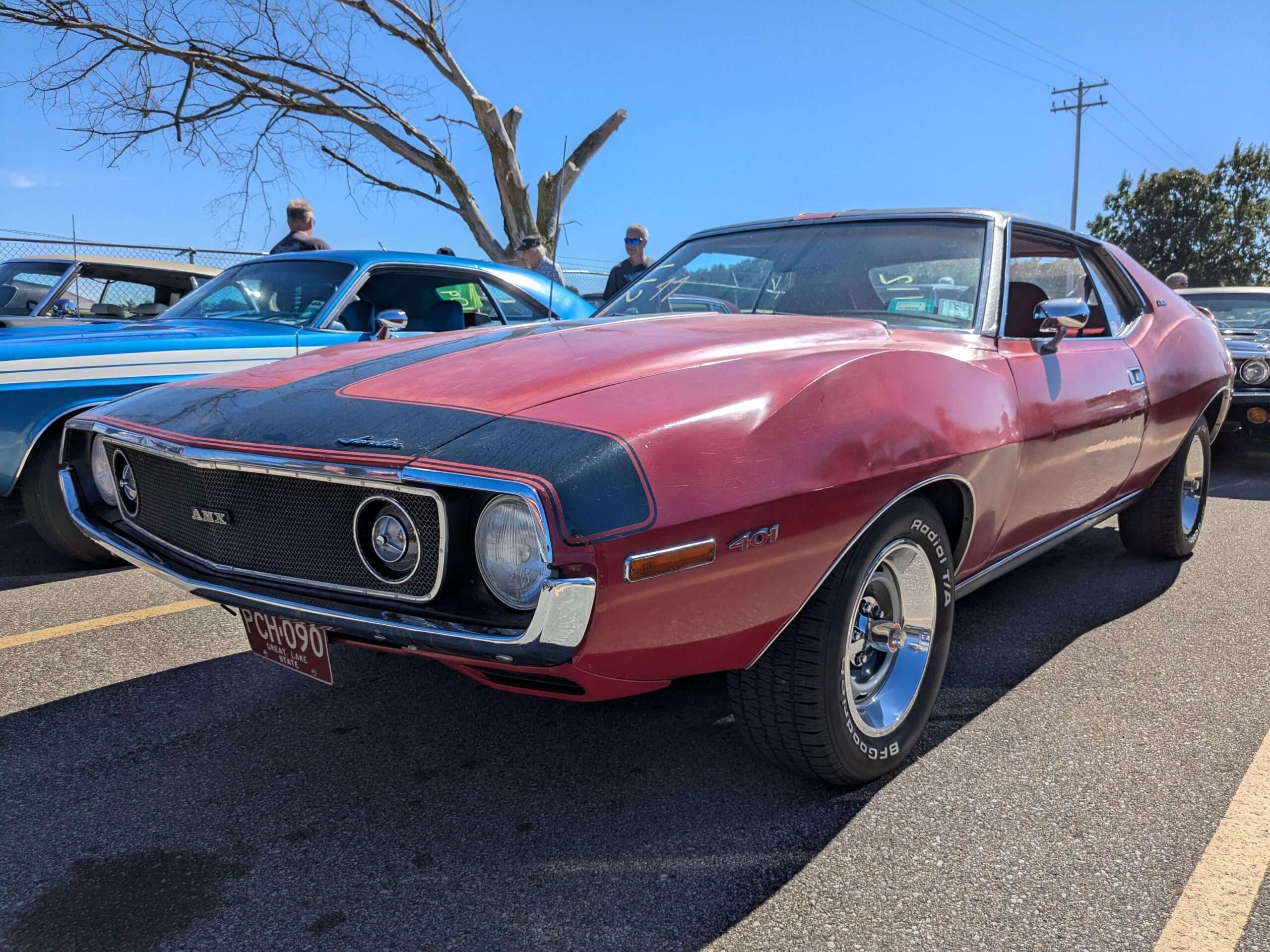
Many American Motors diehards will look to the 1968-70 AMX two-seater as the pinnacle of sporting “Ramblers,” but when it comes down to raw power and getting down the quarter-mile ahead of the other guy, the 1971 AMX might have been the one to have. Let’s take a look at the new-for-1971 Javelin and how it measures up to the 1970 model it replaced, starting with this 401-powered Matador Red example resting in the staging lanes at the 2026 Pure Stock Muscle Car Drag Race in Stanton, Michigan, where it was one of two 1971 AMXs to bear the standard for Kenosha.
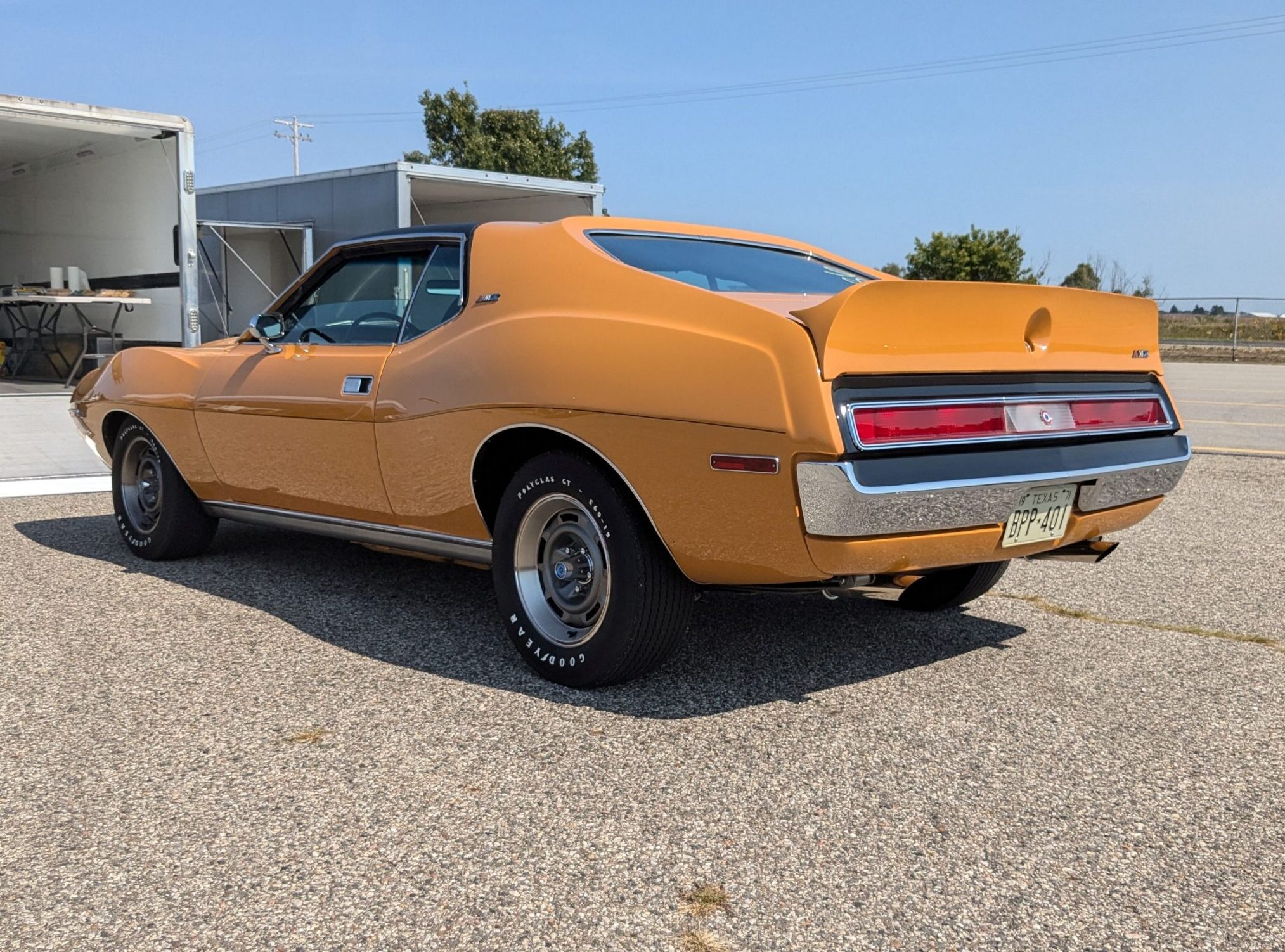
This beautiful orange AMX was the other, and both of them are 401/4-speed cars. The Pure Stock Muscle Car Drag Race is an event where you’ll find bone-stock original muscle cars like the red AMX in addition to beautifully restored, highly-tuned cars like this orange AMX that probably don’t see more than 100 miles in a year. It shows in their quarter-mile times: the driver-quality red car’s best showing was a 15.42-second run at 94.74 miles per hour, while the orange car managed a 13.48 at 106.3 miles per hour. For comparison’s sake, Sports Car Graphic’s April 1971 road test of an AMX with a 401/automatic resulted in a 14.3 second run at 98.8.
The Pure Stock rulebook allows for the engine to be blueprinted, so a lot of the really nice iron has been rebuilt with the event itself in mind. And honestly, if someone bends the rules a little, it all seems to be in good fun from what I’ve observed.
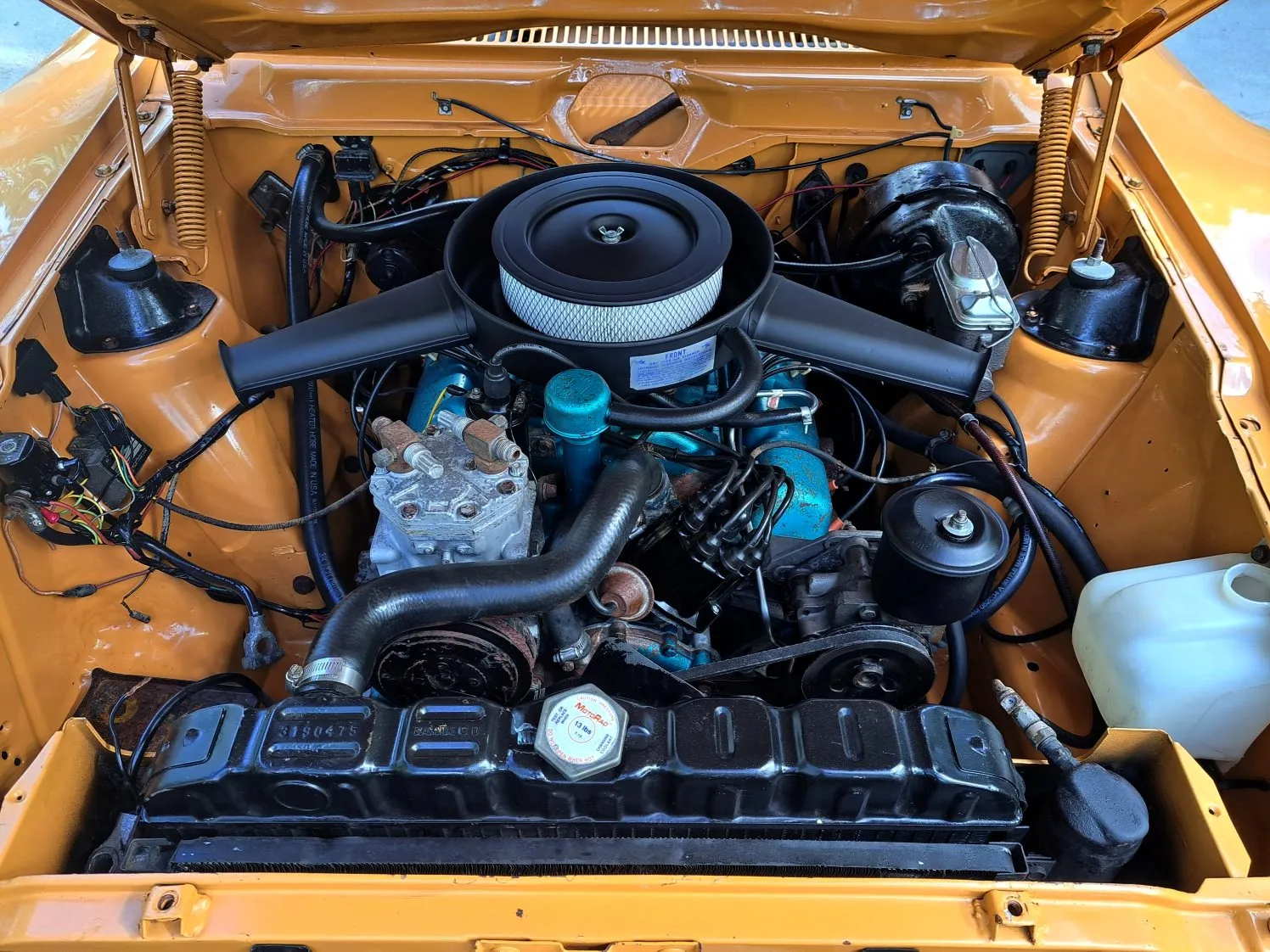
The 401, shown here, was a replacement for the previous year’s 390 and had a longer stroke (3.68″ compared to 3.57″). Sports Car Graphic tested a 1970 AMX with the 390 in May of 1970, and it was over a half-second and over four miles per hour slower down the quarter than the 1971 car: 15.0 seconds at 94.4 miles per hour (Motor Trend got a 14.68 at 92), so the new 401 definitely packed a punch. But perhaps the most troubling part of Sports Car Graphic’s 1971 AMX test was this:
During our acceleration runs, we noticed that engine oil pressure fell drastically, which is not unusual. However, recovery was long. It took five to ten minutes after the completion of a run before the pressure gauge indicated a safe 20 psi.
A safe 20 psi? If these guys were winding that AMX to 5,000 rpm, I would certainly want more oil pressure than that showing on the gauge; therefore, the moral of the story seems to be to never buy a used media press car.
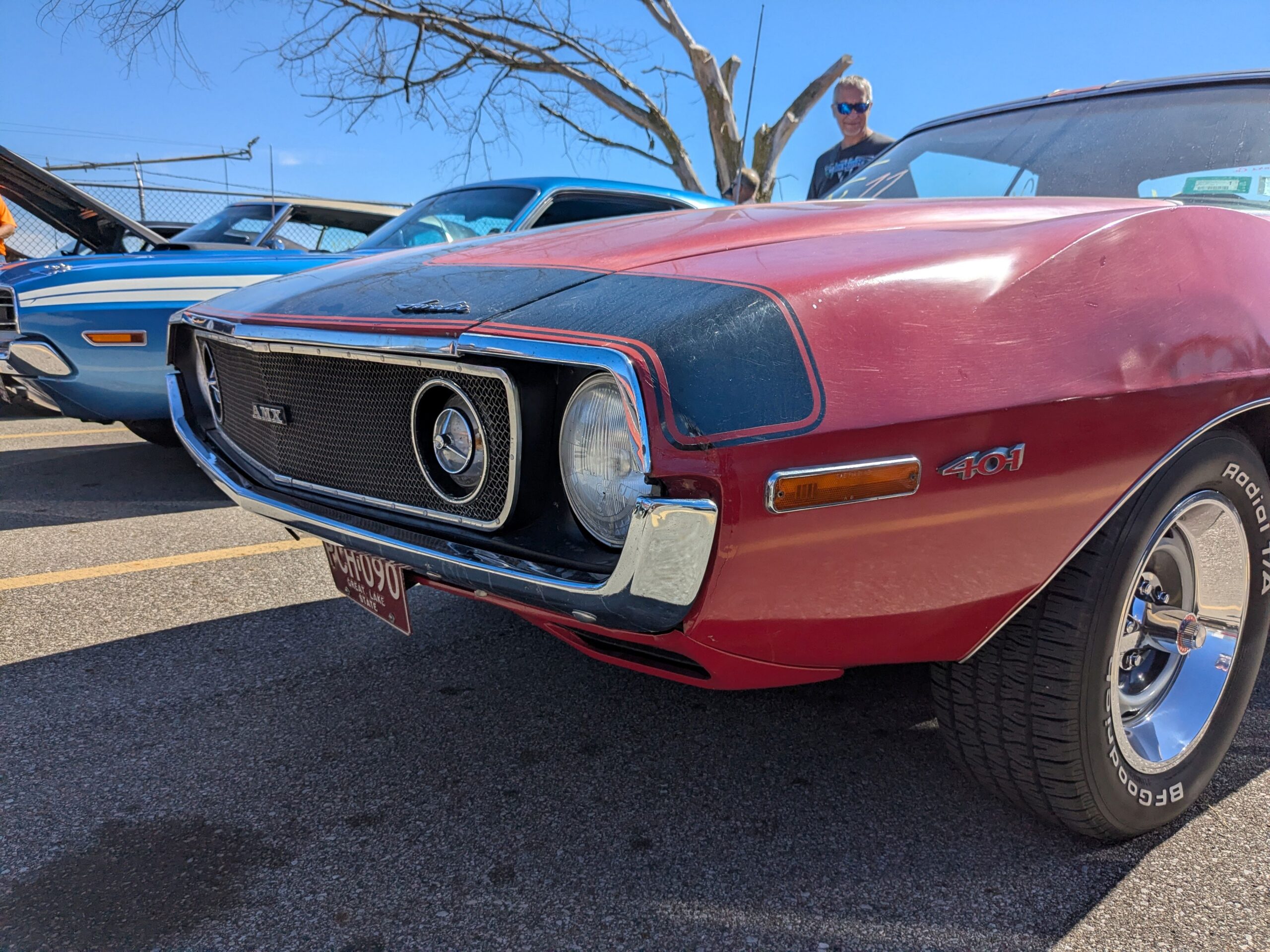
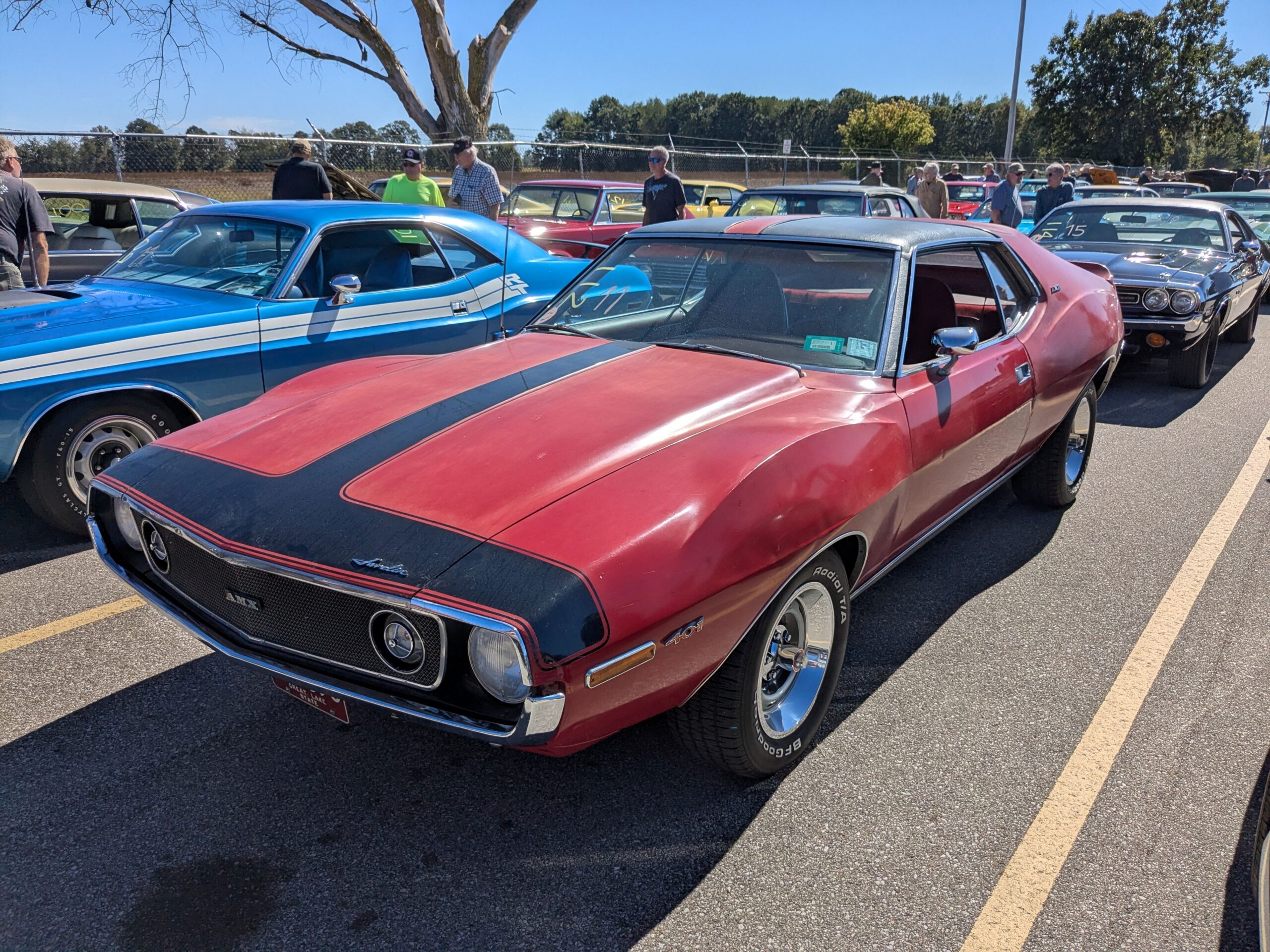
As powerful as the big 401 was, the big story in the American Motors showroom was the Javelin’s new styling. With some input from Penske Racing’s driver/engineering mastermind Mark Donohue, the AMX got a neat flush grille with a mesh pattern that reminds me of a fencer’s mask, all the better for foiling those Mustangs and Camaros in the Trans Am series, and just in time for the big names to bail out. Penske was therefore able to clean up, winning eight of ten events and the championship in 1971.
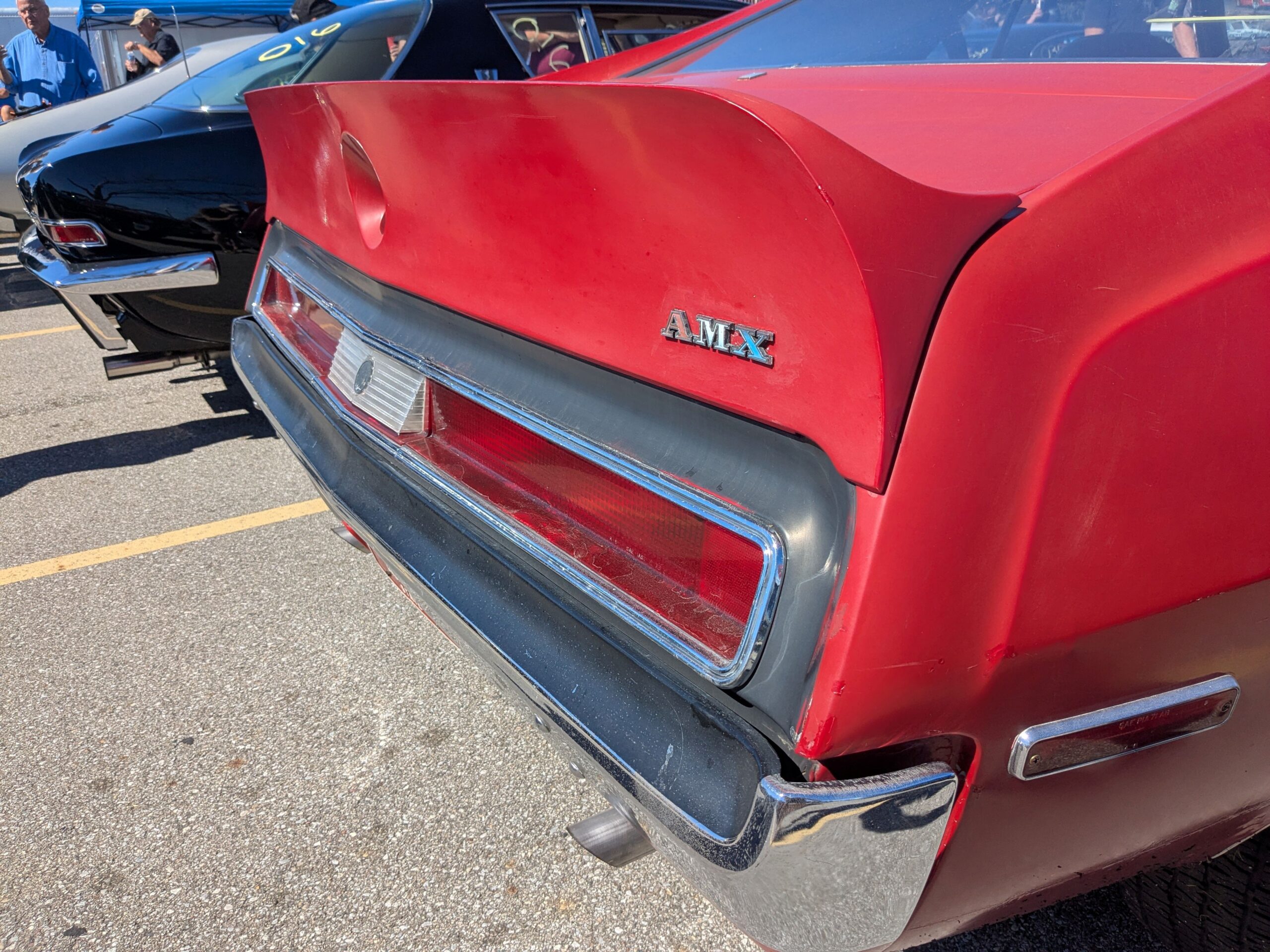
The big rear spoiler was about the only thing that wasn’t brand new for 1971.
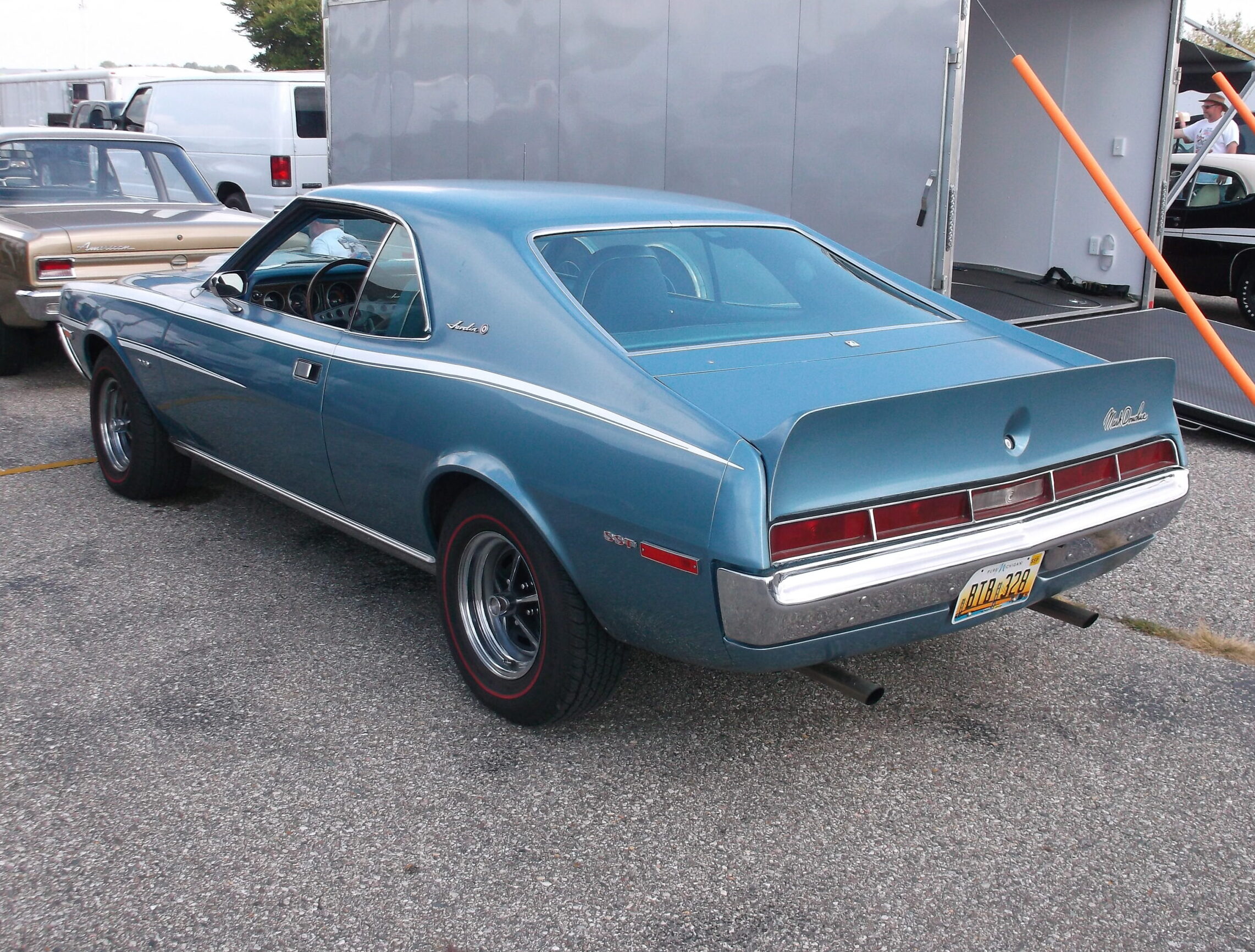
The 1970 Mark Donohue Javelin, which was based on the Javelin SST, had a similar-looking rear spoiler that apparently had a few differences from its successor; nevertheless, we can take a minute to admire this very nice blue example. I’m not sure if it’s a real Mark Donohue car, but if it is, it’s one of 2,501 built, one more than the necessary 2,500 to homologate the tall rear spoiler that Donohue designed to plant the rear of his Trans Am car for 1970.
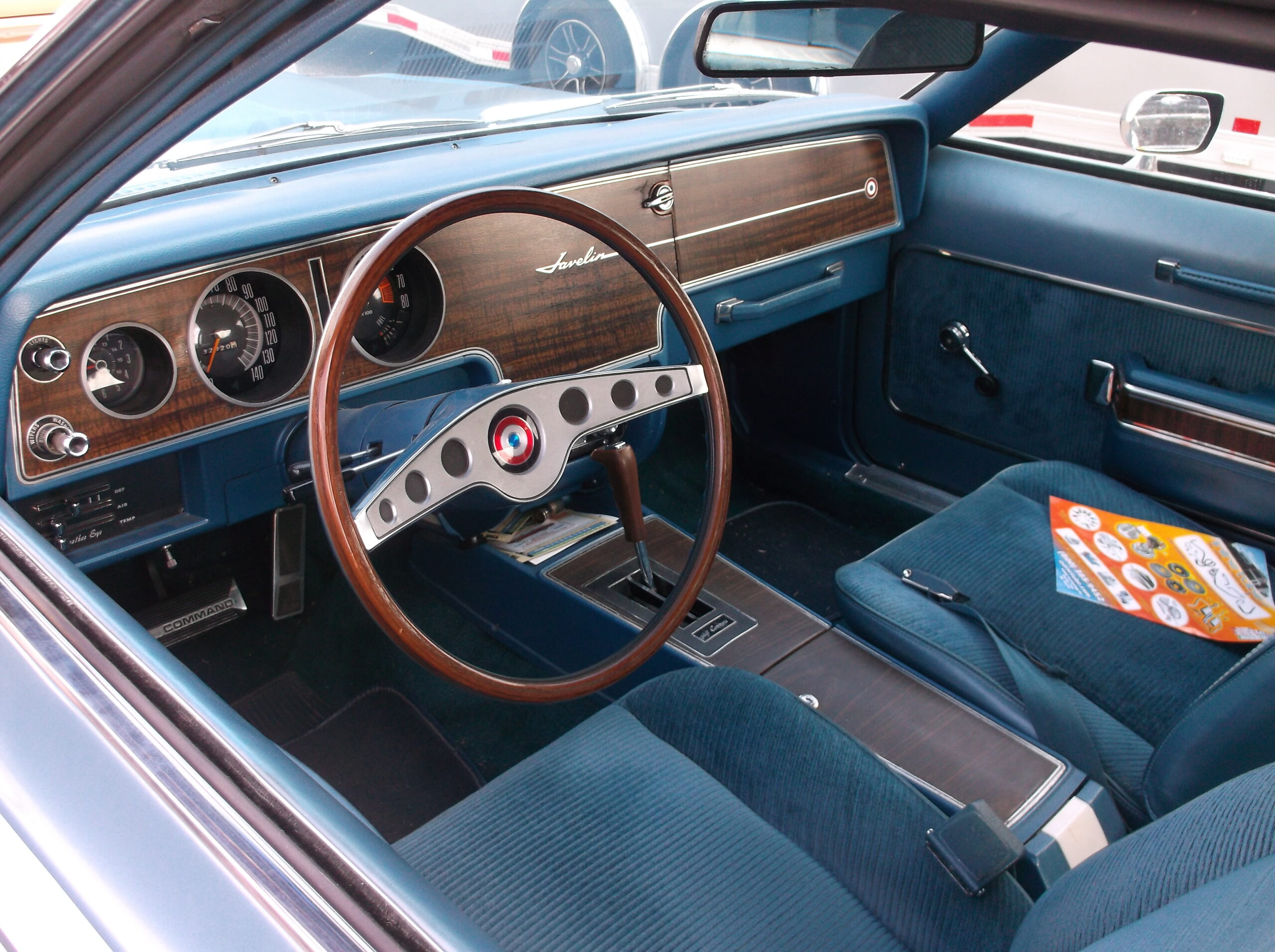
The Mark Donohue car also offers an opportunity to compare the 1970 and 1971 Javelin interiors. The 1970 car has a flat woodgrain dashboard with a big, round speedometer and tachometer right in front of the driver. This one has the “Shift Command” automatic.
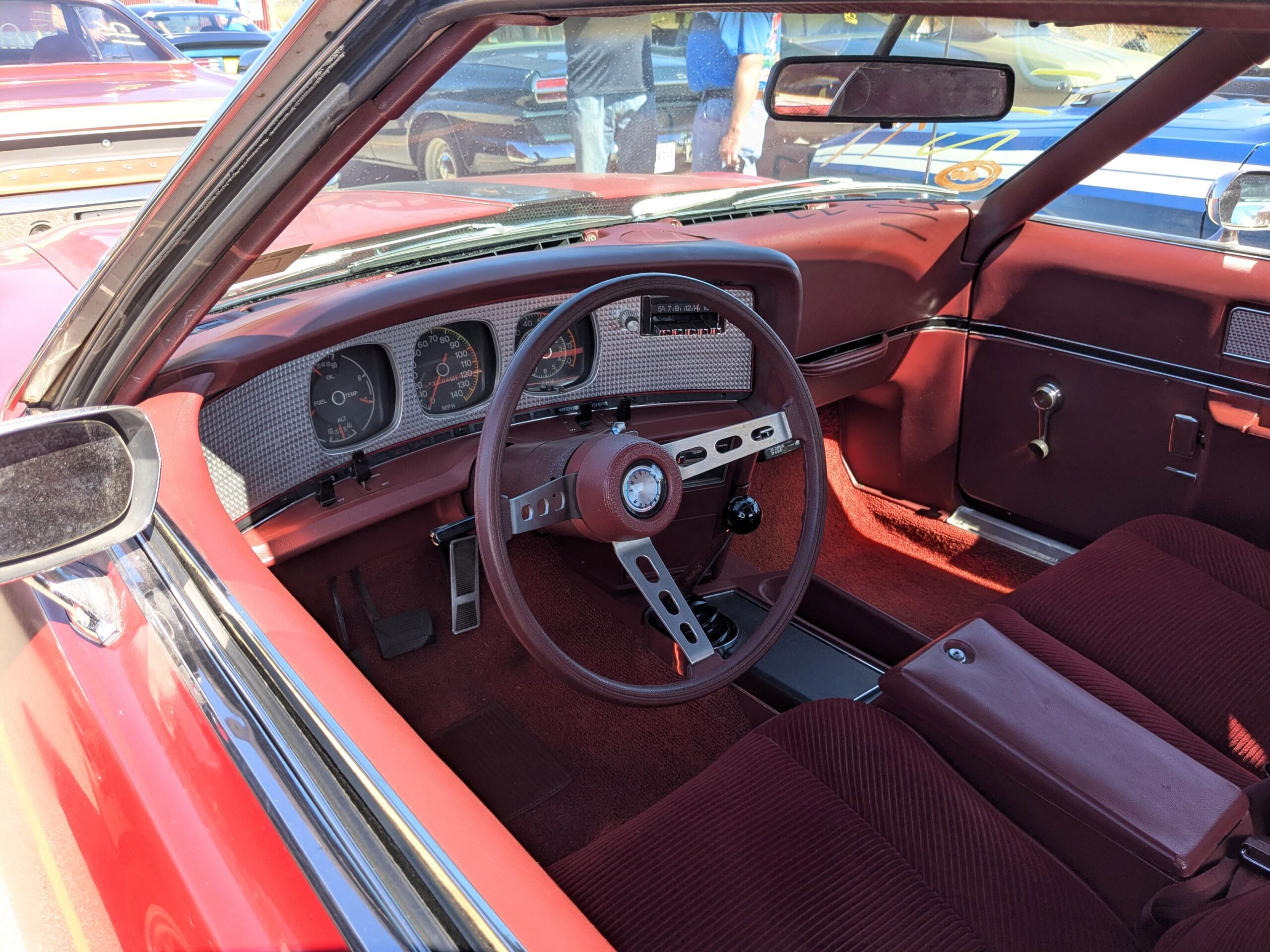
The 1971 AMX, on the other hand, centered three gauges in front of the driver: the oil pressure, fuel, engine temperature, and charging gauge all got their own housing within the instrument cluster with its engine-turned trim. Notice the trim Hurst shift lever for the four-speed transmission, which was a Borg-Warner T-10.
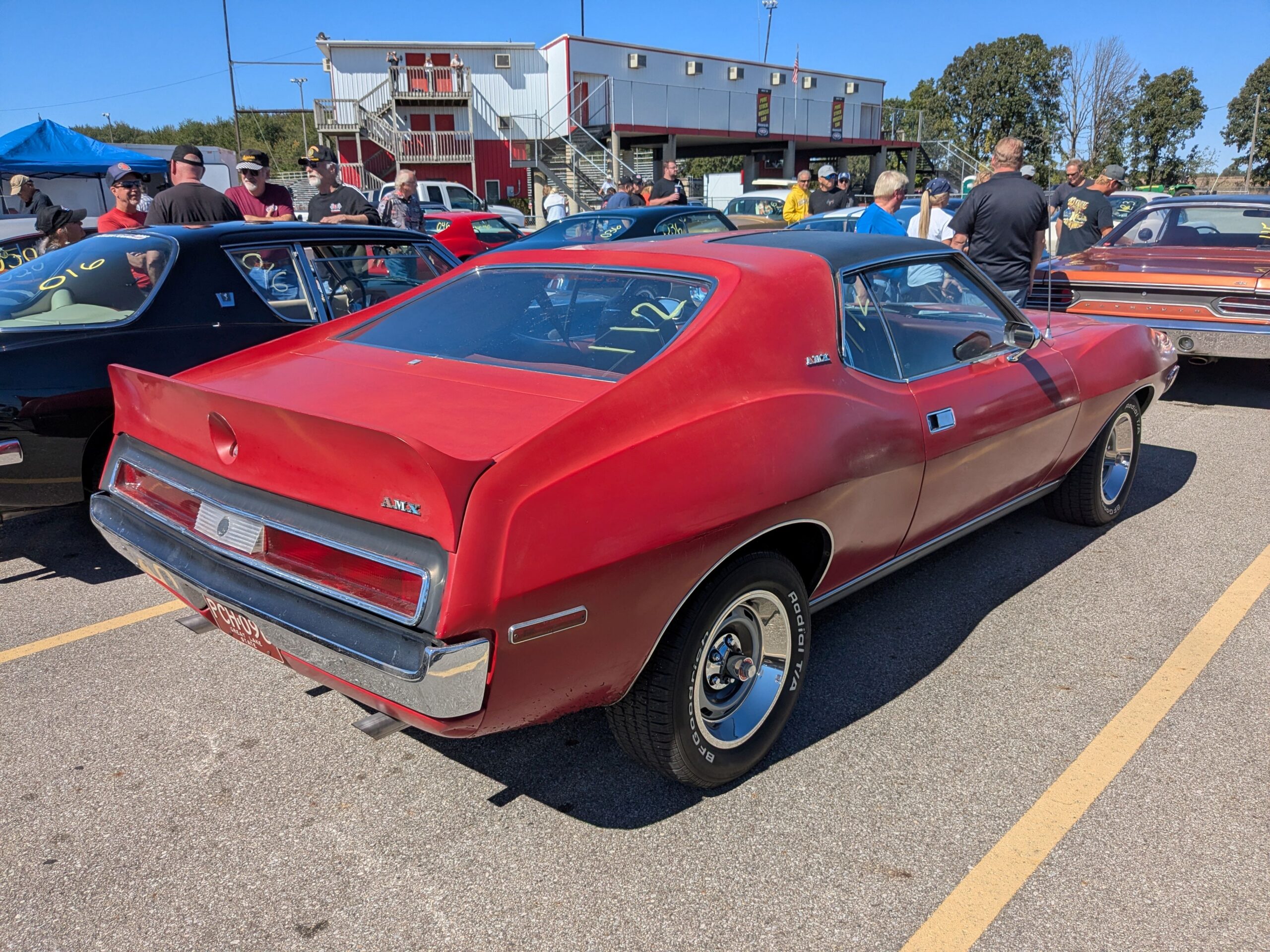
The new sheetmetal had bulging haunches, a unique simulated T-roof, and Corvette-like arches on the front fenders. While the 1971 Javelin looks bigger and more muscular than the 1970 model, it really isn’t; length and wheelbase grew by only about an inch each, but the width was up over three (75.2″ vs. 71.9″).
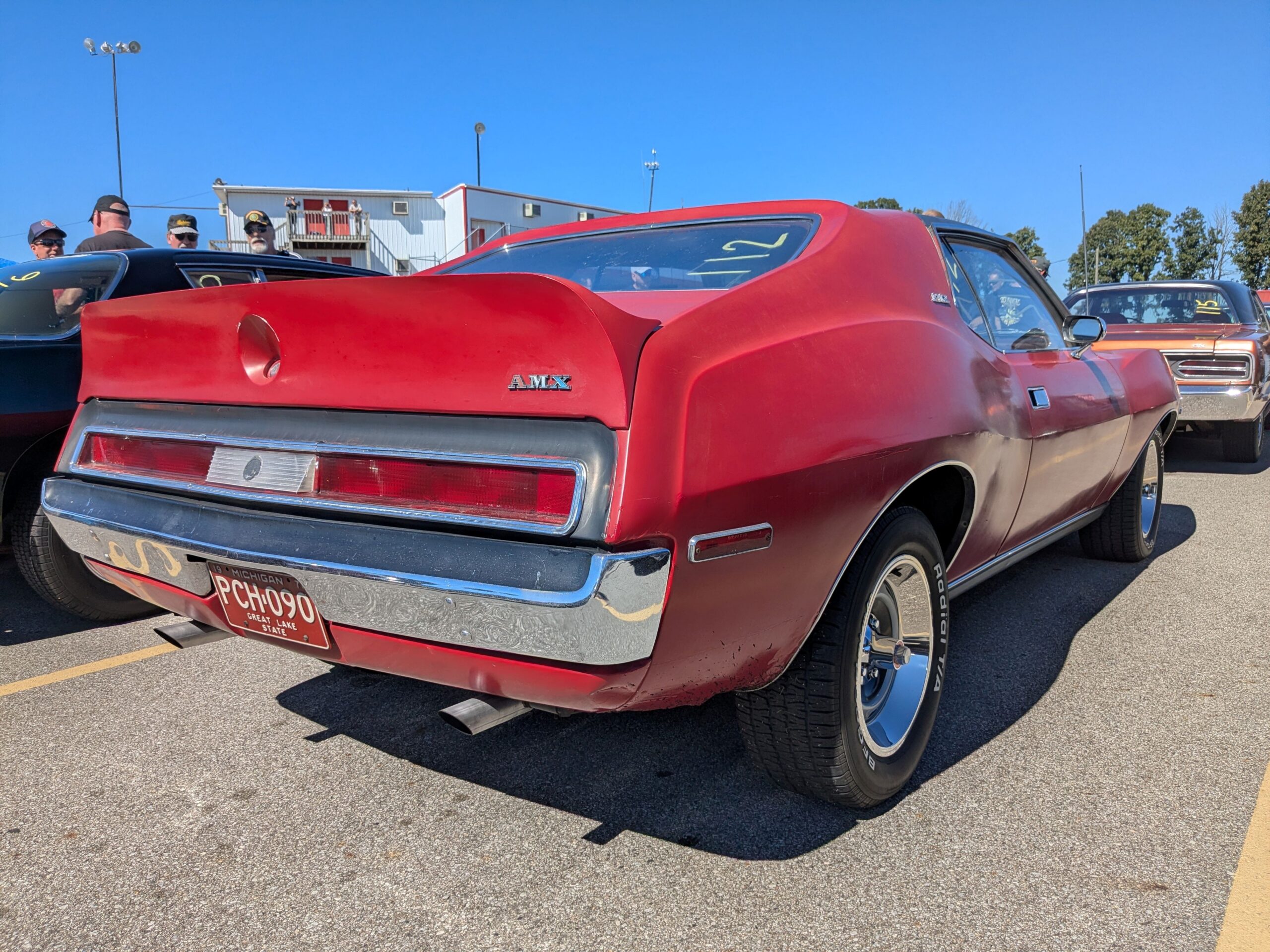
Sports Car Graphic liked the new look, saying that “the styling is something that grows on you. The more you see it, the better it looks.” I’ll agree, and I also think it looks better in person than it does in pictures. Is it a little busy, with all of its swells, swoops, and clashing body lines? Maybe, but the whole is dramatic and striking, perfect for the early 1970s. I spent as much time as I could ogling both this red one and the nearly pristine orange car (for reasons I’ll never understand, I prefer the earthier red example).
Unfortunately, buyers weren’t having it, and only 26,866 Javelins were built for 1971, 2,054 of them being AMXs. That’s not really the fault of the new styling, as sales were down from 1970 by only about 1,500 units; pony car sales in general were slowing down, and there was an all-new Mustang and an almost new Camaro/Firebird to contend with. If you’re an AMC fan, however, it might not get any better than this brawny AMX and its most-powerful factory engine. Owners have shown that they’re capable of some impressive quarter-mile times, and they look great sitting in the staging lane or crossing the beams at the end of the strip.
Related Reading
Vintage Road Test: 1971 AMC Javelin – Road Test Magazine Evaluates A Regular Pony Car (by GN)
QOTD: Striped Javelins–What’s Your Preference? (by me)
1971 & 1972 AMC Javelin State Trooper – When Pony Cars Wore Badges (by Jason Shafer)
Curbside Classic: 1970 American Motors Javelin SST – Wrangling A Non-Average Pony Car (by Eric 703)























If I would ever think about buying a muscle car from that Golden Age, this is it. Just for the styling.
These were very good looking despite being a low dollar restyle.
I’m not 100% sure, but pure stock drag racing allows bore/stroke upgrades and weight reduction. I’ve heard of people removing the springs in the seats to cut weight. Those rules are for F.A.S.T. (factory appearing stock tire) racing.
These are the rules, Dave.
https://www.psmcdr.com/rules
In Pure Stock, you’re not supposed to change displacement past the usual overbore to clean up the cylinders. I know that you used to be able to have your car certified “stock” but I don’t think they do that anymore. I’m only a longtime spectator, so I’m not up on the minutiae.
You’ll notice in the rules that there are a lot of upgrades allowed, including compression ratio, gearing, and exhaust, so it’s no surprise that some of them run pretty well.
Gotta give credit to AMC-they did the best they could with their limited resources.
A friends dad had a black 71 that was super clean.
I never drove it but I did get a ride and liked the gauges and overall interior.
My childhood best friend’s parents bought a new 72 AMX almost identical to the red one. Only theirs was for Tim’s mom and had the 360/auto and air. Tim’s dad still had the 64 Avanti R2. Was there a Midwestern garage in 1972 with a rarer combination of daily drivers than that?
I really love the styling on these – they are over-the-top 70s attitude at its best. As I recall, these were outselling the Barracuda in the years of this generation.
Styling that grows on you is definitely true, and it is better in person. I’ve been seeing these more and more restored at car shows around here and they’re a welcome sight! I would argue though these only really looked right in the spoilered road wheeled and striped AMX form, a standard Javelin with skinny tires and wheel covers can look very awkward with those bulging arches!
The second gen AMC V8s seem to have oiling problems as their Achilles heel, I remember reading some article with a step by step capping certain gallery holes and running a line through the valley to feed the rear main directly.
It’s taken a while, but I eventually overcame my initial negativity to appreciate these for the period pieces they are. it wasn’t exactly easy, as the original Javelin was a quite lovely thing, except for being a bit too long in the area behind the driver’s seat and the rear axle (Got to be able to brag about all that rear leg room in a pony car!).
I still struggle with that absurdly tall front fender bulge, a good two feet (or more?) above the actual wheel and tire. It’s as fake as the spare tire humps on the Continental Marks, but what the hell. It was 1971, and cartoonish styling was the hot thing.
You can see what they were trying to do (copy the Mako Shark), but it was not at all cohesive like it was on the ‘Vette. Eh, like you said, it was the early 1970s and it pretty much works.
I like the wraparound dashboard compared to the big slab of the first gen cars, but it’s a hard no on the styling. The late Sixties AMC cars, especially the small cars starting with the 1964 American through the first Javelin/AMX, and then the Hornet, were classics of clean design. Then it pretty much went downhill. Still, they’re good to see here – I haven’t spotted one on the road in a very long time.
My old XO was a big AMC fan and he had a ’71 Javelin with a 360. Although I never raced him, (he signed my evals after all, lol) he did take me for a ride and that car felt every bit as quick as the 340 Duster I had. I cant see it handling as well as the 2nd gen Camaros/Firebirds but I could see it holding its own against a Cuda or Challenger. I do love the styling and the interior on these, except for the over-exaggerated humps on the front fenders.
I really liked these when they came out, but sure didn’t see many of them. I wonder if a ’72 AMX 401 automatic was any faster than the ’71, as the ’72 had the much better 727 ‘Torque-Command’ transmission rather than the Borg-Warner gearbox.
I imagine it would be a draw at best because of the 1972 car’s lower compression ratio.
I’m surprised that Joseph Dennis hasn’t chimed in yet. I think he and I may be the biggest Javelin fans here!
Anyway, 15 years or so ago, my next door neighbor passed away and when the family came to clean out her place, they had the garage door open. One of these 401 powered AMX(s) was being kept inside and I couldn’t believe my eyes. I think it was her son’s car. The day he came to get it, I was at work, but from what the neighbors told me, it was quite the sight watching him smoke up the tires as he drove the car away. Perhaps his was set up for racing too!
I’m kinda biased to this generation as my best friend had a bright orange ’74 Javelin (just a 304 with a 3-speed). This was the car I’ve mentioned here before into which we swapped a Pierre Cardin interior from a basket case to let the interior live on.
Ironically, even though he had a second gen Javelin, he always wanted a first gen AMX. I like them both, but prefer the oulandish styling of these.
I agree these have aged rather well. It’s another one of those AMC cars where the base trim level looks quite bad with skinny tires and hubcaps, but the AMX grille, spoiler and those fabulous rallye rims fill out the wheelwells and are a huge improvement.