
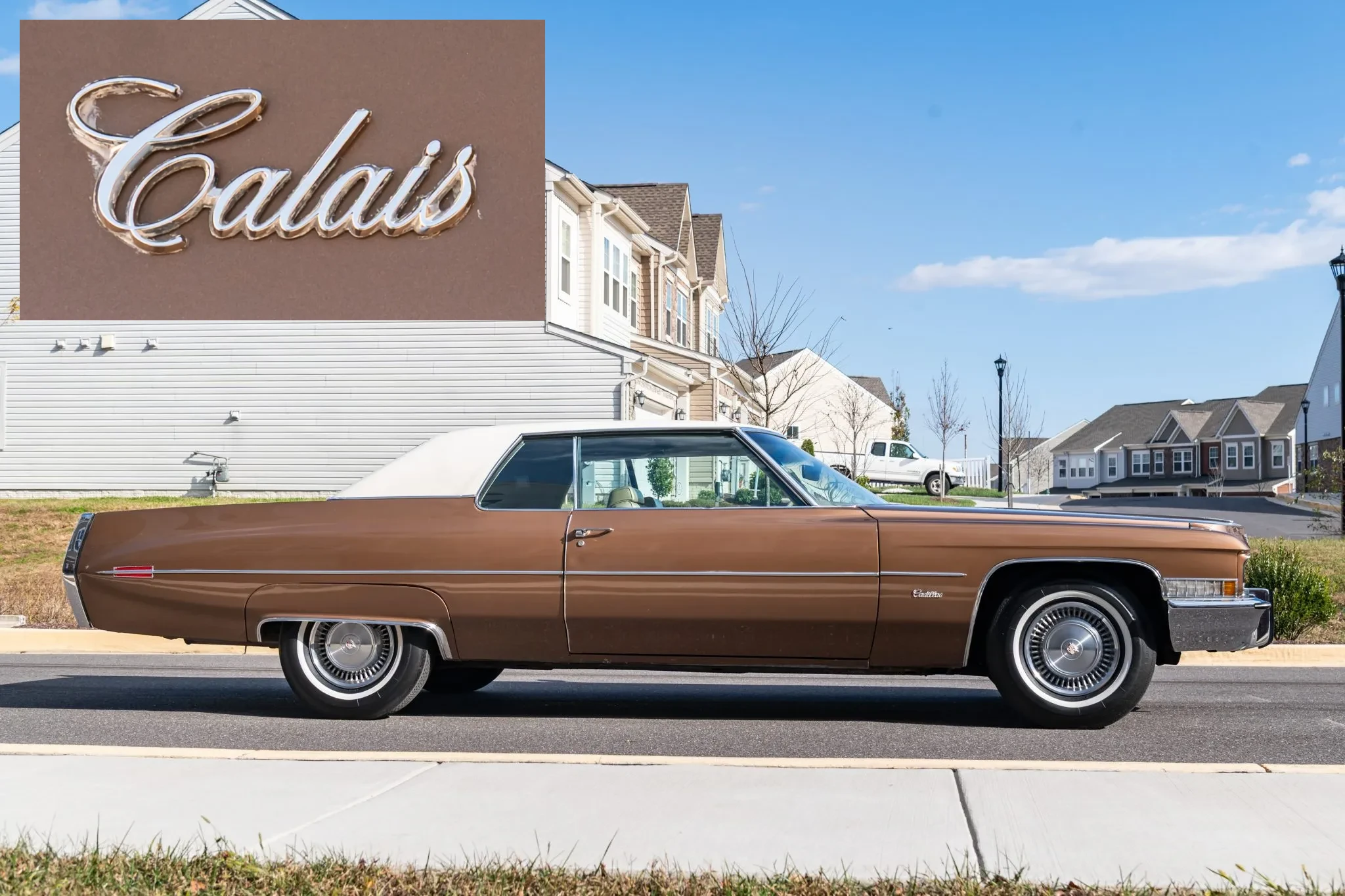
For Cadillac, the 1970s were like an extended experiment to test how much buyers were prepared to spend for the Cadillac name alone. As prices climbed, Cadillac quality diminished, leaving less and less distance between the luxury flagship and other GM full-size cars. Nowhere was that more evident than in the slow-selling base-model Calais, which could no longer match even the Chevrolet Caprice for interior luxury. This low-mileage survivor is also one of only a handful of 1972 Cadillacs built WITHOUT air conditioning.
From 1965 to 1976, the Calais was the entry-level Cadillac, priced a few hundred dollars below the De Ville. Cadillac’s 1972 brochure called the Calais “the easiest step up to the pride and pleasure of Cadillac ownership,” with “no stinting on styling, comfort or convenience.” However, it was never very popular, and by the ’70s, its sales were so grim that I wonder why Cadillac still bothered. For 1972, when Cadillac built 267,787 cars, Calais production totaled only 7,775, split roughly evenly between the coupe and the sedan.
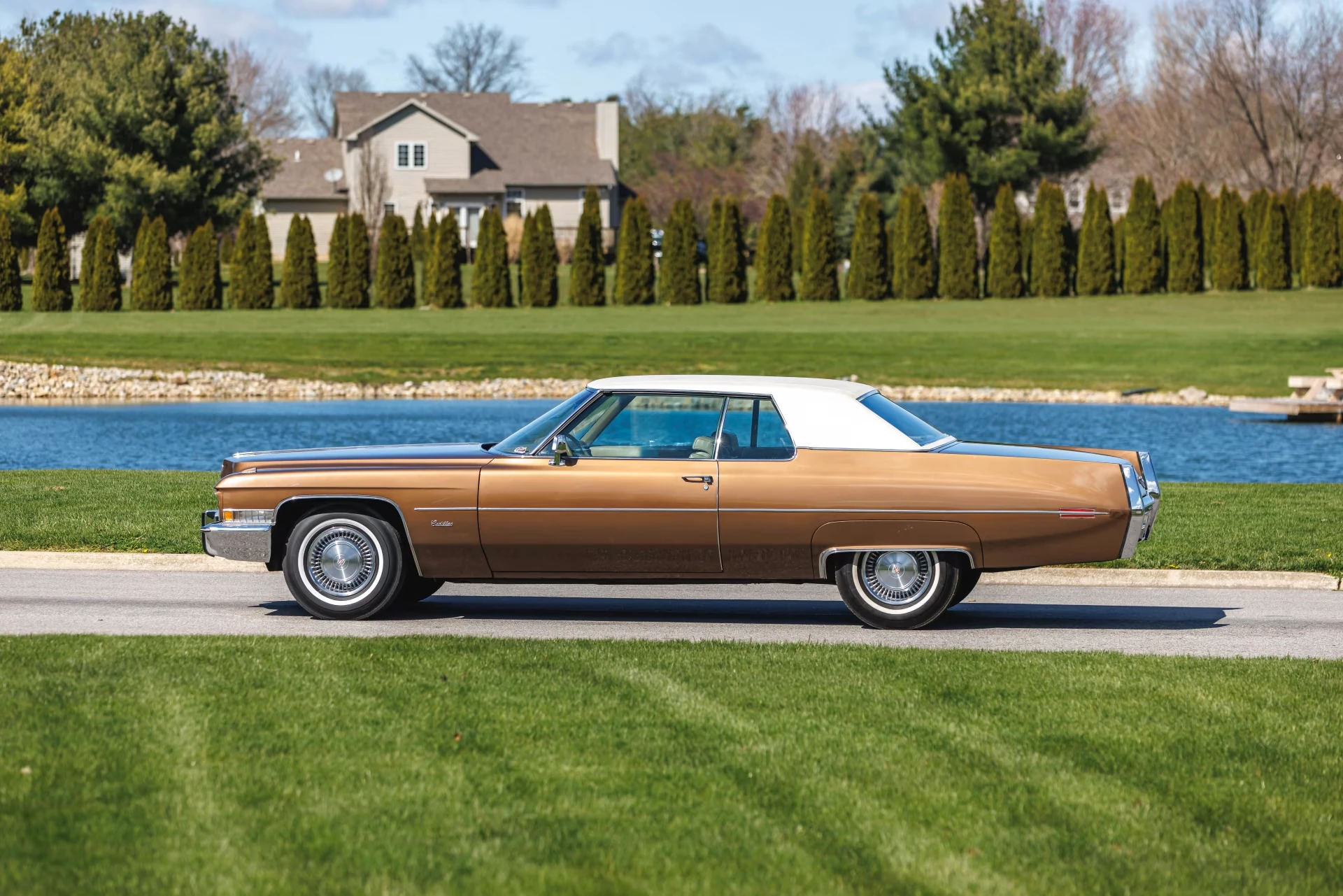
The Calais shared the same GM C-body shell as the De Ville, and it was the same size on the outside: 227.4 inches long on a 130-inch wheelbase. It also had the same 472 cid V-8 engine and the same chassis as the more senior models.
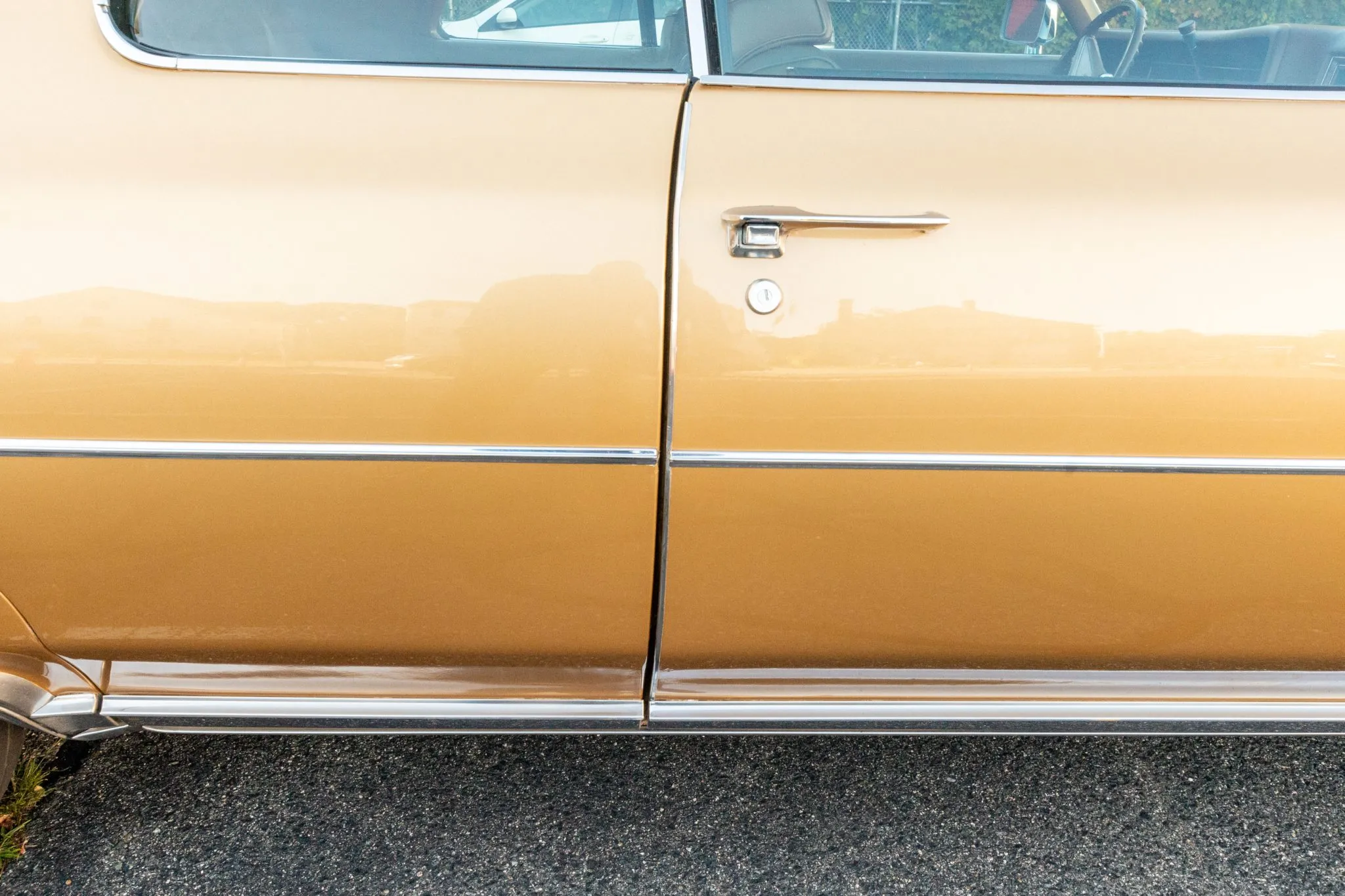
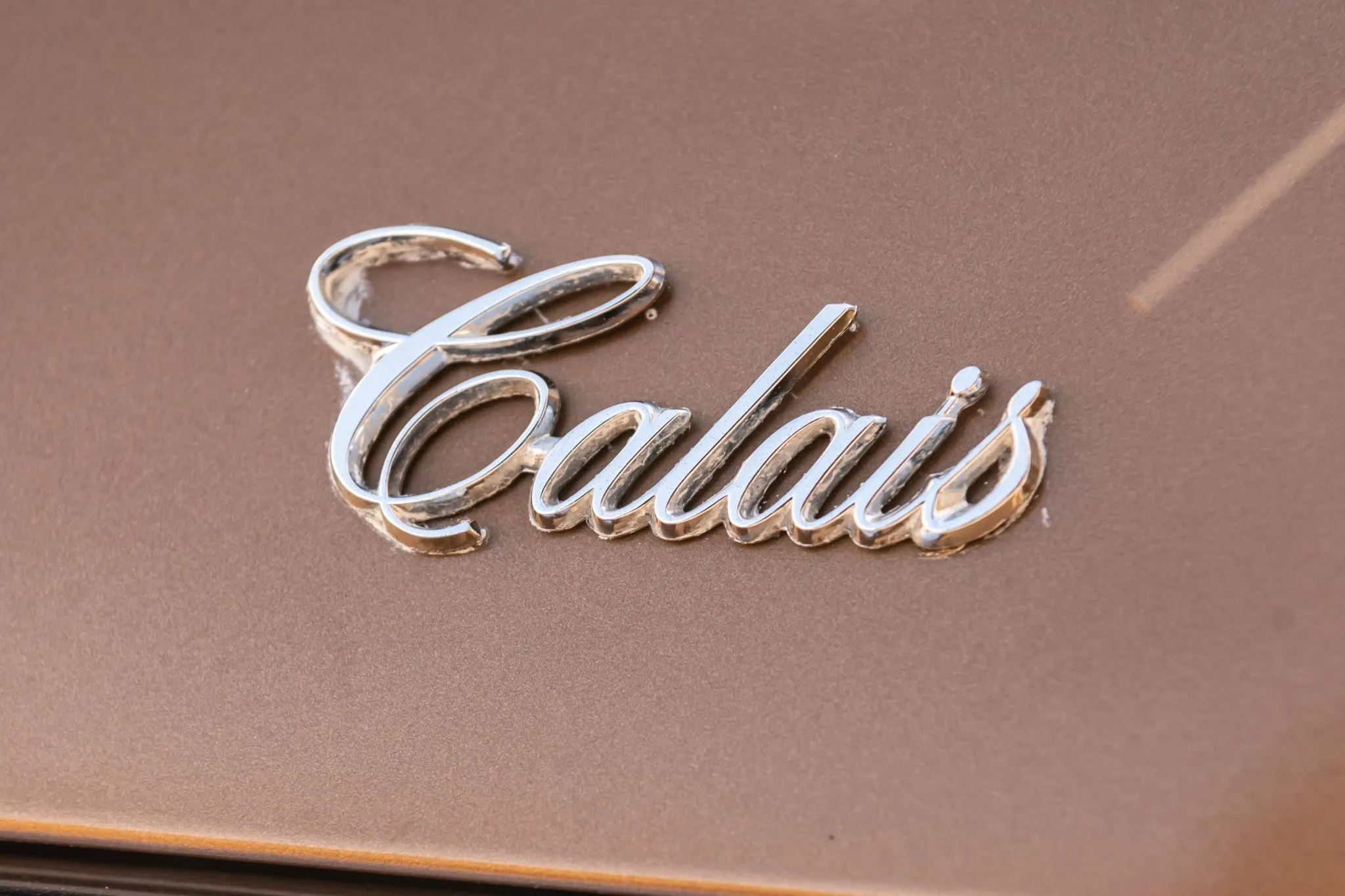
Other than the Calais badge, the only significant exterior tip-off that you had ordered from the value menu (as it were) was that the Calais lacked the rocker panel moldings of the De Ville.
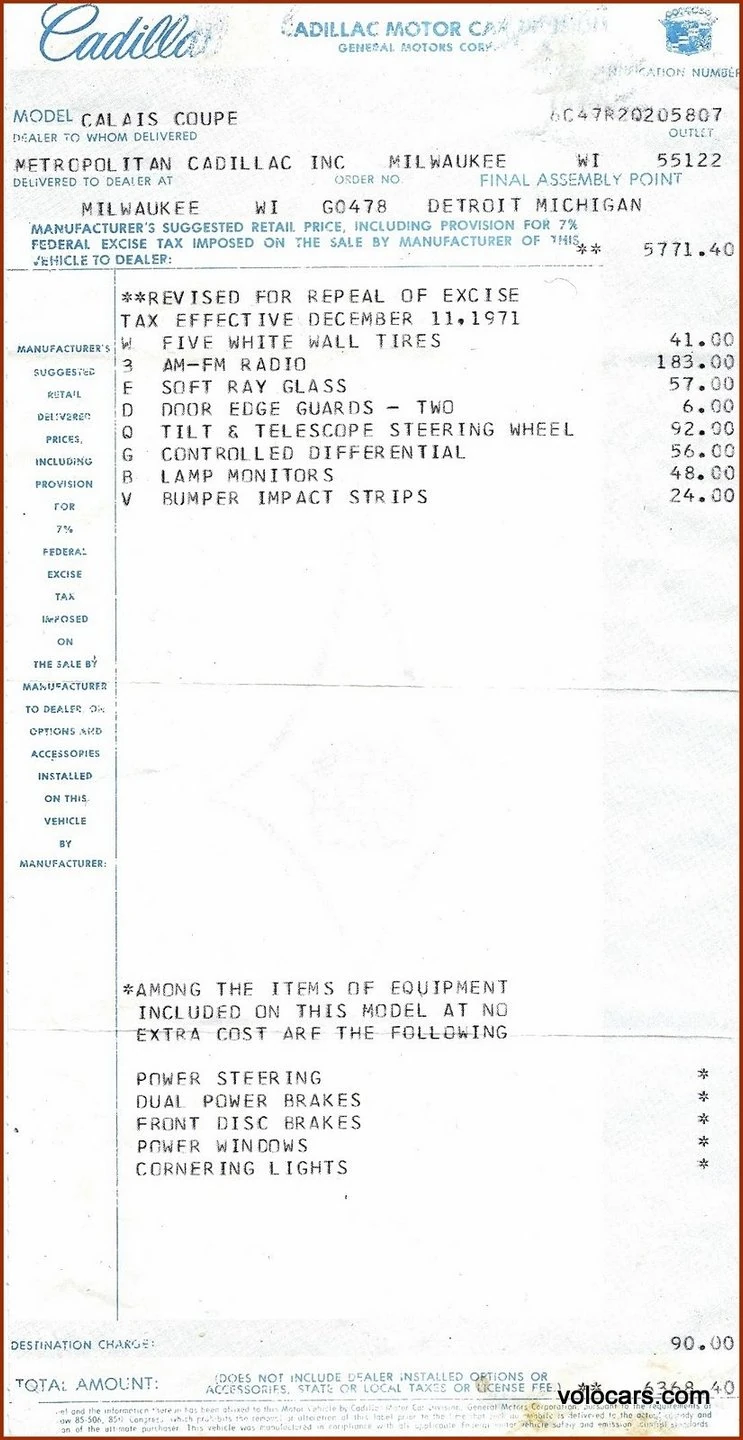
While the Calais was cheaper than the De Ville, it was still an expensive car. At the beginning of the model year, the 1972 Calais coupe started at $5,899. By the time this particular car was built in February 1972, the end of the federal excise tax on new cars had reduced the list price of the two-door Calais to $5,771.40, although that was still almost $900 more than a Buick Electra 225 Custom two-door hardtop and over $700 more than an Oldsmobile Ninety-Eight Luxury Coupe. The original sticker price of this Calais was $6,368.40, a relative worth of about $52,600 in 2025 dollars.
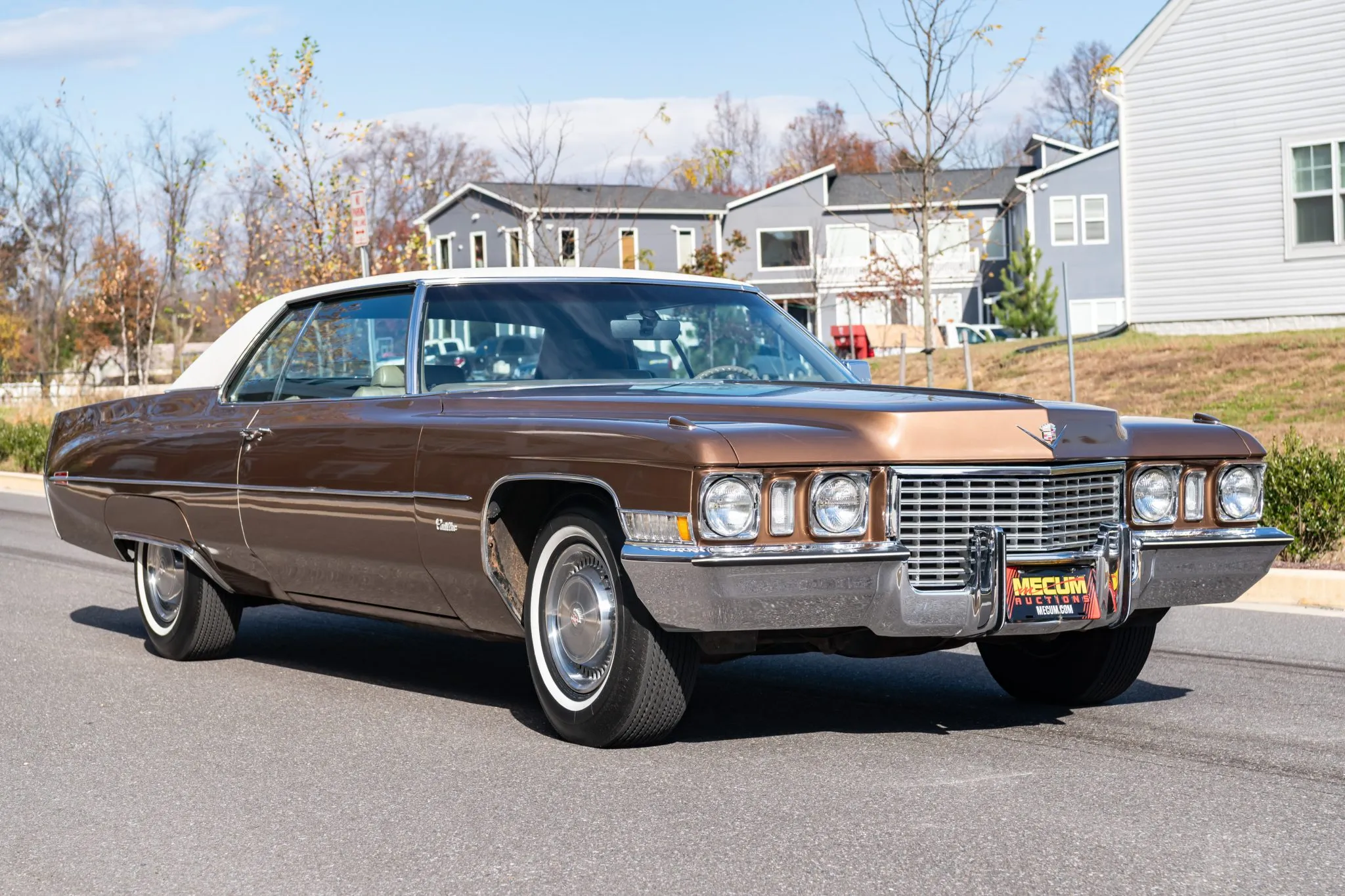
I want to address a number of common misconceptions about the Cadillac Calais that I’ve seen in the comments here on Curbside Classic:
- Calais resale values were lower than those of the De Ville, but really only to the same degree that the Calais was cheaper upfront. For example, a two-year-old Calais might be worth $200 less in trade than a similarly equipped two-year-old De Ville that originally cost about $400 more.
- Cadillac dealers DID order and sometimes advertise the Calais. Judging by the total sales, dealers didn’t order many, but even in this price class, it was often useful to have a couple of “low-end” models on the lot and in the newspaper ads. The Calais also seemed to have been the preferred choice as a prize in contests, sweepstakes, and tournaments offering the winner a new Cadillac, since it was cheaper than a De Ville or an Eldorado.
- The suggested retail prices of the Calais did still incorporate very healthy dealer profit margins, allowing sizable discounts off sticker price. For example, the difference between the MSRP and the dealer wholesale cost of a 1972 Calais coupe was about $1,382, meaning salespeople had quite a bit of room to bargain without venturing into loss-leader territory. The original buyer of the car featured here had no trade-in, but received an $812.40 “special discount” on what I’m confident was still a profitable sale for Metropolitan Cadillac in Milwaukee, Wisconsin.
- The margins on a De Ville were higher than on the Calais, although not dramatically higher. For example, if sold at sticker price, a 1972 Coupe de Ville was worth about $96 more to the dealer than an identically equipped Calais Coupe. Now, a hundred dollars is a hundred dollars, but the Calais was profitable enough in its own right that Cadillac salespeople were unlikely to rend their garments if a customer insisted on buying or ordering one.
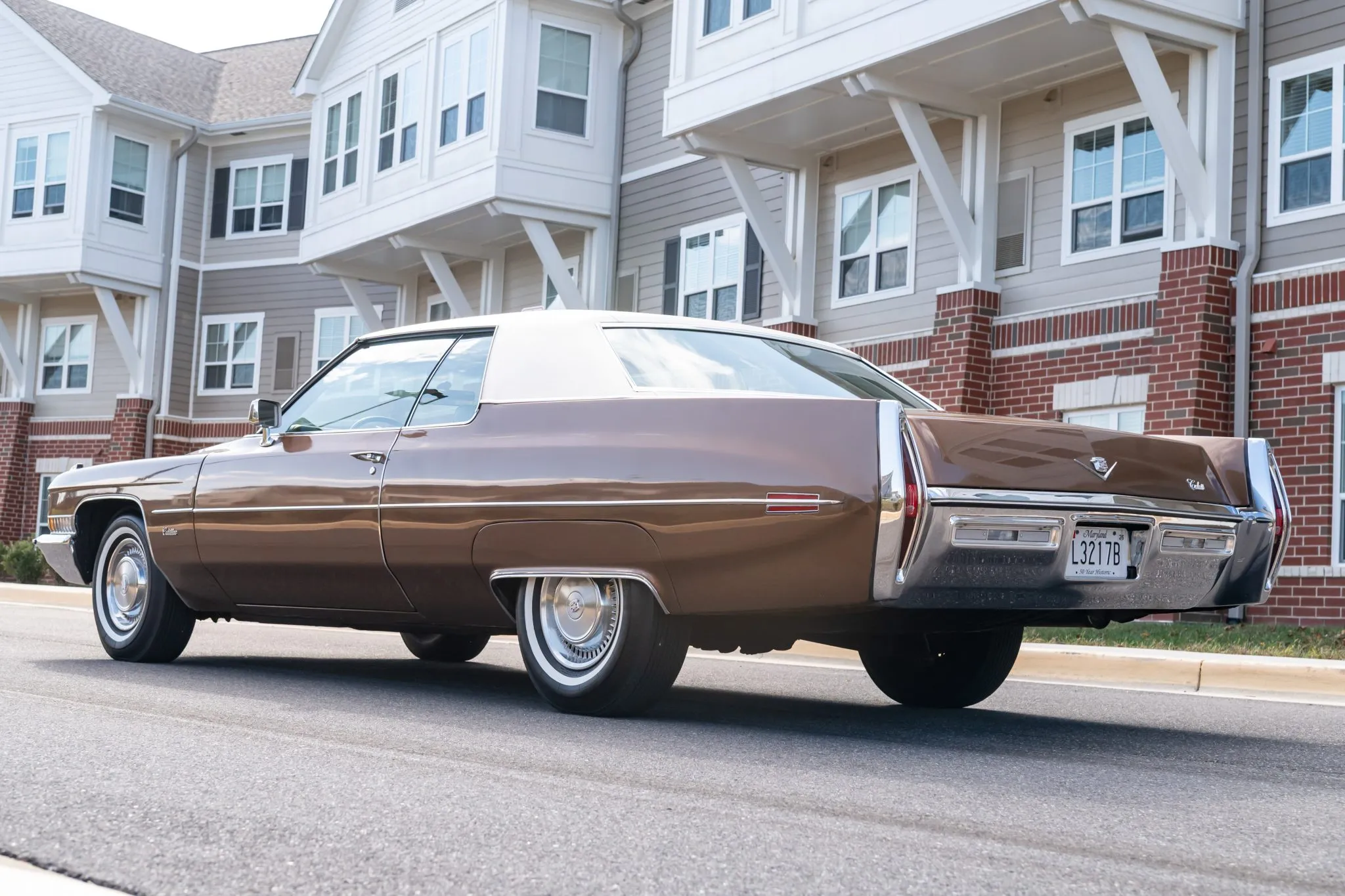
This brown (excuse me, Cognac) Calais has a peculiar mix of options that lead me to think it was specifically ordered like this, rather than bought off the lot.
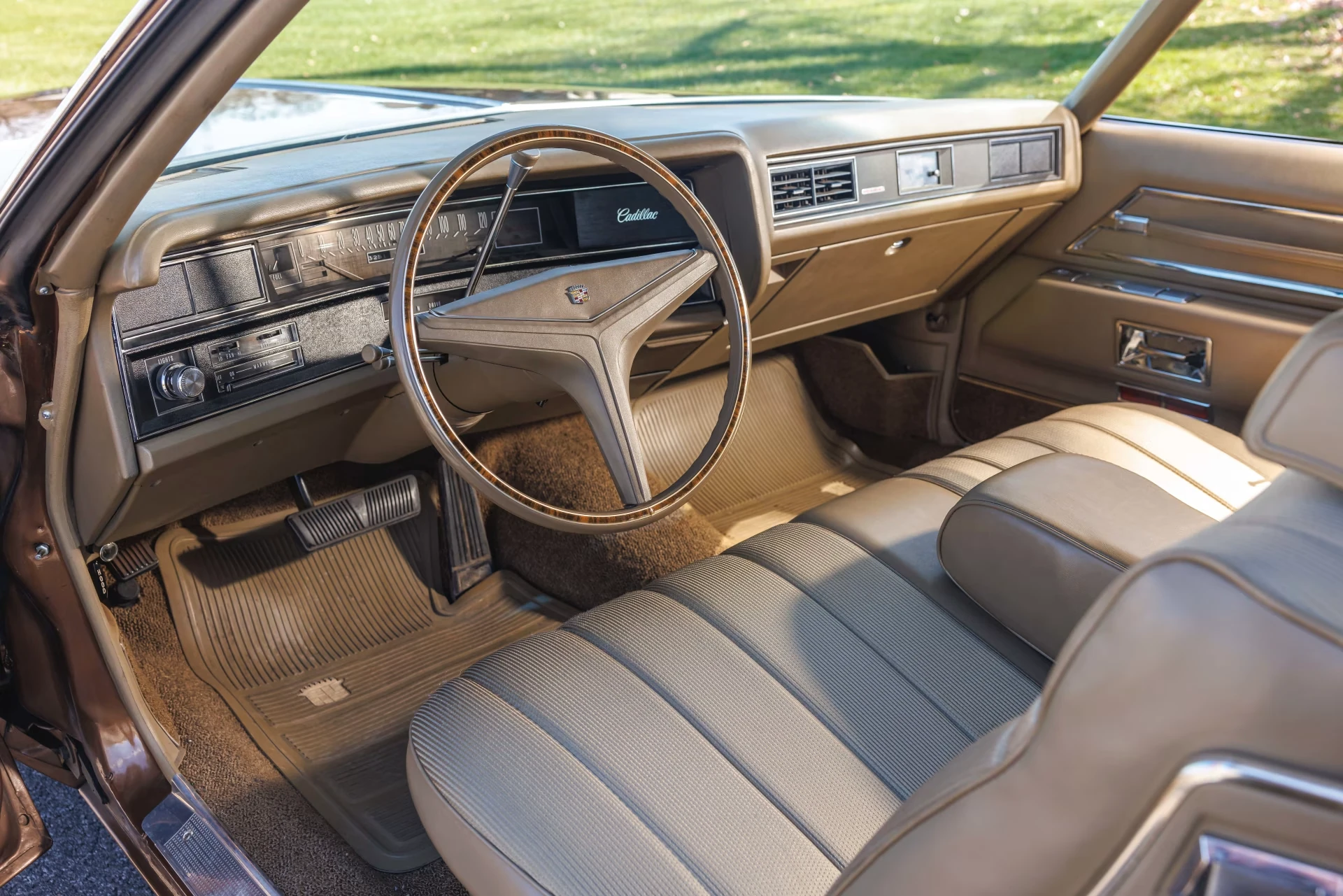
It lacks both air conditioning and a power seat, which were very close to universal on 1972 Cadillacs, and it has the cheapest of the factory AM/FM radios. However, it has a tilt-and-telescoping steering wheel ($92 extra) and a limited-slip differential ($56).
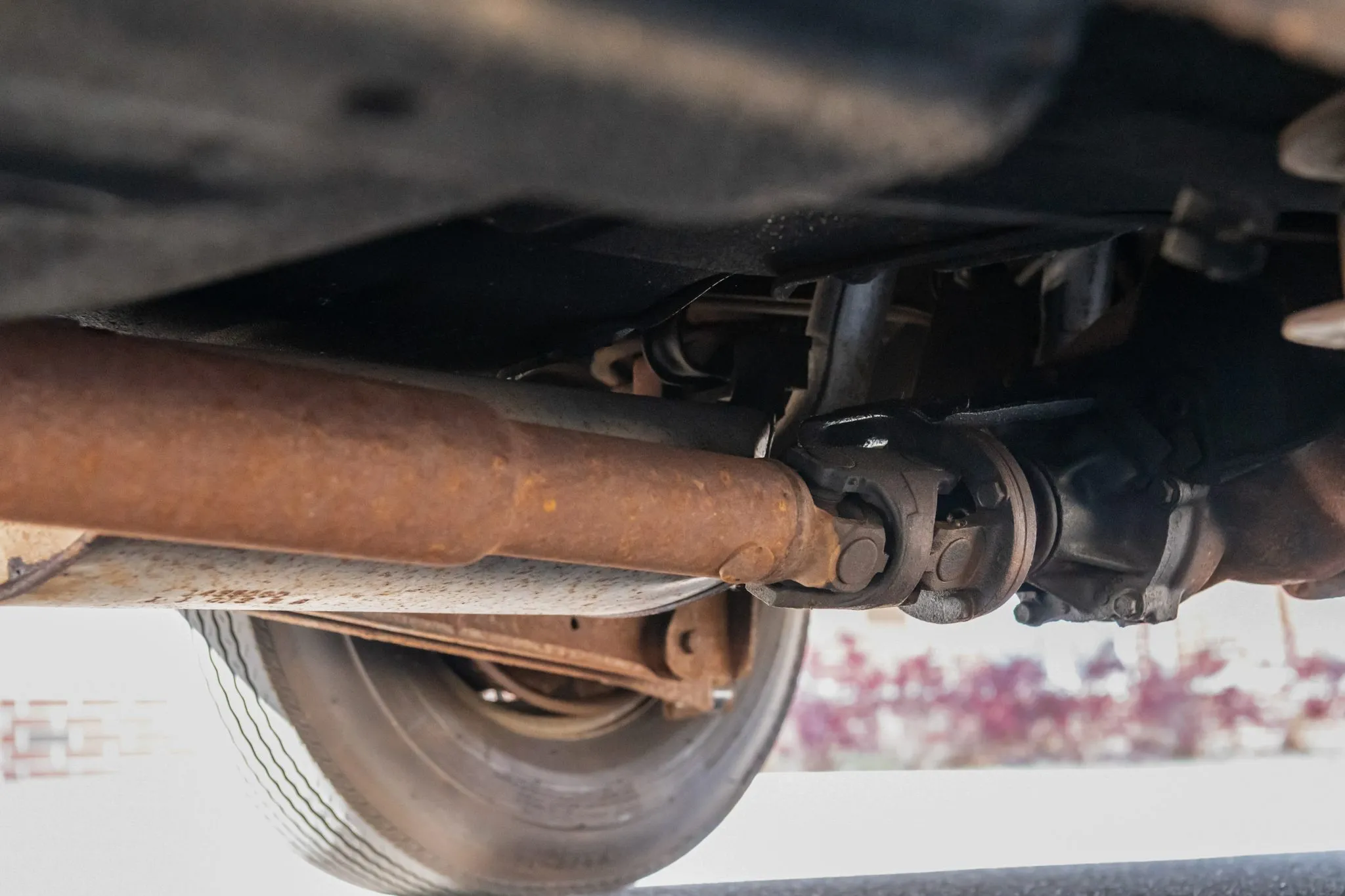
Cadillac had offered the “controlled differential” for years, but salespeople didn’t seem to push the option very hard, and I don’t think it was usually specified unless a customer asked for it. Only 8.5 percent of 1972 Cadillacs had limited-slip.
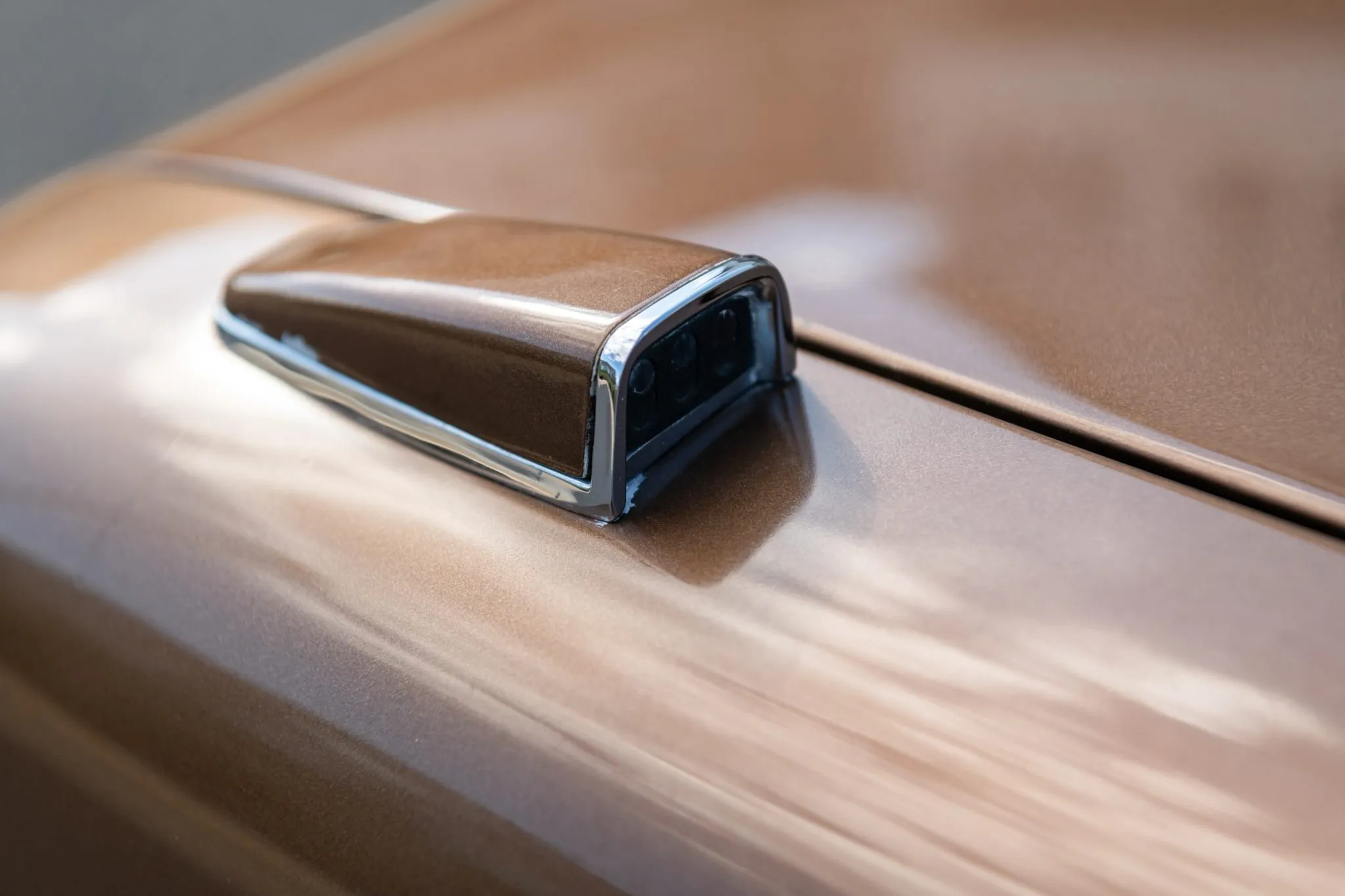
The original buyer also paid $48 for the U46 lamp monitor option, which the data book explained like this:
Mounted atop each front fender is a small unit housing three small, different-colored lenses. During operation, light is transmitted from the source to the color-keyed monitors through a fiber-optics system. The outer lens is amber when the parking lights are on and flashes when the turn signals are operating. The center lens is green when the headlamps are on low beam, and the inner lens is red when the headlamps are on high beam.
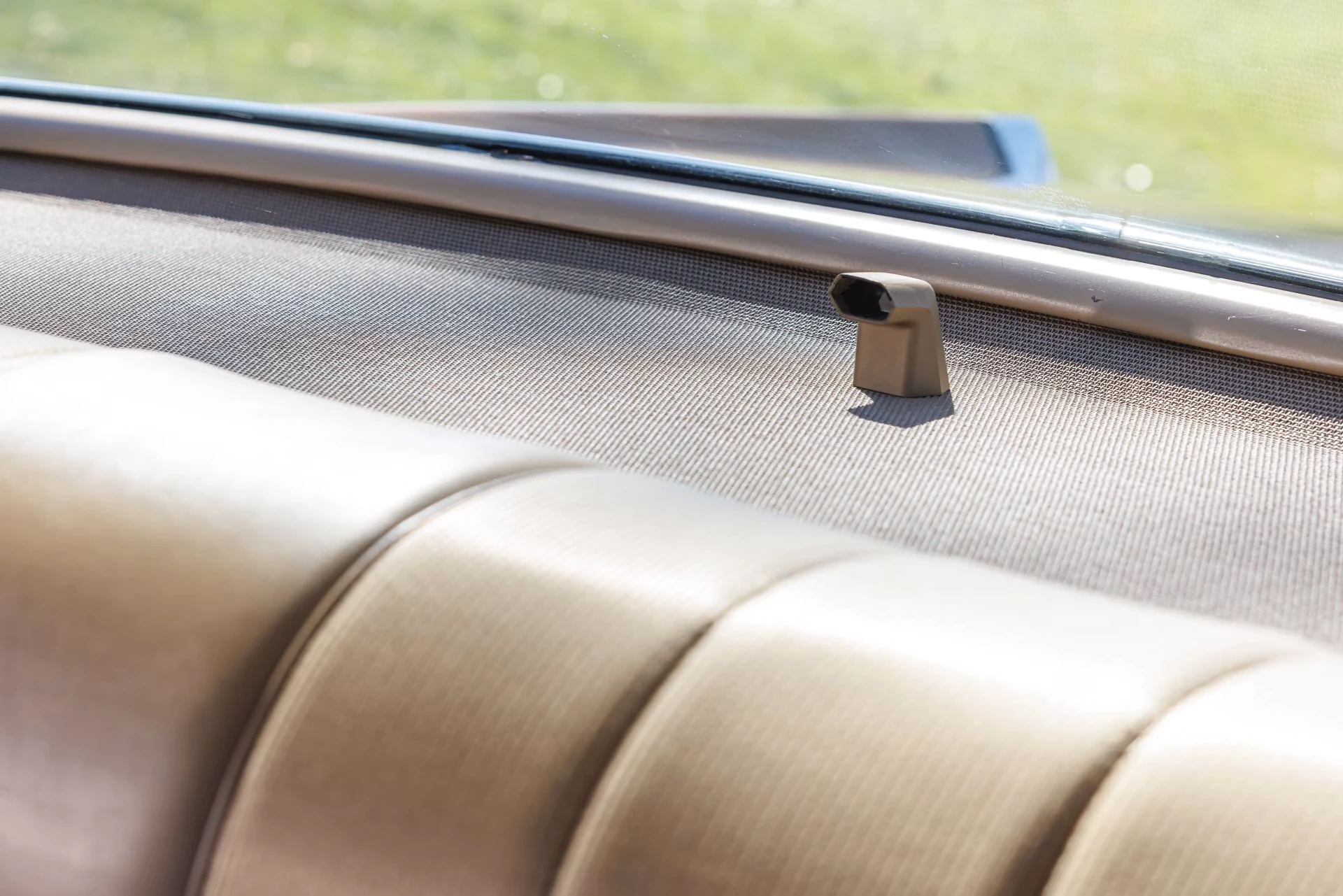
The description continued:
Equally beneficial is the monitoring of the rear lights, the function of the small unit positioned in the center of the rear package shelf. The two red lenses indicate tail light and stop light/turn signal light operation … readily visible to the driver when viewed through the inside rear view mirror.
This option also included a low windshield washer fluid warning lamp, which was the only part of the system in the dashboard. The lamp monitor indicators might be a nifty “surprise and delight” feature if they were standard, but I’m surprised that an apparently frugal Cadillac customer would order this gimmick on a Calais. (It was a standalone option, not part of the various option groups.)
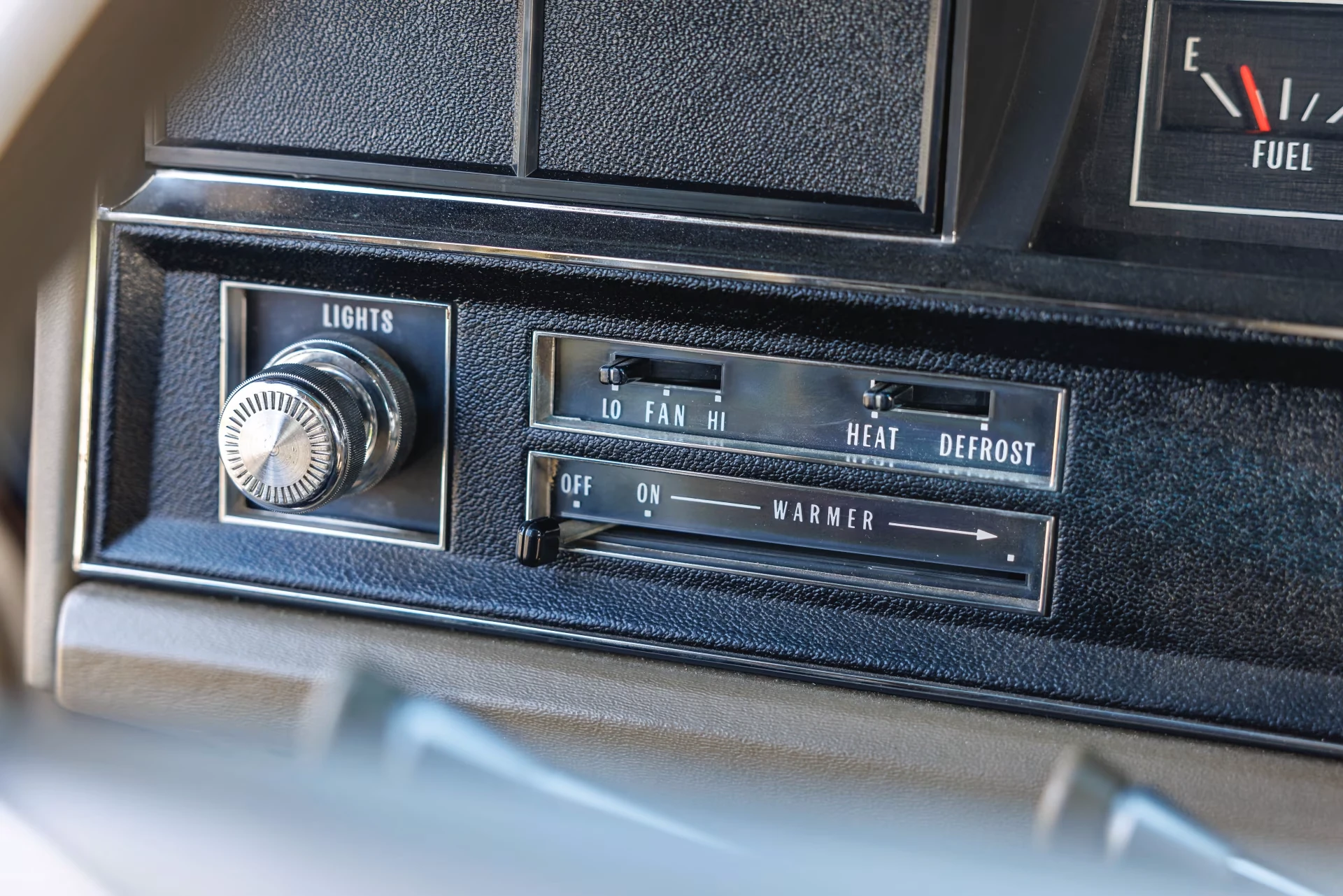
Not ordering air conditioning on a new Cadillac in 1972 qualified as very unusual, and perhaps downright stubborn. By this time, almost 70 percent of all new domestic cars had factory air, and automatic climate control was fitted to a whopping 99.6 percent of 1972 Cadillacs. Climate control was still a pricey $523 option on all but the Seventy-Five (where it was standard), but it was expected of cars in this class, so forgoing it would cost you a hefty chunk of resale value and make the Calais harder to sell on. Consequently, only 949 C-body Cadillacs and just 86 Eldorados were built without air conditioning this year.
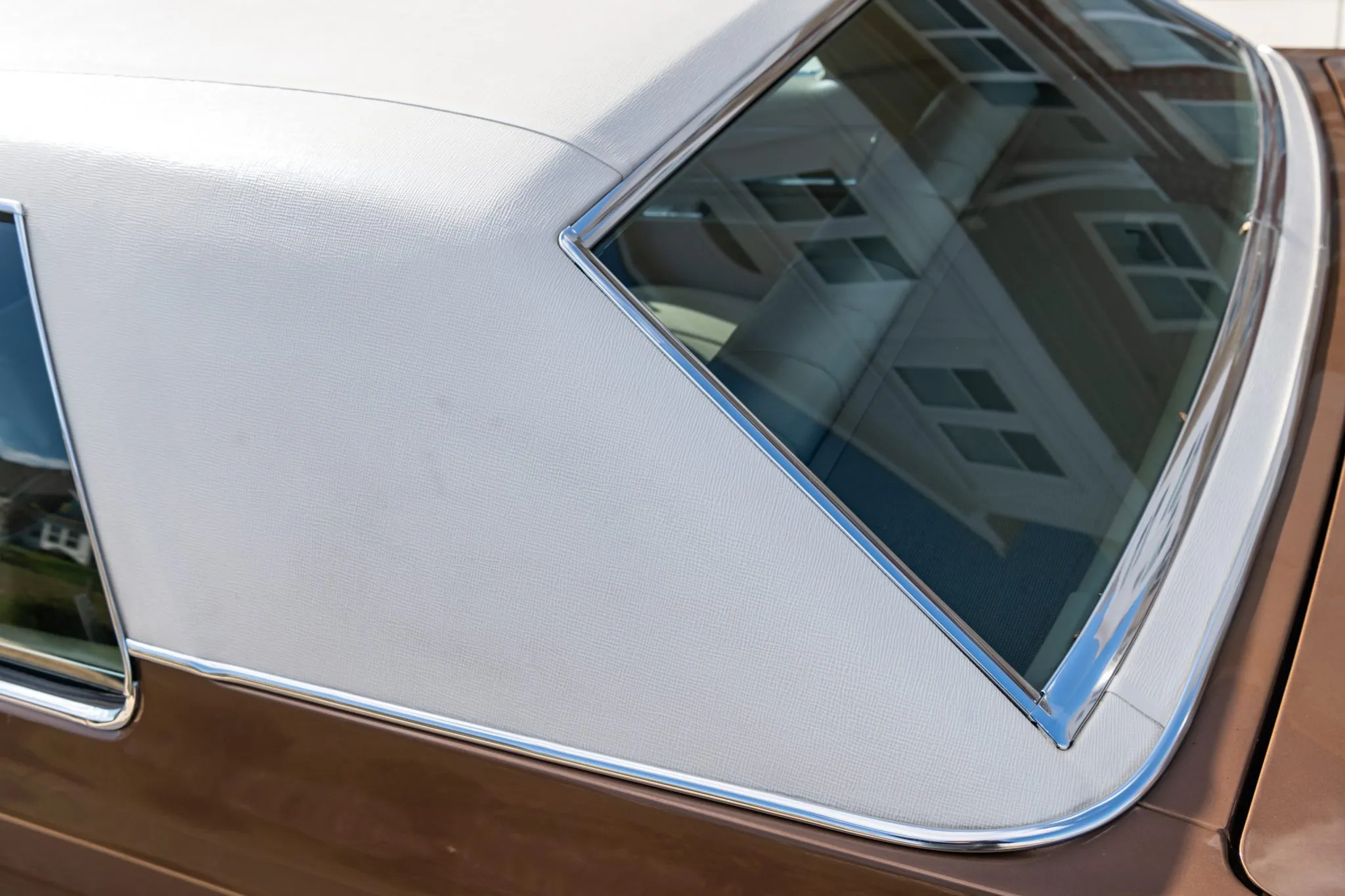
The most unusual option on this Calais, however, is the vinyl roof — not because it was unpopular (almost 9 out of 10 1972 Cadillacs had one), but because the dealer data book was emphatic that it wasn’t available on the Calais. This isn’t the only 1972 Calais I’ve seen with a vinyl top, but the Volo Cars and Bring a Trailer listings include the original window sticker, the dealer invoices, and the broadcast sheet, which all indicate that this car wasn’t built with a vinyl top. It was likely installed by the dealer service department after delivery. Although the roof vinyl on this Calais is the same “tuxedo grain” as the factory roof, you’ll notice that it extends all the way to the windshield and side window moldings and has a stainless steel molding along the lower edge.
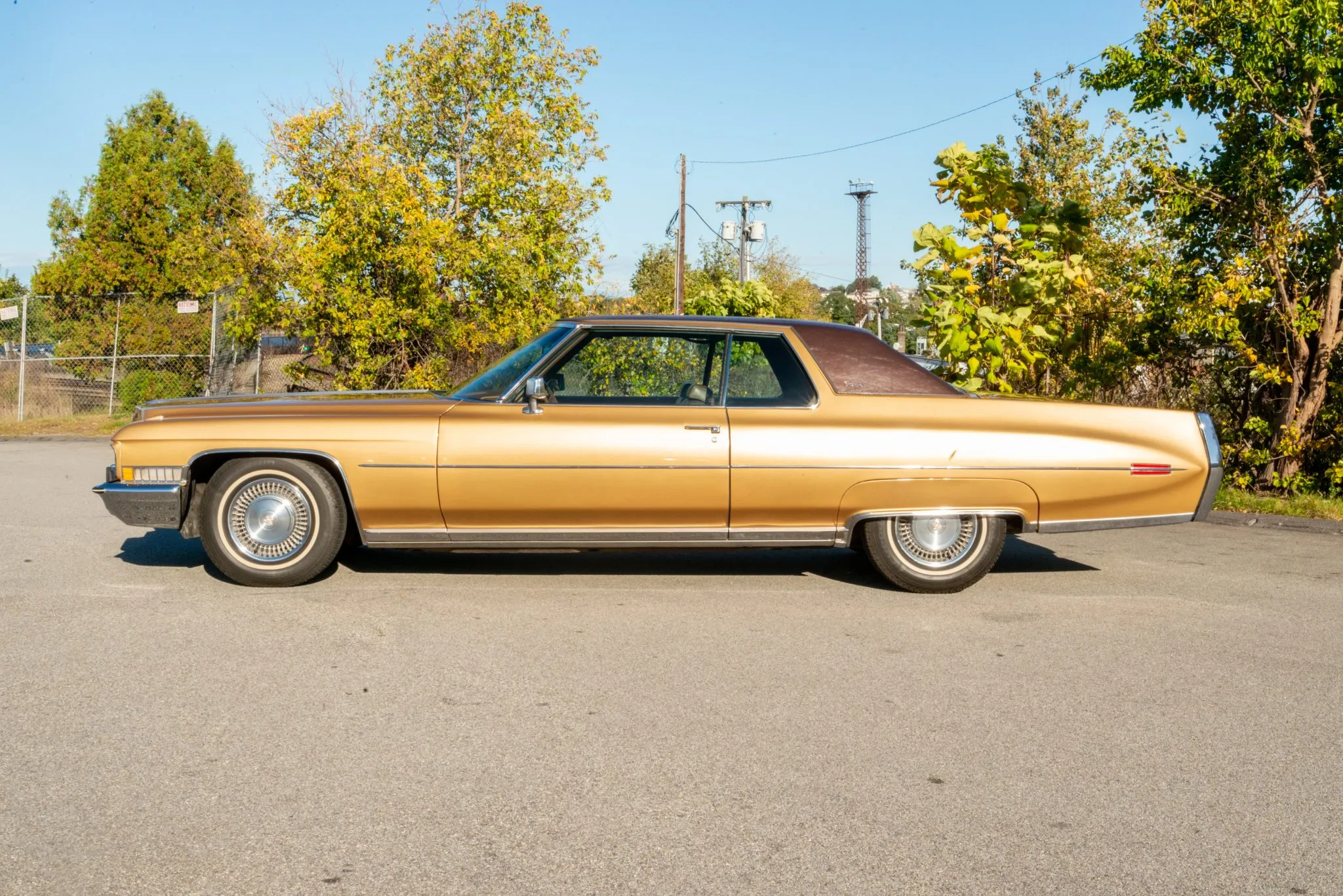
On a Coupe de Ville, the vinyl top (which was a $152 option) was of the “halo” type, with an area of exposed body color between the moldings and the roof. The vinyl covering on the De Ville also had a color-keyed lower edge molding rather than the bright stainless steel one on the Calais.
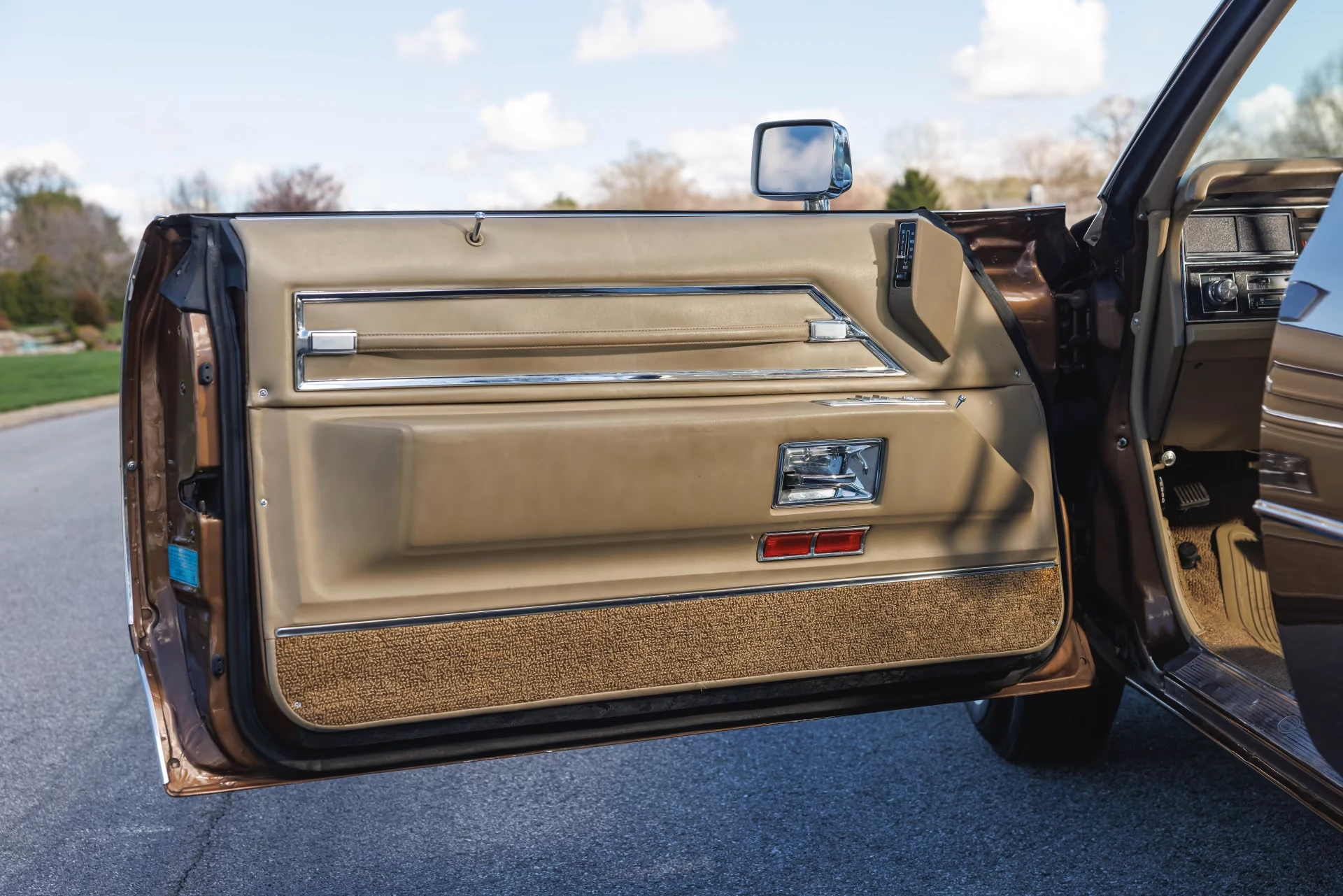
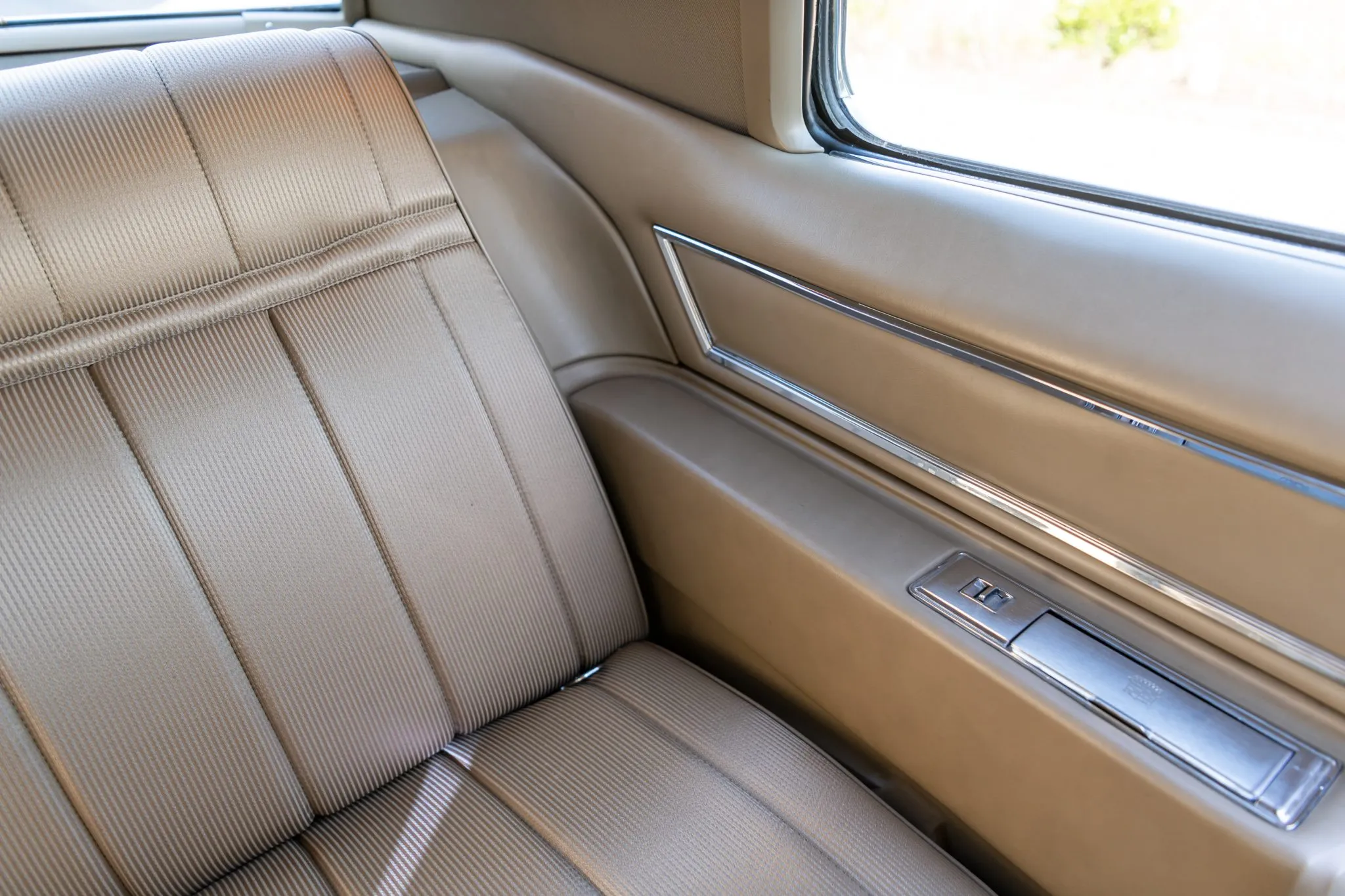
Otherwise, the Calais was much the same as the De Ville on the outside and under the skin, so the main area where it saved money was in the interior. There was no leather, even by special order, and no woodgrain trim except a thin band in the steering wheel rim. Power windows were standard on the Calais, just as on the more expensive models, but the Calais came with a manually adjusted bench seat; the De Ville came with a 2-way power adjuster, with 6-way power adjustment optional. More than 75 percent of Calais buyers ordered the 6-way power seat, which listed for $115, but this car doesn’t have that option.
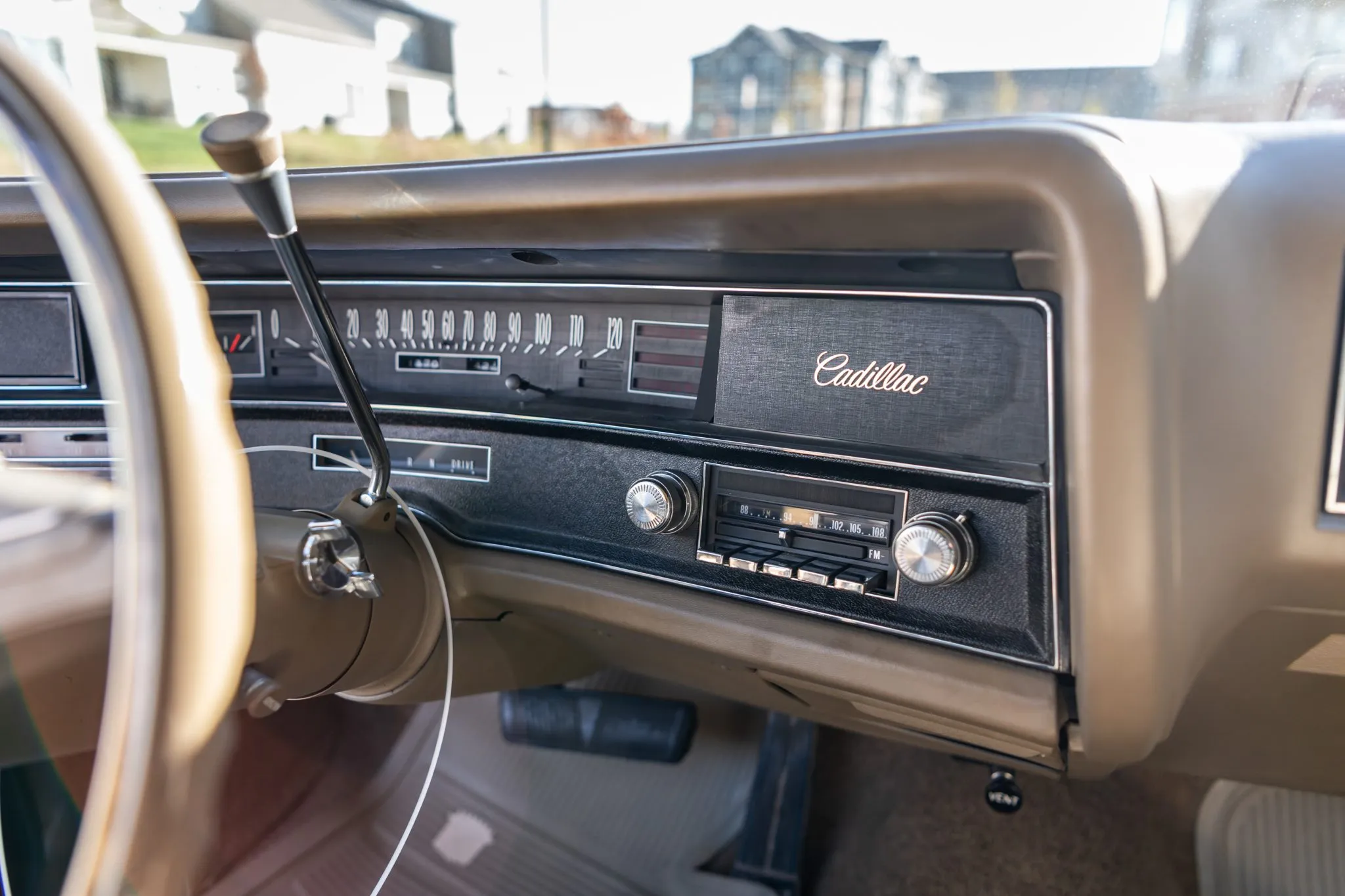
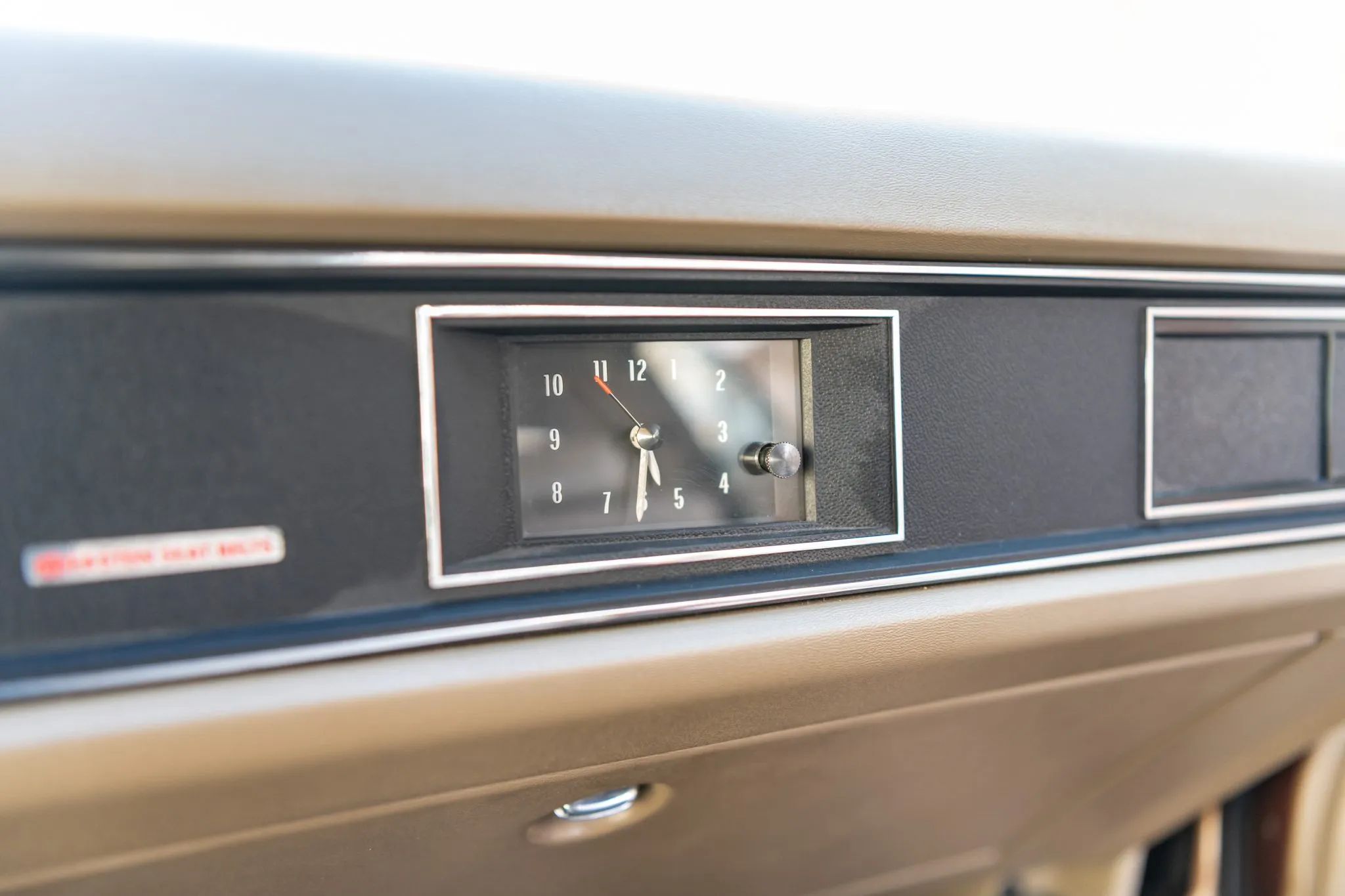
Depending on your tastes, the lack of plastic wood might have been a bonus, but the acres of matte black camera-finish plastic didn’t make the Calais feel particularly upscale, particularly with the blanking plates for the air conditioning vents and other missing options.
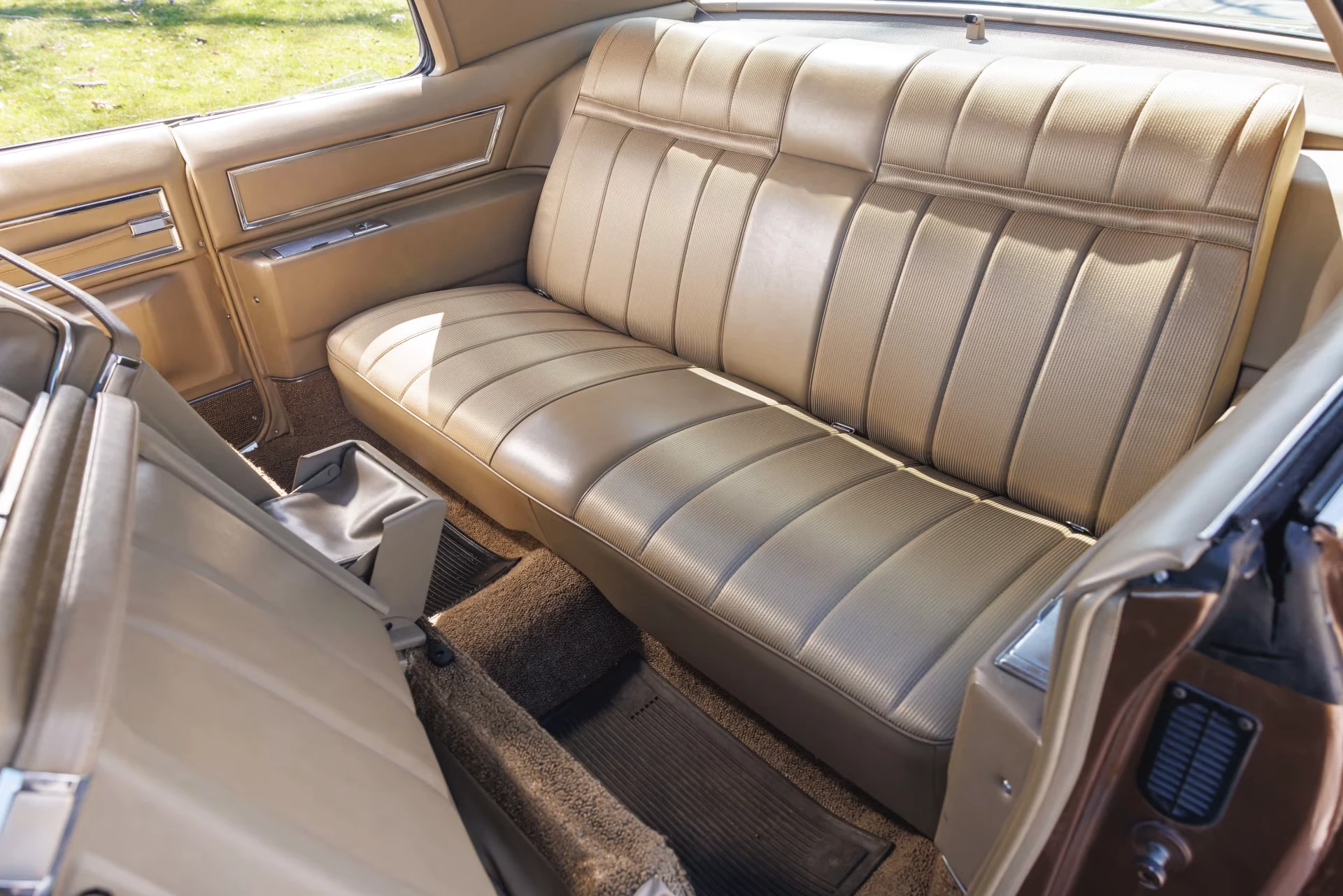
Back seat passengers in the Calais also did without the fold-down rear center armrest provided in the De Ville and Fleetwood Brougham.
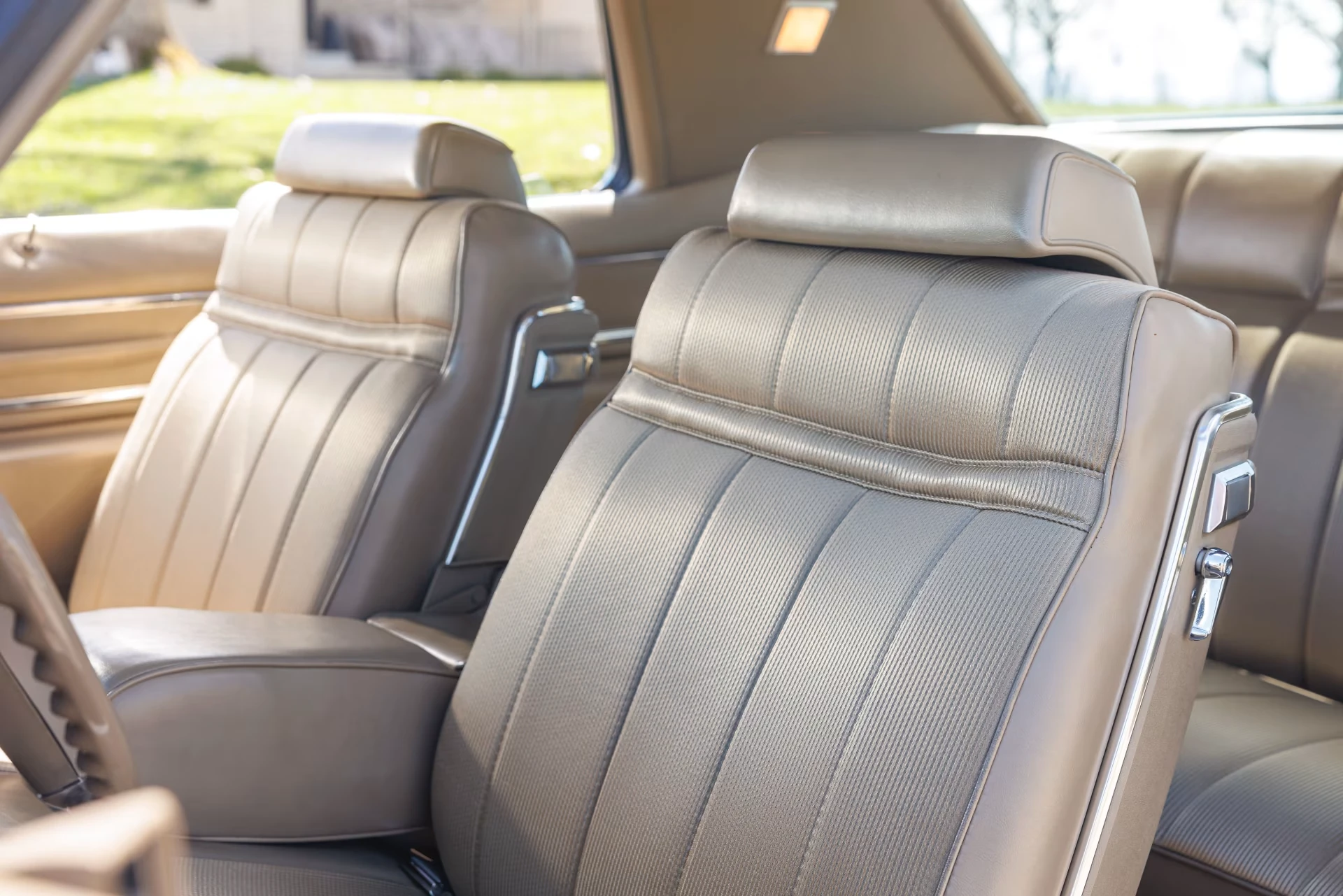
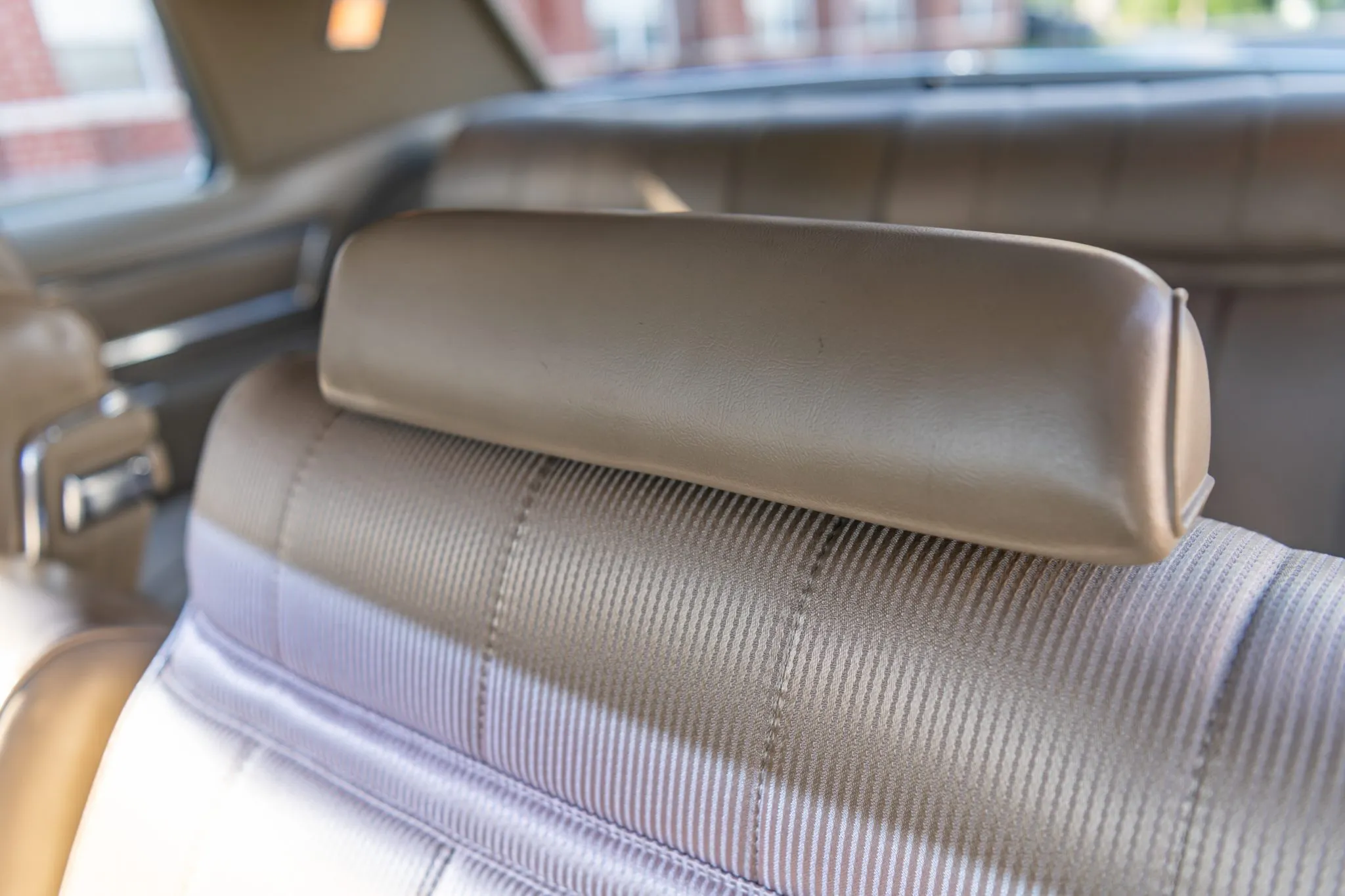
While the De Ville and Fleetwood cars offered several cloth upholstery options, the 1972 Calais offered only one, which Cadillac called Mayfair cloth. It seems reasonably tasteful, and less grim than the Calais cloth options in some previous years, but it too seems a bit downmarket for a $6,000 car. The Calais could also be ordered with expanded vinyl upholstery, but that was only available in two colors (Dark Saddle or black), and it cost $41 extra. (You’ll forgive me if I find the prospect of paying extra for all-black vinyl seats in a Cadillac too depressing to contemplate.)

Compare the Calais to the lusher interior of the somewhat cheaper Buick Electra 225 Custom with the Limited trim package …
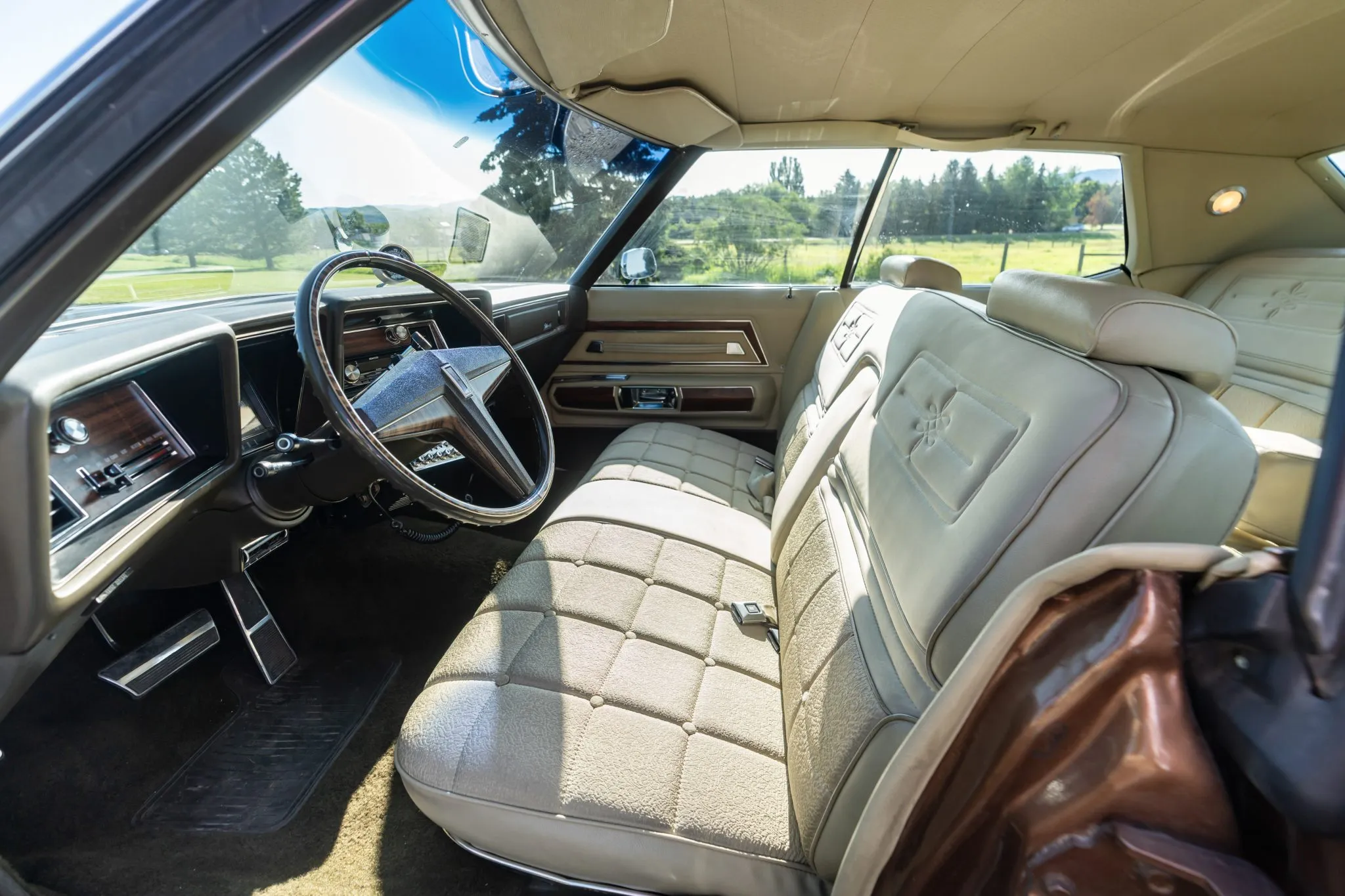
… or the Oldsmobile Ninety-Eight Luxury Sedan …
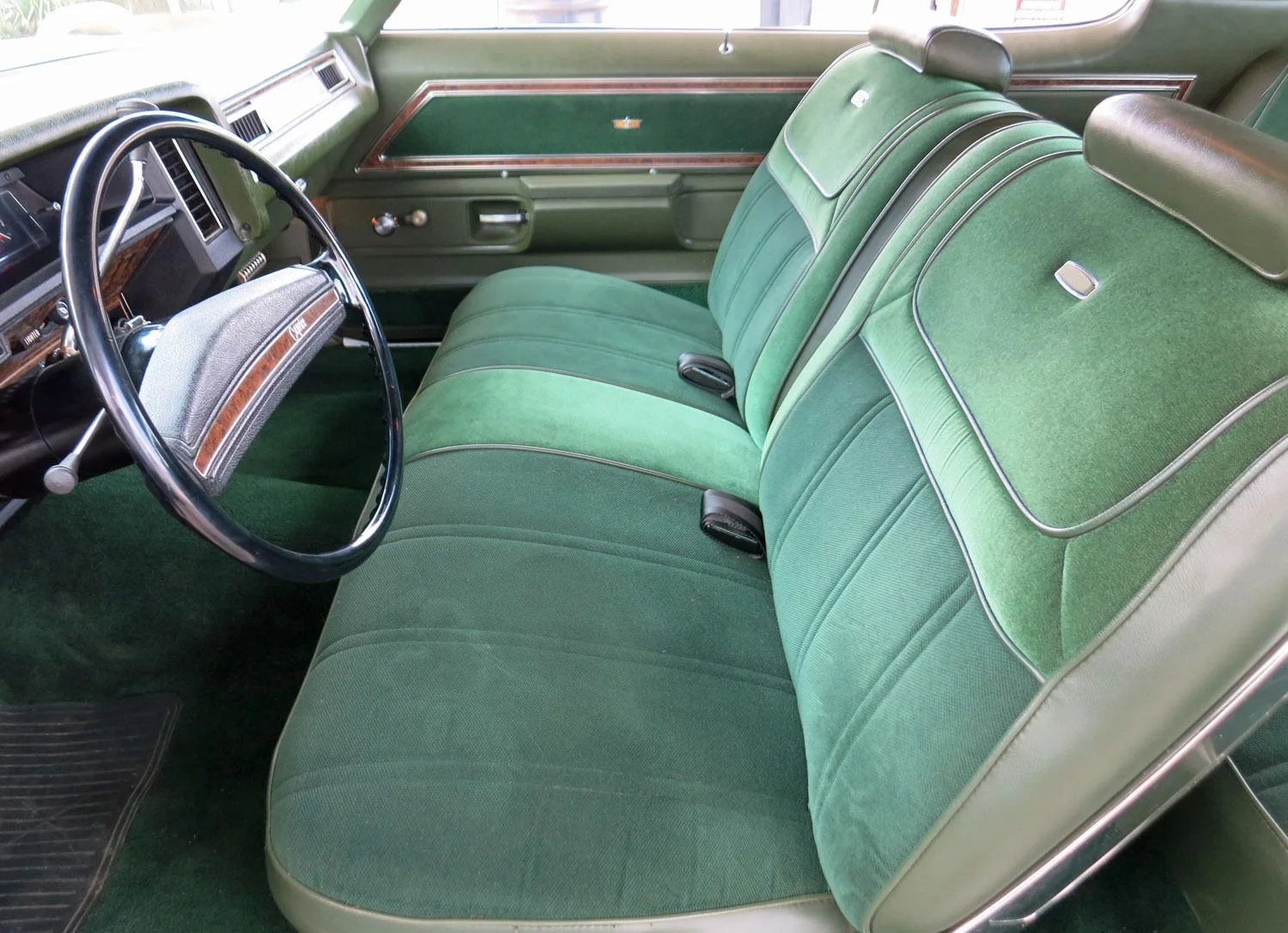
… or for that matter the Chevrolet Caprice, which listed for over $1,700 less than the Calais.
This trade-off was not inherently remarkable: Detroit had long offered buyers the choice between plusher versions of low- or mid-priced marques and plainer editions of the fancier brands. It all came down to priorities — whether you were more concerned with impressing your passengers or impressing your neighbors and acquaintances. A Chevrolet Caprice had to sell itself to buyers, to justify its price premium over an Impala; for just $7 more a month, look at all the luxury you could get! For the Calais, the selling point was first, last, and always the Cadillac badge and the status it conveyed. People passing by on the street would see the brand, not the blanking plates, or at least that was the theory.
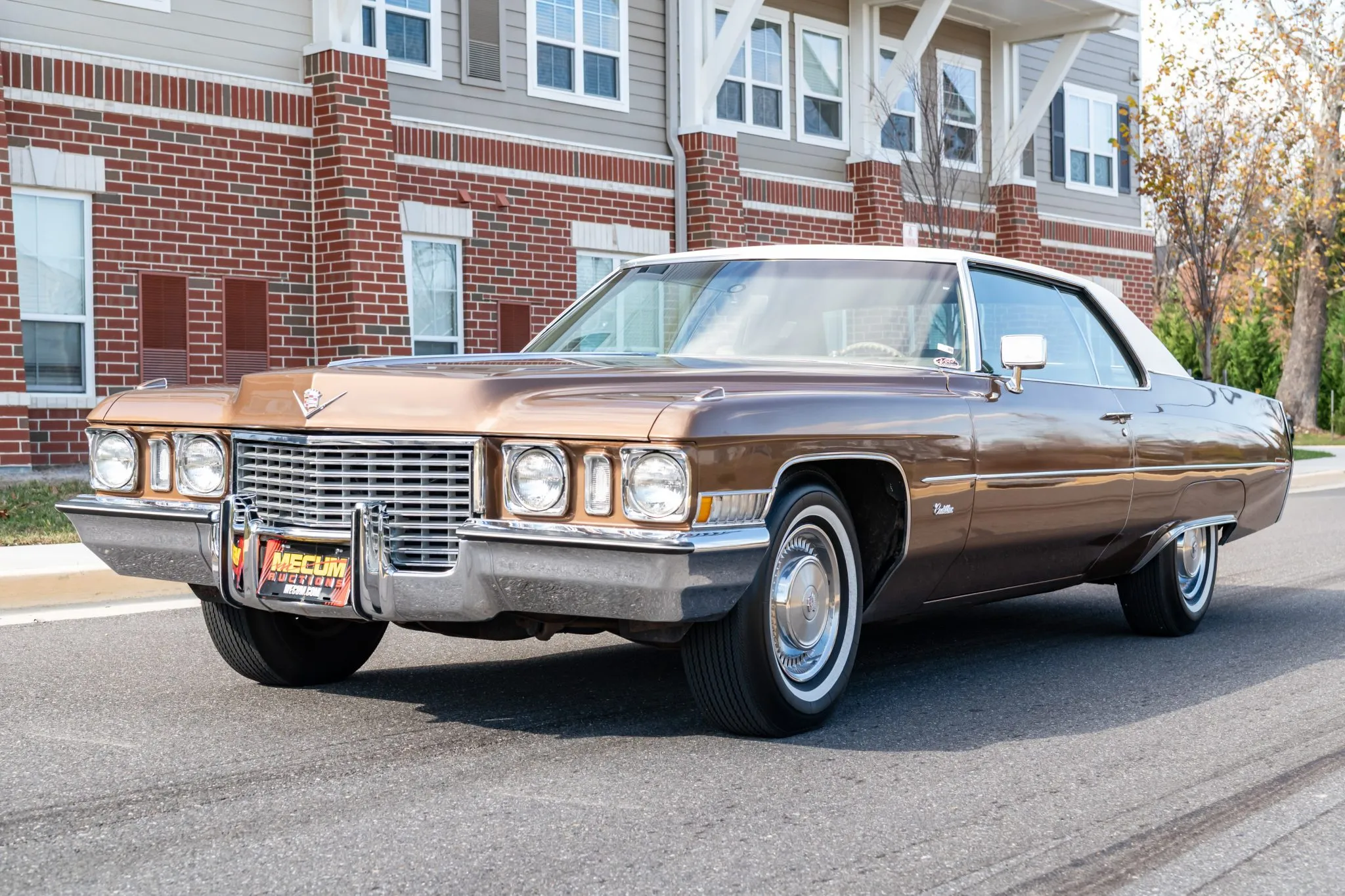
Looking at this Calais, I can’t see much reason to choose it over cheaper GM big cars of its time other than the Cadillac badge. This wasn’t a bad car of its type, but it was no longer an exceptional one in any particular way, and its appointments and quality were more comparable to cars selling for 25 to 30 percent less. A decently equipped Ninety-Eight Luxury Coupe or Electra 225 Limited could you cost a bit more than a lightly optioned Calais like this one, but more of that money went into features and trim, rather than just disappearing into GM’s corporate coffers. If you just had to have a Cadillac, a year-old Coupe de Ville would have the same snob appeal for hundreds of dollars less. Cadillac buyers apparently concluded the same thing, and mostly ignored the Calais.
However, I think the mere existence of the Calais was nonetheless an anchor on the rest of the line, dragging it down into more plebeian territory. I’m not talking about any intangible quality of brand equity, but rather the economics of mass-production cars. If you intend to mass-produce both cheaper and more expensive iterations of the same basic product, you’ll make more money on both if you focus on maximizing the profitability of the cheaper version. It’s easier to add content than to take it out, and if you know you can make good money on the cheapest model, it’s easier to tailor the higher-priced version to be all the more lucrative.
At GM in the 1970s, there was a push from on high to increase profit margins. According to John DeLorean (in On a Clear Day You Can See General Motors), even at Chevrolet, this resulted in significantly reduced quality “in highly visible areas such as the interior appointments.” Senior management was also pushing what DeLorean called “a massive campaign” of standardization of parts across divisions, greatly reducing the previously substantial differences in production costs between brands and between models. This made some sense from a production standpoint, but it meant that more and more pieces were taking on a generic GM corporate look and feel.
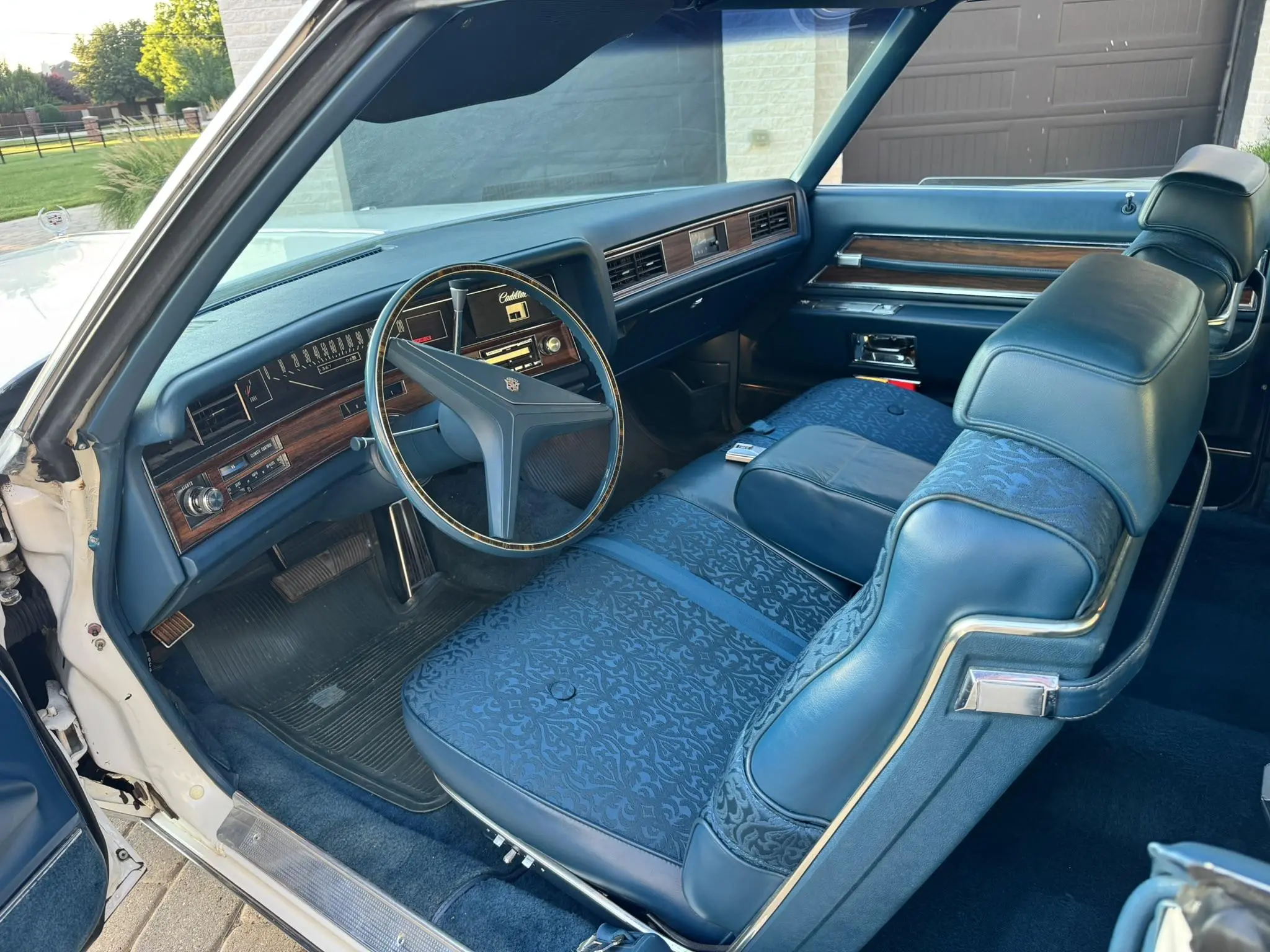
For Cadillac, the issue was not that the Calais interior wasn’t as nice as the interior of the De Ville — it was that the De Ville wasn’t no longer that much nicer. The De Ville had a little more brightwork, the cloth upholstery choices were flashier and more rococo, there were some scattered bits of leather trim, and you could spend extra for leather upholstery and the obligatory vinyl top. However, that was about it, other than the 2-way power fore-aft seat adjustment, to which Cadillac assigned a resale value of $26. (The Coupe de Ville pictured above has the 6-way power seat, which was $89 extra on a De Ville.)
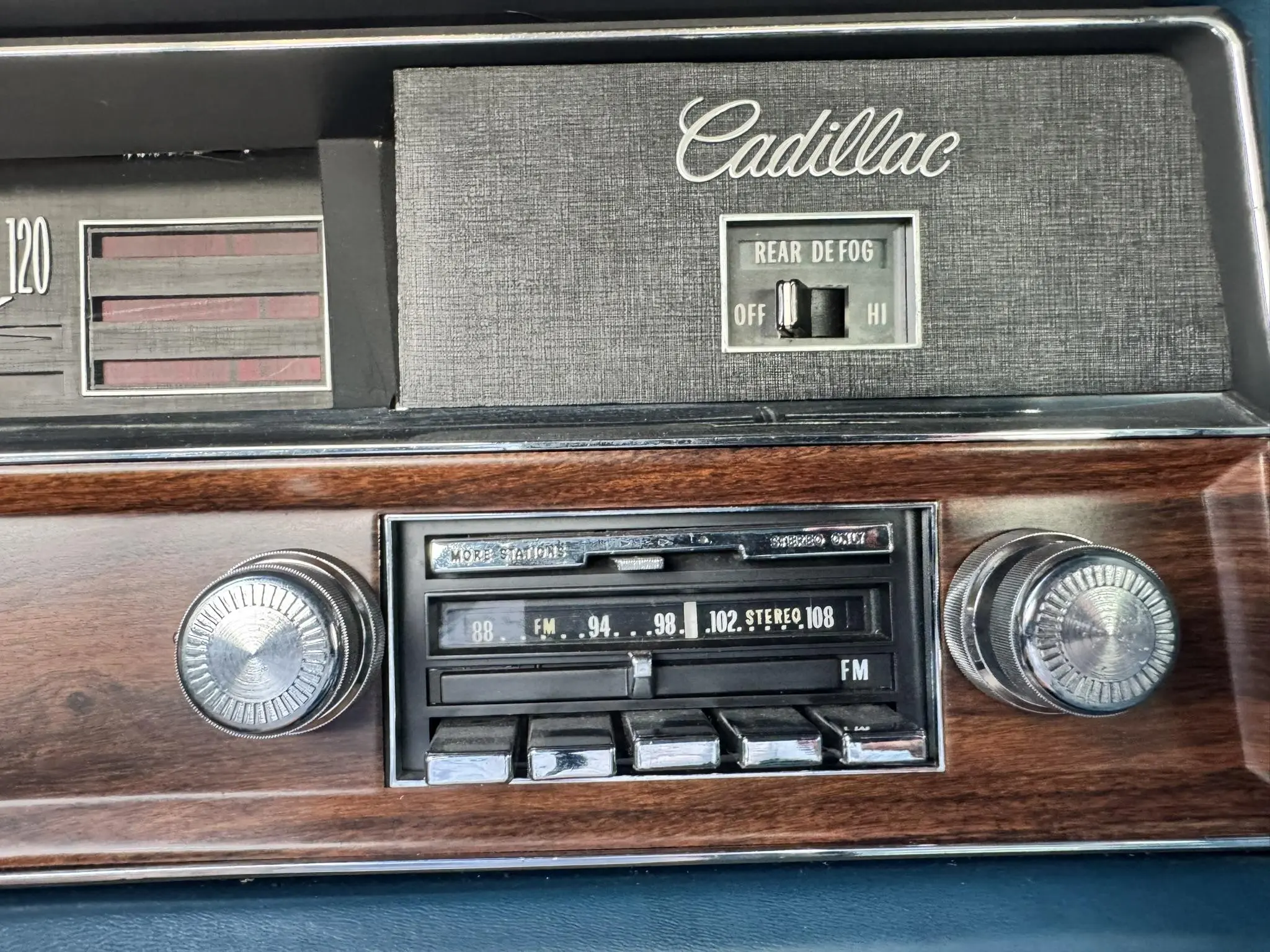
Much of the molded plastic on the De Ville dashboard was woodgrain rather than matte black, but it was still obviously molded plastic, and it would have just as many blanking plates as the Calais if you didn’t order close to a thousand dollars worth of options. Features like automatic climate control, power locks, and cruise control were extra-cost options on the De Ville, just as they were on the Calais.
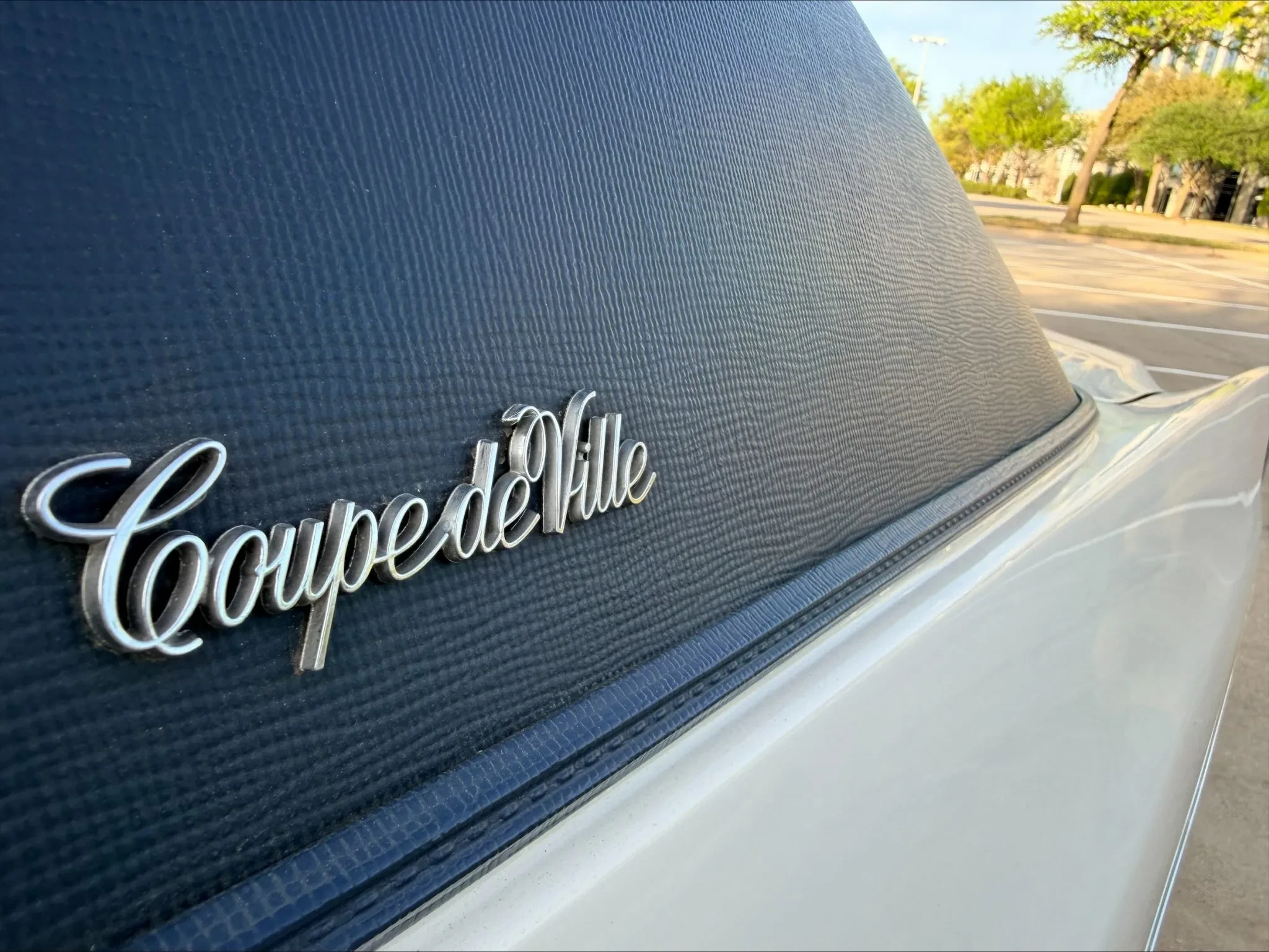
Compared to the Calais Coupe, a 1972 Coupe de Ville cost the retail customer an extra $397 and the dealer an extra $301, but its additional value was felt more strongly on the division’s balance sheet than in the showroom or on the road.
For the moment, it didn’t matter much. A lot of people wanted a new Cadillac in the early ’70s; Cadillac now had the production capacity to serve all comers, and buyers didn’t seem to mind that those cars now offered more symbolism than substance. That Cadillac customers mostly shunned the Calais (which was finally dropped after 1976) wasn’t because the interior was less plush than a Caprice, but because having Calais badge on a Cadillac seemed too much like going to a fancy restaurant and handing the waiter a coupon. The last thing class-conscious people want is to be seen as cheapskates, whether they actually have money or not.
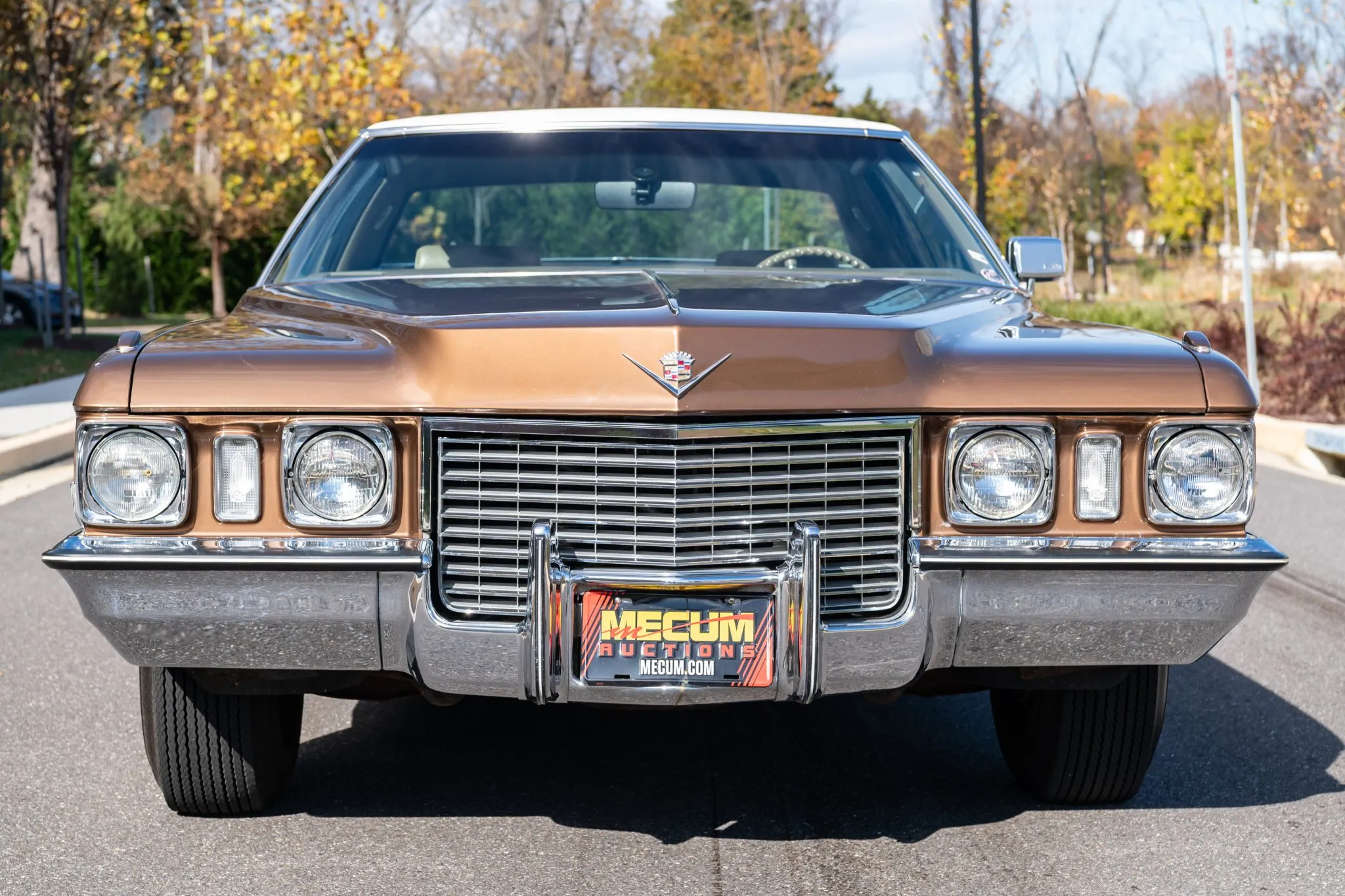
This particular Calais probably has an unusual backstory that has remained untold in its various appearances at the major auto auction houses. It showed up at Volo Cars a few years ago, with only 11,008 miles on the odometer and still in clean, apparently mostly original condition (save for the vinyl top, which Volo Cars mistakenly believed was a factory item). The car then showed up at Mecum Indy 2024, now with 13,251 miles, and sold for $19,250. The buyer then decided to sell it on Bring a Trailer in November 2025, due to what sounded like health reasons; the car still had fewer than 14,000 miles. For whatever reason, they neglected to set a reserve, so the car finally sold for only $8,700, less than half what they’d paid for it the year before.
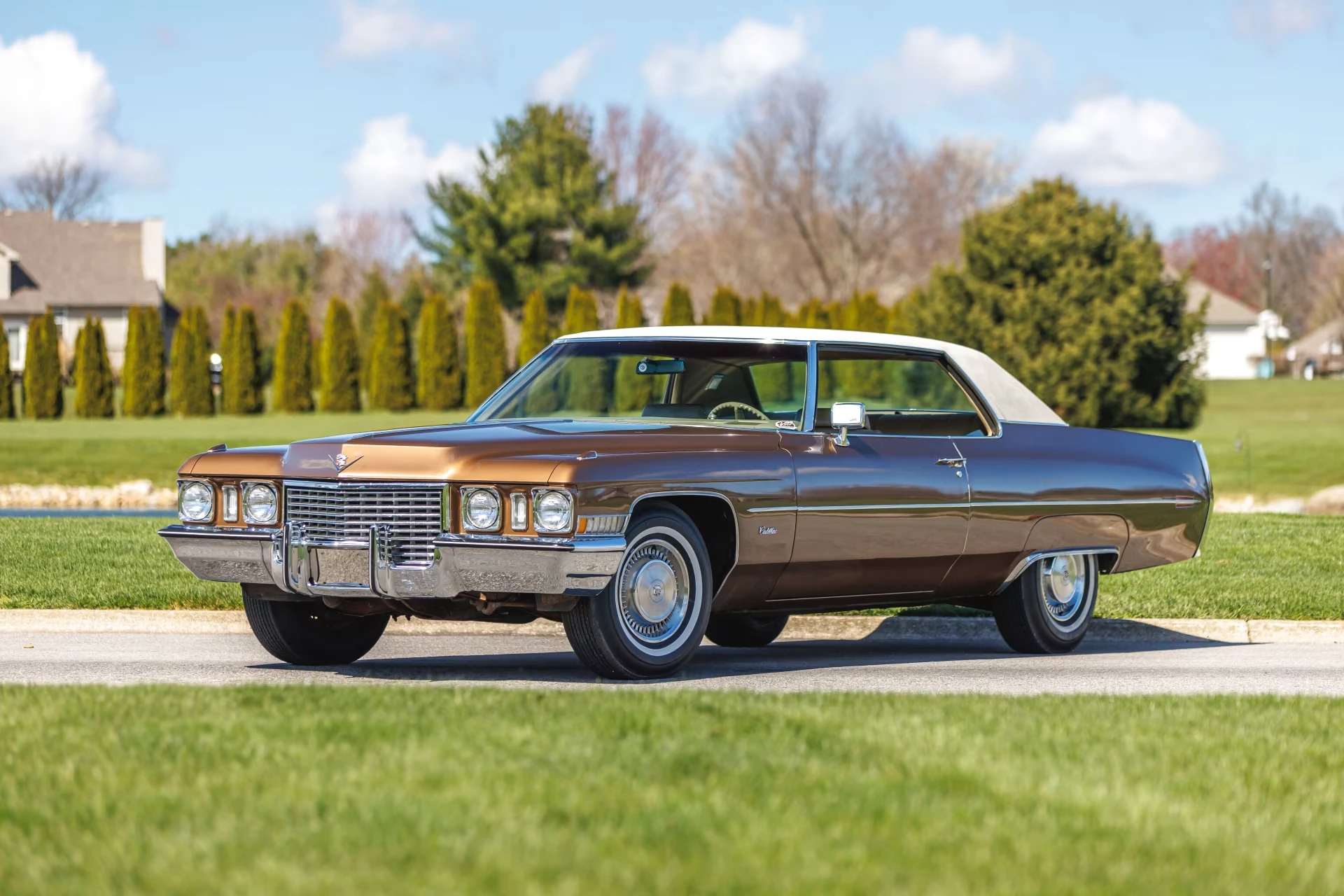
The previous owner speculated that the original purchaser of this car didn’t use it as a daily driver, “but for the prestige of Sunday driving.” Despite its limited options, the Calais drove like any other Cadillac, and, especially with the vinyl top, only an experienced Cadillac spotter could have distinguished it from a De Ville at distances of 40 feet or more. Give it a “B” for snob appeal and a “C+” for comfort and luxury, especially in a sticky Midwestern summer.
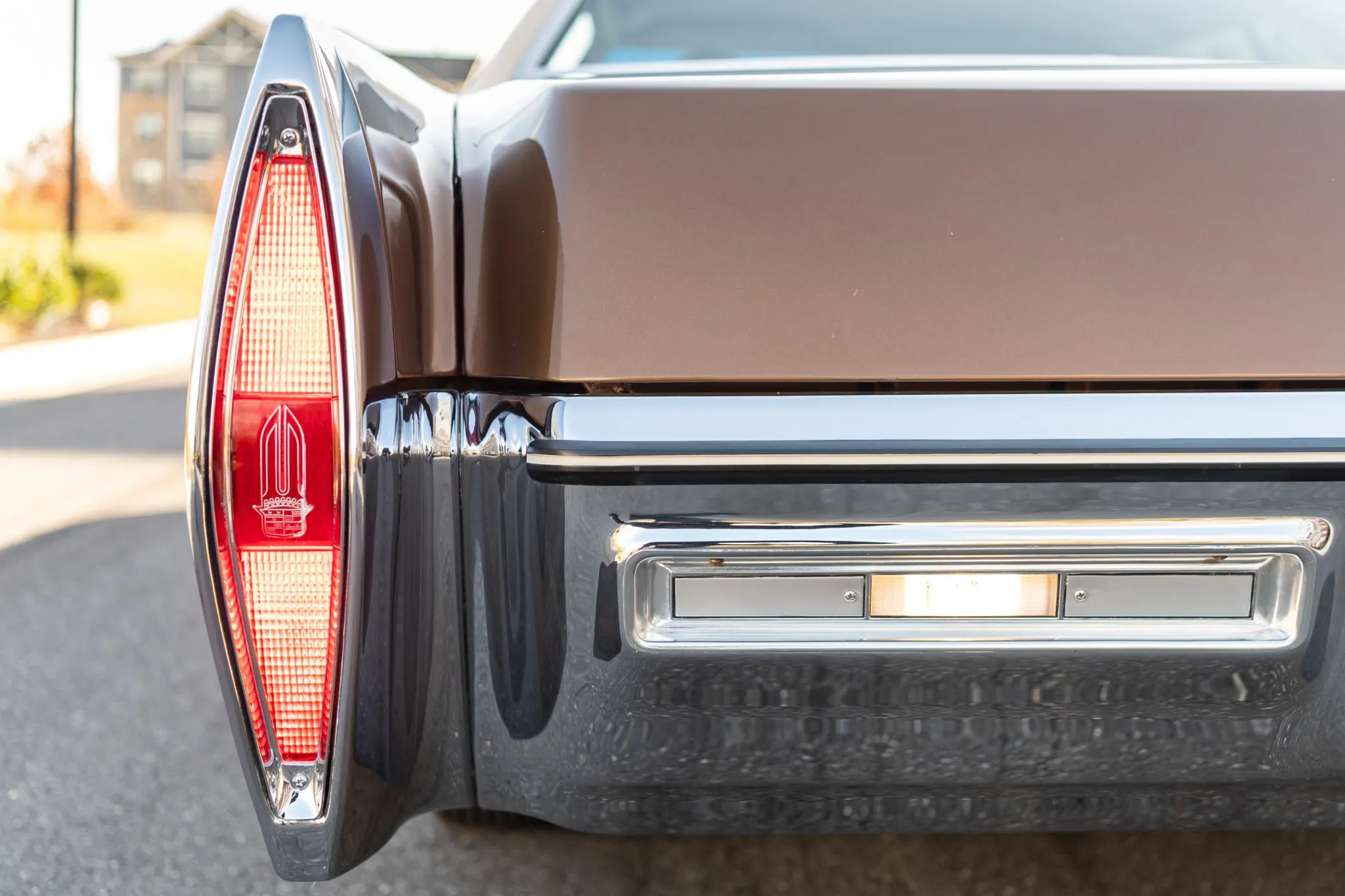
It would be another decade or so before it really became painfully apparent that Cadillac had cashed in more of its former prestige than it could afford, leaving the brand an increasingly tatty and sometimes cynical monument to past glories. Cadillac eventually managed to alienate even some of its loyalest returning customers, but the bigger problem came when those buyers began to age out of new car ownership, leaving Cadillac faced with younger generations for whom the badge meant a lot less than it had for their parents and grandparents. However, the rot had set in much earlier than that, as Cadillac had begun to test the limits of how little it could offer while still asking Cadillac money.
Related Reading
1968 And 1969 Cadillac Coupe De Ville: Were These The Tipping Point For Cadillac Quality And Style? (by me)
1970 Cadillac Calais Coupe: The Least Expensive (But Rarely Chosen) Way To Become A New Cadillac Owner (by Aaron65)
Vintage MT Comparison: 1971 Cadillac DeVille versus 1971 Chevy Caprice – Rise of the Chevrollac (by GN)
1972 Oldsmobile Ninety-Eight Luxury Sedan: A Full-Size Luxury Bargain From Big Sky Country (by me)























The sand-colored interior of this Calais is compelling in its simplicity. My second choice would be the green interior of the Chevy.
The oriental-inspired fabrics in the Buick and the Olds are, in their kitschiness, downright nauseating.
Sometimes less is more.
Especially given the price difference new, $1700, wasn’t far off the price of a VW Beetle. You could pretty much have a second new car for the differnce between a Caprice and a Calais.
Cadillac in its “Big Chevy” era…
Aaron this is indeed a rare one. Maybe it was sold new on the shores of Lake Superior or some other place with moderate summer temperatures. Yet as you say back then there were people who purchased cars to impress on Sunday mornings. It had to have been custom ordered, I don’t think a dealer would stock that.
Yes I would have purchased a Caprice, good enough.
I grew up on a dairy farm within walking distance to Volo Cars. In the sixties the barn housed an antique store, then in the seventies the front of the barn sold discount stereos and electronics, I bought an Audiovox 8-track there. The owner had a car collection and opened the auto museum in the seventies.
I think the Cadillac Calais should’ve been sold for fleet/rental car use only in the 1971-1976 generation. For retail buyers, the premium for a Coupe/Sedan de Ville clearly wasn’t that hard to digest for most folks.
It always seemed hard to justify buying this car new when the top-spec sedans at GM’s other divisions could do much the same job. I would’ve bought a decently loaded Oldsmobile 98 or Buick Electra when given the choice over a barebones Cadillac.
Speaking of that, I wonder how much the price differential was when the Calais was optioned to a typical deVille level? I see the Calais was dropped around the time the Seville arrived. Also, just curious. At a time when air conditioning and power seats were built in, at least at Cadillac would this be a hassle on the assembly line? Sort of a reverse special order?
1972 was in the middle of a “mini Ice Age”, a period of global cooling that some scientists predicted would lead to a greater period of global cooling. That did not happen…
In the Pacific Northwest, almost nobody had ac in their houses until in the last couple of decades.This was certainly the case too here in Eugene; when we moved here the summers were wonderfully pleasant with quite cool nights. One just opened the windows at night to cool the house off. Sadly, that’s all in the past.
I can just see the buyer of this car: an older guy and a military vet who came of age in Cadillac’s golden era and still held it in high regard. And he thought ac was for namby-pambies. But he wanted Positraction for the snow! And I guess he was taken by the light monitoring thingy. And quite likely he had a heart attack or such not long after he got it and his widow stashed it in the garage for a long sleep.
The no-a/c was a definite oddity, certainly by 1972, even in the upper midwest. But like PN notes, there were some crusty old folks who insisted that “we’ve never had air conditioning before and we don’t need it now.” I wonder if the first owner had second thoughts after experiencing GM’s ventilation system that eliminated a fresh air path which bypassed the heater system (and which let heat soak into “vent” air).
Dealers loved their vinyl tops in the 70s. A friend’s father traded a slick-roof 72 Chrysler Newport 2 door in 1976. A week or so later he reported seeing his old car on the Dealer’s used car lot. The sleek black car was now wearing a white vinyl roof. It was not an improvement.
So weird that Cadillac didnt make a/c standard by then. It probably was standard a couple years later, Ive never seen a 77+ Deville without it. I guess if you lived in Maine or up in Quebec you could legit say you didnt need it. It would still get hotter than hell for 2 or 3 months up in Wisconsin or Chicagoland most summers.
From about 1981-1984 we had a bank repo 1967 Calais 4 door, with the vertically stacked headlights. Rusty white, with solid black vinyl interior. Acres of black like you say. I was age 5-7 and thought it might have been leather since it was a Cadillac, but to me there was little difference between the two. Both burned you in the summer and froze you in the winter. Cloth, especially velour, was the real luxury.
It did have working AC. My dad used to lock the windows so we didn’t “let the AC out and waste it”. Therefore for the longest time I thought Freon was a consumable like washer fluid. The little vent window was the only thing that saved me from being carsick from their smoking. So it was just as well that we never had another vehicle with working or available AC for another 10 years, and that was my mom’s S10 truck which I rarely rode in. To this day I don’t use it and don’t like it, I need outside air. Still in northwest lower Michigan.
Thank you for the write up on the fender mounted light monitors. I had no idea they were fiber optic, but it makes sense for sure indication. I had gathered that fiber optics was some newfangled technology of the 90s. I was fascinated with all types of car lighting, and little me would play with the lights until I killed the battery. Though I only remember the amber monitors on our Calais. After some additional reading, I see that it’s possible that headlight replacement could have made their monitors non functional. I remember my folks talk about headlight problems and not being able to drive at night. I used to always watch the indicators on the back wall of the school bus too, the whole fleet was from the 70s. I’m guessing those were fiber optic as well. A new rabbit hole to explore.
“… velour—that was the real luxury.”
Finally, someone who dares to say it.
And what’s more: nothing has changed in that regard to this day.
Had one velour car, a 78 or 79 AMC Concord. Spilled a jello mold on the seat and we were never able to get that stain out.
This car was a steal for someone at $8700 that recently, the condition is magnificent even if by then they were just bigger Chevys. At least the excellent 472/THM400 was still present.
Thanks to neighbor its and friends I had a lot of experience with ’59, ’61, ’64, ’66, ’68, ’70, and ’72 Cadillacs, and owned myself a ’75 Sedan deVille bought expressly for a family trip across country and back. Up to the ’66 they were still The Standard of the World. The ’68 very slightly less so, the ’70 slipped more, the ’72 was an awful jiggly mess, the ’75 improved but the 500 was weakened due to smog control. Too bad the beancounters ruined what had been the standard bearer for American luxury. And I did like those sometimes over-ornate brocades, nice to sit on and much easier to keep clean compared to velour!