
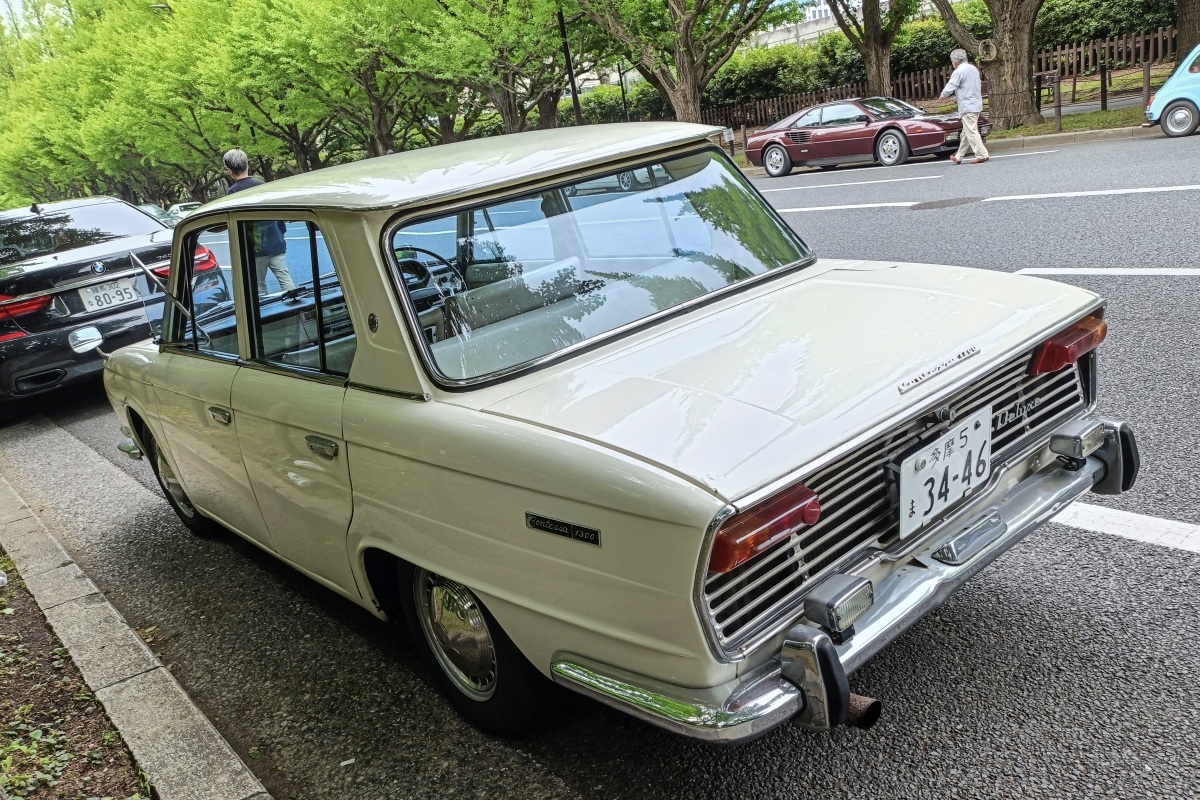
It’s easy to call the Hino Contessa Japan’s VW Type 3 or Japan’s Corvair, but we should be more accurate with our similes at CC. This is Japan’s Renault 8/10, really. The Corvair and VW had air-cooled boxer engines, whereas we have a good old water-cooled straight-4 on our hands here. And the boxiness of the design feels a little closer to the French car, anyway.
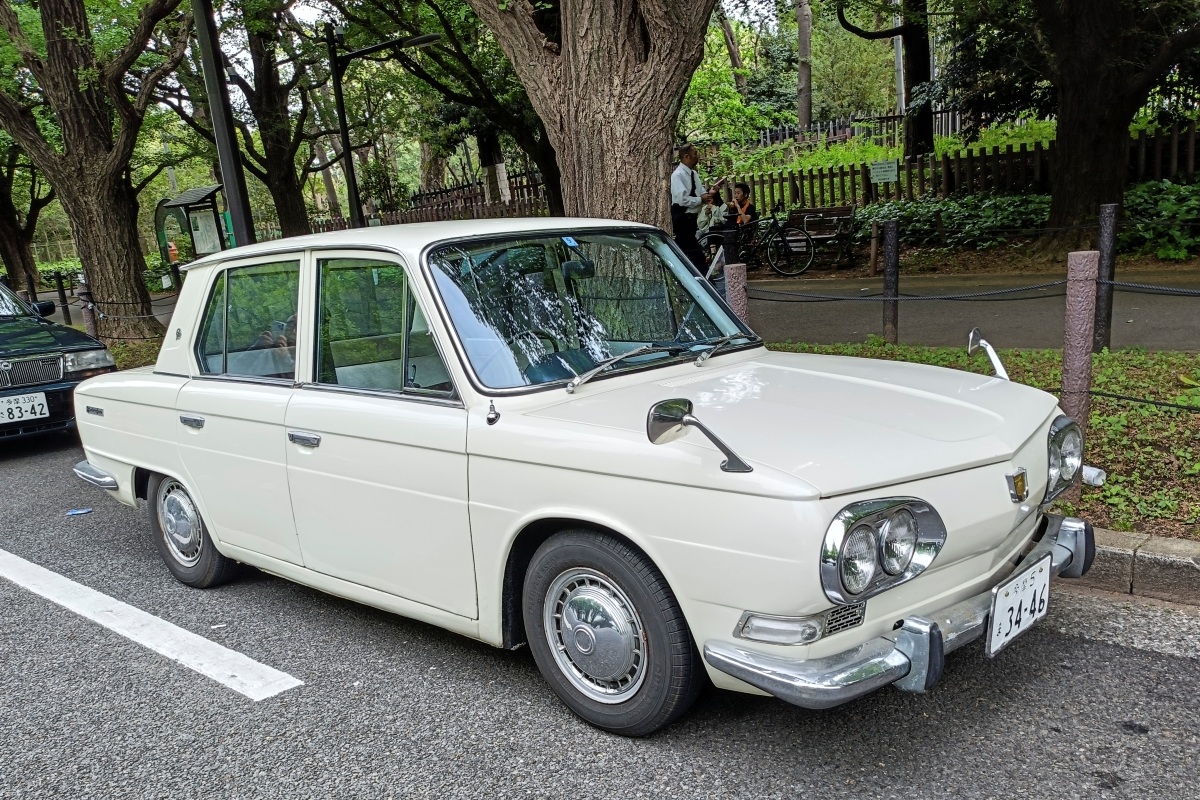
To add another layer, Hino got their short stint in the carmaking business by assembling Renault 4CVs. The family resemblance is not merely skin-deep, this Contessa is an alternate universe rear-engined Renault in every way. Much prettier than its French cousins too, thanks to a dash of Italian style.
It was all for nought, in the end: the powers that be, also known as the Ministry for International Trade and Industry, decided that the country had too many carmakers and persuaded Hino to get hitched to Toyota. The truck side would survive at the expense of the cars. But we’re getting ahead of ourselves.
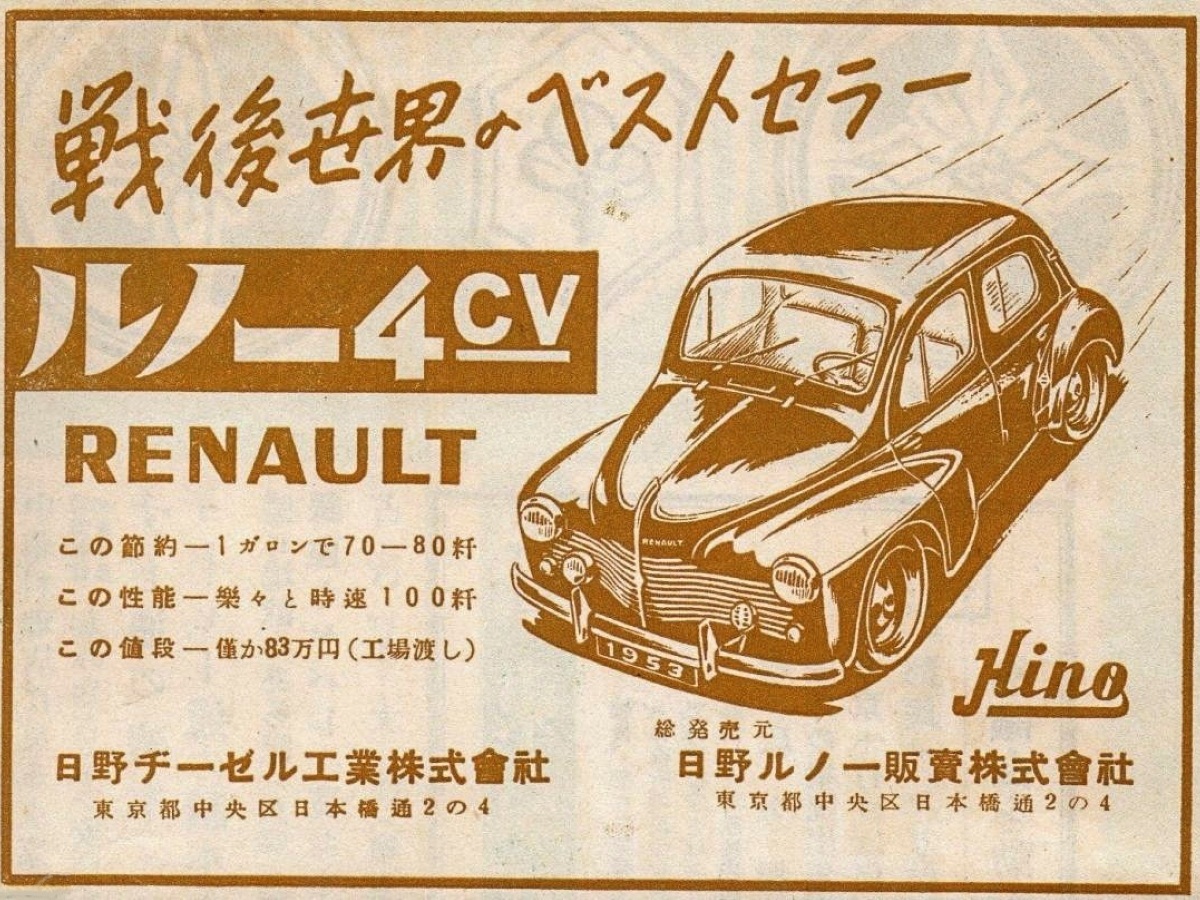
Tokyo-based Hino Motors emerged in 1945 from the chaos of the war and soon became one of the country’s leading truck and bus makers. Like Isuzu and Nissan, Hino figured that the most cost-effective way to get into the carmaking business was to license a foreign design – in Hino’s case, this turned out to be the small rear-engined Renault 4CV. The first CKD kits were shipped over in 1953; by 1958, Hino were producing a majority of the car’s parts in-house.
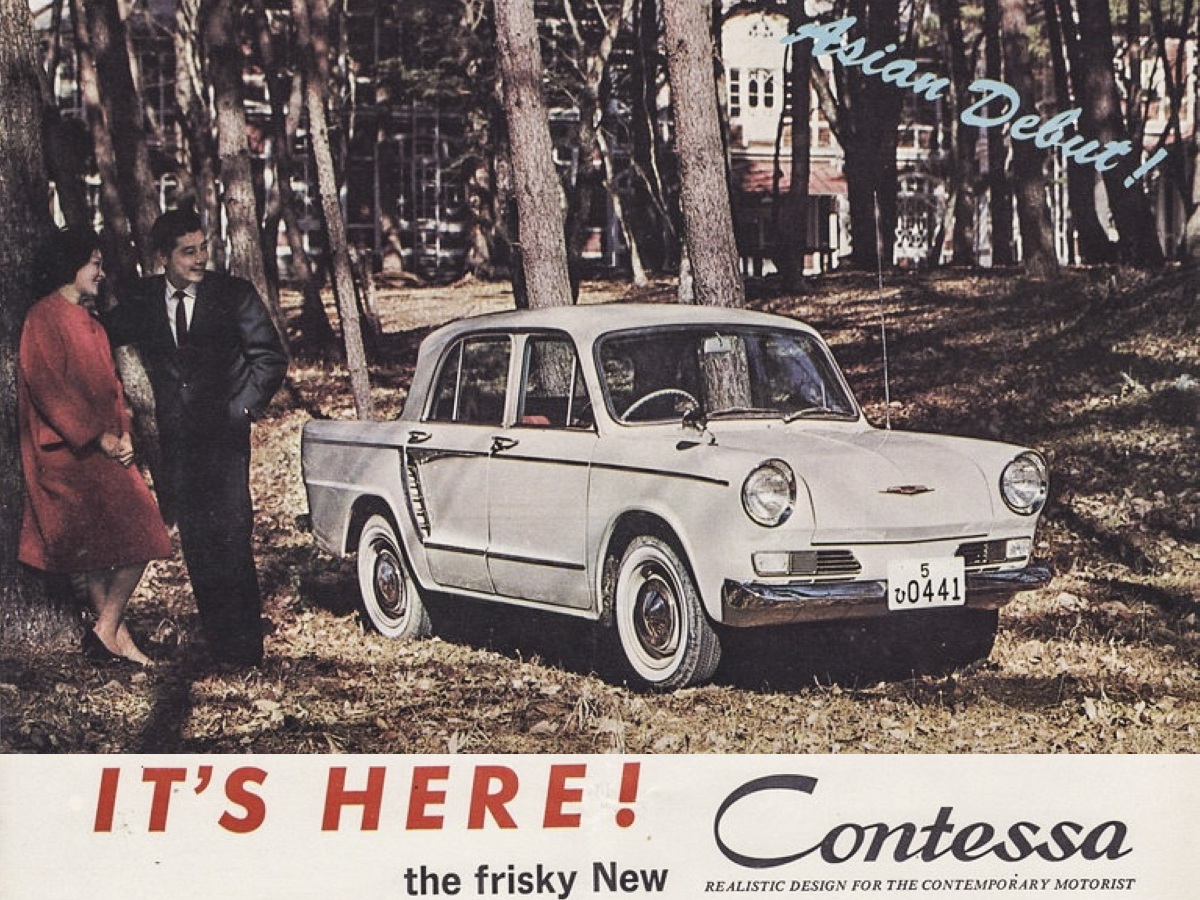
This was, coincidentally or not, also the year when Hino’s first home-grown passenger car prototype began testing. Doubtless with an eye on what the Renault folks were doing, Hino had more or less designed a Japanese Dauphine: four doors, slightly bigger than the cramped 4CV and with a larger 900cc 4-cyl. still located in the tail. The Contessa 900 was launched in 1961 and met with a fair amount of success.
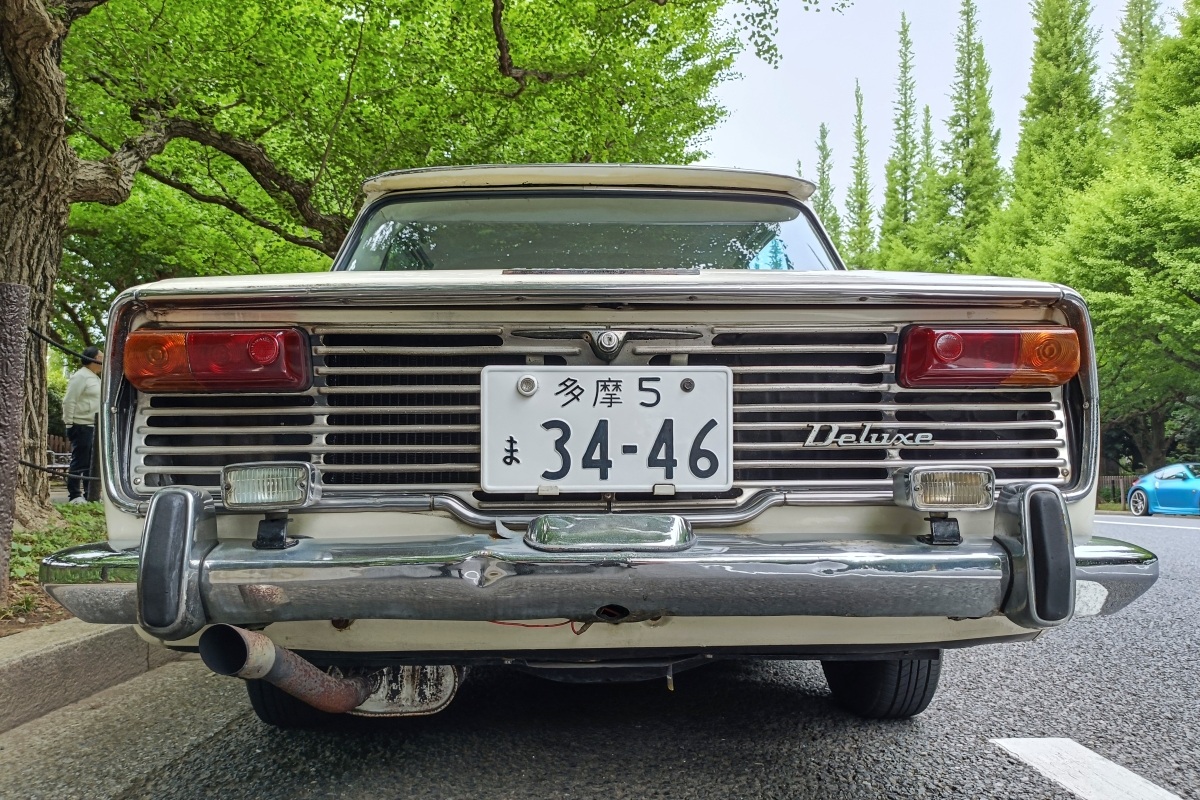
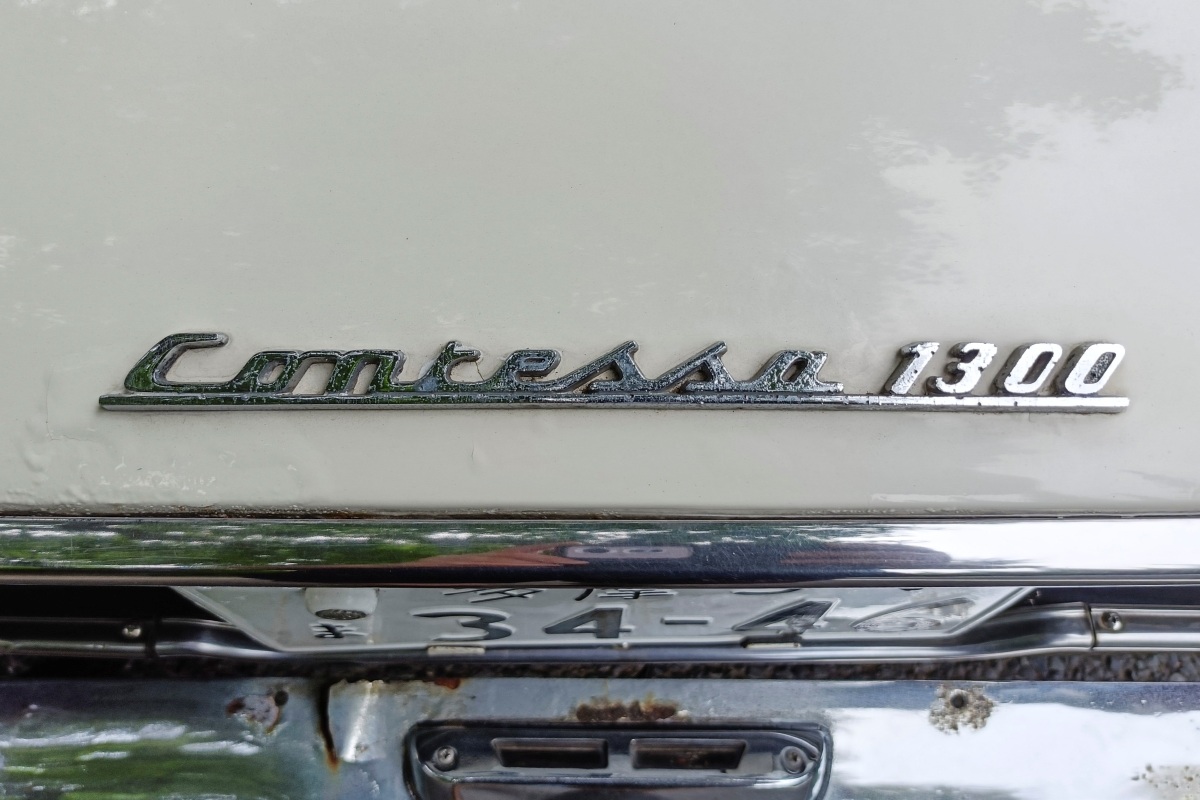
Now that Hino had ploughed that particular furrow, they just kept at it: the next generation Contessa, to be launched in late 1964, would keep its predecessor’s general layout. It’s quite possible that Hino kept an eye on what Renault were up to, which in this case was the R8, which debuted in 1962: yet again, the body and engine size went up a notch to 950cc, then up to 1.1 litre. The boxy design, also found on the likes of the Simca 1000, the Hillman Imp or the NSU Prinz IV, was the way to go for mid-‘60s rear-engined compact saloons.
Hino had designed the Contessa 900 in-house, and it had worked out well. But for the second generation, adding a touch of Italian flair to the mix was seen as the way to go. It was certainly very fashionable – Nissan, Daihatsu and Mazda were all lured to frequent the Italian grands couturiers around this time too. Nissan went to Pininfarina, Daihatsu talked with Vignale and Mazda consulted with Bertone. For their part, Hino called upon the genius of Giovanni Michelotti.
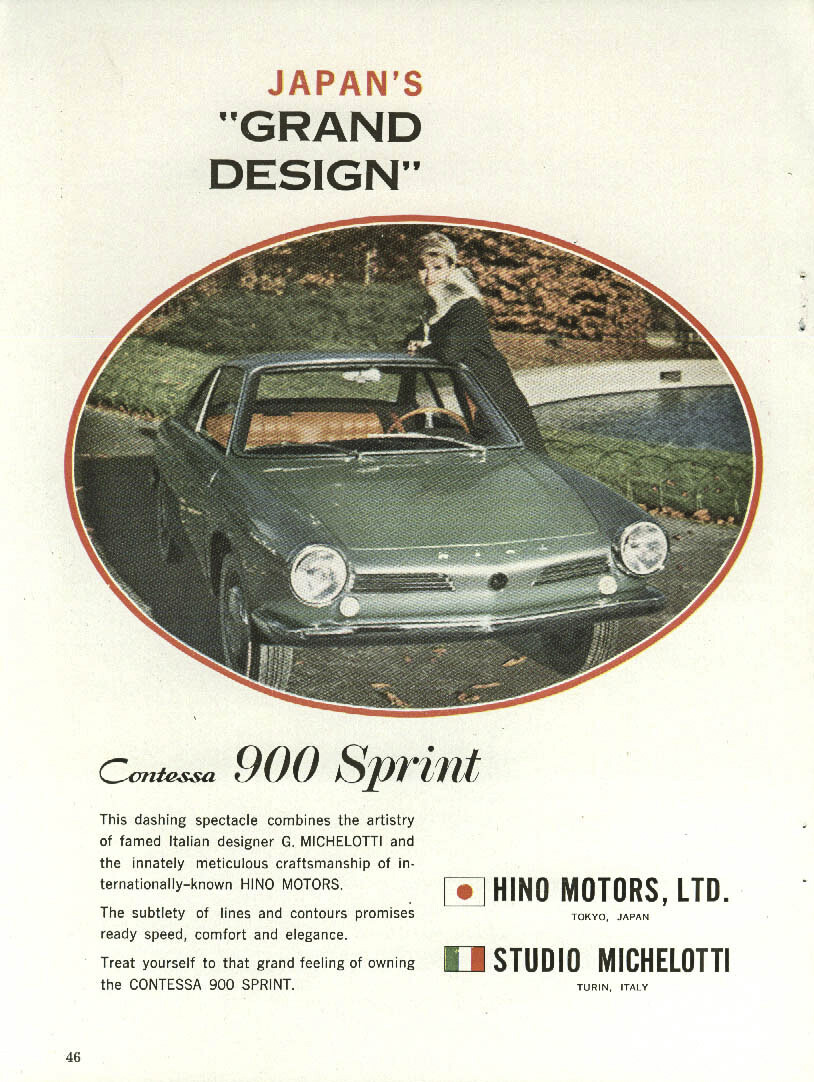
This started with the Hino Contessa Sprint, a stillborn coupé first seen at the 1962 Turin Motor Show. This was one of the first Italo-Japanese collaborations, right on the heels of the (very limited-production) Prince Skyline Coupé, coincidentally also styled by Michelotti. Unlike Prince though, Hino asked for the famous Italian designer to work on their upcoming 1300cc platform.
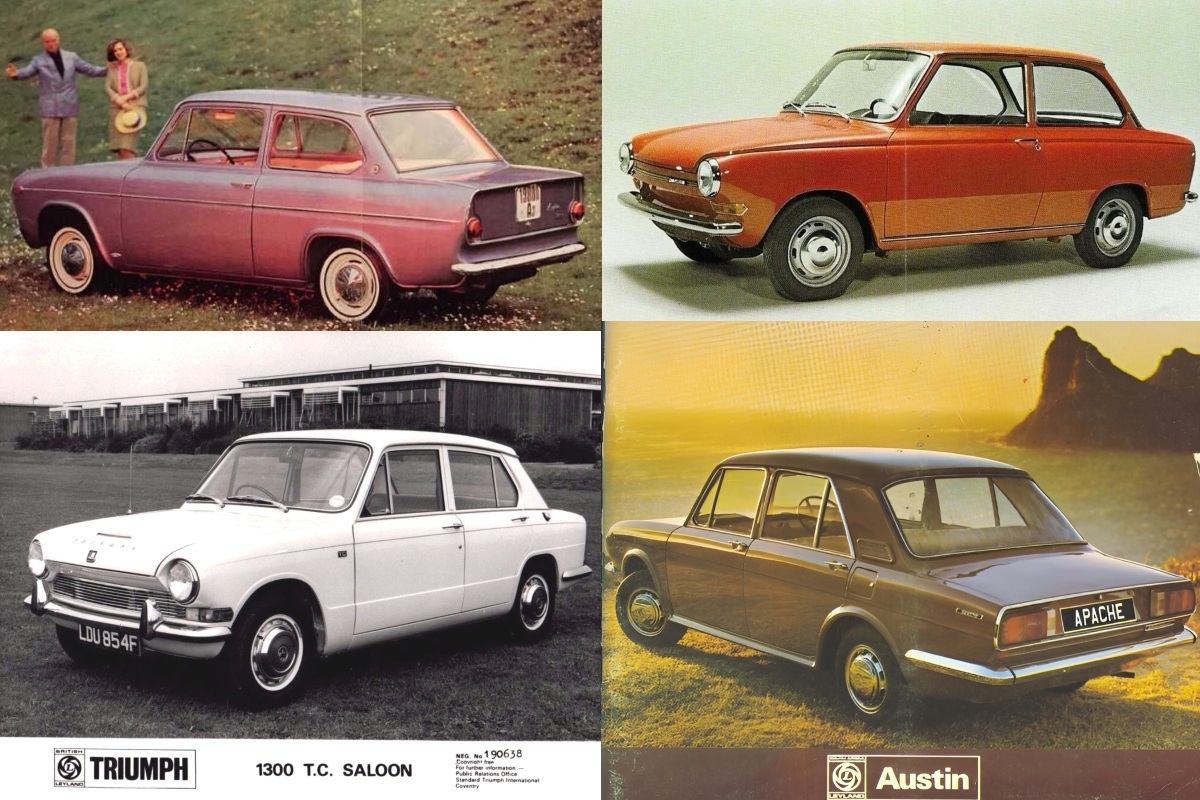
After having spent all of the ‘40s and ‘50s employed by Stabilimenti Farina, Ghia, Ghia-Aigle, Vignale, Allemano and Bertone, Michelotti set up his own design bureau and small-scale coachbuilding business in 1959. In the ‘60s, the maestro’s design language (for saloons, at least) was to be dominated by a few signature traits: cut-off Kamm-like tails with chrome trim surrounds, Hoffmeister kinks and a matchless sense of proportion.
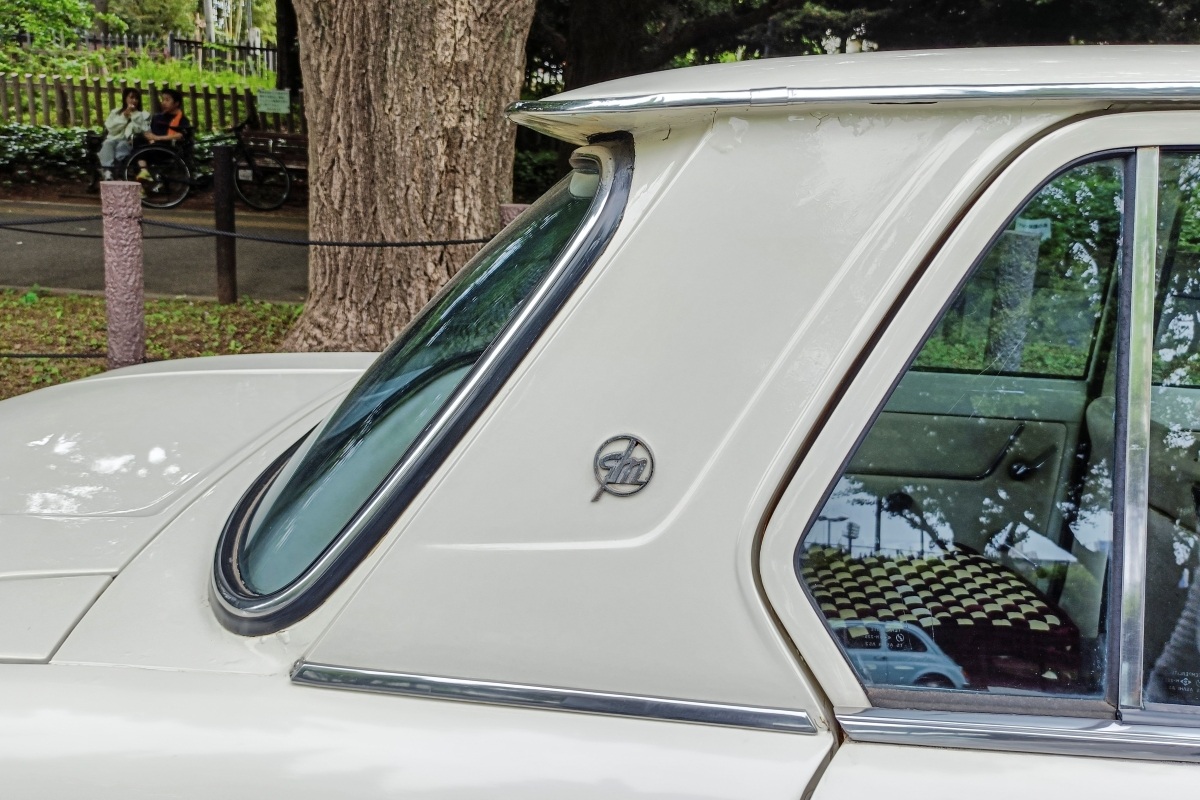
Michelotti’s art was on full display with the Contessa 1300. He even pulled a couple of novel features (for him), such as the 1959 GM-inspired roof line and taillights imbedded in the rear grille.
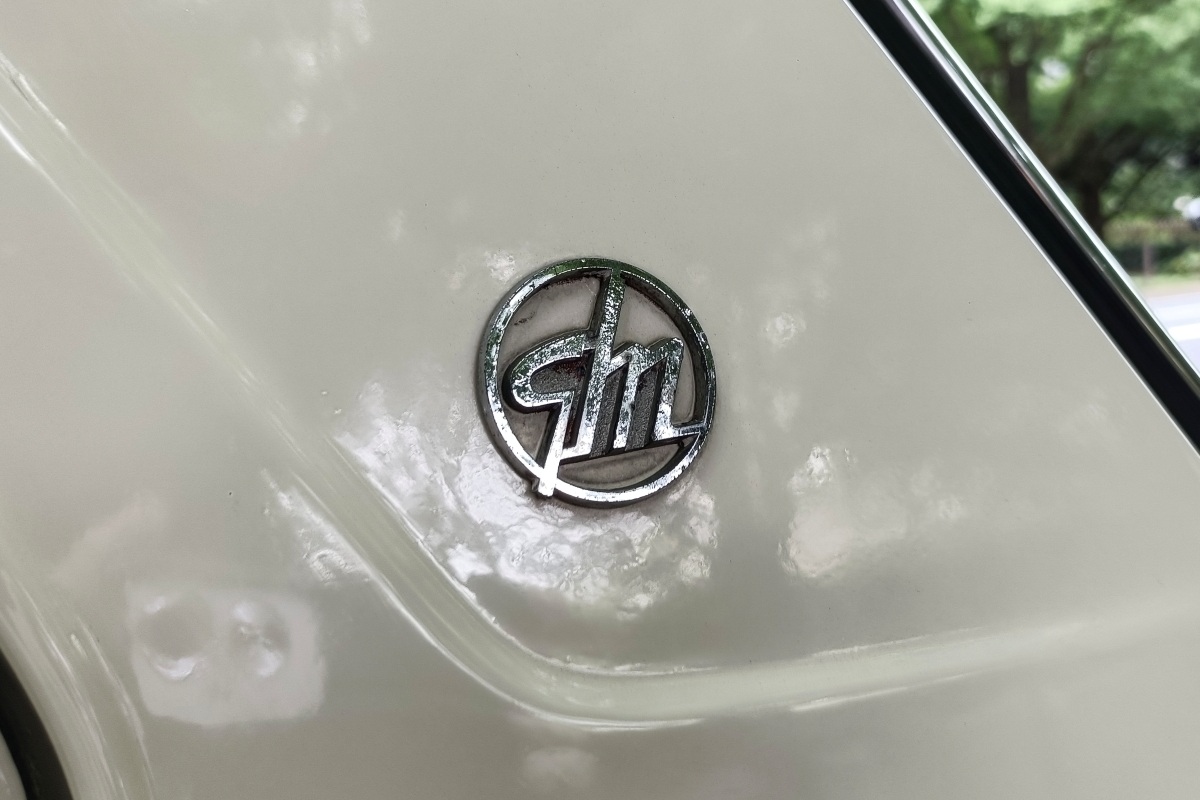
Manifestly quite proud of his work and perhaps keen to lend some of his street cred to Hino, Michelotti even monogrammed his work on the C-pillar, elevating his name to that of an established carrozzeria like Pininfarina or Zagato. It’s not something myna car designers have done. Pietro Frua did it at the time – as would Giugiaro, some years later, but I’m not sure anybody else has.
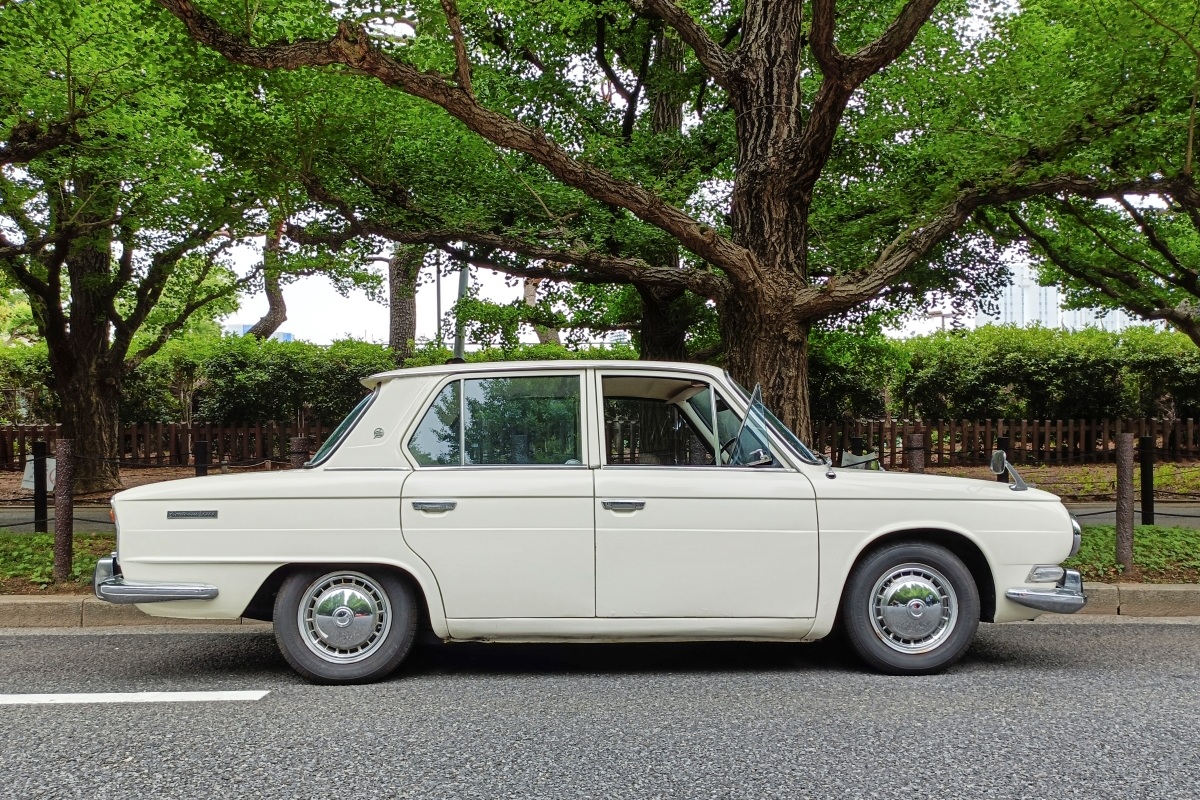
The whole design is slightly less well-balanced than, say, the contemporary Triumphs that were also penned by Michelotti, though this slight imbalance was even more evident in the Contessa 1300 Coupé that joined the Hino range for 1965. This can be blamed on the chassis’ layout: the front end paradoxically had to be bulkier to provide something approaching adequate cargo space for a family car. The Renault 10, NSU 1200 and Simca 1000 suffered from similar overhang issues. The VW Type 3 did not: its front trunk was smaller, but it compensated by having a rear compartment thanks to its flat engine. Škoda also managed that on their 1000MB, despite the water-cooled straight-4.
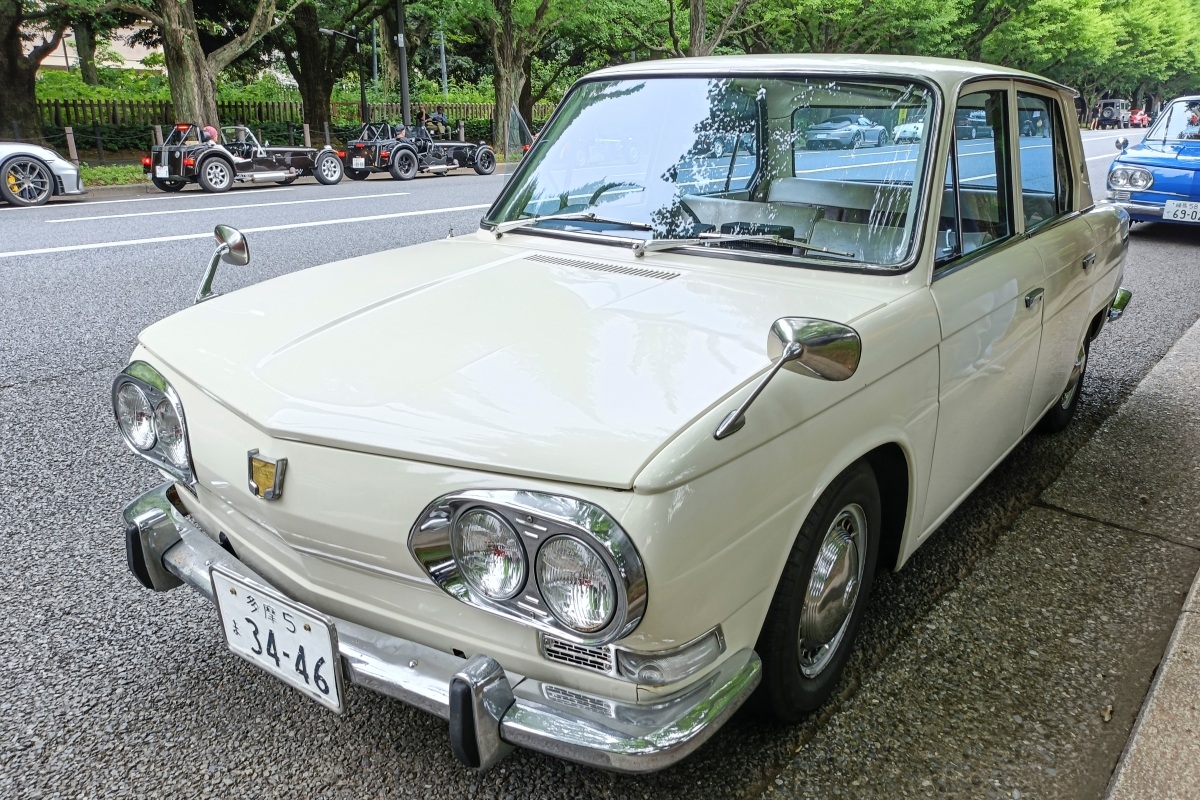
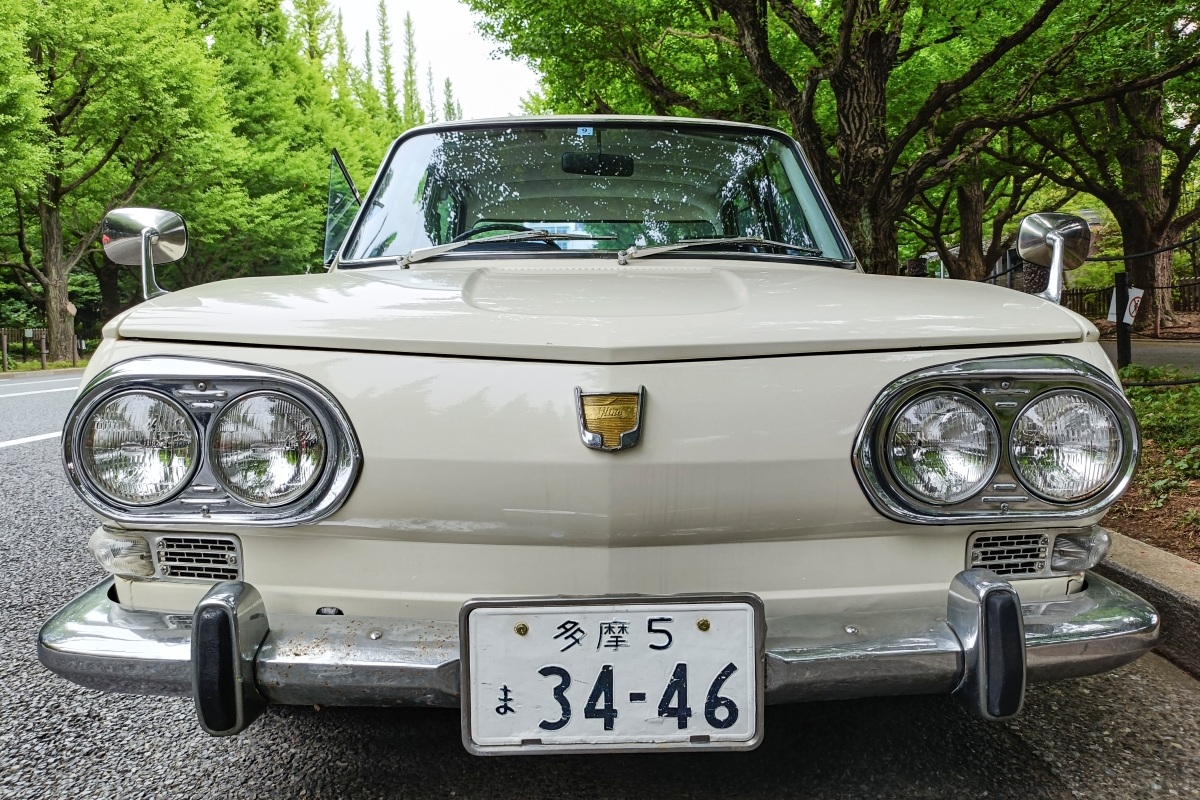
Hino followed Renault’s layout, which did not allow for any cargo space in the back, so the overhang was inevitable. But Michelotti still managed to hide it pretty well, making the front end pointier through a clever use of volumes and creases. The Contessa did not overtly copy the Corvair. The quad headlights may induce some into thinking otherwise, but the Chevrolet was hardly the first car to feature those.
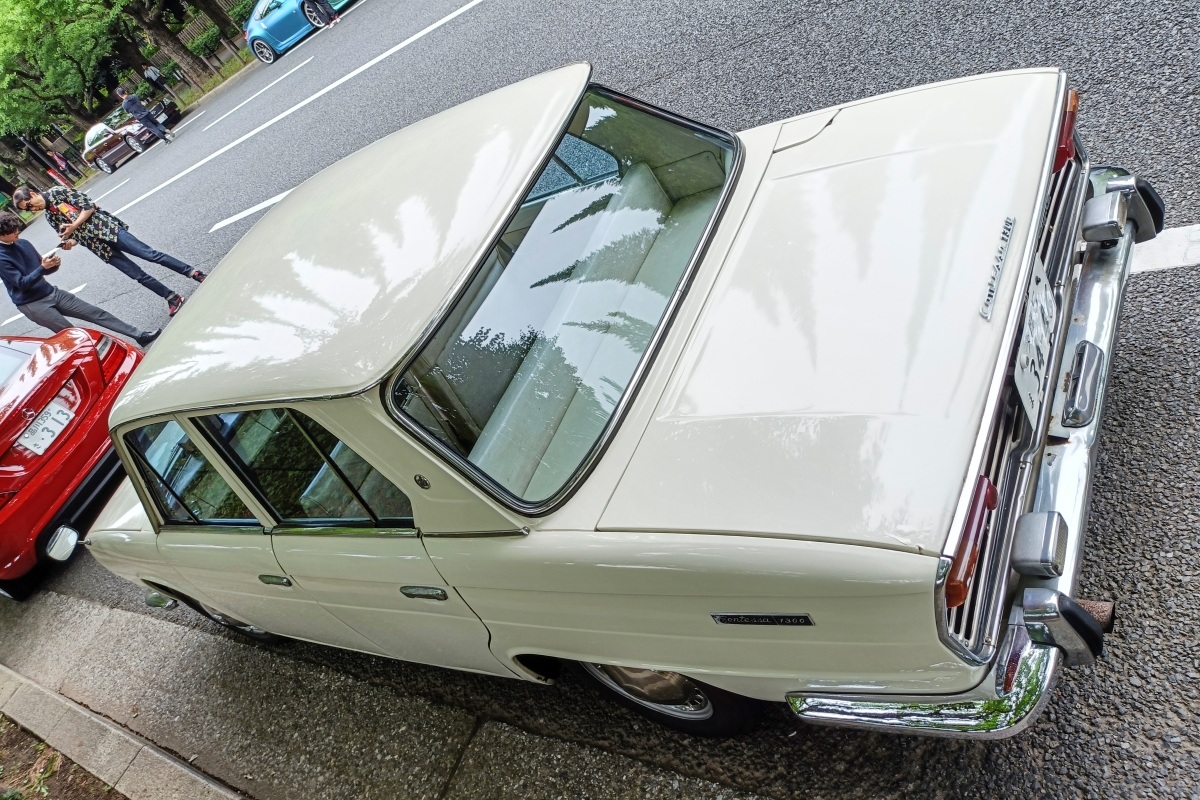
The 52hp 1251cc engine was entirely Hino’s own design. It was, in many ways, a twin of the Renault 8’s Cléon Fonte, with its five-bearing crankshaft. Hino went for a little more displacement though, to provide more torque and offset the Contessa main deficiency: its initial 3-speed gearbox.
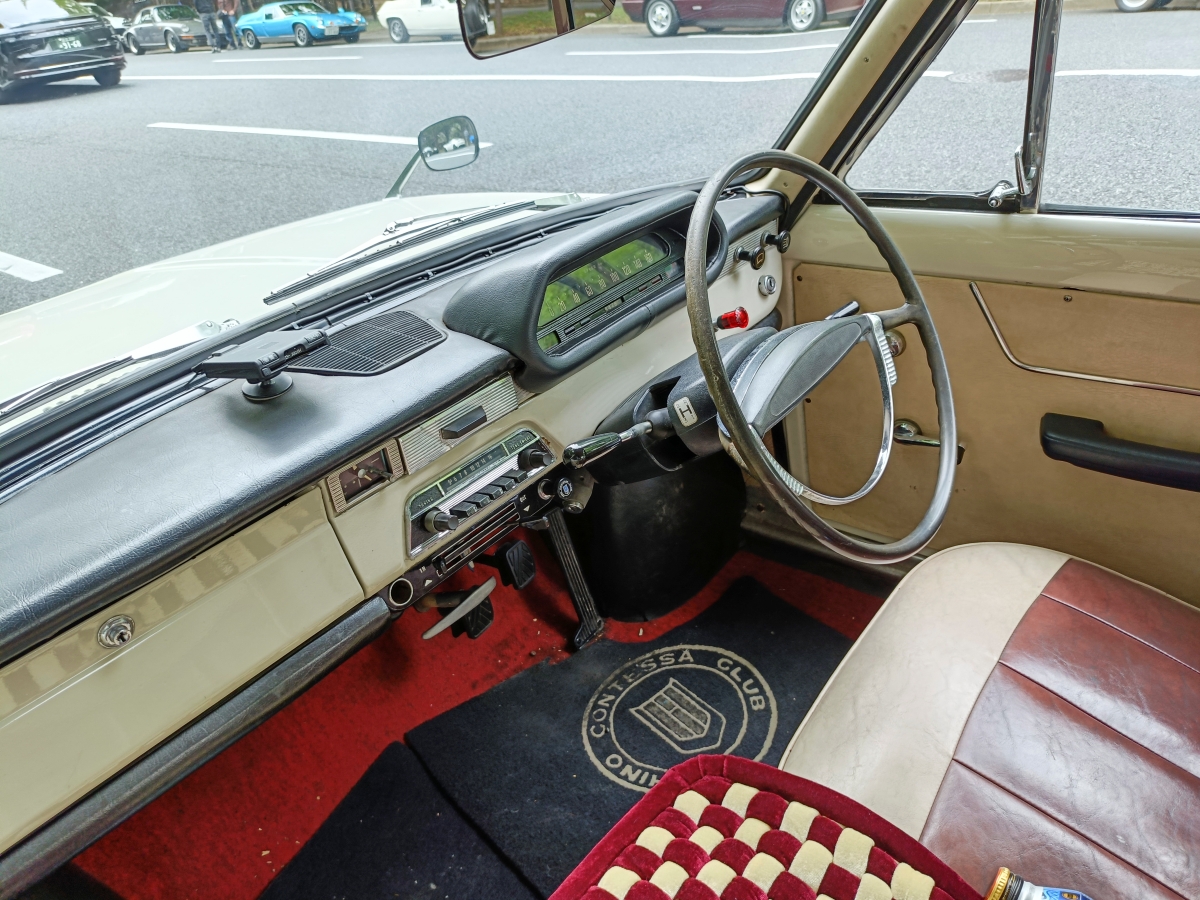
Our feature car, being an early model Deluxe, still has the outdated three-on-the-tree used in the Contessa 900. I’m not sure when the floor-mounted 4-speed became generalized across the range, but it should have been there from the get-go.
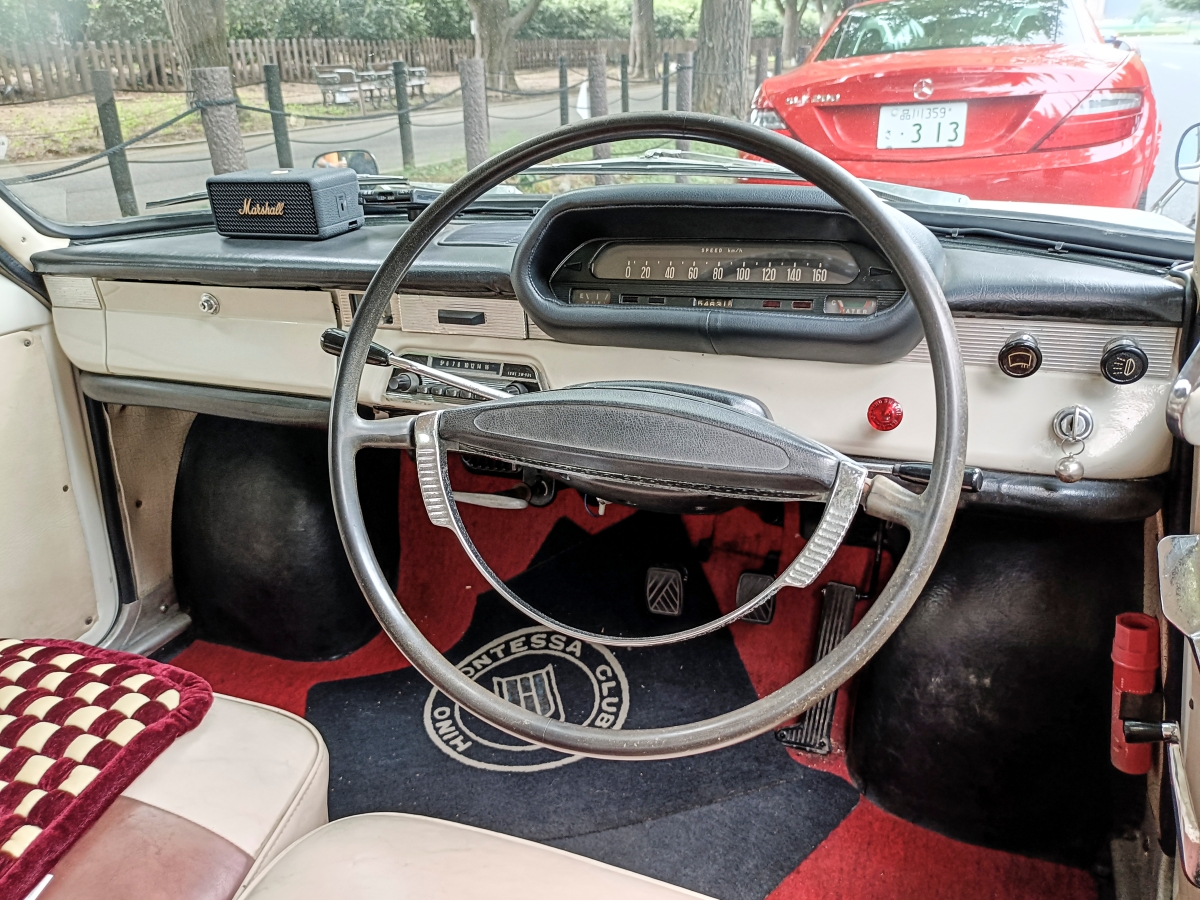
This brings the Hino Contessa into the rare realm of rear-engined cars with a column gearchange, along such luminaries as the Tatra 600 and 603, the Isotta-Fraschini 8C Monterosa and the Tucker (but those two were semi-automatics). I’ll add the Lancia Aurelia to the mix, as it had a rear transaxle, but my point is it’s a very small élite. The length and complexity of the linkage is just not worth the trouble – certainly, not for popular rear-engine specialists like VW, Fiat or Renault.
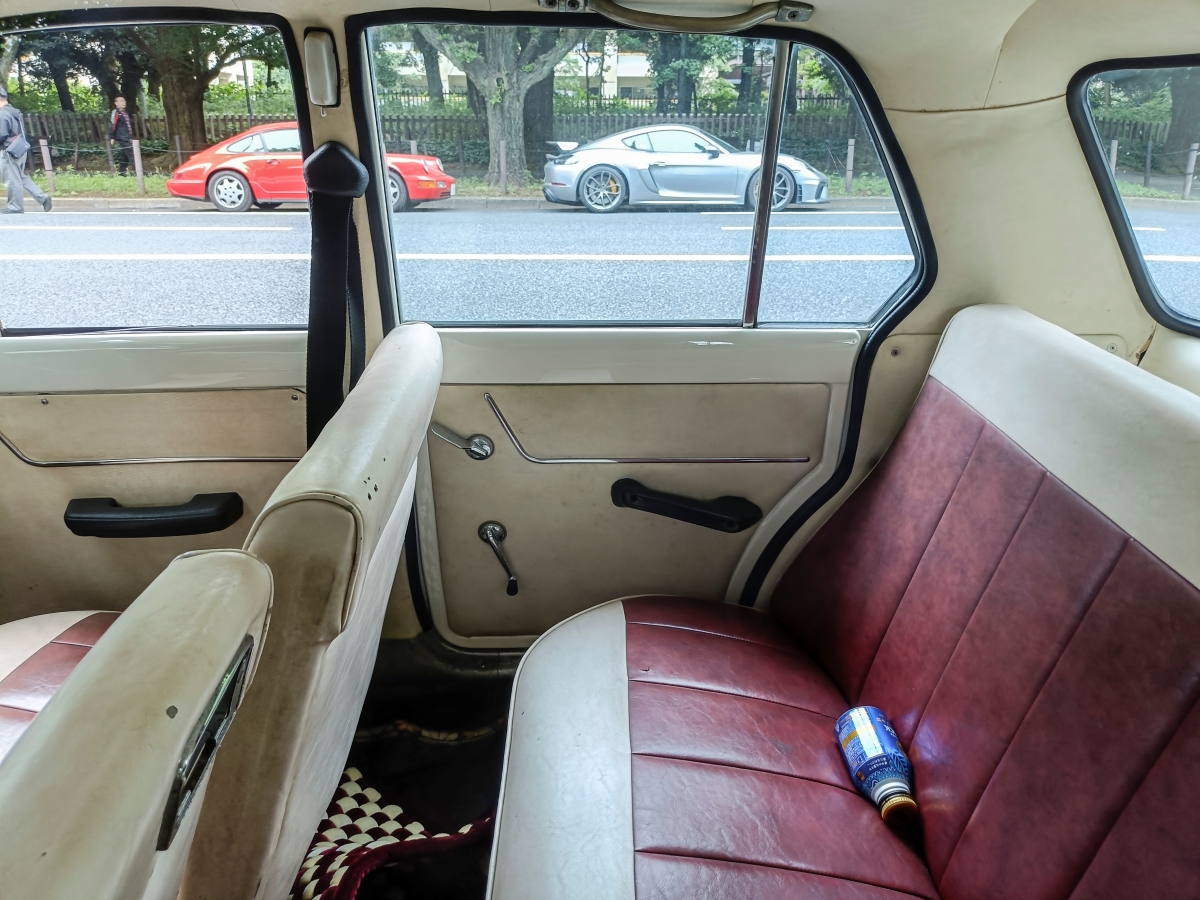
Plenty of space in the back for a Japanese car of the ‘60s. They exported these to a bunch of places, including Scandinavia, Benelux, Austria and Switzerland. Some of the tallest Europeans, in other words. But hey, it was a different world. People had to make do with Beetles, DAFs and Lloyds, so the Hino would have seemed fine in comparison.
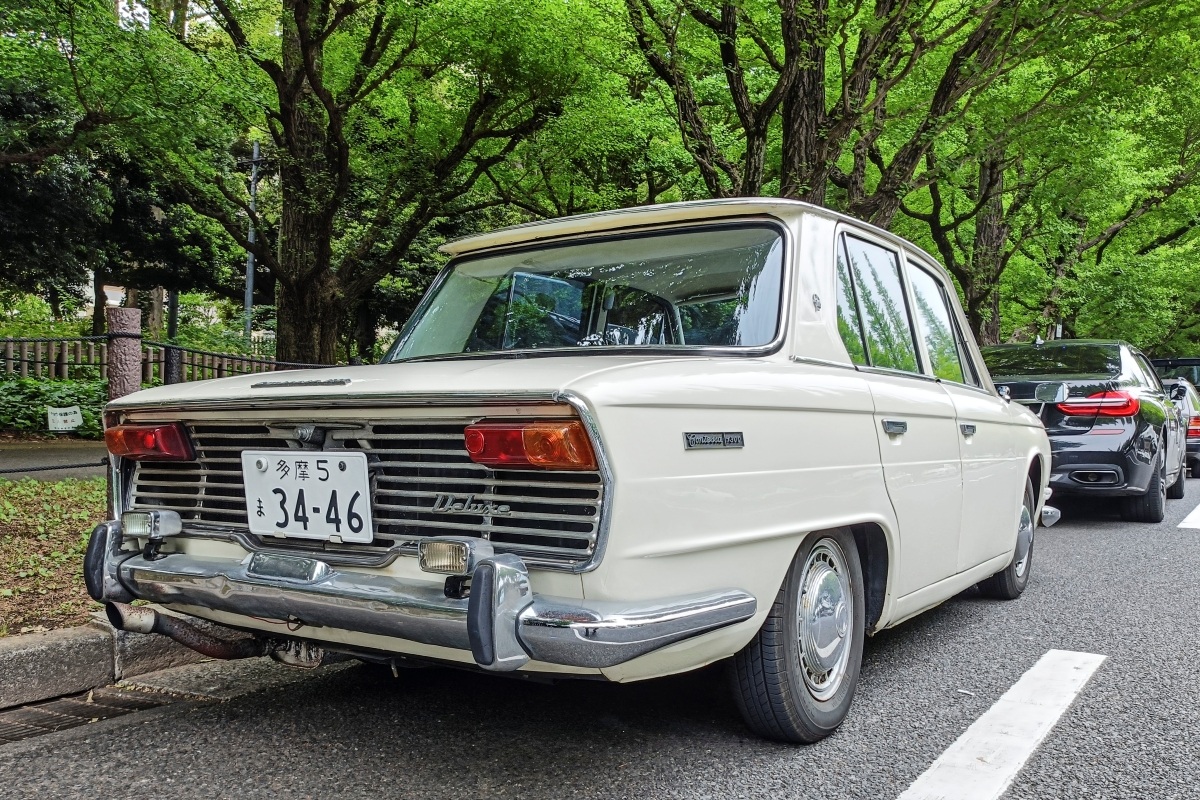
I wish I could have found enough pricing data to make my usual table, by the way. But those are hard to track down for imports in this era. The Contessa 1300 was available at ¥560,000 in 1965 for the weird and seldom-seen Standard model; our Deluxe commanded ¥640k. This latter price was almost exactly the same as what Toyota asked for their segment-leading Corona (70hp, 1.5 litre), as well as Mitsubishi’s Colt 1000 (51hp, 1.0 litre). It was a bit cheaper than the Datsun Bluebird (55hp, 1.2 litre) and the base model Isuzu Bellett (58hp, 1.3 litre), as well as the new front-drive Subaru 1000 (55hp, 1.0 litre) that was launched at the Tokyo Motor Show that October.
To keep up with the competition, Hino squeezed a little extra power from their engine for the Deluxe in 1966. They also introduced the 1300S saloon, which had the Coupé’s 65hp twin carb engine. Alas, it was all for nought, as Hino Motors began their “alliance” talks with Toyota, which were finalized in October 1966. The deal called for Hino to quit passenger car production before the end of 1967, which they more or less did (a trickle of cars were still assembled through to 1969, apparently to clear leftover stocks).
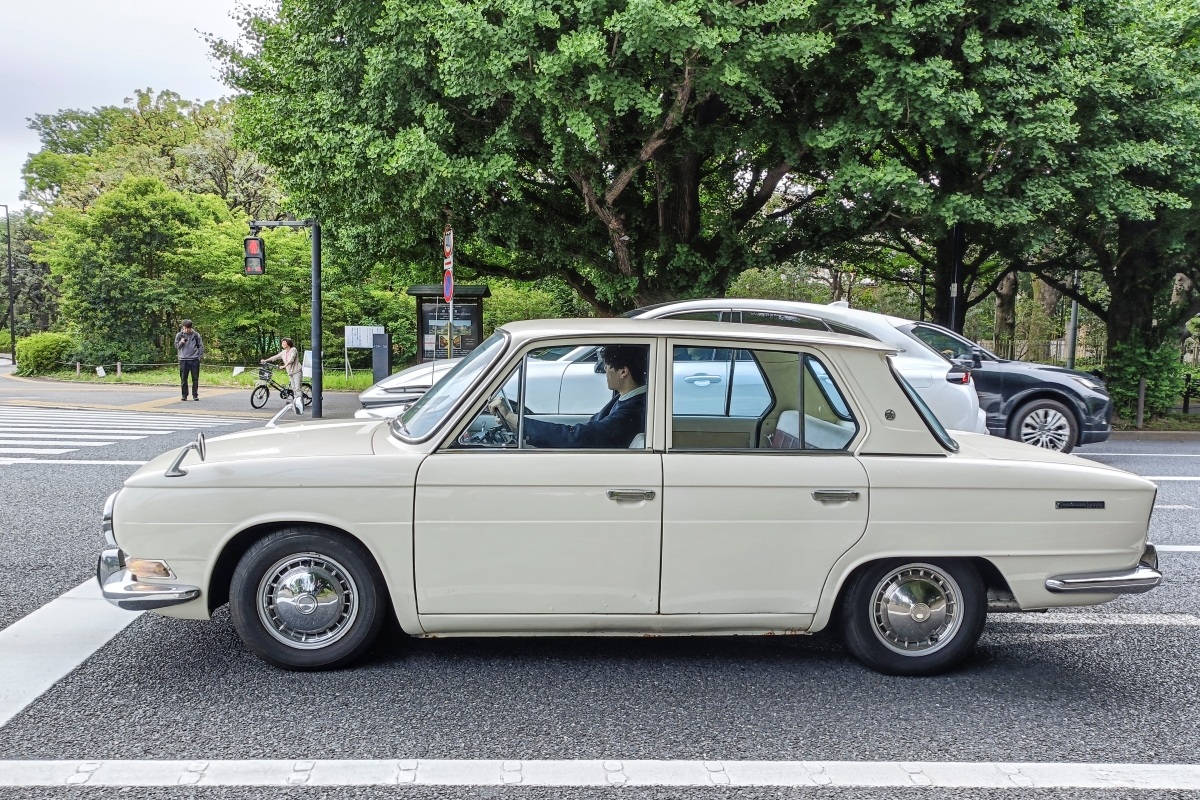
All told, Hino sold just over 51k Contessa 1300 saloons between 1964 and 1967, plus around 4500 CKD kits assembled in Israel and New Zealand. This was to be the last rear-engined “international-sized” family model (i.e. not a kei nor a sports car) made in Japan. By the mid-’60s, Renault had switched to FWD and only made a few legacy rear-engined models for another ten years or so, whereas Hino had no secret prototypes in the works when the MITI decided to put Toyota in charge. Hino’s passenger car operation was just too small. Even with Italian styling and some of the best workmanship in its class, the Contessa failed to save its maker from being absorbed.
Related posts:
Curbside Classic: 1968 Hino Contessa (PD) 1300 Coupé – Deadly Sin In The Rising Sun, by T87
Automotive History: 1964-1967 Hino Contessa 1300 – The Japanese Corvair?, by Allan Lacki
QOTD: Edgardo Michelotti Asks If Anyone Knows Of A Hino Contessa In Europe To Exhibit?, by PN























There’s quite a bit of Mk1 Triumph 2000 in that design, which of course was also the work of Michelotti. One could be tempted to say he wasn’t afraid to “borrow” from his own portfolio for a variety of clients, but even Pininfarina did that. The Contessa at least doesn’t look quite as top heavy as the 2000, a trait which has always made the big Triumph look a bit odd to me.
Borrow? Photocopy, repeatedly, I’d say!
But yes, Pinin did the same thing, if (arguably) to much better effect.
The 3/4 size Triumph 2000 styling is obvious, I havent seen a Hino Contessa for quite a while in the wild and they were assembled here by Campbell motors at whats now a Toyota refurbishing facility for its used import business once upon a time.
That rear 3/4 view looks a bit like an Alfa Romeo Giulia sedan, with the wraparound backlight and the overhanging roofline.
This car is visually familiar to me as I had several kid car books with front rear quarter view photos. But I think this is the first time I’ve seen that rear grille. Very interesting. I agree that the proportions, perhaps due to packaging constraints, aren’t quite as good as Michelotti’s best, but the combination of the (GM, hah) rear roofline with the C pillar kink is really nice. Thanks for the post!
That is quite the find. Very exotic and interesting from my perspective. I don’t find the front overhang too bad myself.
That Hino Contessa Sprint looks quite a lot like a NSU Spider.
Summer, 1969, and my family spent the summer in Israel. I was 15, and not yet driving.
We rented a Contessa, much like this one —
Left hand drive, and 4-spd. on the floor …… suitable for any American.
Dad managed fine. But with Mom driving, it consistantly stalled out, going uphill.
Back to the rental agency — Nothing wrong.
But I recognized the problem, based on watching the school bus drivers shift through the gears —
Mom didn’t know she needed to downshift in rising altitude.
Altho she learned driving, wrestling a ’49 Pontiac w/o power steering, it was an automatic.
Never got the memo on manual shifting.
And that’s my recollection of the rented Contessa
I’ve been trying to remember whether I have ever seen one of these. I remember reading about them as a kid, and I think there were adverts in the paper. A new rear-engined car seemed rather odd in the mid-sixties; I hadn’t realised there was an earlier model.
Unusual the ad for the 4CV shows a LHD 1953 model – surely Japanese assemblies would have been RHD? Incidentally that’s the last year for the original busy faux-grille. Japanese modellers have converted the Heller model to a Japanese-spec one by altering the front grille, among other changes.
Thanks for identifying Michelotti’s C-pillar ‘signature’. I had been going to ask whether that was a Japanese character denoting something auspicious, or just an artistic doohickey.
Looking at the amount of wheel arch intrusion and the resultant pedal offset, I’m surprised they didn’t lengthen the wheelbase and push the wheels forward a bit.
Great find and love the license plate. In terms of old car sightings, I still see a fair number of these around occasionally.
I find this to be simply lovely .
? Is it an incredible survivor or older restoration ? .
You find so many rare and exotic cars .
-Nate
I wonder if “michelotti” is an Italian dialect for “almost”, because everything attributed to him falls short (or in the case of the Leyland P76, falls off). Not ugly cars – except in the case of the Leyland P76 – but even something like the Stag has never looked quite right (now there’s a second mob who’ll start throwing things at me). The best i can think of with his name on them is the Triumph Italia coupe.
I must make a confession. For years, Oz motoring writing was dominated by the hand of a fellow called Bill Tuckey, who, apart from taking no crap from carmakers and being a good writer, also had a pretty dab hand for humor. And on what seemed numerous occasions of his nonsense side (under a pseudonym), the Hino Contessa always appeared for a comic mention due to its apparently very dreadful handling. The confession? Until maybe 10 years ago, I thought the car was made up!
And don’t forget Bill’s alter ego, Romsey Quints.
Lol, I was just going to mention Bill Tuckey. In one of his Wheels articles he said the Contessa was the only car he’d ever driven that understeered at the front and oversteered at the rear, and at the same time…
Interesting find and tale.
Do you know which market the English language advertising came from?
That’s a good question – I have no idea, just a couple of guesses.
The “Frisky” Contessa 900 ad might be aimed at Okinawa, which was technically still US territory back then. Lots of G.I.s bought cheap Japanese cars there in the ’60s, so it wasn’t an insignificant market. Other English-language markets around the region would have included Australia, NZ, Malaysia, Singapore, Hong Kong … I just don’t know where Hino exported their cars at the time. But Okinawa was a definite target.
The Contessa Sprint was 100% a halo car, destined to publicize Hino’s name in the West, especially the US. Clearly, Hino had designs to export to the all-important US market in due course. If Renault, Fiat and VW were able to make money there, they should be able to as well. There were at least three different English-language ads for that car, but they made sure it was LHD. I would have thought Hino and the Italians would have worked out pretty quickly that it wasn’t a viable project, making the car a one-off. But the PR/name recognition value was deemed worth the expense, it seems.
Could be NZ – I’ve got the English brochure for the 1964-7 NZ market Contessa.