
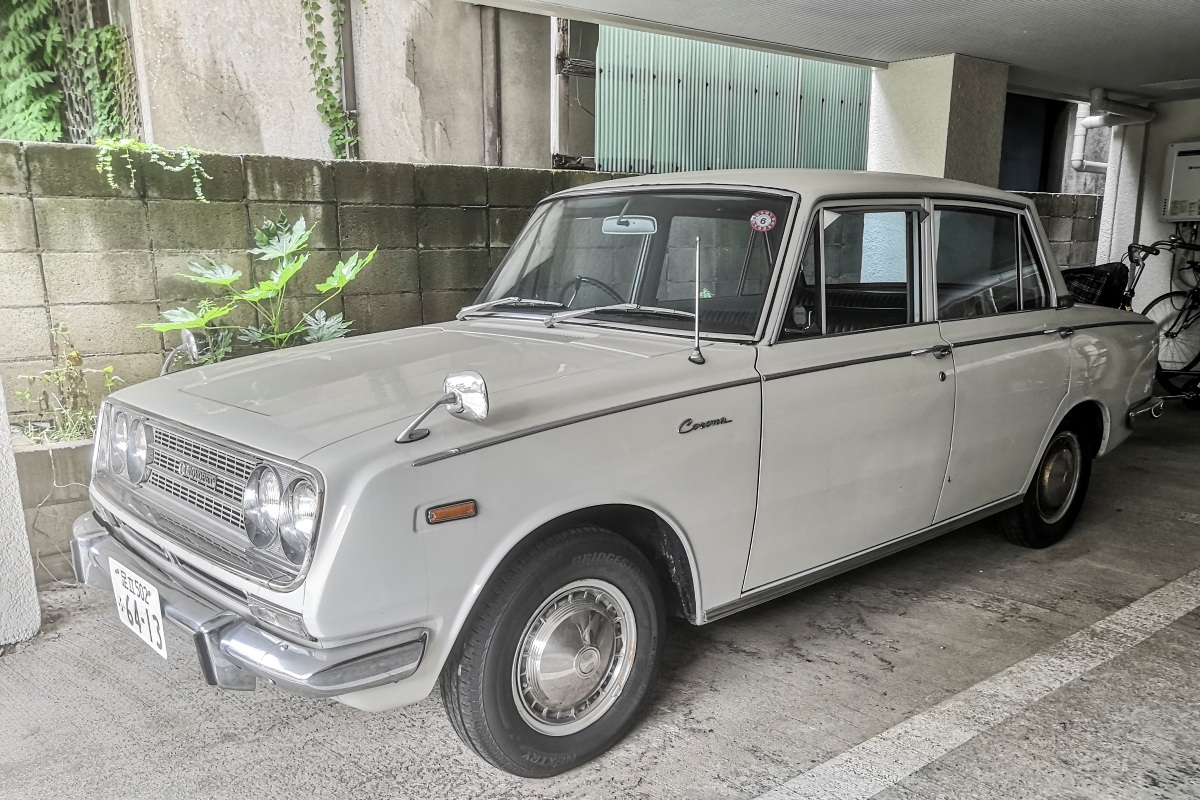
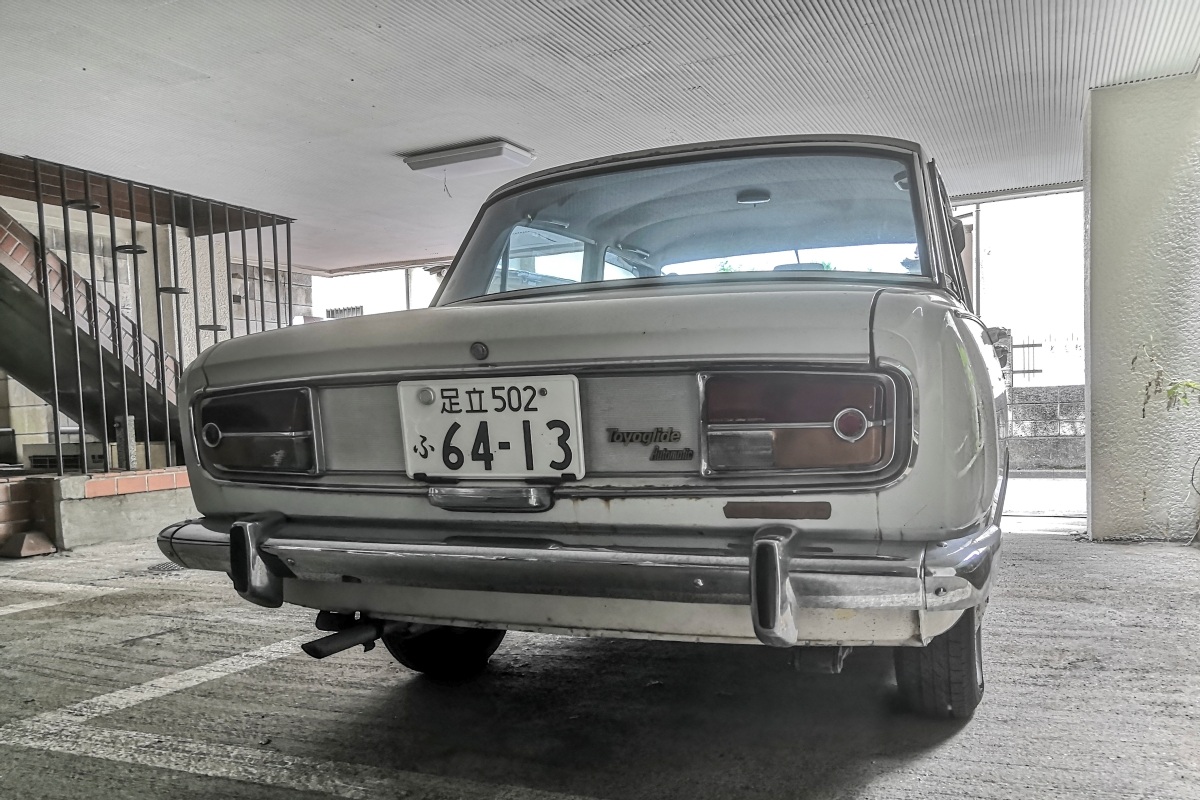
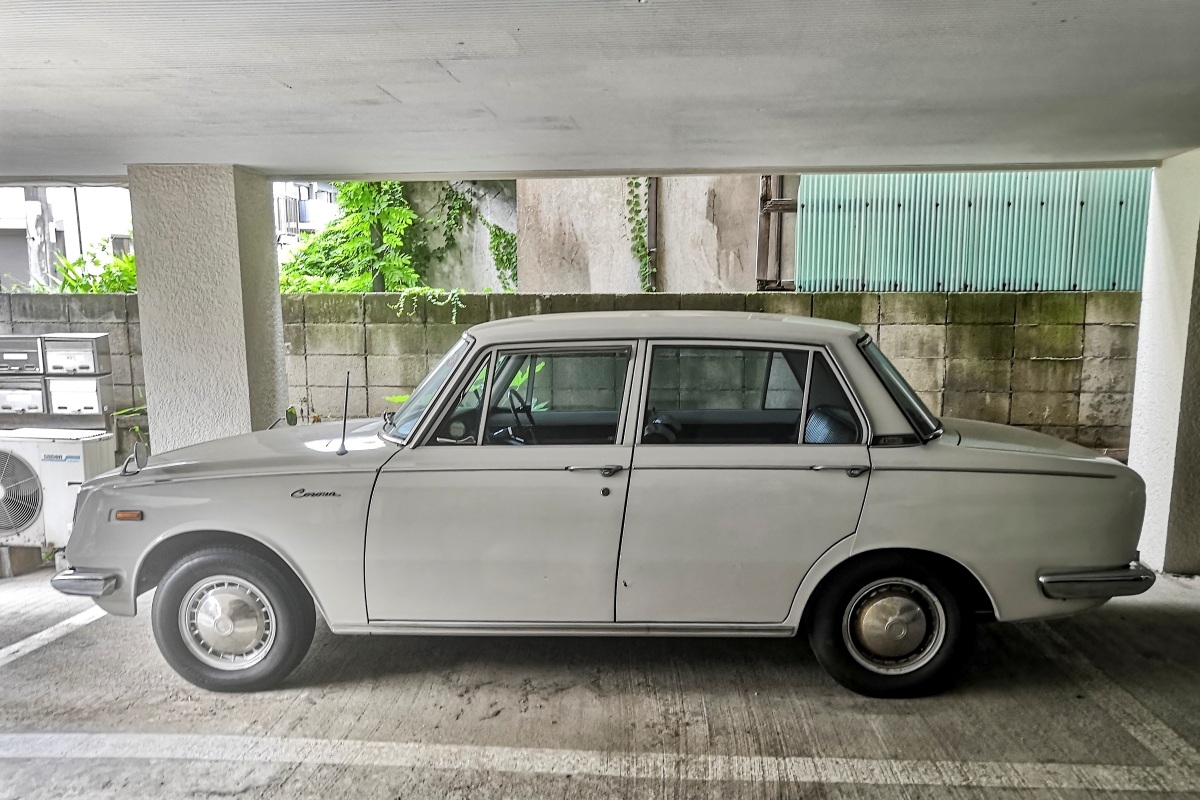
CC has had the pleasure of entertaining the ol’ shovel-nose T40 here a number of times. Which makes sense, as it’s probably the marque’s first real global hit. Corona has a way of spreading across the world, doesn’t it? Part of this viral success had to do with a key optional extra that this particular car is equipped with: the Toyoglide automatic transmission.
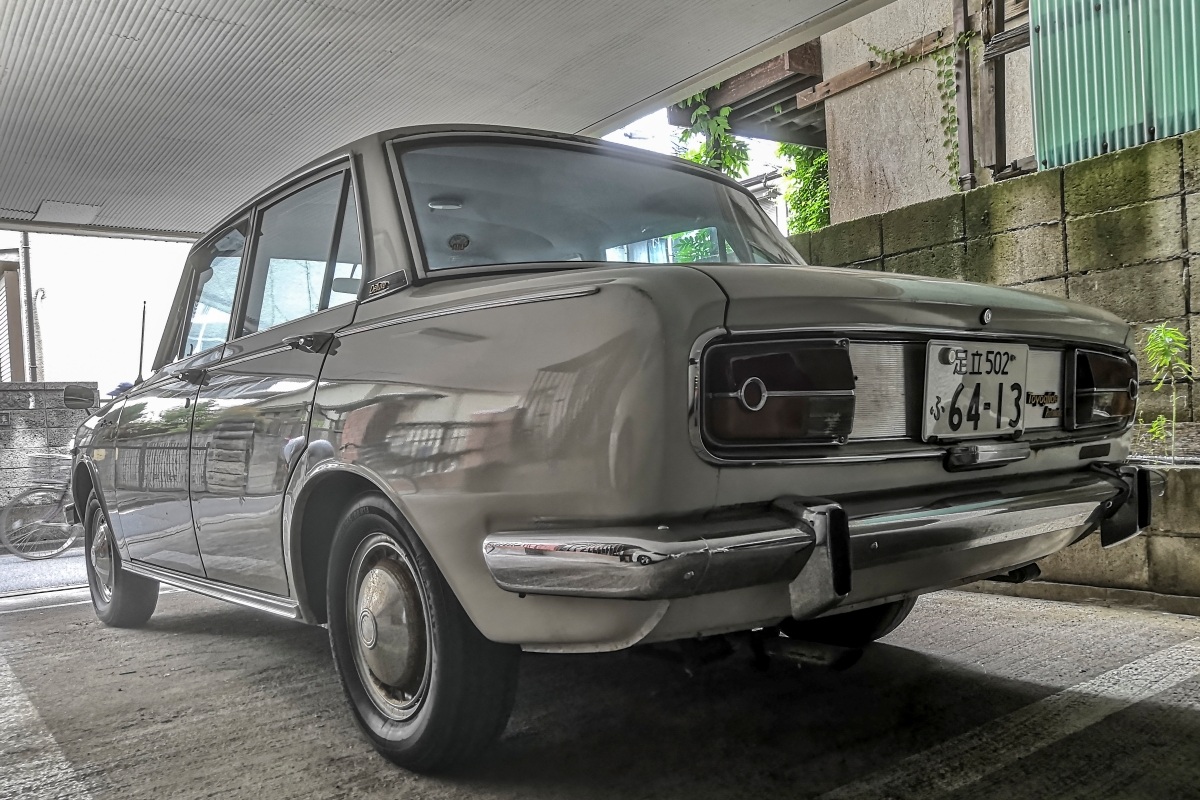
Manual transmissions are still pretty popular in places like Italy or Spain, where they still command a 40-50% share, but even holdouts like France and Germany are now below 30%. This is a relatively recent phenomenon in Europe, where about 80% of cars had manuals at the turn of the century. Japan, in contrast, has enthusiastically adopted automatics: nowadays, over 90% of new cars sold here have some form of automatic transmission. Even the tiniest kei cars are all equipped with them, and have been for a while.
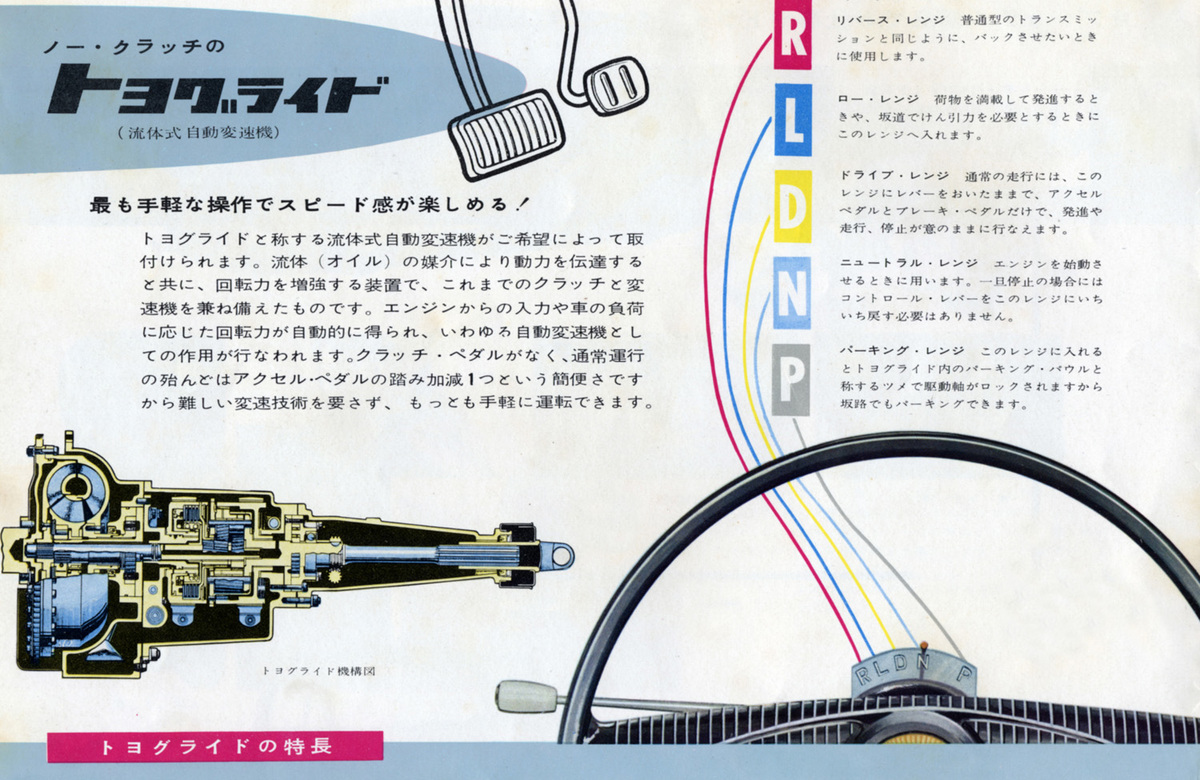
This was not the case in the mid-‘60s, of course. But at the time, Toyota had an inkling that self-shifting was the way to go. It all started with the first Toyoglide, developed in collaboration with Aisin-Warner. It launched in late 1959 on the Crown 1900 and the related Masterline van, but was soon adapted to the rest of the range, including the little Publica. It was a semi-automatic two-speed with a torque converter, and as such not that many cars were equipped with it, but it was a crucial first step.
The Toyoglide was, in essence and according to people who know about these things (i.e. not yours truly), a reverse-engineered GM Powerglide, which was also semi-automatic in its earliest incarnation. To be entirely accurate, the Toyoglide was not the first home-grown automatic transmission made in Japan. The honour goes to the 1957-59 Mikasa, a small 600cc 2-cyl. car made in 500 units. The two-speed automatic developed for that car was later used in Cony and Mazda kei cars. However, the Toyota-Aisin transmission was made in far greater numbers, especially when the fully automatic second-generation Toyoglide arrived in June 1963.
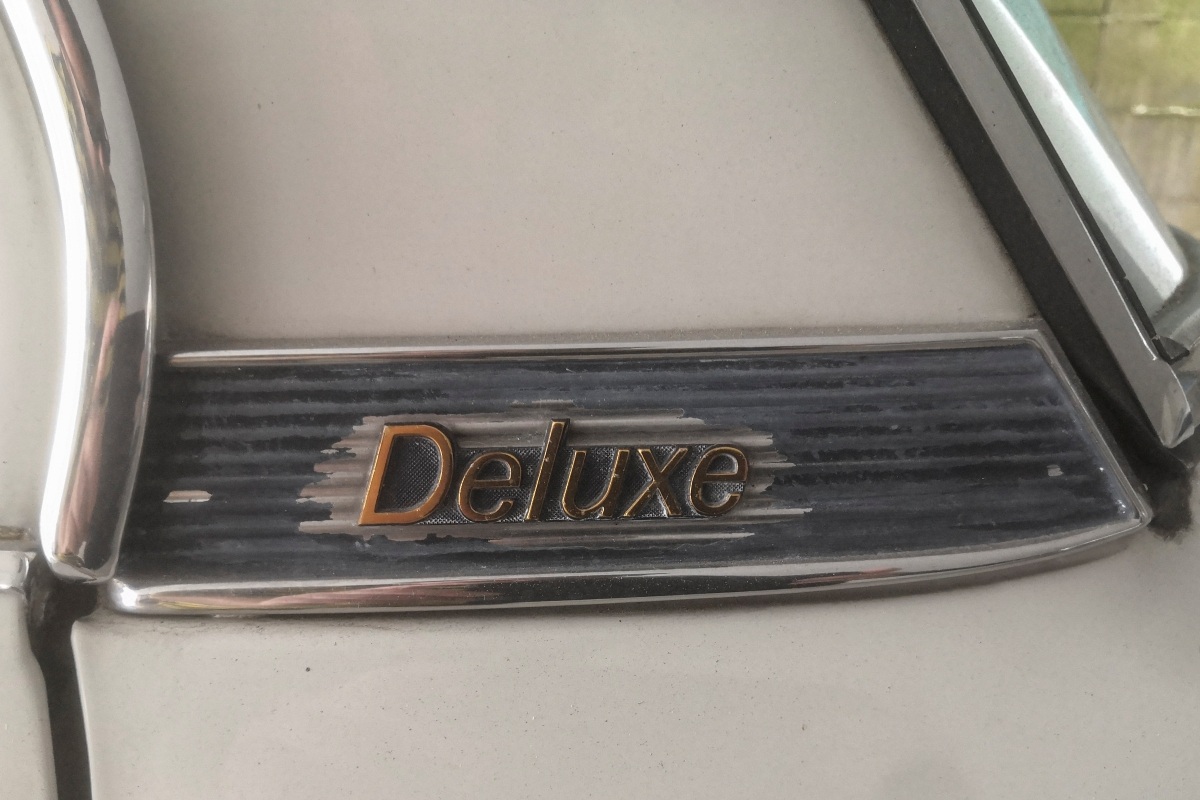
Just over a year later, the new T40 Corona was unveiled, and the 1.5 litre 70hp Deluxe version (on the JDM, the lowest rung in the civilian range had a 1.3 and the taxi version had a 1.2) could be ordered with the Toyota-Aisin 2-speed slushbox instead of the 3-speed (later updated to 4-speed) manual.
Up to the launch of the T40 Corona, Toyota were not as clearly ahead of the pack as it seemed. In the crucial mid-range 1200-1500cc segment, the previous Coronas had failed to impose themselves in the domestic market against the Datsun Bluebird. By January 1965, the situation had finally turned in Toyota’s favour: the Corona took the lead in JDM sales and stayed there until it was overtaken by the Corolla in early 1968.
The same thing happened abroad. Toyota had been exporting cars before the T40, but once it arrived, sales shot up immediately. The number one market that developed an appetite for it was North America, and to win at that game against VW, the Toyoglide was the ace of trumps.
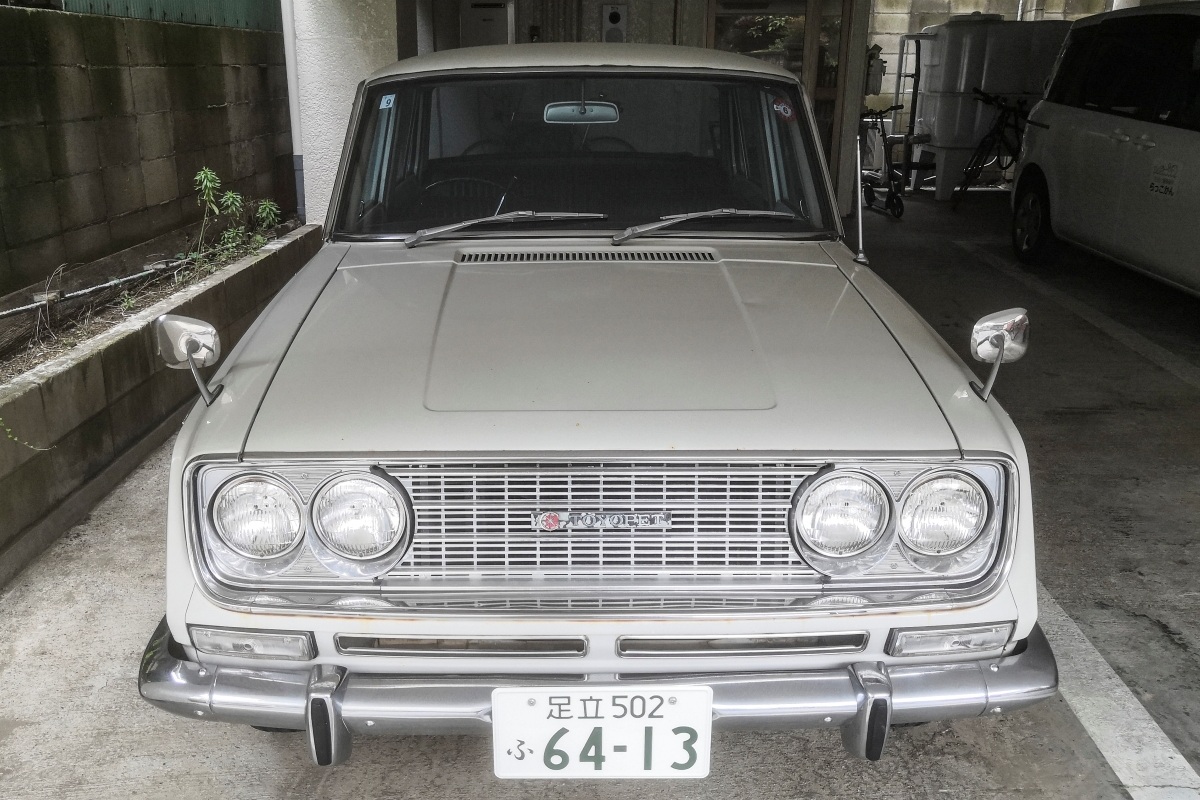
It wasn’t just that, obviously. Renault also offered an automatic gearbox on their cars in the ‘60s, but utterly failed on the other side of the Pond. The Corona also offered above average reliability, build quality, value for money and a real dealer network. Its styling was vaguely Detroit-flavoured – well, more so than anything that came out of Wolfsburg or Billancourt – and its front-engined layout was a bit more reassuring and familiar than those weird European contraptions.
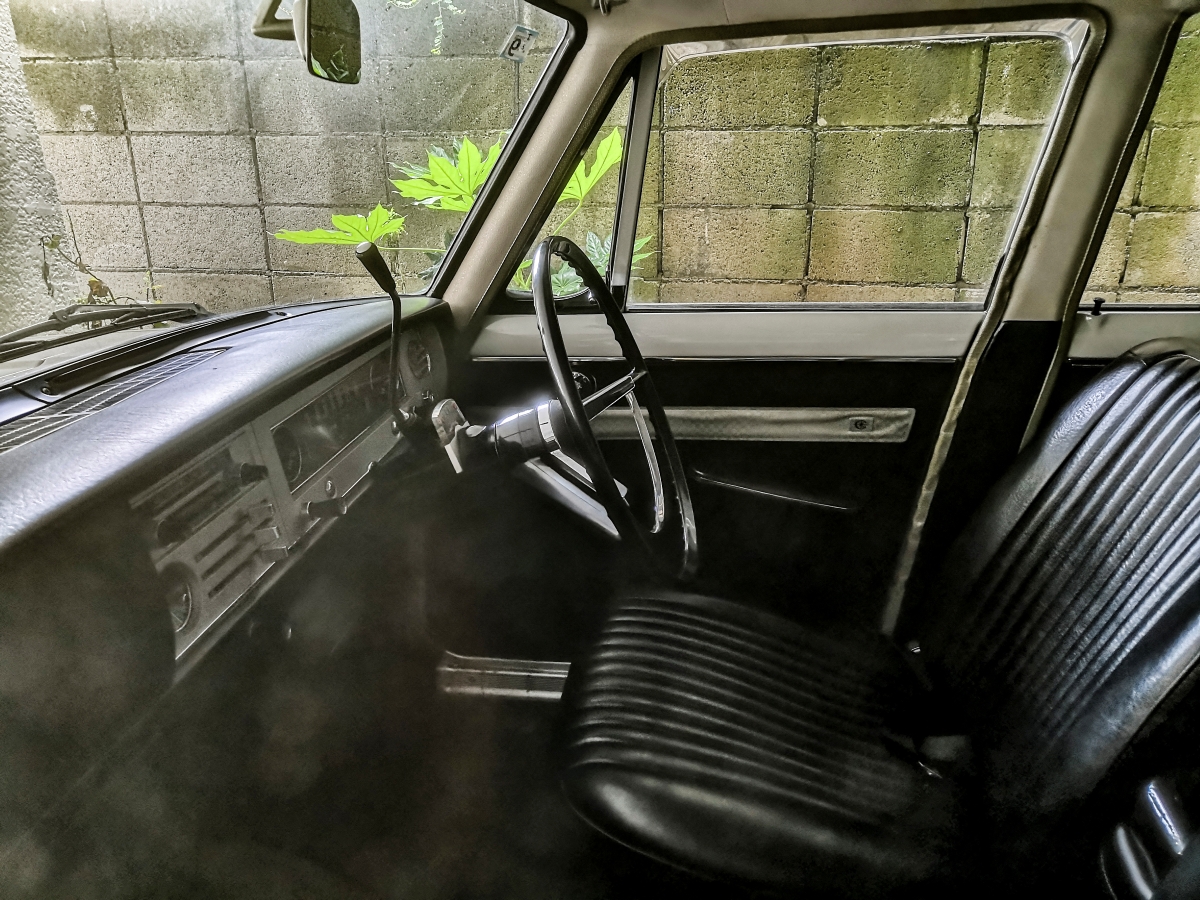
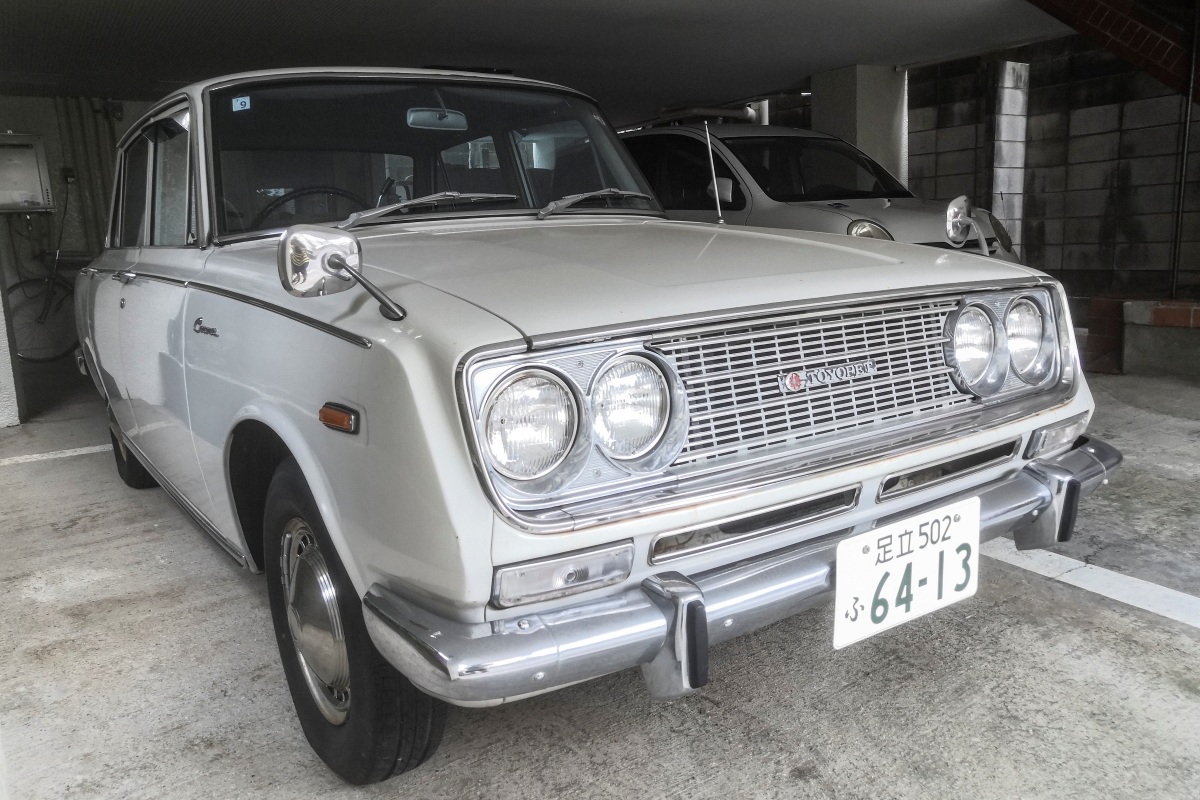
In its home market, this was the top of the line for the four-door Corona. It’s not clear how many Toyoglide-equipped cars were ordered, be it in Japan or abroad. It should think the share would have been pretty small, given how unfamiliar many buyers were with the technology at the time, not to mention the cost.
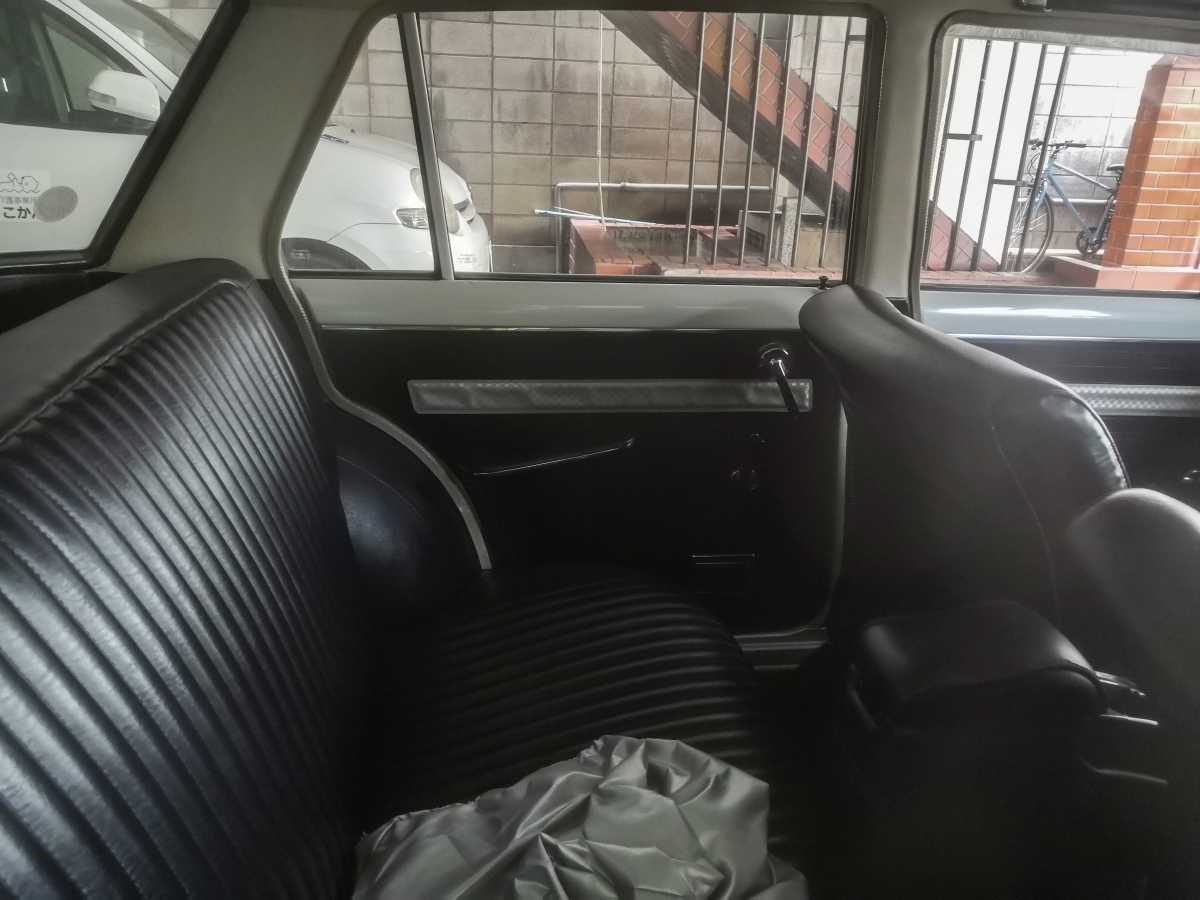
It is said though that the second-gen Toyoglide was a fairly solid bit of kit, unlike its semi-automatic predecessor, which did not garner a very favourable reputation. The main issue with the full automatic was that two ratios was just not enough, especially for smaller engines like the 700cc Publica or the 1.2 litre Corolla. The 1490cc engine found in the Corona was the bare minimum with that transmission, really.
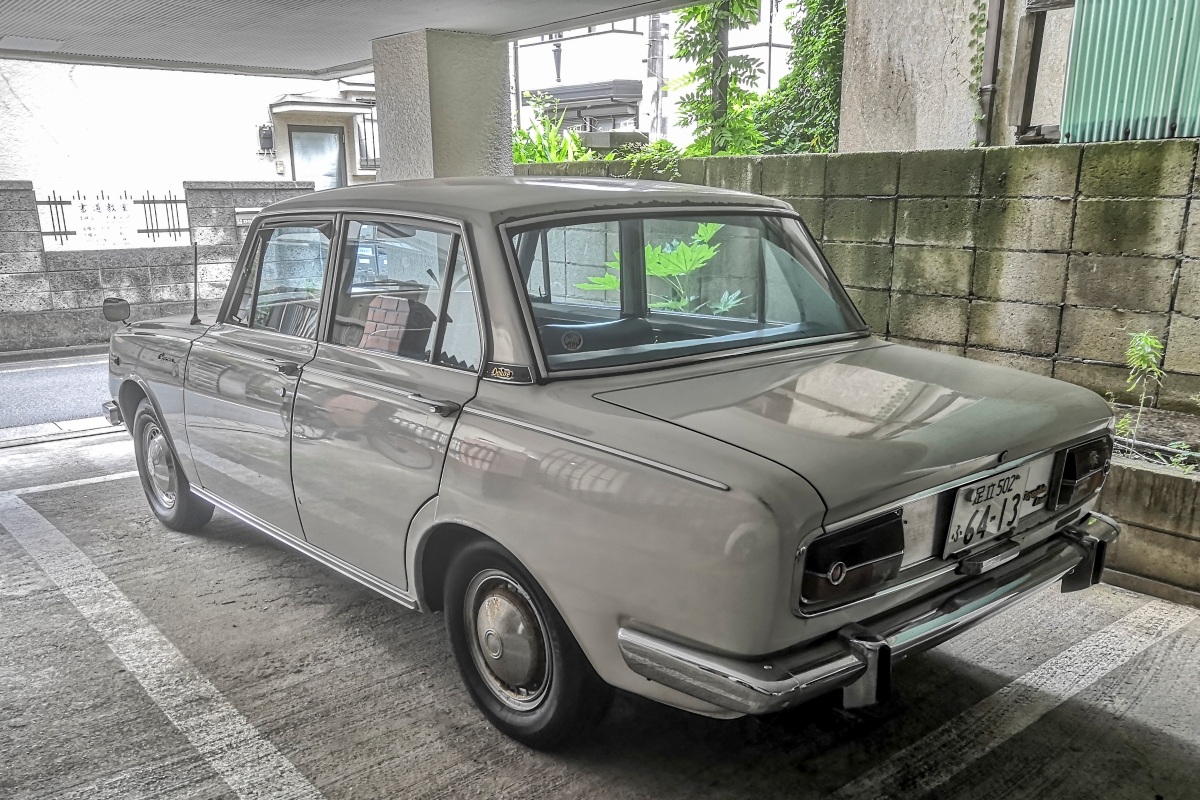
Toyota manufactured a little under 580,000 of these cars (in saloon, coupé, wagon and hatchback form) between 1964 and 1970, plus around 700k derivatives on this platform, such as the Mark II and the several blue-collar van and pickup variants, making it Toyota’s first million-seller.
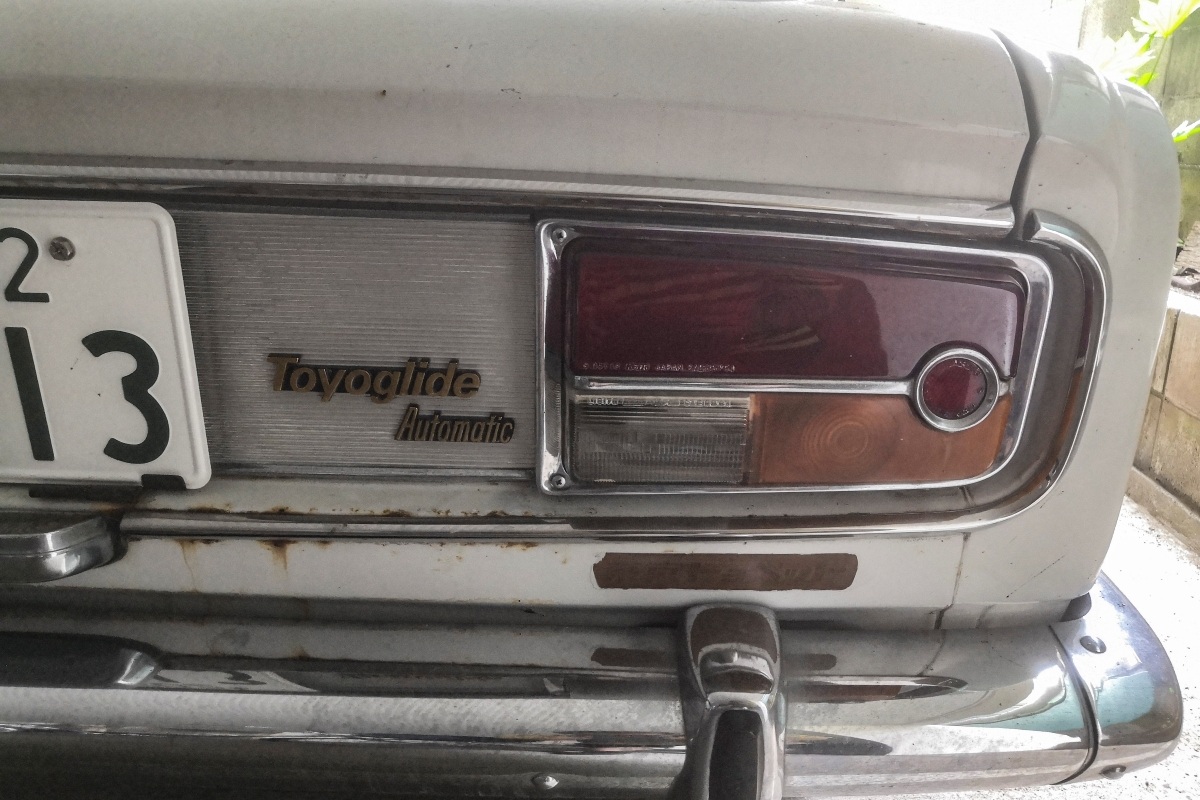
The Toyoglide, for its part, evolved into the industry standard three-speed in 1969 and carried on gliding along for many years, increasing Toyota’s popularity with the buying public both at home and overseas. The two-speed Toyoglide was not really an ideal fit for the T40 Corona, but it was good enough and niche enough to do the trick. Some bipeds prefer to only work with two pedals.
Related posts:
Curbside Classic: 1969 Toyota Corona – It All Started Here, by PN
Curbside Classic: Corona 1.9 – A Novel Contagion Sweeps the Land, by PN
Curbside Classic: ’64-’67 Toyota Corona – Ready For Take Off!, by Rich Baron
Curbside Classic: 1968 Toyota 1600GT-5 – Corona Con Tequila, by T87
CC Capsule: 1967 Toyota Corona Wagon – The Utilitarian Corona, by Rich Baron
CC Capsule: 1968 Toyota Corona 1600S Hardtop Coupe – The ‘Cool’ Corona, by Rich Baron
Vintage Reviews: 1966 – 1970 Toyota Corona – Bullseye!, by GN























A couple of clarifications: The original Chevy Powerglide was not a semi-automatic. It was an automatic that also had a Low range that could be selected for certain conditions, such as climbing or descending steep grades. But normal operation did not involve any manual shifting. The torque converter in it was designed to be utilized from a start, albeit a somewhat leisurely one. Starting in Low and upshifting manually into Drive was discouraged as it was hard on the transmission.
I don’t know if the original Toyoglide required manual use of Low in regular driving or was like the Powerglide (I suspect it was). If so, then like the Powerglide, it was an “automatic transmission”.
I know, that sounds a bit counter-intuitive, but an automatic transmission does not require shifting of gears; a torque converter alone with a wide enough ratio is technically an automatic transmission (does not require manual shifting).
I would disagree with you about the 2-speed Toyoglide not being a good fit in the T-40 Corona. The 2-speed Toyoglide (like the 2-speed Powerglide) was a surprisingly effective and efficient automatic, giving away very little to the standard manual in acceleration. Combined with the relatively large 1.9L engine, it was quite brisk in comparison to any other imports in the US at the time, and was a key factor in its success here. Testers were impressed with it, as were consumers. Of course it probably wasn’t quite as impressive when teamed up with a smaller engine.
The earliest 1962 Toyoglide started on the torque converter alone — Aisin also calls it semi-automatic — but Toyota says, “The Toyoglide transmission was replaced by a fully automatic transmission in September 1963.”
There’s just something about these old Toyota’s that I love. Even some of the other Japanese brands from the 60’s and 70’s and early 80’s.
This is a cool little car.
Oldest Toyota Ive owned was a RT80 next model to the 40 it was a good car problems were easily fixed roadside, I still have a car with a Aisin Warner transmission albeit a specially strengthened version that was developed as a complete powertrain and only installed that way,its the first time I deliberately sought out an automatic thanks to chemical burns
In 1968 my kindergarten teacher drove one of these and it was pretty much the only Toyota in town.
SWEET ! .
Even the original hubcaps, those must be hard to find by now .
I’ve loved these since way back, now and then a coupe shows up in my local scrapyards but they don’t like selling cars once placed in the rows .
I still have a little refri magnet made from a “TOYOGLIDE” sticker, this tranny was a GM Powerglide two speed made under license and it works very well indeed but for one fault : if the car is moving forward when you shift into revers, the reverse band snaps *instantly* leaving you with a nice car that easy to push backwards if the $1,200.00 to fix it exceeds your budget after having paid $1,500.00 for the whole car .
This was very common back in the day, I’da thought Toyota paid closer attention to American driving habits . everyone says “I _never_ do that !” when I point out them doing it even today .
The Renault box was a “Ferlic” electric clutch and 4 speed manual box that didn’t work very well, I had one in a 1963 Dauphine and loved the car, never got the Ferlic clutch to work properly .
These really were sturdy little sedans that took amazing abuse at the hands of my then teenage and twenty years old friends .
The turn signal switch was the horn ring, a nifty and thoughtful touch .
-Nate
“if the car is moving forward when you shift into reverse, the reverse band snaps *instantly* ”
Oh gawd, I worked with a guy who’s county assigned work truck was an S10 pickup. His SOP upon leaving his typical work station was to back up hard, at, I dunno, 10-15 MPH, then slam it into Drive. On the fly. Ne’er a fan of GM products, I felt sorry for that truck. But I guess they engineered it for that, it never made a noise or seemed to complain. I did feel sorry for whomever bought it 10 years later with 35K on it without knowing it’s history.