
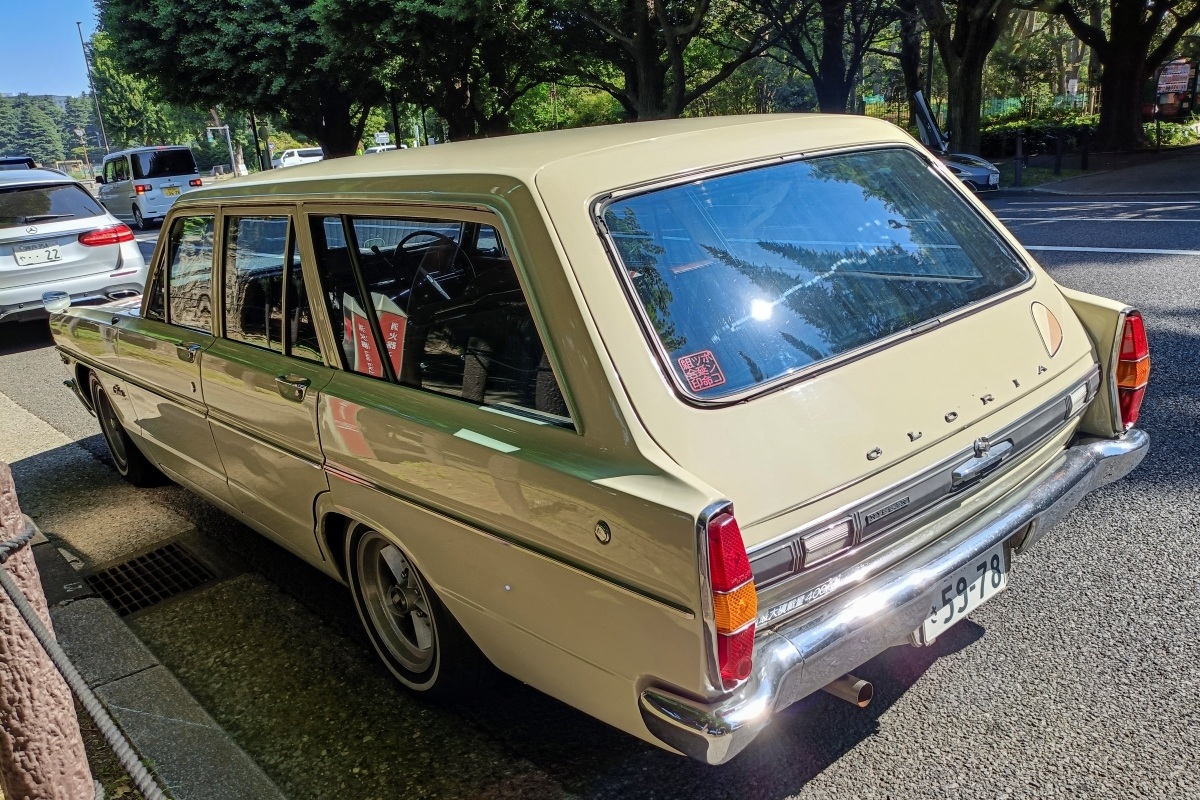
It’s about time we had a deep dive into the 3rd generation Gloria. We’ve had a glimpse or two before, as I encountered a few in passing or some that were already passed on, so to speak, but it took me six years to find a decent one that would cooperate and pose for the camera. Just a little patience and voilà!
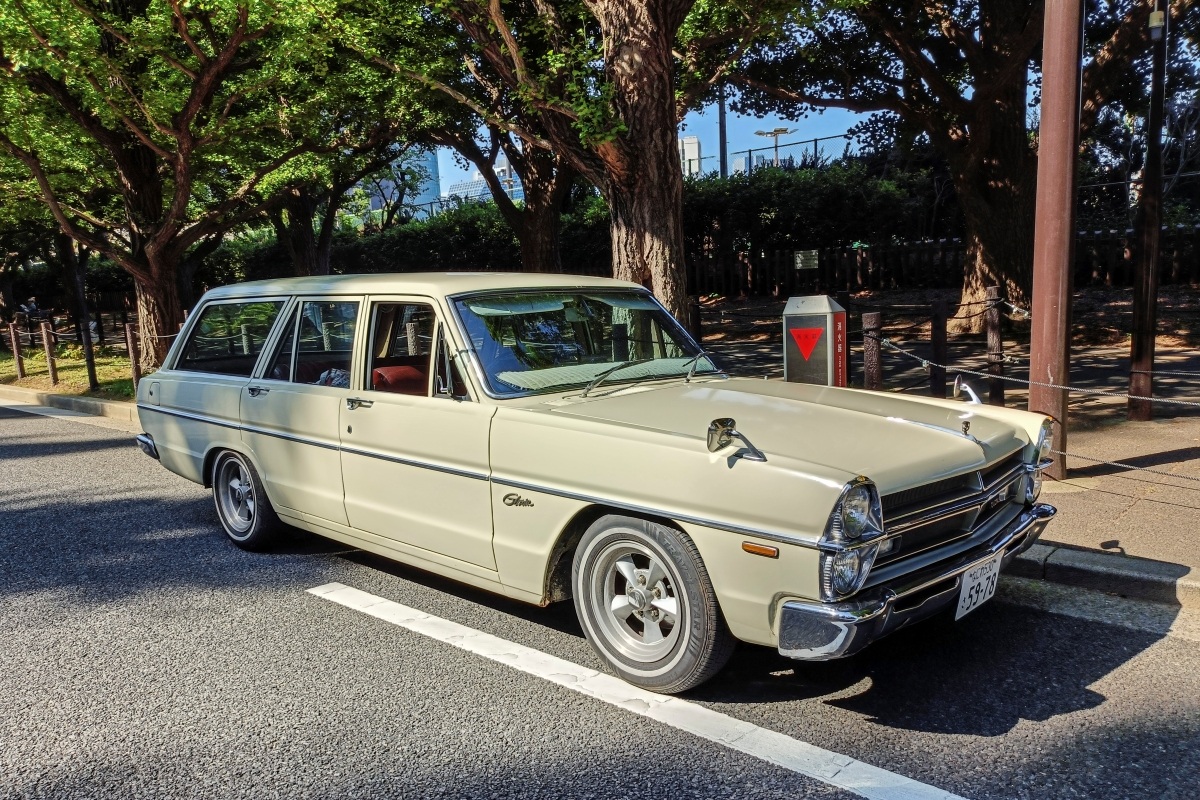
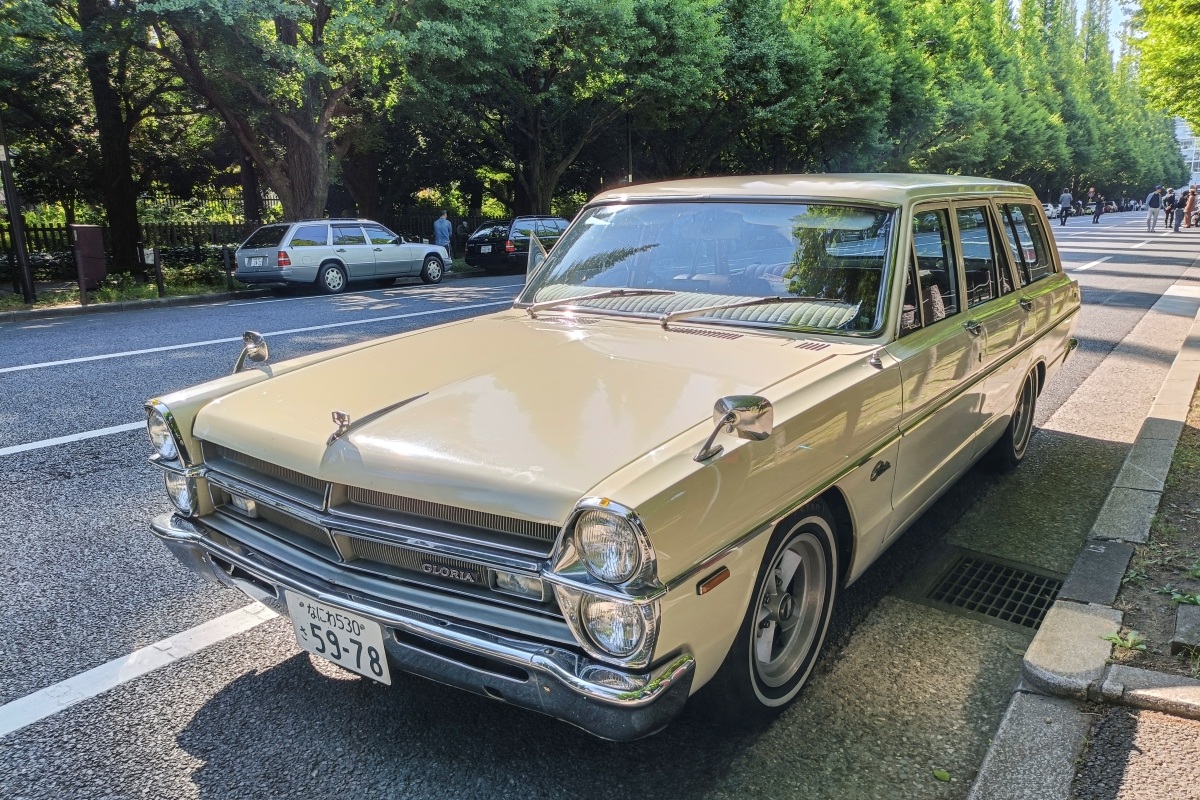
My ultimate dream would be to find an early model high trim saloon, but in the meantime, here’s a base model “van,” as the Japanese call their wagons. I trust many of you will like this one even more. Aside from the ugly aftermarket wheels, of course.
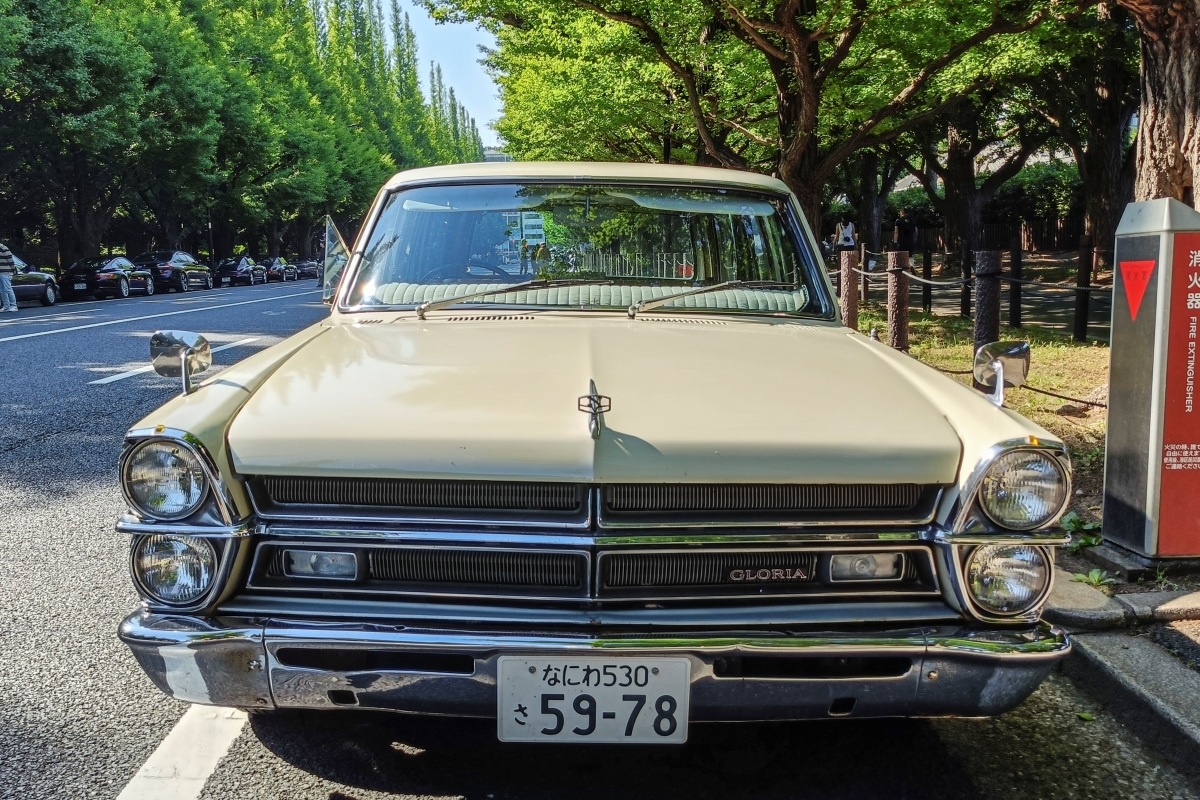
Glorias are always a special treat. Up to the penultimate generation in the mid-‘90s, they were always quite influenced by Detroit designs. This was especially true in the ‘60s and ‘70s, and I think most of you will look at this A30 Gloria and think mid-‘60s Pontiac, Ford, Cadillac, Mercury Comet or even Plymouth Fury. The stacked quads will do that.
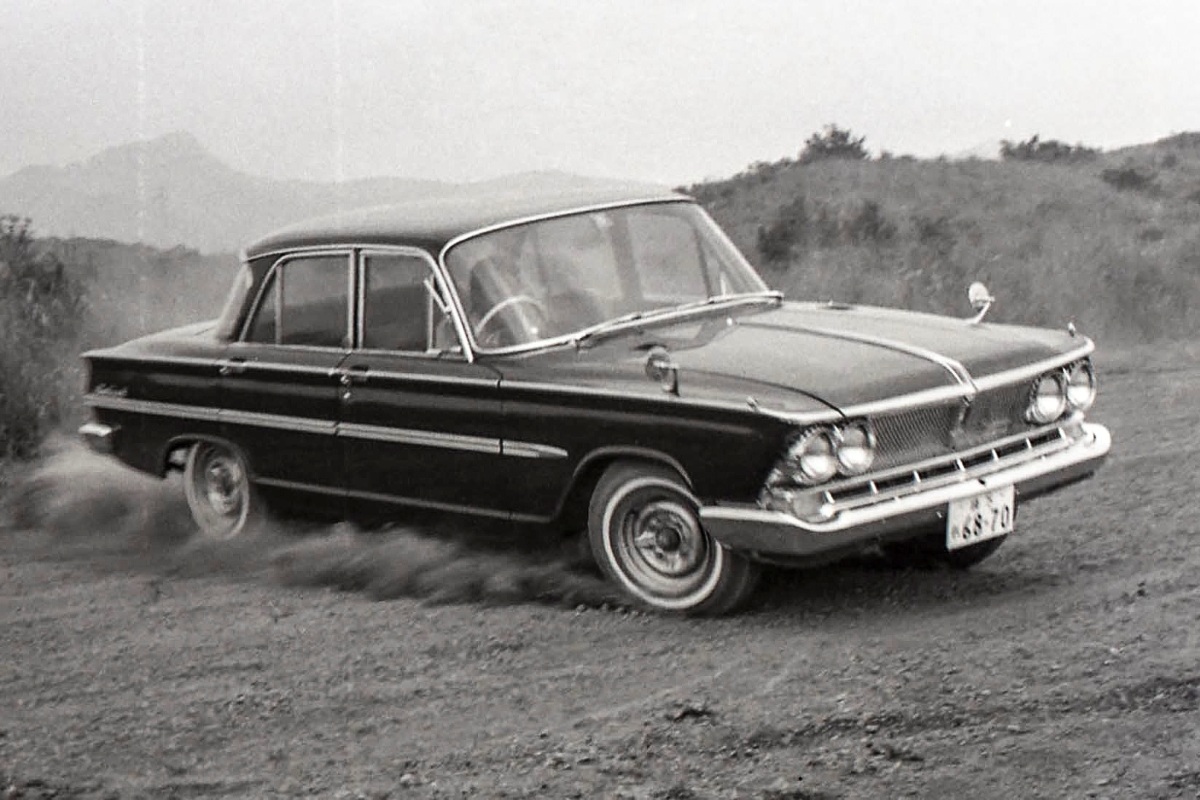
It was a big change from the previous generation Gloria, made between 1962 and 1967 by Prince Motors. Those had more of a Corvair vibe, with a bit of AMC thrown in. Prince were a major player in the budding Japanese executive car field, but they were deemed by the infamous Ministry for International Trade and Industry (a.k.a the Deep State, as we say nowadays) to be too small to fend for themselves. The men from the Ministry decided that pairing up Prince and Nissan would be the best course of action, so they organized a merger.
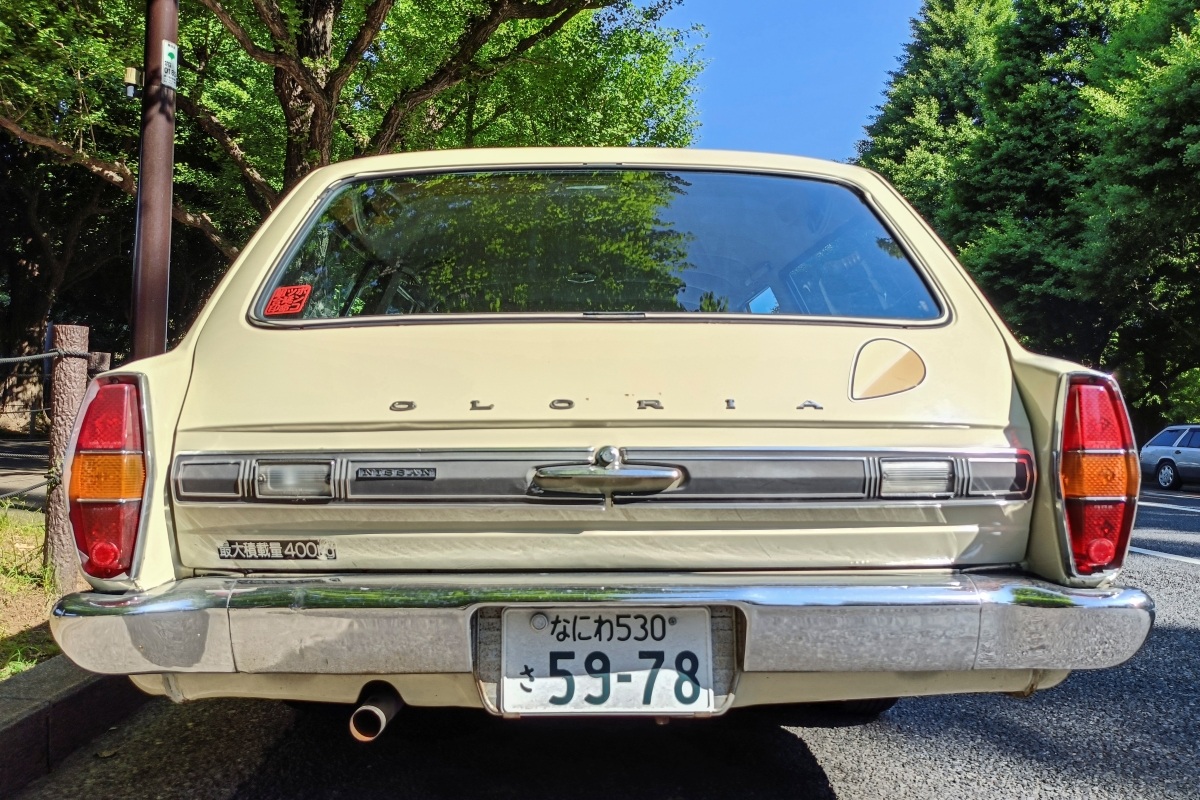
This merger took place in 1966, at a time when the next generation Gloria was entering pre-production. This makes our CC more of a Prince than a Nissan, badging notwithstanding. The Nissan influence was brought to bear on the A30 Gloria in a few ways, such as the rear suspension, which was of the De Dion type on previous generations, but switched to the Nissan Cedric’s leaf-sprung live axle for this model.
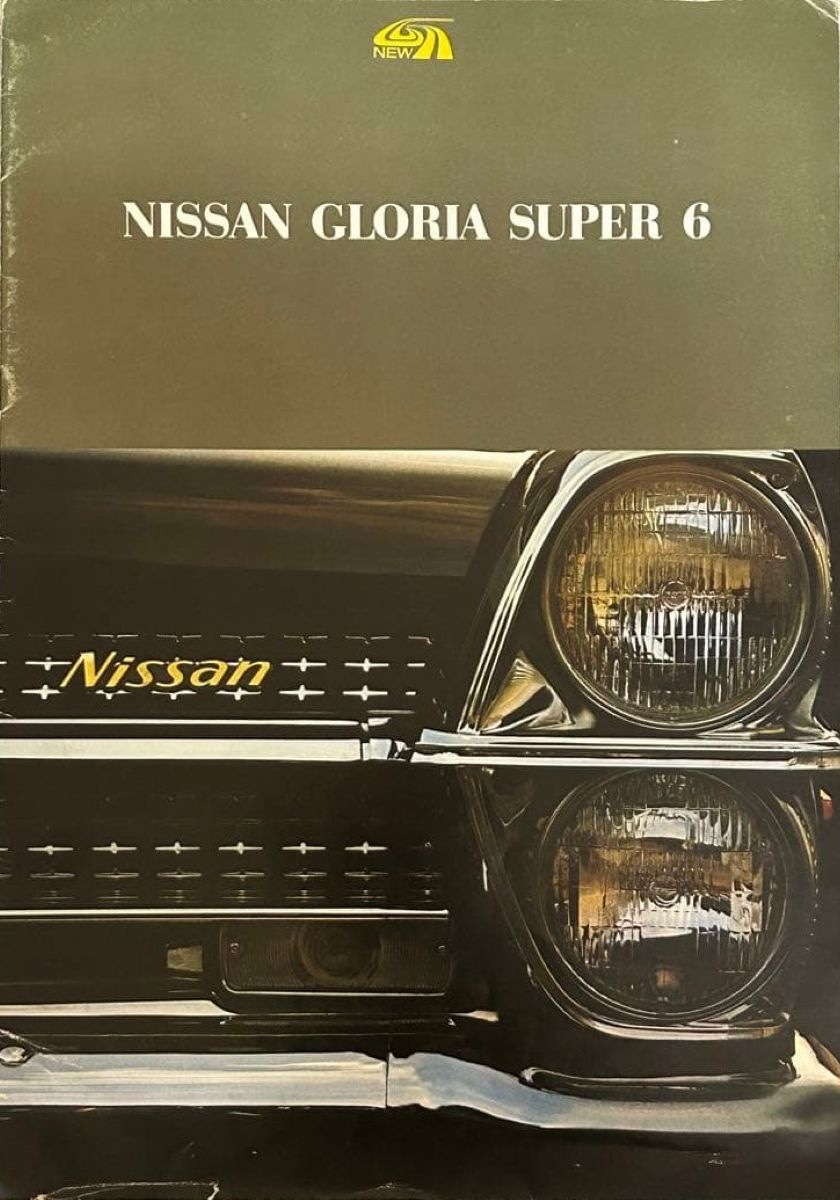
The car’s exterior design, on the other hand, was utterly alien to anything Datsun. The stacked headlights were immediately latched on by both Nissan’s PR department and the Japanese public as the new Gloria’s main design feature. Which makes sense, as it was then the only JDM model in its segment to have that look. As a consequence, this generation is known to this day as Tateguro (タテグロ) – a protmanteau of tate, meaning “stacked,” and guro, the first two syllables of Guroria, which is how the name “Gloria” is transcribed in the local vernacular.
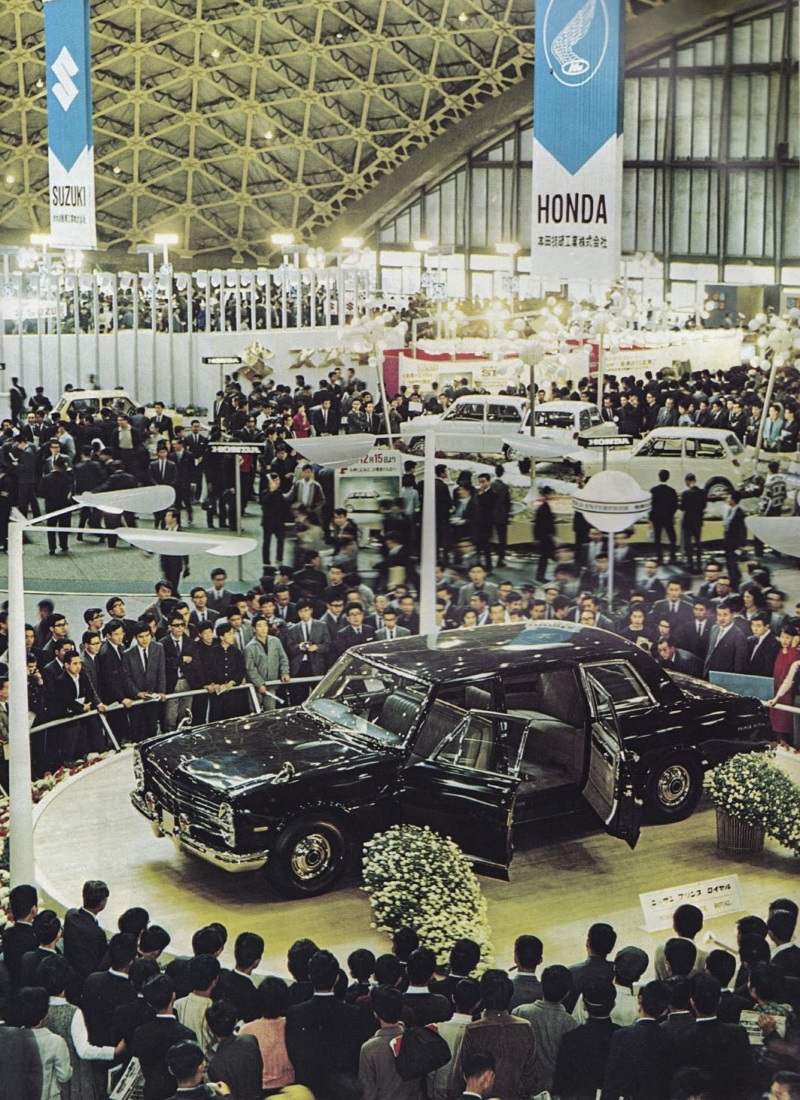
The stacked headlights were premiered on the Prince Royal custom-built limousine, delivered to Emperor Hirohito in 1966. It was the first domestic car entrusted to do this job, hitherto undertaken by the likes of Daimler, Rolls-Royce or Mercedes-Benz. Nissan were apparently seething that Prince had snatched this extremely prestigious job right from under their noses, so grafting that front end to the Gloria could have been Prince’s way to tell Nissan what they thought of the merger…
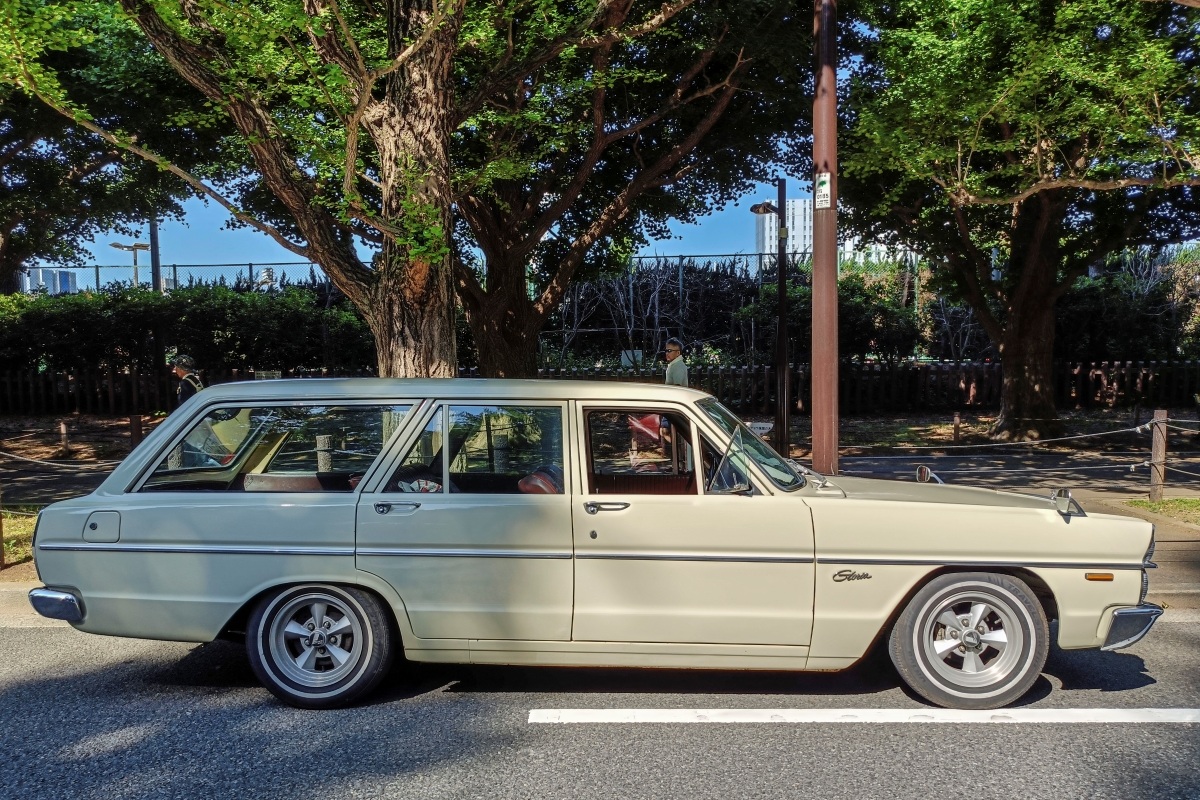
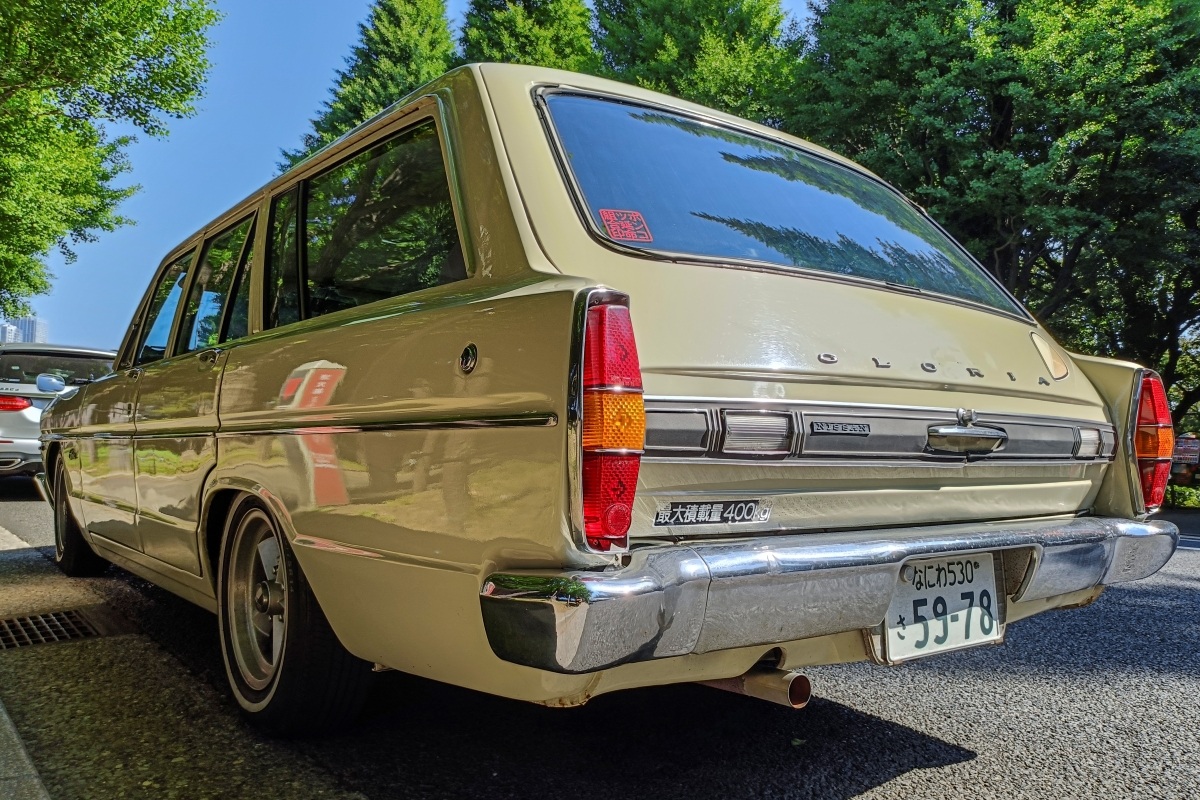
From the start and until the end, the A30 Gloria was available in two body styles: saloon and “van,” better known and somewhat more accurately termed as wagon or estate in the Anglo-Saxon world. The rectilinear styling made it easy and esthetically pleasing to graft on the long roof.
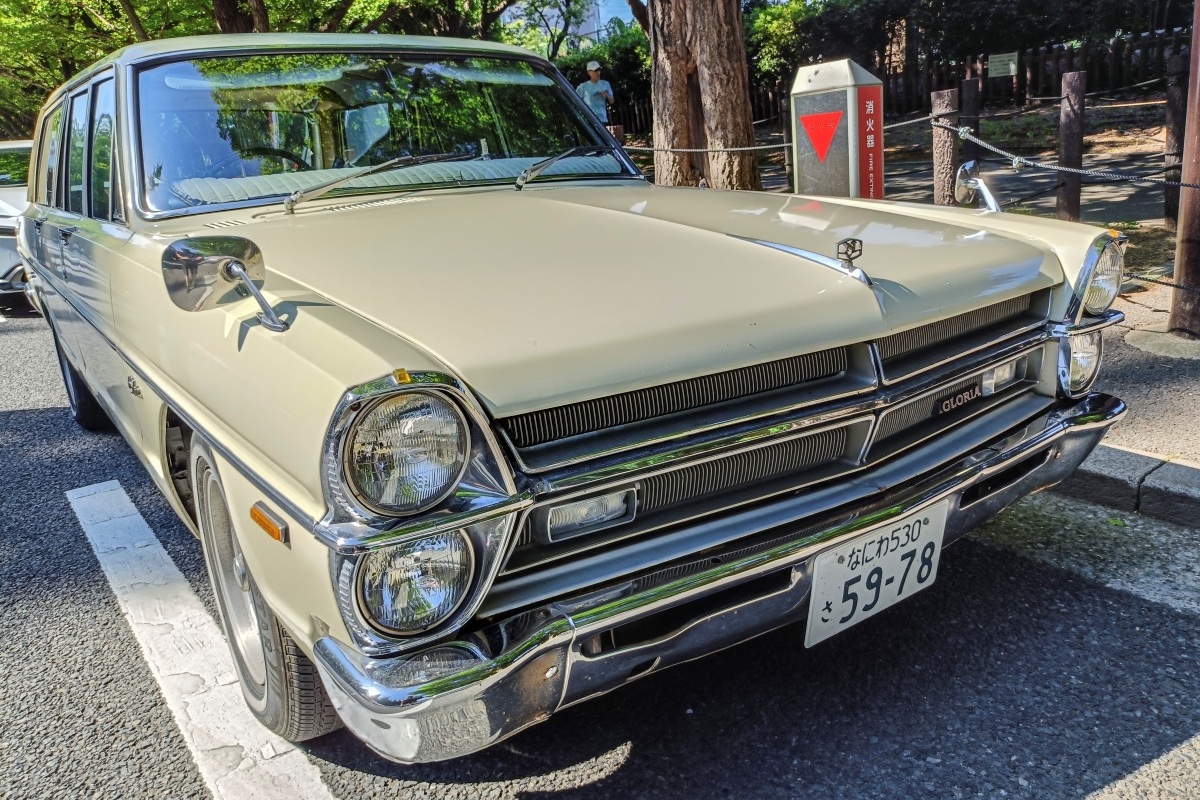
The headlight design definitely has a whiff of GM about it, but it ended up being a one-generation thing. On the other hand, the four-part grille has quite a Mopar feel (the ’65 Fury, in particular), and that motif became a Gloria trademark from this point forward.
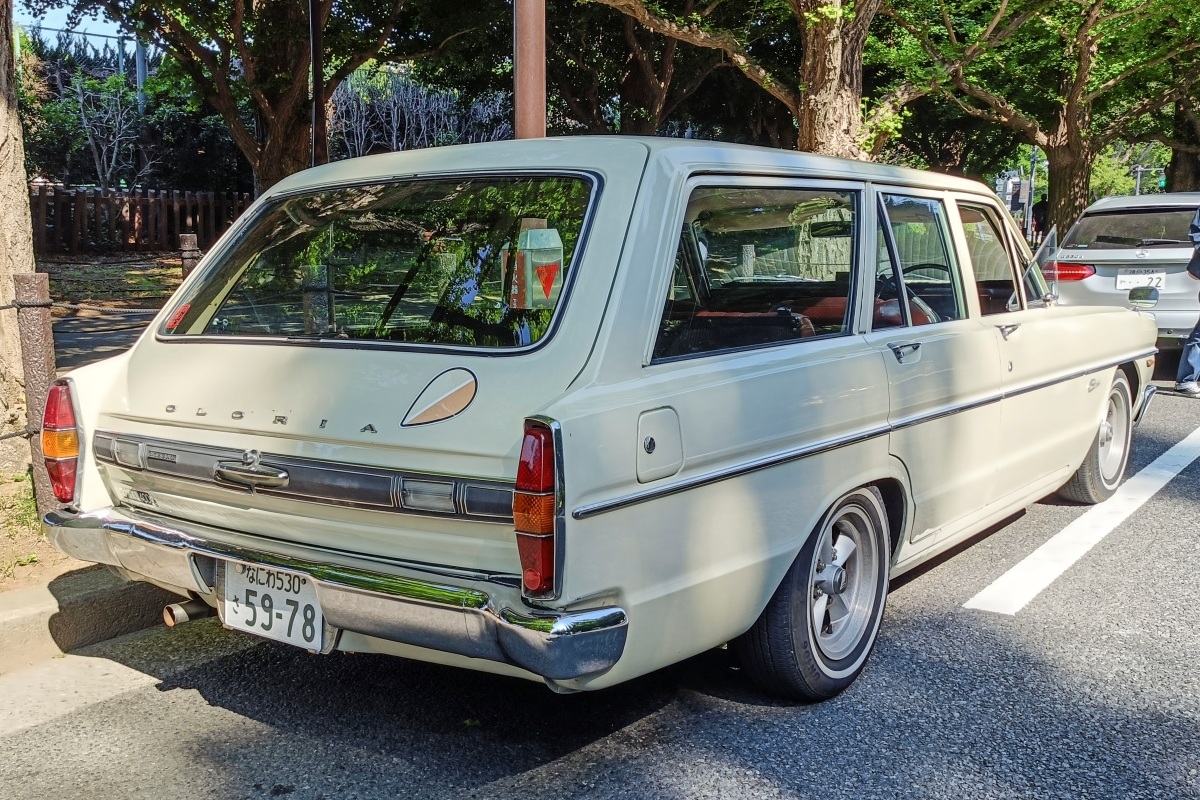
The vertical taillights were not repeated on subsequent generations, either. A touch of AMC Ambassador about those, perhaps. Very neat and extremely well-suited to a wagon design.
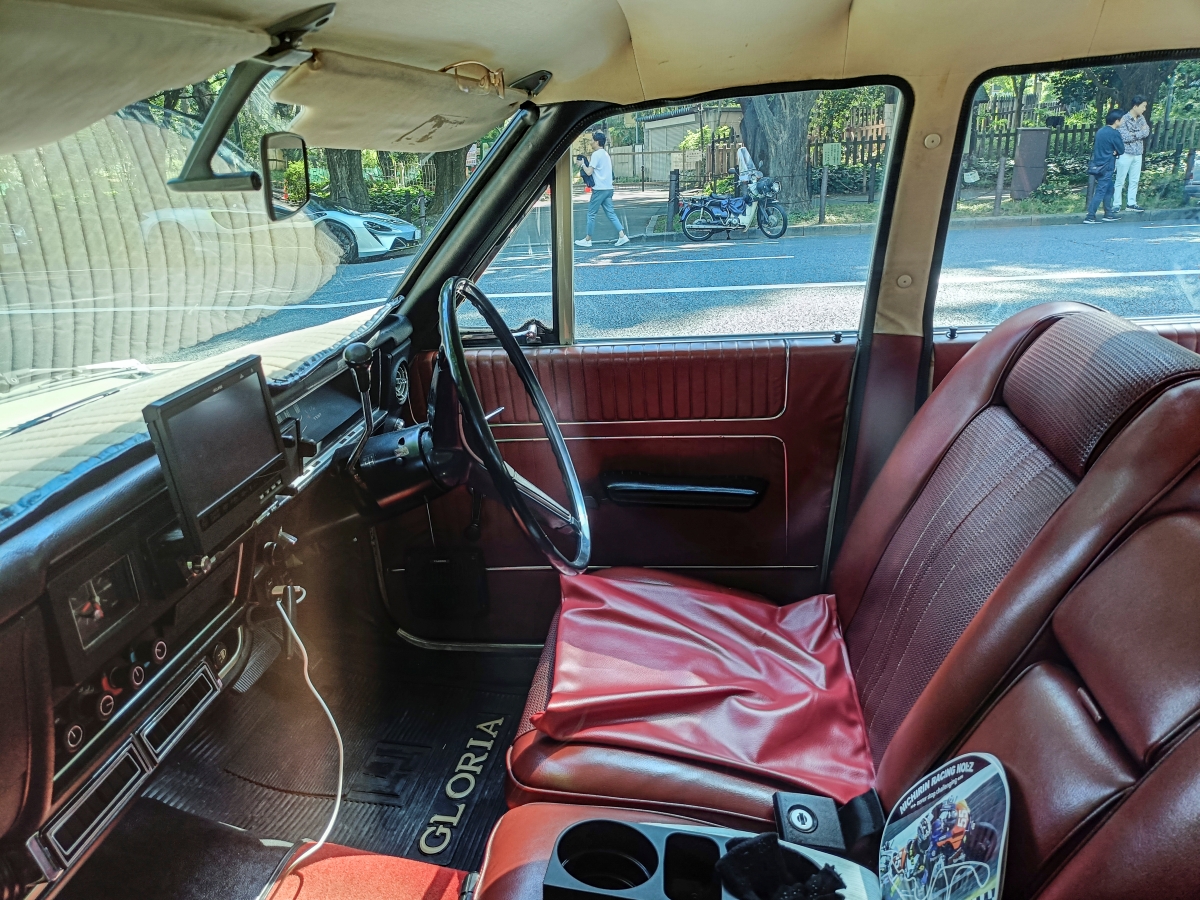
Inside, the Detroit theme continues, with a cliff-edge dash, a strip speedo and a column gearchange. However, said gear lever commanded a four-speed manual, in this instance (or, to be more precise, a three speed plus overdrive). A three-speed auto was optional, but in the ‘60s, automatics were still pretty niche on JDM vehicles.
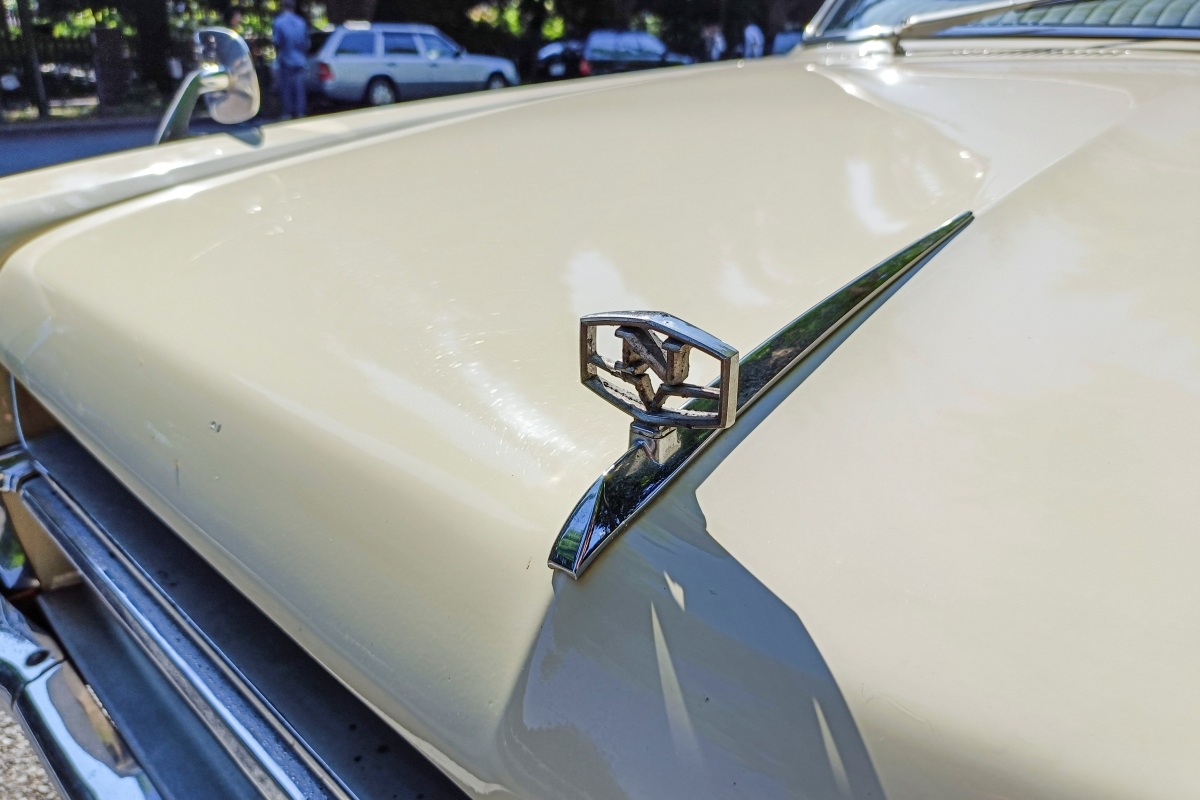
This particular car doesn’t have its original engine any longer (as is stated in this gazoo.com article featuring it). Until late 1969, the Gloria featured Prince’s legendary 2-litre OHC straight-6, good for 106hp. In the fall of 1969, this was replaced by the Nissan L20 – similar specs, but with an extra 20hp. Very basic models in taxi or van trim had a 2-litre 4-cyl.
The influence of Prince on Nissan was significant. The Skyline became one of the marque’s hottest nameplates, so much so that it still survives to this day. Prince also had advanced plans to enter the compact segment with a brand new FWD model, which eventually became the 1970 Cherry.
But for larger cars, this Gloria was the end of the line. From February 1971, when the A30 left the scene, the nameplate would remain as a purely badge-engineered Cedric. This was due in no small part to economies of scale, for no matter how cool it looked, the A30 Gloria was not a runaway success. Only about 50,000 were produced, which was much less than its predecessor. There are still a number of survivors in good nick about, thankfully. No doubt they now command a princely sum.
Related post:
Junkyard Classics: One Of These Cars Is Not Like The Others, by T87
(Cropped) Snapshot From 1967: Quick; What’s The First Car That Comes To Mind? (Updated), by PN























I am no expert on older Japanese vehicles, but I find this a very good looking car, with a cohesive look. It did scream “Detroit” before even reading the text, but even though the stacked headlights might not be original, they are very well integrated in the front end; it most reminds me of Cadillac as their housing is well sculpted and not just a square slab of metal (as seen on some american models)
The interior also looks nice and I would imagine these cars were well built, being Nissan’s flagship, if I learned anything from your articles about Japanese cars!
I am not convinced by the vestigial fins, but it must not have been easy to integrate the wagon body into the design.
When I scrolled down to the second picture my immediate thought was “1966 Ford Fairlane Wagon”!
This is a very good looking “van”.
It’s styling is derivative, as you said, but…it’s so cool! I love it.
I see AMC Ambassador and ’66-’67 Chevy II/Nova wagon. All at once. Not a bad looking car at all though.
Quite a find. After swallowing up Prince, Nissan stopped selling the Prince designs down here, so we never got this model. I’m quite taken by the intricate detailing on the headlight surrounds, rather like arrows pointing inward, and the decorative panel on the tailgate, which say this is no ordinary ‘van’.
This is a lovely car. The styling all works together very well. It makes a very nice wagon.
The aftermarket wheels are rather American looking so they work for me on this example.