
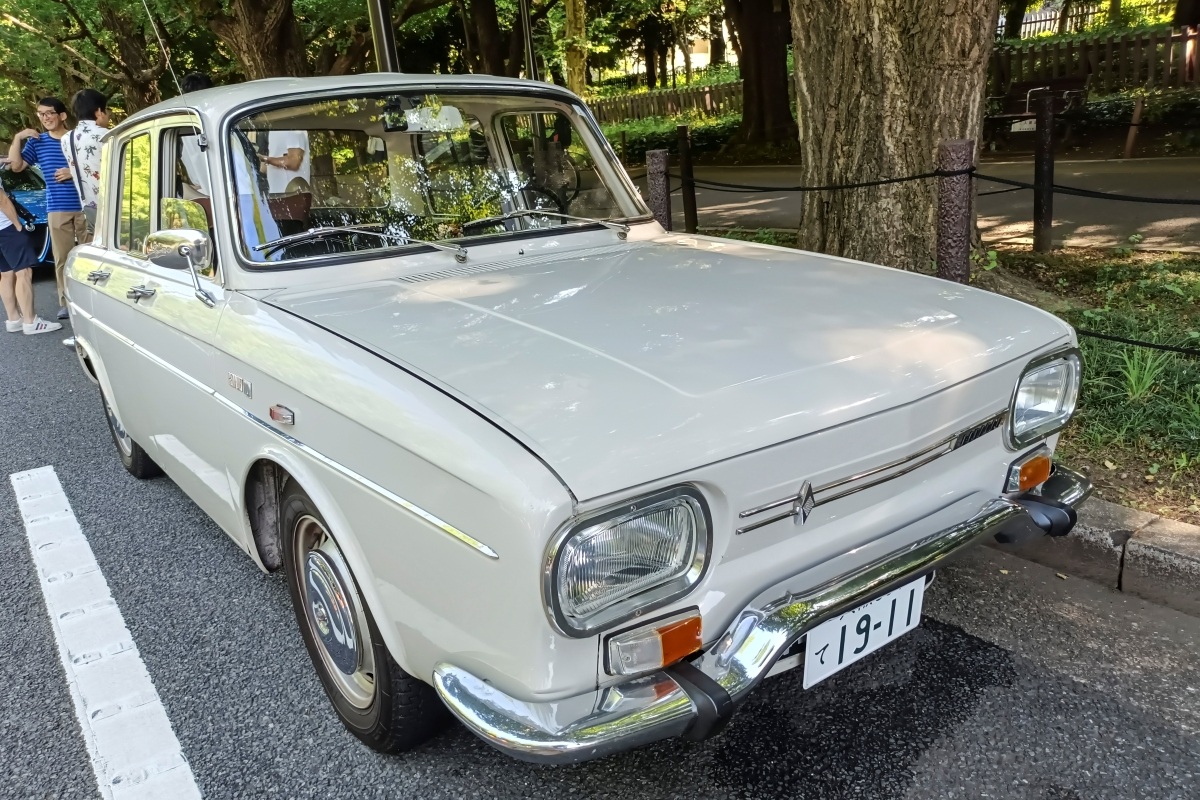
Everybody harps on about the whacky (read: pig-ugly) styling of ’70s Datsuns, and quite rightly too. At the time, some rather peculiar-looking machines were also made by the likes of Lancia (the Gamma berlina), Citroën (the Ami 6, the Visa), British Leyland (the horror… the horror), VW (the 411/412), not to mention some dubious COMECON products. But you know who repeatedly created some of the most esthetically-challenged vehicles ever mass-produced? The good old Régie Renault.
We’ve had a look at the R6, the R14 and the Rodéo, three rather egregious examples of Renault’s least-inspired designs. But three wrongs don’t make a right, so let’s try a fourth one, this time with its engine in the back.
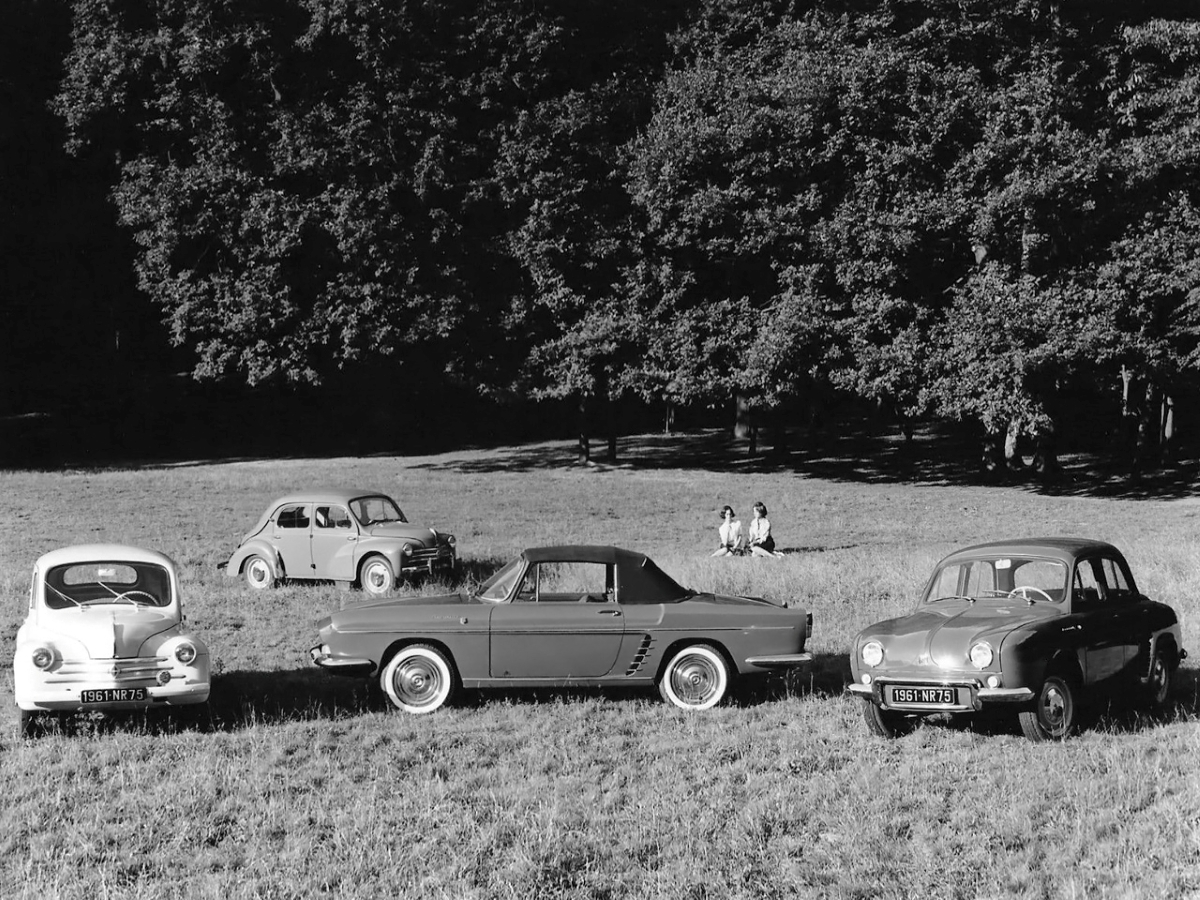
Rear-engined Renaults were a postwar staple. The 4CV (1946-61) launched the concept and ended up being the first French car to break the million-unit mark; the Dauphine (1956-68) carried it over pretty brilliantly, helped by coupé/cabriolet derivatives (Floride / Caravelle, 1958-67) and the semi-independent sporty Alpines.
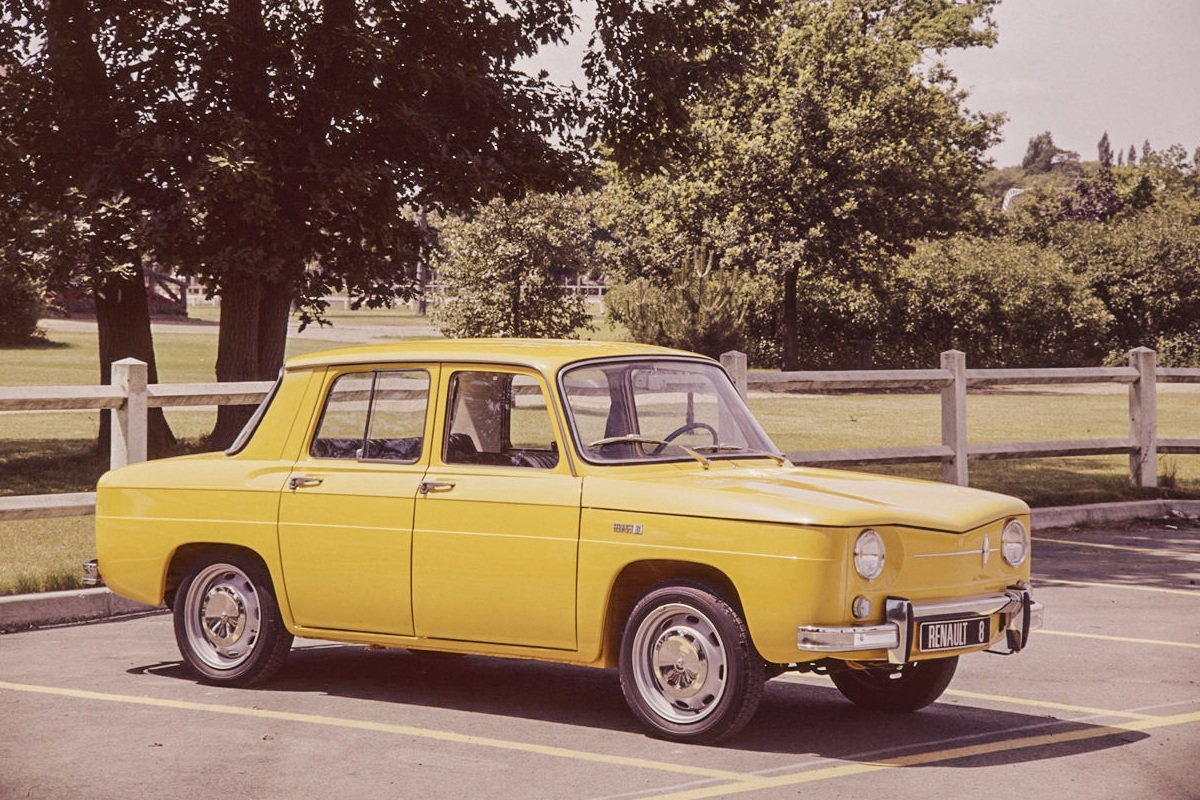
By the early ‘60s, Renault were starting to turn their focus to FWD models, but their tail-happy erzatz-Beetles had garnered quite a following, so they spruced up the concept by introducing the Renault 8 (above). It was basically the same as its forebears, with a water-cooled 4-cyl. perched aft of a swing axle rear end, but its clever and boxy body provided far better living conditions for its passengers.
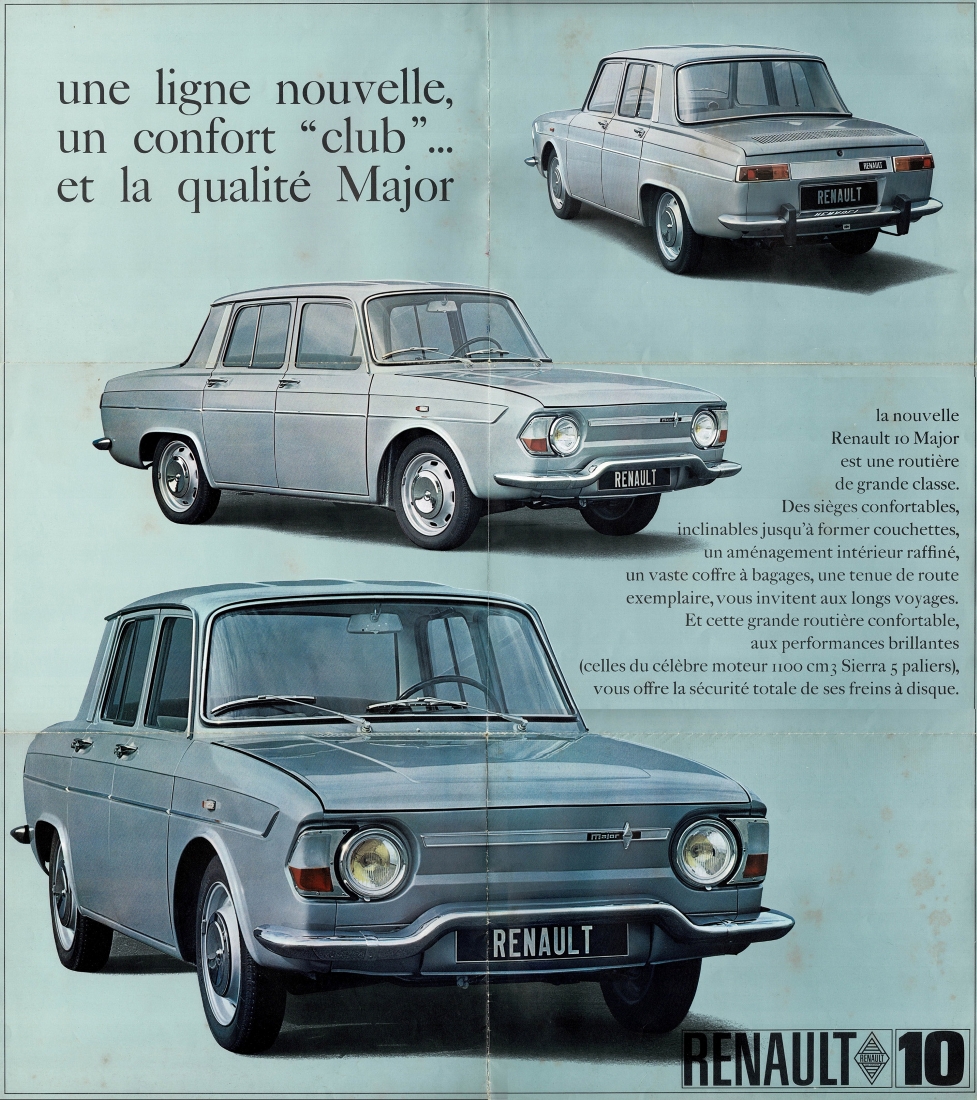
But Renault soon got the impression that some of their clients remained a little unconvinced by the R8’s luggage compartment. It was underwhelming, as most of them are in rear-engined cars – especially Renaults, which did not offer any additional cargo space in the back, like VW’s Type 3 or the Škoda 1000MB. They could have facelifted the R8 with a bigger nose, but instead they just launched a derivative saloon with said enlarged snout. In September 1965 the 10 was finally out.
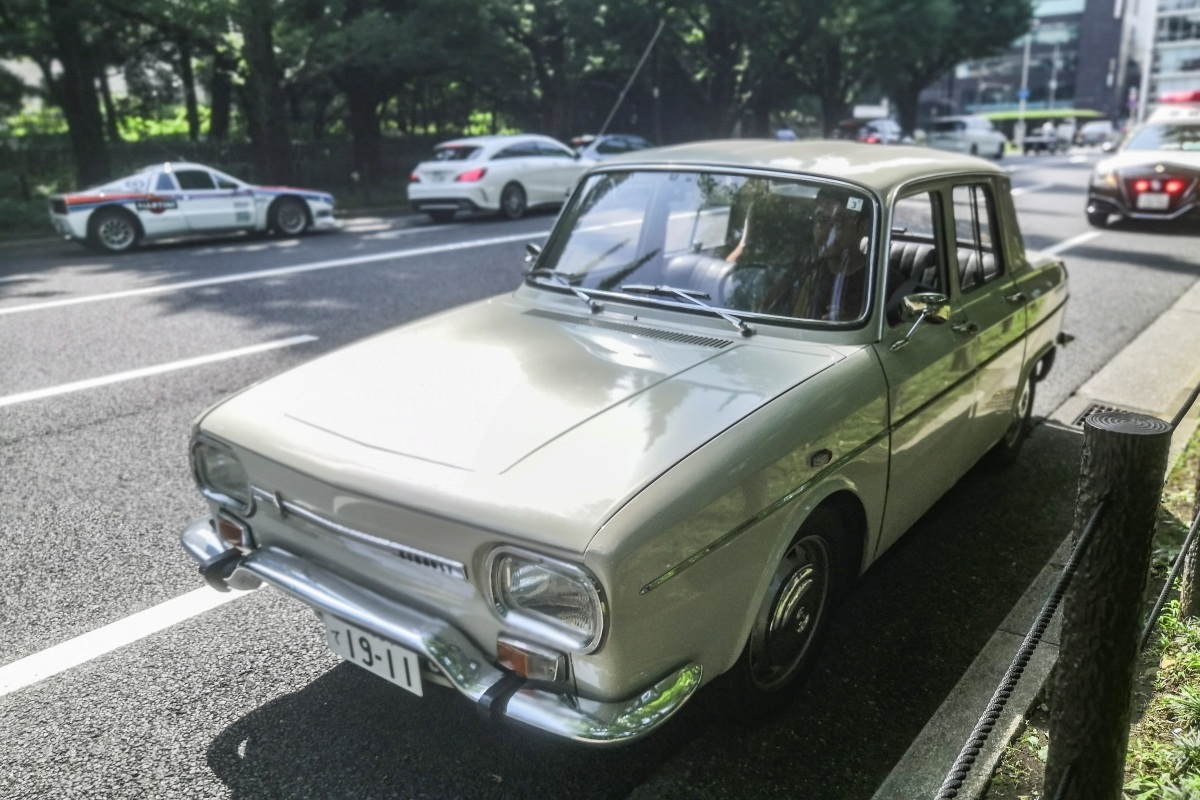
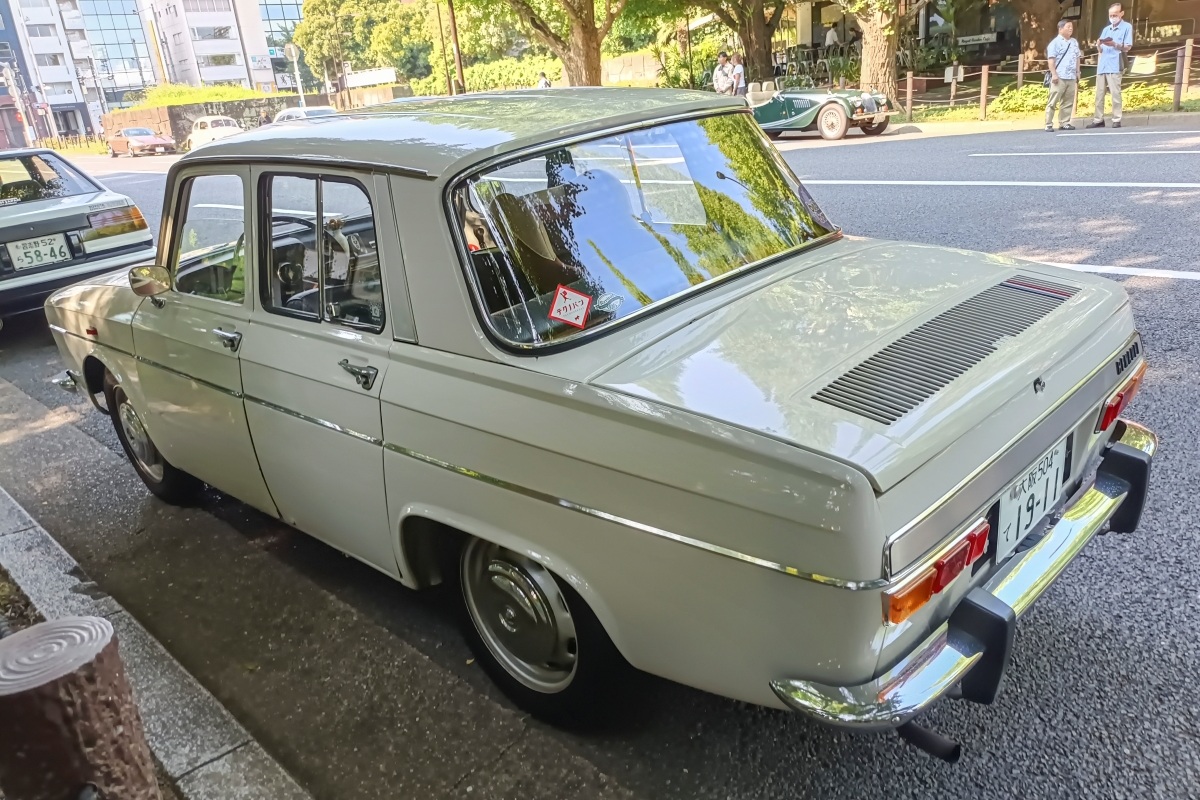
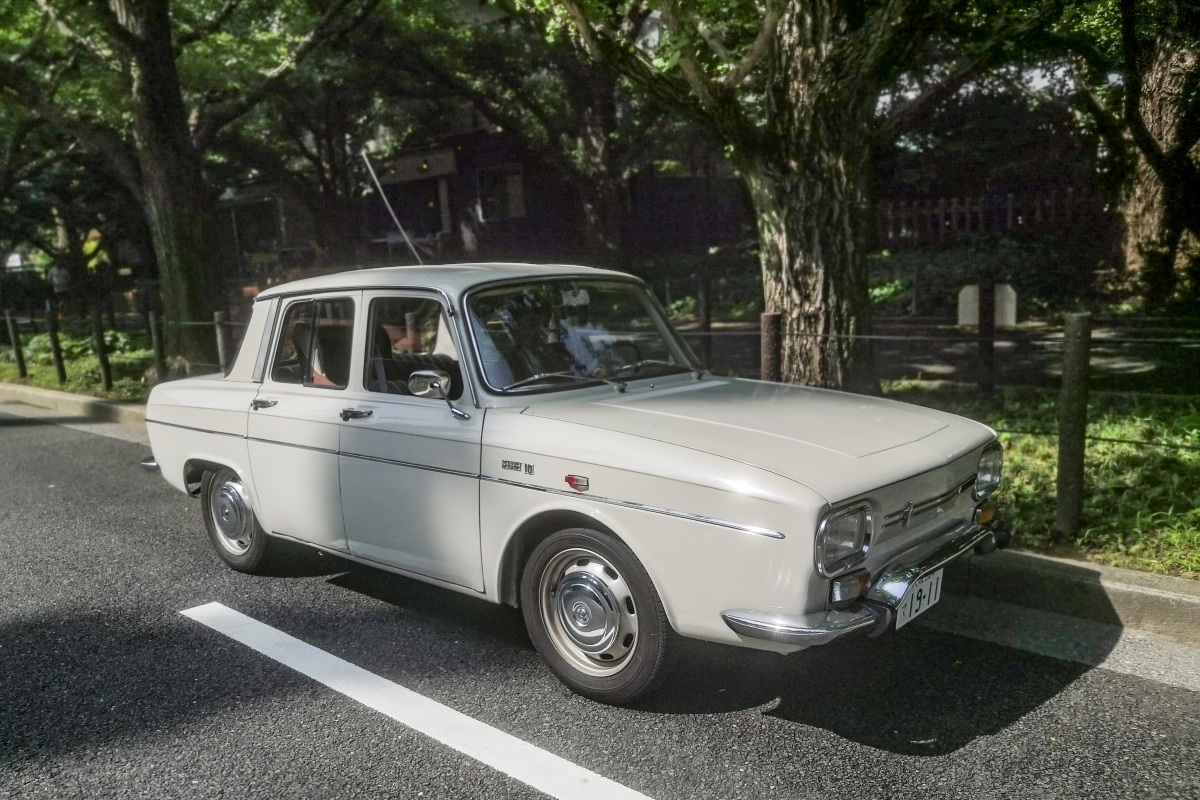
Despite keeping the same body shell as the R8, the R10 was a shade wider (because of its larger bumpers); the main different was the 20cm in extra length, mostly in front overhang. Whatever balance the Renault team, aided by Philippe Charbonneaux, had succeeded to build into the R8’s design back in 1962 was completely thrown off by this heavy-handed rhinoplasty, authored by Pierre Mignon. But the exercise was not done without good reason.
Renault’s predicament, in those days, was somewhat similar to Citroën’s: they had plenty of good products on the smaller/compact side of the range (i.e. under 1000cc) and, on the opposite end, a new flagship saloon in the shape of the 1.5 litre R16. But in the middle, right in the 1100-1300cc segment where most large European carmakers had their bread-and-butter family saloons, Renault had nothing to offer.
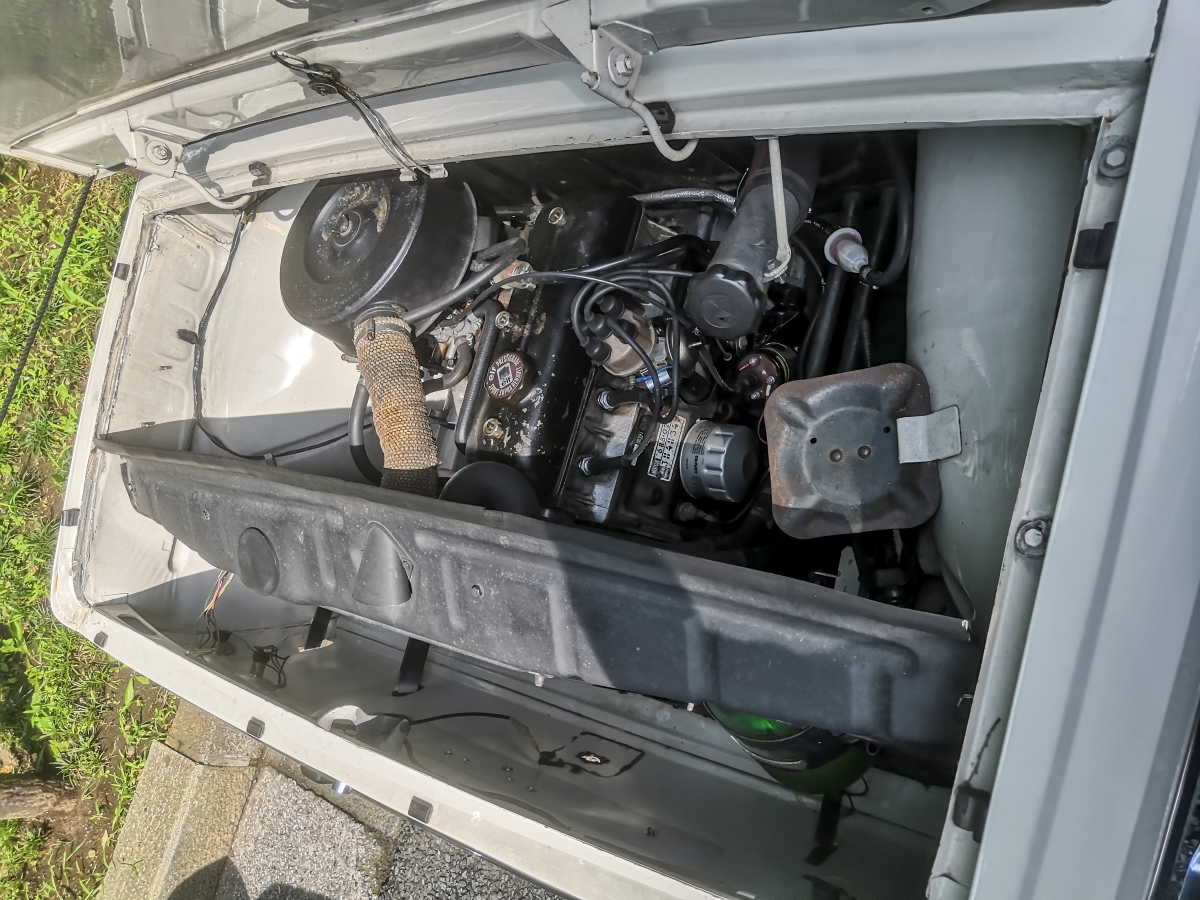
They did have their new “Sierra” engine, a.k.a the Cléon-Fonte 4-cyl. created for the R8. It was initially only available in 950cc form, but in 1964 came a 1.1 litre variant. That would be the higher end mill for the R8 and all the R10s, including our CC. A very good engine it was, too. It could be mated to the default 4-speed manual transaxle or, for an extra FF1000, a push-button 3-speed automatic – not the most common option on this class of cars in the mid-‘60s.
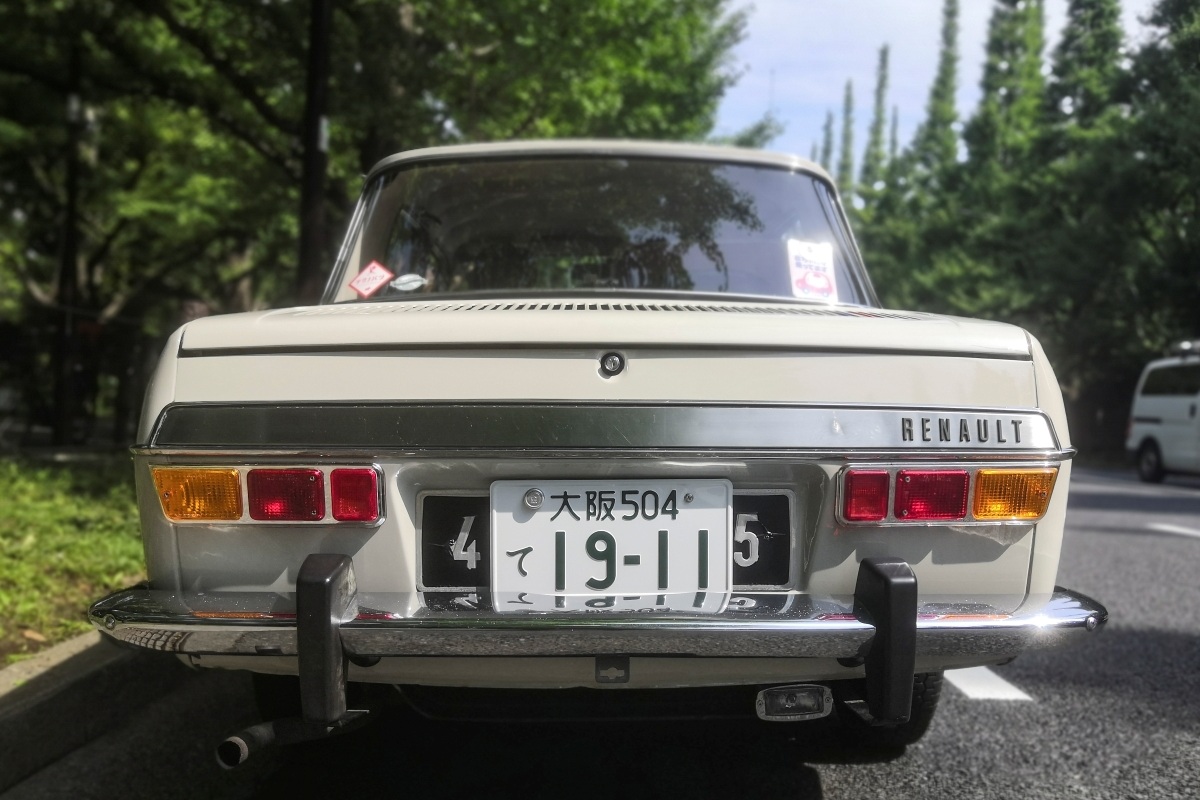
I guess that’s why Renault tried their luck peddling the R10 in the North American market. Much had been written on CC about that pretty disappointing adventure, but from Renault’s perspective, the R10 was the only viable choice (along with the R16, which sold even worse over there). Because of the immutable sealed beam requirement, American market R10s always kept the original front end.
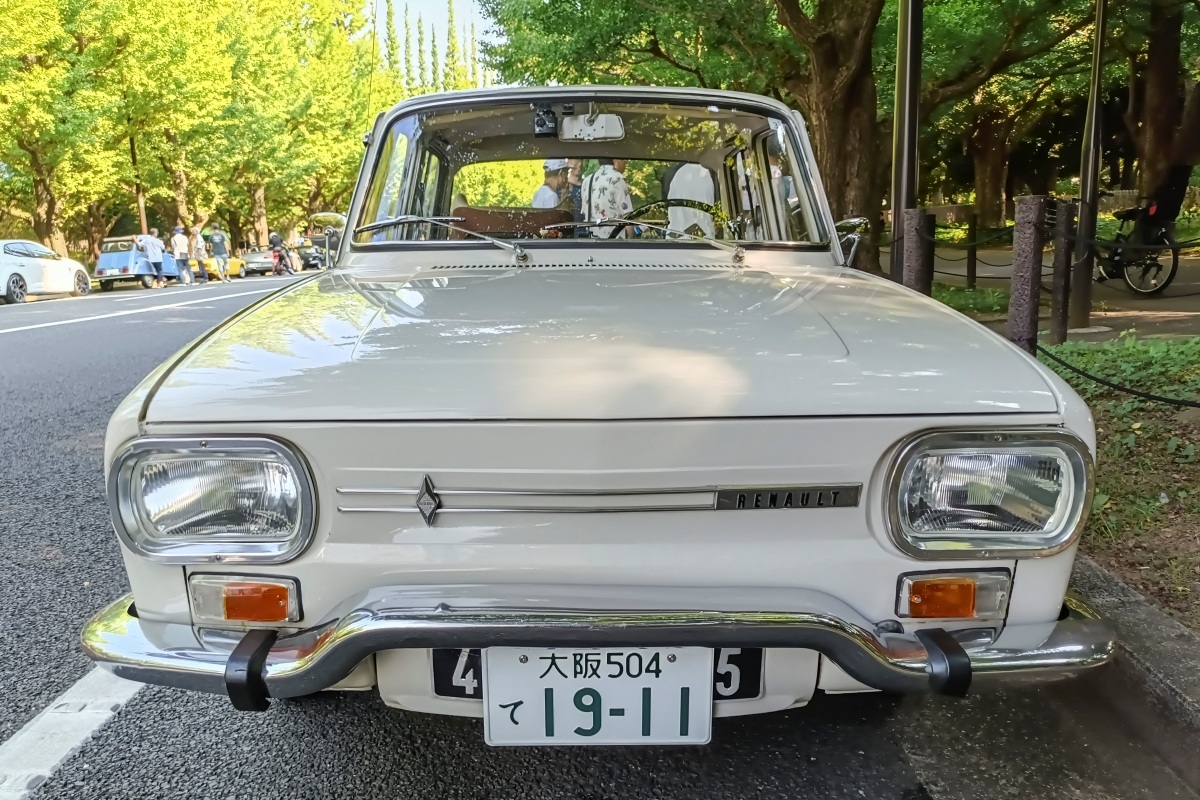
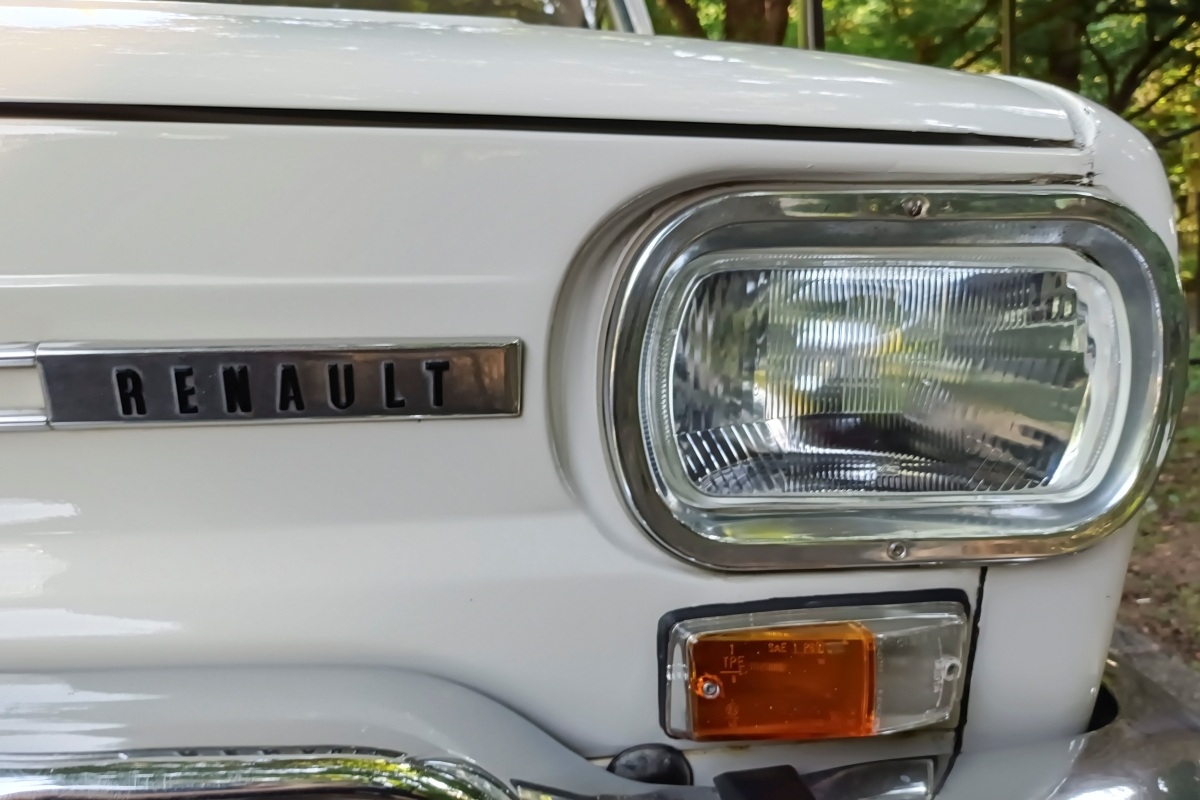
Domestic and global market R10s, on the other hand, were given a pretty significant facelift in 1967, a mere two years into their production run. Composite headlights were all the rage, so I guess the folks at Renault thought their most statutory small car should don some rectangular specs, in a desperate bid to look trendier.
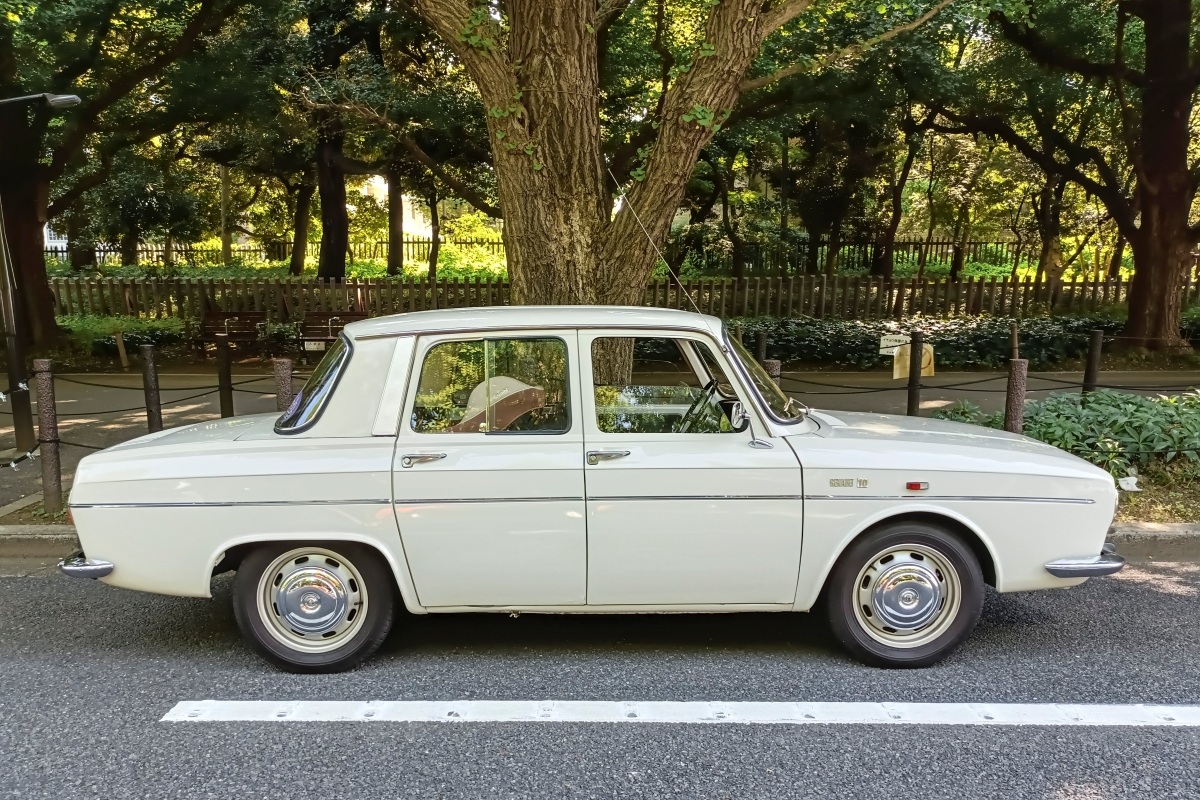
It sure wasn’t an improvement from an esthetic point of view, but at least it was different. Renault had been admonished quite a bit by the European automotive press for the R10’s looks in 1965, so the Régie did not have much to lose. And in any event, the R10’s facelift was eclipsed by the general consternation that the presentation of the R6 caused a few months later, not to mention the R12 in 1969.
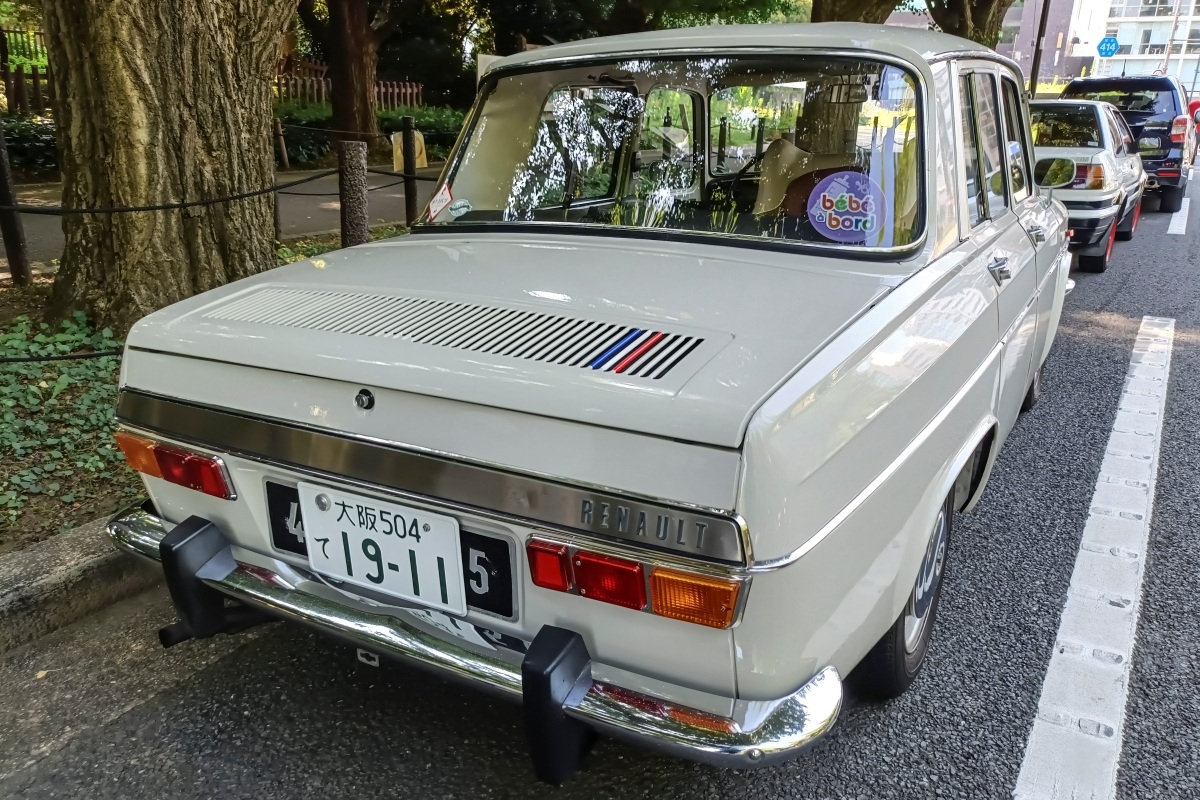
Bizarre though it was in terms of styling, the front-drive R12 did address the gaping hole within the Renault range very aptly. And thus its new 1.3 litre engine found its way into the R10’s tail for MY 1970. But by then, the rear-engine cars had truly become an afterthought in Renault’s range. The R10 was put out of our misery at the end of MY 1971; the R8 survived it for another couple of years in the domestic range, but was locally assembled in Spain until 1976.
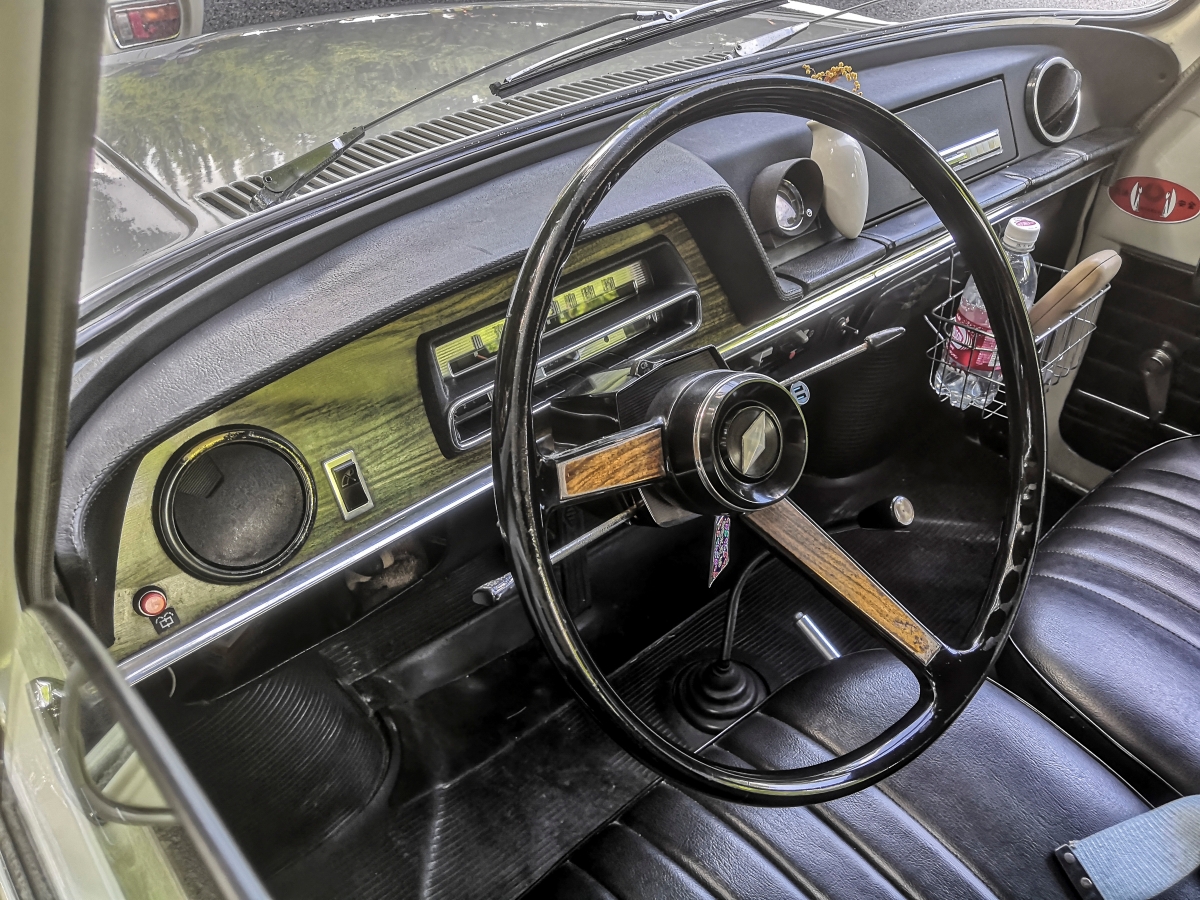
Fittingly, Renault slapped on a bunch of faux wood on their deluxe compact’s dash. Just as beautiful inside as out, really. It worked on some people, otherwise they wouldn’t have bothered – Simca were probably the worst offenders for this kind of cheap tricks at the time, and they sold their cars pretty well.
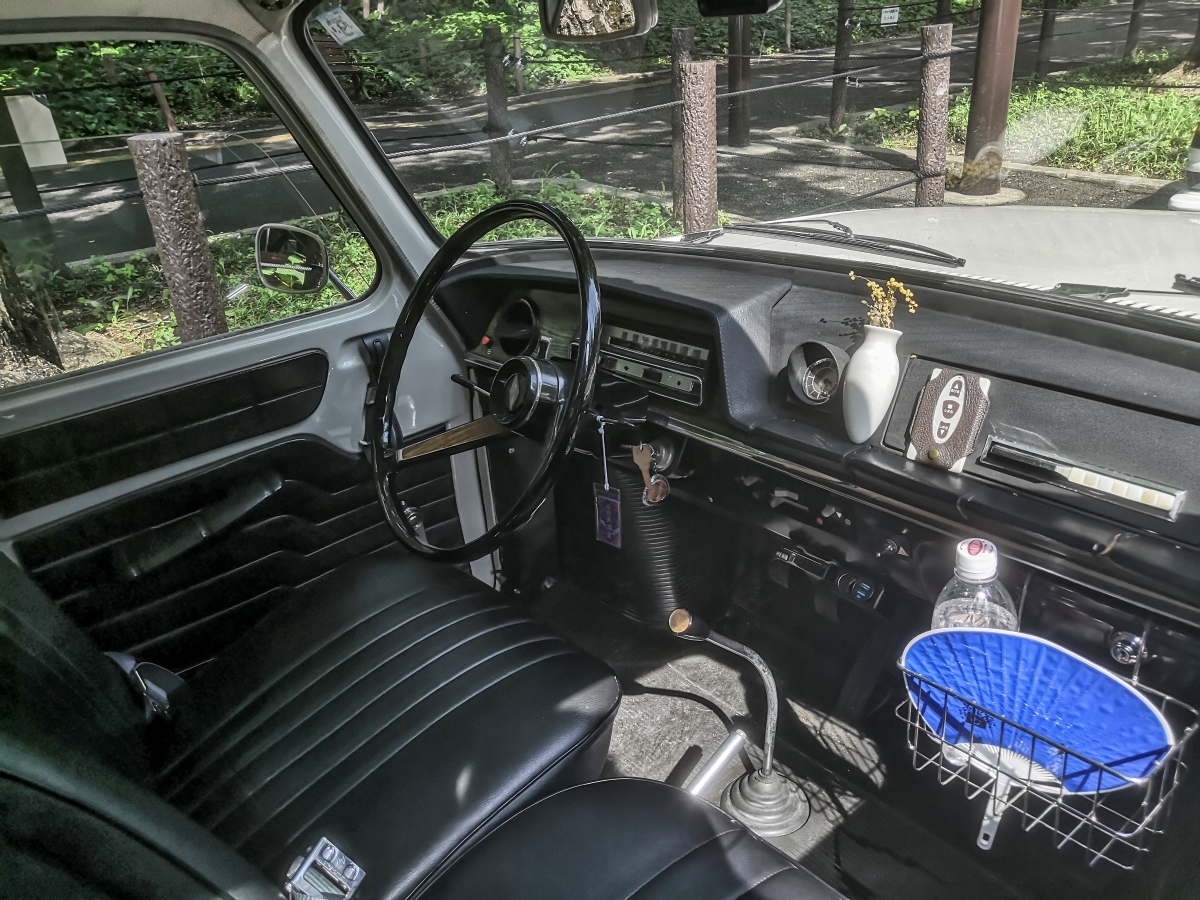
Where the R10 actually had a lot to recommend it, besides the engine and transmission, was in its comfort. It was no better than the higher-trimmed R8s in that respect, but that happened to be quite good already. The suspension was set to be relatively soft (to the detriment of roadholding, which was notoriously twitchy), and the seats were probably the best in their class. Speaking of which, what were the R10’s rivals in 1969?
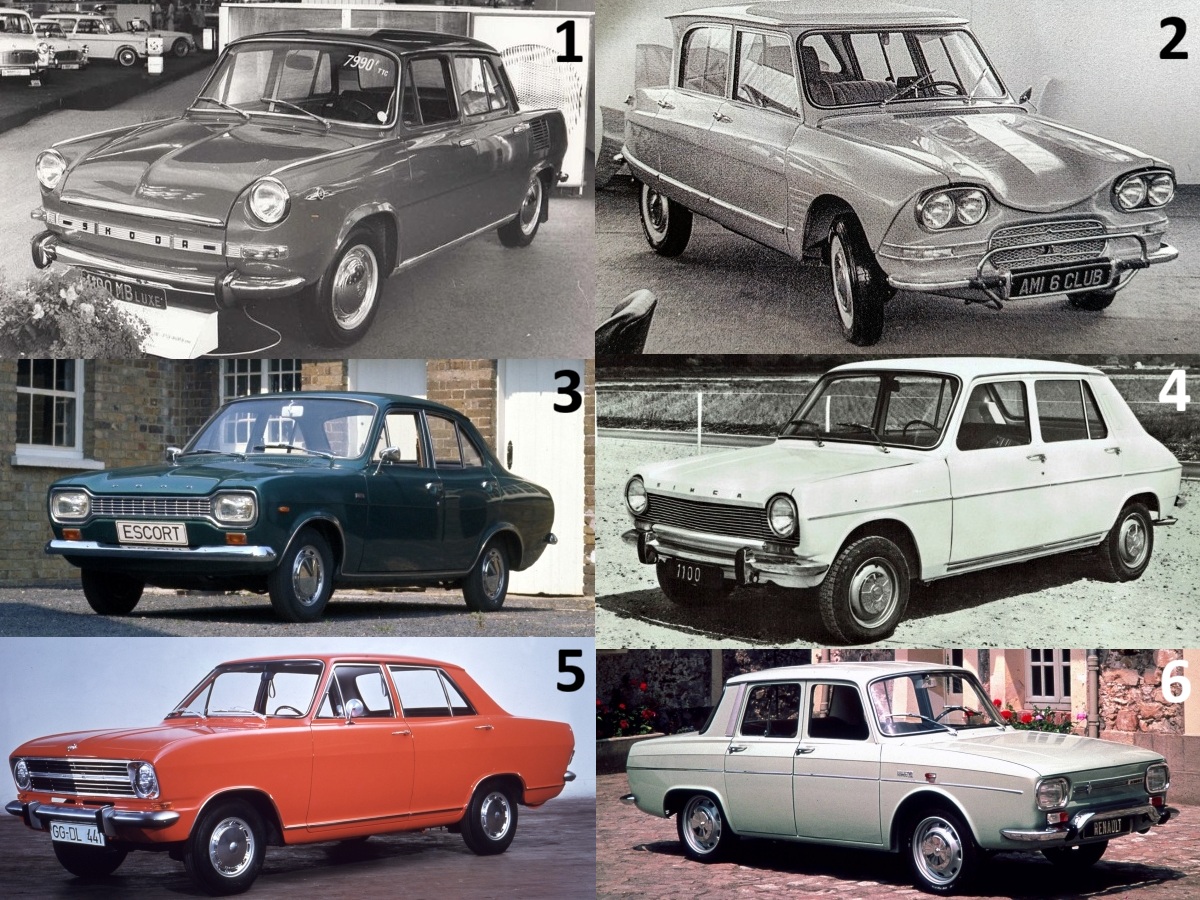
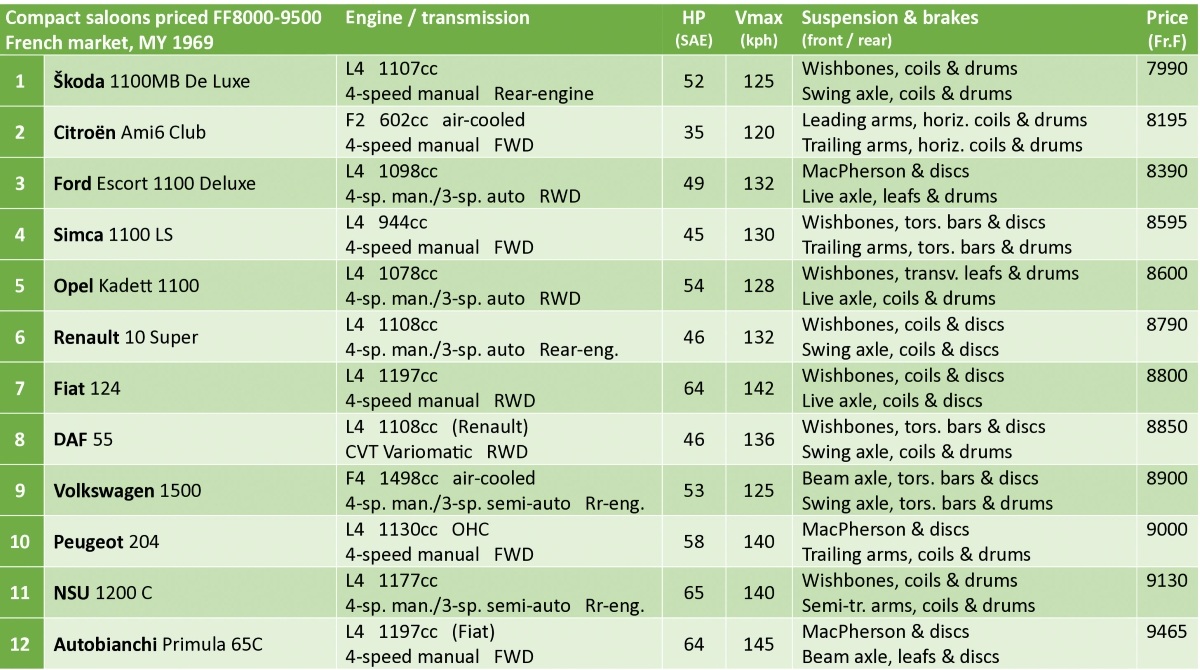
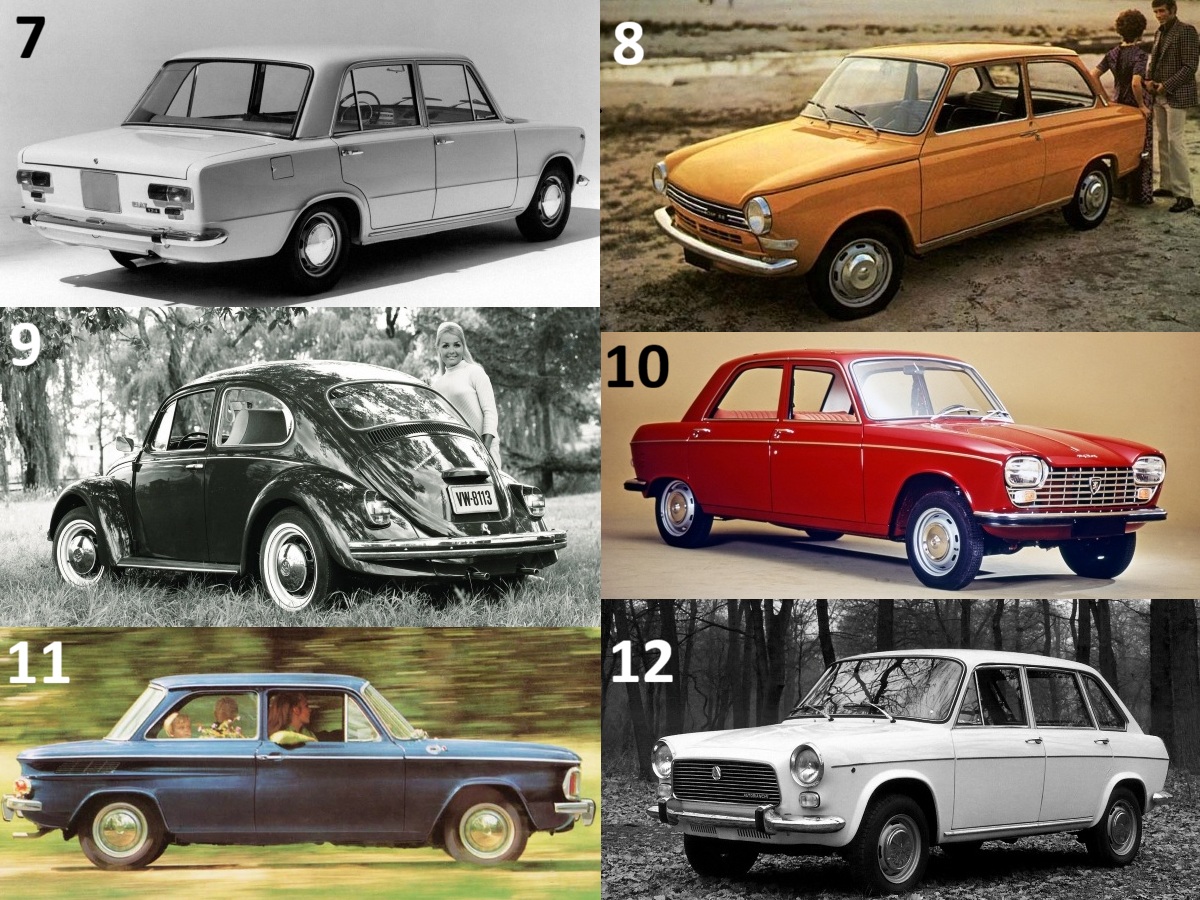
Now that the Common Market had brought down import prices, the fighting was fierce in this segment. Renault weren’t the only ones to field legacy rear-engine designs by a long shot (Simca also had their 1000, which would also have fit in this table); the traditional RWD layout still had its loyalists, while FWD adopters were growing. Despite this rear-guard attitude, at least the R10 had disc brakes all round – not that they were absolutely needed, with only 43hp DIN to propel it. The extra 5hp DIN brought by the 1.3 litre engine in 1970 could be tamed with ease.
For people who did not mind tail-wagging their way through corners and who had no sense of automotive styling, the R10 was a pretty convincing alternative to the Beetle or the Peugeot 204. It was roomier than the VW and better appointed than the Pug, for sure. The R10 was also quieter and more user-friendly than the Citroën, somewhat better built than the Škoda, more spacious than the DAF, more powerful than the Simca and more comfortable than the Opel or the Ford.
In other words, the R10 had its merits. And that’s not just me saying it, but the sales charts: an amazing 700k units were made – most in France, but CKD kits were sent to Spain, Australia, South Africa and Bulgaria – between 1965 and 1971. Twice as many R8s were sold, but over many more years (1962-76).
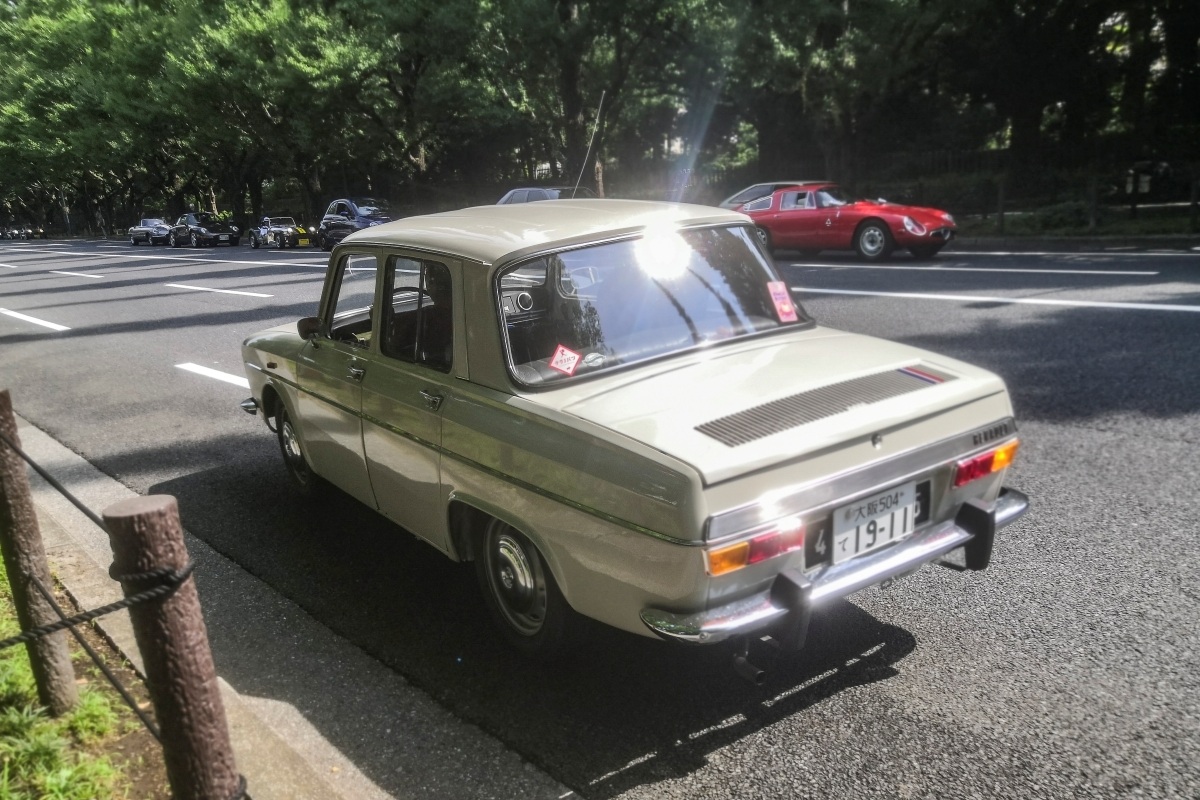
It turns out Renault were absolutely spot on with this ugly duckling. It was very cheap to make, sold decently well and rusted away quickly after purchase, like an old Renault should. They haven’t all died out, as we can plainly see. And we’re talking Guinness Book of records levels of plain, here.
Related posts:
Curbside Classic: Renault R10 – When Being A Better Volkswagen Isn’t Good Enough, by PN
CC Outake: 1968 Renault 10 – France’s Super Beetle, by Roger Carr
Museum Classic: Renault 10 With Serial Hybrid Conversion, by Gray Walters
Vintage C/D Road Test Comparison: 1967 Renault 10 and VW 1500 – Renault’s Last Shot At The Beetle, by PN























Harsh. But then, my only experience with the R10 was getting a ride one in rural Virginia when I ran out of gas and could barely get off a busy two lane road. Everyone passed by my outstretched thumb until the Renault pulled over and its driver gave me a ride to the gas station, AND back to the truck with a gallon of gas. That R10 looked pretty good to me on that Sunday morning in 1975. And I remember the seat was very comfortable.
This is another one on the list of cars I thought about buying but didn’t, which is a good thing considering how many I actually did! Years ago, there was one of these on eBay very, very close to where I live. I think it sold for $800, and it was so cheap and so quirky looking that I was thinking very hard about giving Renault ownership a go.
Renaults like Fiats are not for everyone and they’re wildly odd looking to the average American .
Those who take the time to learn their quirks and required maintenance are typically richly rewarded .
In 1969 a teacher where I was at bought a red one new, took 5 or 6 or us somewhere in it, we laughed and derided it but it was in fact, amazingly comfy and spacious inside, quiet and I don’t recall him ever having trouble with it .
No, it wasn’t powerful as we discovered when he needed to change direction on narrow S.R. 109 and turned into a bunch of trees, we kids all grabbed handfuls of branches and he wasn’t able to pull the car out of our grasp in reverse .
I don’t mind the looks but then I tend to look at function over appearance .
-Nate
It’s very French in the utilitarian way that is the opposite of the futuristic Citroen DS and CX. As for comparisons I’m sure Citroen dealers heaved a sigh of relief when the GS replaced the Ami. I’m also sure the dead conventional Ford Escort and Opel Kadett out sold the the R10 in many markets.
The Fiat 124 and the Beetle are the only ones on the list that sold well i the US