
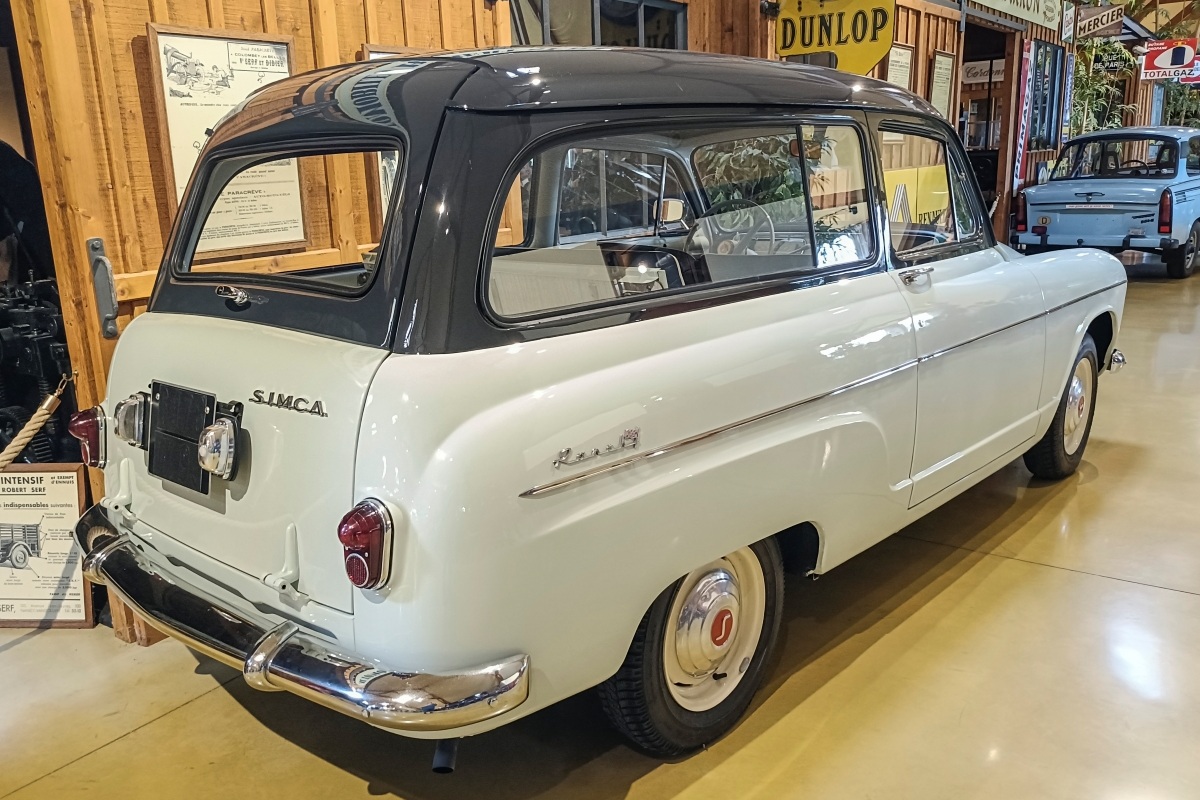
“Sport wagons” are a weird sort of combo, aren’t they? More roof equals more cargo space, not necessarily better aerodynamics. I suppose the shooting brake was the ultimate expression of this bizarre yet enticing concept, with the likes of Aston Martin, Volvo or Scimitar bringing the sporty element to the fore. But you know who had accidentally figured it out before everybody else? Simca, of all people.
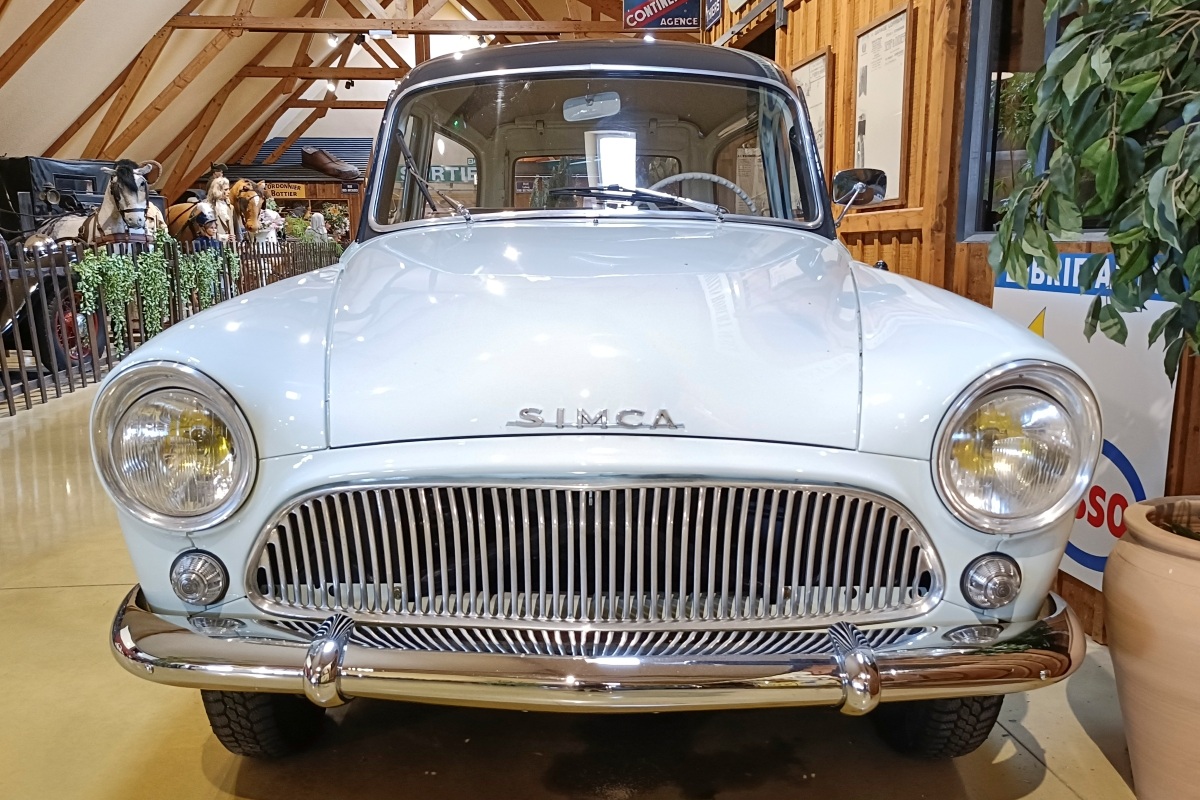
We’re back at the Manoir de l’Automobile for this one. I do prefer my classics out in the open air, but this particular flavour of Aronde is a very rare sight, nowadays. We’ll have to make do. And we should start off with defining what is the Aronde, just to make sure we’re all on the same page.
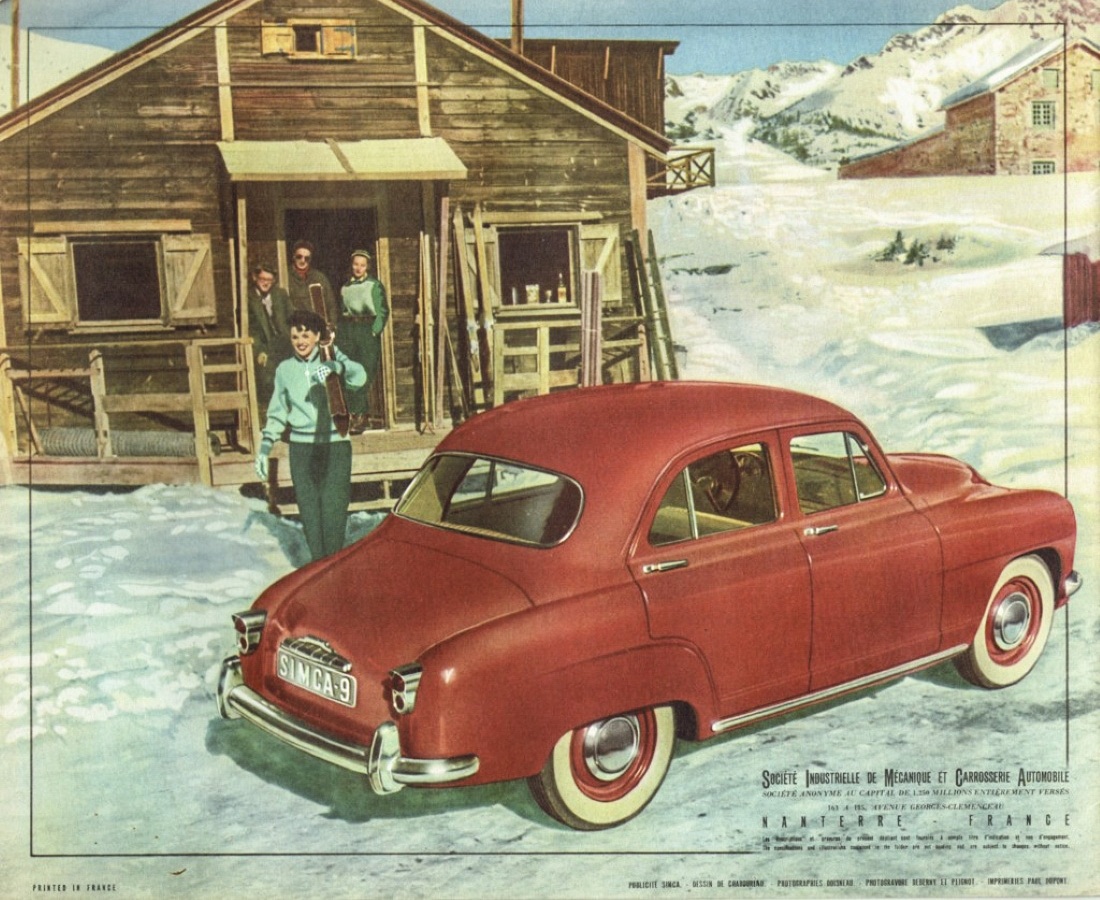
Simca products were initially carbon copies of Fiats built in France. In the booming postwar economy, this French tentacle of the Italian octopus started to demand more autonomy, though the Fiat influence remained. In the spring of 1951 came the first “home-grown” Simca in the somewhat dumpy but not unpleasant shape of the Simca 9, soon universally known by its other name, the Aronde. This was Simca’s first unit body, designed in-house (with a little help from Turin, of course), but the mechanicals were all hewn from the 1938-52 Simca 8, also known as the Fiat 1100.
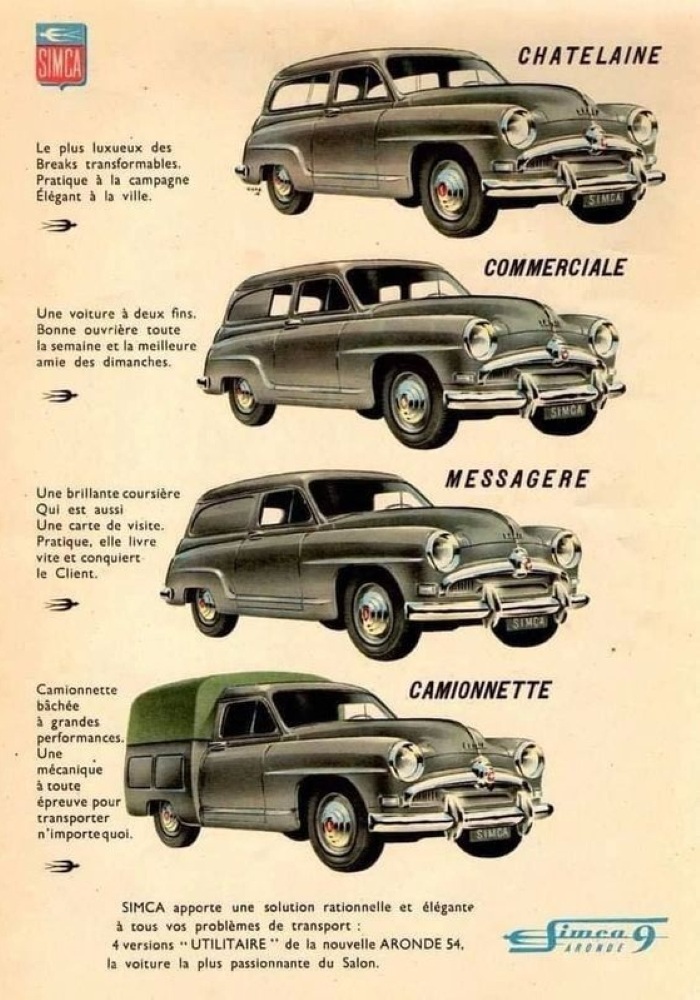
The Aronde was soon a major hit, both at home and abroad. Simca were keen to offer a full range of derivatives, from the Facel-bodied Sport coupé and cabriolet to the Grand Large hardtop coupés. In late 1952 came the first two-door wagons, initially only available as a fourgonnette (sedan delivery) called the Messagère or a more upmarket break dubbed Châtelaine. By 1954, four blue-collar Arondes were in production, including a double-cab fourgonnette, the Commerciale, and a canvas-topped pickup that would eventually be known as the Intendante. All had the standard 1220cc 45hp engine available across the range.
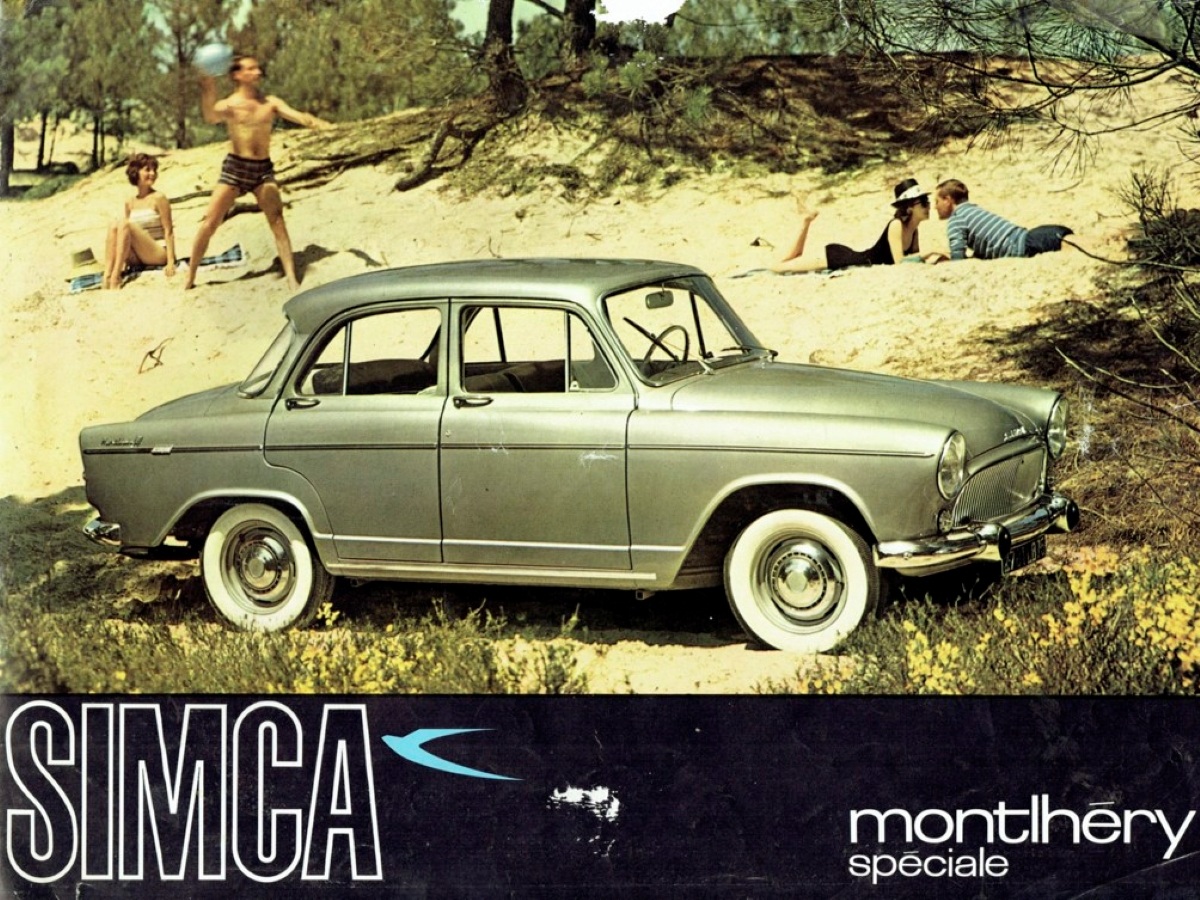
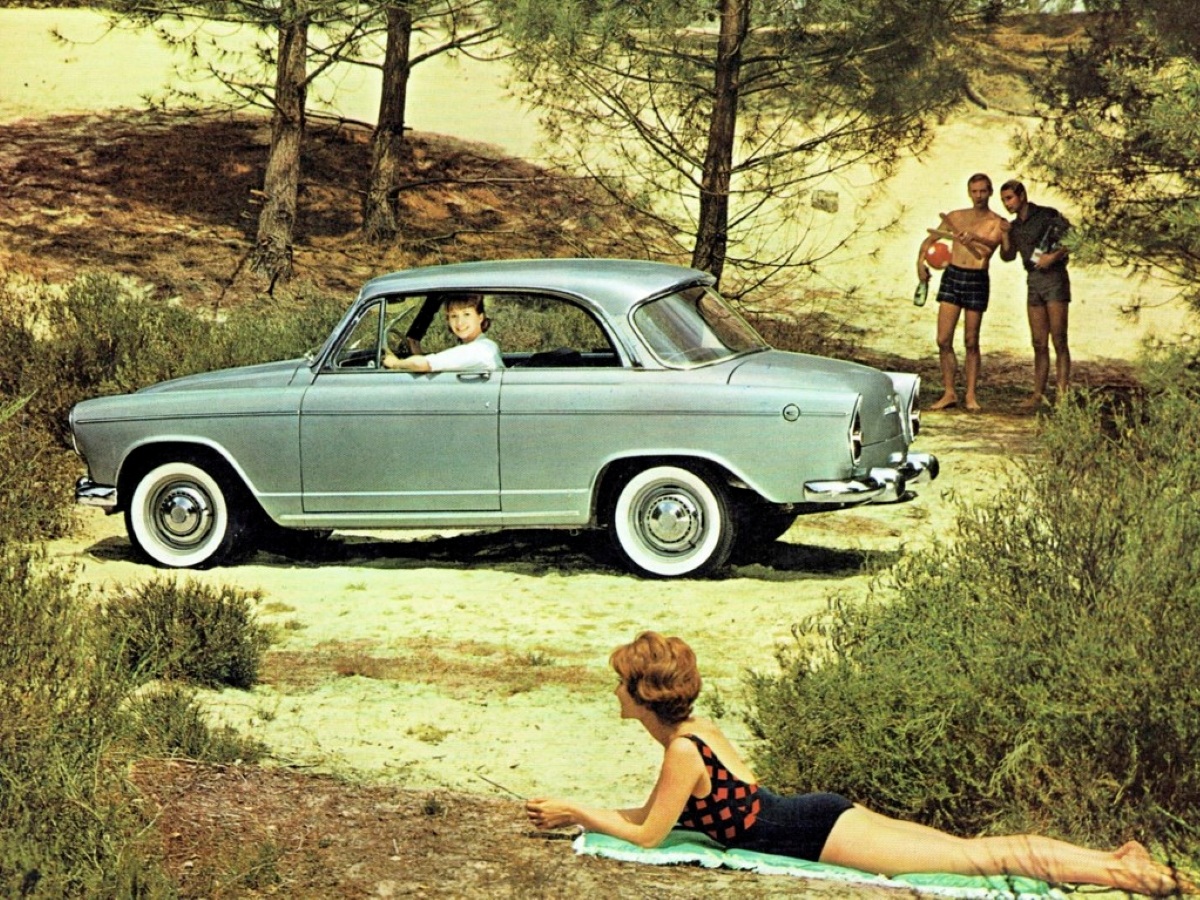
The Aronde was crucial to its maker’s success. It enabled Simca to absorb Ford-France and overtake both Peugeot and Citroën in production numbers by 1955. Every couple of years, the Aronde’s front end would get a touch-up, the interior got refreshed and the engine gained a little extra displacement and power, but nothing dramatic. There was no need to mess with the formula, until the styling really started to look a bit passé. Model Year 1959 ushered the P60, a pretty thorough facelift that gave the car a new lease of life. And the following year, a new high-trim wagon also made its way into the range. Enter the Ranch.
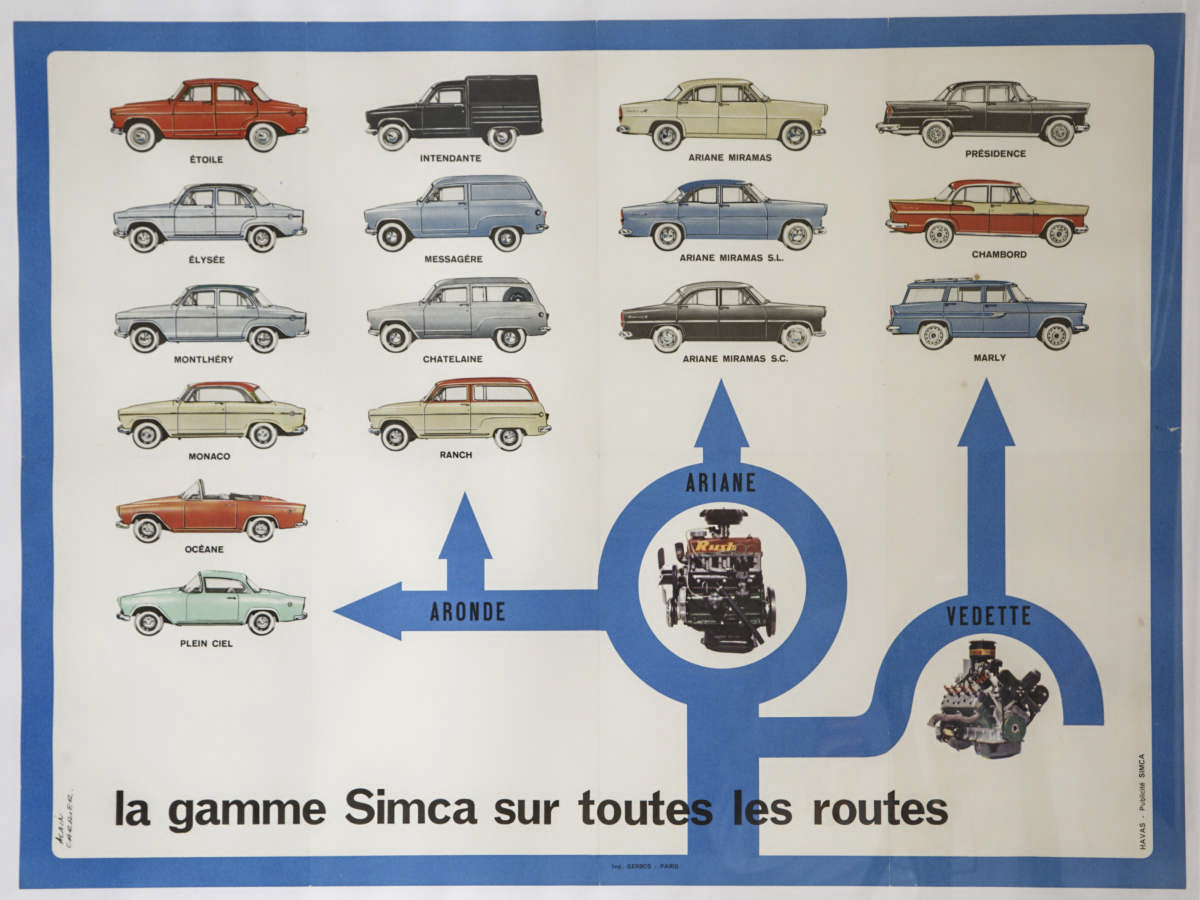
By that point, Simca’s range was broadly divided into three models: the Aronde, which was available with either a Fiat-derived 1.1 or 1.3 litre 4-cyl., the Flathead V8-powered Vedette inherited from Ford and the Ariane, which was a Vedette body with an Aronde 1290cc engine. The higher end of the Aronde range in 1960 – the Montlhéry saloon, Monaco hardtop, Plein Ciel coupé / Océane cabriolet and now the Ranch wagon – were fitted with yet another improved version of that engine, which churned out 62hp.
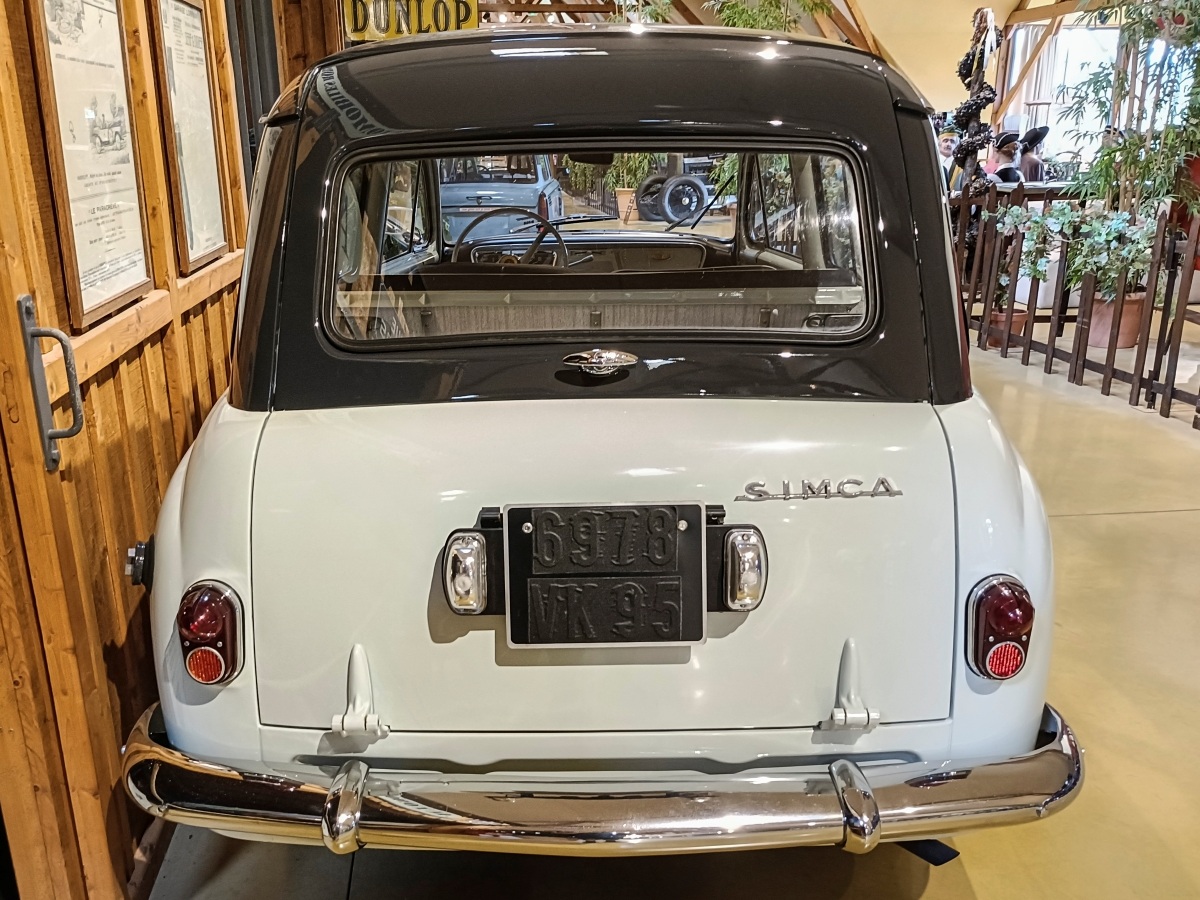
Unlike the other P60 body styles, the wagons did not get rear fins, keeping the early ‘50s rounded look going until the end. But the Ranch was nonetheless given access to the rest of the trim on the swanky Montlhéry saloon (except the bumpers, which lacked overriders for some reason) and two-tone paint jobs. The Châtelaine became much more bare-bones, and was only available with the 1.3 litre tuned to 48hp.
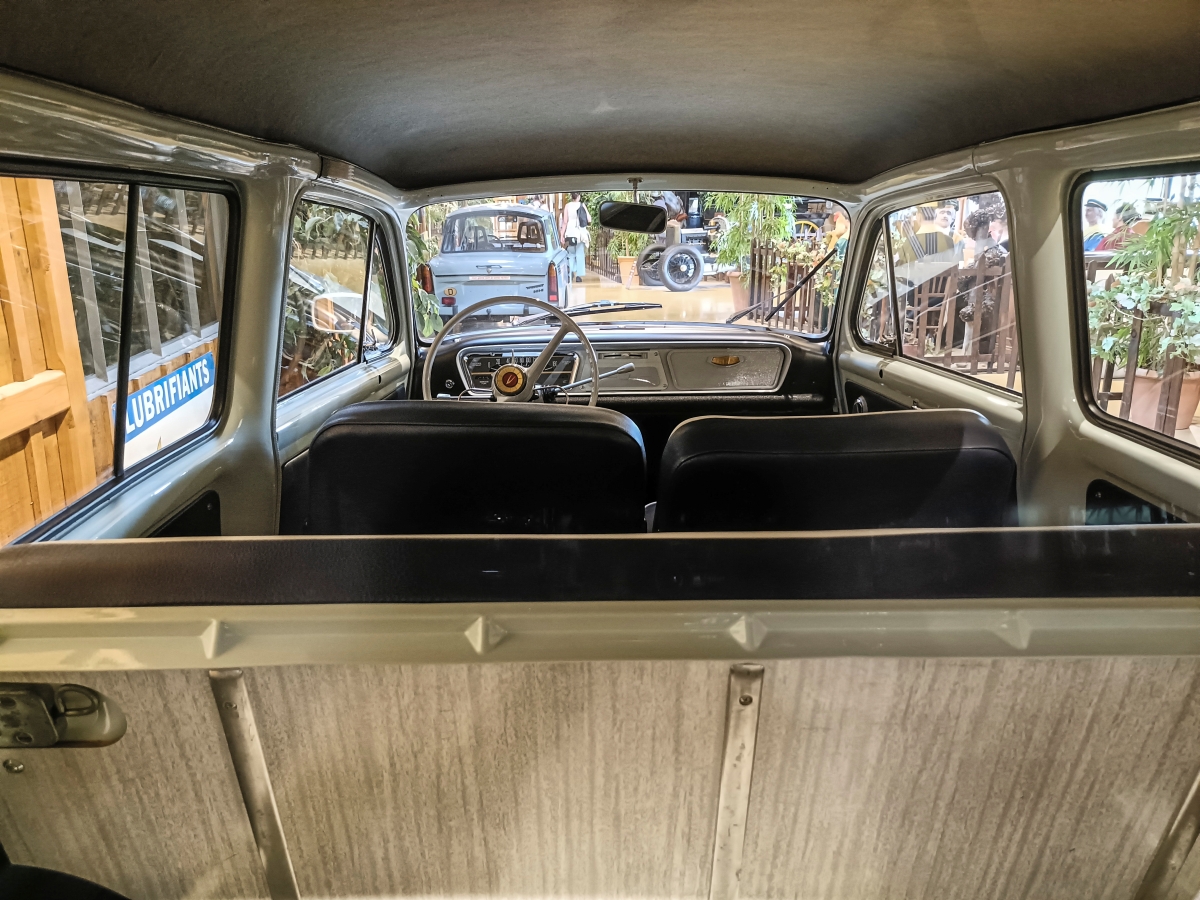
By MY 1962, the Aronde was on borrowed time, as the new rear-engined 1000 monopolized attention. The Ranch carried on regardless until the very end of the line in Spring 1963, when the P60 and Ariane were replaced by the Simca 1300 and 1500. Coincidentally, this was when Fiat sold a large chunk of their Simca shares to Chrysler, a major inflection point in the marque’s history.
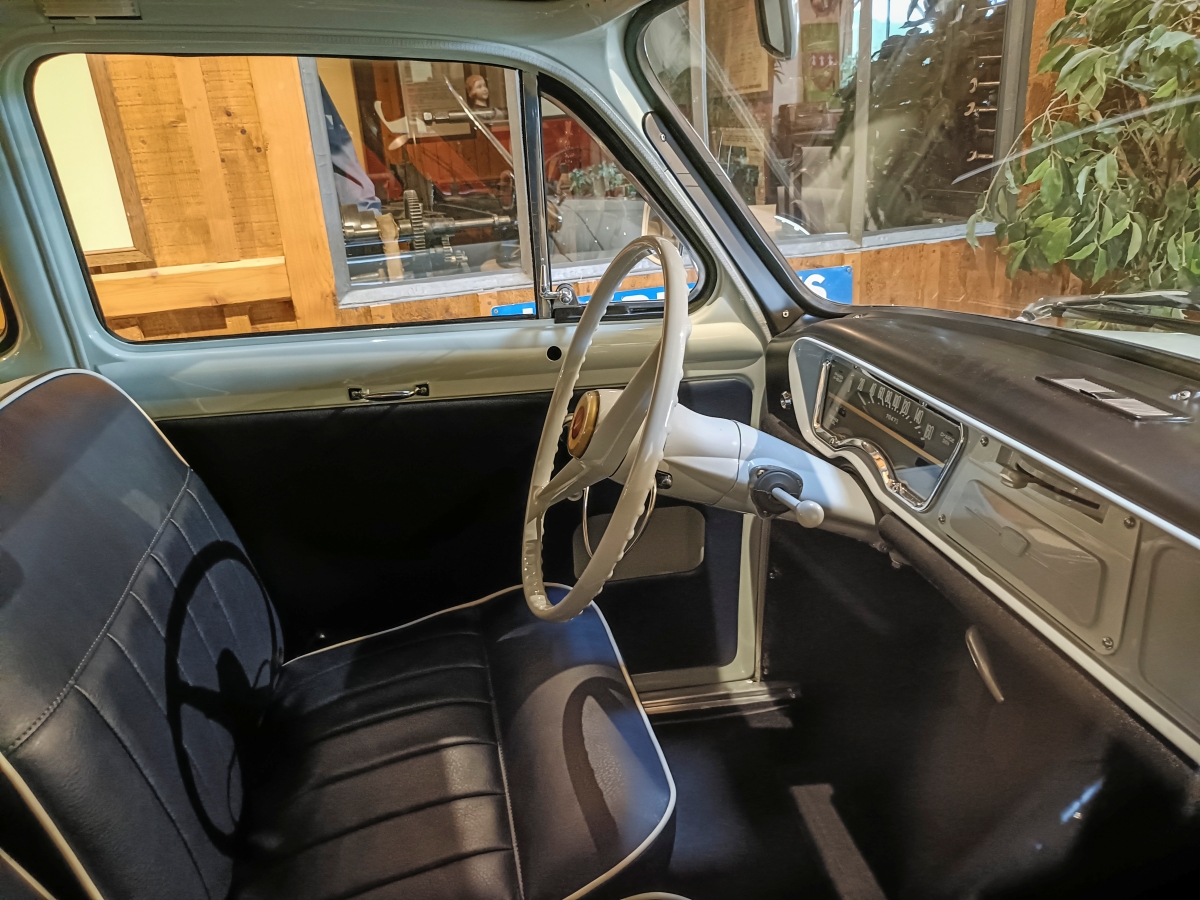
The front end may be from 1959, but inside the overall feel is very mid-‘50s. Simca never bothered with a panoramic windshield – it would have cost way too much and would have been pretty impractical to boot. The Facel-built Sport coupé / cabriolet could justify that expense, but not the “regular” Arondes, even upper crust ones like the Ranch.
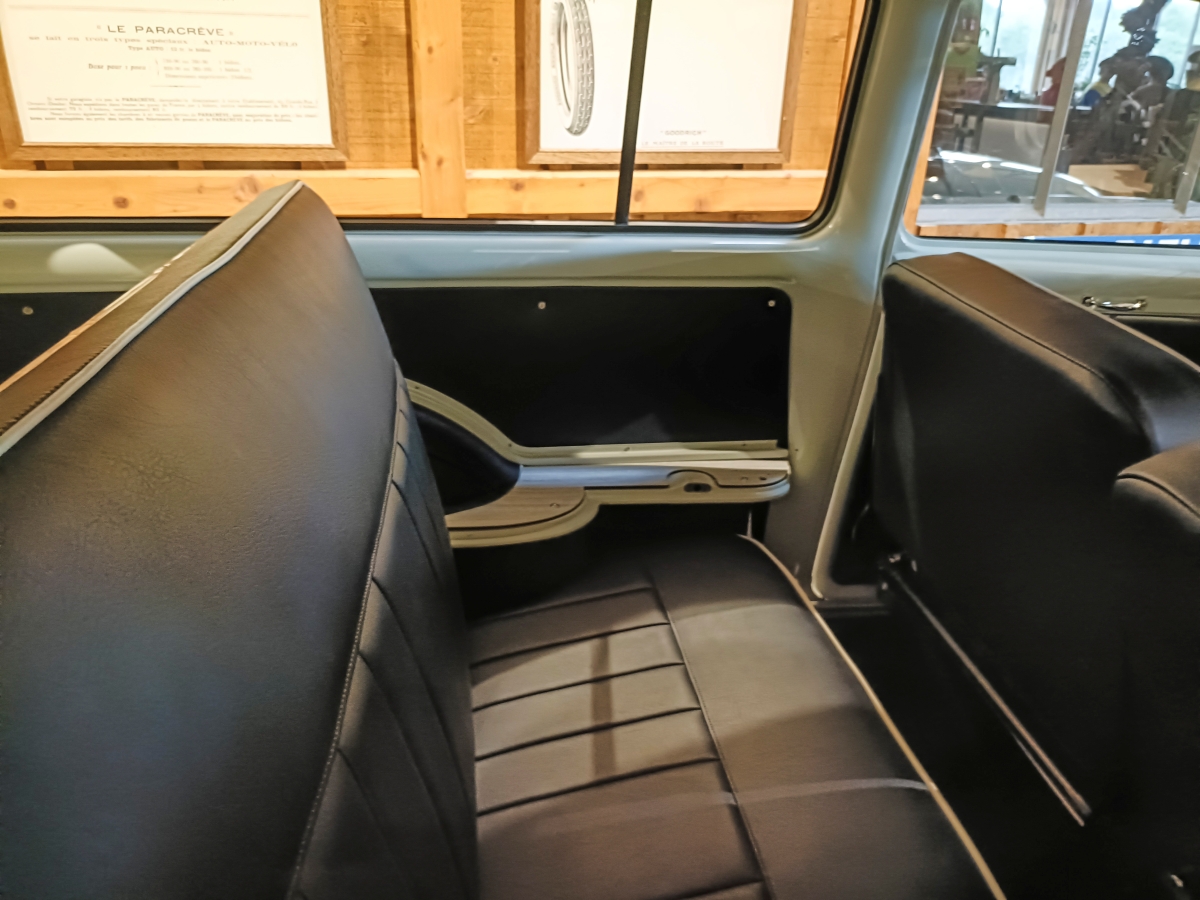
And it very much was upper crust. It was the second most expensive Aronde in the range, just after the Monaco hardtop. And yet it remained a practical cargo-hauling vehicle: the rear bench was extremely easy to fold down, providing a flat loading bay from the B-pillars back. The spare wheel and jack were stowed away in a compartment under the floor near the tailgate.
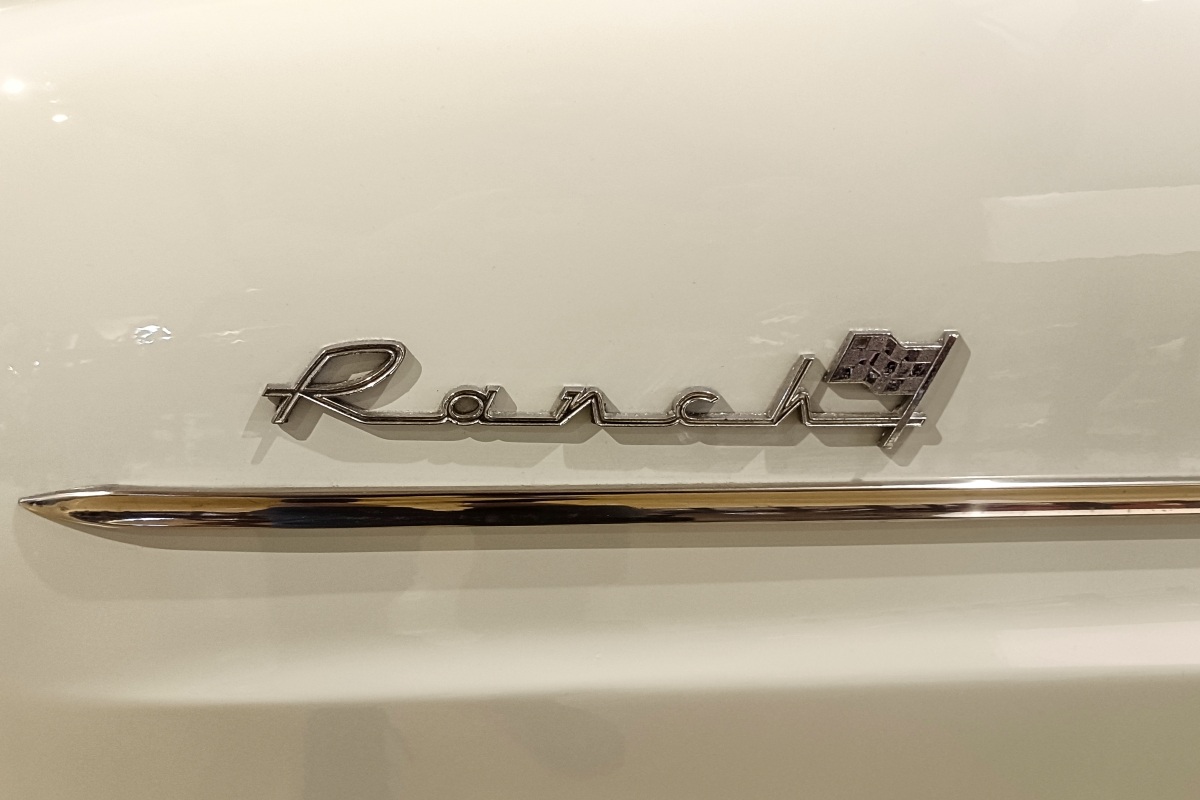
As a result, the Ranch found its niche. Over 20,000 units were made between 1960 and 1963, which is a pretty good score for a relatively expensive variant of a model whose best days were behind it. It’s not much in the context of the 450k-plus Arondes P60 made during those years, but it would not have demanded much investment, either.
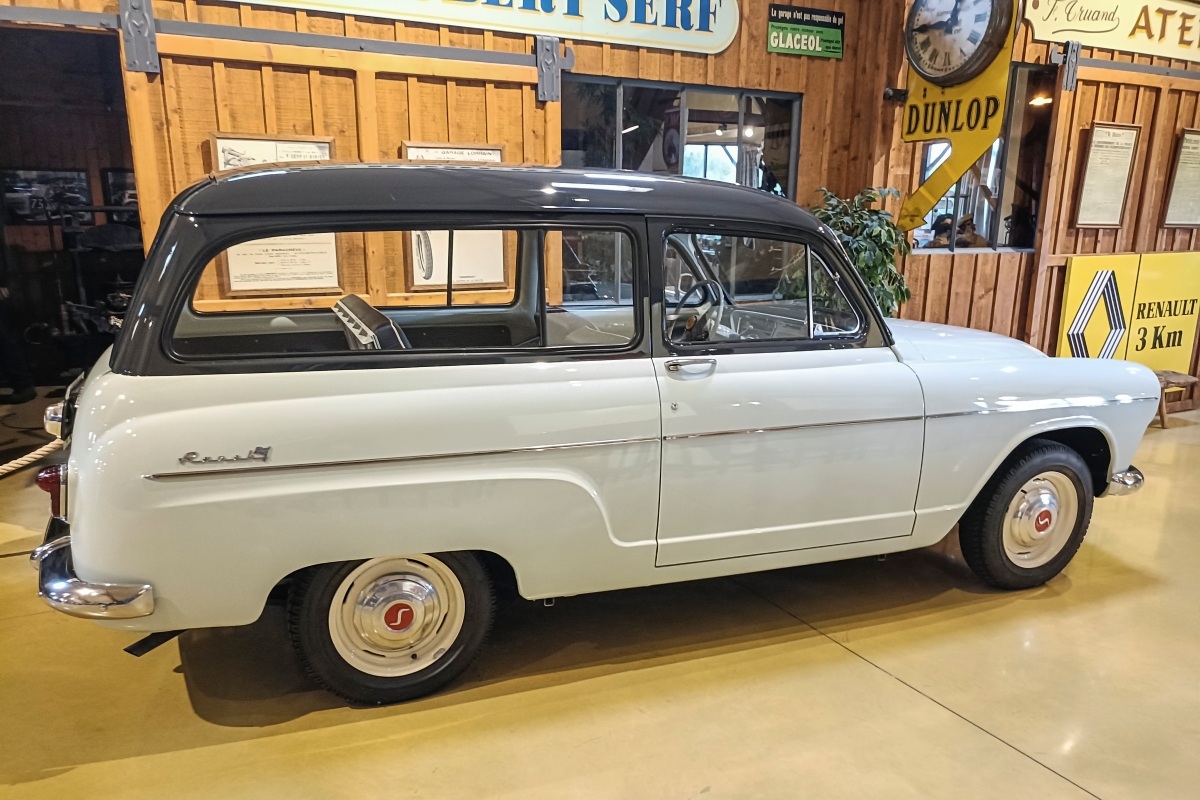
I would be astounded if more than 1% of these were still extant today, but then people would have just used these to death (like most wagons, with or without the fancy two-tone) when they entered the second-hand market in the late ‘60s and ‘70s. This one miraculously escaped the crusher and was doubtless restored, though they did get the wheelcovers wrong – those disappeared after 1959 because Studebaker claimed the emblem in the centre was too close to theirs. Lazy S indeed.
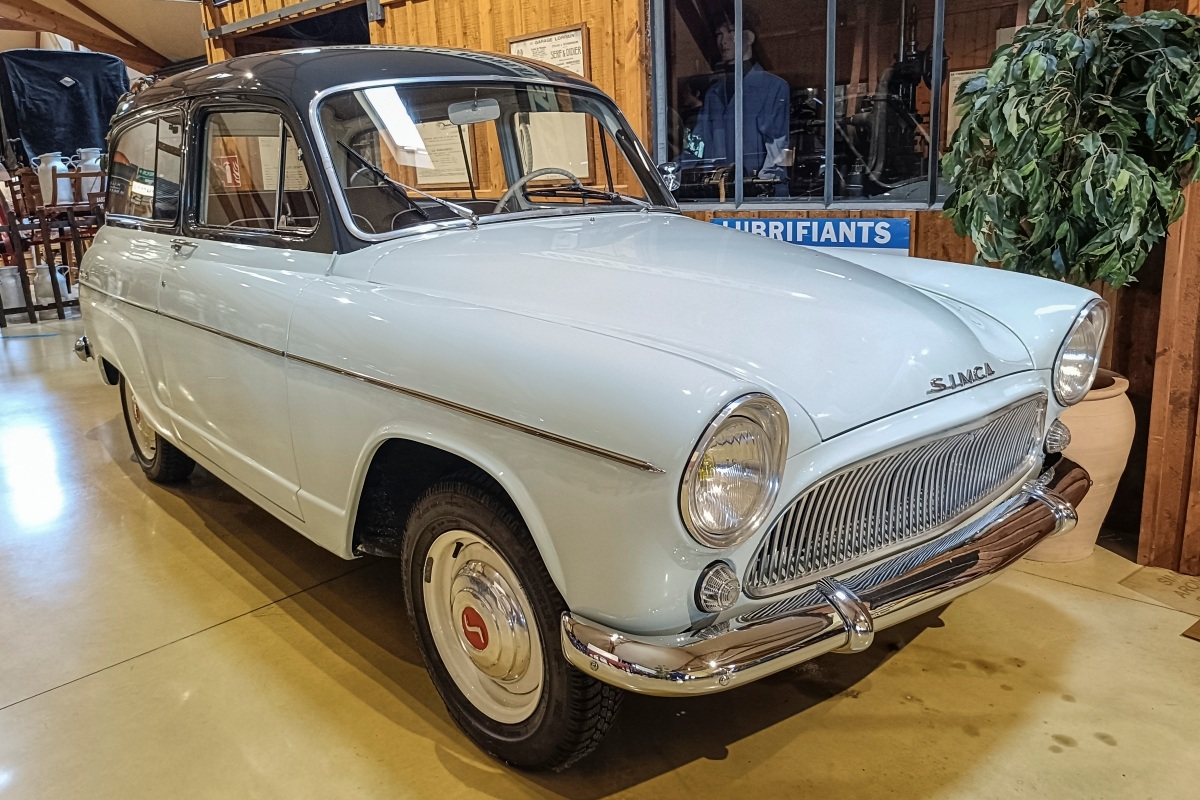
Simca did not follow up the Ranch with a similar sports-luxury wagon, really. The 1300 / 1500 wagons were definitely not sporty, and if the later front-drive 1100 range did propose one of the first hot hatches, the 1100 wagon never had access to anything exciting, engine-wise. They did sort of recycle the name with the Matra-Simca Rancho, but that’s a different concept altogether.
Related posts:
Curbside Classic: 1956 Simca Aronde (90A) – French Training Wheels, by PN
Vintage PR Shot: 1958 Simca Aronde 1300 Chatelaine – A Shooting Brake For The Chatelaine, by PN
Curbside Classic: Cuban Camouflage – Simca P60 Aronde Océane Convertible, by David Saunders























The rear armrests are brilliant … I assume the shape nests with the wheel arch cutout in the seat back when the seat is folded to create a more continuous surface. And I assume it’s not a complete coincidence that the ranch name evolved later into the Rancho. The Plein Ciel name for the coupe seems odd though; shouldn’t that have been for the convertible instead? Or am I translating it wrong?
That is a real beauty. The two tone paint helps visually take some of the height out of it. I have always liked Simcas of this era. Those hub caps do have a Studebaker vibe to them.
I do like the Simca 9 as well. Not sure I’d call it dumpy but it does have a headlights one size too big look to it.
I took photos of that car last week!
The Manoir de l’Automobile is quite a find – but is a line of 4 examples of the Simca 1000 (one badged as a Talbot?) absolutely necessary?
I converted my 2026 HR-V into a ‘Messagère’. I did a complete rear seat delete (both the bottom cushion & backrest) and removed the awful foam block over the spare tire that eats up 6” of cargo floor depth. I lined the inside of the rear windows with black coroplast and removed that stupid wide “floating” center console that just eats up knee room. It’s hard to find a little panel van in North America that’s ready-made for my needs. The only ones I remember are the Ram Vans based on the K-cars—I owned one myself, a 1989 panel model with no rear windows—and later came the HHR, which I wouldn’t touch with a ten-foot pole. The Kia PV5 is arriving here in Canada soon, but it’s an EV—and it’s a Kia.
Very cool car and all it miss at Le Manoir is this Australian Aronde 4-door wagon.
https://www.simcaworld.net/aronde/stationwagon/indexstationwagon.php
Cute wagon but there was another version built in Aussie that retained the P60 sedan rear lights, looked nicer but Ive only seen one parked on a property complete and not for sale,The uprated engine gained 5 main bearings theoretically indestructable Simca under Chrysler management showed Rootes the trick of cramming 5 mains into a 3 main block
Sweet wagon. I suppose they may have sold these in the US but I’m not sure. Aronde sedans were not uncommon during the Great Import Boom of the ’50s.
Here in Australia the Aronde was an extremely popular car. For a company that seemed to come out of nowhere after the war, they enjoyed spectacular growth. But by the mid-sixties Chrysler seemed determined to phase out Simcas in favour of Hillmans here, then phased Hillmans out for Mitsubishis – then got phased out themselves when Mitsubishi took them over.
It does seem odd that the French wagon body was a two-door, yet the sedans were all four doors. And I don’t think I’ve ever seen a factory half-panel half-wagon like that Commerciale before.
What’s even odder is that we developed and apparently produced a four-door P60 wagon in Australia, as KB says. They would have had a very short production life for the tooling expense and were never common; I’ve only ever seen them in old ads and photos – but I found this one on the net.
With such large glass area and good visibility, I believe today’s CUVs should learn something from such design.
I’ve seen brochures for another deluxe Aronde wagon variant called the Castel; I suppose it was an alternative name for this same car used in America and other markets where Ford had a claim on the Ranch Wagon name.