
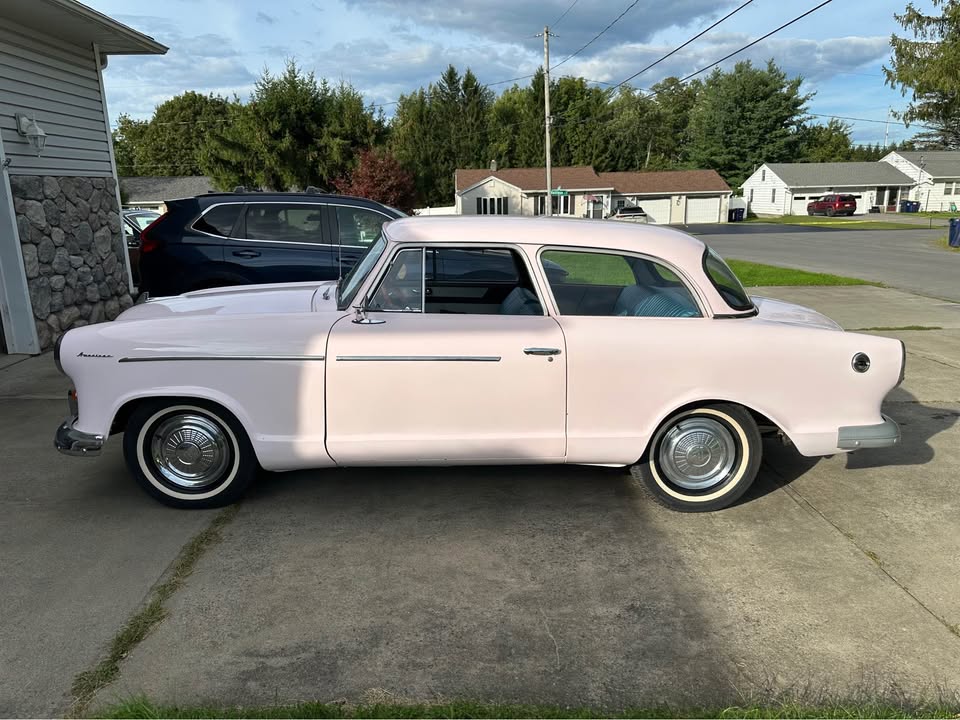
As collector cars, I’m not the first nor will I be the last to say that Ramblers aren’t for everyone, especially the “so ugly they’re cute” 1958-60 Rambler Americans (heck, you might as well throw the similar 1961-63 models in there for good measure). But I’m also certain that not everyone wants to drive the same old muscle cars you see at every small-town car event, and this 1960 American Super is for those iconoclasts. It has some idiosyncrasies past the normal Rambler stuff, but it’s painted pink to draw attention and it’s priced at a not-bad-for-2026 $6,500 $4,500 on Facebook Marketplace in Franklin, New York.
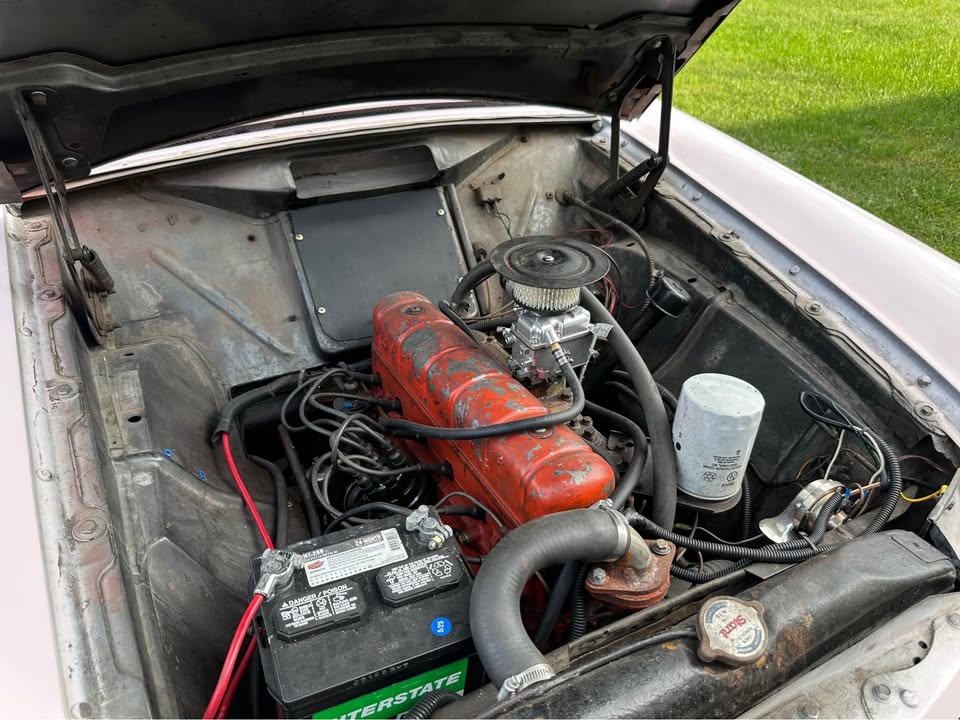
A couple of those idiosyncrasies take up space in the engine compartment, and the first is the engine. Most Americans came with the old 195.6-cubic-inch flathead six that made a surprisingly stout 90 horsepower; however, it’s clear to anyone that knows a piston from a connecting rod that this is not that engine. Instead, it’s the overhead-valve Rambler six, which was allegedly available in the top-of-the-line Custom trim level of the American, although that engine didn’t make the sales materials for 1960. Therefore, this is probably not the car’s original engine (this car is a Super and not a Custom), but if it is a 195.6, it makes 125 horsepower, a nice bump over stock. The carburetor appears to be a Carter YF, which was standard equipment on the American, and the seller says that it’s been rebuilt. Unfortunately, the seller’s video of the engine running, especially behind the car where you can hear the exhaust, makes it clear that some more tuning might be required.
Additionally, someone has riveted in a plate where American Motors’s famous heater was once mounted, so this will be a summer-only vehicle until the new owner decides to do something about that.
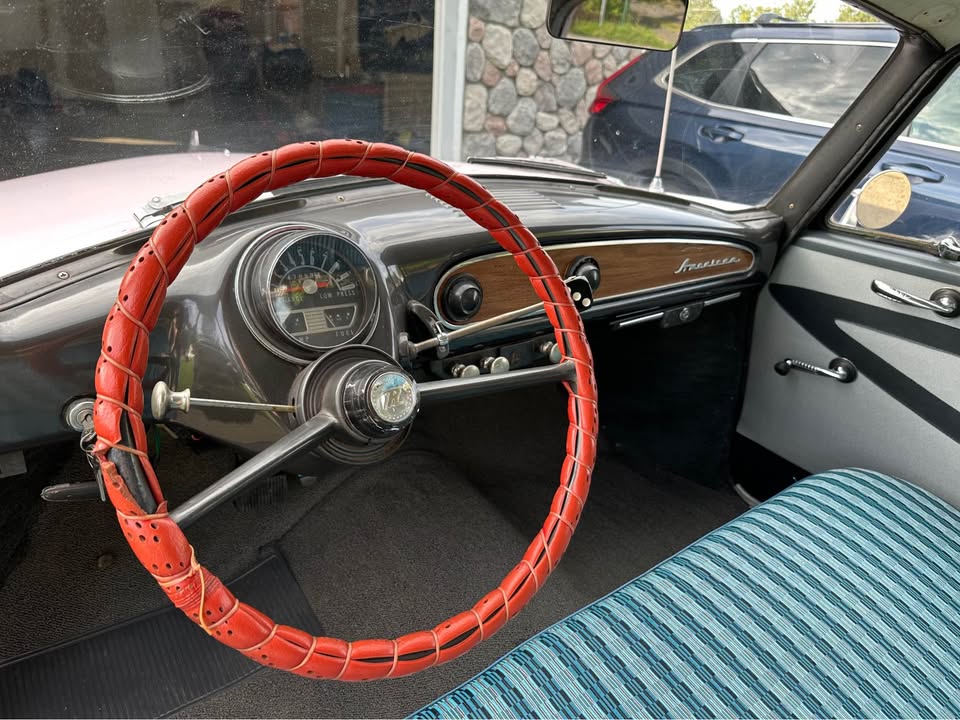
The Marketplace ad tells us that the interior has been “freshly restored,” and the carpet, door panels, and upholstery all look pretty clean. I think I might have gone with a black or gray motif myself, but if you’re going to drive around a pink Rambler American, anything goes. The transmission is a Borg-Warner “Flash-O-Matic” automatic, which supposedly shares some parts with Ford’s various Borg-Warner-designed automatics of the 1950s through the 1970s.
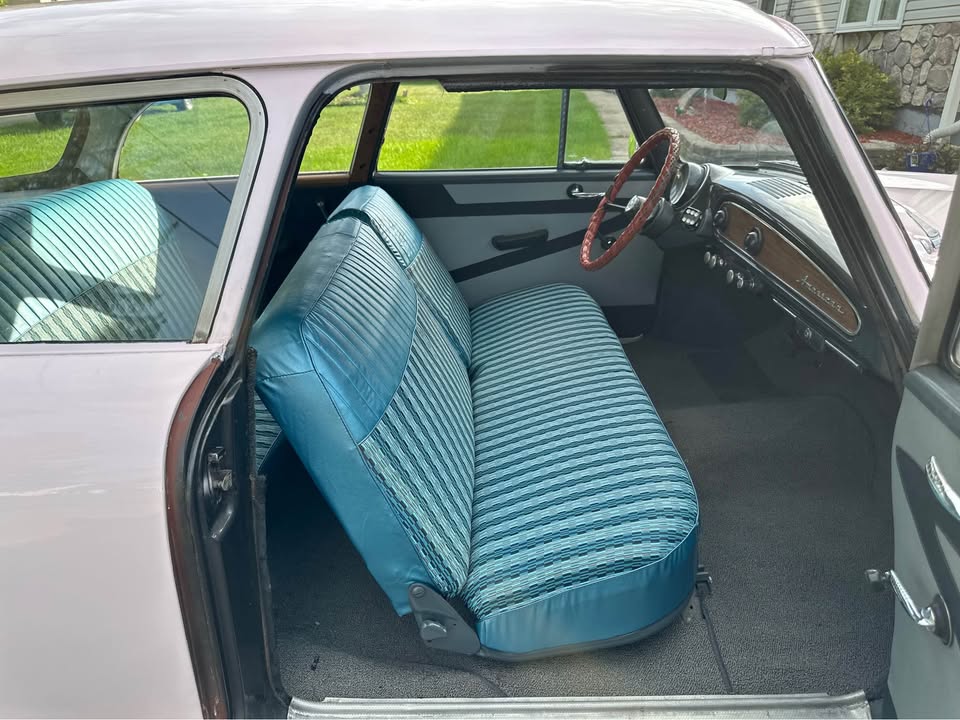
You can see why a lot of people bought Americans in the late 1950s and early 1960s: The interior is roomy and the mileage is excellent as long as you don’t try to push the car harder than it was designed for. At reasonable speeds, economy should fall safely into the 20+ mile-per-gallon range or better.
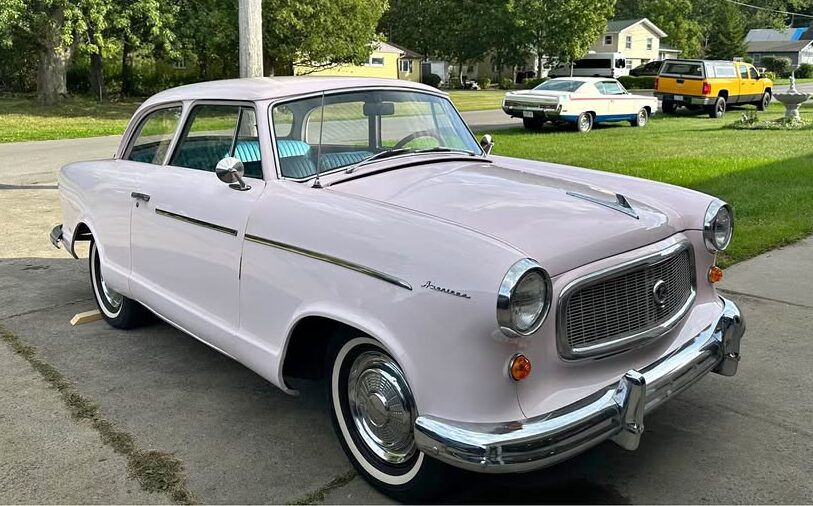
The seller mentions that the American “runs, drives, and stops” and has an original 43,000 miles. That’s a tough thing to verify without documentation (which the owner very well might have), but at least the brakes have been gone through. By the way, the American had self-adjusting brakes in 1960, a nice feature. The gas tank has also been replaced.
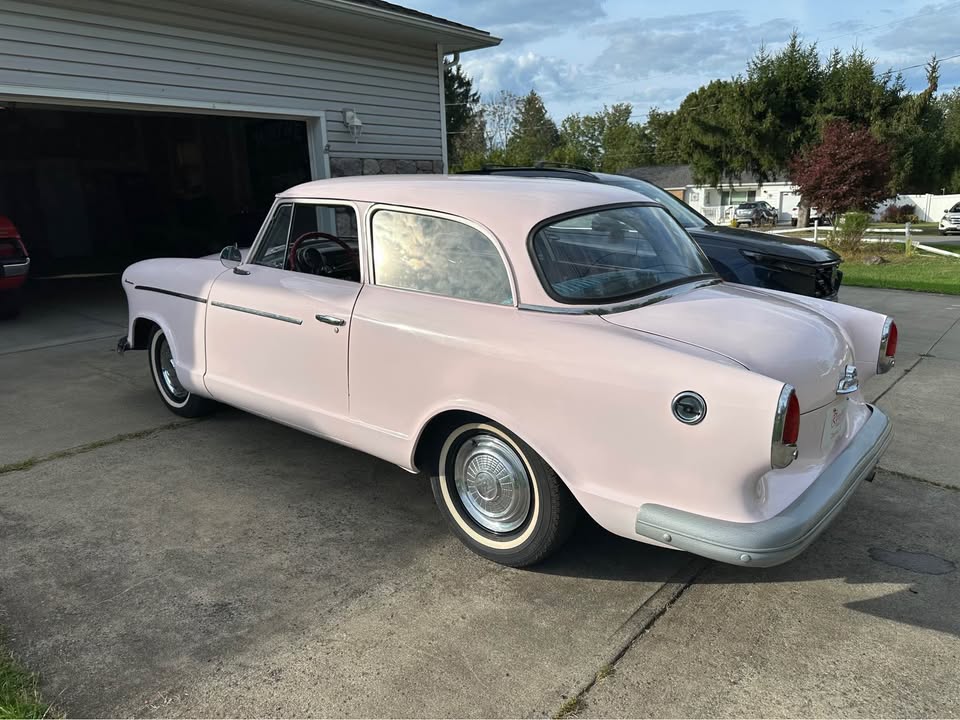
In pictures at least, this Rambler is in nice shape, with the painted rear bumper being the only thing that’s been visibly skimped on. Being a northern car, any potential buyers would need to make an appointment to see the car up close and give it a test drive to make sure it’s worth the price. With all that being said, it’s probably a small pool of buyers who will be interested in a pink Rambler American, but I can imagine that someone will fall hard for this cute little AMC. It only takes one, and that person will be drawing plenty of attention.
Related Reading
1960 and 1964 Rambler Americans — Two Survivors From The “Peak Rambler” Era (by JeromeSolberg)
Curbside Classic: 1959 Rambler American – Beep Beep (by JP Cavanaugh)























The off-color upholstery would bother me to the end. Which is a shame because the rest looks presentable. If I were the seller, I’d take a scrub brush to the engine compartment to see of I could make it look less dirty. Perhaps he already has, as there isn’t any grease about.
The one thing I could never unsee was the the rear wheels being off center from the wheel arch. Why did do they do this?
Agreed! I always notice that when I see an American in profile.
I’ve become quite convinced that it was a structural issue. Keep in mind that the original version (1951-1955) had no rear (or front) wheel openings, so undoubtedly there were structural elements in the body right in front of the rear wheel that gave strength to the unibody that could not be eliminated when the openings were cut out for the 1959-up version. There’s simply no other explanation, as Ed Andersen was a perfectly competent designer.
In the past several years I’ve softened in my view of `58-`60 Americans, and I kinda like this! The shade of pink reminds me of Cadillac’s “Mountain Laurel” used `56-`57–very subtle and classy. And yes–I too would prefer gray/black seats over the blue. But overall, I’d simply get a set of period-correct whitewall cokers and call it good!
Check out the Rebel Machine in the background of the fifth picture!
I updated the text because the seller dropped the asking price by two thousand dollars.
Yes, that ohv version of the six looks a bit suspicious in that engine compartment. Which also makes the 43k miles a bit suspicious. But I do like these pudgy Americans, and they drove better than most might assume. Road and Track gave a flathead version high marks in this review, and it managed the 0-60 in 16 seconds, which was pretty brisk for an economy car back then.
https://www.curbsideclassic.com/vintage-reviews/vintage-rt-road-test-1959-rambler-american-much-better-than-it-looks/