
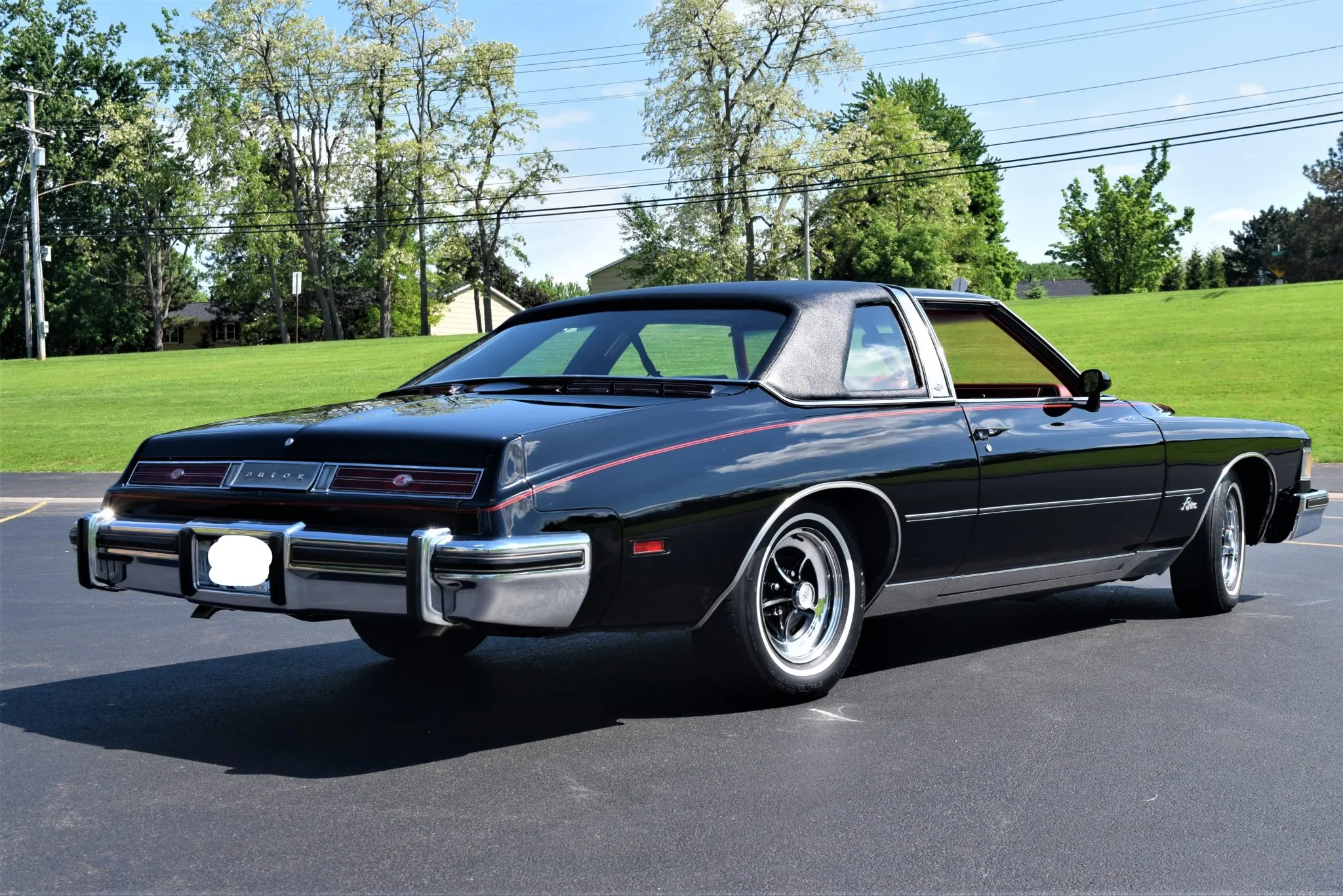
Buick’s 1971–1973 “Boattail” Riviera has always been controversial, but its 1974–1976 successor remains a non-entity, a car you could easily forget had existed at all. That’s not just a latter-day judgment: Back in 1976, Road Test tried the bustleback ’76 Riviera and found it an undistinguished big coupe that seemed to have suffered “a detuning of the personality.”
The Buick Riviera, Buick’s personal luxury car, had had a pretty good run for about the first decade of its existence. The 1970 model was a strange anomaly, but the 1963–1965 and 1966–1967 cars are classics, the 1968–1969 cars aren’t bad, and the 1971–1973 boattail car was at least distinctive.

No one involved with its development had been happy with how the boattail had turned out — not Bill Mitchell, whose idea it had been; not Jerry Hirshberg, who had to try to interpret Mitchell’s idea on a platform that didn’t suit it; not Buick general manager Lee Mays, who hated it; and not Ned Nickles, who had designed the car that became the 1963 Riviera — but it had character, and it still has its fans.
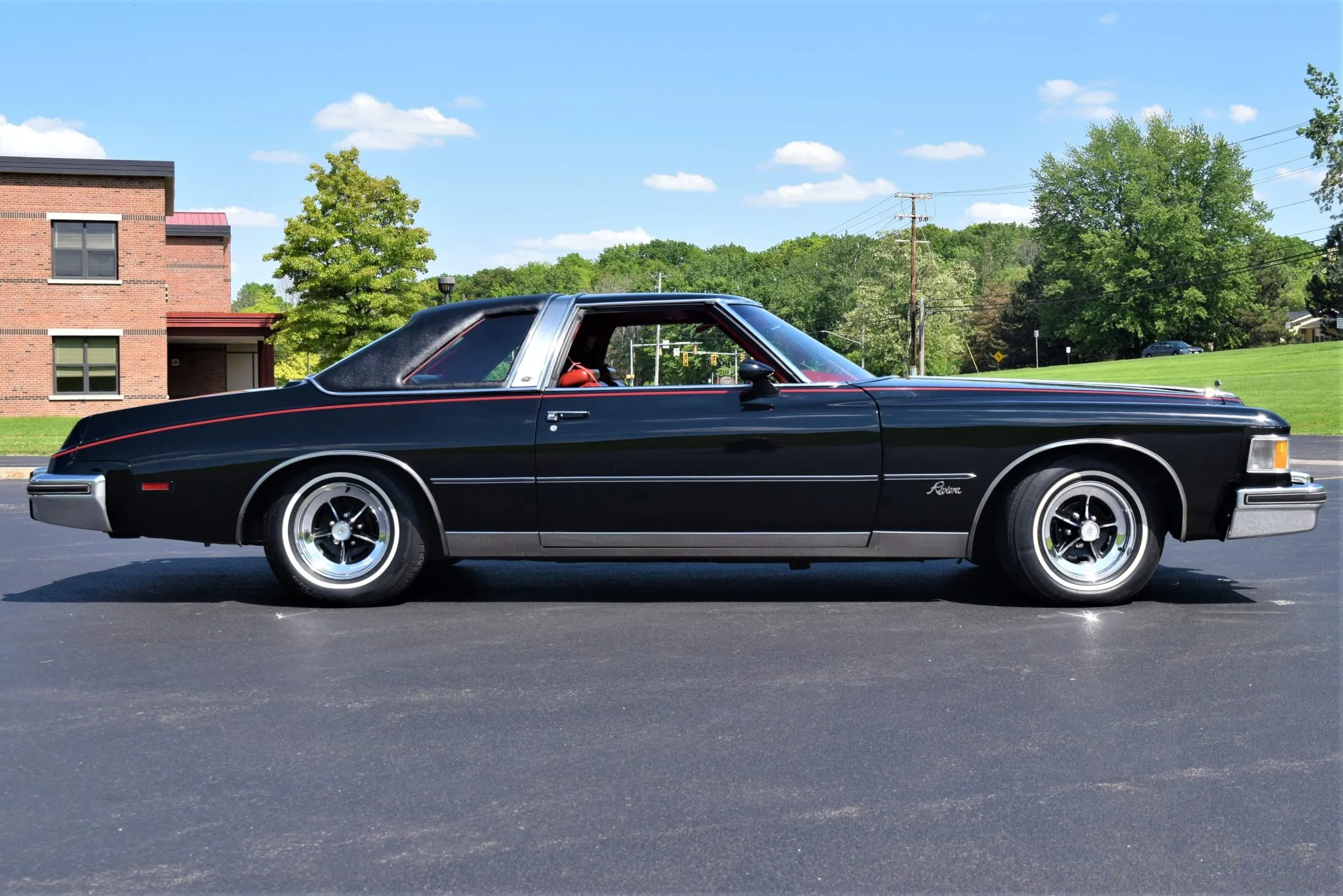
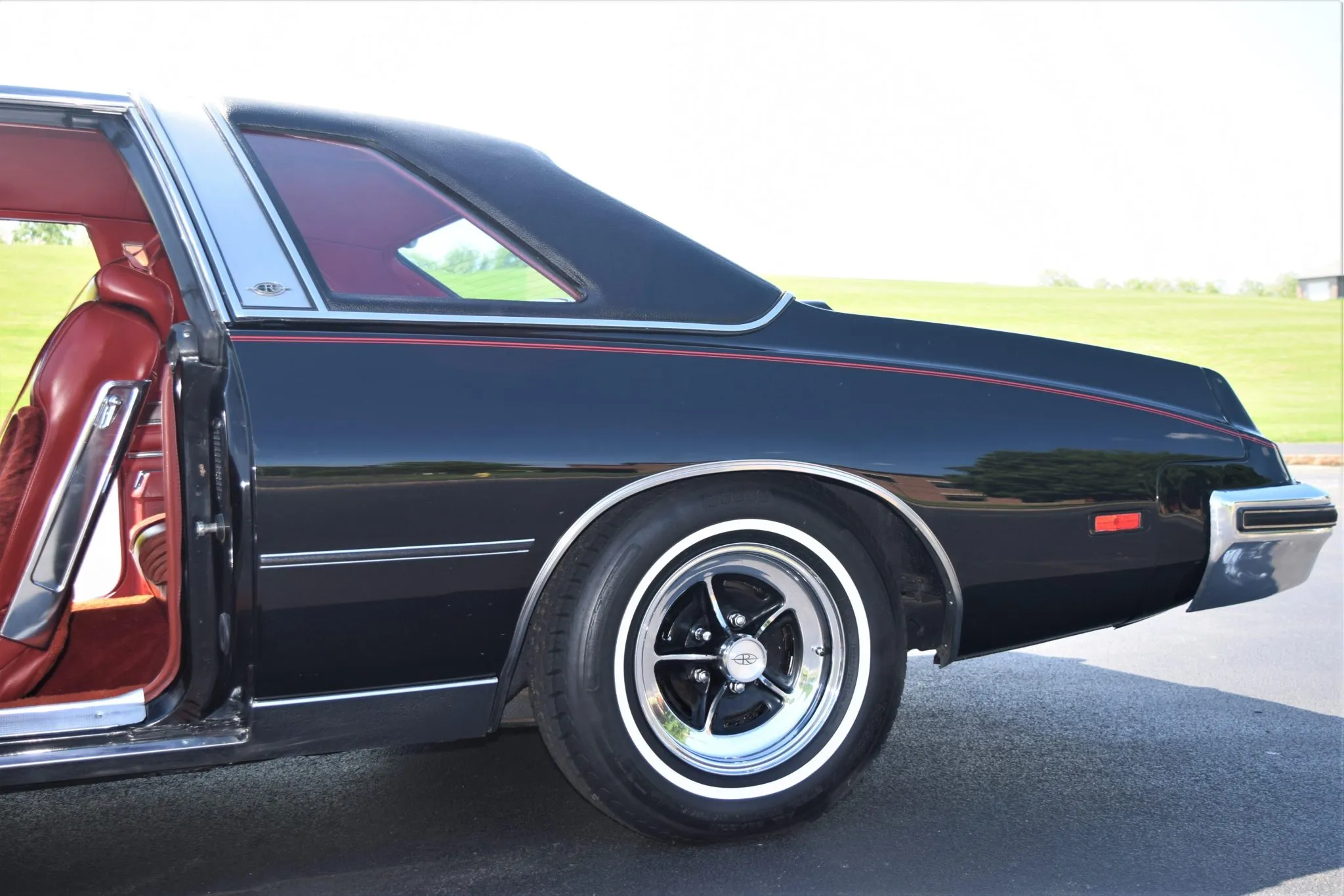
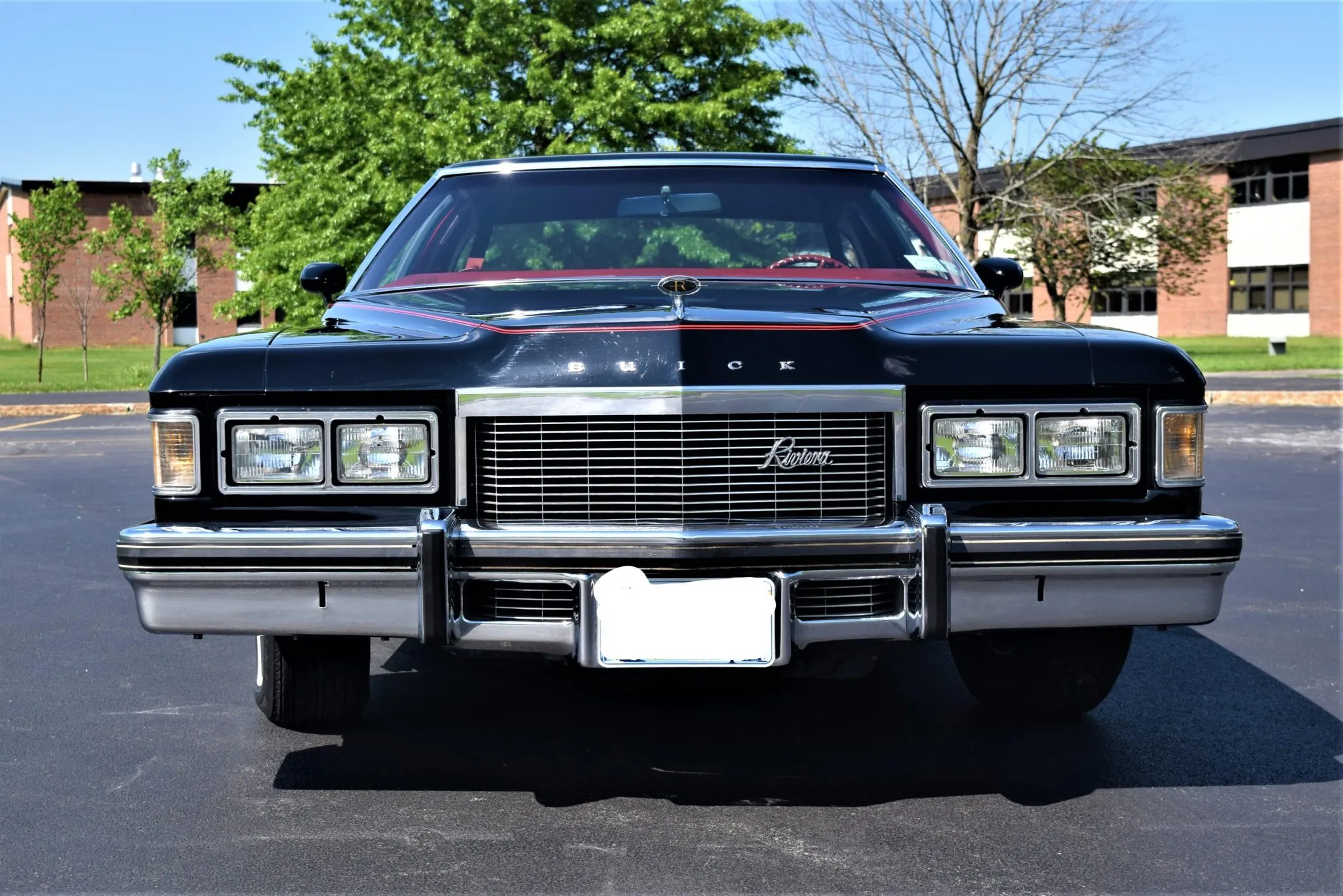
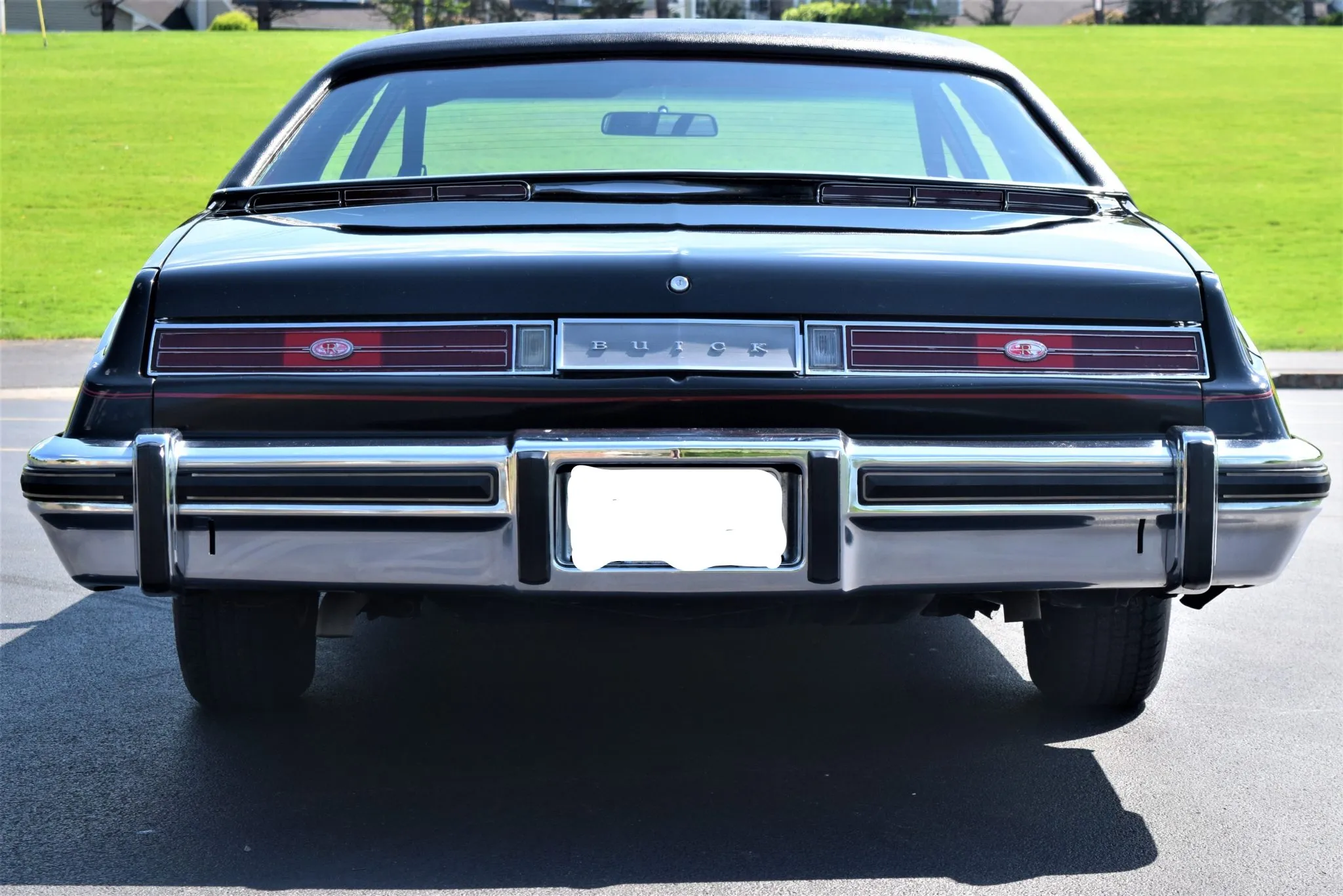
In 1972, designer Wayne Kady began a two-year stint as chief of the Buick styling studio and came up with a facelift for the 1974 Riviera that dispensed with the boattail in favor of one of Kady’s beloved bustleback rear decks. I am already on record as regarding the bustleback as an aesthetic abomination, and Kady’s fascination with it would later be ruinous for Cadillac, but this is probably the least-offensive variation on that theme, perhaps because it was plainly done on the cheap. Looking at this car, you can see how the designers looked for ways they could reshape the sheet metal to make the Riviera look different within what I assume was a very modest tooling budget.
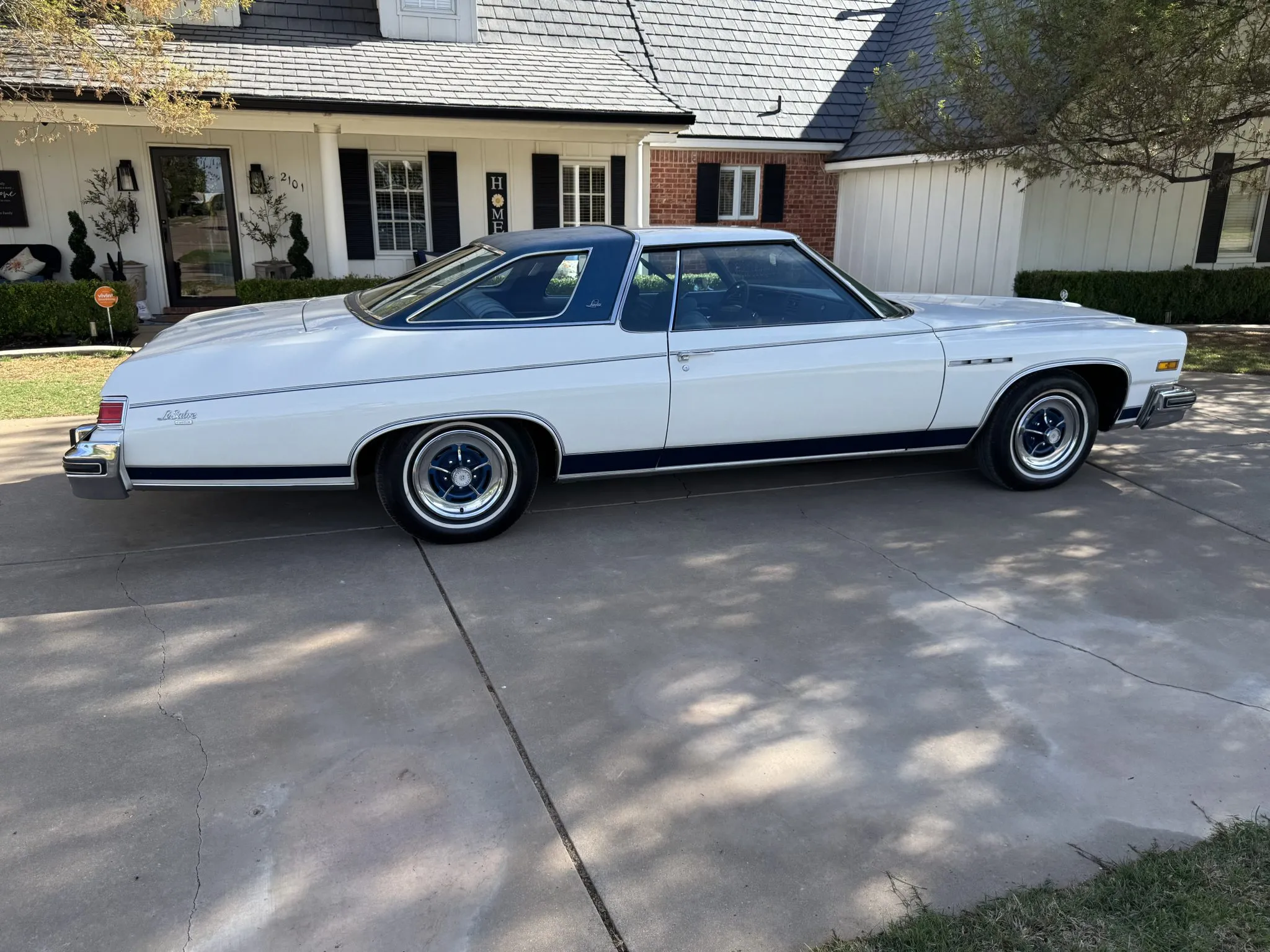
The problem was that the Riviera now didn’t look like anything in particular. Scratch that — it looked like a two-door LeSabre with a different roof and exterior sheet metal, which it more or less was. A 1976 Riviera was 2 inches shorter in wheelbase than the LeSabre and about 3.8 inches shorter overall, but the resemblance was nonetheless strong. There were far worse things to look like than a LeSabre, but the Riviera had essentially reverted to the formula of the old B-body Oldsmobile Starfire, an Olds 88 with a different roofline and fancier exterior trim.
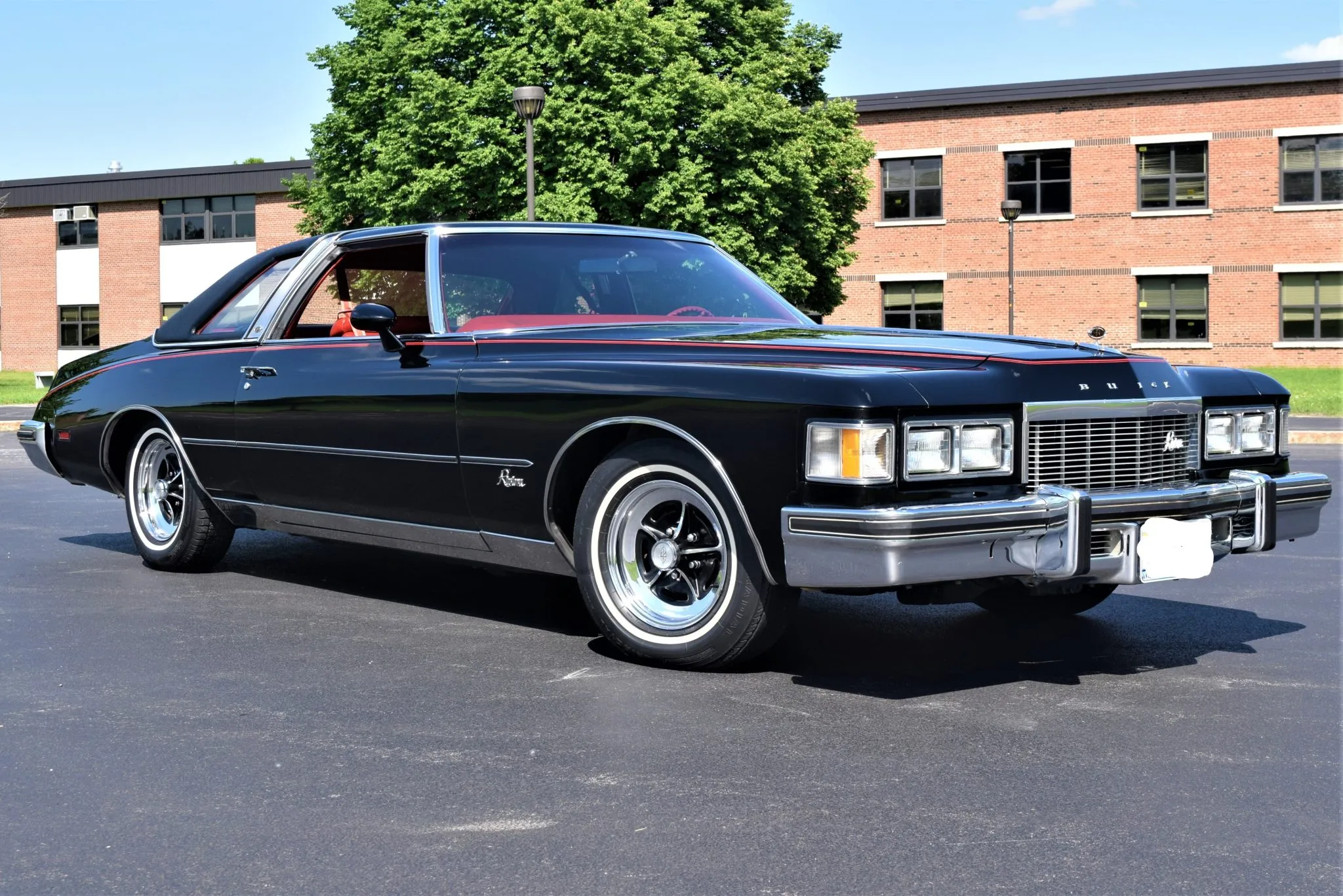
New Buick general manager George Elges said the restyled Riviera was “our bright hope for 1974,” but that hope was in vain: Sales dropped 41 percent from 1973. Much of that decline was undoubtedly due to the 1973–1974 oil embargo, which hit during the middle of the 1974 model year, but 1975 was even worse, with Riviera production falling to 17,306 cars. Big car sales rallied once the embargo was over, but the Riviera was lost in the shuffle.
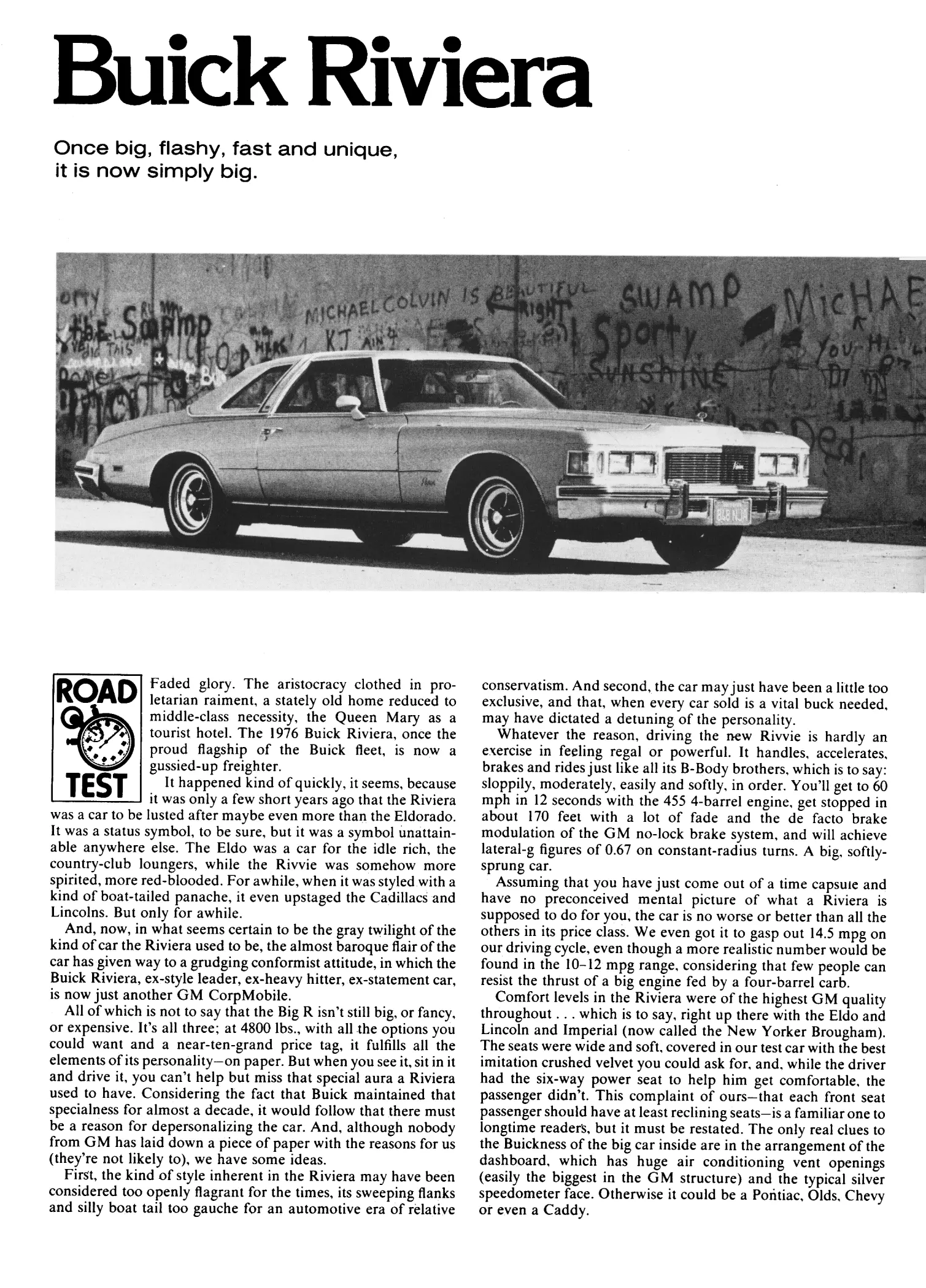
Given all that, you can understand why the editors of Road Test started on a rather gloomy note:
Faded glory. The aristocracy clothed in proletarian raiment, a stately old home reduced to middle-class necessity, the Queen Mary as a tourist hotel. The 1976 Buick Riviera, once the proud flagship of the Buick fleet, is now a gussied-up freighter.
It happened kind of quickly, it seems, because it was only a few short years ago that the Riviera was a car to be lusted after maybe even more than the Eldorado. It was a status symbol, to be sure, but it was a symbol unattainable anywhere else. The Eldo was a car for the idle rich, the country-club loungers, while the Rivvie was somehow more spirited, more red-blooded. For awhile, when it was styled with a kind of boat-tailed panache, it even upstaged the Cadillacs and Lincolns. But only for awhile.
And, now, in what seems certain to be the gray twilight of the kind of car the Riviera used to be, the almost baroque flair of the car has given way to a grudging conformist attitude, in which the Buick Riviera, ex-style leader, ex-heavy hitter, ex-statement car, is now just another GM CorpMobile.
All of which is not to say that the Big R isn’t still big. or fancy, or expensive. It’s all three; at 4800 lbs., with all the options you could want and a near-ten-grand price tag, it fulfills all the elements of its personality—on paper. But when you see it, sit in it and drive it, you can’t help but miss that special aura a Riviera used to have.
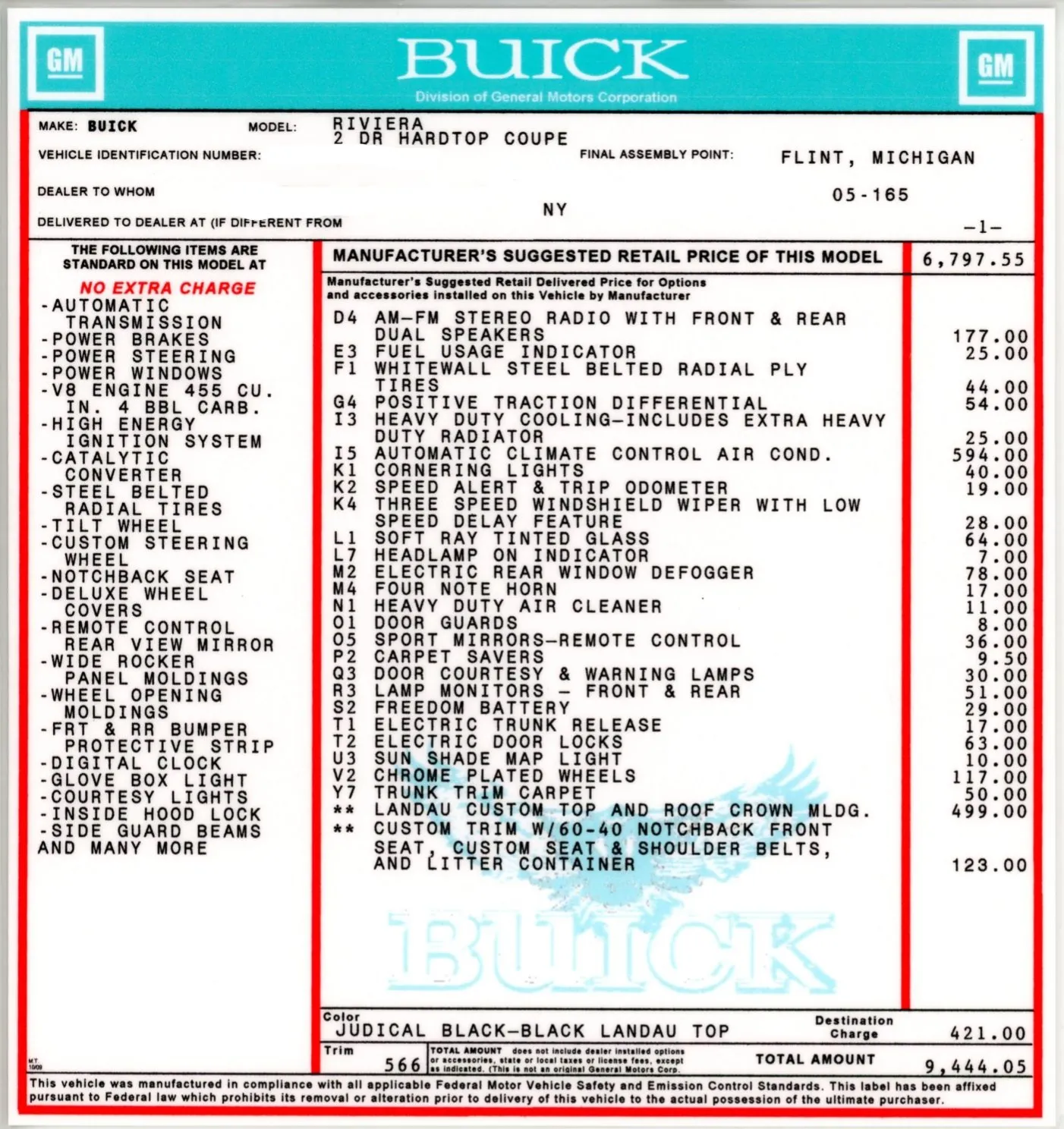
The base price of a 1976 Riviera was $6,797.55, but its standard equipment still didn’t include essential features like a radio, air conditioning (with or without automatic climate control), a power seat, the chrome-plated wheels, or the ubiquitous Landau Custom vinyl top. This car has all that stuff, bringing the original sticker price to $9,023.05, not including destination charge, within about $80 of the Road Test car.
Road Test speculated that “the kind of style inherent in the [boattail] Riviera may have been considered too openly flagrant for the times, its sweeping flanks and silly boat tail too gauche for an automotive era of relative conservatism.” So far as the high-end personal luxury market went, that was ridiculous: The tastemakers of the segment were the Cadillac Eldorado and Lincoln Continental Mark IV, which offered glitz by the full-ton lot, and really well-heeled buyers might also be tempted by gaudy low-production neoclassical horrors like the Excalibur or the Stutz Blackhawk, for which the word “flagrant” might well have been coined. At the lower end, the one to beat was the Chevrolet Monte Carlo, which offered dramatic disco-era extravagance on a Chevelle budget. People didn’t buy ’70s personal luxury cars to be subtle.
Car magazine testers can forgive a lot if they like the way a car drives, but Road Test found the Riviera completely average:
Whatever the reason, driving the new Rivvie is hardly an exercise in feeling regal or powerful. It handles, accelerates, brakes and rides just like all its B-Body brothers, which is to say: sloppily, moderately, easily and softly, in order. You’ll get to 60 mph in 12 seconds with the 455 4-barrel engine, get stopped in about 170 feet with a lot of fade and the de facto brake modulation of the GM no-lock brake system, and will achieve lateral-g figures of 0.67 on constant-radius turns. A big, softly-sprung car.
Their reference to “the GM no-lock brake system” like refers to the brake proportioning setup (front discs and rear drums were standard on these cars), not to the electronic rear-wheel ABS that had been available on the Eldorado and Oldsmobile Toronado. Buick hadn’t offered that system, although the Riviera had been available for a while with MaxTrac electronic traction control. (MaxTrac was no longer available by this time — likely for emissions reasons, since it worked by cutting ignition power.)
Assuming that you have just come out of a time capsule and have no preconceived mental picture of what a Riviera is supposed to do for you, the car is no worse or better than all the others in its price class. We even got it to gasp out 14.5 mpg on our driving cycle, even though a more realistic number would be found in the 10-12 mpg range, considering that few people can resist the thrust of a big engine fed by a four-barrel carb.
Comfort levels in the Riviera were of the highest GM quality throughout … which is to say, right up there with the Eldo and Lincoln and Imperial (now called the New Yorker Brougham). The seats were wide and soft, covered in our test car with the best imitation crushed velvet you could ask for, and. while the driver had the six-way power seat to help him get comfortable, the passenger didn’t. This complaint of ours—that each front seat passenger should have at least reclining seats—is a familiar one to longtime readers, but it must be restated. The only real clues to the Buickness of the big car inside are in the arrangement of the dashboard, which has huge air conditioning vent openings (easily the biggest in the GM structure) and the typical silver speedometer face. Otherwise it could be a Pontiac. Olds, Chevy or even a Caddy.
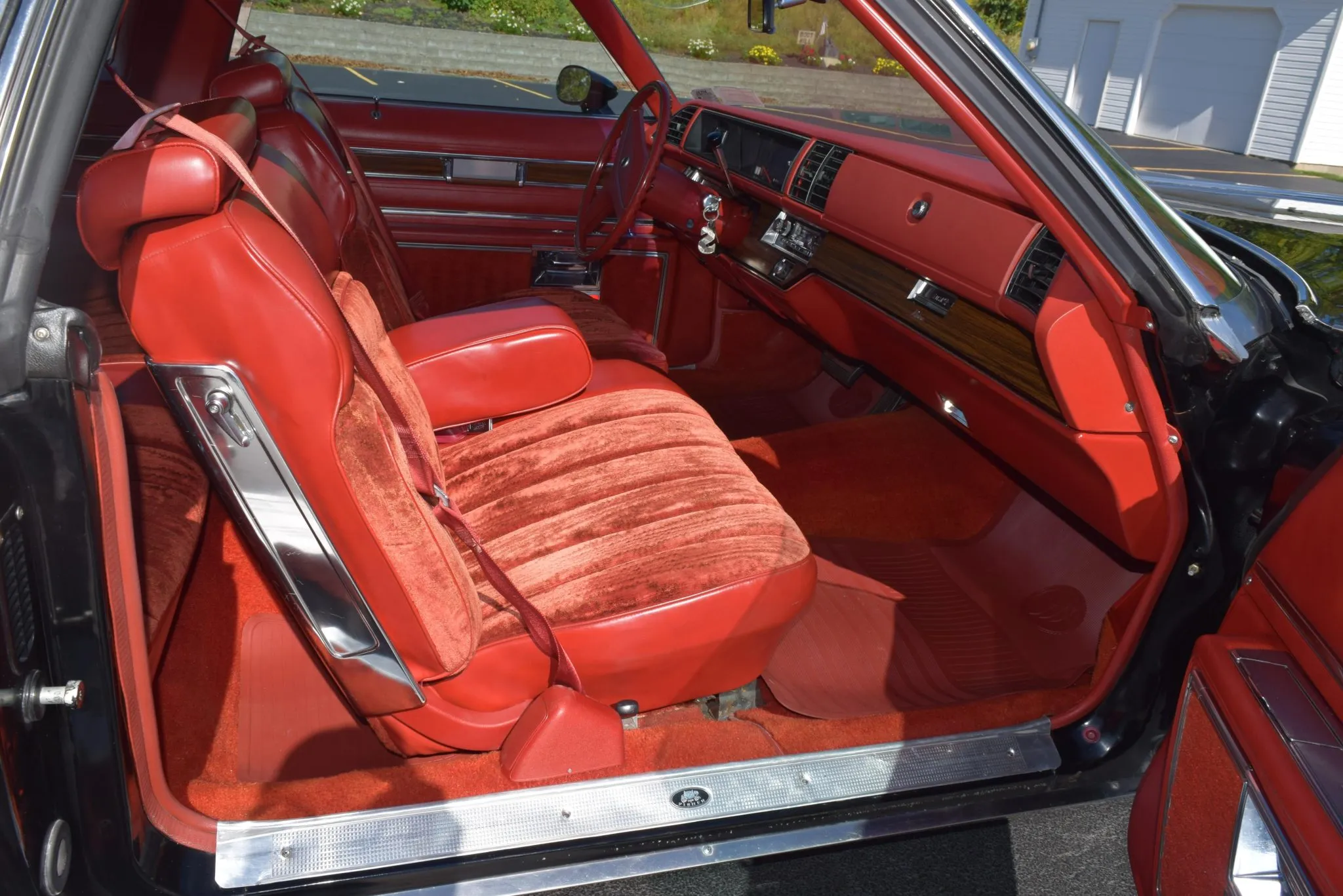
I can’t tell what color the Road Test car may have been, but they also had the $123 Custom trim option, with a 60/40 notchback bench seat upholstered in crushed velour and vinyl.
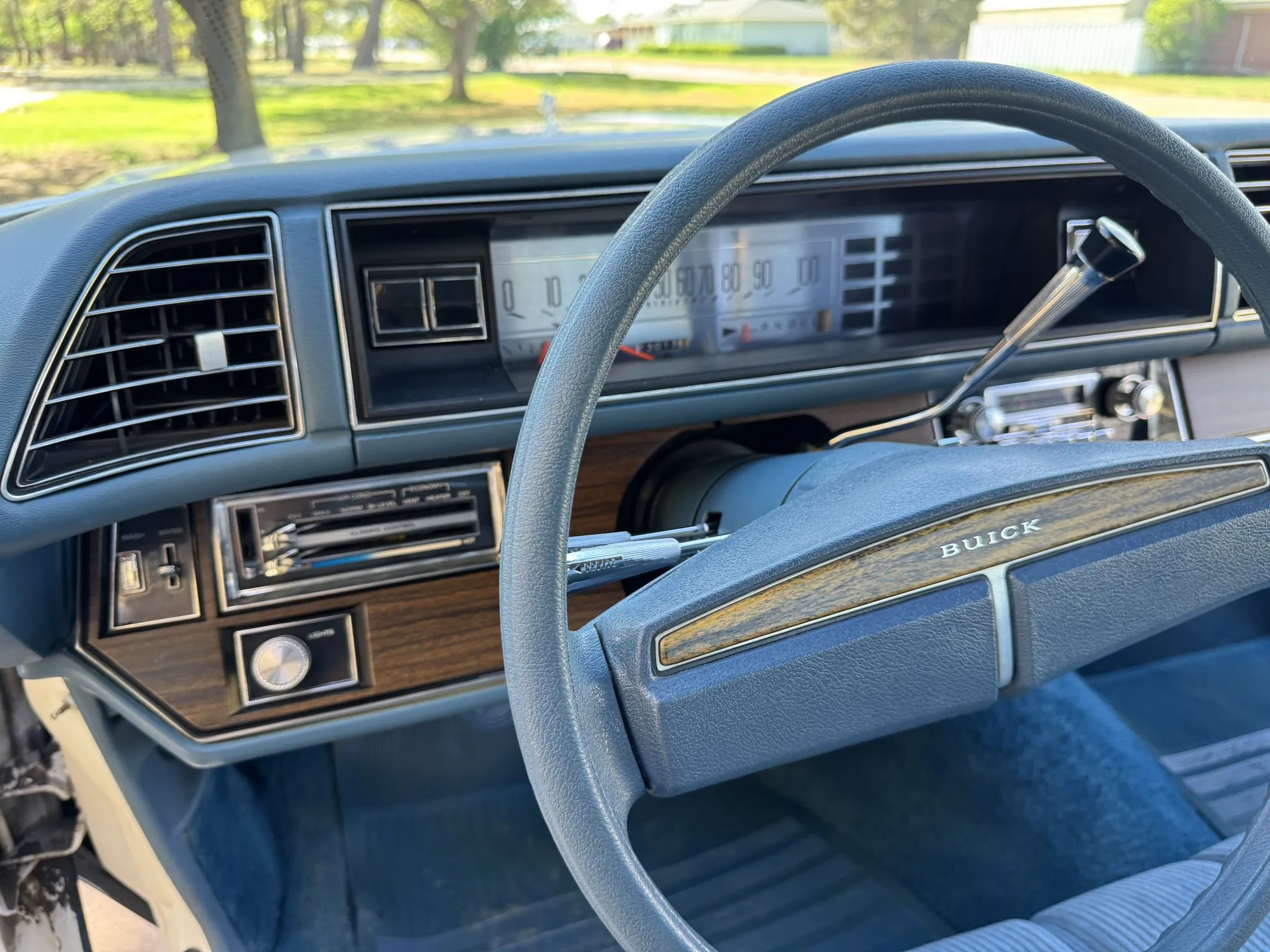
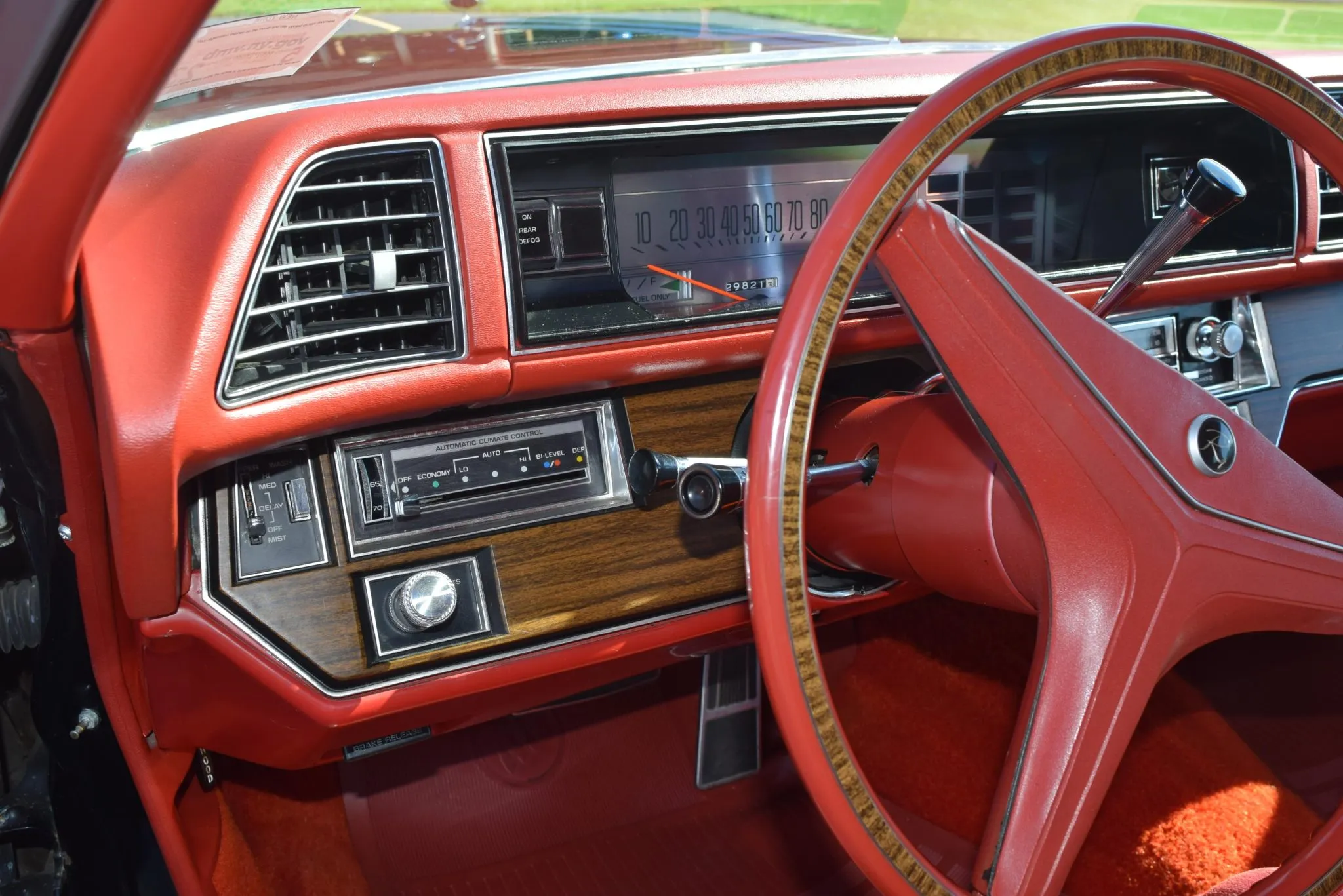
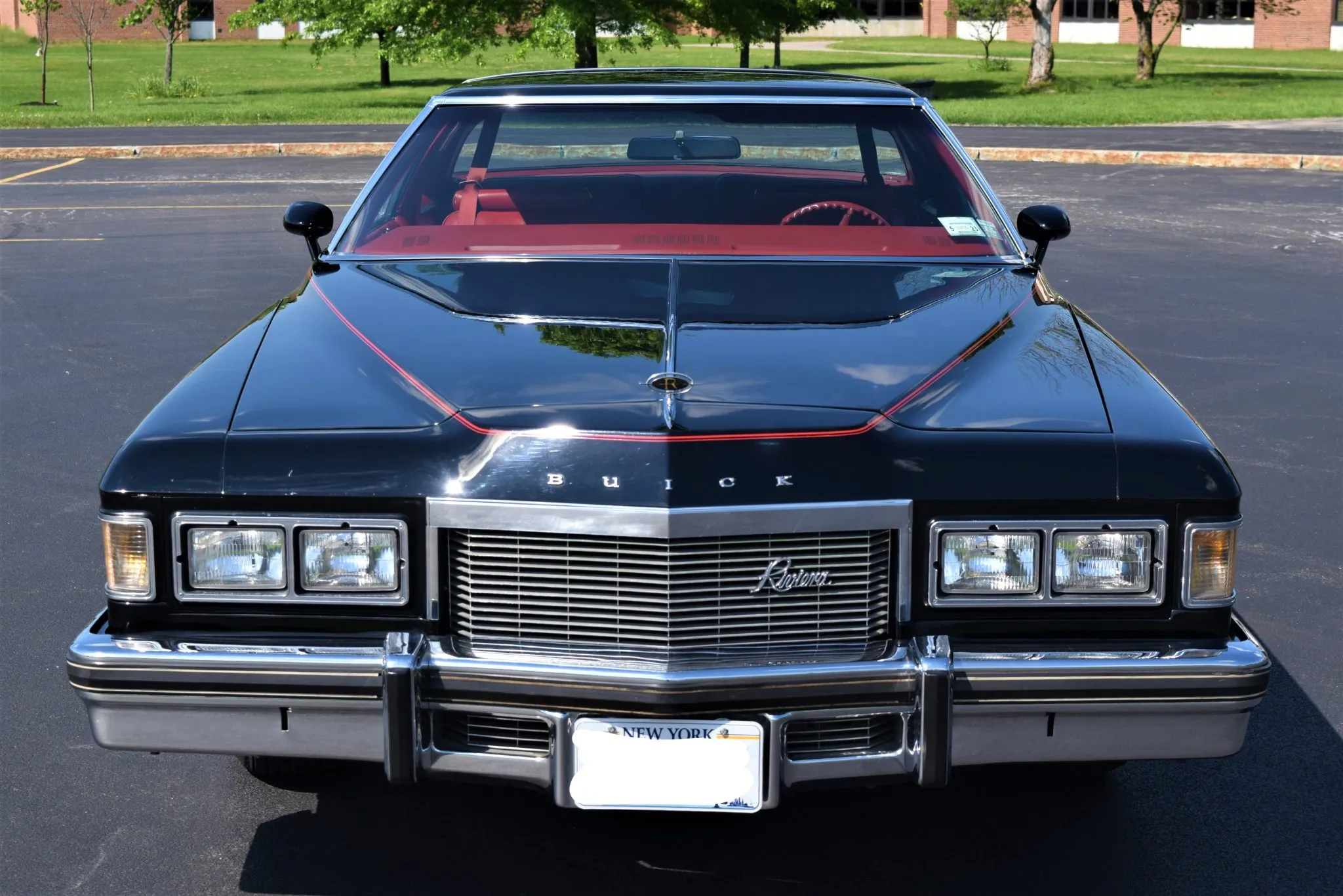
The Riviera dashboard differed little from the one in the LeSabre, although the Riviera had a three-spoke Custom wheel with that awful woodgrain ring. Early Rivieras had also shared dashboards with the rest of the line, but back then, Buick dash design was a good deal flashier than it was by the mid-1970s.
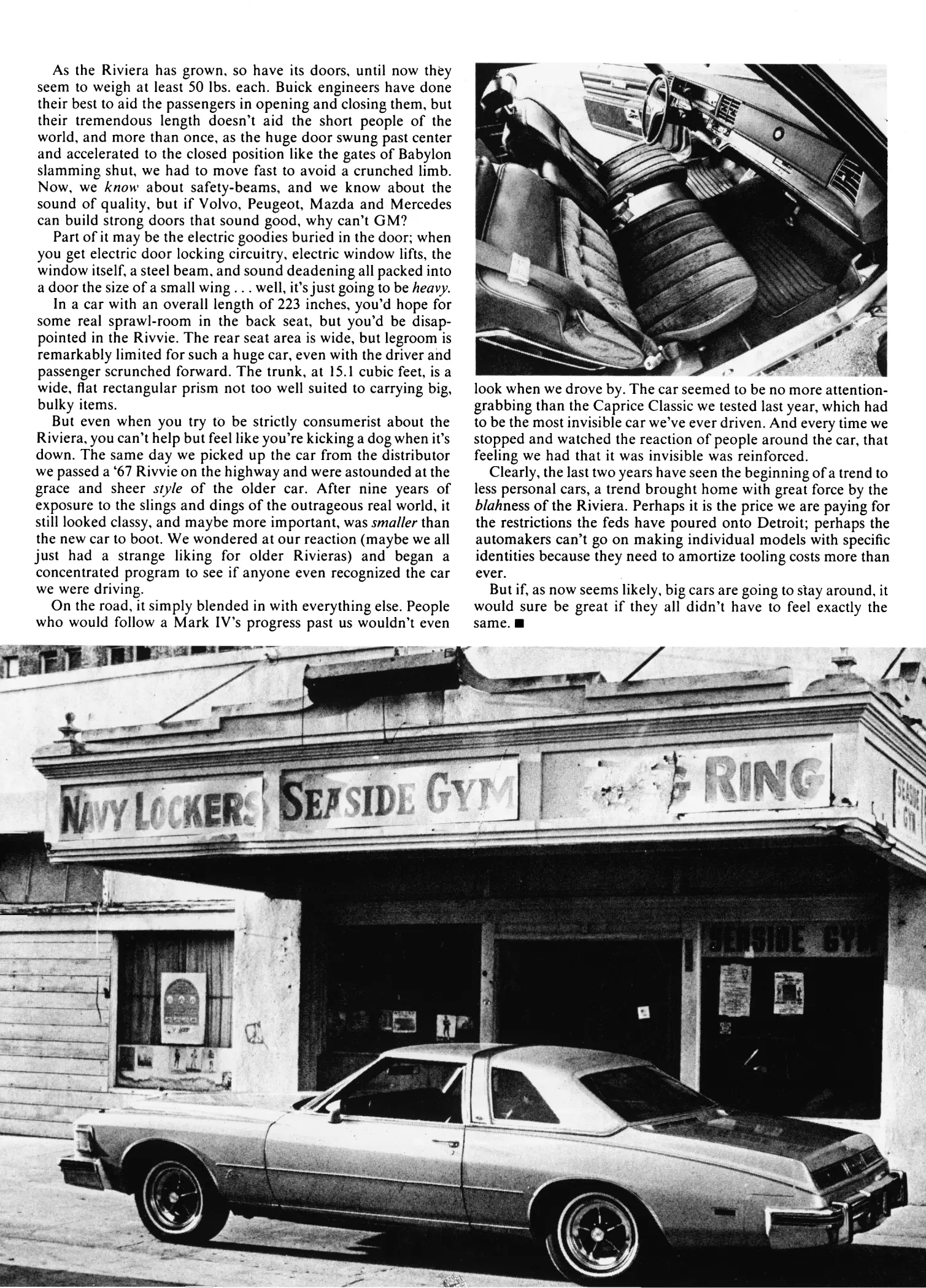
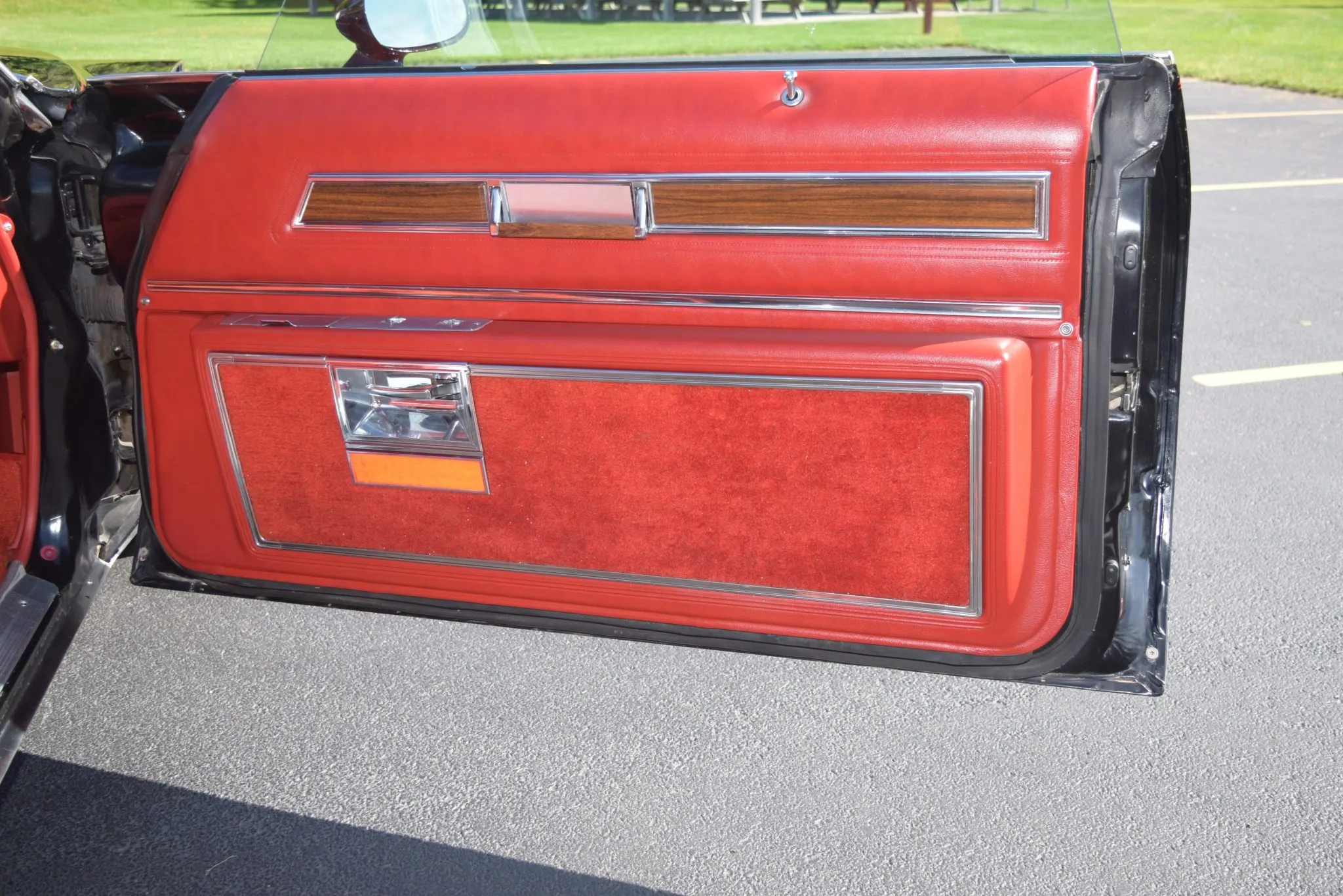
Road Test had complaints about the doors as well:
As the Riviera has grown, so have its doors, until now they seem to weigh at least 50 lbs. each. Buick engineers have done their best to aid the passengers in opening and closing them, but their tremendous length doesn’t aid the short people of the world, and more than once, as the huge door swung past center and accelerated to the closed position like the gates of Babylon slamming shut, we had to move fast to avoid a crunched limb. Now, we know about safety-beams, and we know about the sound of quality, but if Volvo, Peugeot, Mazda and Mercedes can build strong doors that sound good, why can’t GM?
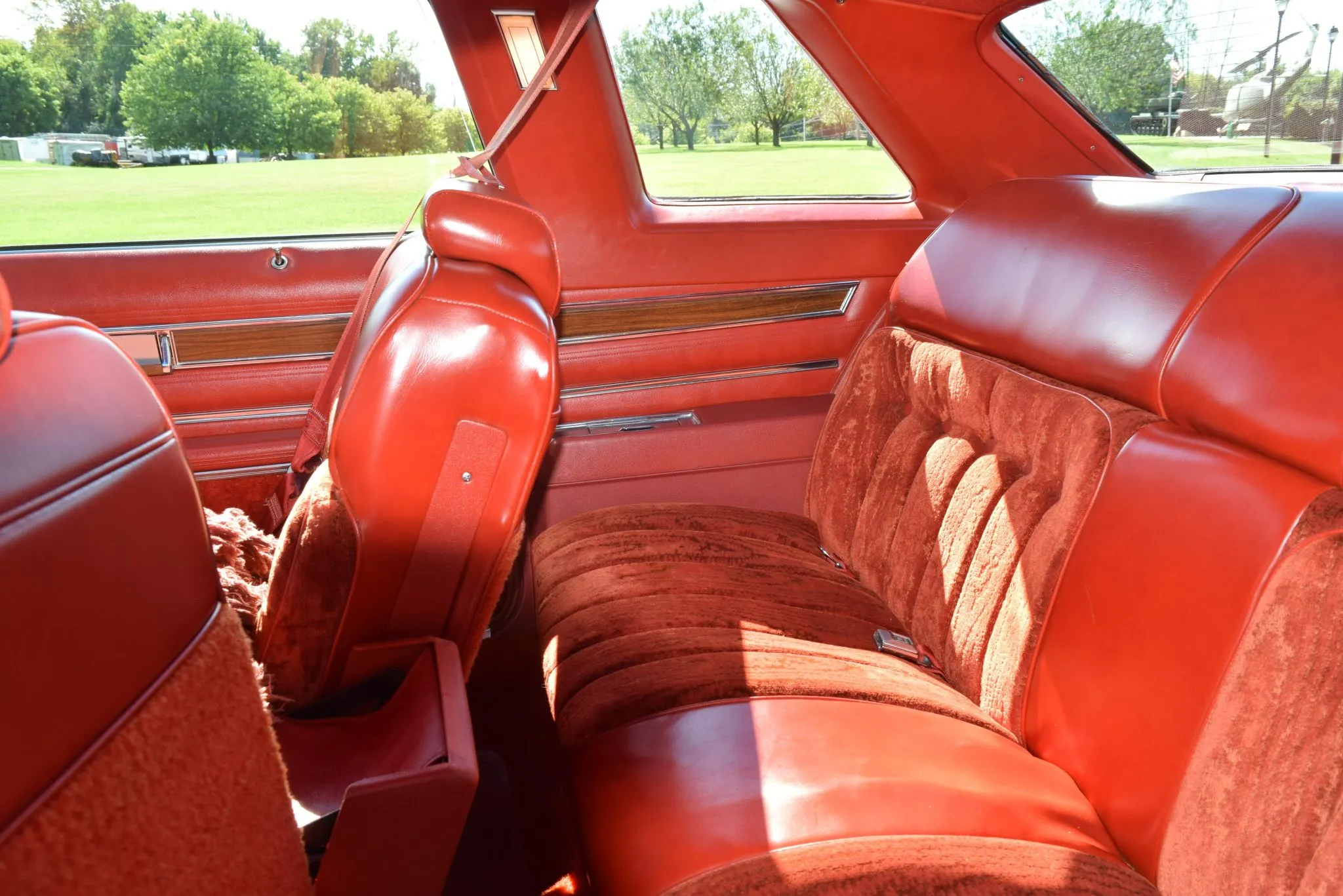
For 1975, Buick had restyled the bumpers of the Riviera, trimming overall length by 3.4 inches and curb weight by around 50 lb, so they could demonstrate that they were Doing Something in response to the energy crisis. The 1975–1976 Riviera was still nonetheless an enormous car with a tiny back seat. Road Test complained:
In a car with an overall length of 223 inches, you’d hope for some real sprawl-room in the back seat, but you’d be disappointed in the Rivvie. The rear seat area is wide, but legroom is remarkably limited for such a huge car, even with the driver and passenger scrunched forward. The trunk, at 15.1 cubic feet, is a wide, flat rectangular prism not too well suited to carrying big, bulky items.
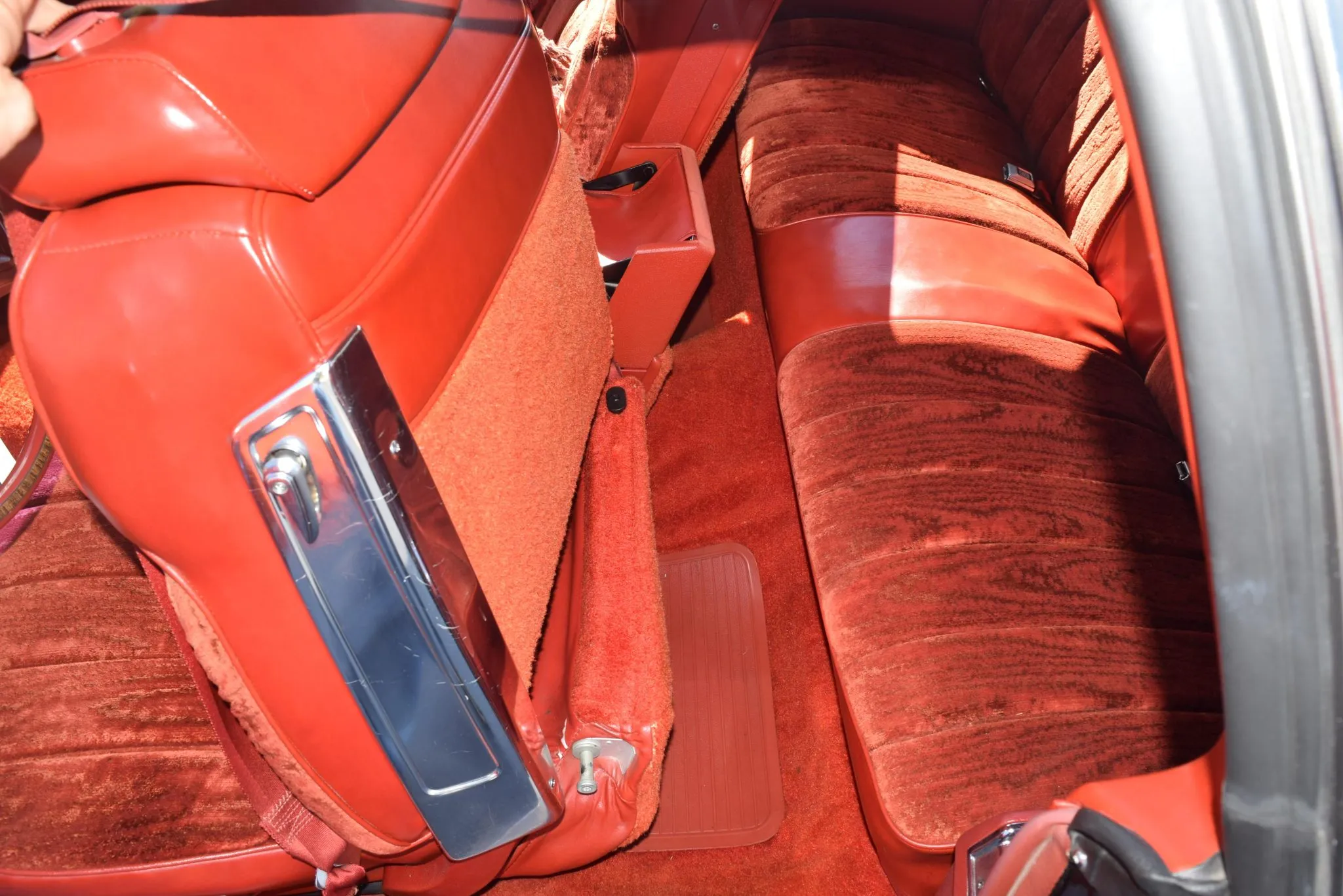
Obviously, people shopping for cars like these were prepared to make significant sacrifices in interior space for style. (Anyone with Riviera money who wanted space could certainly afford an Electra 225 instead.) However, that did presuppose that the Riviera offered enough style to make up for the shortfalls in space, which was arguable.
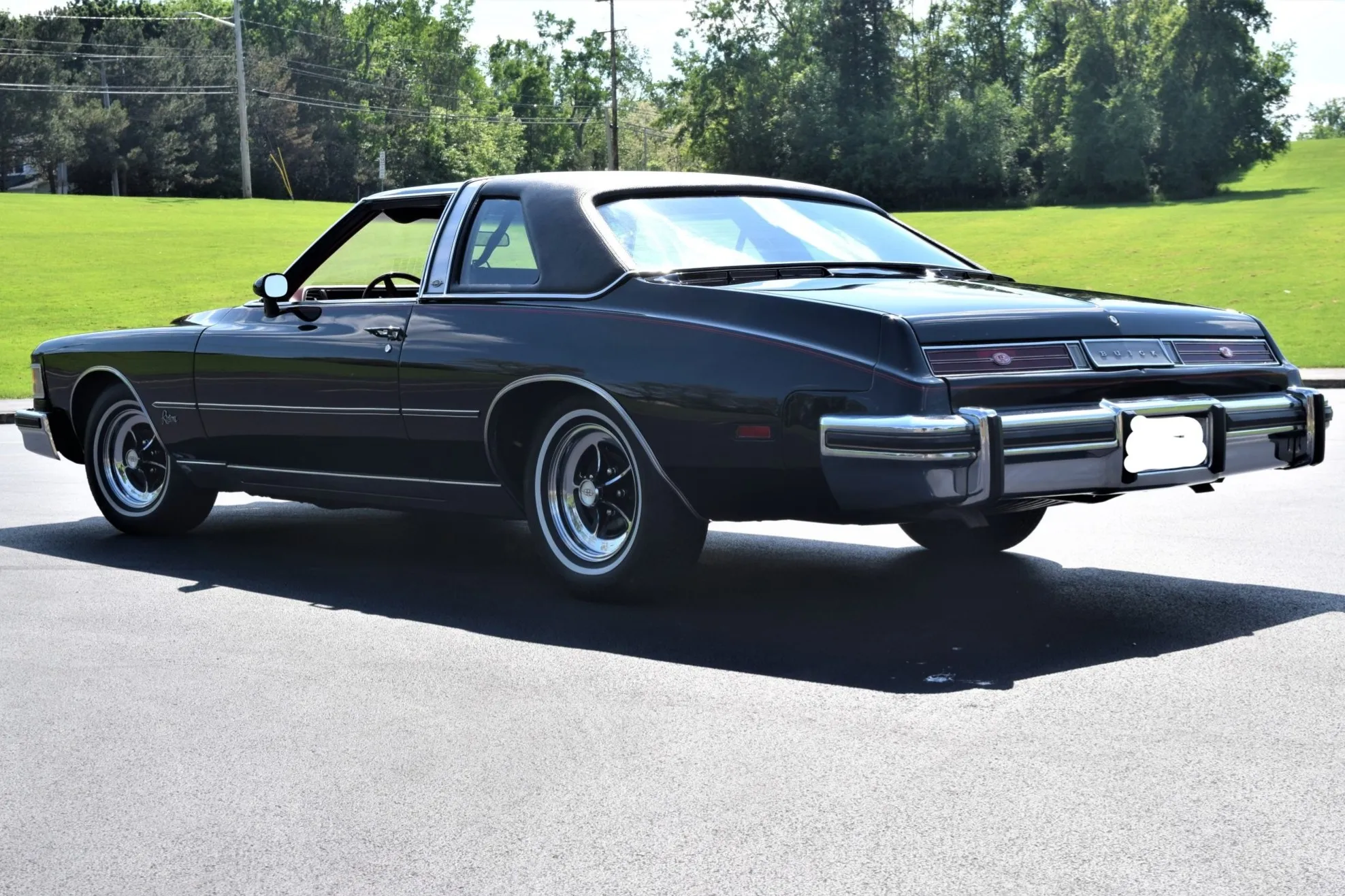
Even so, the Road Test editors couldn’t bring themselves to do too much number-crunching consumer analysis:
But even when you try to be strictly consumerist about the Riviera, you can’t help but feel like you’re kicking a dog when it’s down. The same day we picked up the car from the distributor we passed a ‘67 Rivvie on the highway and were astounded at the grace and sheer style of the older car. After nine years of exposure to the slings and dings of the outrageous real world, it still looked classy, and maybe more important, was smaller than the new car to boot. We wondered at our reaction (maybe we all just had a strange liking for older Rivieras) and began a concentrated program to see if anyone even recognized the car we were driving.
On the road, it simply blended in with everything else. People who would follow a Mark IV’s progress past us wouldn’t even look when we drove by. The car seemed to be no more attention-grabbing than the Caprice Classic we tested last year, which had to be the most invisible car we’ve ever driven. And every time we stopped and watched the reaction of people around the car, that feeling we had that it was invisible was reinforced.
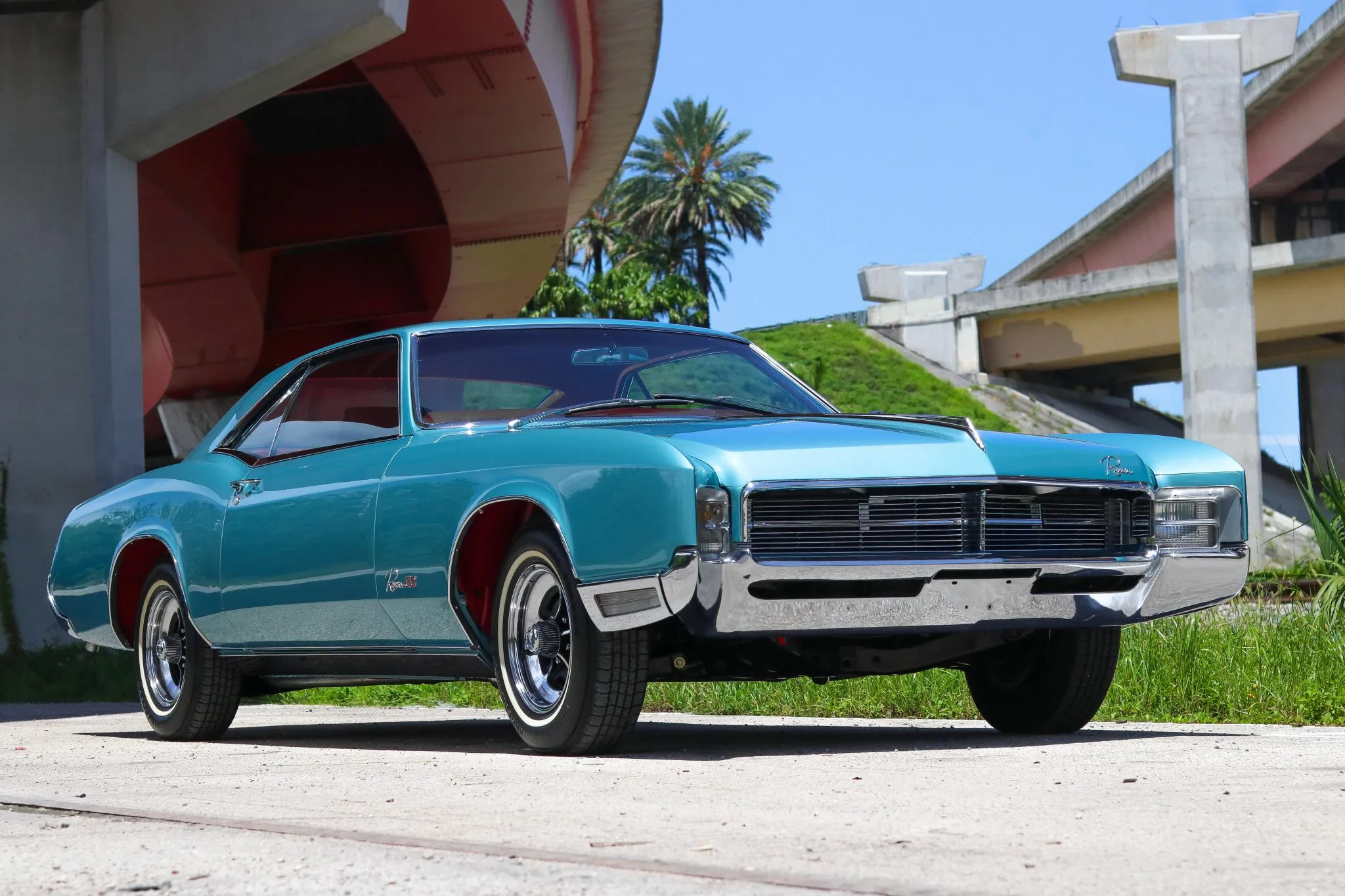
Just to twist the knife, here’s a 1967 Riviera like the one they saw.
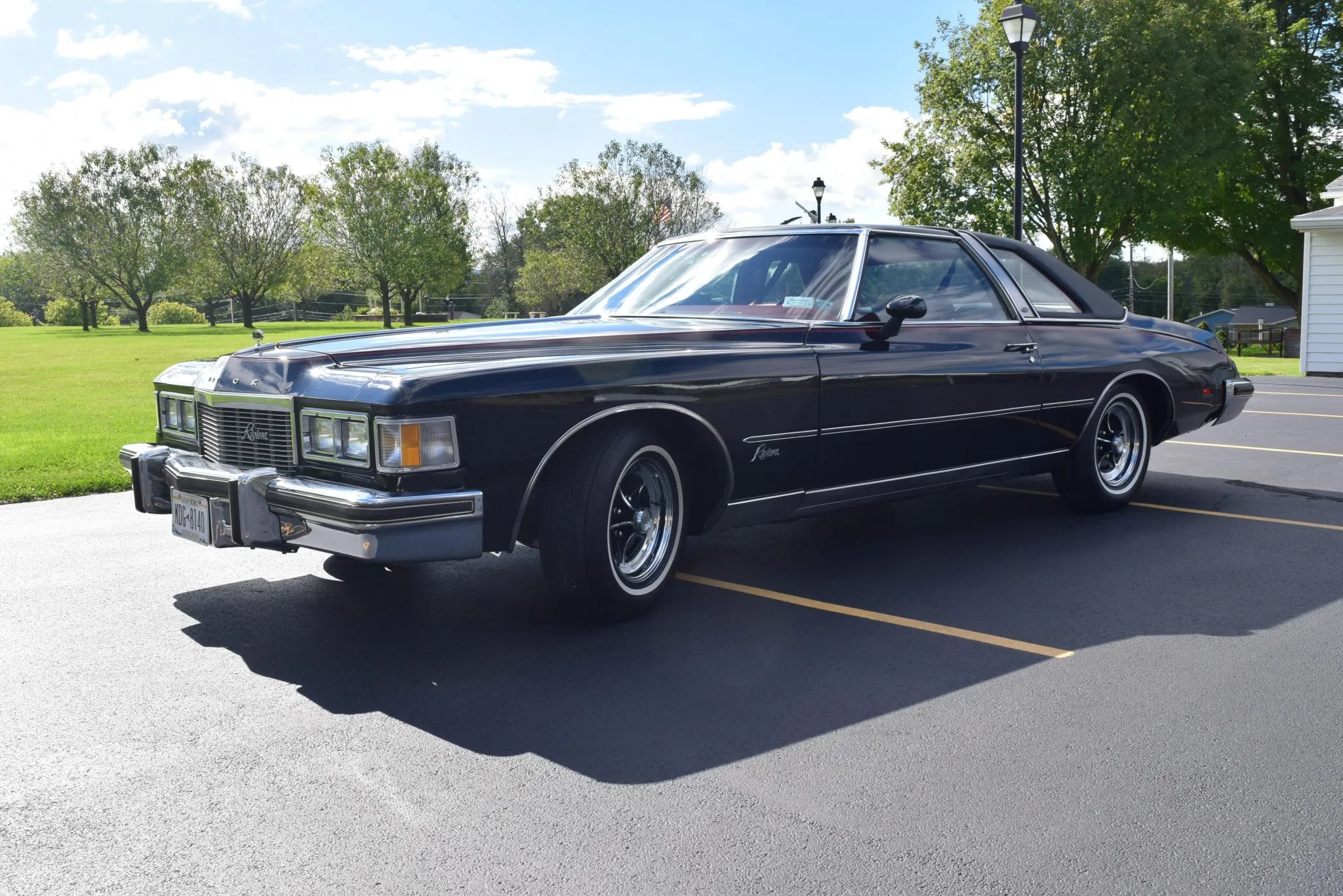
Road Test wasn’t arguing that the 1976 Riviera was a bad car, just a very bland one. The editors concluded:
Clearly, the last two years have seen the beginning of a trend to less personal cars, a trend brought home with great force by the blahness of the Riviera. Perhaps it is the price we are paying for the restrictions the feds have poured onto Detroit; perhaps the automakers can’t go on making individual models with specific identities because they need to amortize tooling costs more than ever. But if, as now seems likely, big cars are going to stay around, it would sure be great if they all didn’t have to feel exactly the same. ■
For its third and final year, production of this Riviera was back up to 20,082 units, but that was still less than the old boattail car.
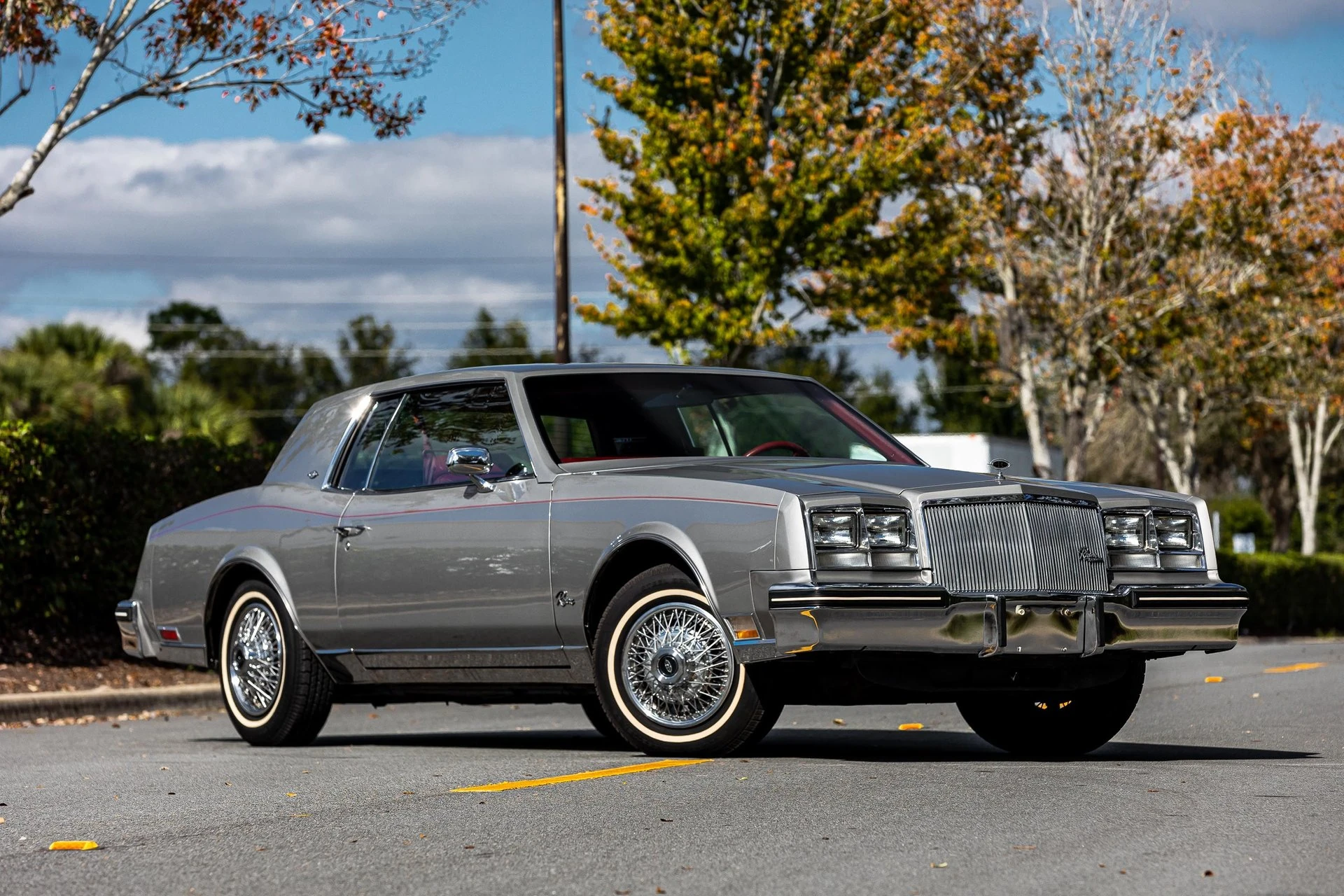
The 1977–1978 Riviera seemingly embraced its destiny of becoming just a fancier LeSabre, although since it was based on the downsized and updated B-body line, it was a more competent driver’s car than before. Fortunately for Riviera fans, this turned out to be a temporary fix while Buick awaited the all-new, further downsized FWD 1979 Riviera, which had the panache and pizzazz that its two predecessors had so desperately lacked. Its stylistic flair was amply rewarded: The 1979–1985 car was a big hit, the bestselling Riviera ever.
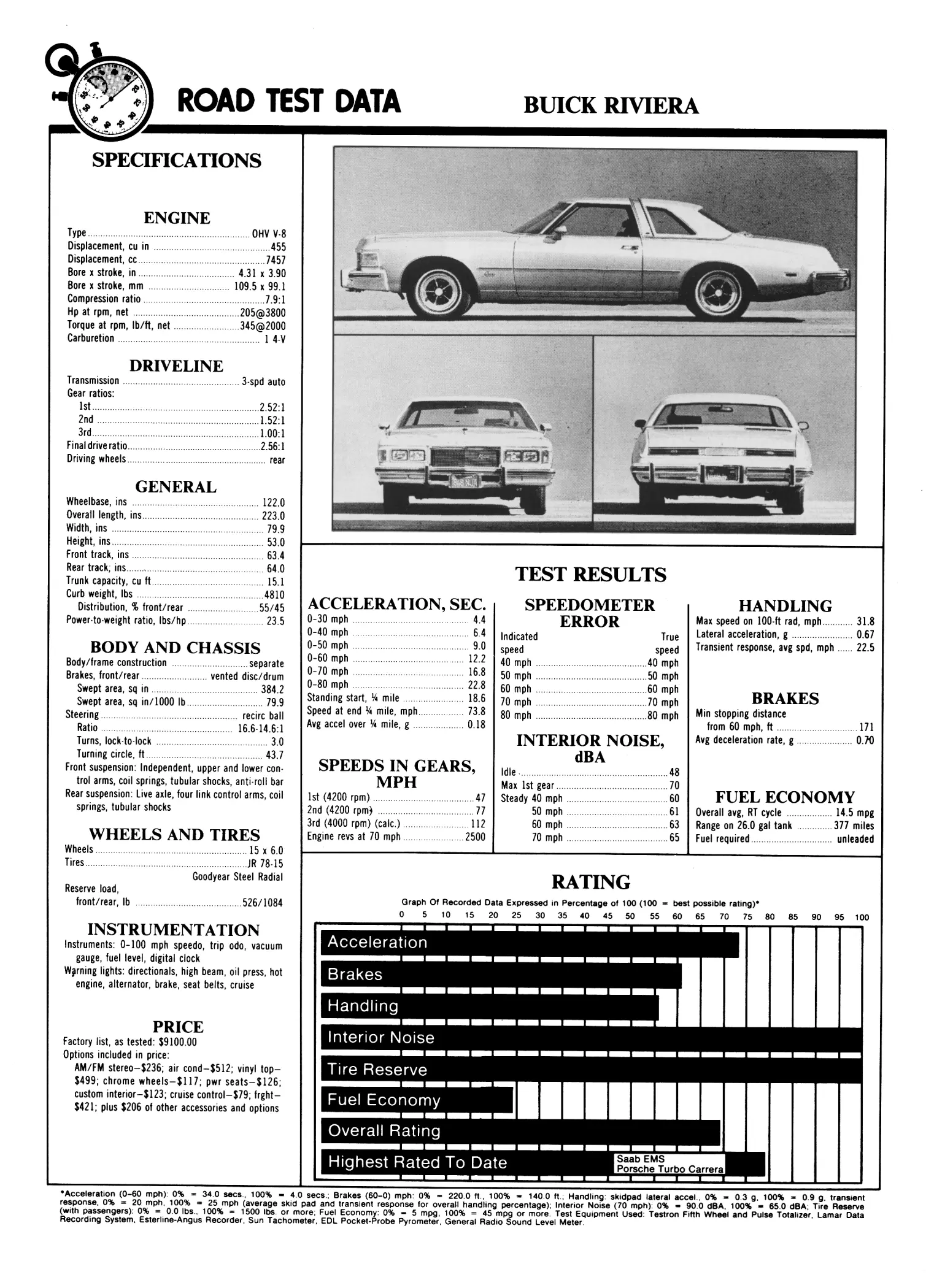
When the magazine first launched in the mid-1960s, Road Test had an amateurish quality to their editing, with lots of sloppy editorial errors. (Since they didn’t accept advertising, they didn’t have the budget that magazines like Car and Driver or Motor Trend boasted.) By this time, they had cleaned up their act, and their specifications and test data were about as reliable as any of the magazines of the time.
Incidentally, there’s a minor discrepancy in the dimensions of the Riviera, which seems to have been Buick’s doing rather than the magazine’s. The 1976 Buick brochure listed the overall length of the Riviera as 218.6 inches, but the trade publications and car magazines (including Road Test) listed 223.0 inches. I don’t have the MVMA specifications for this car, but I think the source of the discrepancy was the rear bumper guards, which were technically optional. The front bumper guards were standard, but the rear ones were not. Obviously, the extra length of the bumper guards had no bearing on interior space or driving manners.
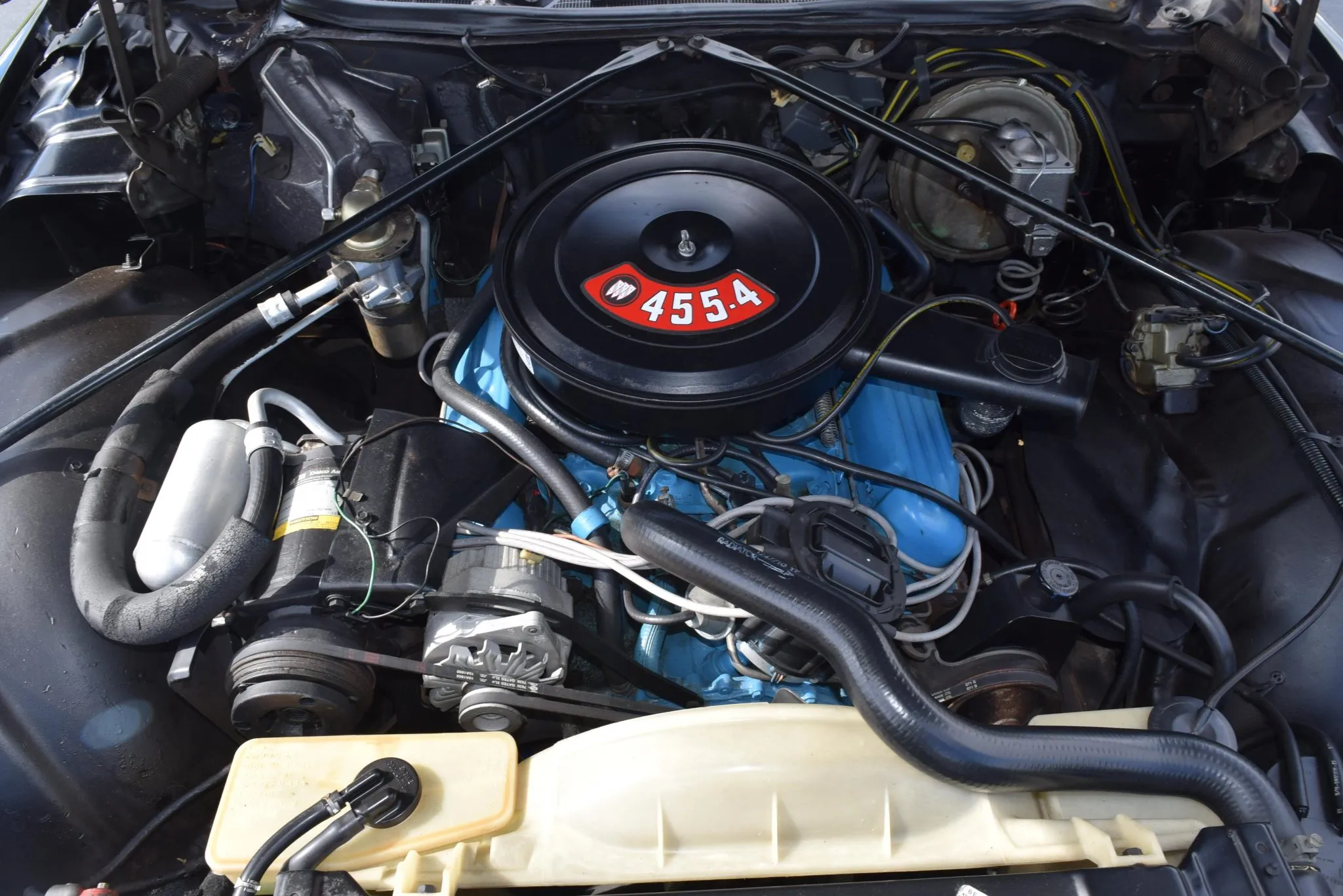
The Road Test data panel supports their comments about the unexceptional nature of this Riviera’s performance: 0 to 60 mph in 12.2 seconds was adequate, but it wasn’t great, especially for a 455 cid engine. Granted, lower compression and mid-’70s emissions controls had trimmed its claws to 205 net hp, and Buick had saddled it with a tall 2.56 axle ratio in pursuit of better gas mileage, but getting only 27.7 hp/liter and (barely) 14.5 mpg made it seem like a weak compromise. The 1977 car used the Buick 350 cid V-8 or the Olds 403 instead of the 455, but performed better than the ’76 because it weighed less.
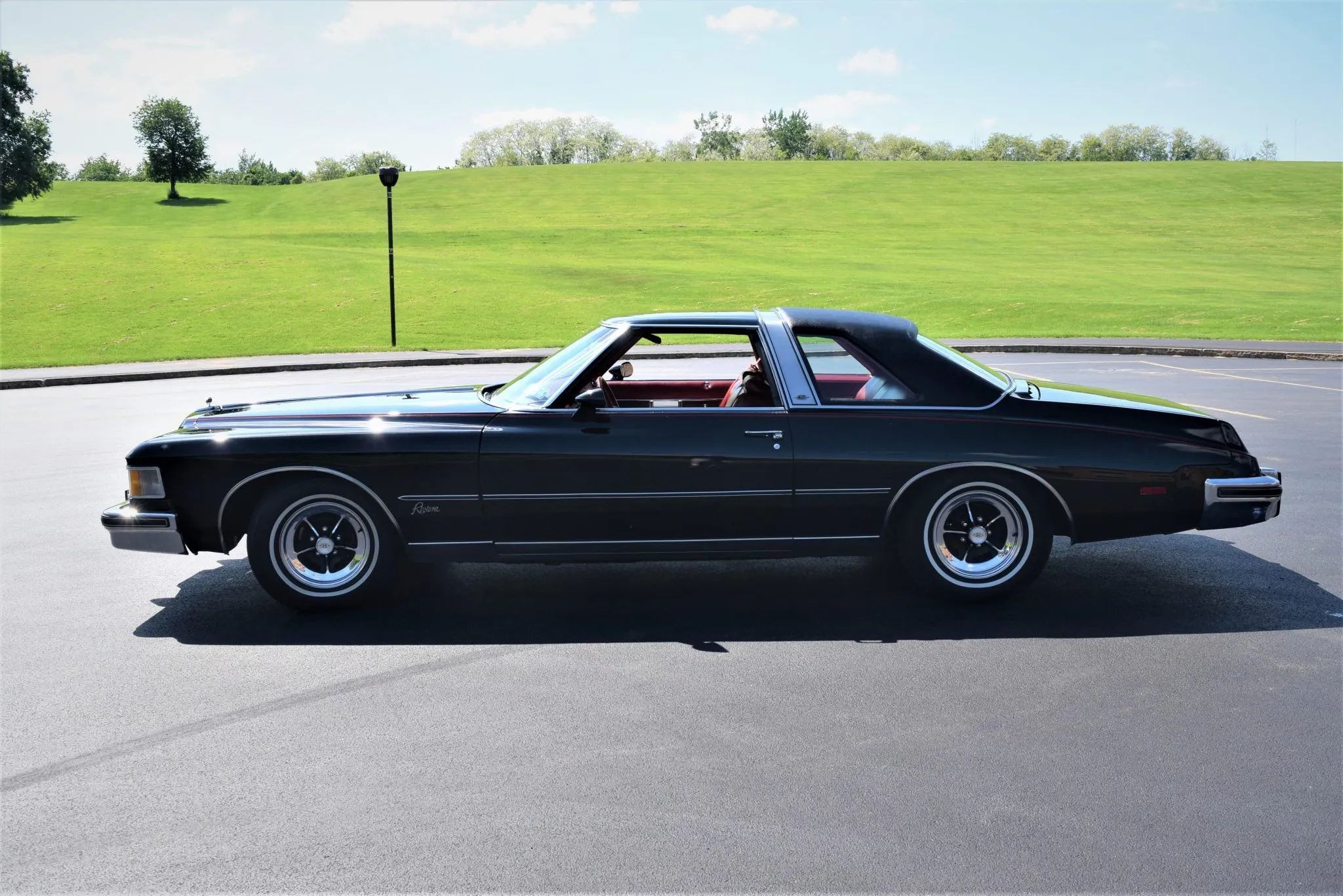
As Road Test suggested, it’s hard to summon any very strong feelings about this Riviera, pro or con. If this were a LeSabre coupe, that would have been fine — LeSabre buyers didn’t expect their cars to be scintillating. However, the Riviera was a much more expensive car (you could have a very well-equipped LeSabre Custom for the price of a minimally optioned Riviera), intended to compete in a class full of hey-look-at-me alternatives. In that league, the 1974–1976 Riviera just didn’t rate, even if you could set aside your memories of how much more stylish it had previously been.
Related Reading
1973 Buick Riviera: A Slightly Toned-Down, Two-Owner Boattail (by Aaron65)
Curbside Capsule: 1977-78 Buick Riviera – The Placeholder (by William Stopford)
The Cars Of GM Designer Wayne Kady – An Obsession With Slantbacks And Bustlebacks (by Paul N)
Vintage R/T Review: 1979 Buick Riviera S Type – The “S” Stands For “Sharp,” Not “Sporty” (by me)
1985 Buick Riviera – The Last Great Riviera (And The Last One That Really Sold) (by me)





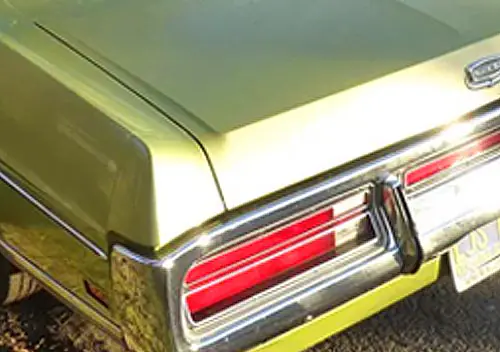


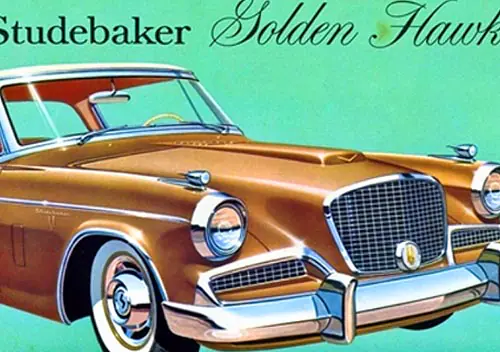







I actually think these look really good, especially with the Buick Road Wheels.
>>Road Test tried the bustleback ’76 Riviera and found it an undistinguished big coupe that seemed to have suffered “a detuning of the personality.”<<
This car has ten times more "personality" than any SUV, CUV or truck you can buy today.
But you couldn’t buy one of those in ’76, and big cars spammed the roads just as those do now. Its’ personality is that of a survivor from a bygone era, which by definition it wasn’t when Road Test took out a new one on streets filled with GM B-bodies and their Fomoco and Mopar equivalents.
1975 was the first year Subaru sold their 4wd wagon in America (complete with international-type slim chrome bumpers since NHTSA classed it as a “light truck”!) and that would’ve had buckets more character than the same year Riv.
Victory is claimed by all, failure to one alone.
I am no fan of Kady and I think the 1974 Riviera is a very bad design, but my understanding of what happened behind the scenes is that Mays wanted the boattail gone, and it was Mitchell who assigned Kady to Buick.
Kady had a very tough job as he was mandated by management (Mays) the use of certain body panels of the other E bodies; and anyways, Mitchell approved the final design, as much as he might have considered himsel forced to do so.
All in all, an institutional failure and an egregious example of the Malaise era of car design, in my opinion.
And somehow they moved Kady back to Cadillac, giving us other deadly sins…
Oh, yeah, there’s no question about that. That wasn’t Kady’s doing, nor were the obvious budget limitations. The sharing that I think hurt most from a design standpoint was the commonality with the B-body, which had been due in part to Mays and in part to Ed Cole wanting to cut production costs on the E-body cars with greater commonality with the B-bodies. The problem is that without the boattail, there was no longer anything to make the Riviera not look like just a LeSabre hardtop with a different necktie.
The 1974-76 Riviera is THE poster child for ugly mid-seventies cars. It ties with the Aztek for GM’s “Most Ugliest Car” award. It’s not surprising sales numbers dropped significantly after the boattail Riv. Lessons could have been learned from that ugly back end when it came to the 1980 Seville design. Only thing an ugly car like that is good for is in a demolition derby.