
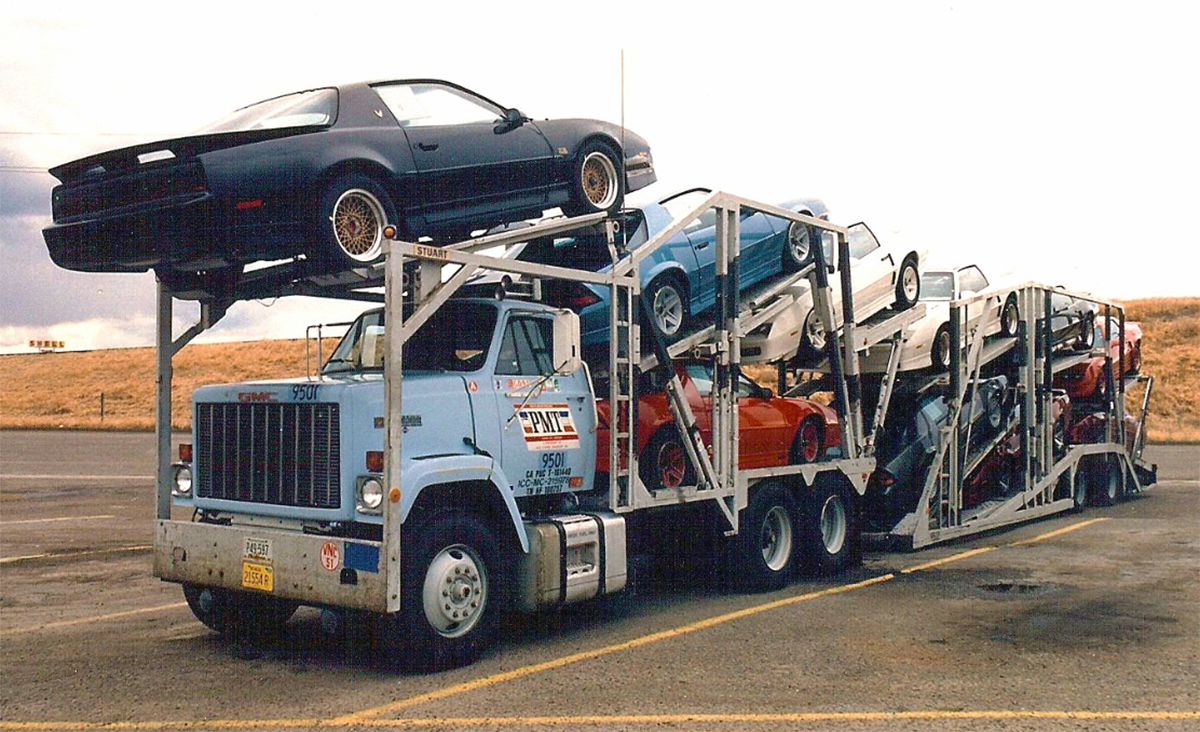
Here’s a rad image. Fresh and fly. Sorry, it’s hard to resist the ’80s slang with today’s photos, but if you lived back then, these were the cool wheels to have if you were into GM’s youthful offerings.
There’s no date attached to this image, but the aero kits suggest these Camaros and Firebirds hail from the late 1980s, perhaps the early ’90s. We do know the photo was taken in Southern California, with the cars riding aboard a PMT truck based in Van Nuys.
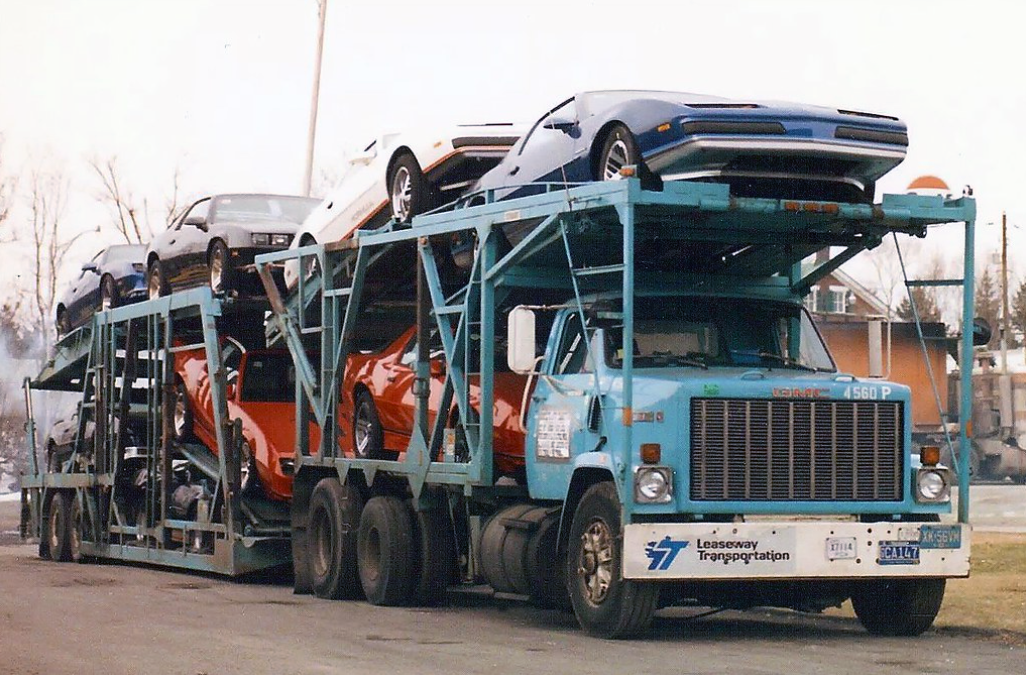
Let’s move to the earliest of today’s images, a group photographed in 1985 or ’86, according to the image notes, near Carlisle, Pennsylvania. These F-bodies were hauled out of GM’s Norwood, Ohio, plant.
As I mentioned a couple of weeks ago in a post featuring 1980s Camaros on dealer lots, there’s quite a range of F-bodies to spot among these truckloads. From “plain” Firebirds to Trans Ams, T-tops, and plenty of other options, there’s a little bit of everything here.
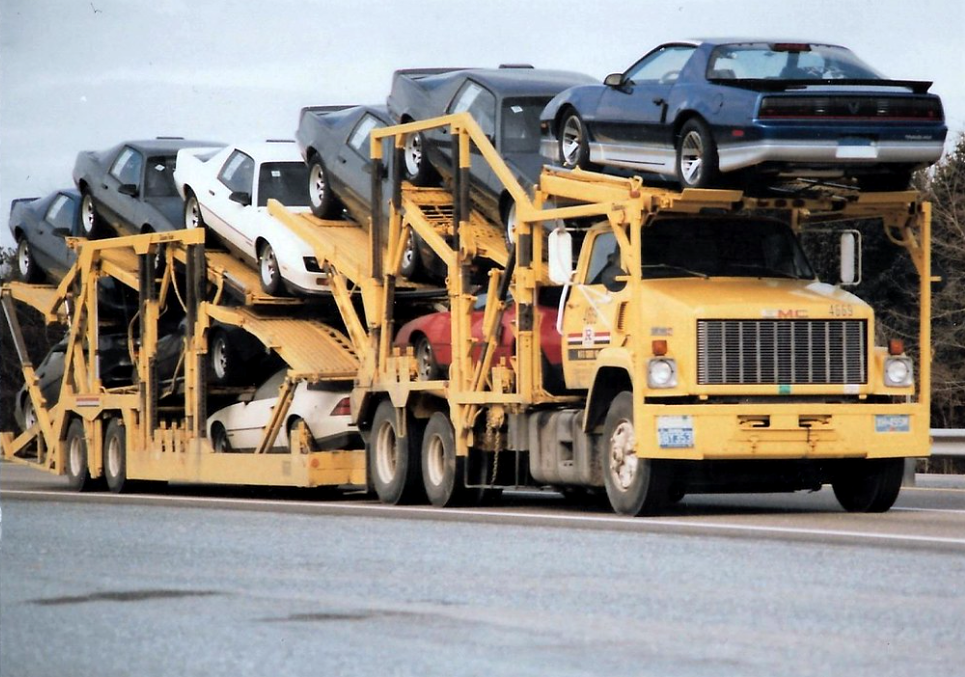
No date came with this image, but it looks like another late-’80s shipment, this time heading out of Ohio along I-78. Since most of today’s photos appear to come from the latter part of the model run, you’re unlikely to spot an Iron Duke-powered example in these truckloads. The four-cylinder made sense in the economy-minded early ’80s, but it was dropped from the lineup after 1985.
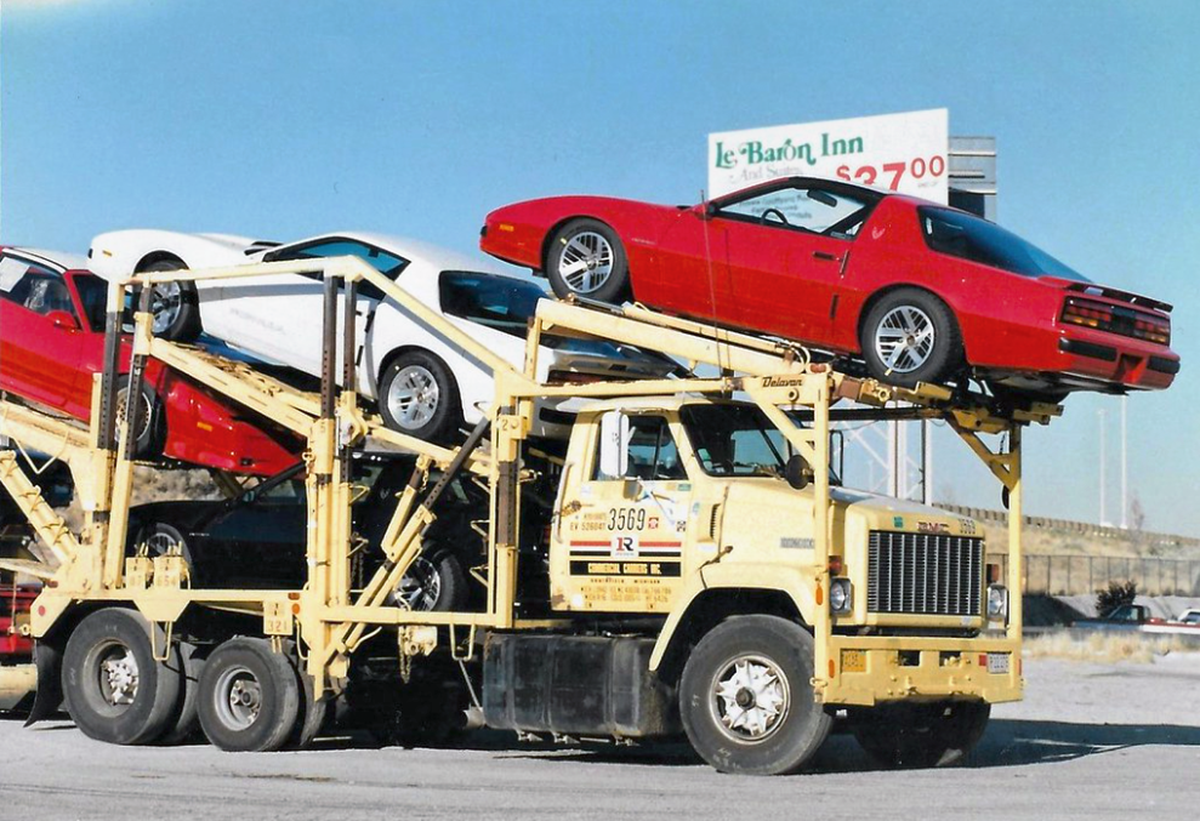
Moving further into the decade, the Firebirds above are riding on a Delavan 2300 carrier. According to the image notes, the photo was taken in Albuquerque sometime in 1989, putting these Pontiacs well into the second half of the model’s 1982–1992 run.
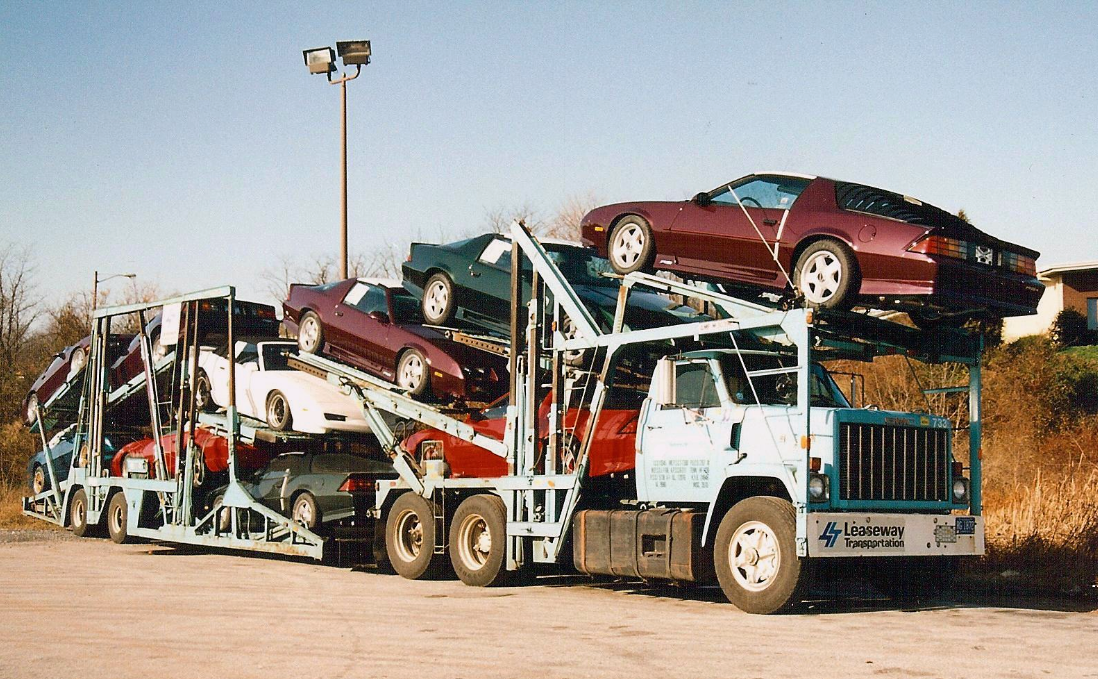
Here we’re nearing the end of the third-generation F-body’s run, with this image dated December 1991. That likely makes these 1992 models, the last of the line before a new generation arrived. A lot had changed since the 1982 models first came about. Back then, buyers could choose a 90-hp 2.5-liter Iron Duke four, a 102-hp 2.8-liter V6, or a 305-cubic-inch V8 producing 145 or 165 hp. By 1992, the lineup had evolved to include a 140-hp 3.1-liter V6, 305 V8s rated at 170 or 230 hp, and a 240-hp 350 V8, along with the rare Formula package.
An entirely new generation would arrive for 1993–2002. Despite its evolutionary improvements, I’ve never warmed up to those. So, drawbacks and all, the 1982–1992 F-body remains my generation one. Impractical, perhaps even pointless, yet low-slung, eye-catching, and with subtly seductive lines. Pretty rad, indeed.























I drove for The Ryder Car Haul Division. Started at the GM rail head in Jackson, Mississippi in1982. Retired at the Flat Rock, Michigan terminal in 2008. In between I drove out of Houston,Tx. then Bowling Green, Ky.
As you can see from the photos, ease of maintenance on the transport trucks was the last thing on anybody’s mind.
Capacity is king, and there was just enough clearance to open the flip front hood. Now an engine rebuild might require removing the over cab ramp. Modern car haulers are equally packed, although most do a add a flat top sleeper
The engines could be repaired with the headrack on.
Ryder shops hated us car haulers.
There used to be a GM assembly plant in Van Nuys; those Camaros must have come from the plant.
The Brigadier was a great truck for car hauling, the cab roof was low and hood was short, but you could still spec. decent power in them. Car haulers need more power than you think because of the bad aerodynamics. I used to see P.M.T. haulers a lot, they handled GM Van Nuys and Southgate plants. P.M.T. also had a lot of the GM ‘Steel Tilt’ haulers, they were special models with 6V-71 Detroits and twin-screw rear axles. Some even had 8V-71’s in them.