
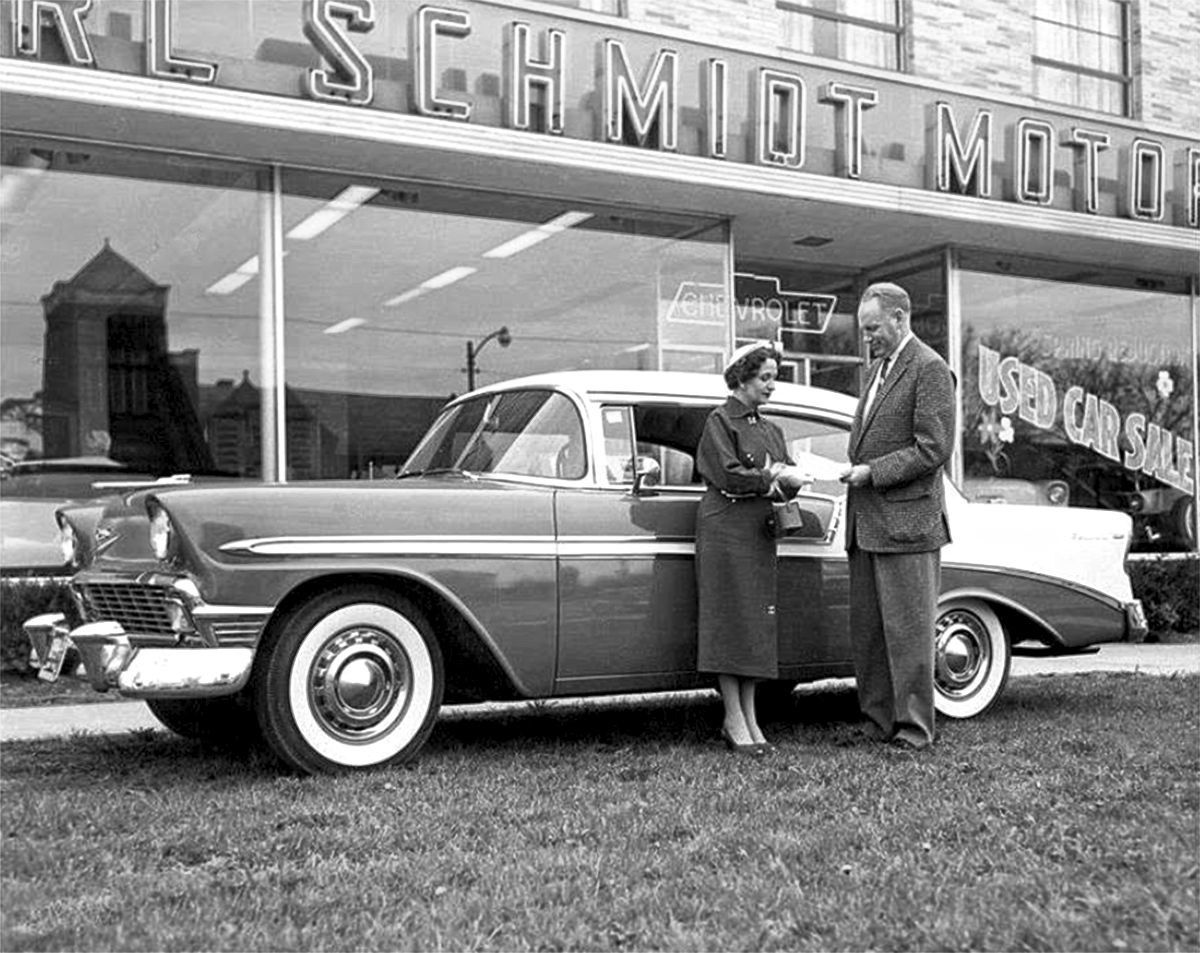
Over the past couple of years, I’ve shared quite a few vintage photos of car dealerships from the 1950s. Always a chance to time-travel and wonder what could’ve been, isn’t it? Now, looking back at those earlier posts, I’ve noticed—entirely anecdotally—that Chevrolet dealer photos from the Fifties seem less common than those of other makes. Perhaps Bowtie dealers were too busy selling their hot stuff to bother with photos?
That’s pure speculation, of course. Maybe I just haven’t been lucky enough to come across many of them (or unlucky, depending on how you look at it). Either way, here’s a short collection to help even things out, covering Chevrolet dealers from roughly 1953 to 1958, with most of the photos featuring the era-defining Tri-Fives of 1955–1957. There are new-car handovers, showroom scenes, and other glimpses of Chevrolet retailing in its heyday. Our opening image takes us to Carl Schmidt Motor Sales in Perrysburg, Ohio.
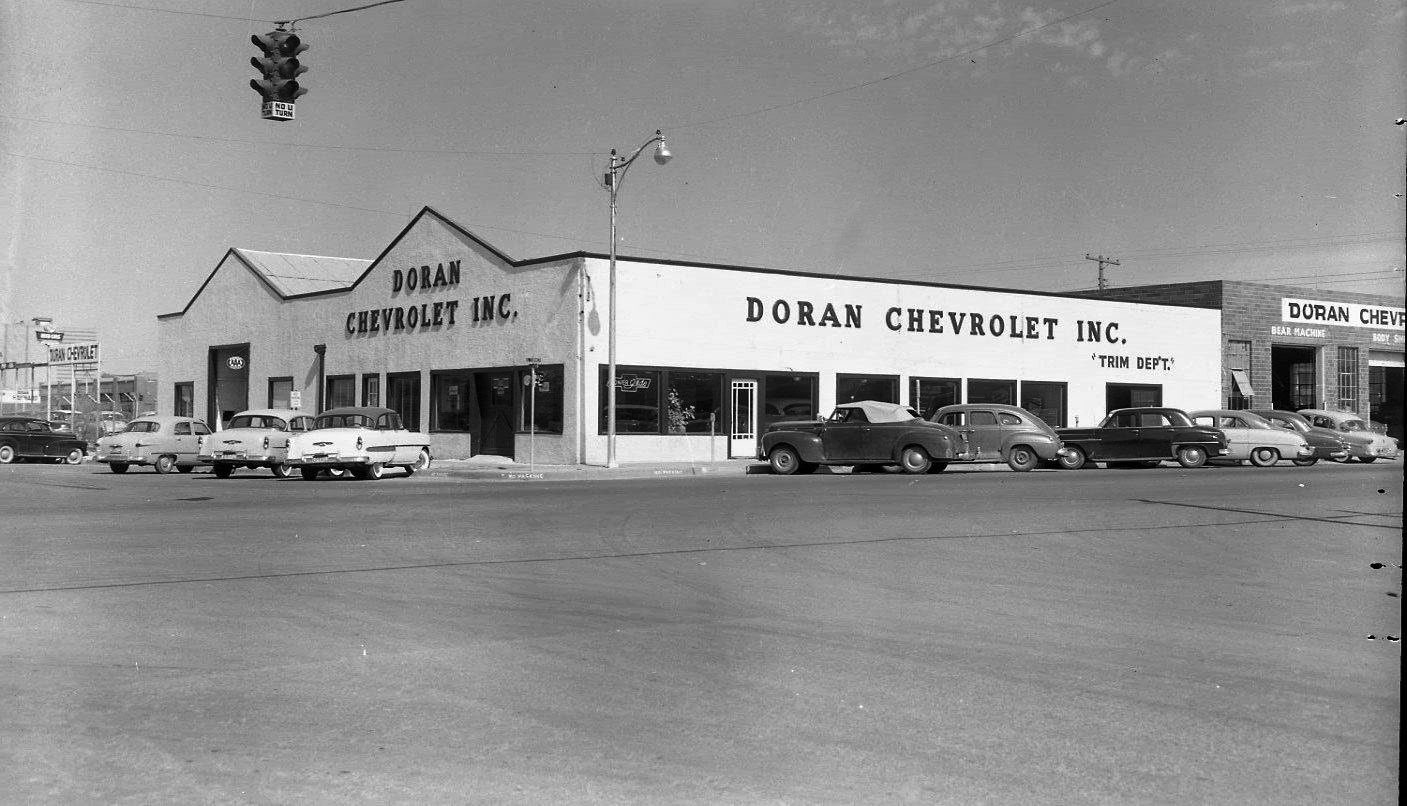
Doran Chevrolet Inc., Dallas, TX.
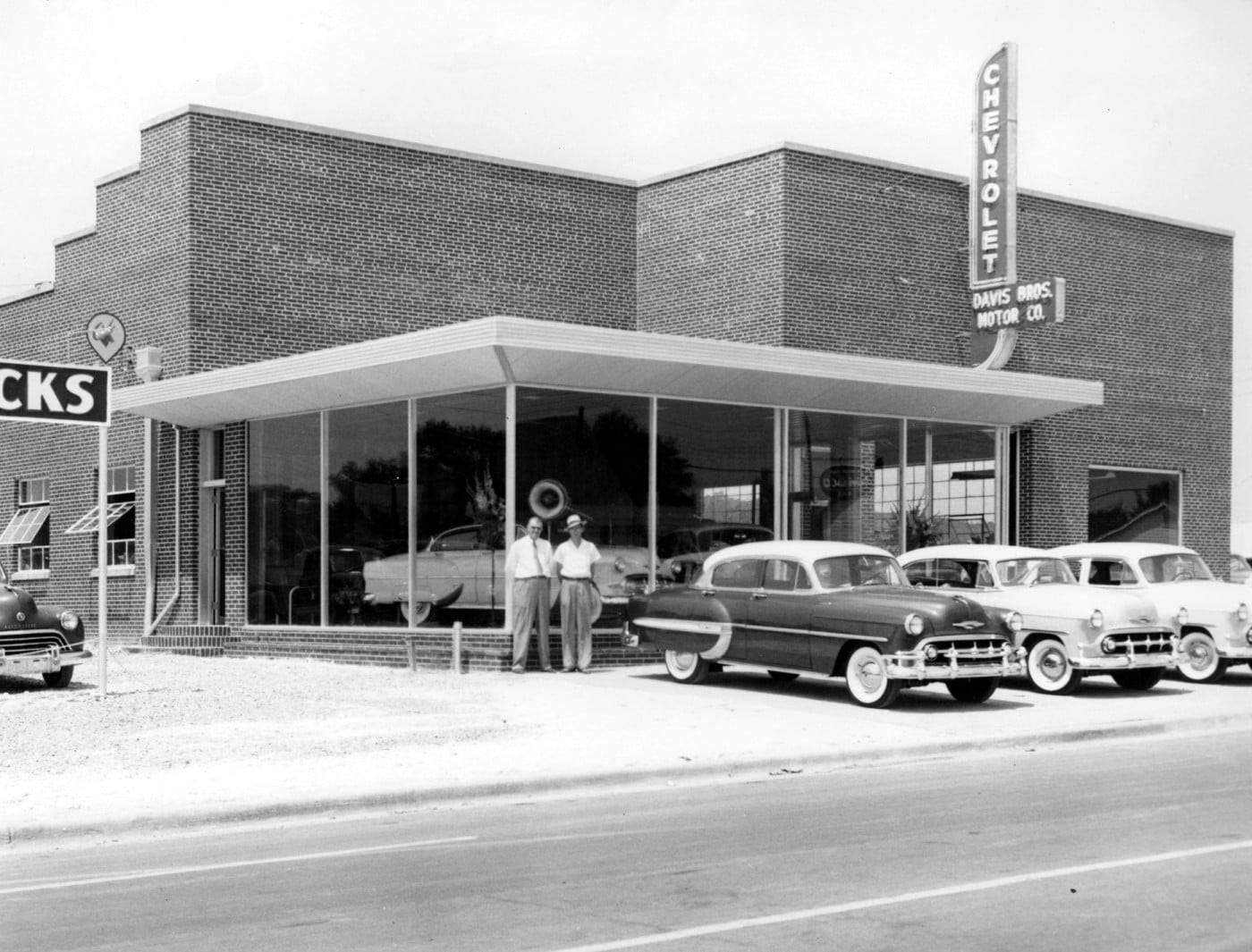
Davis Motor Co., Chevrolet, Summerville, GA.
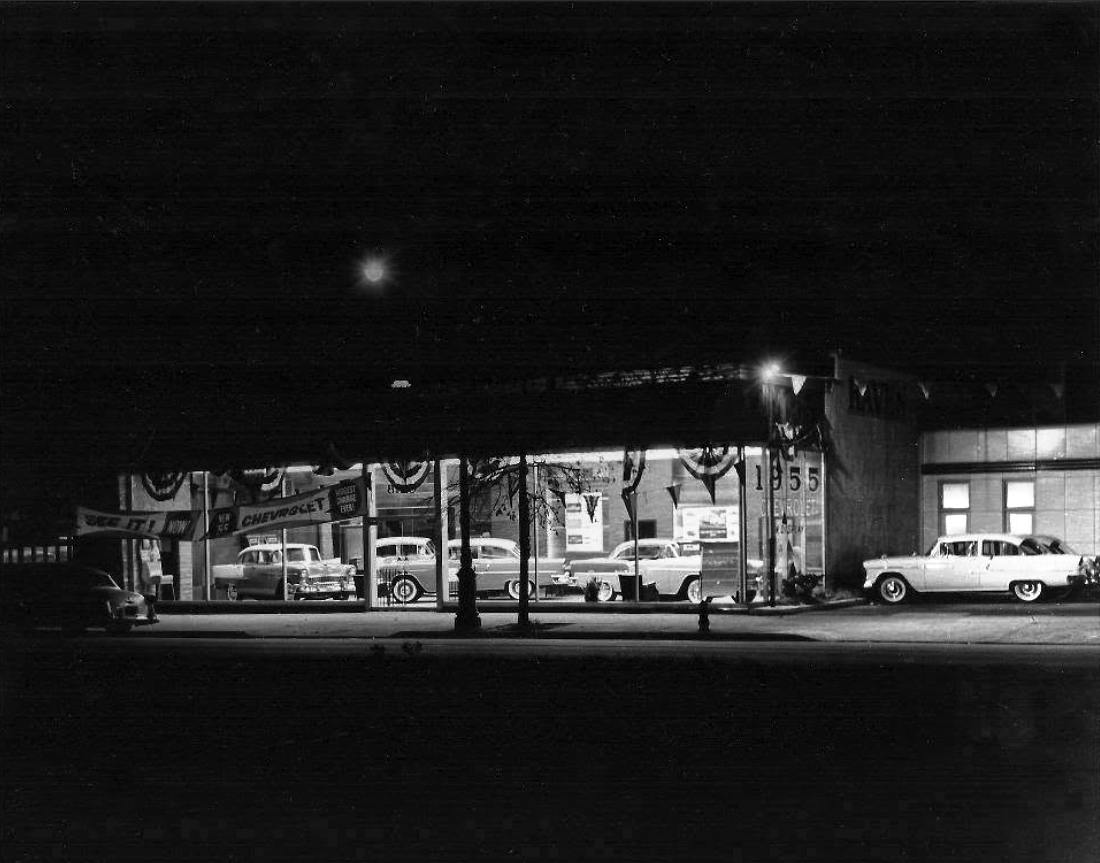
The 1955 models arrive!
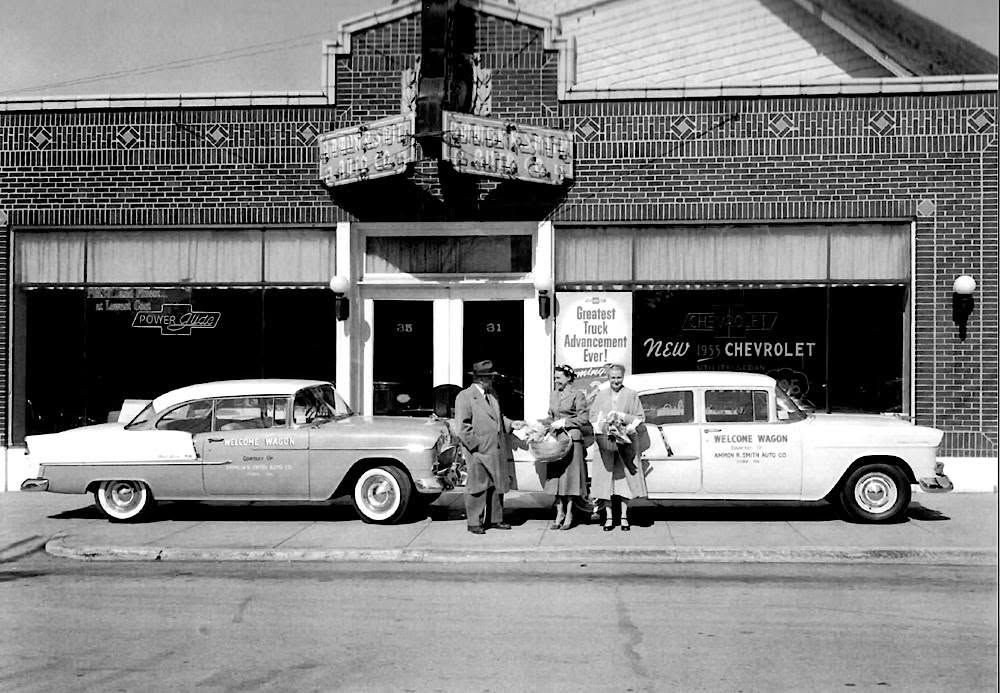
The 1955s “Welcome Wagon” arrive at Ammon R. Smith Auto Co., York, PA.
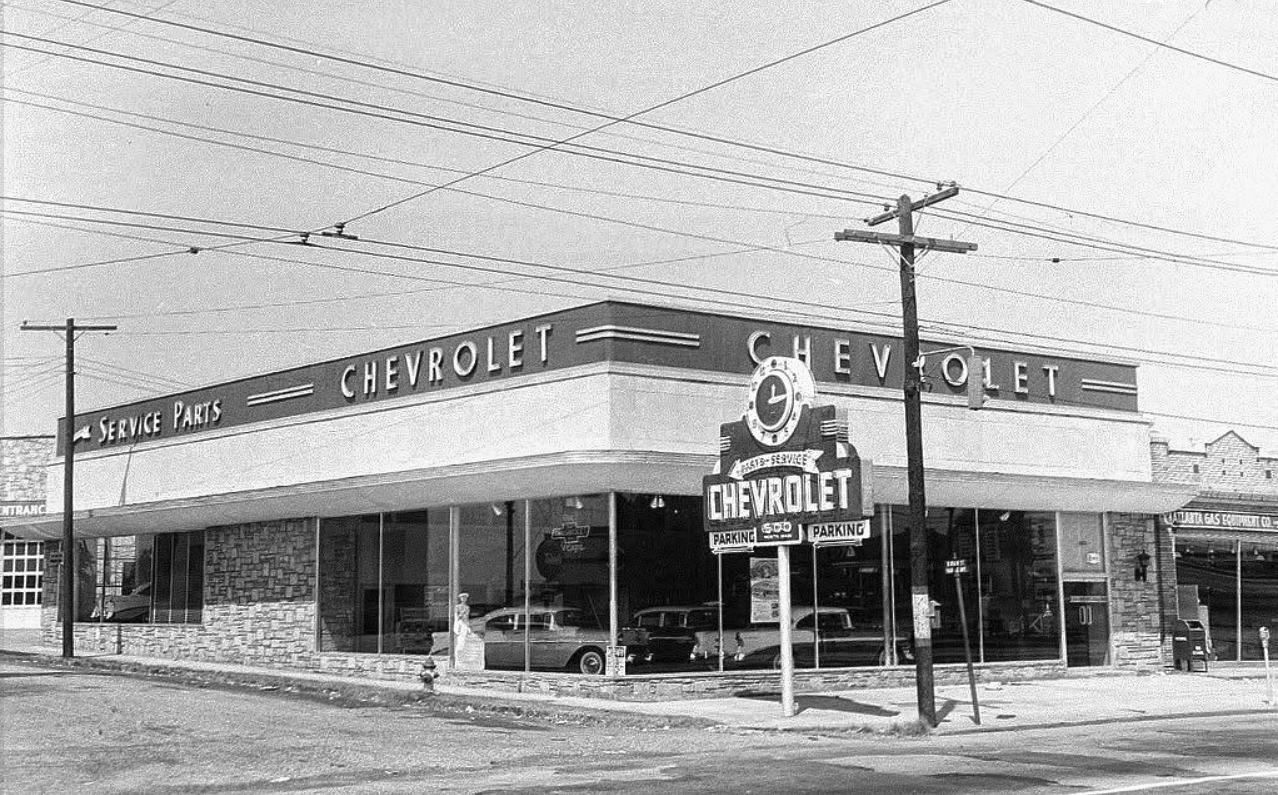
Another collection of 1956s, awaiting in the showroom.
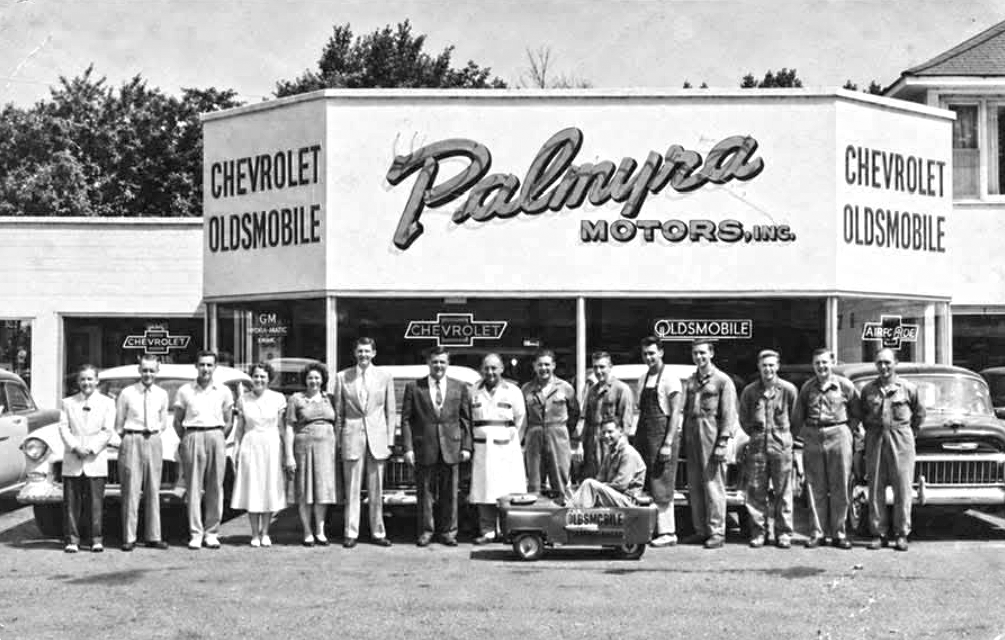
The staff at Palmyra Motors, Inc., Palmyra, NY, Chevrolet-Oldsmobile, and the 1955 Chevys.
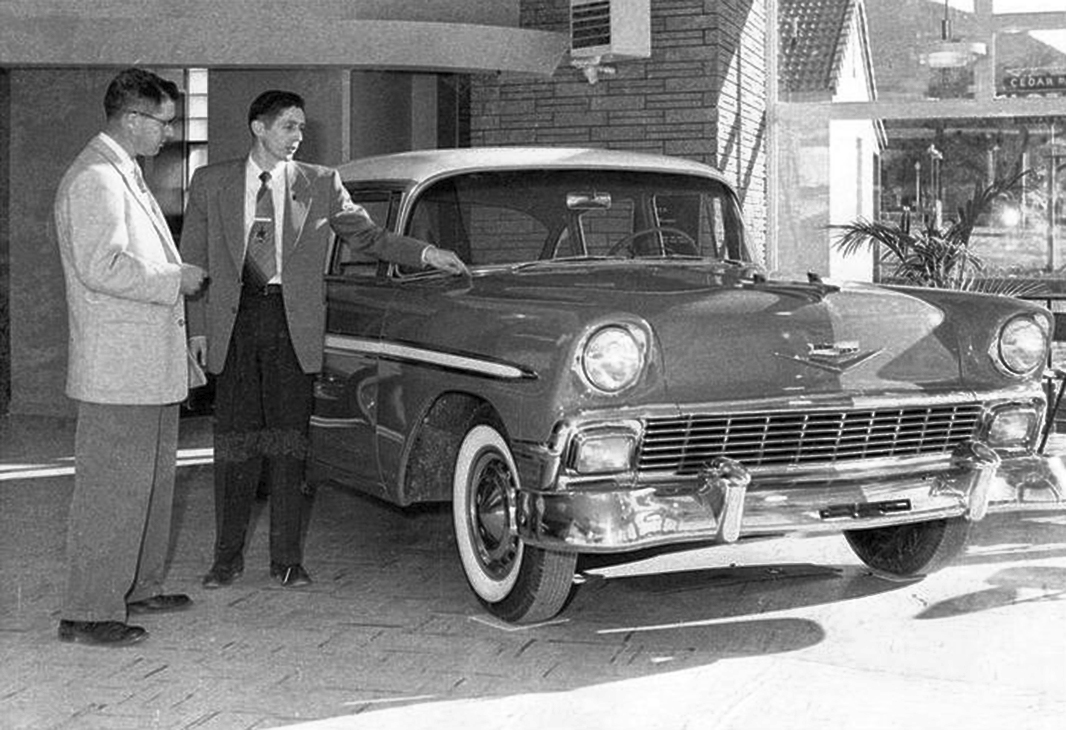
1956 models in the showroom, in Cedar City, UT.
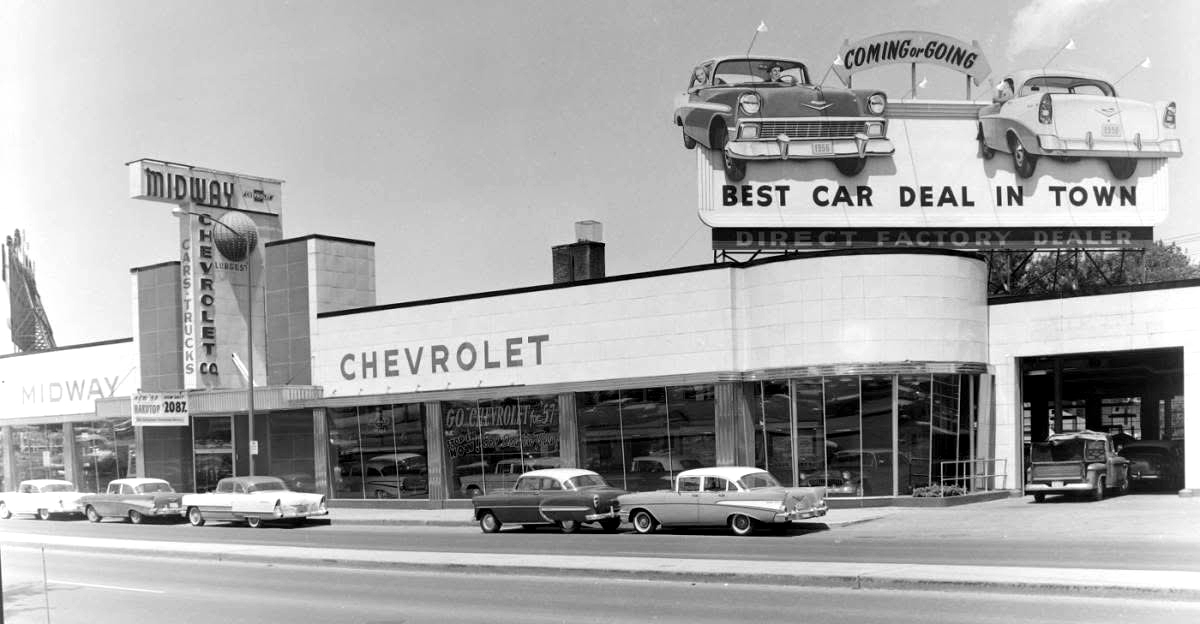
Midway Chevrolet (with a Packard on the curb), St. Paul, MN.
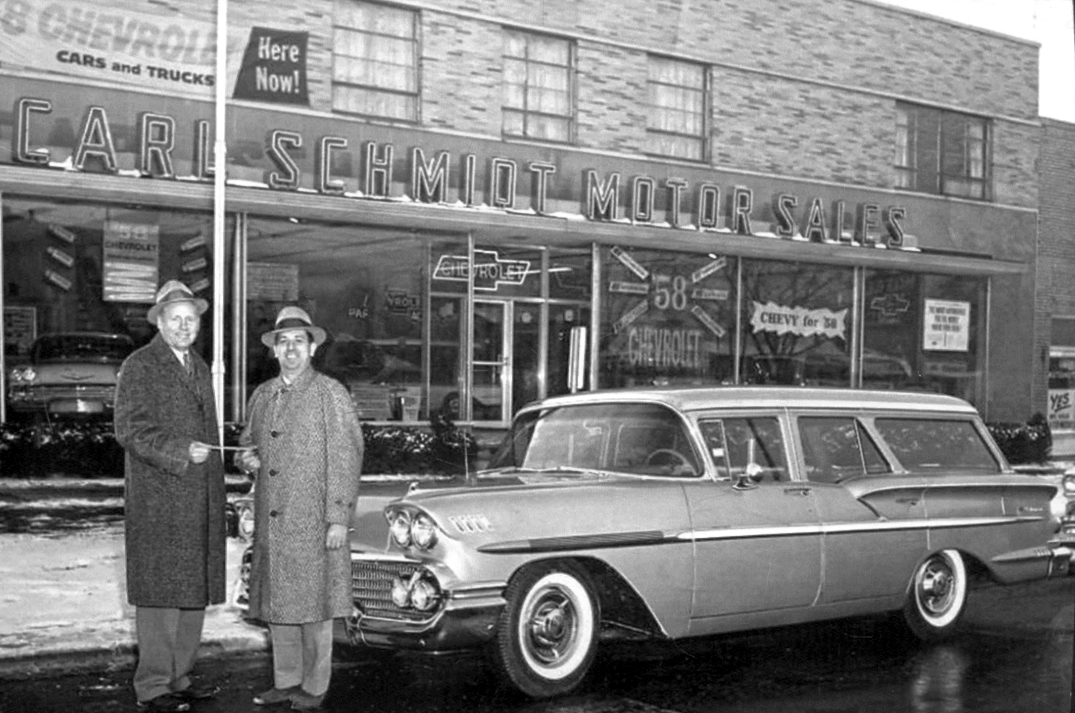
Another stop at Carl Schmidt Motor Sales, this time in 1958.























I love these old CC dealer posts, even though I am a hard core Ford man.
1974 – I was a college student, on a summer walk through the Georgetown section of DC. Narrow brick roads & historic brick homes. An older lady was having trouble parallel-parking her ’56 Chevy — like the one in the opening photo.
She leaned out of the window, and asked if I could park it for her. Sure, why not. It was an automatic, with neither power steering nor power brakes. Bingo, done. She said thank you, and the encounter was over.
Times were different — The Chevy wasn’t even 20 years old, yet already recognized as a classic.
The ‘older’ lady was probably younger than I am now.
And a friendly-looking stranger was able to do her an odd little favor.
No witnesses. My word is my bond.
Great pics! I often wondered what the first thoughts were from the grizzled old mechanic in the service department, who knows nothing but stovebolt sixes, when he first laid eyes on that newfangled V8 in the ’55s 🙂
Nice shots! I hate to be that guy, but the cars in the 6th picture are ’56s, not “55s.
I’d love to able to walk into a Chevy dealer in ’55 or “56 and drive away in a new Bel Air 2 door hardtop!
Indeed, they’re ’56s
Odd that the billboard at Midway has 56’s on it but there are 57’s at the curb.
Another example taken in 1965 with the ‘63 on the sign:
I suppose they only had the budget to change the sign every couple of years.
Photo #6 is of East Point Chevrolet, near Atlanta. I recognize the photo since it appeared in another Chevy dealer photo compilation, here:
https://www.curbsideclassic.com/vintage-snapshots-and-photography/vintage-dealers-chevrolet-dealers-in-the-mid-50s/
…and I was able to figure out where it was back then. In the comments of that earlier article, I wasn’t exactly sure just where in East Point it was located, but looking again, I think it’s on Main St., north of the central business district (the site’s current address is 2441 Main St., but the building was demolished long ago).
Growing up, there were two ladies who drove mid-fifties Chevrolets at our church. Mildred had a 1955 Chevrolet two-door sedan, which I think was a 210 and not a Bel Air. She was in her 80s, and I assume she bought it new. Mildred was a terrible driver, so the car had scrapes and dings on it where she had hit other cars, trees, signposts, or whatever was in her way. The other lady, Mrs Fox, was in her 40s–about ten years older than my parents. Her husband drove a kelly green 1973 Chevy Malibu sedan with a white vinyl roof, and she drove a 1956 Chevy Bel Air coupe. That car was well-maintained and looked sharp. I rode in that one as her daughter and my sister and I were friends and Mrs Fox and my mom would take turns carpooling if we were going somewhere. I think that may be why I like the 1956 Chevy the best out of the 1955 to 1957 generation.
Sweet photos!
Now imagine that you want one of those new Chevrolets. But you’re not White. What did you do?
If you were fortunate, you could walk into a dealership and pay what anyone would pay. Yet, this was not the common practice in many parts of our country. Cadillac, until 1939, forbid dealers from selling to Blacks. Many dealers didn’t want their cars driven by Blacks.
Financing your purchase? Same thing. In many dealerships prices went up based on the dealer’s desirability to sell. Window stickers showing prices didn’t appear until after 1958.
What was often done was to hire a White purchasing agent, or a White friend. They bought your new car, then sold it to you as a used car. An agent would be paid a percentage of the total amount. Yet sometimes the price they paid, plus the percentage, was still lower than the price quoted to a Black customer who merely walked into the dealership! Taking a trip? Grab your Green Book so that you knew who to help you when your car needed service.
While it’s fun to imagine living as an adult 70 years ago, we should also be aware of how far we have come as a society since then. I am very proud of our country and its progress in removing racial discrimination in daily lives. I get asked if I would have wanted to have lived during the 1950s, and I say that life today is far better than back then.
Absolutely, well said.
Per Google, Moroney stickers were introduced in July, 1958 and were first mandatory for 1959 model cars.
I can remember when dealers would soap/paint showroom windows until new car introduction day. There was always much excitement when the new models were first available. My father would drive me around by all the dealers to have a look. Exciting!
Window stickers were not mandated in my province until the late 1980s. There was a GM dealer close to my home. One day, Dad and I were car shopping. Not a single car on the lot had a price listed. In fact, all the salesman said was “Make us an offer.” Dad and I left and never went back.
By this time, it was relatively easy, if humiliating, for black Americans to buy and drive the cars they wanted. Realtors and car dealers would take a black buyer’s money quickly enough, but a black car buyer could take the car home to a black neighborhood. Houses don’t move like that.
The only black teacher I had before college drove a new Buick Wildcat she bought from the downtown Buick dealer. She was a quiet activist who had started teaching when the city’s schools were openly segregated and was still teaching 20 years later when a federal judge ruled that the city’s schools still were segregated practically to provide poorer education to black students.
At the time, she was part of a group of blacks and whites (mostly Jewish professionals) trying to integrate the public swimming club of the most progressive area of the city.
The first house my parents bought still had the segregation laws in the title work. That house was in the effectively but not officially white zone when they bought it.
I grew up on a dairy farm and the tail lights of the ’56 were and are such a deal breaker for me. They always reminded me of the dew claw on a cow’s foot. It just seemed like a half-assed attempt to create a new tail light in the same cavity as the ’55.
It must have been hard buying a new car in 1955, knowing what it would look like in only a few short years. My dad cleaned and polished his cars religiously, but that still didn’t keep rust and oxidized paint from forming in like two years.
Except for the expense, it was generally a pleasure. People who buy new cars usually don’t plan on wearing the same coat and shoes for 15 years. New fashions come out every fall. It’s fun to shop, and occasionally buy.
Palmyra Motors in Palmyra NY (East of Rochester) at one point claimed to be the largest Corvette dealer in the country. Howard VanBortel was quite a character-also known as “Shady Deal” he was also one of the largest Rolls Royce dealers in the US. He sold a lot of cars and advertised $49-$99 over invoice. His daughter Kitty started with a used car lot in 1985 and got the Subaru franchise in 1991. She had built her business into 2 Subaru dealer locattions, a Ford dealership and a Chevrolet dealership. We bought 3 or 4 Subarus from her.
Two longtime drag racing sponsors in the photos: Doran for “Big Mike” Burkhart, and Ammon R Smith for Dave Strickler, “The Old Reliable.”
My first car was a used 55 Chevy 3 sp shift. I decided to put in a Hurst shift on the floor and had a ball with it until my friend sold me his 59 Impala convertible. Kept it till I joined the Army. With all the baby boomers, I wonder why a car manufacturer doesn’t consider making retro cars. I bet they would make a killing.
Complying with modern safety regulations would make it impossible.
I’d like a ride in some a these.
The Chevrolet dealer in Cedar City, UT (Pic #8) in 1956 was Bradshaw Chevrolet-Buick.
The Chevy dealer across the street from my home was nothing like the ones here. I can remember standing fender high next to a ’54 in the metallic brown and cream in the one car showroom.
I love all these images .
My favorite tri – five has always been the 1955 .
I was there way back when and it wasn’t nice, rose colored glasses and all that .
-Nate