
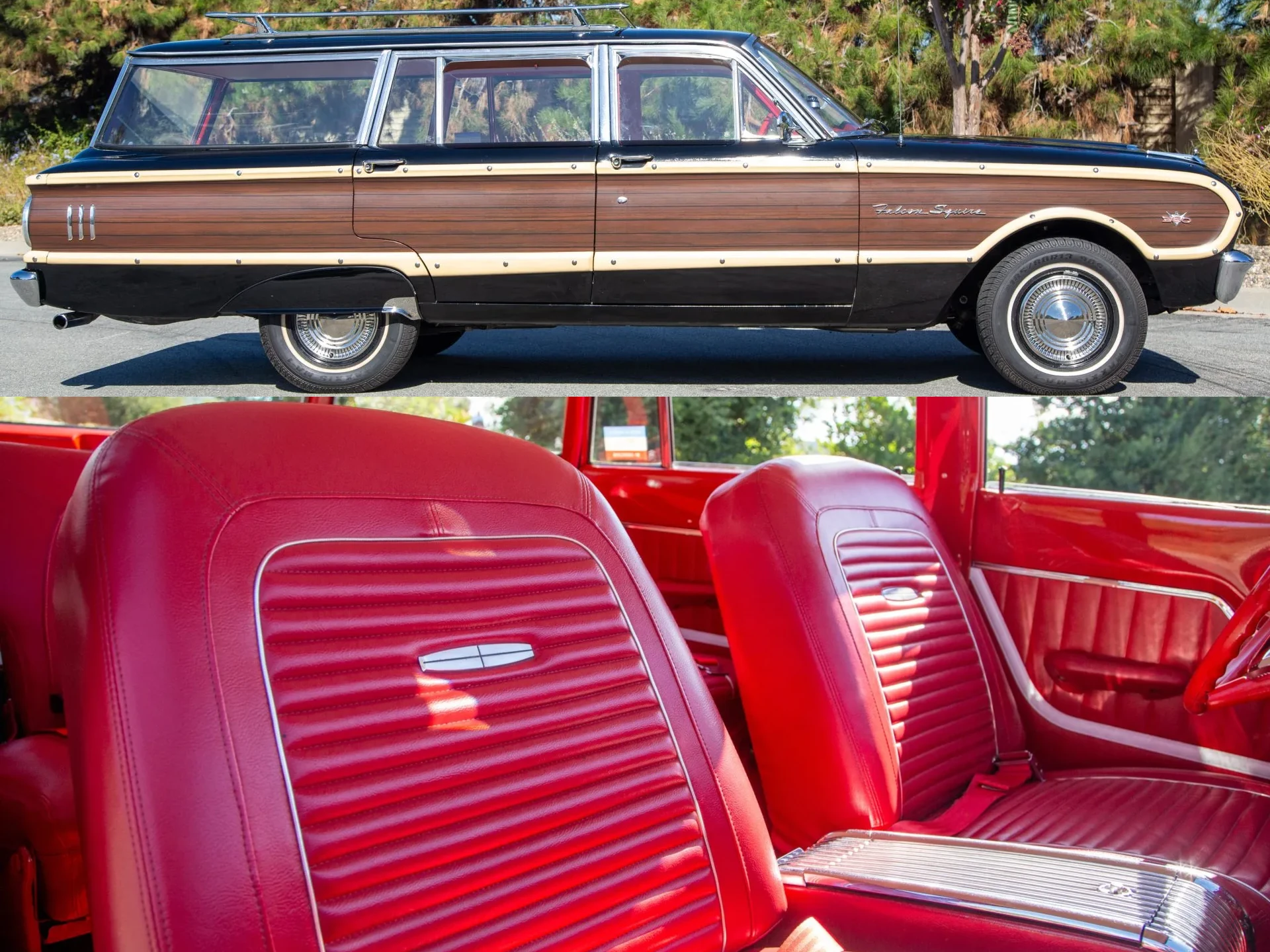
The early bucket-seat Falcon Futura wasn’t available in station wagon form, but in 1962 and 1963, you could order the Futura buckets and console as a standalone option on the Falcon Squire — the fanciest Falcon wagon, complete with woodgrain exterior trim. This Raven Black 1963 Squire is one of a rare handful of bucket-seat Squires with the new 260 cid Challenger V-8.
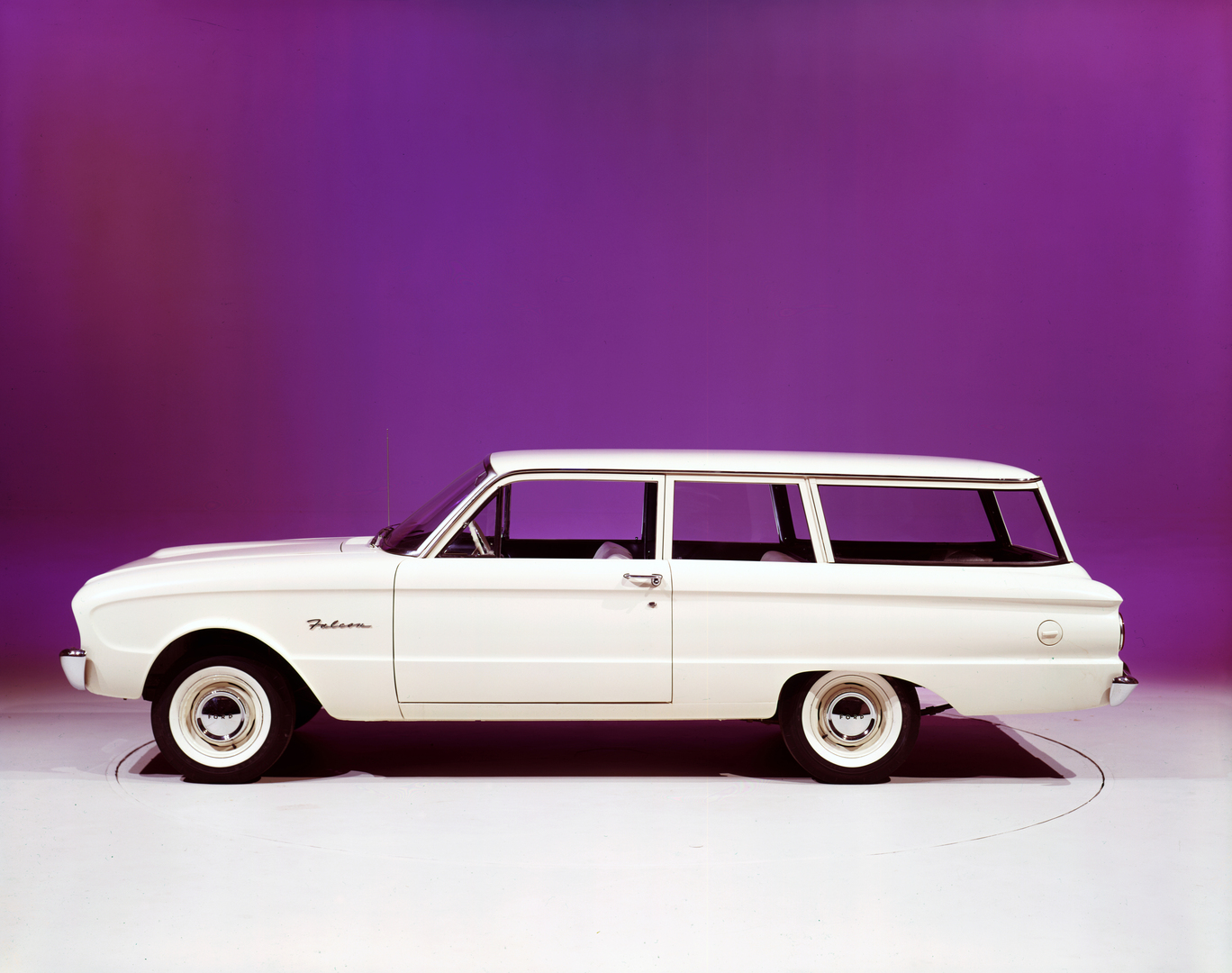
Station wagons were a late addition to the Ford Falcon line: A two-door wagon was added to the program about four months into development, but the four-door wagon wasn’t conceived until late August 1959, shortly before launch of the first two-door Falcon sedan. The Falcon wagons thus had a late start, going on sale in early March 1960, a few weeks ahead of the new Falcon-based Ranchero pickup.
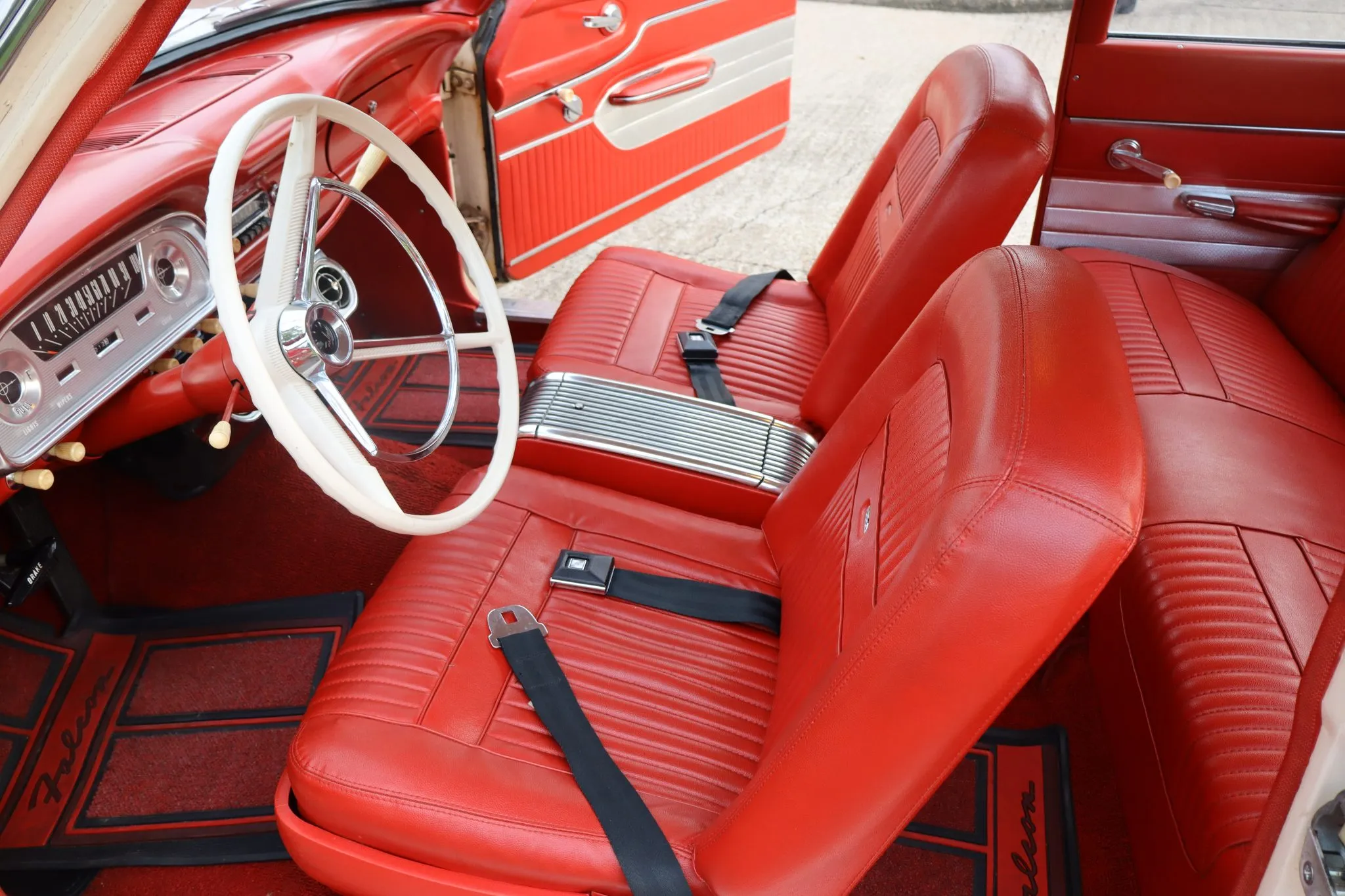
In March 1961, Ford added a sporty Futura version of the Falcon sedan, aimed at the popular Corvair Monza. The Futura featured extra bright trim, a fancier interior with all-vinyl bucket seats and a nifty center console, wheel covers, and optional narrow-band whitewalls not yet available on other Falcons. “Falcon buyers already have expressed their preference for more luxurious interiors by selecting the present Falcon optional [deluxe] trim package two to one,” said Ford Division general manager Lee Iacocca. “The Futura goes further.”
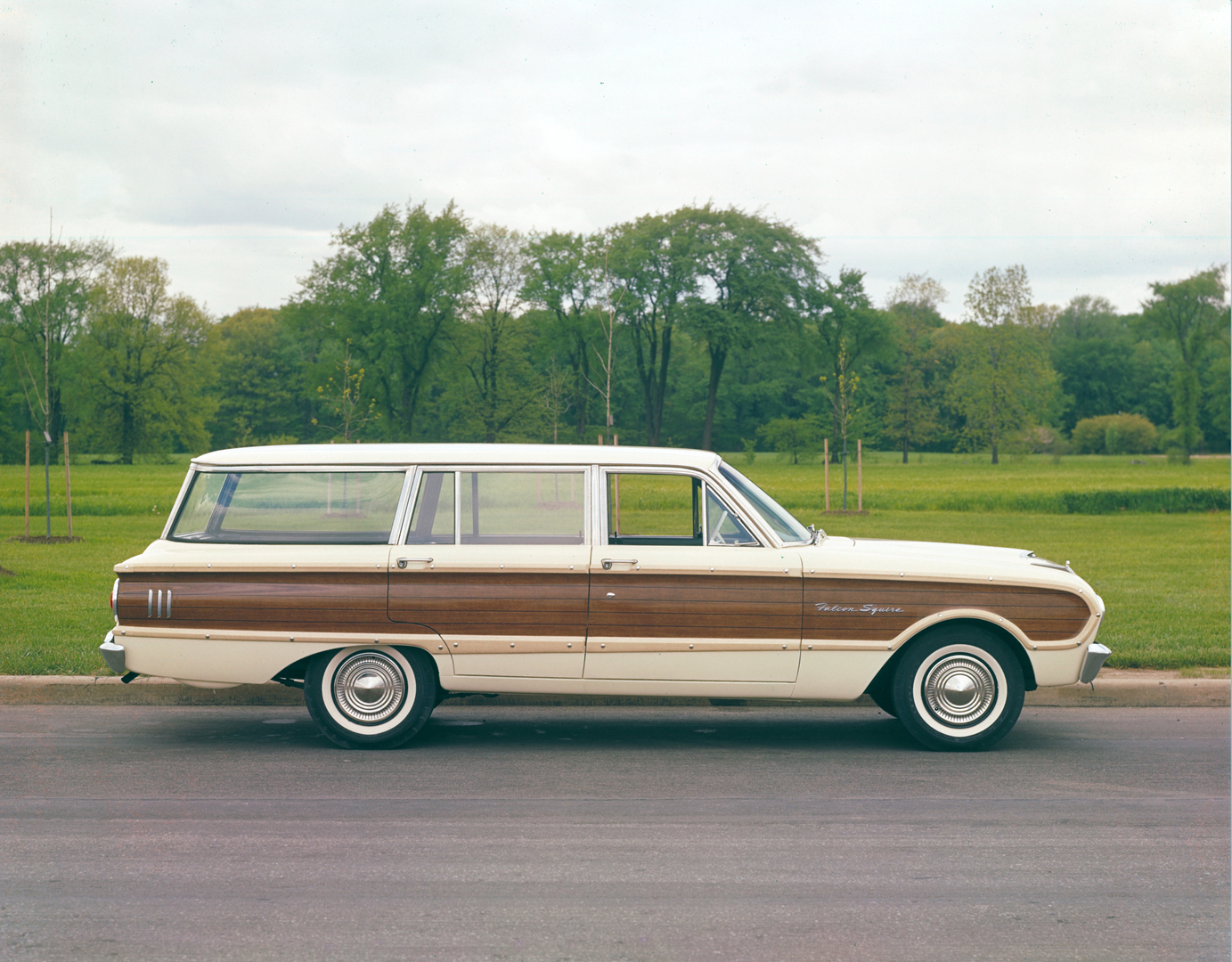
Wagon buyers were initially left out of this push towards luxury, but in May 1961, Ford announced that the 1962 Falcon line would include a new Falcon Squire wagon with simulated woodgrain side trim, a compact version of the big Ford Country Squire wagon. The new Squire would include the existing Deluxe trim features, plus full carpeting and a power-operated rather than manual roll-down tailgate window.
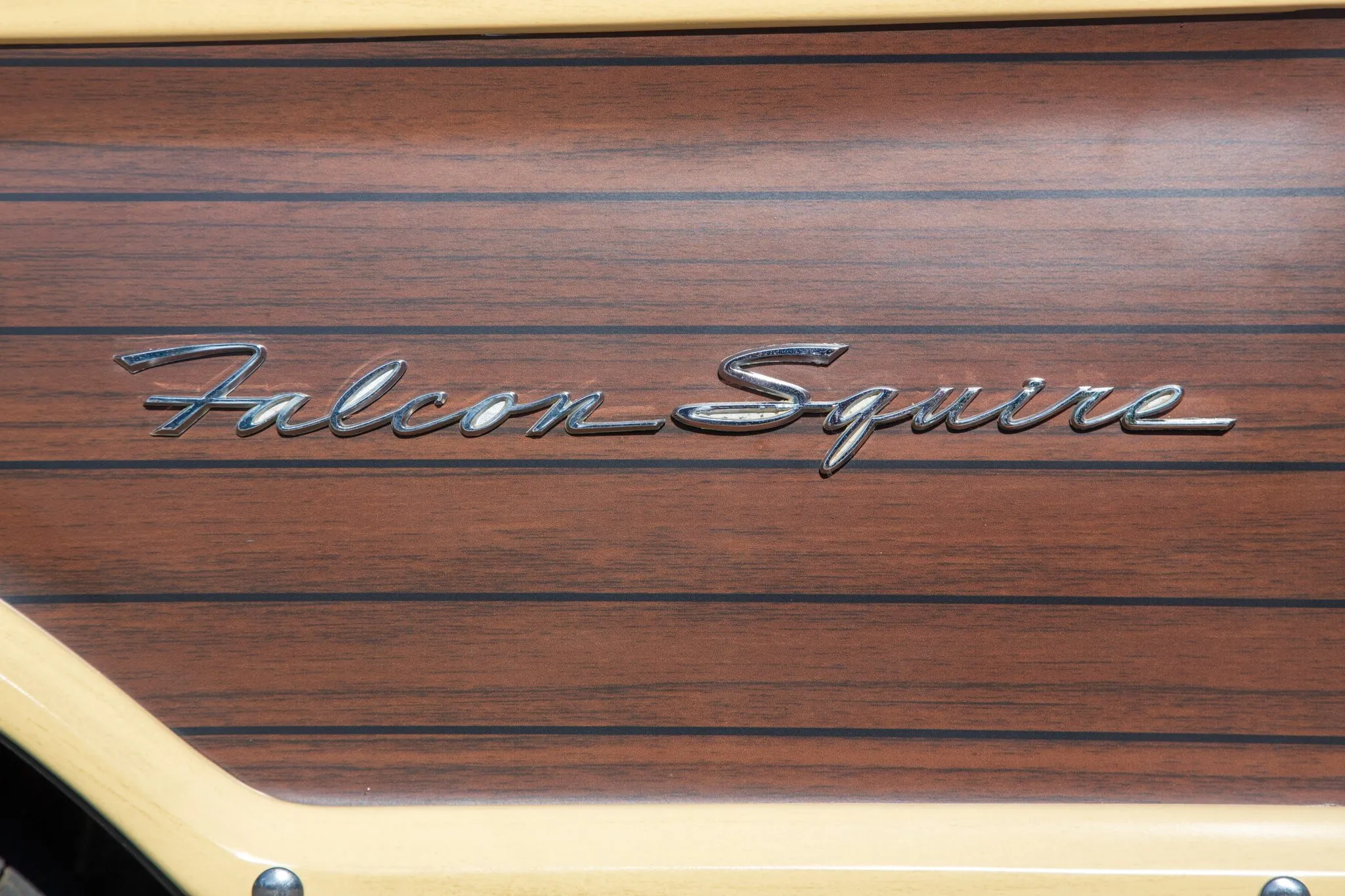
The walnut-colored side panels on the Falcon Squire were vinyl appliques made by Di-Noc Chemical Arts, Inc., of Cleveland, Ohio. Although Di-Noc was later acquired by 3M (which still sells DI-NOC finishes today), it was then still a separate company; George Ferencz has covered its early history. The woodgrain panels were framed in fiberglass moldings Ford said were supposed to look like limed oak.
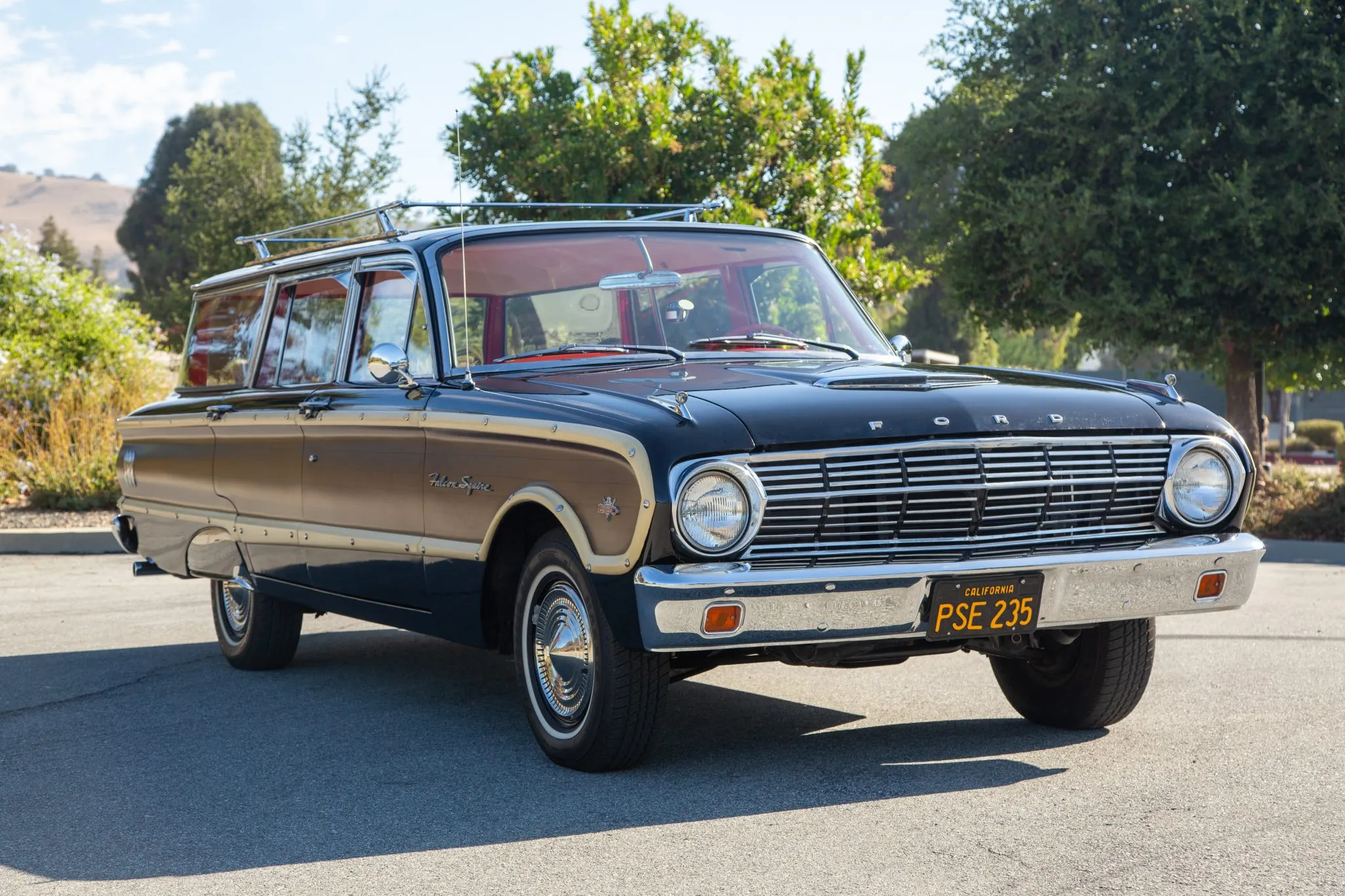
On this particular wagon, the faux-wood paneling makes the ghastly rear fender skirts look even more out of place than they would otherwise; if it were up to me, pulling the skirts off would be Job One. I don’t love the add-on wind deflectors either, but they’re less aesthetically offensive than the skirts.
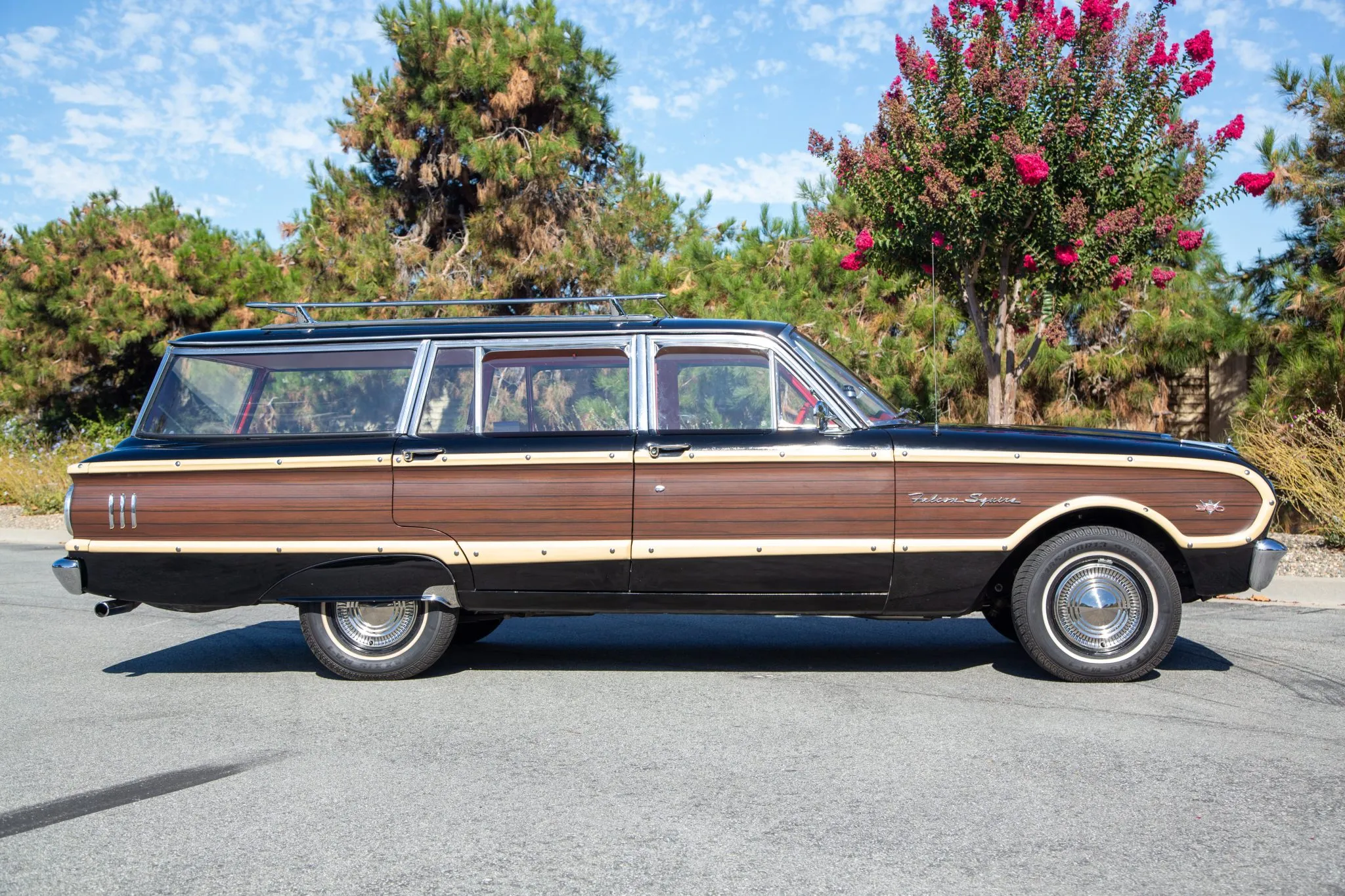
Although some modern sources, like Standard Catalog of Ford, insist on grouping the Falcon Squire in the Futura series, I’ve seen no indication that Ford did so, and it was not an appearance package for the Falcon Deluxe, as some fans have inexplicably concluded. Ford treated the Squire as a separate model, offered only in four-door form (there was still a Falcon “tudor” wagon at this point), with a base price of $2,603 in both 1962 and 1963.
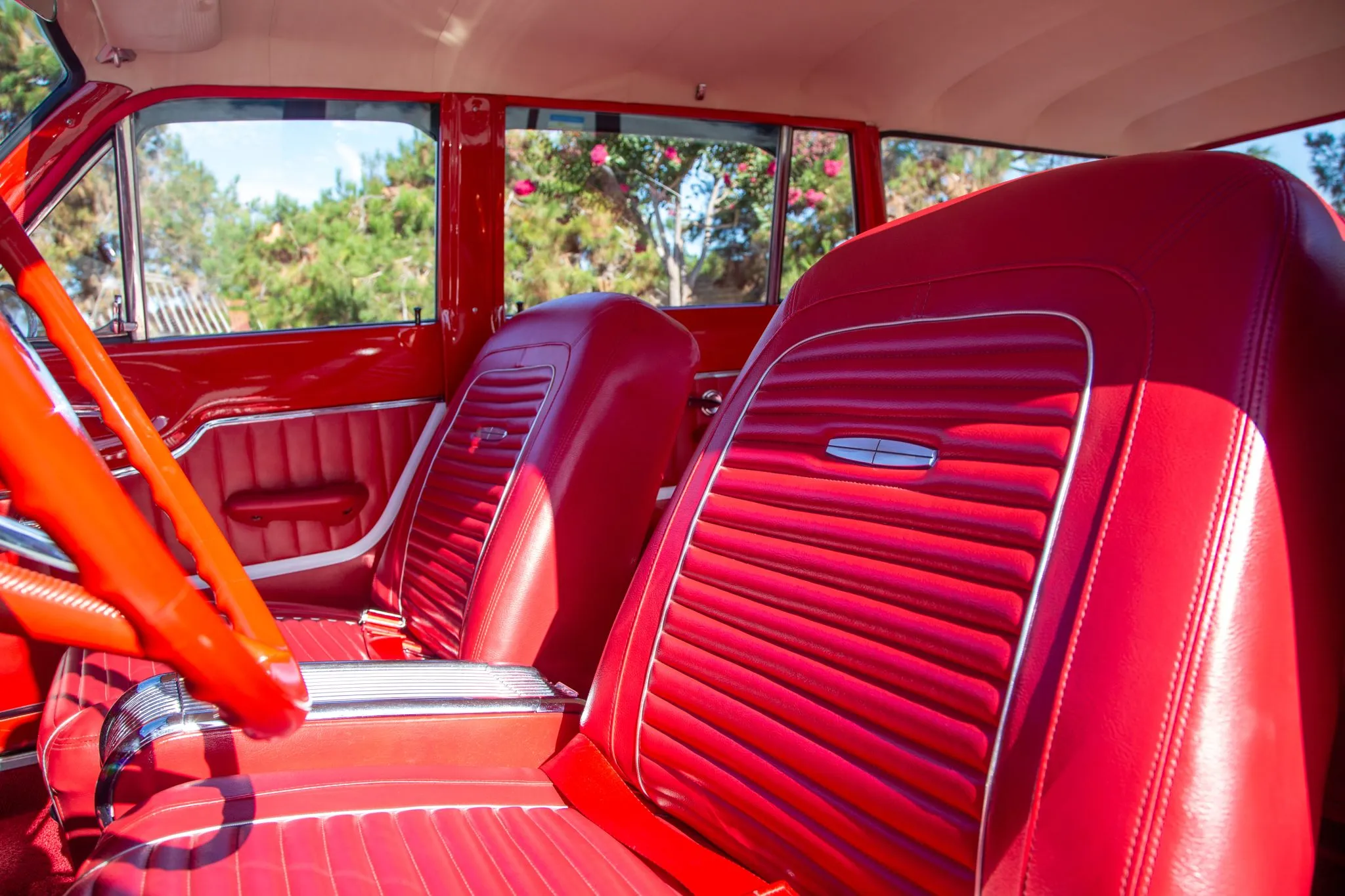
The Futura buckets were not included in the standard Squire, but in 1962 and 1963, you could order the Squire with a “Futura-style interior,” with front bucket seats, center console, and Futura-style pleated all-vinyl upholstery front and rear. This interior was not offered on the cheaper wagons.
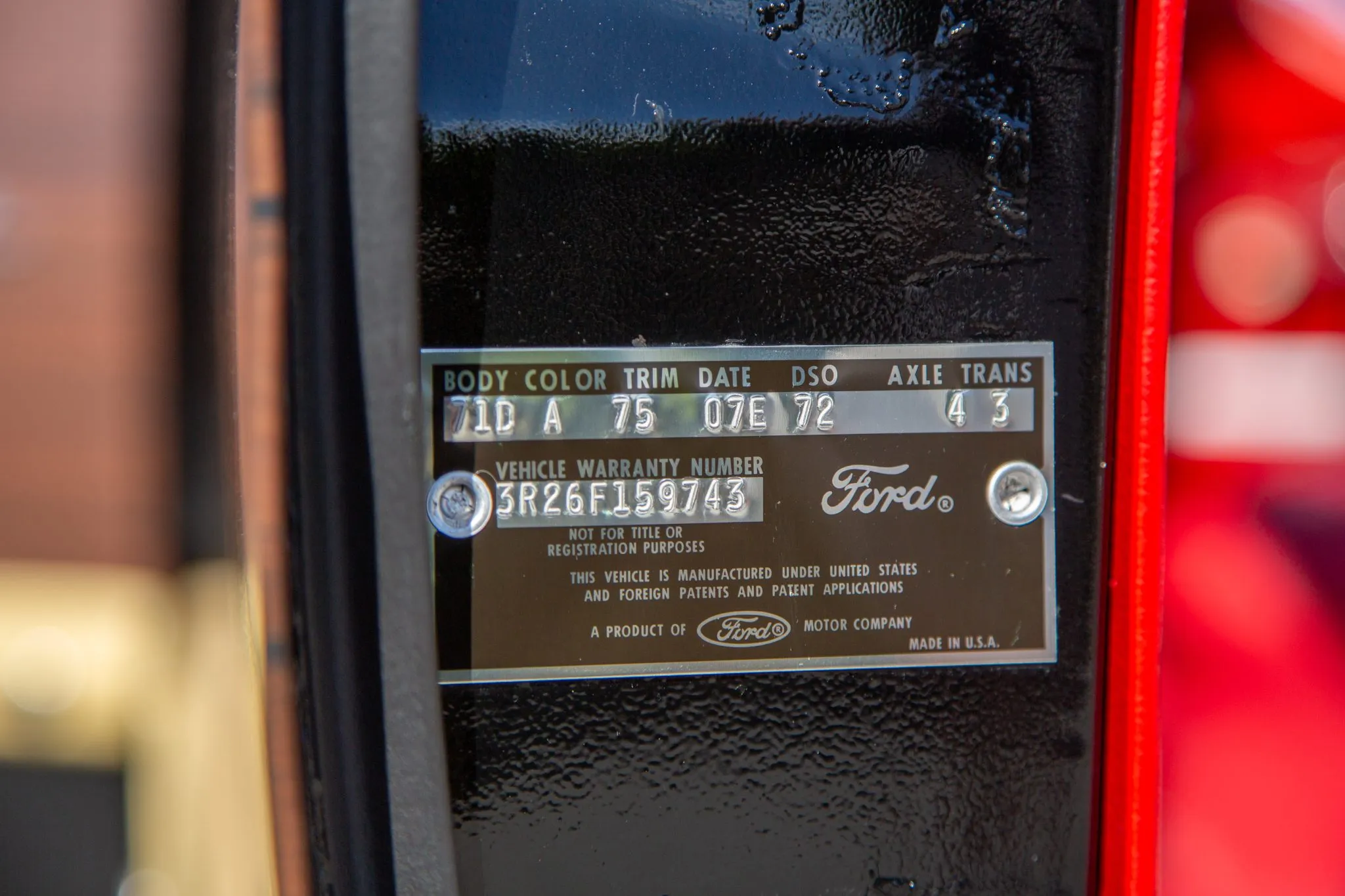
For 1963, Ford assigned a distinct body style code (71D) to the Squire with bucket seats, presumably as a production convenience. This has led some Falcon fanciers to insist that it was a separate “Super Deluxe” wagon model, an assertion that’s not supported by any contemporary source I’ve found.
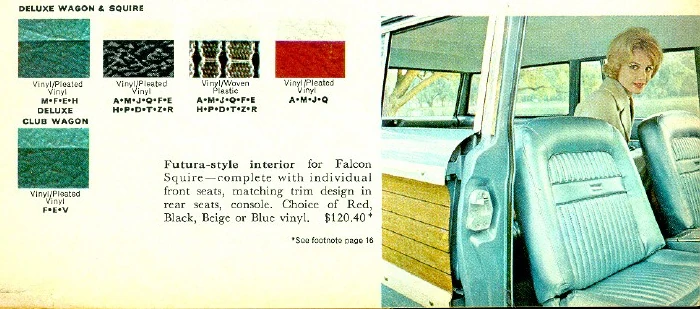
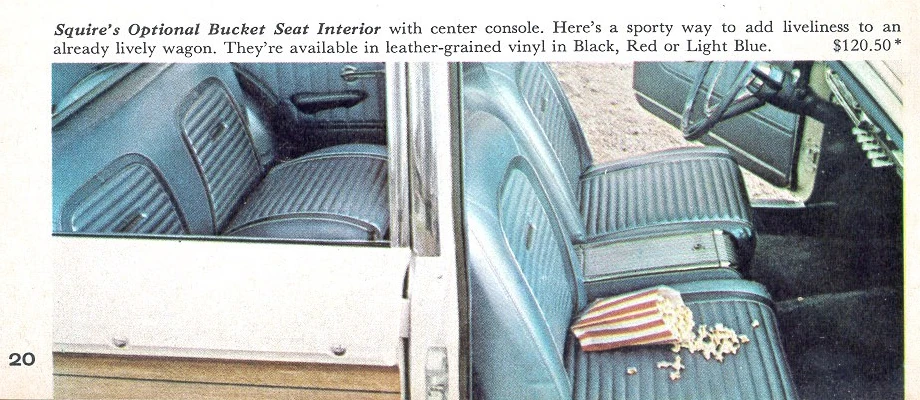
Ford’s own Buyer’s Digest of New Car Facts booklets plainly describe the “Futura-style interior” as a Squire trim option, priced at $120.40 in 1962 and $120.50 in 1963. (For 1963, Ford had also made buckets optional rather than standard on Futura sedans.)
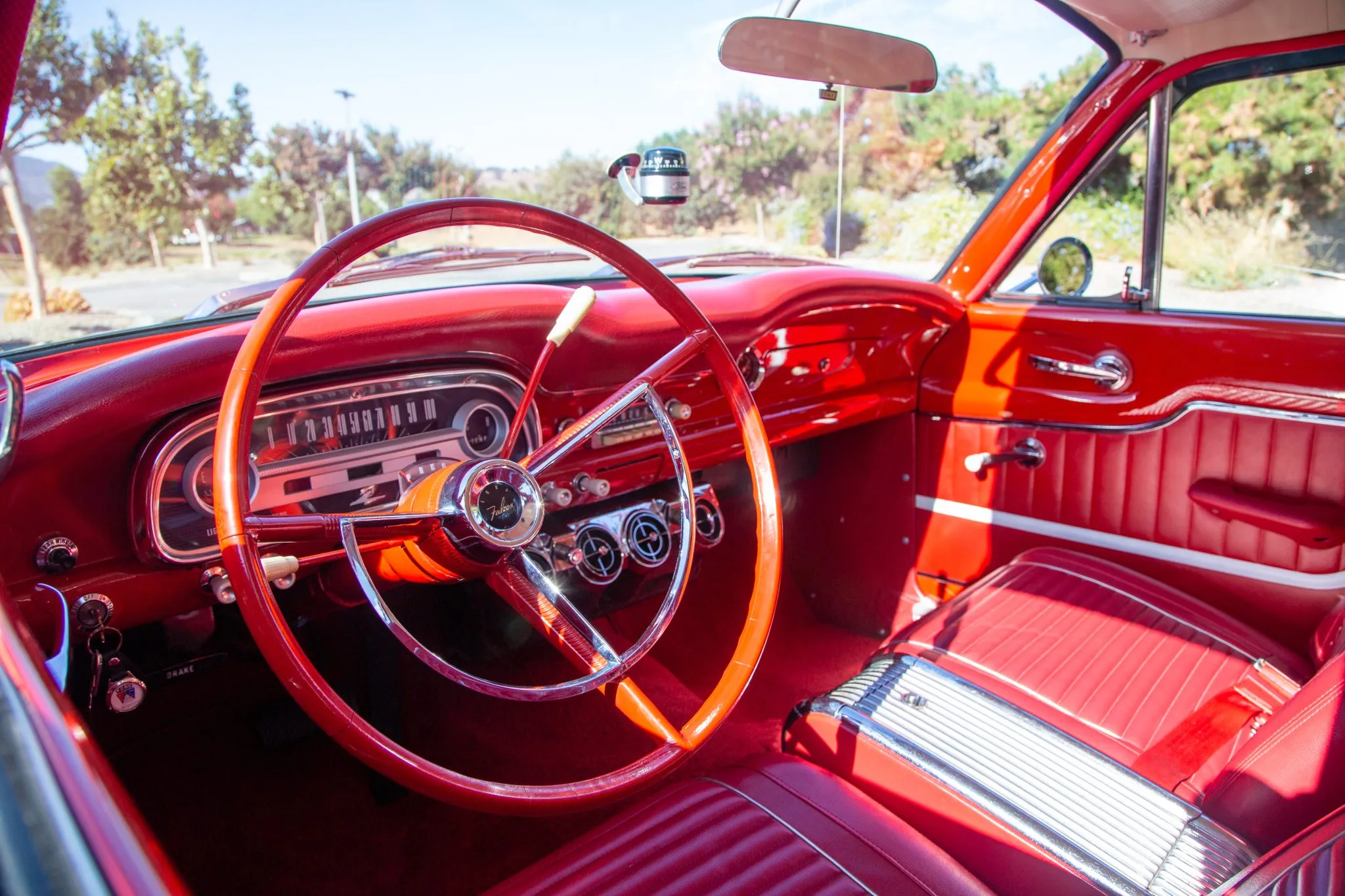
In any event, the Futura-style trim really brightened up the Falcon interior, especially in this eye-popping bright red. (The buckets were also offered in black or blue; beige was optional in 1962, but not 1963.) Although the bench-seat Falcon was nominally a six-passenger car, it wasn’t really wide enough for middle passengers older than about 6, and on a car with the rare FordAire under-dash air conditioner, the A/C vents would have crowded the knees even of grammar-school kids. Better to have the center console’s lockable storage bin and put the kids in the back.
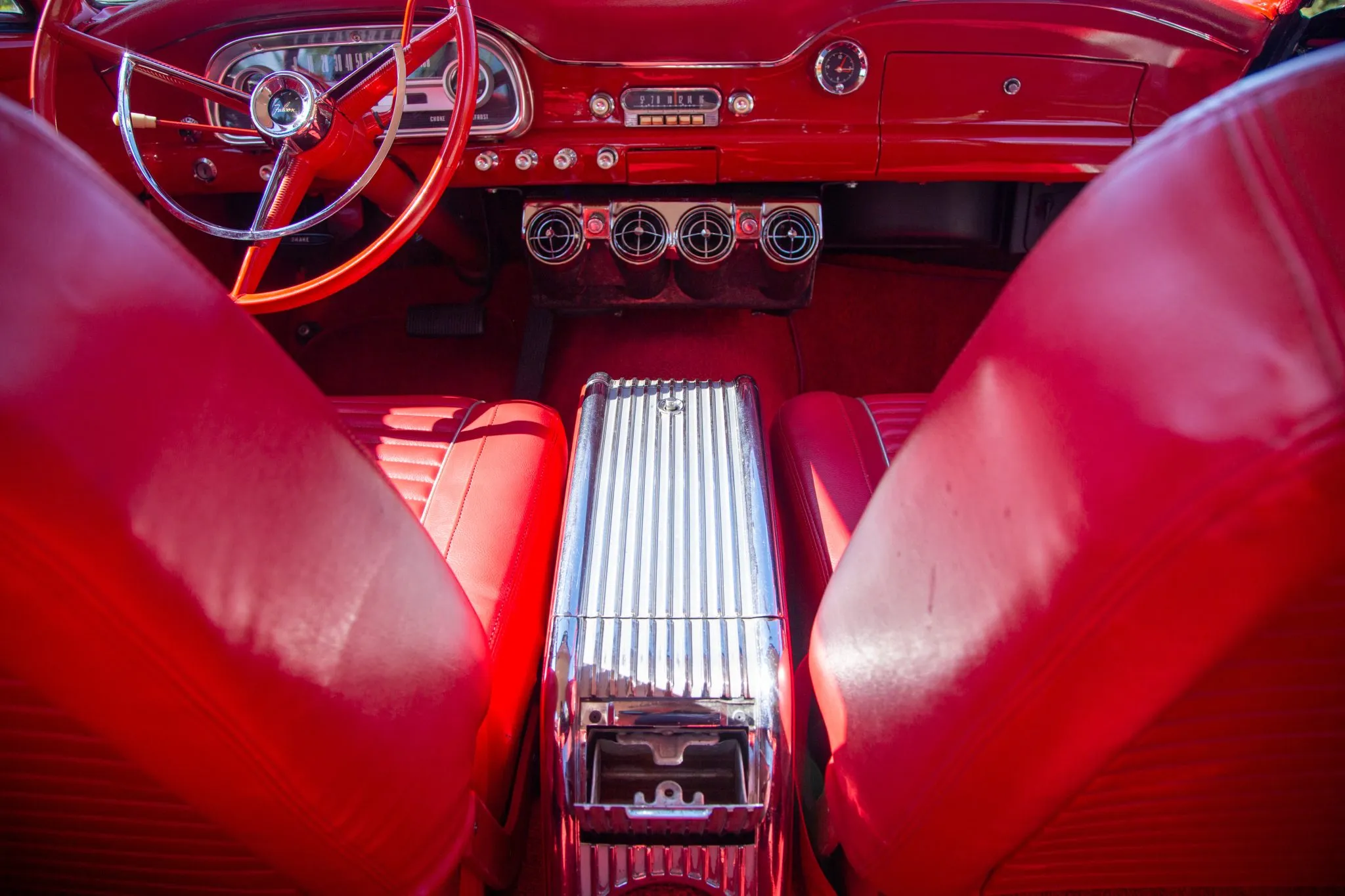
FordAire was very, very rare on early Falcons and Comets, a $231.70 option installed on less than 2 percent of 1963 production. Although the Bring a Trailer listing is ambiguous on this point, an article on this same wagon in the August 2020 edition of The National Falcon News (the Falcon Club of America magazine) suggests that it did not originally have A/C, but the previous owner installed a restored but period-correct FordAire unit.
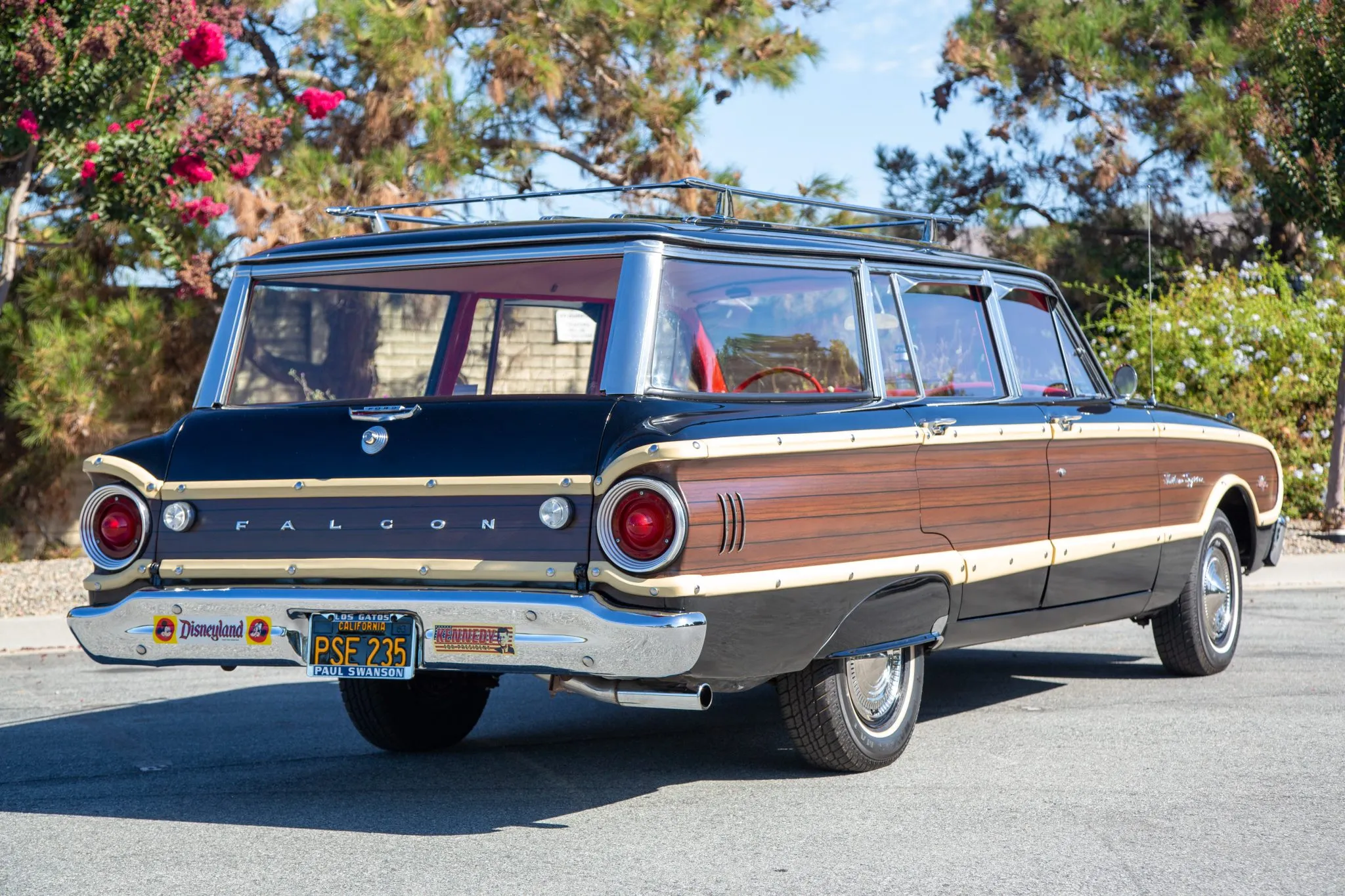
Although it was considered a compact wagon in the early ’60s, the Falcon Squire is not all that small by modern standards. Although they shared the 109.5-inch wheelbase of the Falcon sedan, the Falcon wagons were about 7 inches longer, 189 inches overall, so that Ford could commonize most of the body structure with the Mercury Comet wagons. (Comet sedans had a longer wheelbase the wagons didn’t share.)
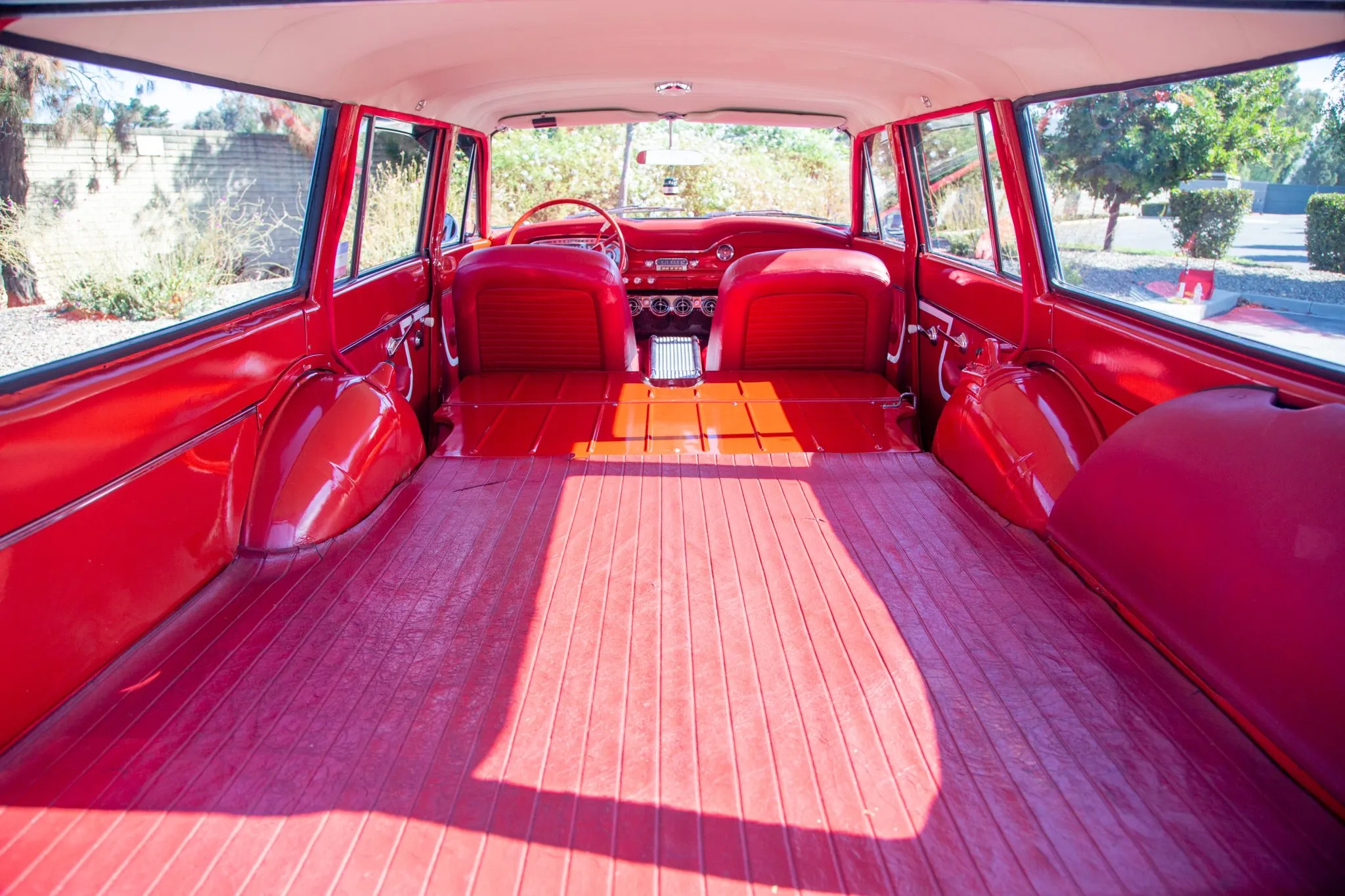
Ford claimed 76.2 cu. ft. of cargo space with the back seat folded flat.
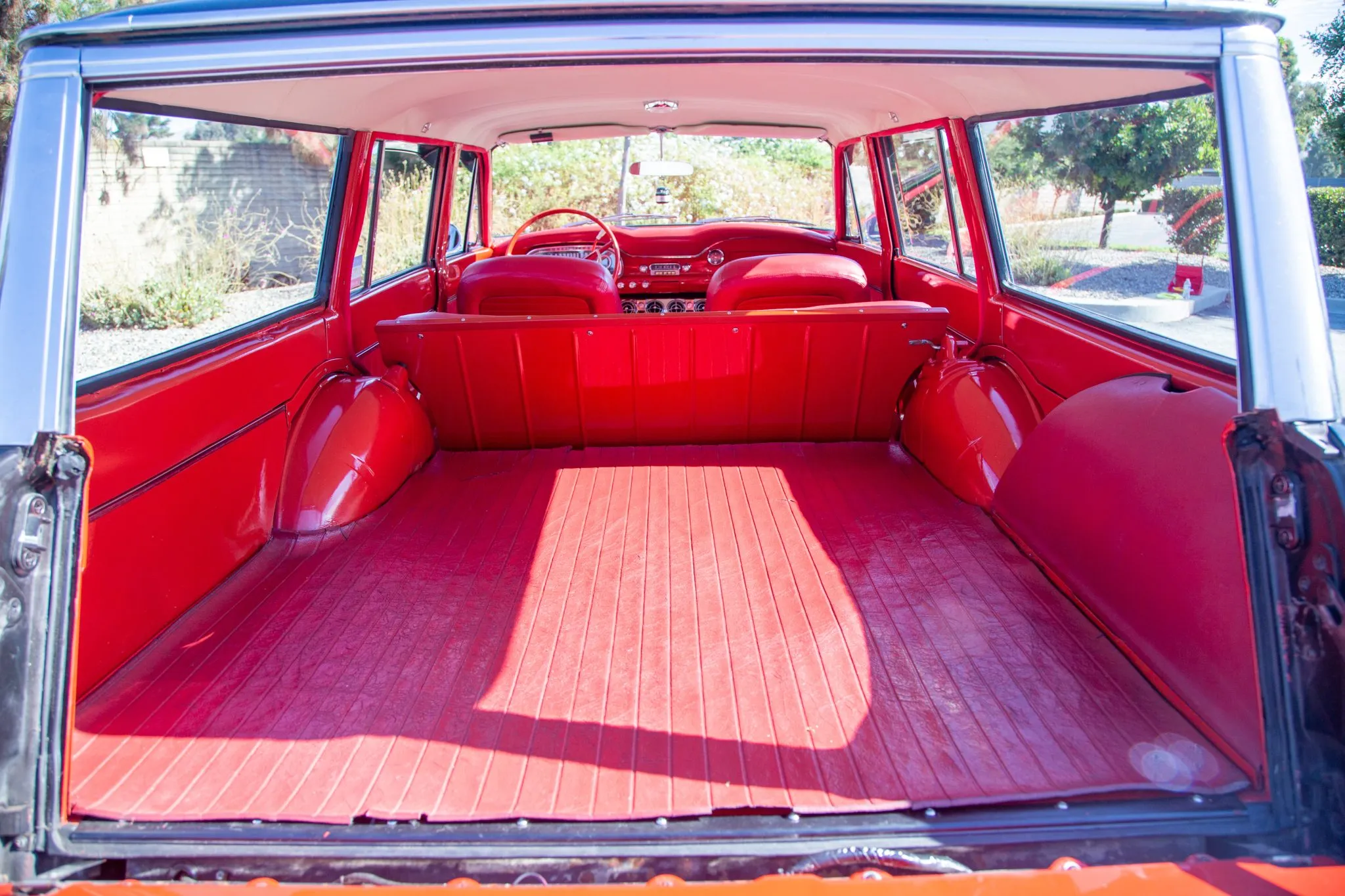
Thanks to its elongated tail, the Falcon wagon still had a reasonable amount of space with the rear seat up, along with expansive visibility.
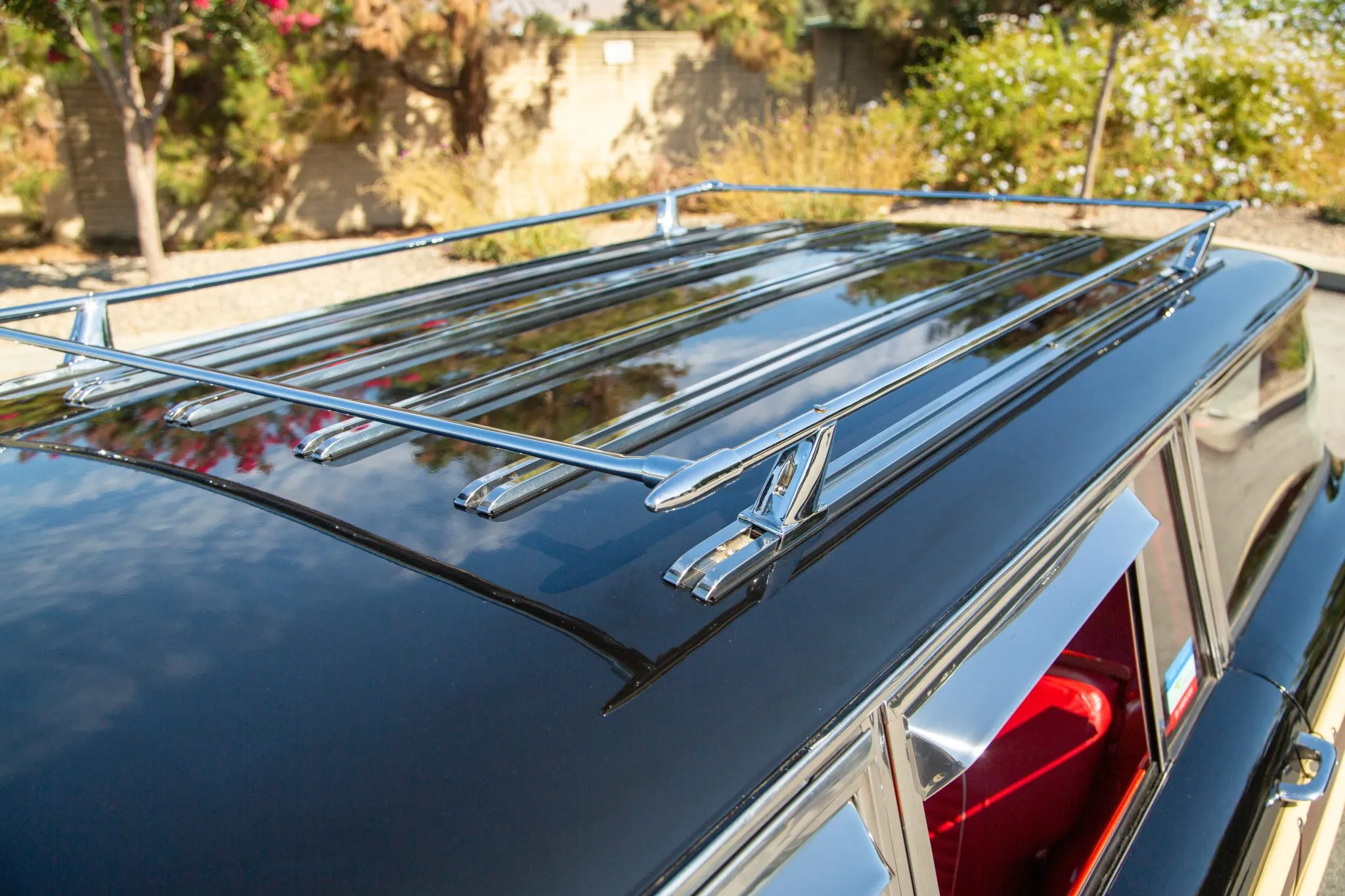
If something didn’t fit inside, there was also an optional chrome luggage rack for an extra $45.40.
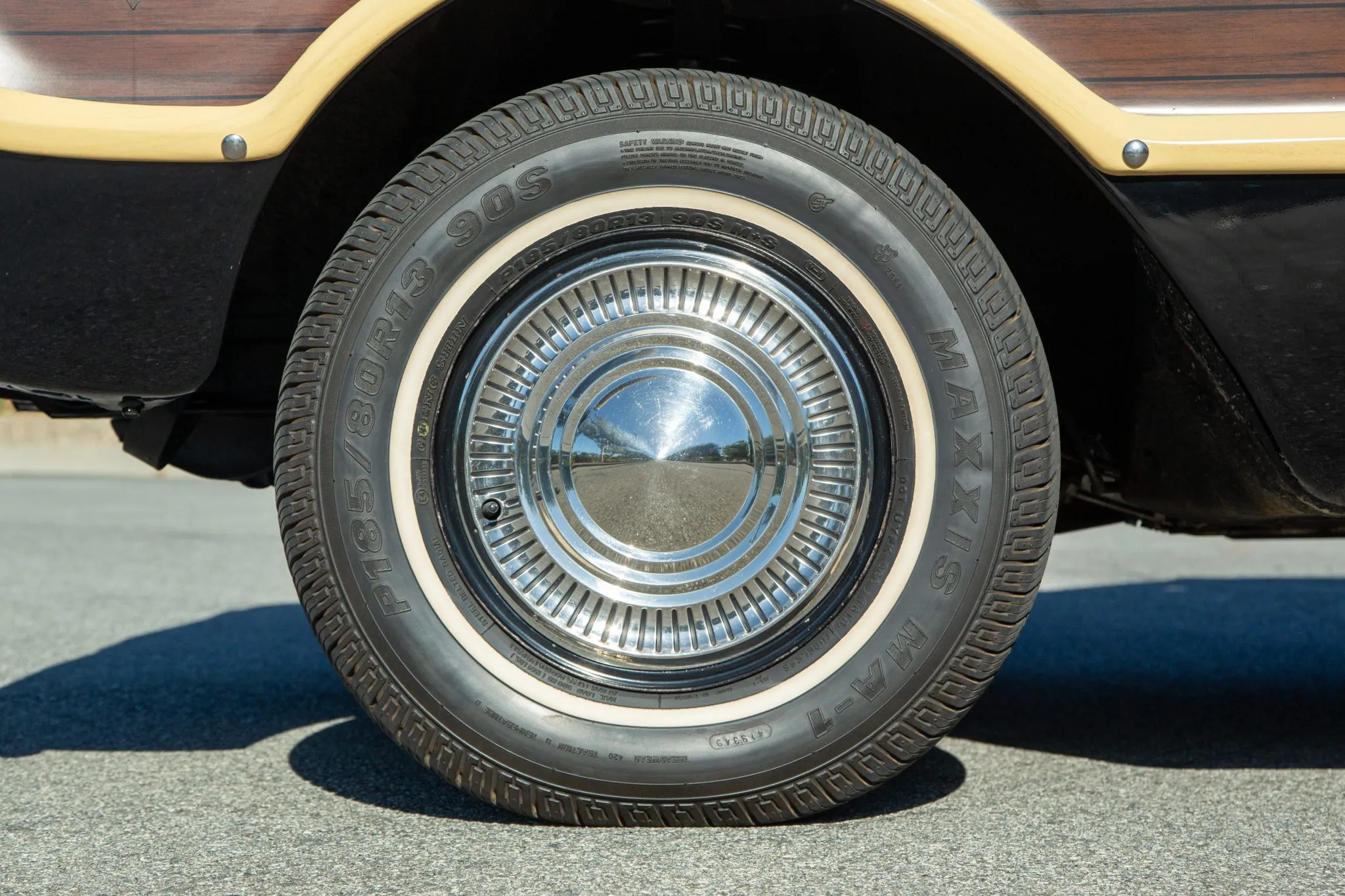
There were two real limitations to using the Falcon as a load hauler: the engine and the tires. Unfortunately, there was really no easy fix for the latter. The biggest factory option for the Falcon was 6-ply 6.50×13 tires, not even the 7.00×13 size specified with the V-8 Comet. Given that the Squire pictured here has a curb weight of more than 3,000 lb, it could really have used the 14-inch wheels offered on the Fairlane and Econoline, but they weren’t offered unless a dealer was willing to make the swap.
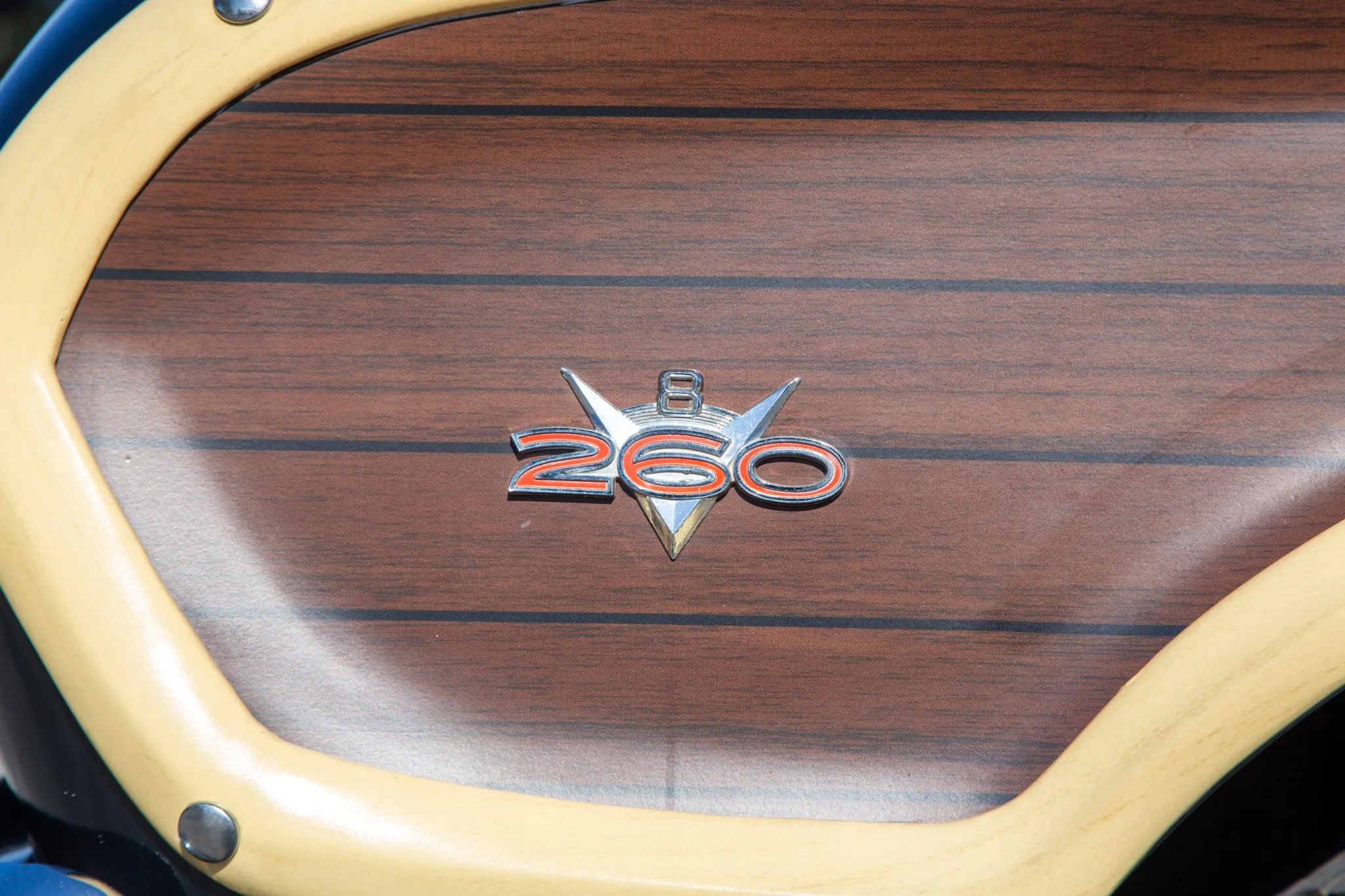
As for the engine, at the start of the 1963 model year, the base 144 cid Falcon 6 was still standard on the Squire, offering truly grim progress in a heavily loaded wagon with Ford-O-Matic. The 170 cid engine (which some contemporary sources suggest became standard on the wagon mid-year) was less bad, but real relief to the power deficit finally arrived in March 1963 in the form of the Challenger 260 V-8, a $162.20 option on Falcon sedans and wagons.
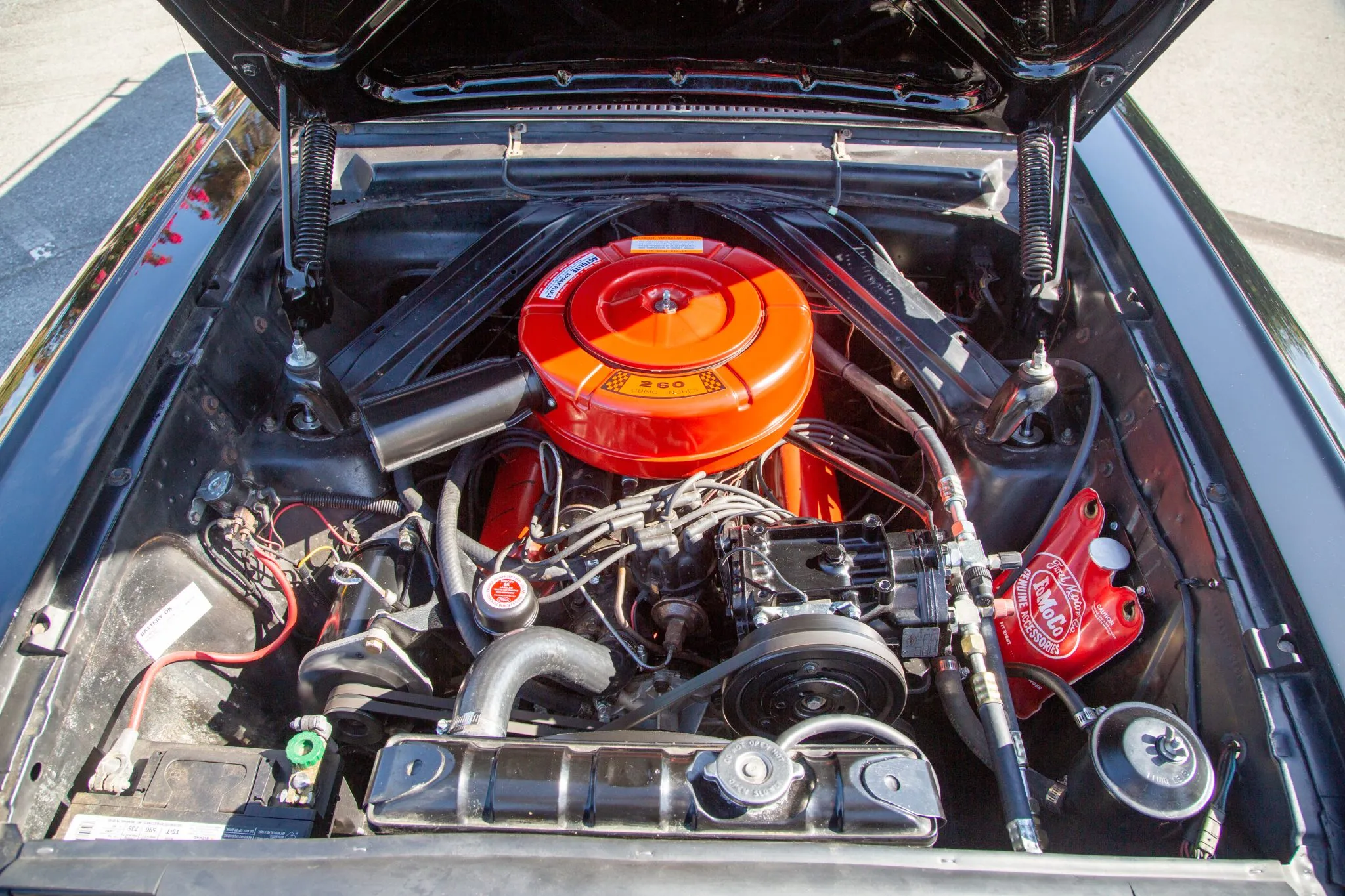
Consumer Reports thought the V-8 came close to spoiling the Falcon and Comet: It hurt gas mileage quite a bit compared to the sixes, and the extra weight on the nose made for clumsier handling and heavier steering. However, for an automatic station wagon, the V-8 strikes me as the most sensible choice.
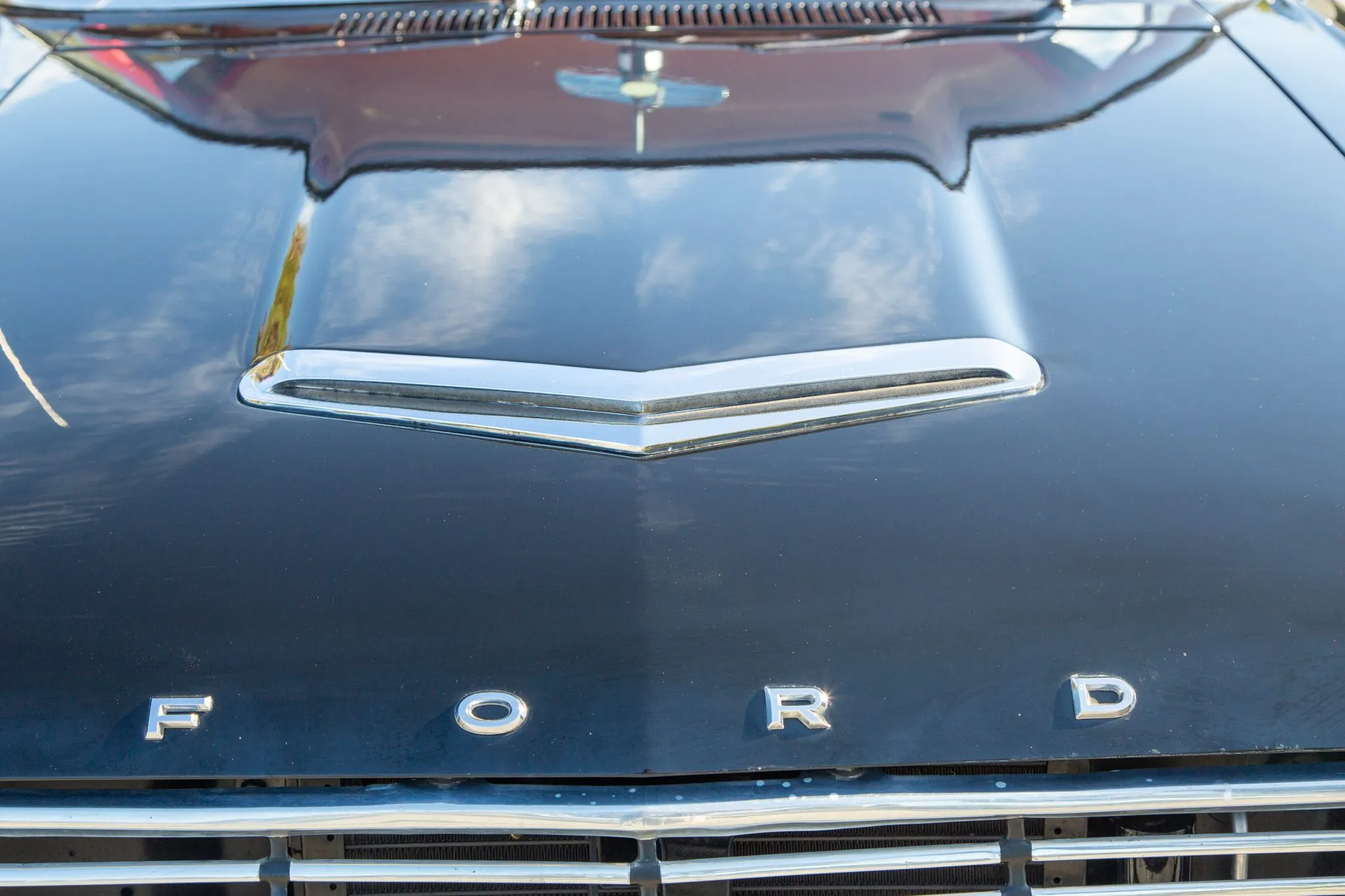
With Ford-O-Matic, a V-8 Falcon wagon was still no ball of fire (0 to 60 mph took around 15 seconds), but the 260 had enough grunt to make a trip through hilly country considerably less fraught. However, the price and late introduction made V-8 wagons rare: Just 4,678 V-8 Falcon wagons were built for 1963. (If you’re wondering, at least a few of those wagons did have the optional 4-speed manual transmission.)
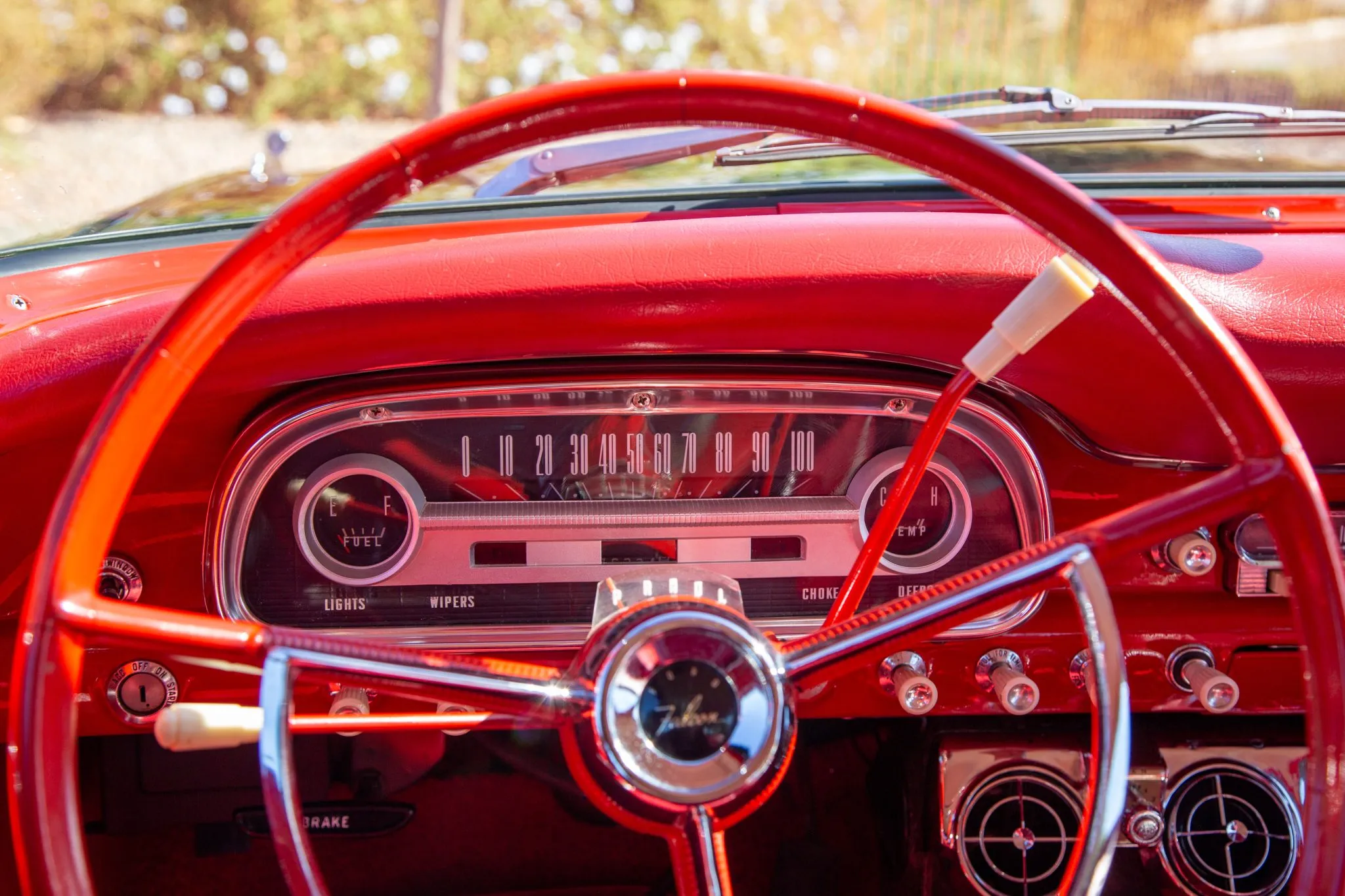
This wagon was built in May 1963, late enough for it to have another new option: the $81.70 power steering. Neither the Falcon nor the Comet had offered power steering before — the six-cylinder cars really didn’t need it — but the V-8 made the manual steering heavy enough to be annoying. Power was only a little quicker than manual steering, and it had no self-return action, so it required care to avoid oversteering in fast maneuvers, but if you wanted to parallel park without an upper-body workout, ordering it made sense.
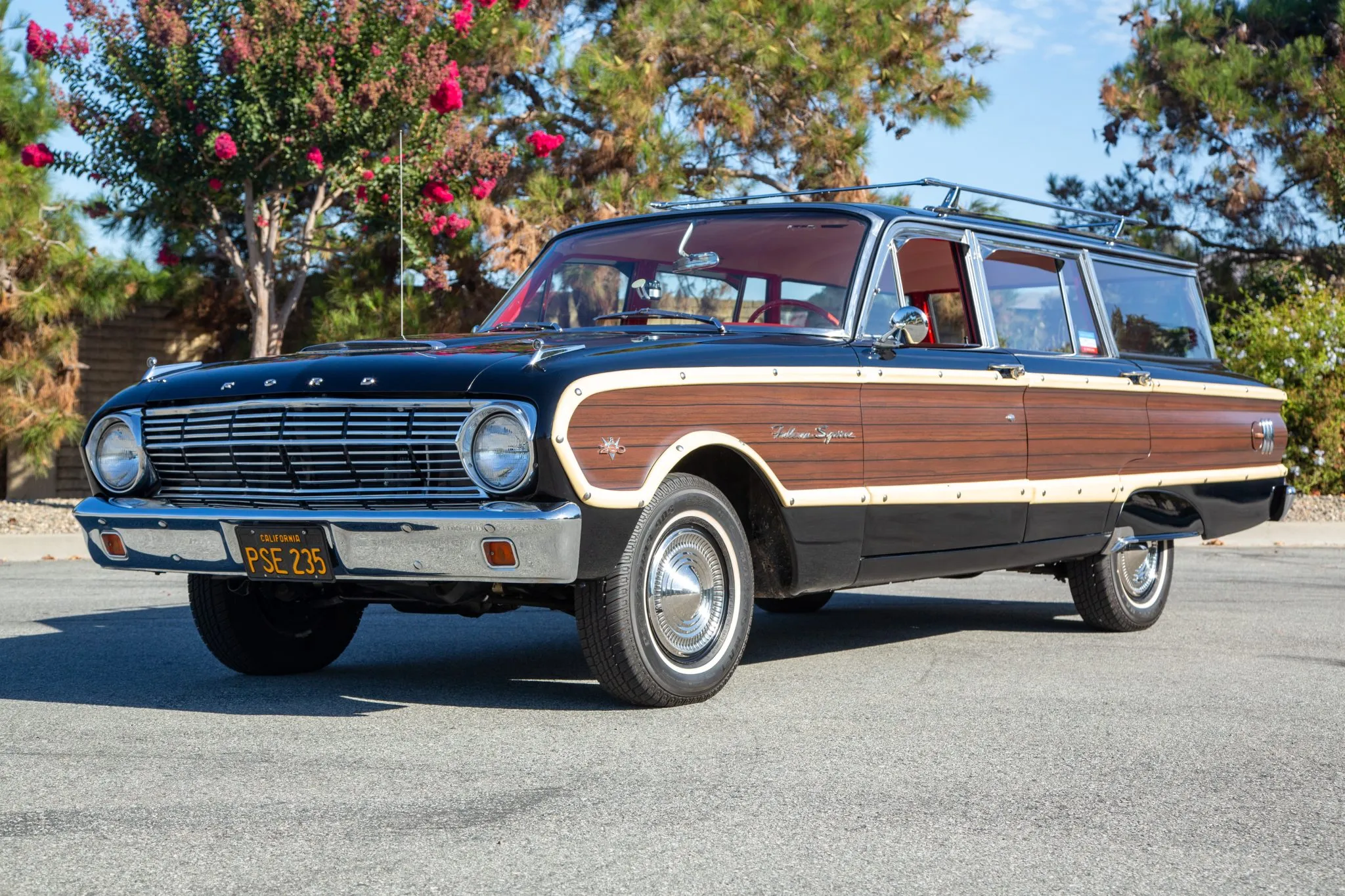
According to former owner John Lissandrello, this wagon was originally sold in San Jose, California (which is consistent with the District Sales Office code shown on the warranty plate) to a middle-aged woman. She apparently loved the Squire so much that she held onto it until she was in her 90s and living in a Texas retirement home. Lissandrello had seen pictures of the wagon online in 2009, and finally tracked it down and bought it in 2018, bringing it back to California. He overhauled it extensively, replacing a lot of mechanical parts and trim, and adding some accessories it didn’t originally have (unfortunately including the awful fender skirts).
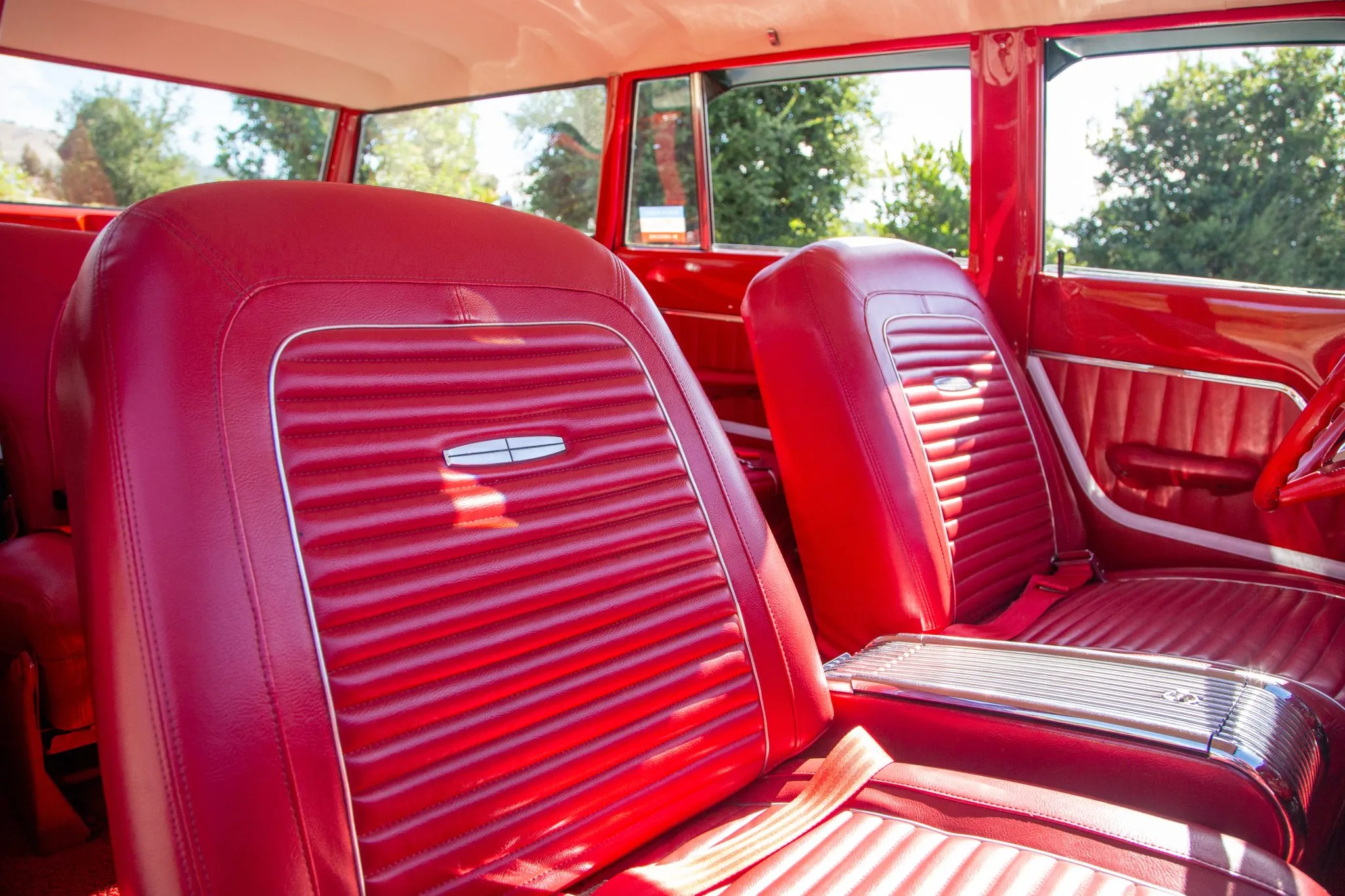
Why would anyone go to so much trouble? Bucket-seat Squires were very rare. No production figures are available for 1962, but for 1963, the unique body style code made installations a little easier to track. Ford built only 8,269 Falcon Squire wagons for 1963, of which 1,461 were the bucket-equipped 71D version. Of those, only 162 had the V-8 engine. Although the Squire and the 260 V-8 returned for 1964, the bucket-seat option was dropped, so a V-8 Squire with buckets (and power steering) is definitely a rara avis by any standard.
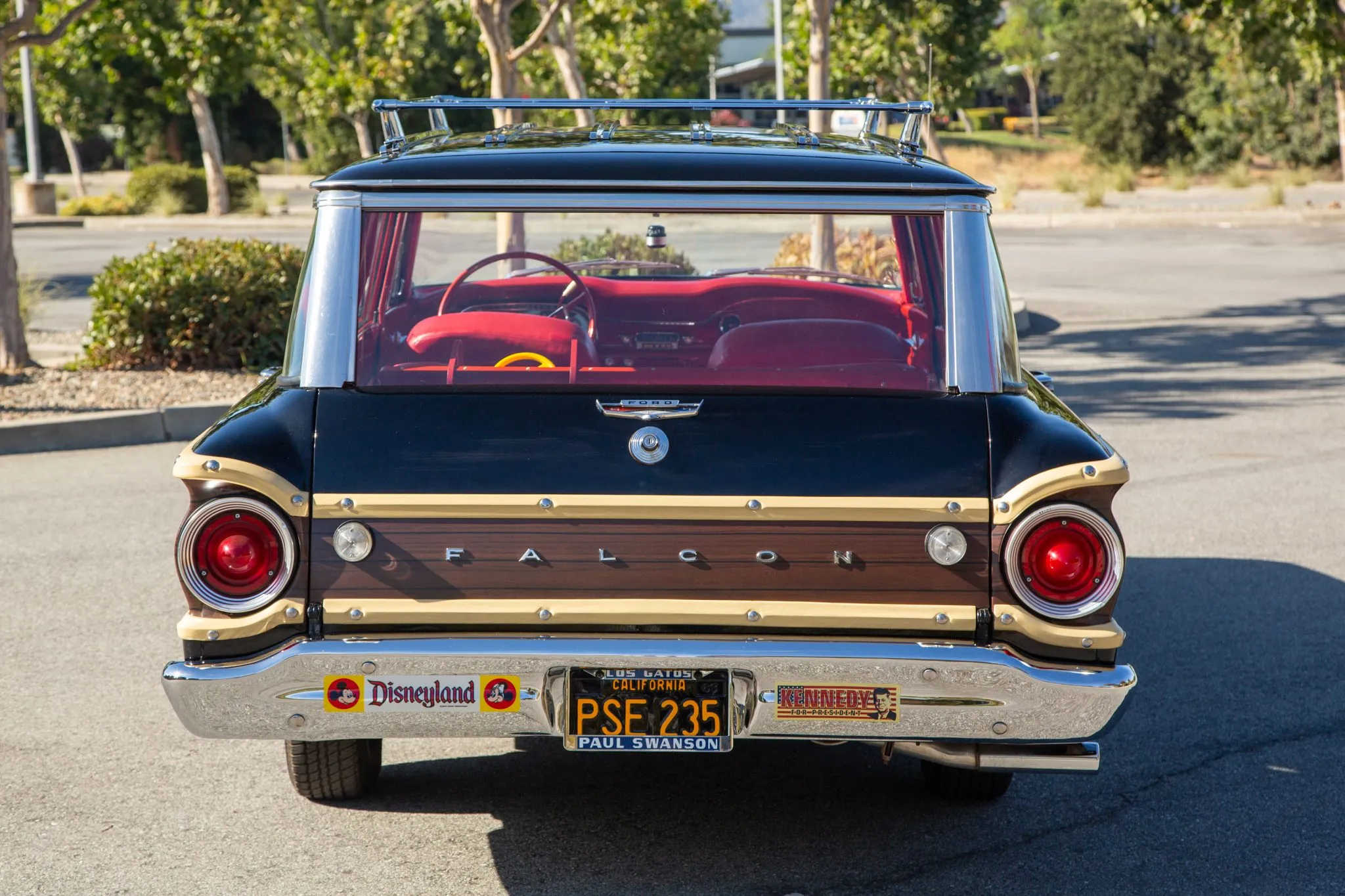
This one, which is probably the nicest Falcon wagon you’re likely to find, sold for a very healthy $34,000 on Bring a Trailer in August 2026.
Related Reading
Curbside Classic: 1961 Falcon – How To Build A Winning Compact (by Paul N)
Curbside Classic: 1962 Ford Falcon Sports Futura – Ford Sees The Future; At Chevrolet (by Paul N)
1962 Ford Falcon Futura: A Well-Documented, One-Option Falcon With A 144/Fordomatic (by Aaron65)
Curbside Classic: 1963½ Ford Falcon Futura V8 – The Economy Compacts Enter The V8 Era (by Paul N)
1963 Ford Falcon Futura 260 – Friendly And Fast(ish) Fido (by J P Cavanaugh)
1963 Ford Falcon Sprint Convertible: A Soft Open For The Mustang (by Aaron65)
1963 Mercury Comet V-8 Sedan: “For Better Or For Worse, Something Different Under The Hood” (by me)























This is, I believe, the nicest Falcon wagon I have ever seen! I had no idea that bucket seats were offered in wagons, and they make it all the better. Also, while I am usually fairly accepting of fender skirts on quite a few cars, this is not one of them. They look completely wrong on this car and I would help you in removing them ASAP!
Also, are these the cheapest, most generic looking wheel covers on any car of the 1960’s? The standard hub caps had far more character and looked more luxurious.
I can see why my parents would have avoided the Falcon when they bought an F-85 wagon in 1961. It was their only car and not a second car to augment a larger, nicer one. My mother would never have put up with manual steering, either. The Oldsmobile’s 215 V8 was no barn burner, but it was at least a V8 in an era when that mattered. Had the 63 V8 Squire been available in 1961, who knows.
The really odd thing about those wheel covers is that they are very similar to the ones used on the 1960.5 Monza coupe (for only a few months before being replaced by much better ones for 1961).
The fender skit looks way out of place on the black wagon.
The 1962 Ford Falcon Squire station wagon in Corinthian White (4th photo) looks more appropriate. Would be inclined to do an engine and A/C swap to bring it up to the ’63 black wagon.
I’m with JP in loving the looks of this little beauty .
I don’t get the hate for Foxcraft fender skirts, if they’re not for you simply remove them .
-Nate
Thanks for a delightful read this morning. The car is from the era where This Young Ford Guy was starting to devour the brochures and magazine ads—and also bicycle around the local Ford dealer’s lot. “Corinthian White” and “Raven Black” are stored in permanent memory, unlike yesterday’s lunch choice, etc.
I’d of course love to give this car a home, but the $34,000 auction bid was more than I would’ve guessed. Wow! (Hooray to original buyer and her devoted long-term ownership.)
I wasn’t there but I rather suspect the real reason the Falcon wagon got the longer body at the rear was simply to increase its cargo capacity. The sedans had a rather stubby trunk and if the wagon had used that same length, its proportions would have looked a bit odd. The Comet wagon just went along for the ride.