
YouTube is a fascinating way to waste time. Last week I was surfing through several model car channels, both American and British. I’d never watched them before, though I think I may have ‘met’ two of the American guys online. Their unofficial ‘theme of the week’ seemed to be favourite kits. One of the guys listed a top five, another added two honourable mentions, while a third virtually said ‘Blow that, here’s my top seven’.
Now these guys seemed to have dedicated man caves lined with unbuilt kits. I don’t. I’ve been having a building spree this year (as I haven’t been able to do much work in the garden) and my stash would pale into insignificance compared to what I saw on screen. So you won’t see photos of mountains of kits reaching up to the ceiling. Doesn’t happen here. I’d just go through my photos of kits I’ve built, and choose ten favourites. Ten, not to upstage the YouTubers, but because five is too short a story.
But as I looked through my files, I found even ten best was too hard a choice. There have been too many good kits over the years, and I build such a wide variety of subjects. So today I’ll start with ten favourite pre-’48 kits. Not in any particular order. These aren’t necessarily the ten best, just my favourites out of what I’ve built. And two honourable mentions, because the choice was so hard. Plus one. A baker’s dozen.
1930 Packard Speedster – Monogram
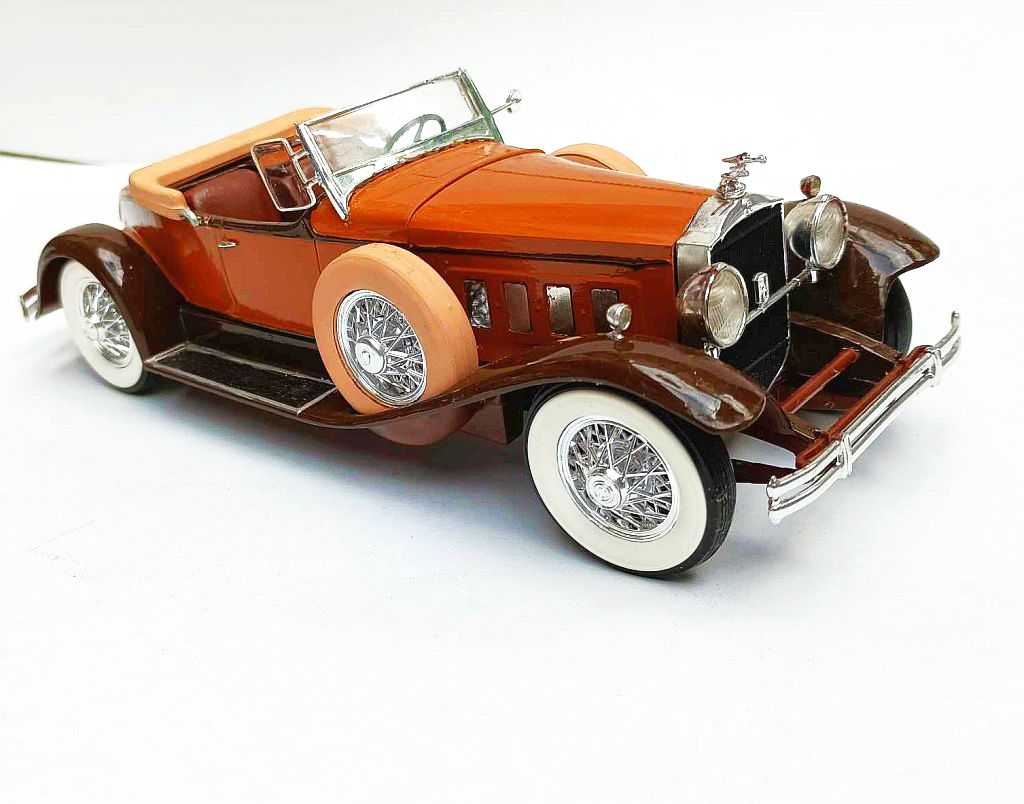
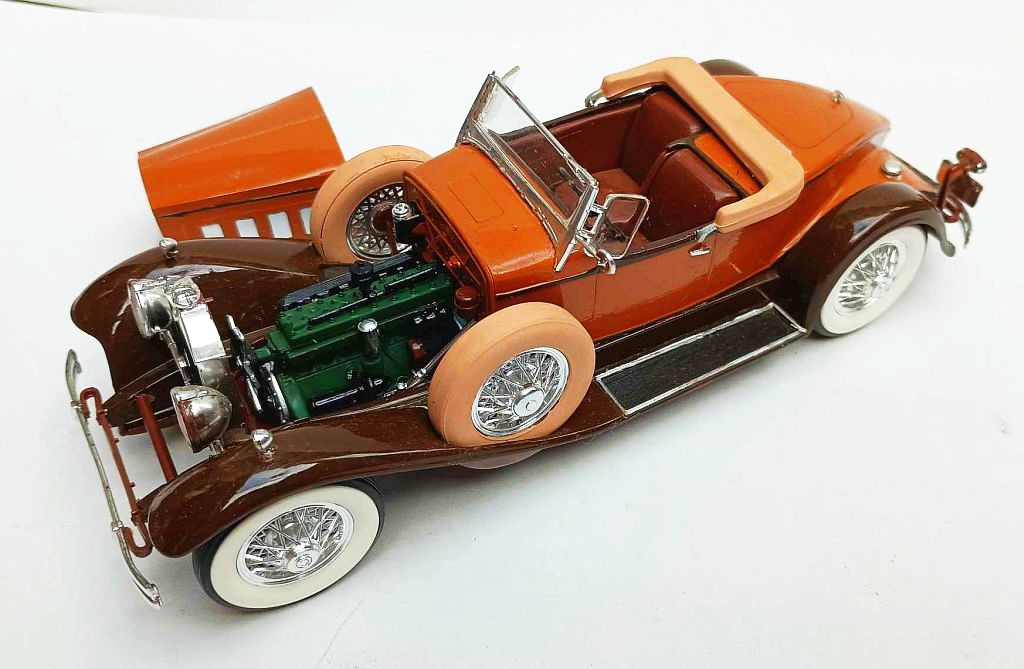
One of Monogram’s later Classic kits from 1975, this comes as either the two-seater runabout or the sporty phaeton. Maybe it’s not quite as detailed as some of their other classics, but it still has quite enough detail to be challenging, while being enjoyable to assemble.
1932 Ford hot rod series (1/25) – Revell
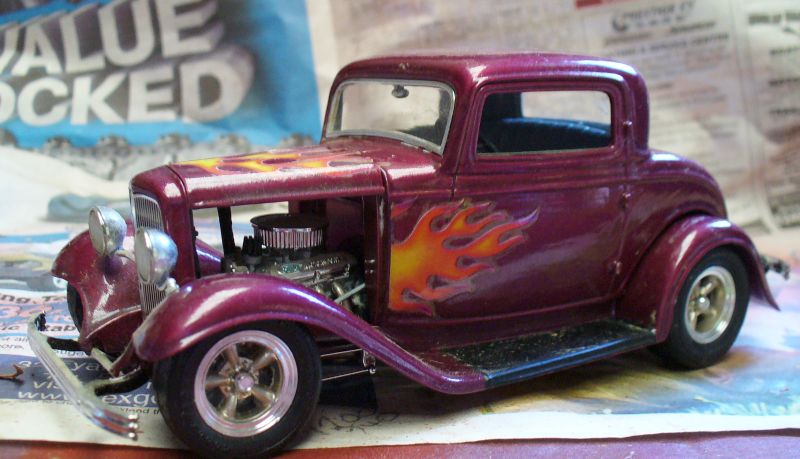
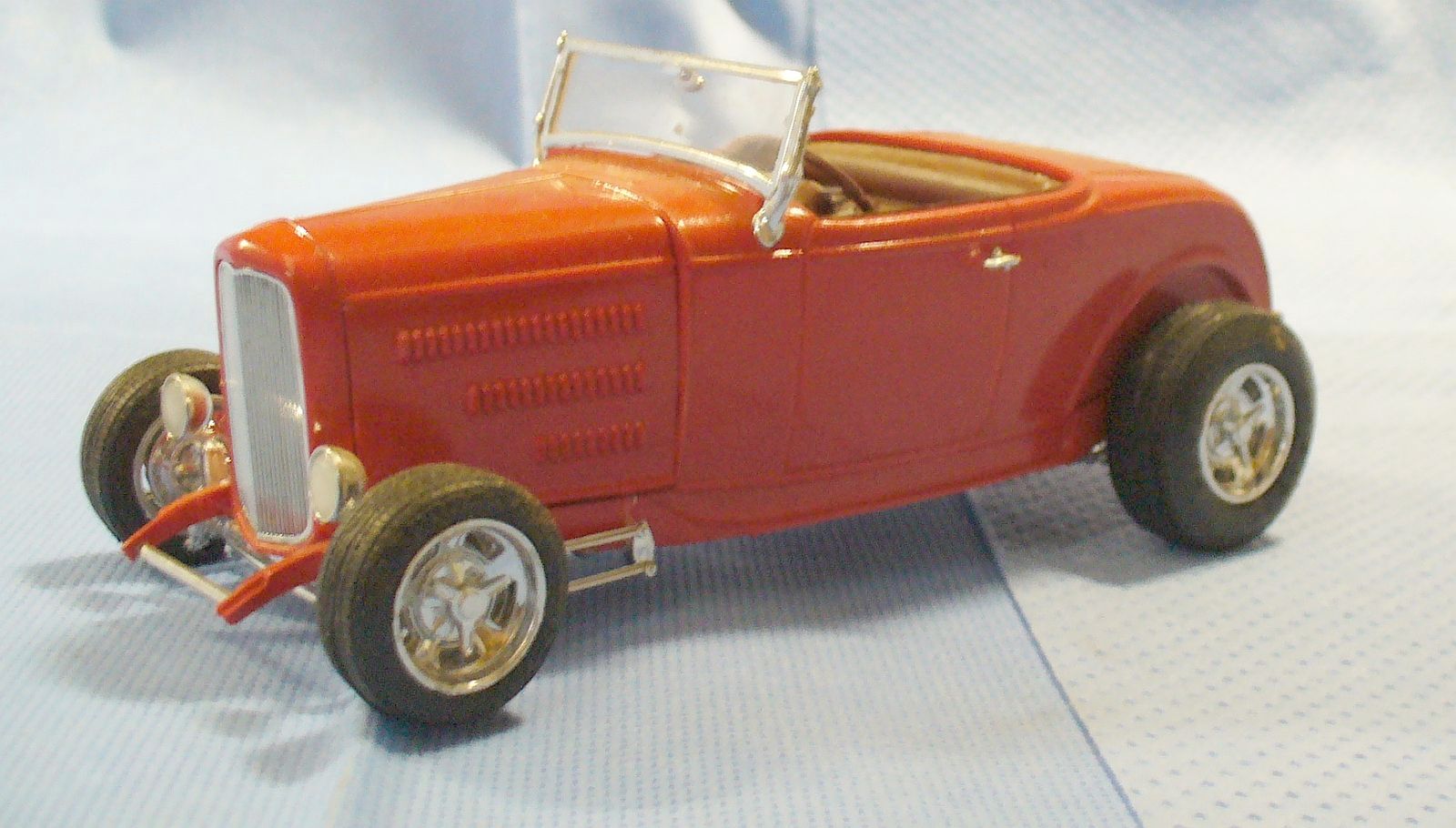
Available initially as a three-window coupe and the Dan Fink Speedwagon in 1996, it was followed by a fenderless street rod, then a sedan in 2011, Stacey David’s roadster in 2013, a five-window coupe in 2016. No stock parts are included, but you can do a mix and match of engines (SBF, SBC, old Hemi…), wheels and other parts between the kits. It’s nice that they try to replicate some famous rods rather than just sticking to the generic. I specify the scale because their 1/24 kits are adapted from old tooling; they’re not bad, just not as good as this.
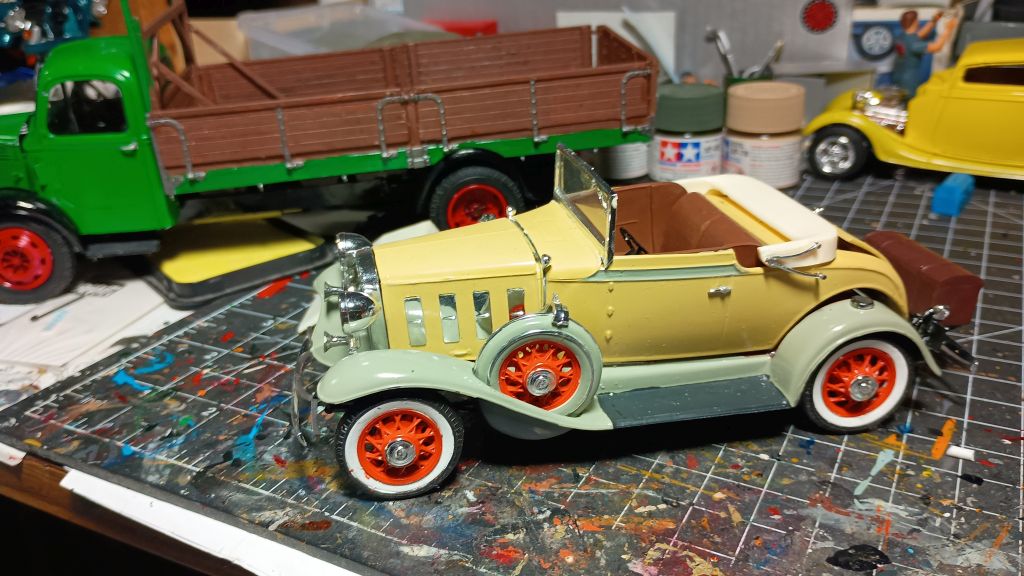
1932 Chevrolet – MPC
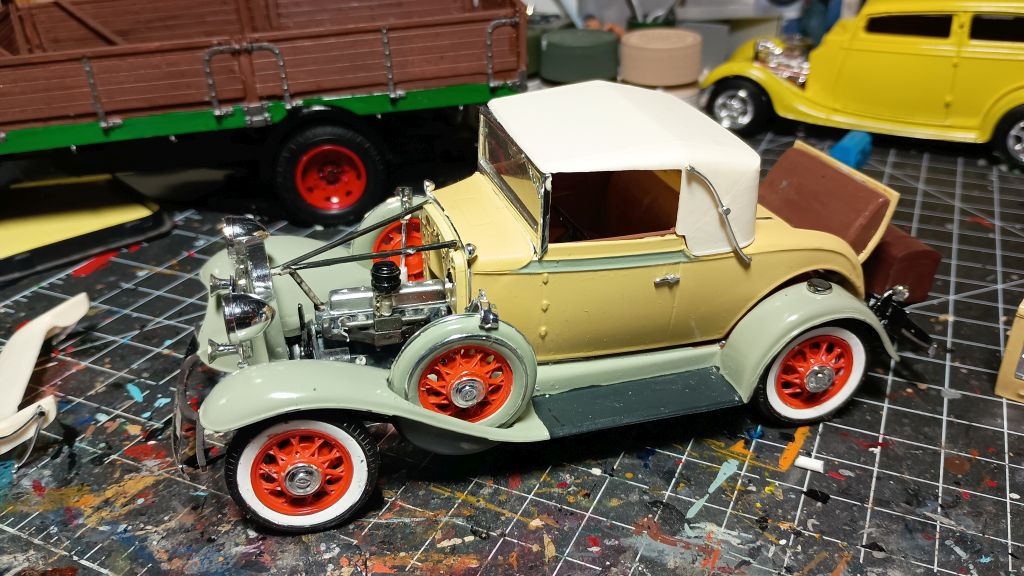
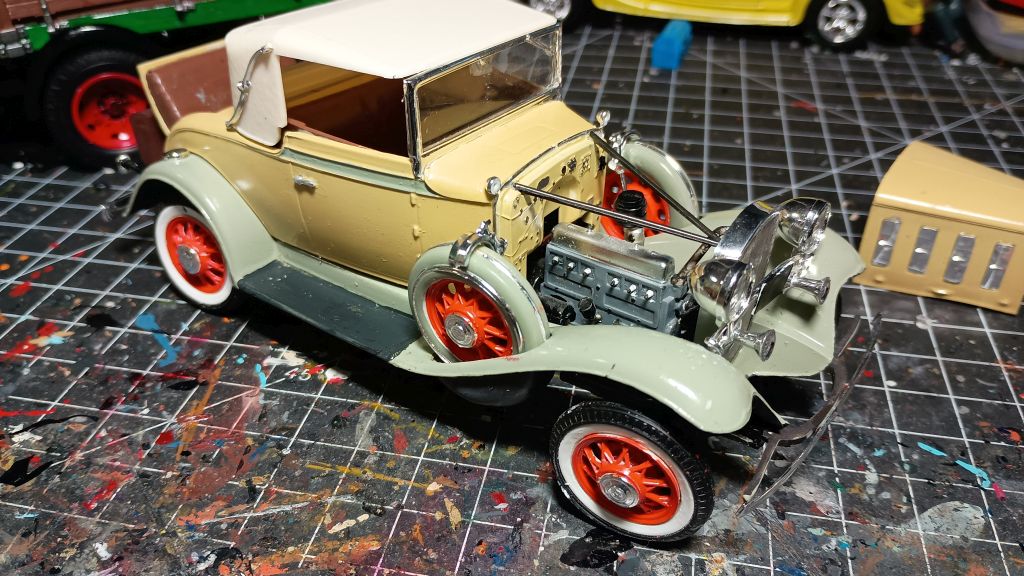
This kit first appeared in 1963, as a cabriolet, though the box called it a roadster. Much more detailed than AMT’s 1932 Ford kits, it came with lots of optional parts for rod or drag versions as well as some nice options for a stock Chevy – sidemounts, trunk rack with trunk…. Plus working steering from the steering wheel – a feature rarely seen 63 years later! Despite the steering being a pain to assemble, and some of the detail not as crisply moulded as you’d see today, the sheer realism of the model ensures it a place in my top ten. And it’s about to be re-released.
1934 Duesenberg SJ – Monogram
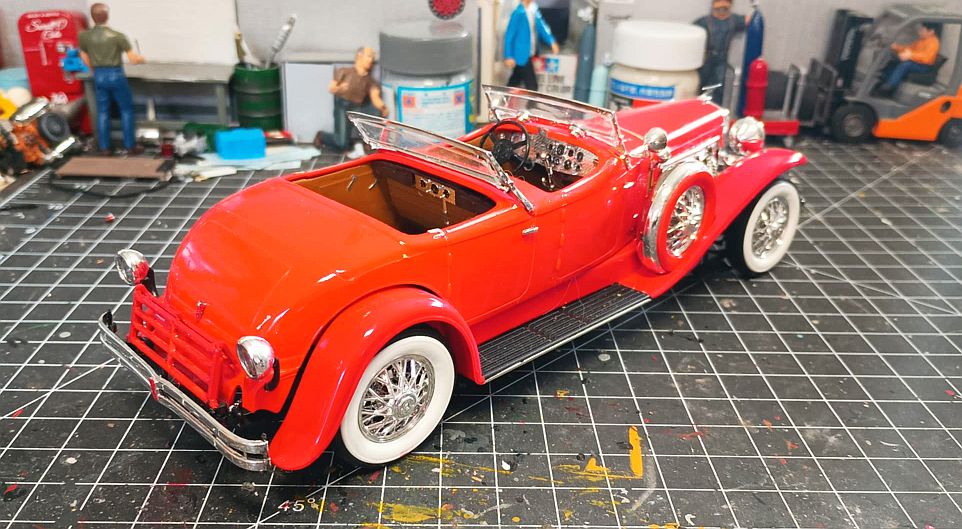
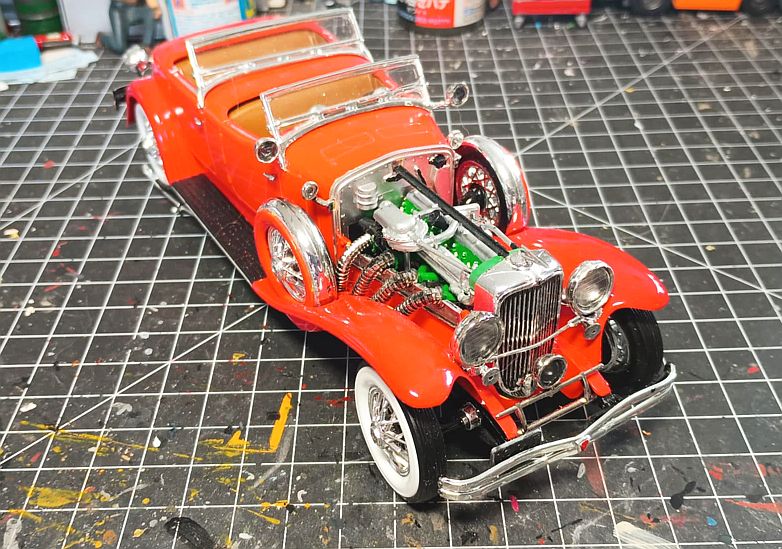
This one was also a new tool in 1963, and this kit still holds up incredibly well today. It’s been available at various times with this Weymann Torpedo Phaeton body, or as a Town Car, Roadster, or a Boattail Speedster (which seems only to have been available once, as a metal kit). Amazing amount of detail, but beware of all the tiny parts. There were several other Monogram classics I could have mentioned, but I found these the most enjoyable to build.
1936 Ford – Monogram/Revell
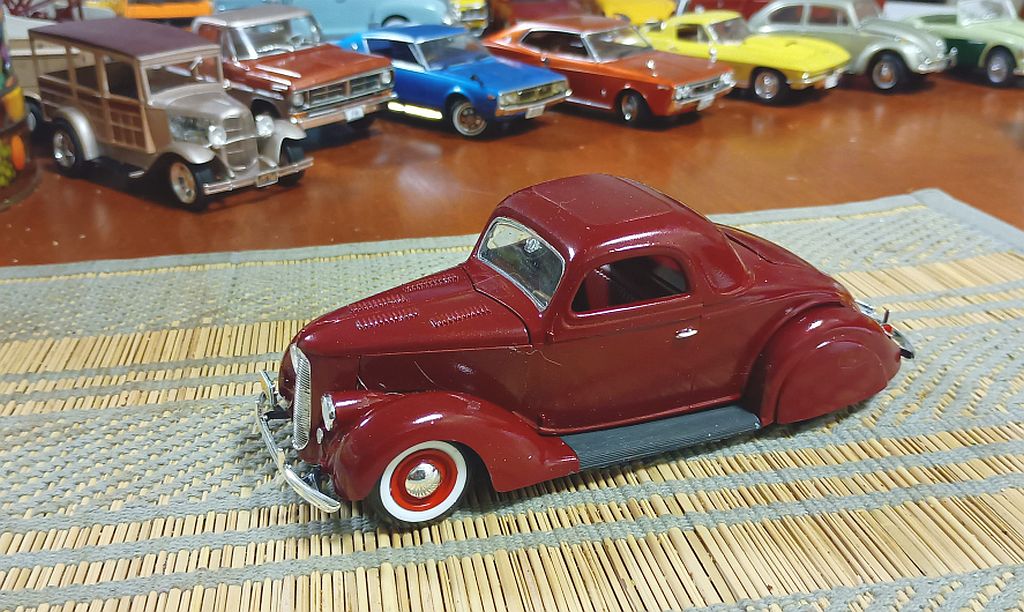
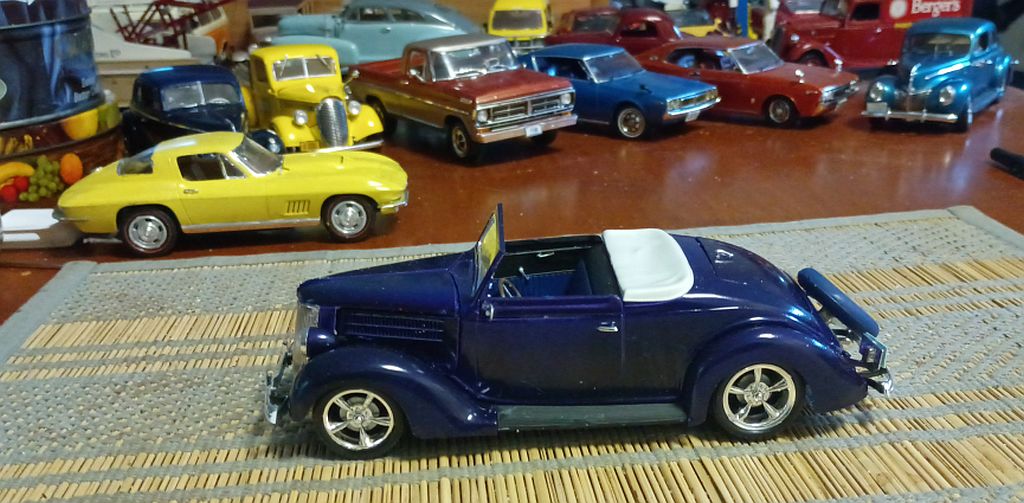
This is an extensive rework of Monogram’s 1961 kit. Back then stock or rod versions were buildable, and both convertible and three-window bodies were included. The stock parts disappeared with the 1974 Early Iron Series issue. The kit reappeared under the Revell name in 2011, with a lot of cool new parts rather than the tired sixties holdovers, including these classic custom body pieces on this coupe and modern-size wheels and tyres on this convertible.
1937 Ford – Monogram
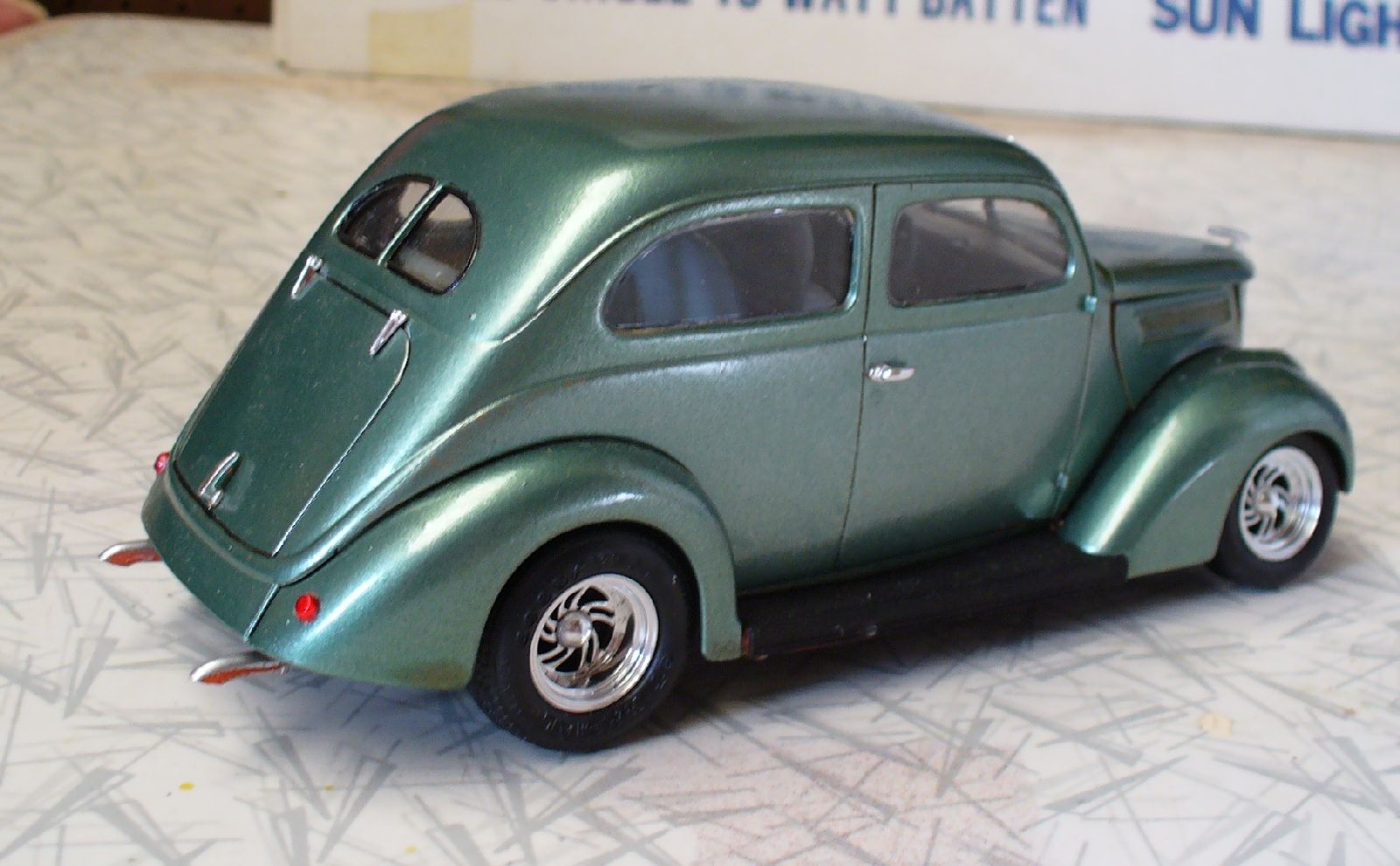
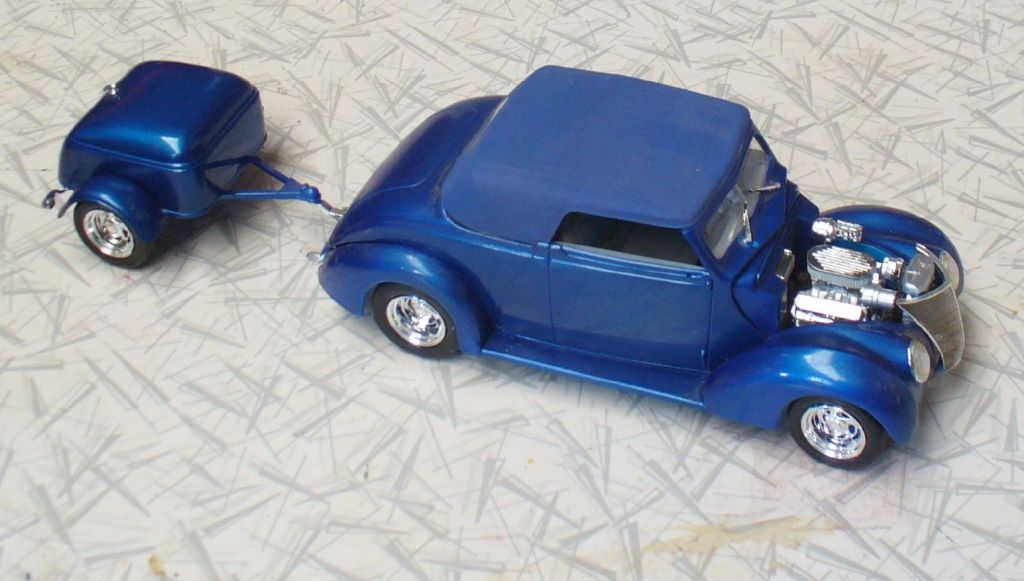
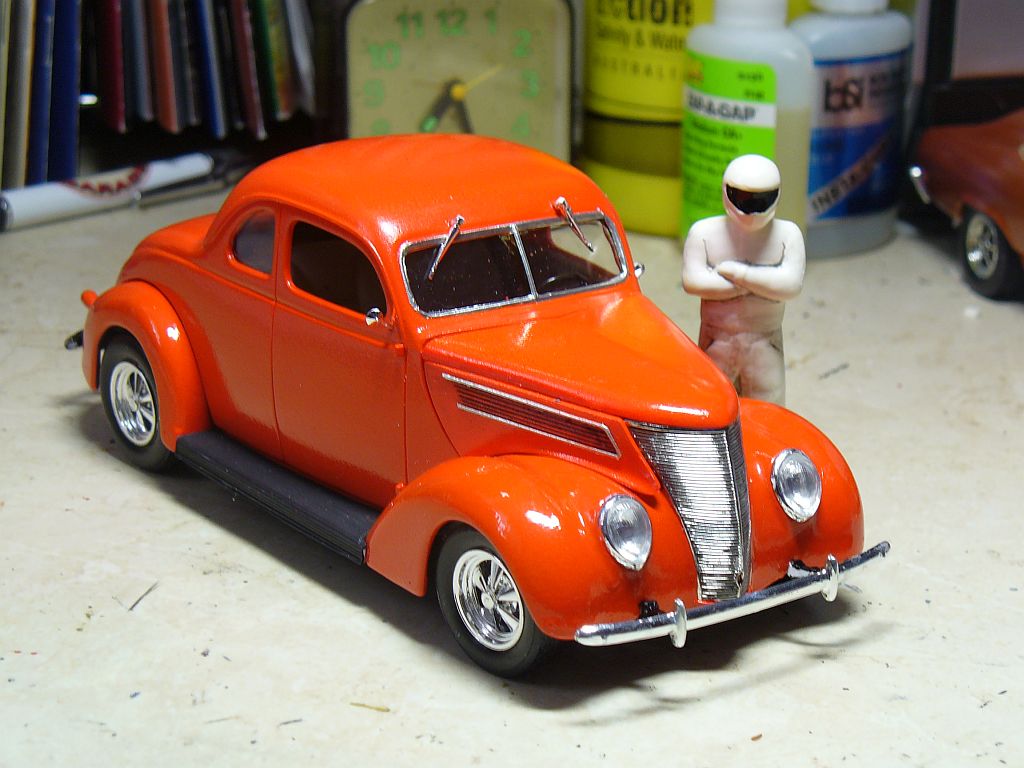
Released in 1987, this is another rod-only kit of the regular short-door five-window coupe (not the four-seat club coupe). There was also a four-seat convertible pulling an enclosed trailer, and a two-door flatback sedan. The sedan had the weird combination of a solid axle front end with a Corvette rear (!!); other versions have a Mustang II front end. The coupe’s now sold in a Revell box, and it seems to only have larger wheels and new decals since the first release. While stock parts would be nice, help is (unintentionally?) at hand.
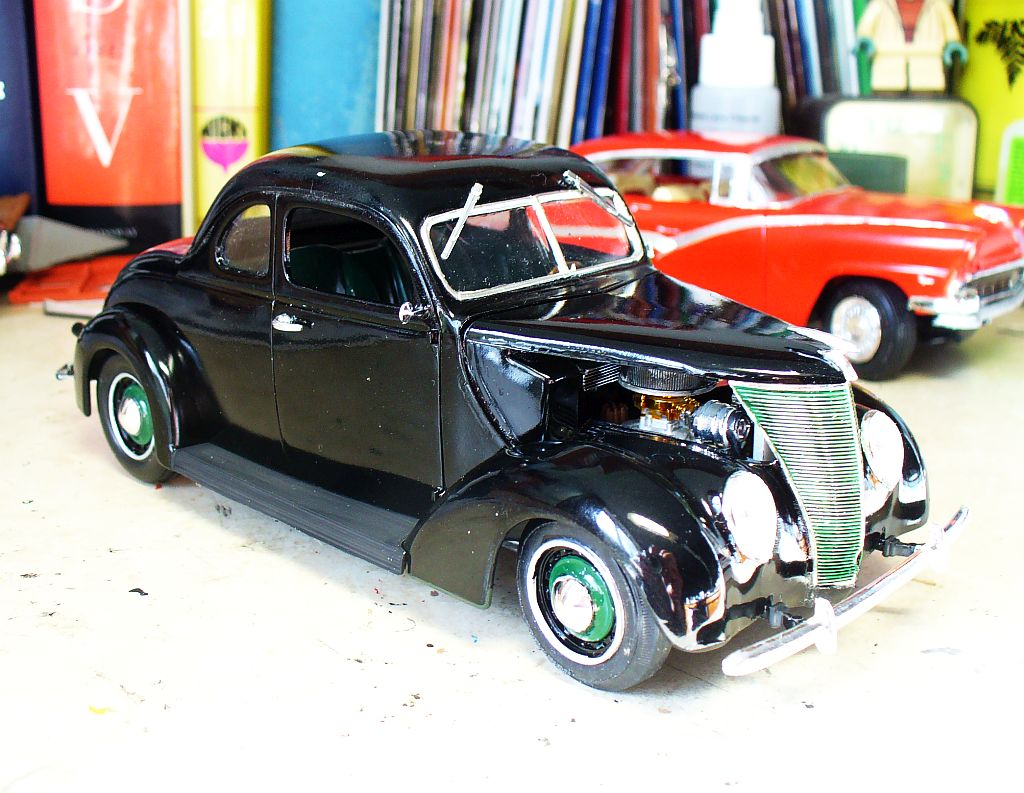
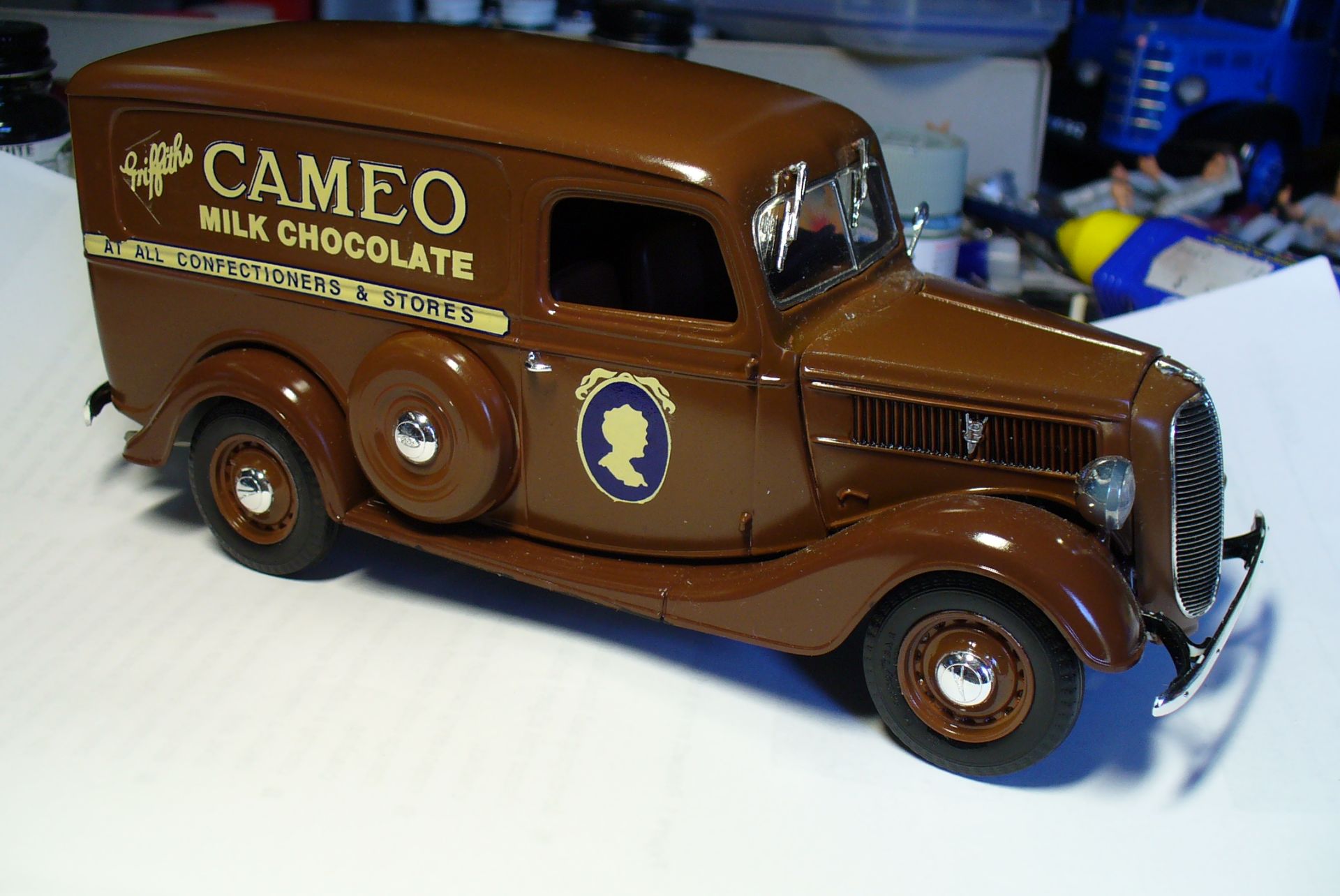
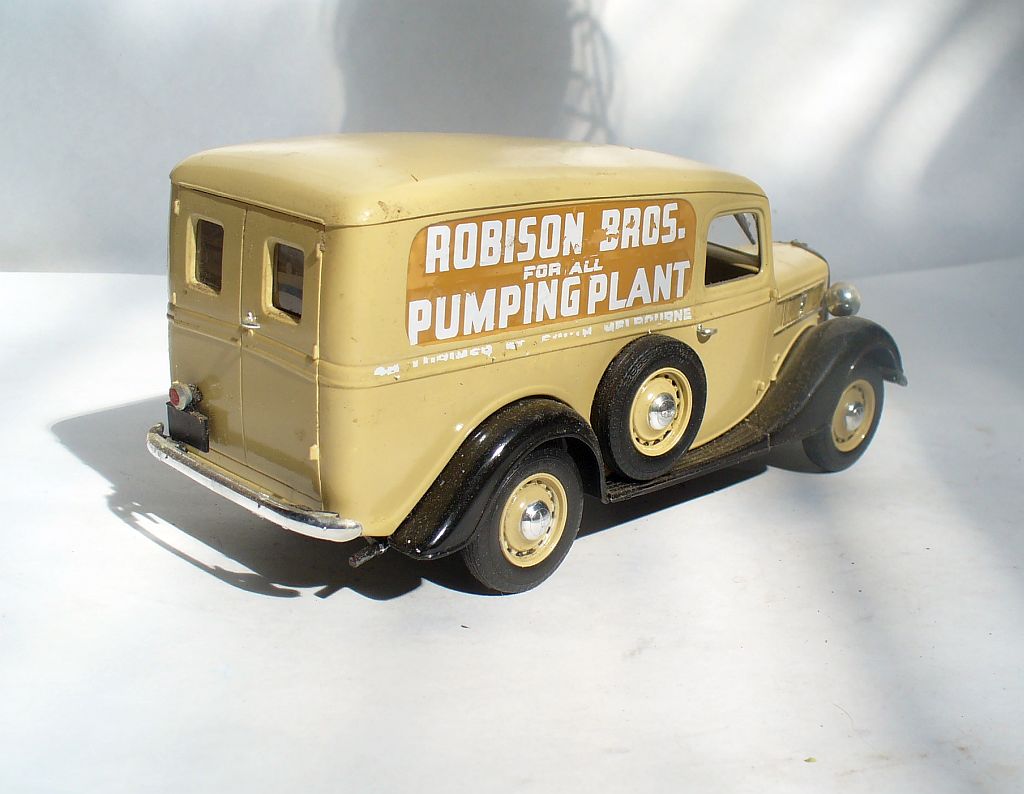
1937 Ford Panel delivery – Monogram
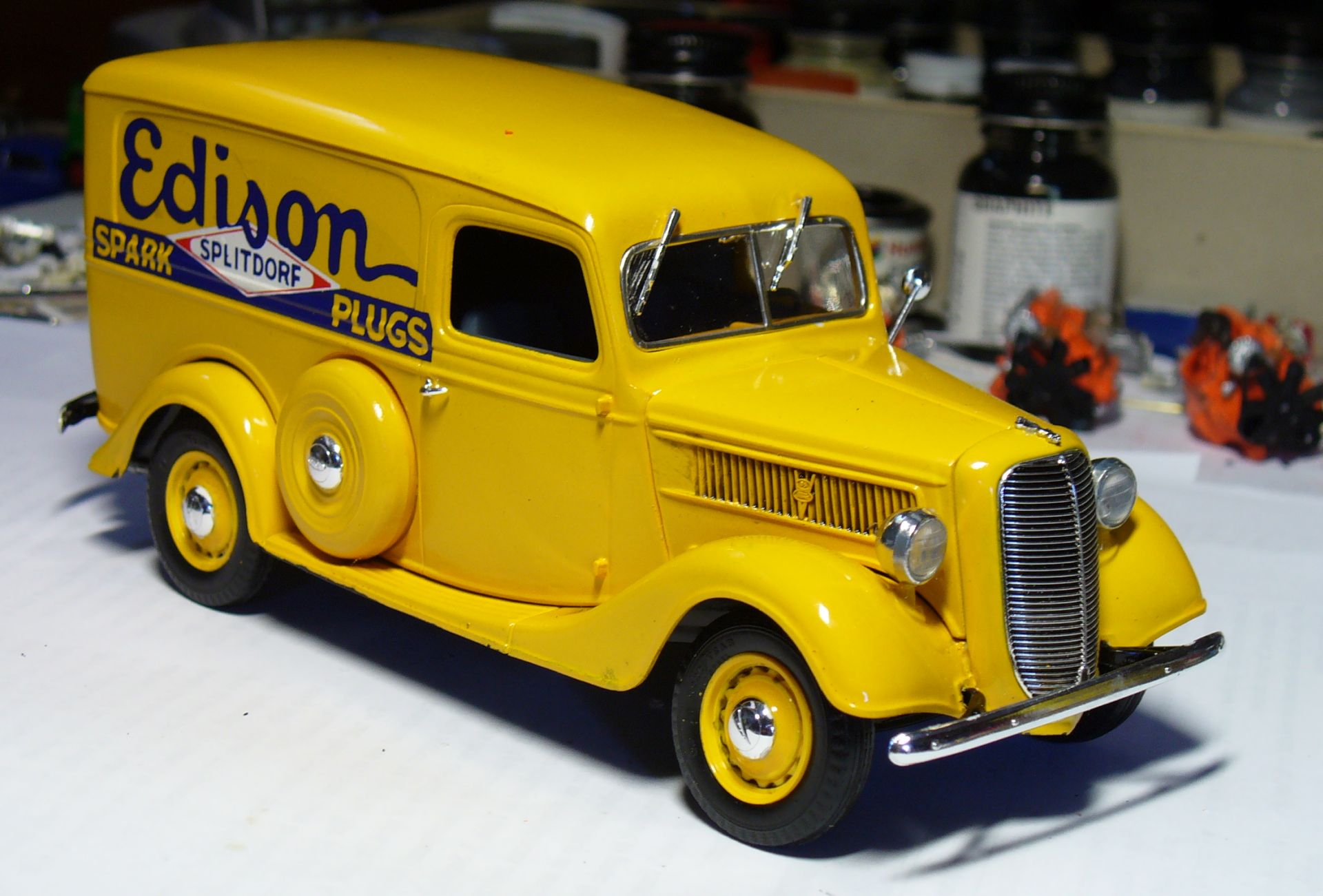
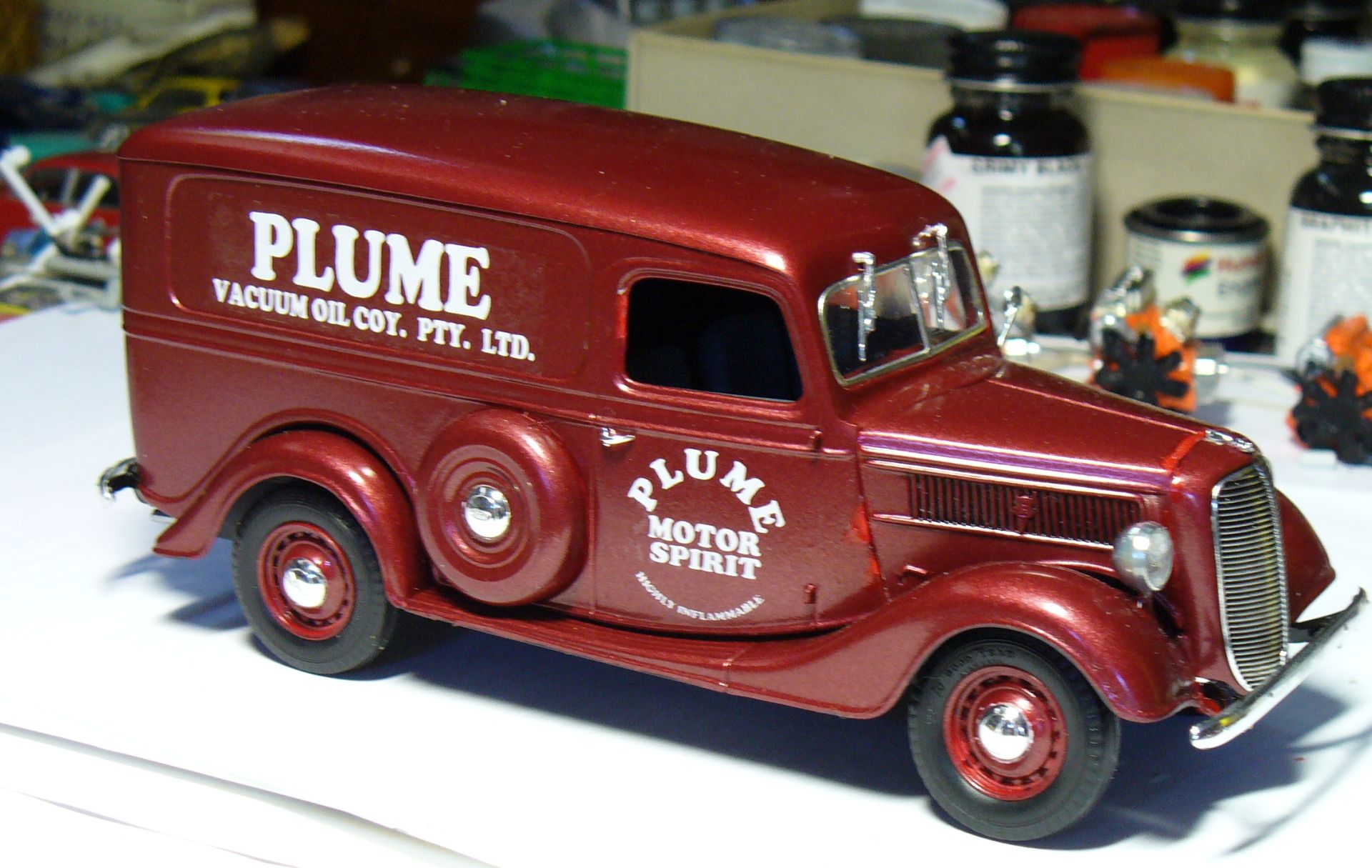
This is a stock-only kit, some parts of which can be swapped with the coupe to give you a mostly-stock coupe – been there, done that. It comes with several bright period decal schemes – or, if you want to be different, HO railway boxcar decals can be trimmed to fit. All of my panels have aftermarket decals.
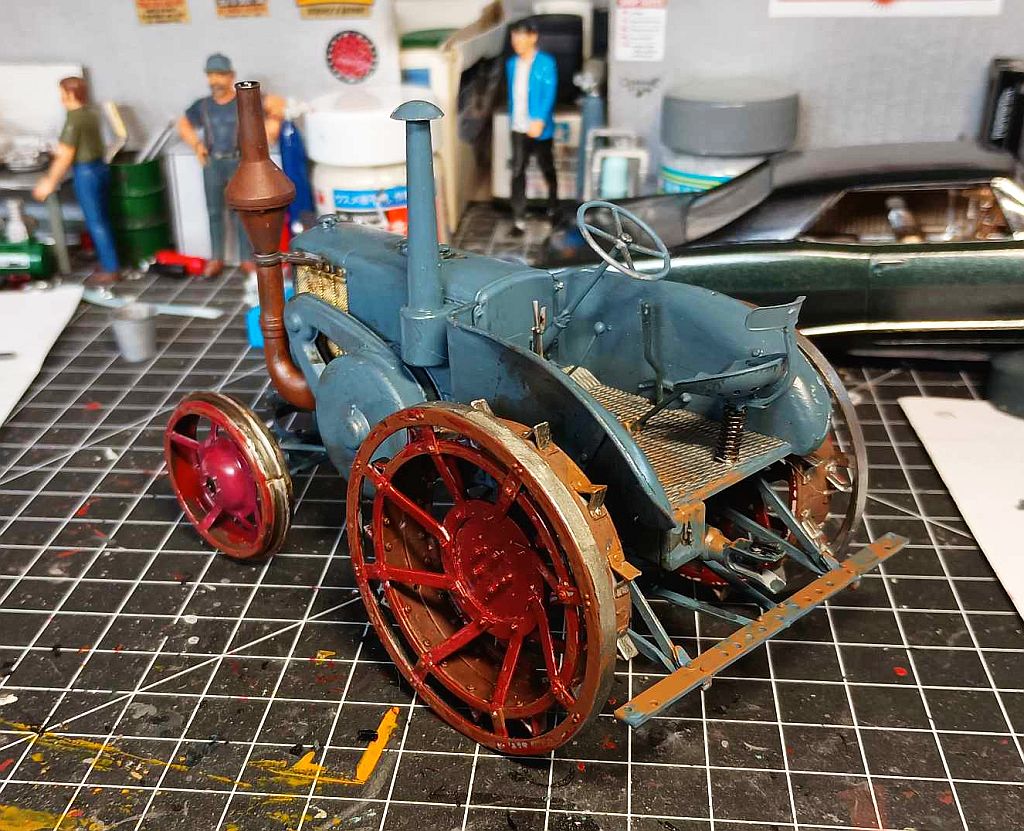
1938 Lanz Bulldog – Miniart (1/24 scale)
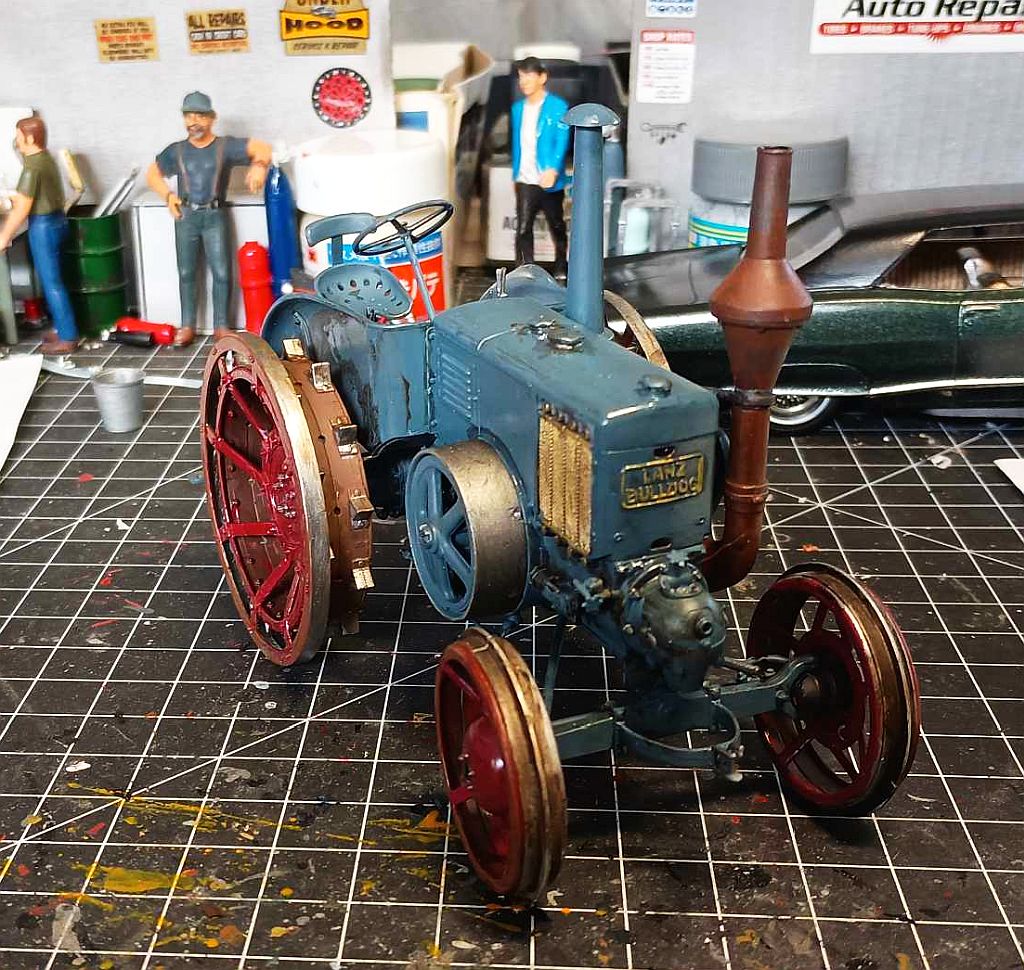
The newest kit here, a mere four years old, the box proclaims it a German Agricultural Tractor (or German Industrial Tractor if you choose that version) – I assume Lanz is extremely protective of their name. Currently there are five versions available, distinguished by wheel type, tyre type, exhaust type, roof or no roof, with probably more variations in 1/35 military scale. No engine, alas, but otherwise incredibly well detailed; it even comes with spare 1mm bolt heads should you want to add more! Now this one is more than usually challenging to assemble, as so much is unfamiliar to a car builder, but it all fits perfectly.
1940 Ford – Revell/Monogram
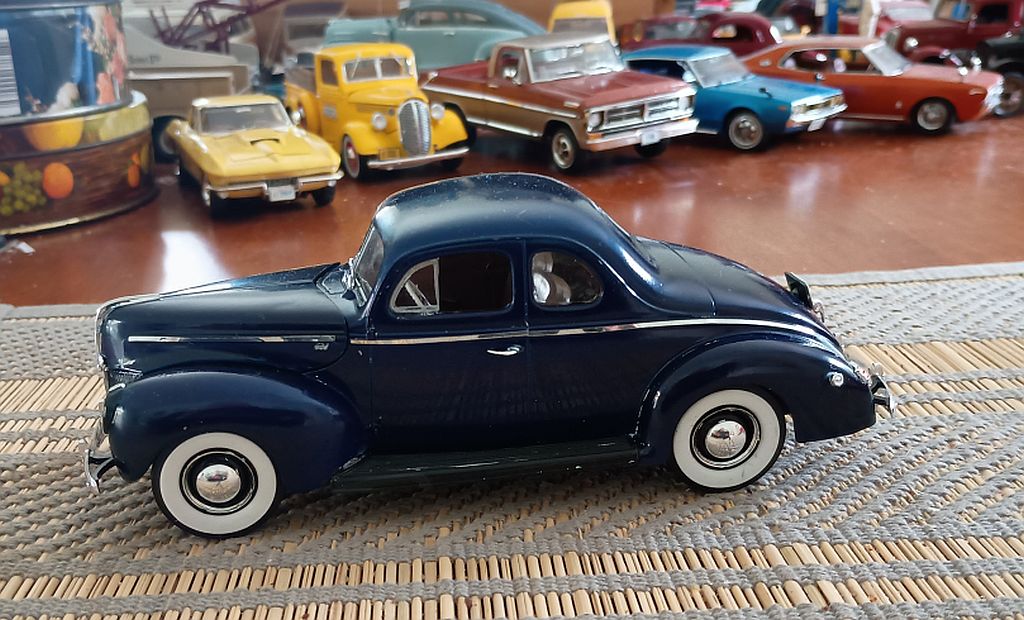
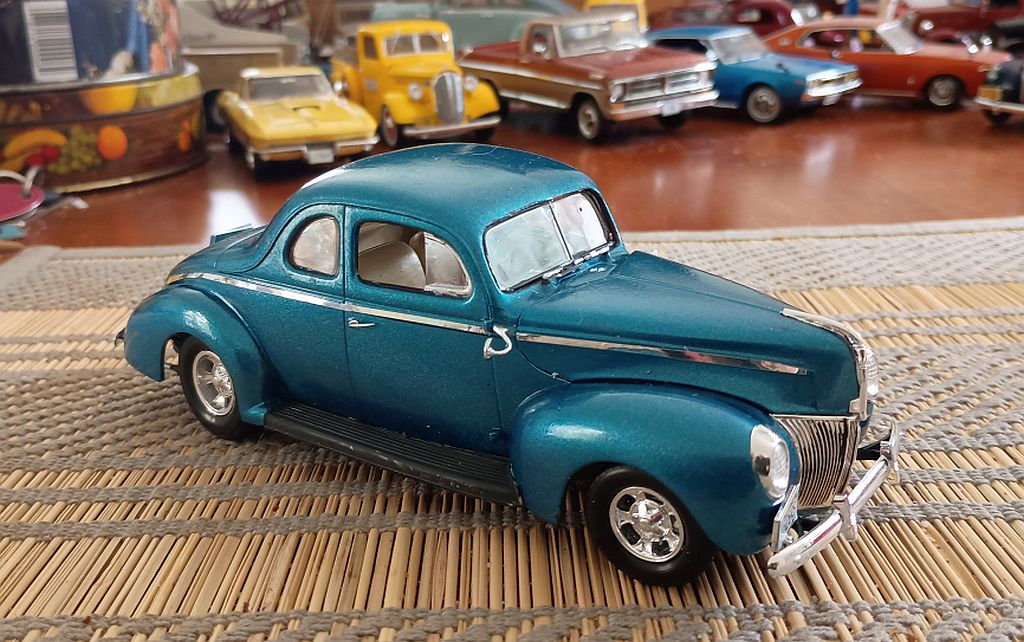
If it seems the Revell and Monogram names are appearing a lot here, it’s because they deserved it. With the 1940 Fords Revell and Monogram have released a bewildering array of stock, rod (or both) versions of the convertible or the standard (not Deluxe) coupe – now that’s an interesting choice! Oh, and you might find either name on the box, in case you weren’t confused already!
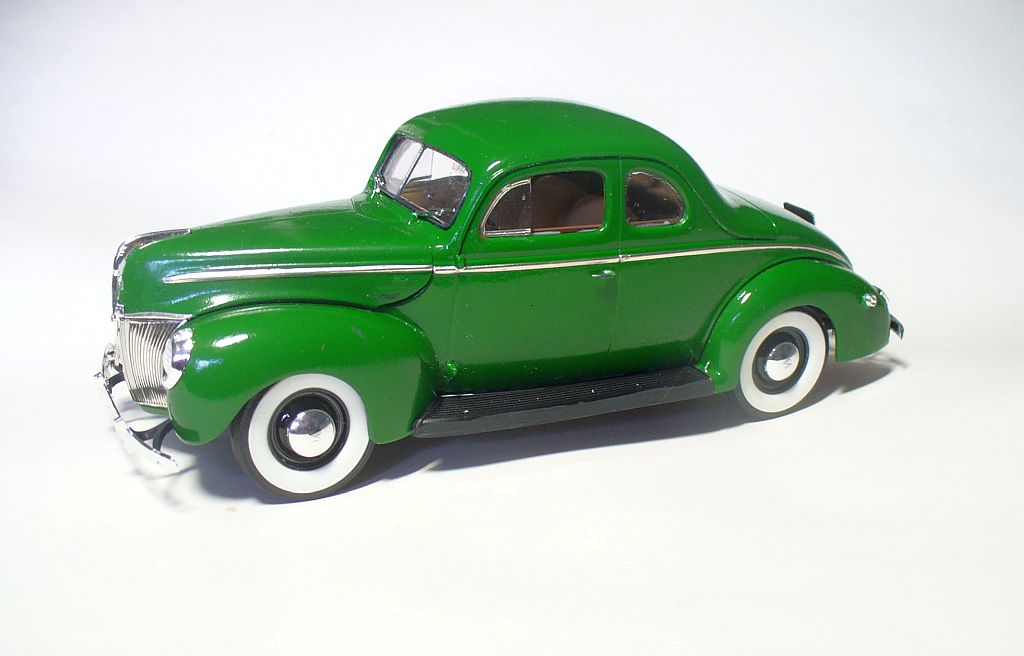
Just one hiccup – the front axle location positions the wheels about 2mm too far back. Not hard to fix, if you know to look out for it.
1948 Chevy – Moebius
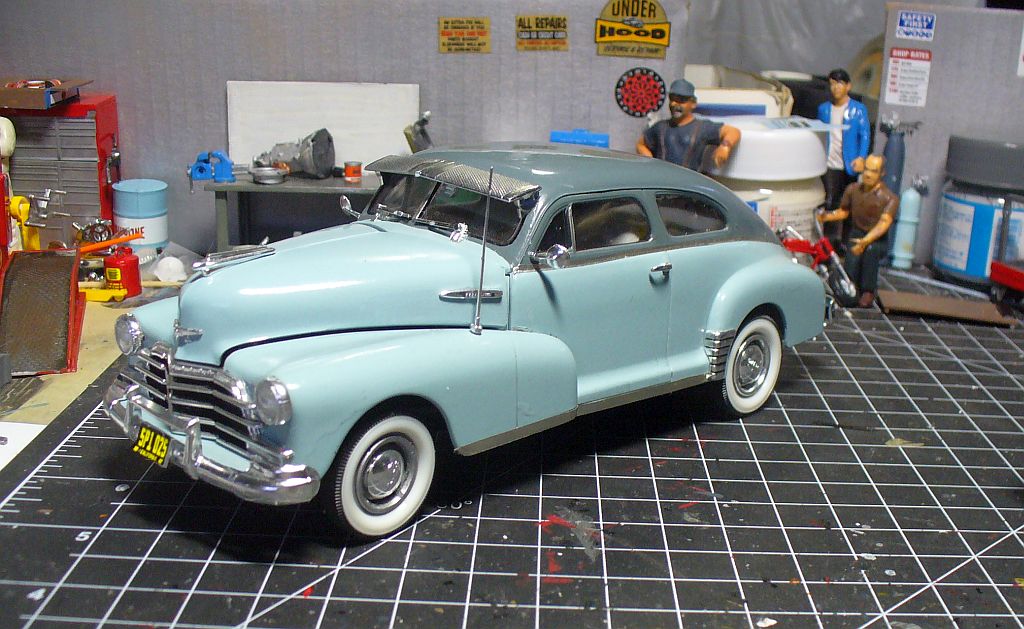
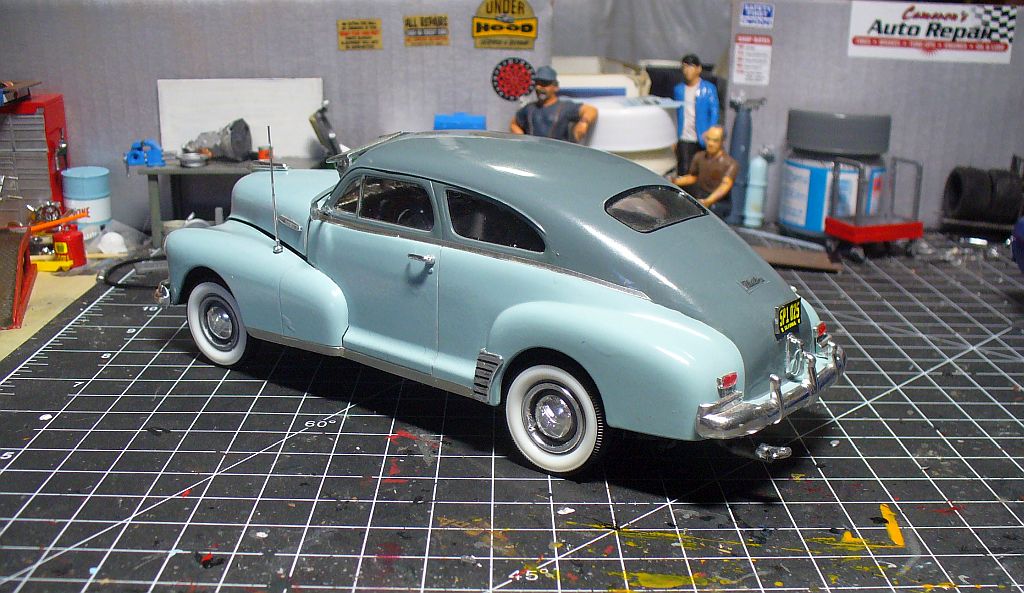
Originally tooled by Galaxie Limited, a small US-based operation, this Chevy comes as a coupe, Fleetline fastback or a sedan delivery, all of which have the parts to build a 1946, ‘47 or ‘48. The bottom of the doors isn’t quite right, and the hood height seems a bit exaggerated, but it’s extremely well-detailed, an enjoyable build and a solid favourite.
Honourable Mentions – Renault 4CV – Heller
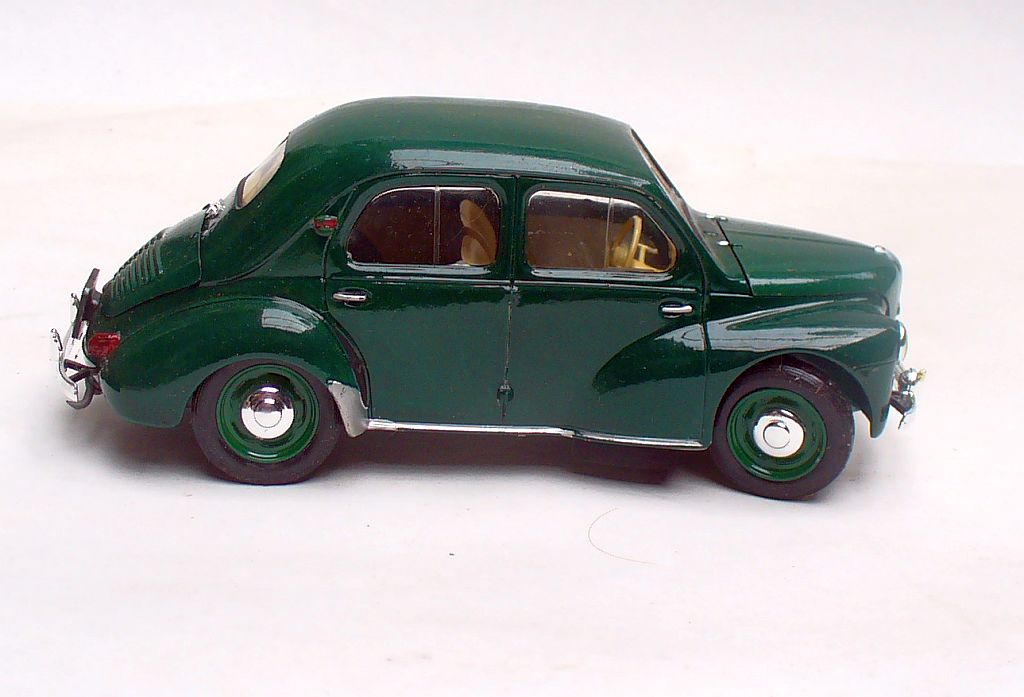
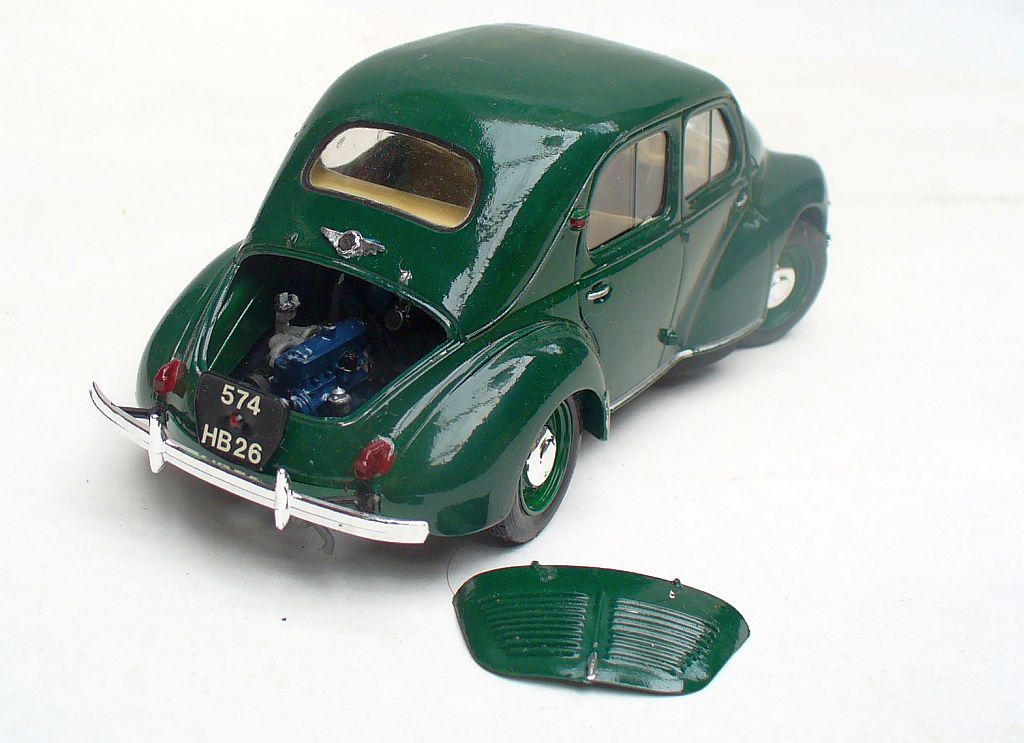
Pedants, step away from the keyboard. Yes, the Renault was made from 1947-61, so it just scrapes in. Besides, it doesn’t look like a fifties car, does it? Admittedly the kit seems to represent an early fifties 4CV (simplified faux-grille on the front), but I’m including it here because there will be even more trouble choosing fifties favourites, and it is simply too good to overlook. To build it, you would never think the tooling was nearly fifty years old. Removable engine cover shows the little 747cc engine, and the separate front trunk lid shows the removable spare. The latest ‘Boutique Edition’ contains a nicely-outfitted figure as well. Also available as a curious police car with cut-down doors.
1948 Ford – Revell
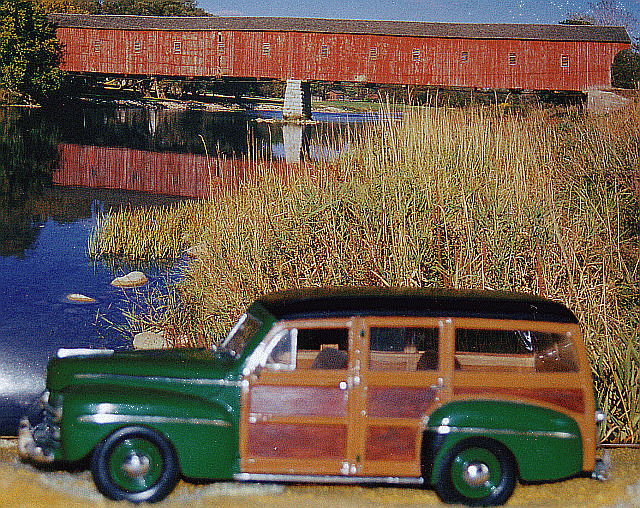
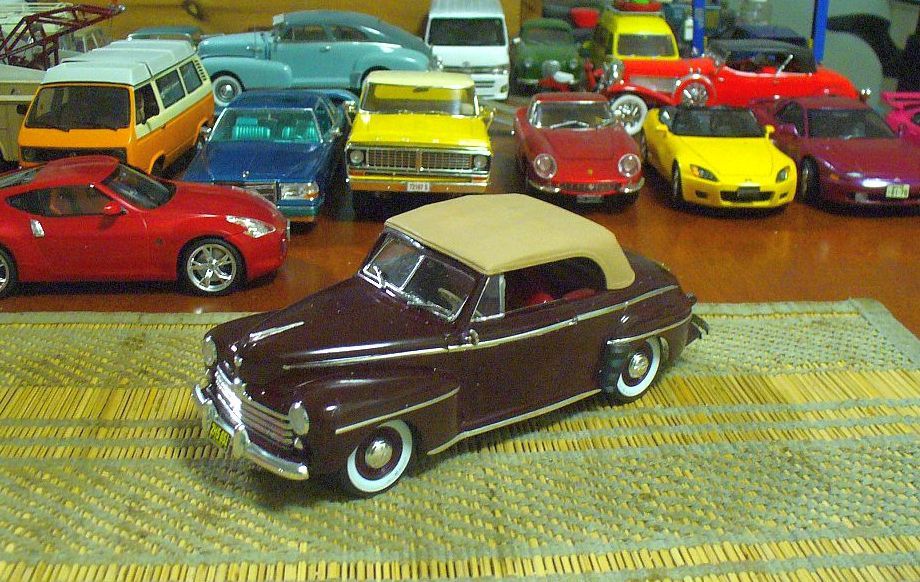
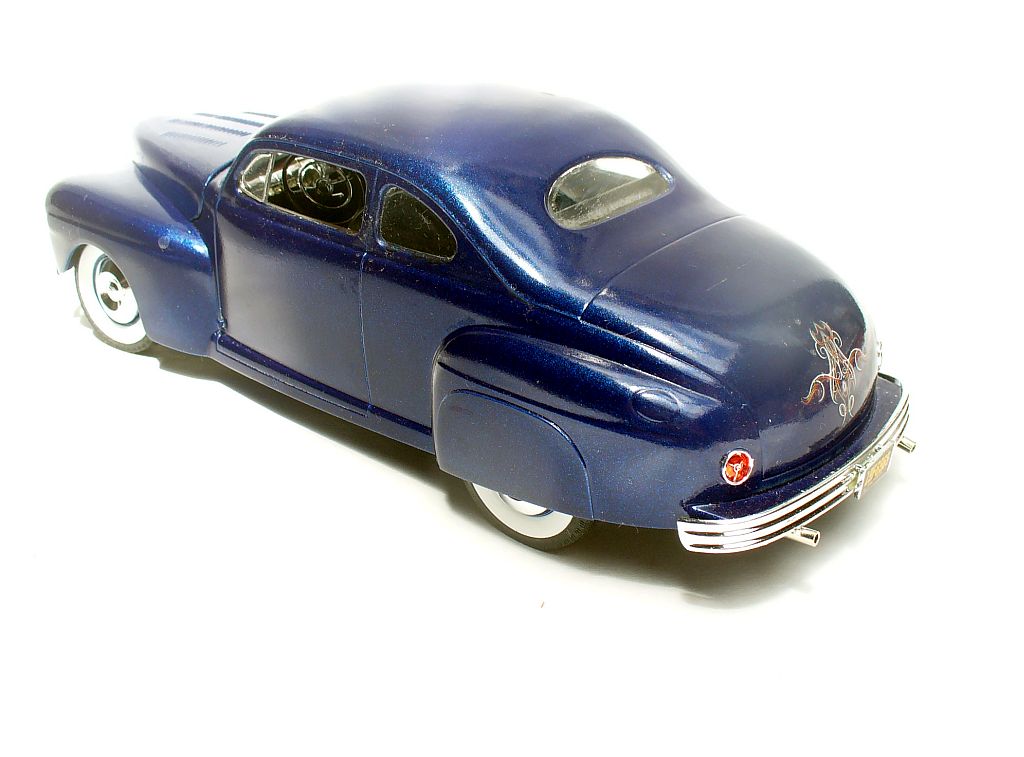
Another one of those kits available in several body styles, The Revell kit comes as a stock woody (1998), a stock convertible (2002) which later gained optional rod parts, a chopped custom coupe (2011), a stock coupe/police car (2016) or as “Greased Lightning” (2018). There aren’t such a wide range of optional parts to choose from as in some of their kits, but they look very realistic.
‘ What, nothing from AMT?’, somebody asks. No, and the reason is quite simple. While they do 2-in-1 kits of Fords of this vintage, which many of us built as kids, the tooling dates back to the early 1960s, and has not been substantially updated since then, not to the degree that Revell/Monogram have. That’s not to say you can’t make good models from them, just that they’re not the best ones out there.
Gone but not Forgotten: 1932 Cadillac V16 – JoHan
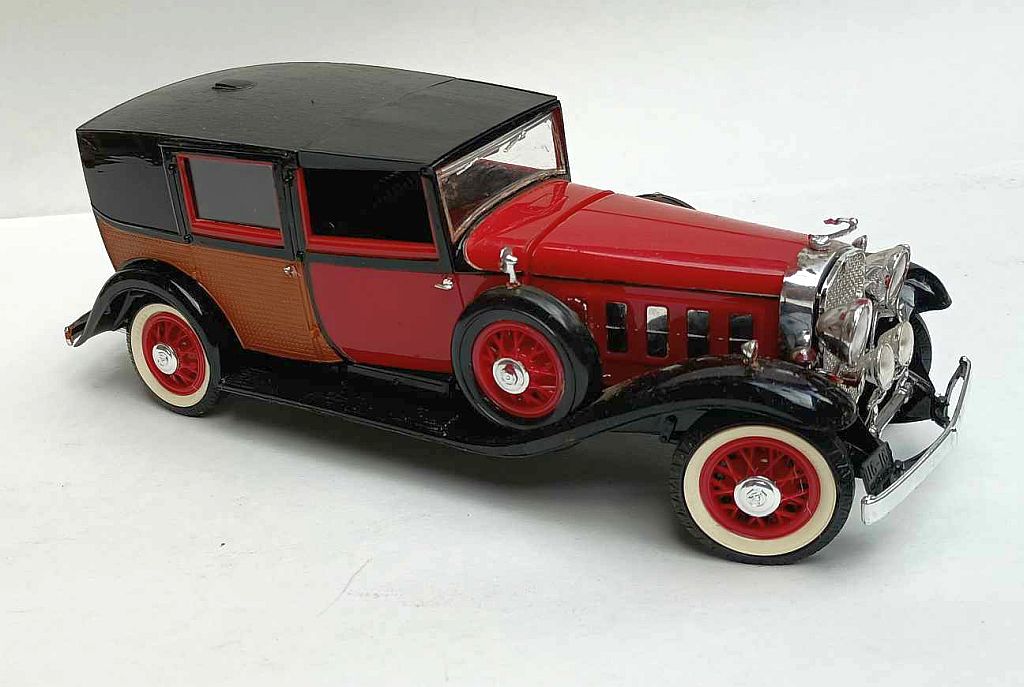
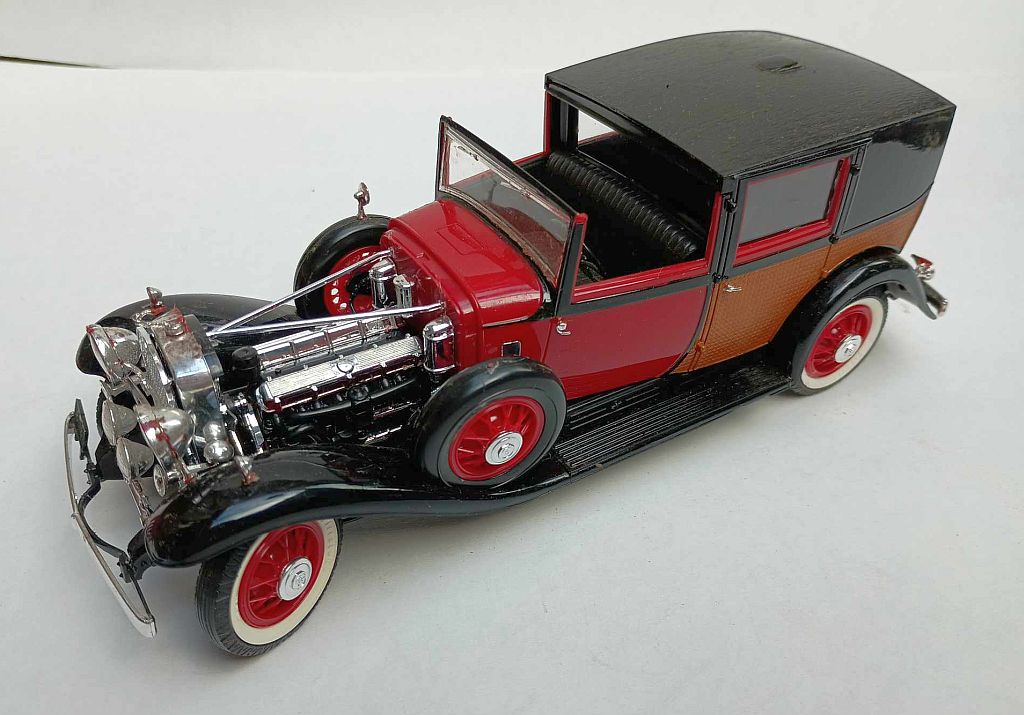
Long out of production, the tooling gone, the JoHan classic kits were usually even better than Monogram’s. This Cadillac was available as a sport phaeton, cabriolet, and this amazing Town Brougham with a simulated wicker rear body compartment, and a removable roof over the chauffeur’s compartment – as well as a beautifully-detailed engine and chassis, with working steering. Tricky to build even if you should find one, but what an amazing model! Monogram does a ’32 dual-cowl phaeton, but it’s not the same kit.























Beautiful models! Much nicer than the ones I put together as a kid.
Boy do those pics bring back some memories
Thank you, John. I:m glad to bring back memories, so long as they’re good ones. These are mostly more recent builds. I think the Packard might be the oldest; that would have been almost fifty years ago. I’d had about ten years’ experience by then.
Excellent choices. I remember building some of these a long time ago. The Renault is my favorite.
Thanks. It wasn’t easy; I looked at hundreds of photos (not hundreds of models!) and tried to remember the building experience. Some I chose more on the look of the finished product; the ’32 Chevy was tricky to build, but the appearance of the finished model kind of makes those memories fade. Here’s another Renault for you.
Your skill as a model builder is really impressive!!
Thank you, Huey. Decades of practice will do that, but I’ve seen some young guys build better than I can.
Great builds. I love oddball stuff so that Renault appeals from that perspective and it looks well detailed. The colour you chose is very effective as well.
The two tone on the ’48 Chevy is great as well.
I am not really a tractor guy but the Bulldog is so well done it is very appealing.
Thanks David. I remember seeing those Renaults bustling around as a kid; they were fairly common in sixties Melbourne. Often in dark colours, but one I remember was a sort of off-white.
I got the idea for the Chevy’s colours from a car I saw in a magazine, then chose the closest I had. They’re actually military colours, and seem quite appropriate for an early postwar car.
That Bulldog is the most amazing kit. They’ve just come out with a similar vintage British Fordson in a smaller scale – here’s hoping they do it in 1/24 too.
Jo-Han were among the best. Different molded in- color trees. & the attention they put into how the trees all had standoffs to hold them safely in position in box, minimizing any scratching, was next level- in my 1970s building era.
I built their 13 Cadillac V-16. Both flavors. This town car version & the green V-16 convertible with golf bag doors behind the cabin & operable rumble seat, that was green body with black fender base. from there, i shifted to Tamiya stuff. that move away from American & fantasy cars into military models was inspired by a same age friend who delved into WWII on all levels. Tho around same time, we both built Jo-Han’s 1935 Mercedes 500 SLK. that vehicle could arguably be tied into the coming Third Reich conflagration. We also both built Tamiya tanks. rubber treads w/motorized corded remote control.
missed my typo of the year. 13? Those pair of models are/were both claimed on the boxes to be (19)31s.
Lars, I knew what you meant. And you caught my typo in the Cadillac’s year (how did I not see that?), so I figure we’re even. 😊
Those JoHan classics were the most amazing kits, perhaps even better than Tamiya were in those days. Having parts in two colours plus chrome and clear was really special in the seventies. I’d forgotten about the convertible version.
That Lanz is a delight! As are your other models but there is something about knaggy, fussy shapes that is deeply satisfying to look at, especially in scale. For me it comprises a large part of visual appeal of miniaturised military machinery I would otherwise care little about.
I would come out smart-assing that the engine is indeed accounted for and visible, though, since the real deal Bulldog’s doghouse (ouch) just holds the auxiliaries
Good point about the Lanz’s engine, Herman. I guess what I meant is that there are no removable covers enabling you to see the whole thing, but yes the cylinder and crankcase are visible from underneath of course, and the head from the front.
I’ve always been fascinated by these machines since seeing one win at a twilight vintage tractor pull about 30 years ago. A Lanz at night is an amazing sight.
Great models there, Peter. While I haven’t had much experience of large scale car models I am not surprised how quality varies, both for appearance and fit of parts as that applies across the modelling board. My favourites hare has to be the vans, especially the Cameo chocolate one. Not that I eat much chocolate, but it’s just such a good colour and livery.
Thanks Bernard. Quality is an issue in itself (isn’t it always?), one that I addressed a few months back – but it can make or break the building experience. Sometimes the finished product is so good that the battles along the way get forgotten – other times not.
I don’t quite have enough of the vans for a stand-alone article – but here’s another one for you. The particular decals I used (they’re an Australian brand, usually Signs Of All Kinds) specify what background colour to use. I usually follow their advice (eg. Edison, Cameo) but not always. For example, the Plume van was supposed to be a much brighter red, but to my eyes that wouldn’t have looked ‘right’. In the case of the Cameo chocolate van, I sneakily used two similar but not identical browns – for milk and dark chocolate!
A bit of irony there that that Chevrolet Moebius was originally tooled by a company called “Galaxie” limited.
My favorite of this lot has to be the 1930 Packard Speedster. Gorgeous.
Reminds me of a favorite car from that era: The Auburn Speedster.
Is that a Stovebolt Six in that ’32 Chevy? I think my Dad had that engine in his ’56 Model Two-Ten!
Thanks Rick. The irony was not lost on me either! Despite the name, they never did a Ford, just the Chevys and some car transport trailers.
While I have built an Auburn speedster, that would rank as one of my Ten Worst kits (no, I will not write them up!), but being a 1950s kit I’ll allow its age as an extenuating circumstance. An unforgettable experience, for all the wrong reasons.
That is indeed a (very early) Stovebolt Six. IIRC it was pretty thoroughly reworked in ’37, so this isn’t exactly the same as the one in your Dad’s ’56. Chevy guys can correct me, but I don’t think these early sixes are regarded as a separate generation.
So many great models here, but the Lanz is my favourite, and I love the cutaway drawing posted above, looking at the piston and crankshaft, it is no wonder they rock back and forth when running.
And that reminds me, Lake Goldsmith is coming up very soon.
If I was going to start building models, I think I would just build vintage tractors, not sure what would be available though.
Thanks jonco. There isn’t much in the way of vintage tractors in this scale. I saw a video review the other day of a 2-pack of WW2 Fordsons – but there was some confusion about the scale. The box lid said 1/48 (easy to scale to 1/24, hint hint!) on the top but 1/35 on the side! ERTL did some 1/25 tractors back in the 70s, but they were new ones then; I suspect you’d be wanting older than that, as I would.
I’ll take that stonking Caddy V16 for my daily, and the Bulldog for keeping the lawn. Actually, I’d first have to get a lawn, but I am digressing.
After these two strong favorites, I’d take some of the panel vans. Something always appeals about old commercials.
Top work sir, over many years.
Thank you Justy. Perhaps Sir might feel slightly more at ease with a less flamboyant body for his V16? Might I suggest something in a dual-cowl phaeton? 🙂
While I do have lawn – well, various grasses and weeds, anyway – I do not have a Bulldog’s worth, but the didn’t stop me building it. I wonder if they plan on making any implements for it? ERTL had two ploughs and a wagon for their 1970s tractors – unfortunately about 40 years too new for the Lanz.
Indeed the old commercials are very appealing, especially with the local firms’ liveries on them. Next one will be Bushell’s Tea.
Loved all of these! I recall building a few of them, including the 32 Chevy, the 40 Ford (from a kit which could also be a 39) and that great JoHan Cadillac V-16 with the wicker rear body. It’s sad that that one is gone forever.
Glad you enjoyed them, JPC. That ’40 you built would have been the AMT sedan. I’ve built a few of those as ’39s. Very sad to have lost those great JoHan classic kits; at least I had the chance to get a few of them.
Lanz Bulldog for the win Peter!
Natuurlijk. 🙂