
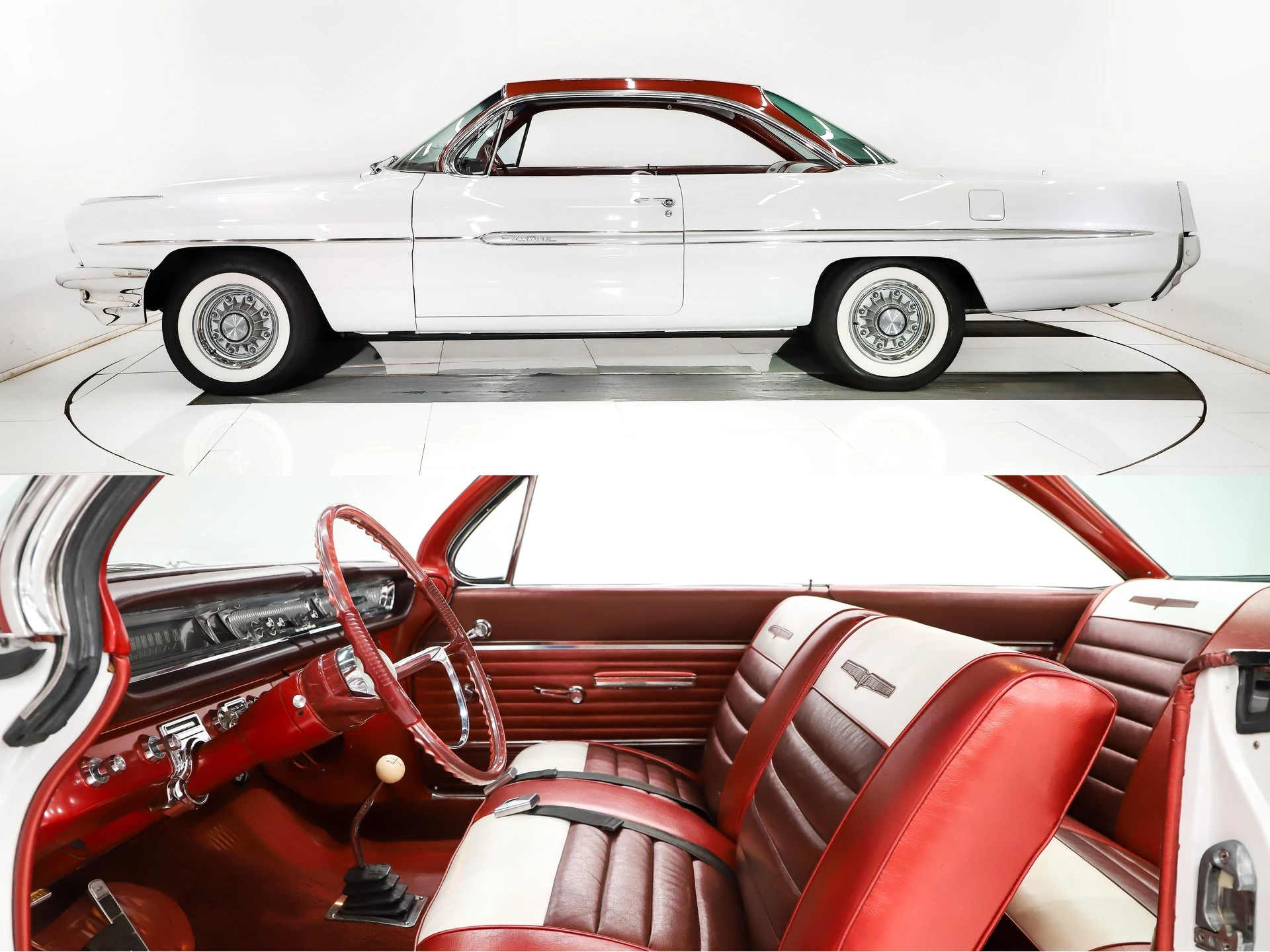
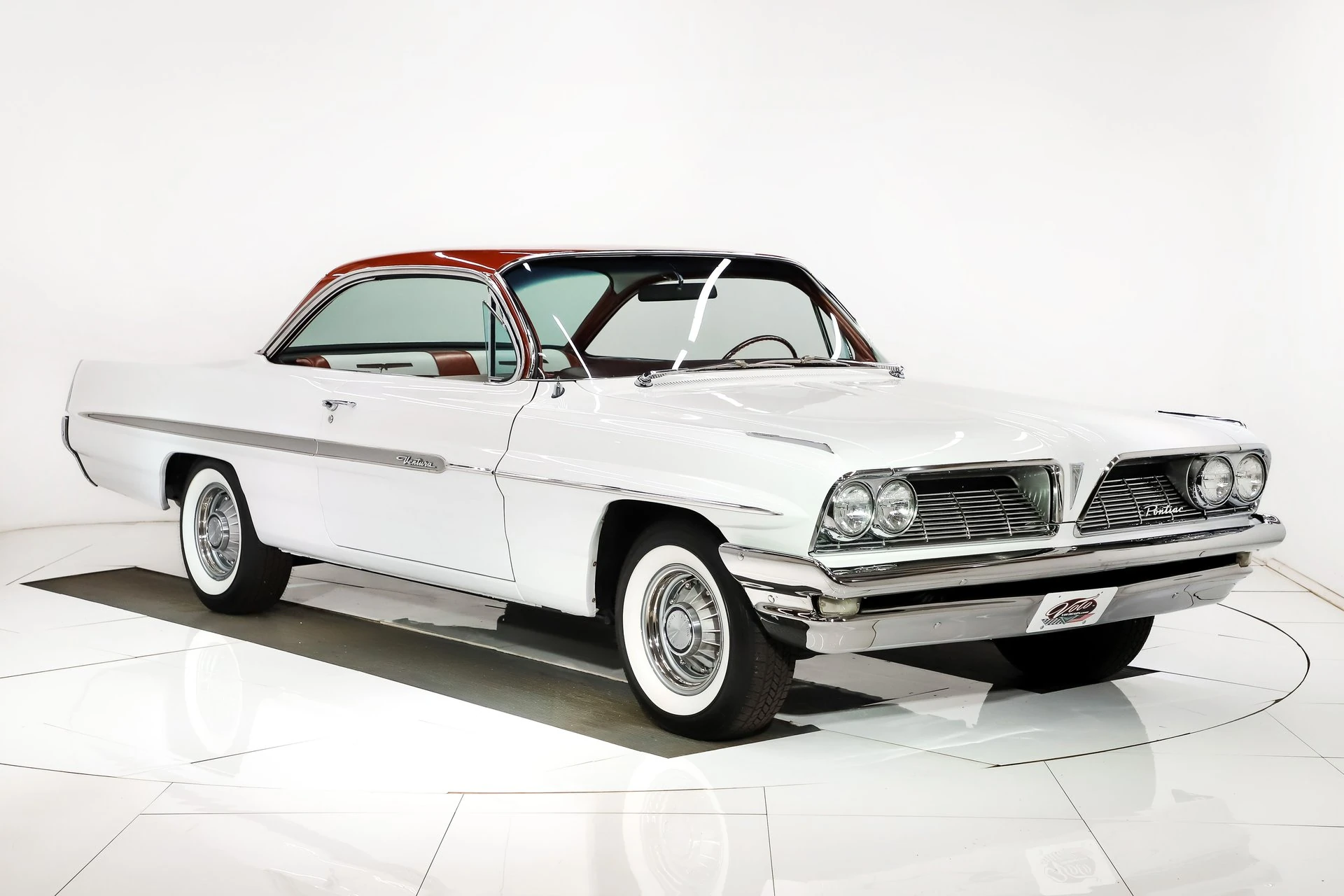
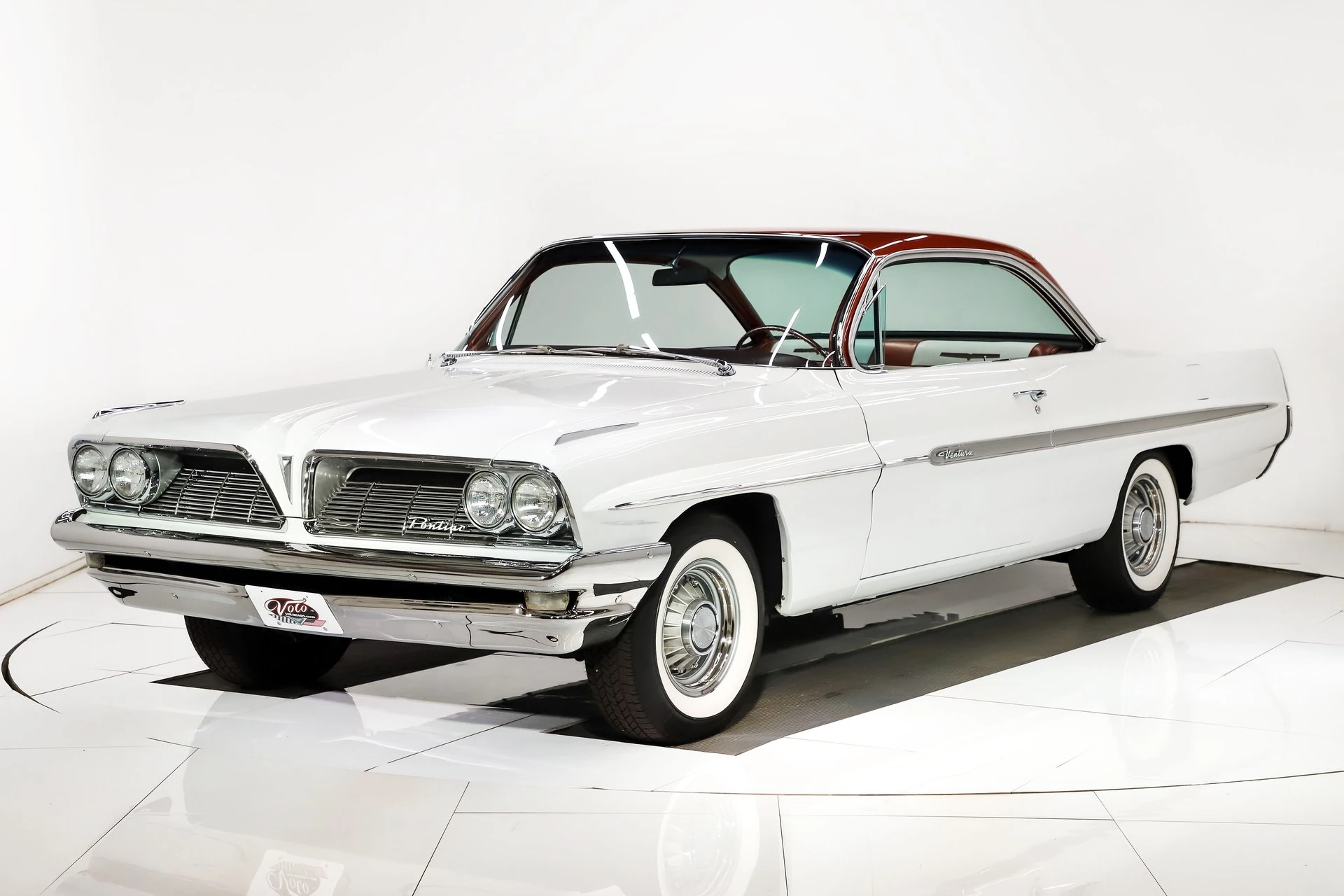
If someone mentions the Pontiac Ventura, you probably think of the Chevrolet Nova-based compact of the ’70s, but for a brief two-year period in the early 1960s, the Ventura was a full-size Pontiac model with fancy all-Morrokide interior trim. This 1961 “bubbletop” Ventura Sports Coupe also has the rare 4-speed manual transmission and the hot 425A Tri-Power 389, the engine later made famous in the midsize Pontiac GTO.
Through the 1950s, the big question for middle-tier models was whether they should be a plusher version of the base model or a de-trimmed version of the biggest, fanciest top-of-the-line car. For a little while at the beginning of the 1960s, Pontiac tried both, offering the long-wheelbase Star Chief as a less-expensive version of the flagship Bonneville and the shorter-wheelbase Ventura as an upscale version of the base Catalina. (All shared the same GM B-body.)
To help communicate that it was a little fancier than the Catalina, the full-size Ventura was offered only in hardtop form: the two-door Sports Coupe and four-door Vista. There were no pillared sedan or wagon versions, and no convertible; ragtop buyers at this time had to buy a Catalina or a Bonneville.
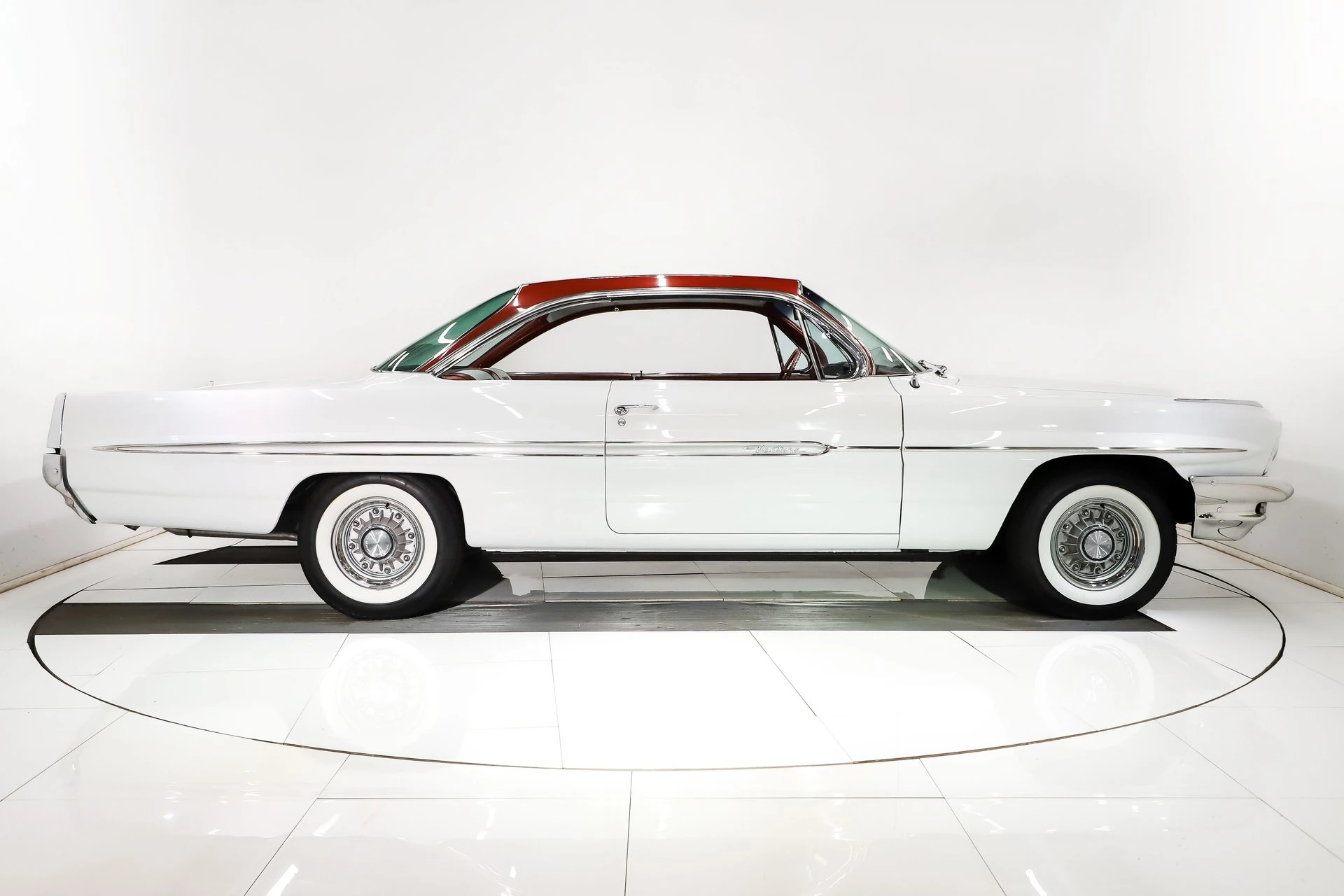
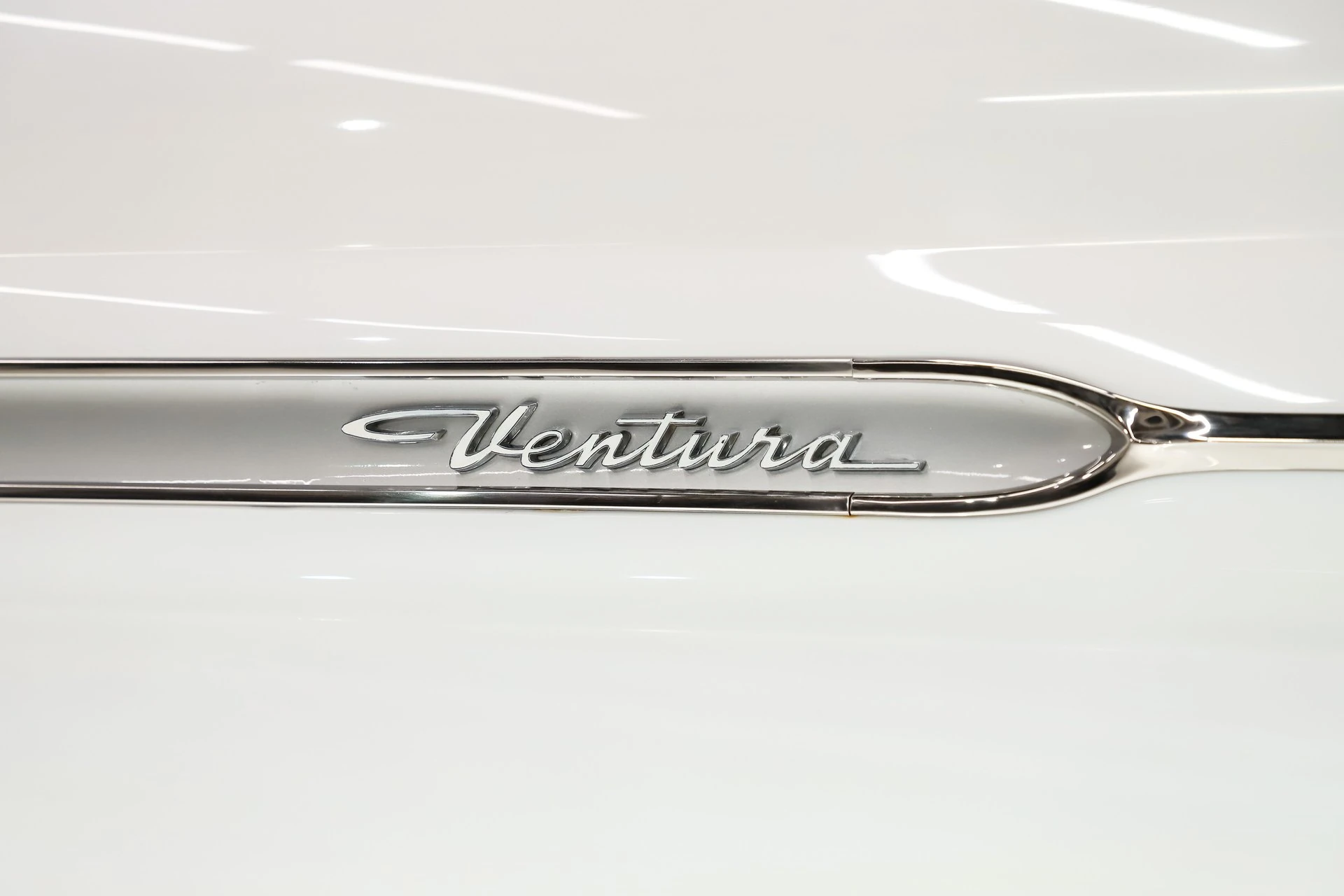
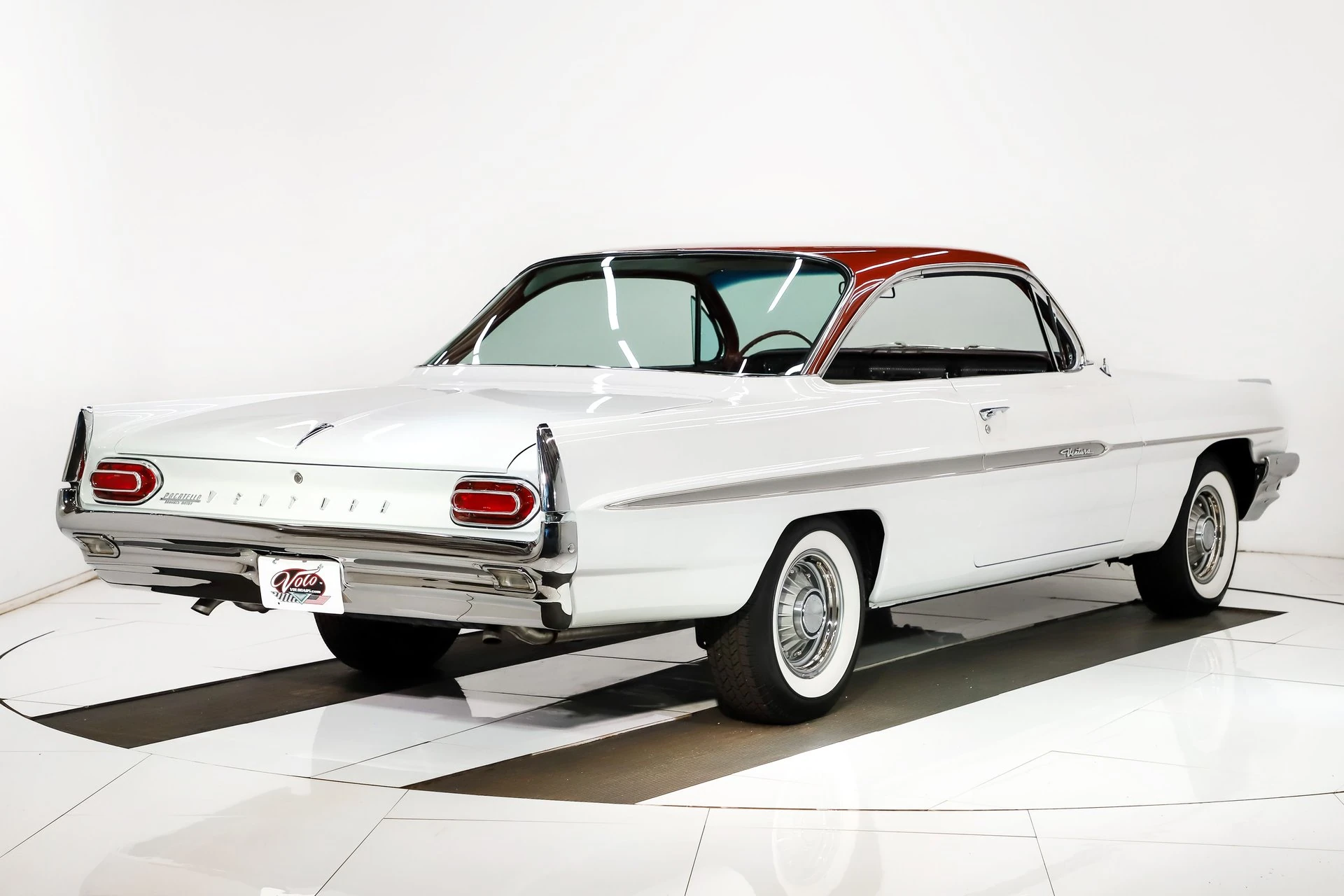
A 1961 Ventura Sports Coupe was the same size as a Catalina Sports Coupe — now 210 inches on a 119-inch wheelbase — but cost $205 more. It was distinguished on the outside by the chrome moldings around each side spear and on each drip rail. The two-tone paint was $12.80 extra — although this car has been repainted, the trim plate confirms that it did come from the factory in this color with a red roof.
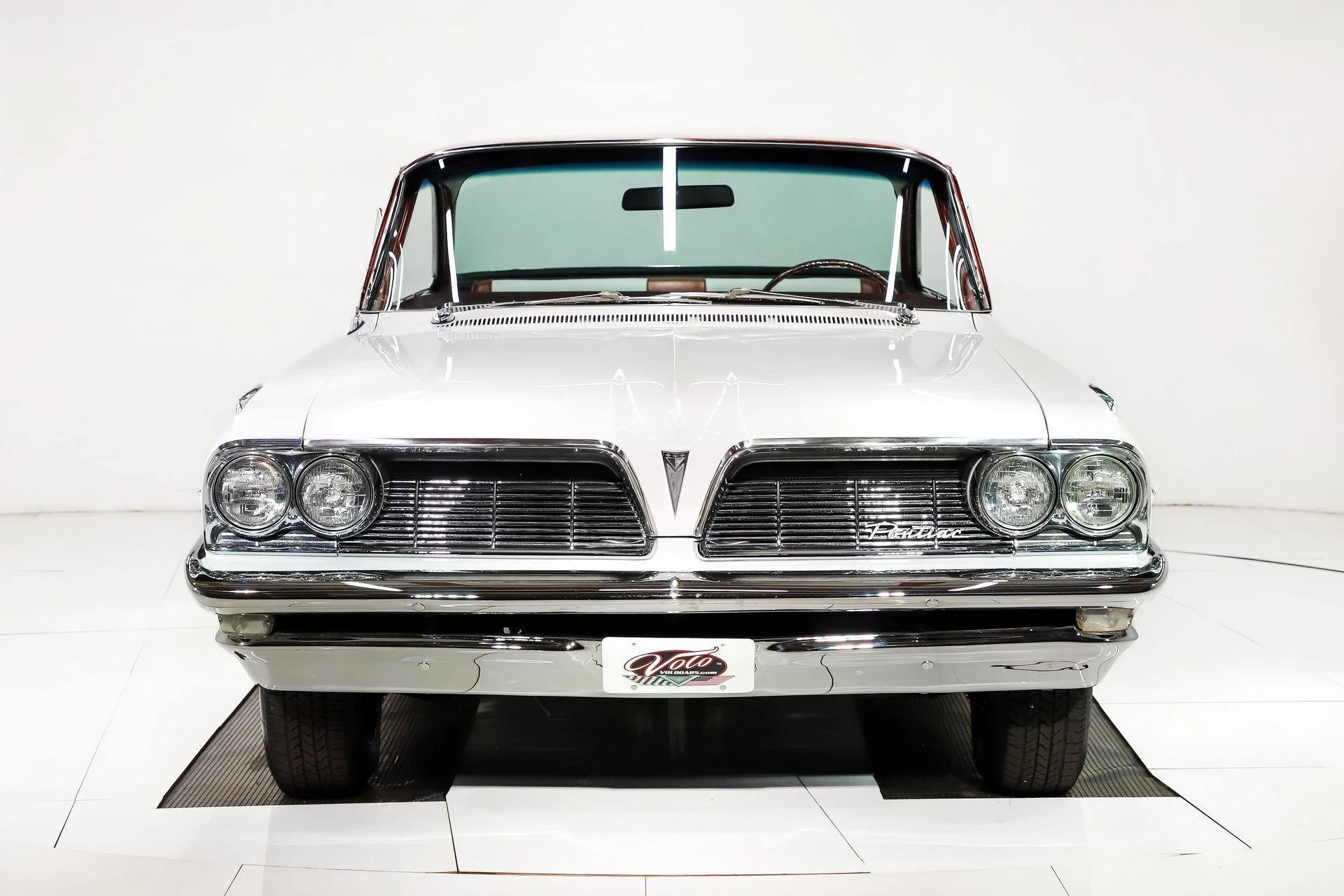
After dropping the 1959 split grille theme for 1960, the Pontiac design studio returned to that look this year. I find the recessed, slanted grilles a tad eccentric, but in a pleasing way. It’s a styling feature that wouldn’t have shown up like this two years earlier and wouldn’t be seen in this kind of form even two years later, and it contrasts well with the bubbletop roof.
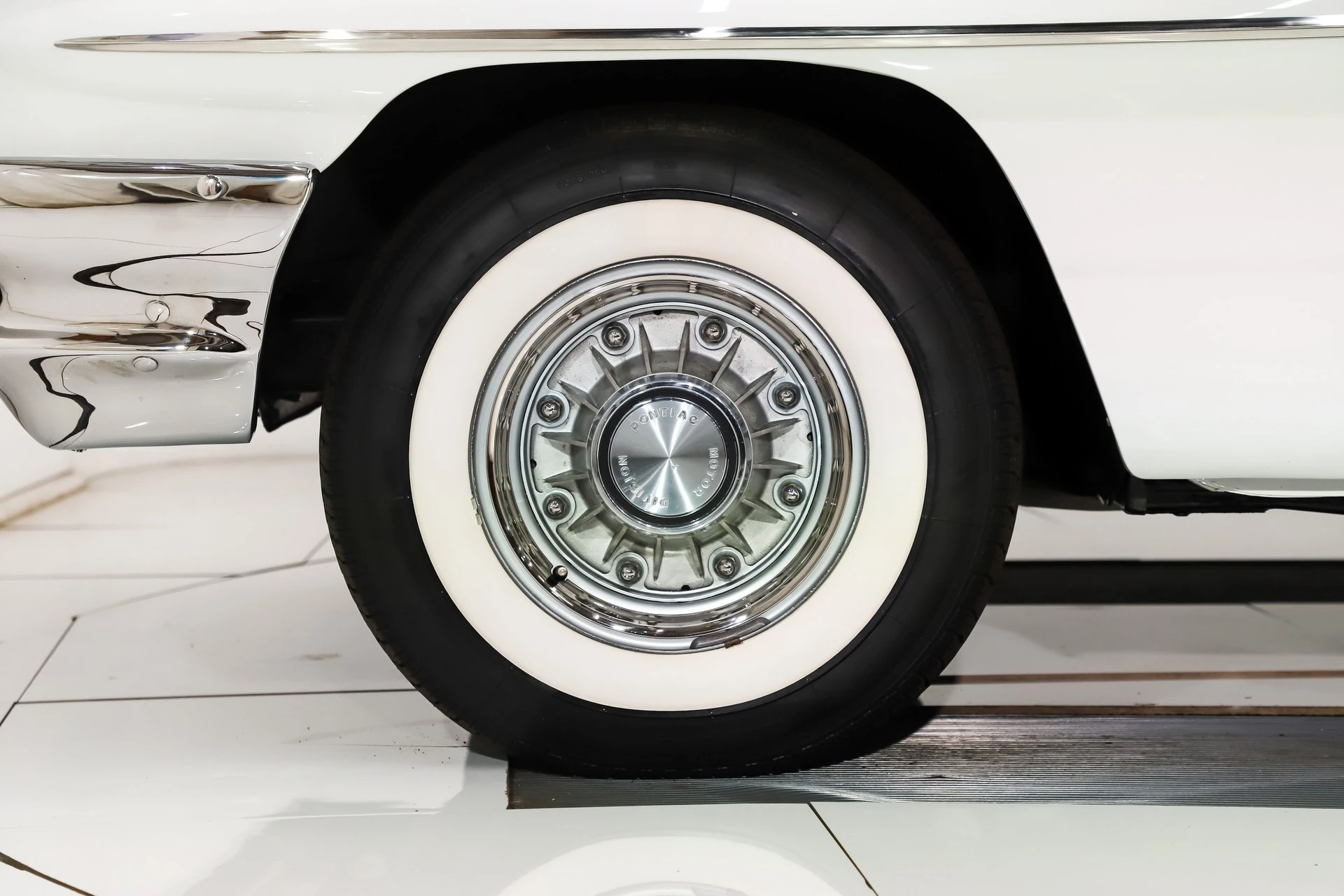
This was the second year for Pontiac’s optional 8-lug aluminum wheels with integral brake drums. They cost $107.06 on a 1961 Ventura, but they gave it the ability to stop from 100 mph without fading into uselessness, which was very iffy with the standard brakes.
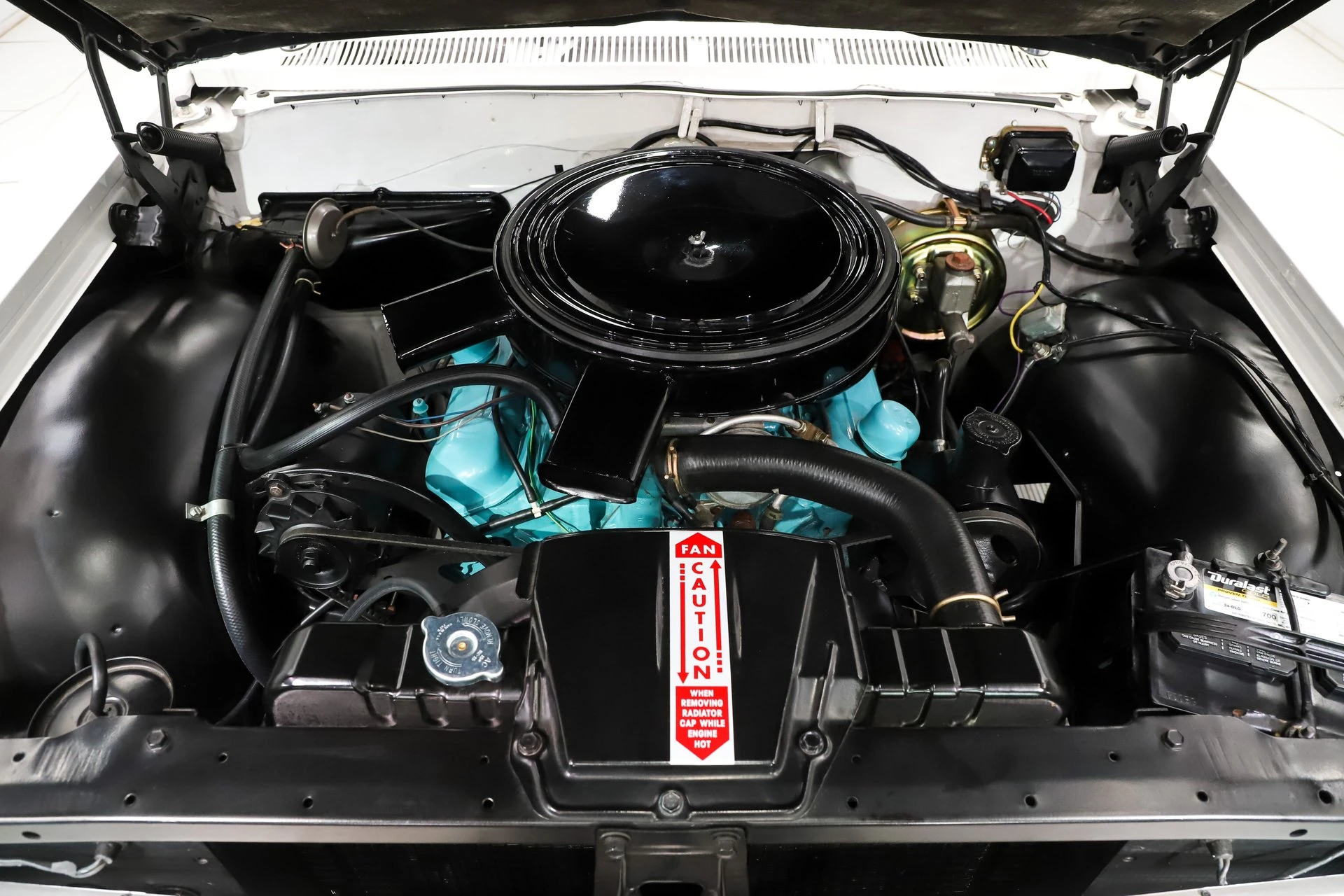
Full-size 1961 Pontiacs had a 389 cid Trophy V-8 that was offered in a truly bewildering array of versions, with gross ratings ranging from 215 to 348 gross horsepower. Discounting the rare, hand-assembled Super Duty engines, the hottest versions generally available to the public were designated Trophy 425A, with four-bolt main bearing caps, hotter camshafts, standard dual exhausts, and shallower combustion chambers that gave an extra half-point of compression. The 425A engines were pricey, retailing for well over $300.
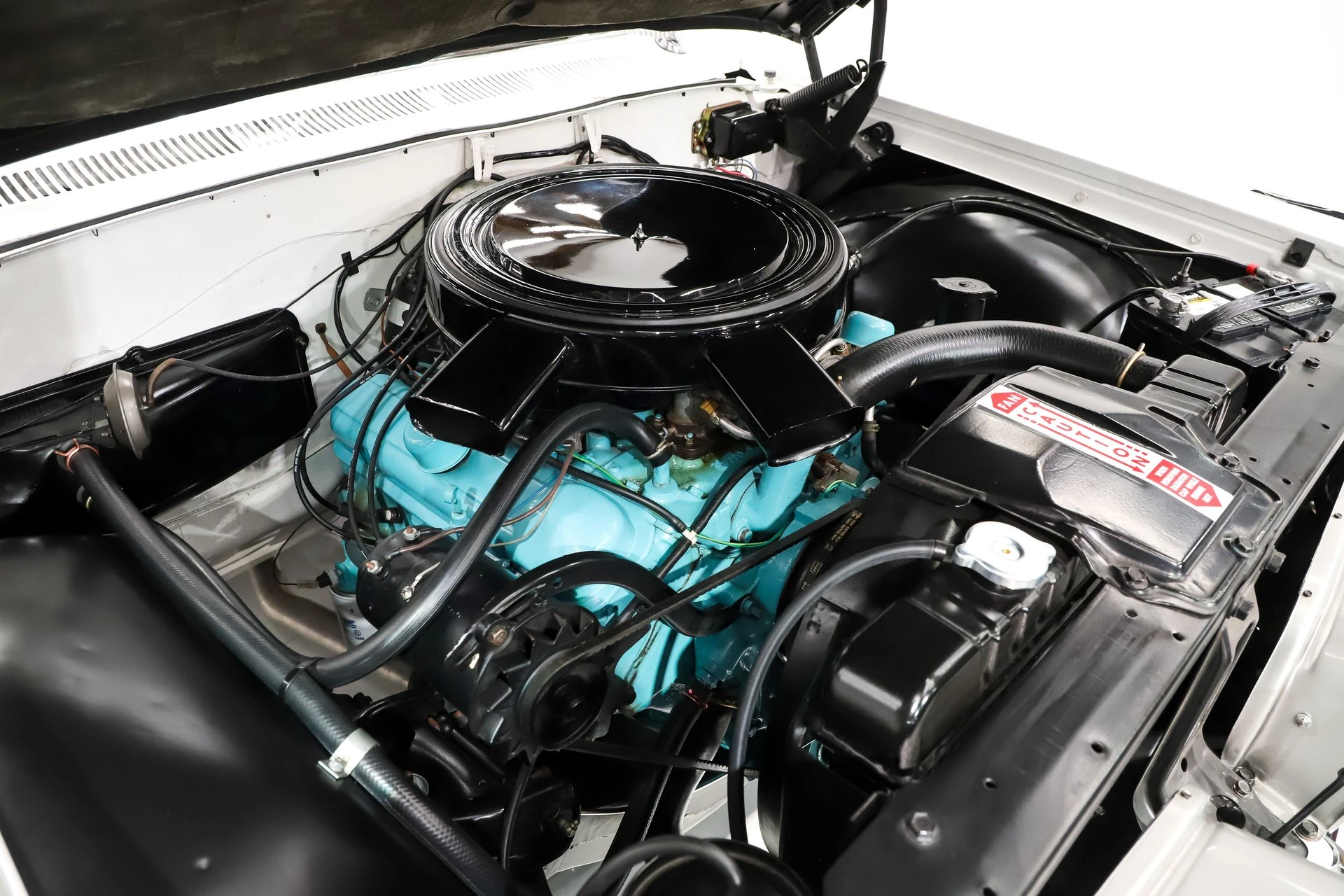
This car has the $395.75 Tri-Power 425A, with three Rochester two-barrel carburetors and a vacuum-controlled linkage. (A mechanical progressive linkage was optional, but I’m not sure you could order it from the factory; I think you had to order the linkage kit over the counter and install it yourself.) Thus equipped, the engine was rated at 348 hp, 133 hp more than the two-barrel 389 that was standard in the stick-shift Catalina Ventura. If this engine sounds familiar, it should — starting in 1964, it was optional on the Pontiac GTO.
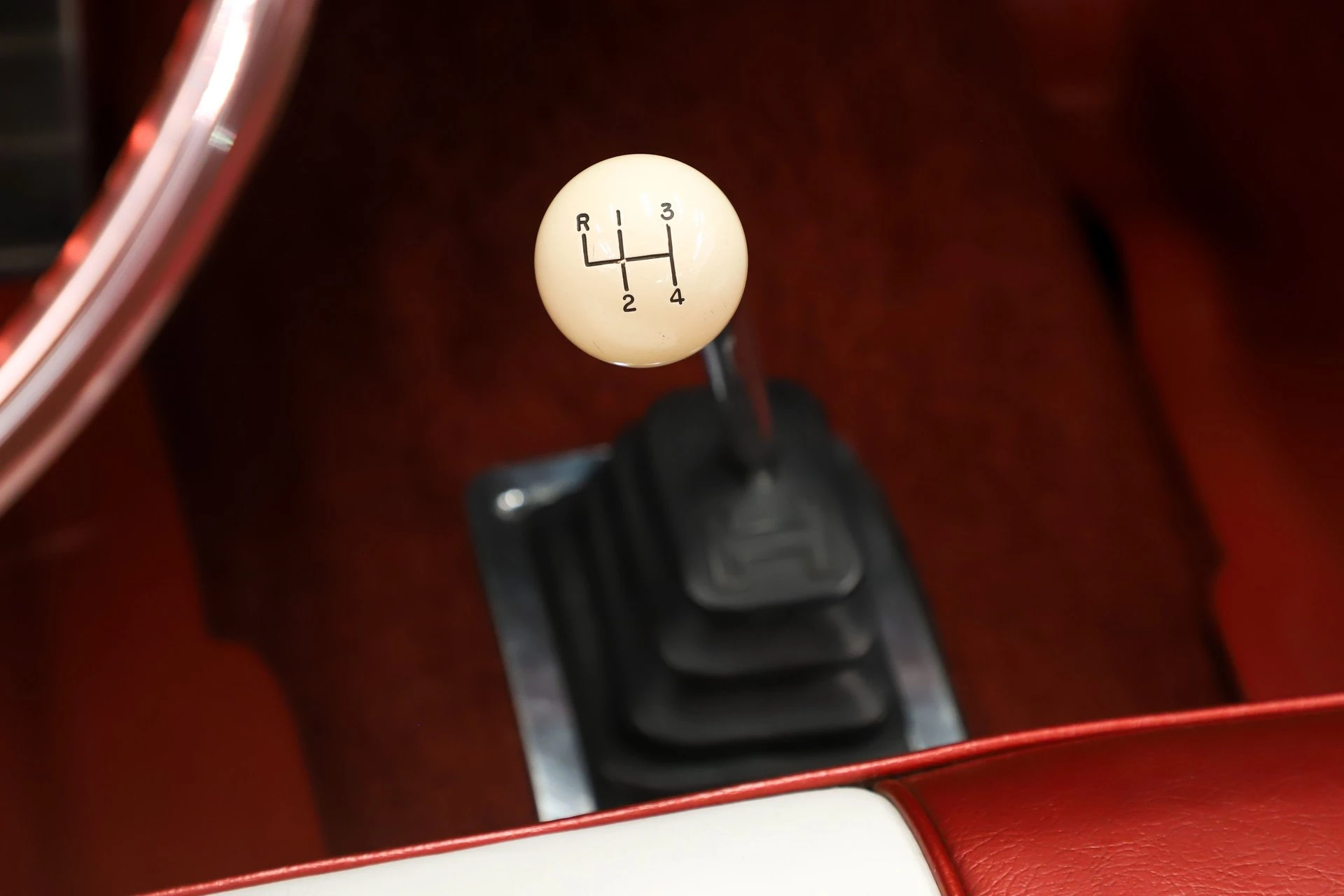
Most Pontiac buyers selected the new 3-speed Hydra-Matic, but people willing to pony up for one of the hottest engines could also have a wide-ratio 4-speed manual. The availability of the 4-speed was limited (according to the AMA specifications, it could be ordered only with Tri-Power or the four-barrel 425A engine). It had to be special-ordered, and it listed for a painful $306.66. Unsurprisingly, it wasn’t very common. Only 1,940 ’61 Venturas had manual transmission of any kind, and some cars with hot engines had the cheaper heavy-duty 3-speed instead.
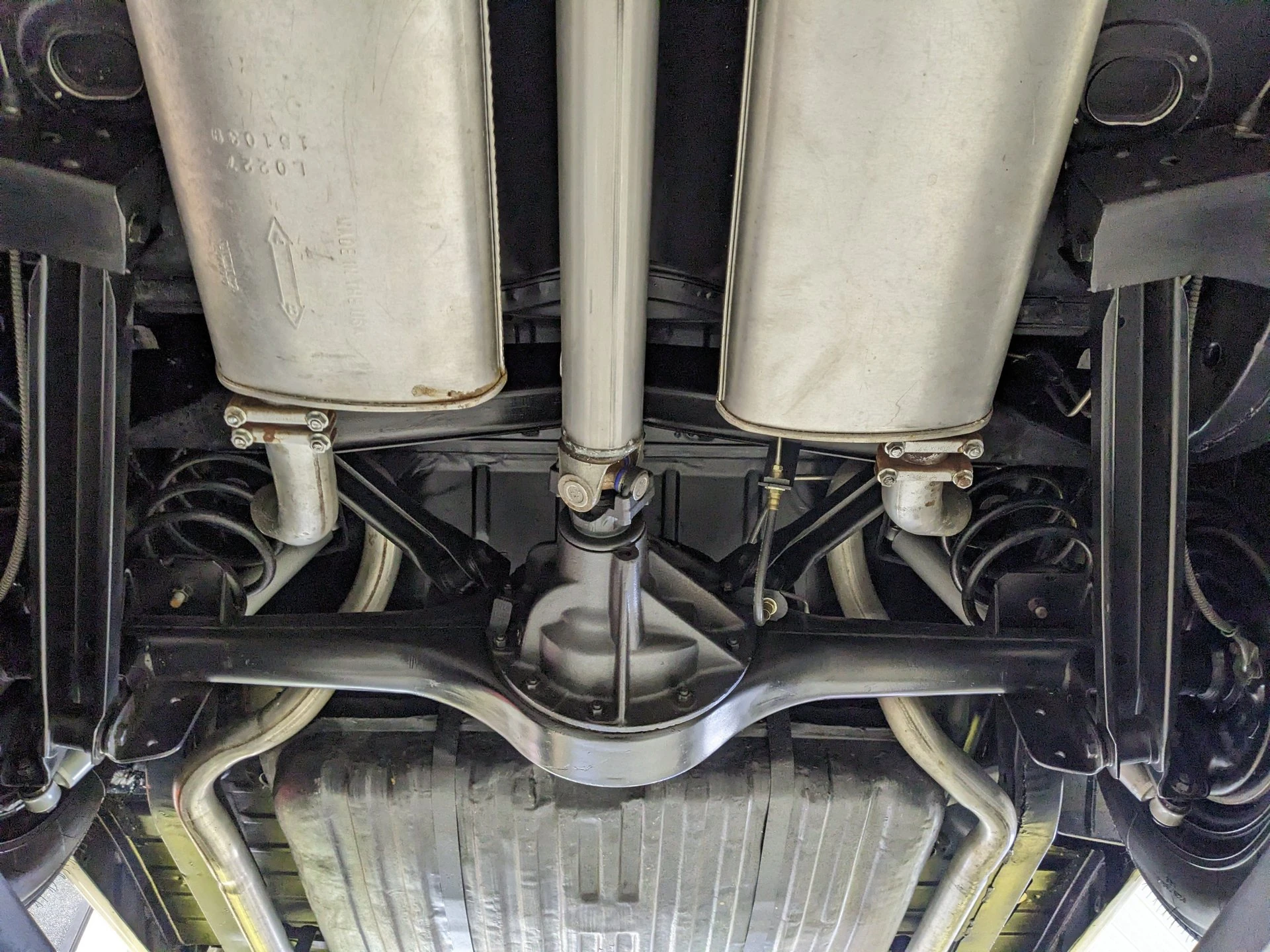
The original buyer of this car also paid an extra $42.50 for Saf-T-Track, which was an uncommon option. Only 7.2 percent of 1961 full-size Pontiacs had a limited-slip differential.
Motor Life tested a Ventura with this powertrain in May 1961 and got 0 to 60 in 8.2 seconds, with the standing quarter mile in 15.5 seconds at 93 mph. That was in stock form with street tires and two aboard. With more break-in miles, quarter-mile performance improved to 15.08 seconds at 96 mph. Pontiac offered assorted off-the-shelf performance equipment, including the rare hand-built Super Duty engines —Motor Life noted that with all that equipment, trap speeds in the 105 mph range were readily attainable.
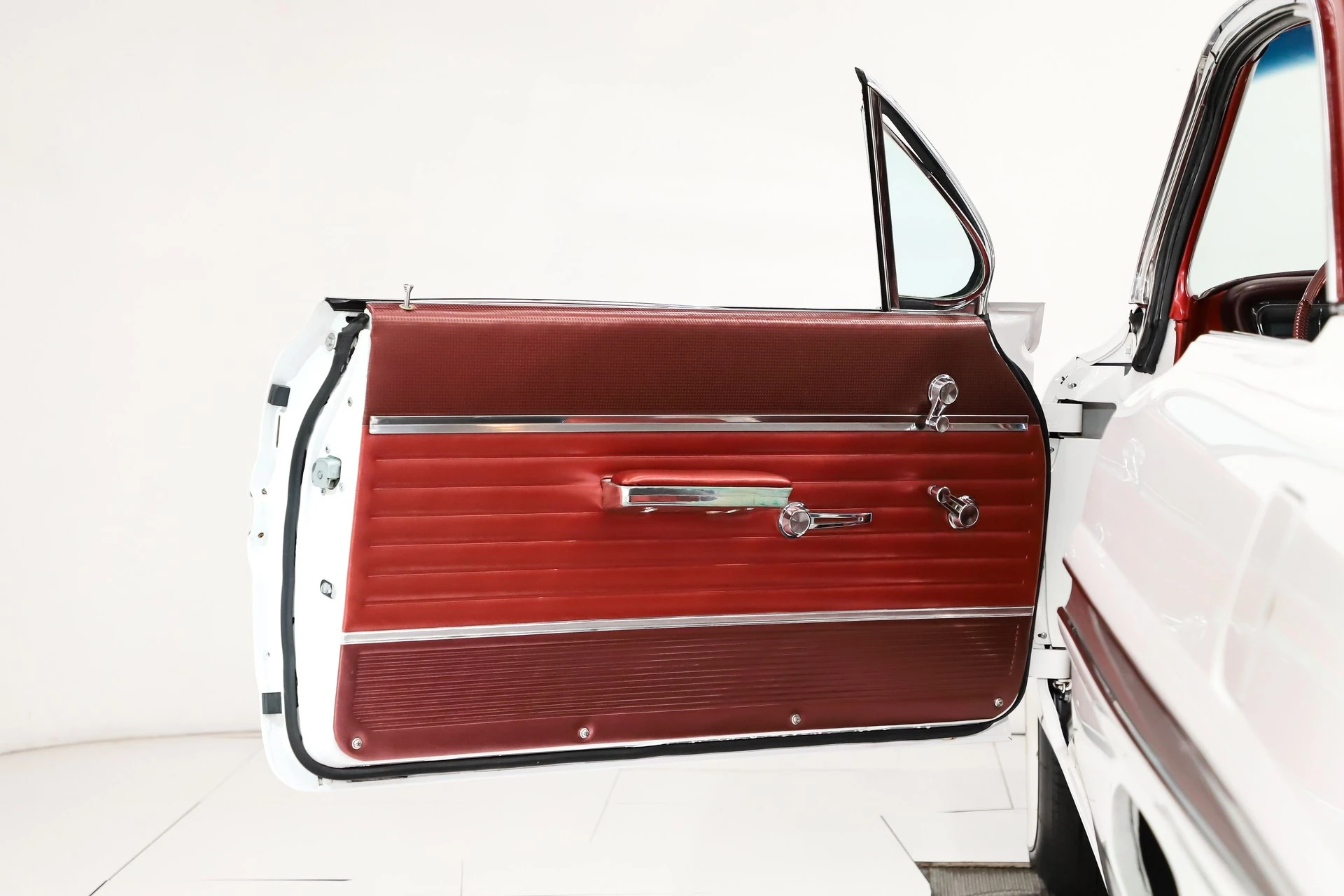
If you wanted maximum go at minimum cost, you were probably better off with a two-door Catalina Sports Sedan, which was $340 cheaper to start and could be ordered with all the same performance equipment. The reason to buy the Ventura was that it had a much flashier interior. A Ventura included a few extra bits of standard equipment, like wheel covers and a clock, but the main attraction was the Custom trim.
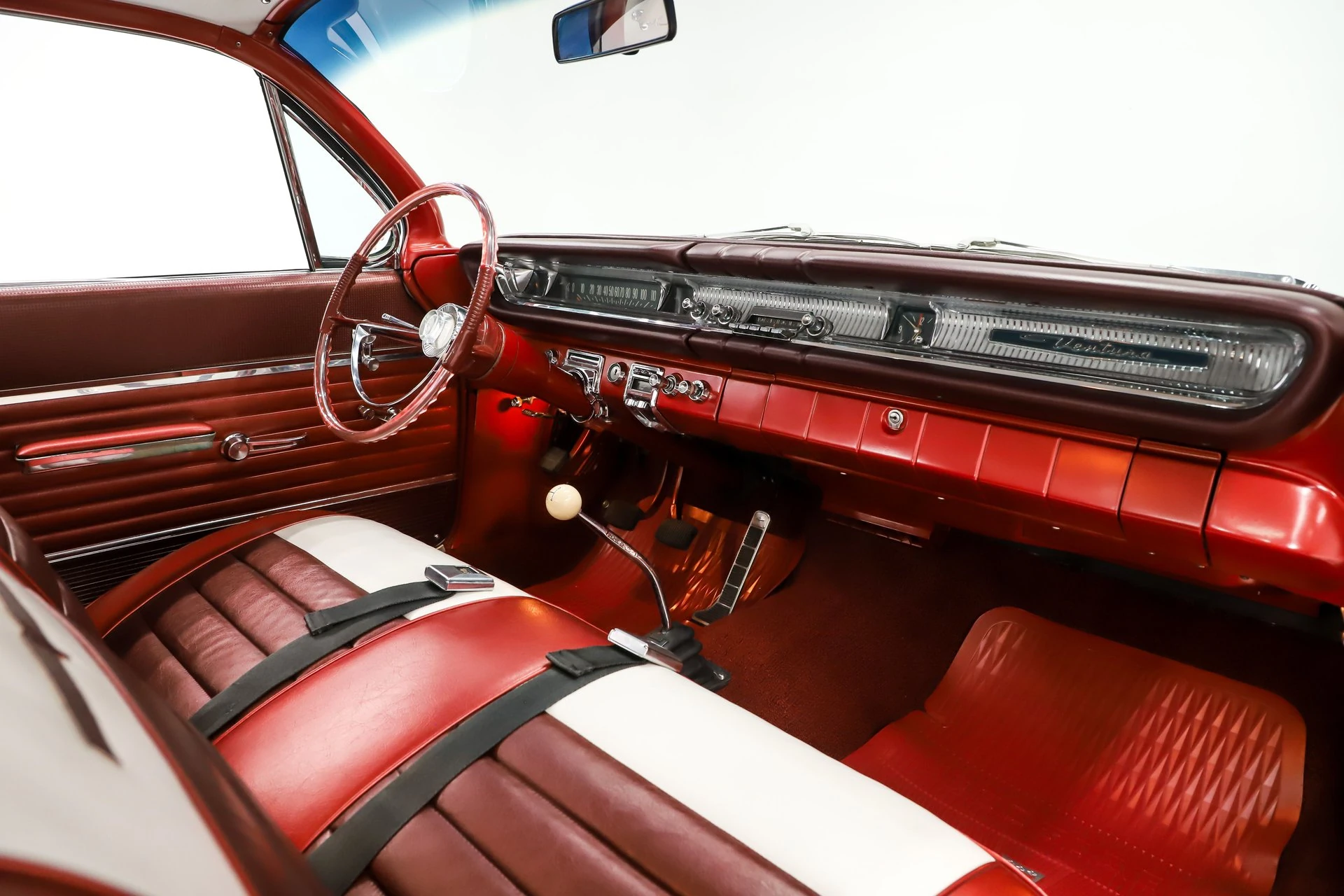
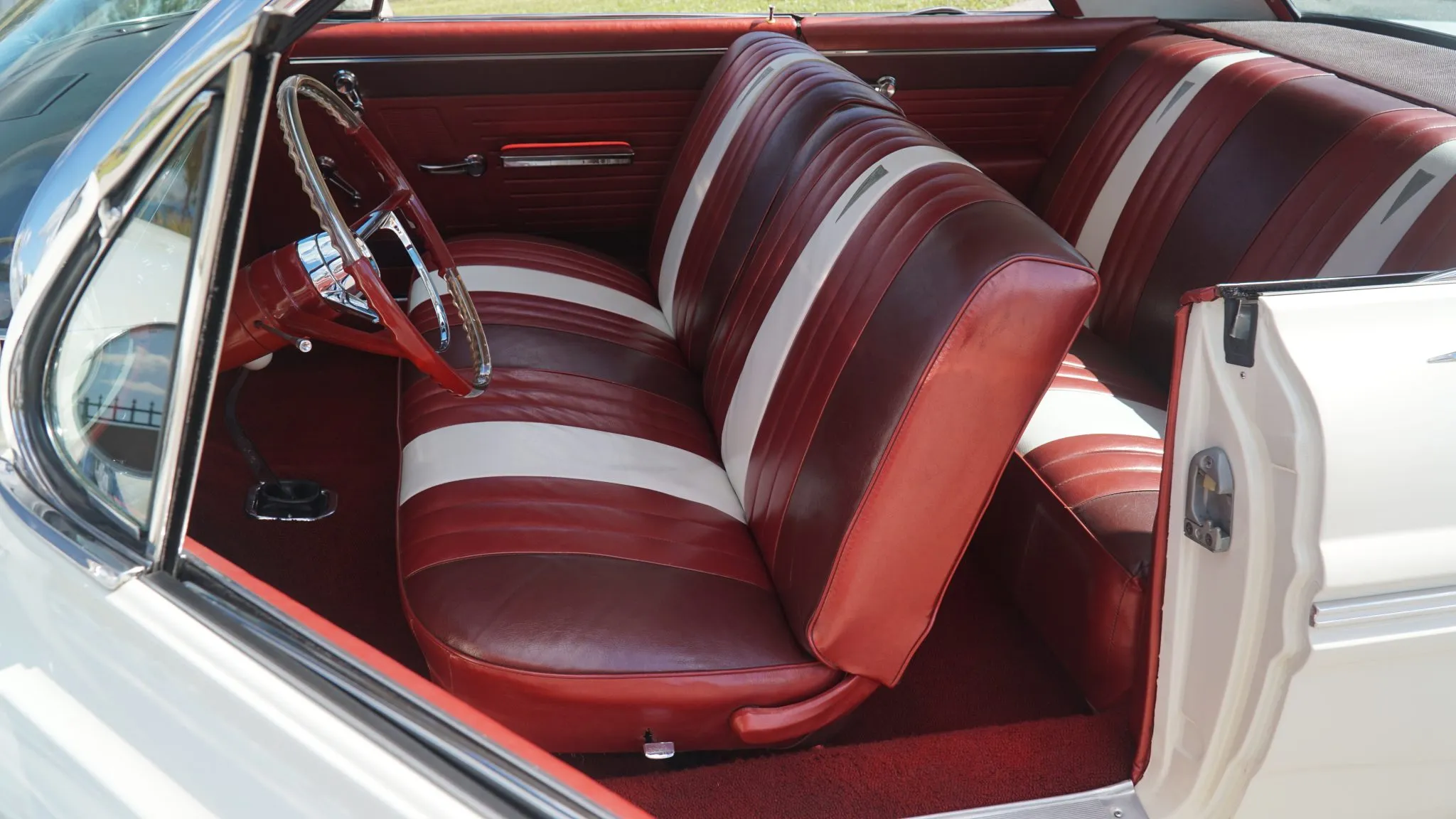
You’ll notice that even with the floor-shifted 4-speed, this car doesn’t have bucket seats. The only full-size Pontiac that offered buckets in 1961 was the Bonneville convertible, and they cost $116.21 extra. This Ventura does have the optional foam rubber front seat cushion (which was $10.65 by itself, but probably ordered on this car as part of Basic Group 061), which makes the front bench look like an overstuffed sofa.
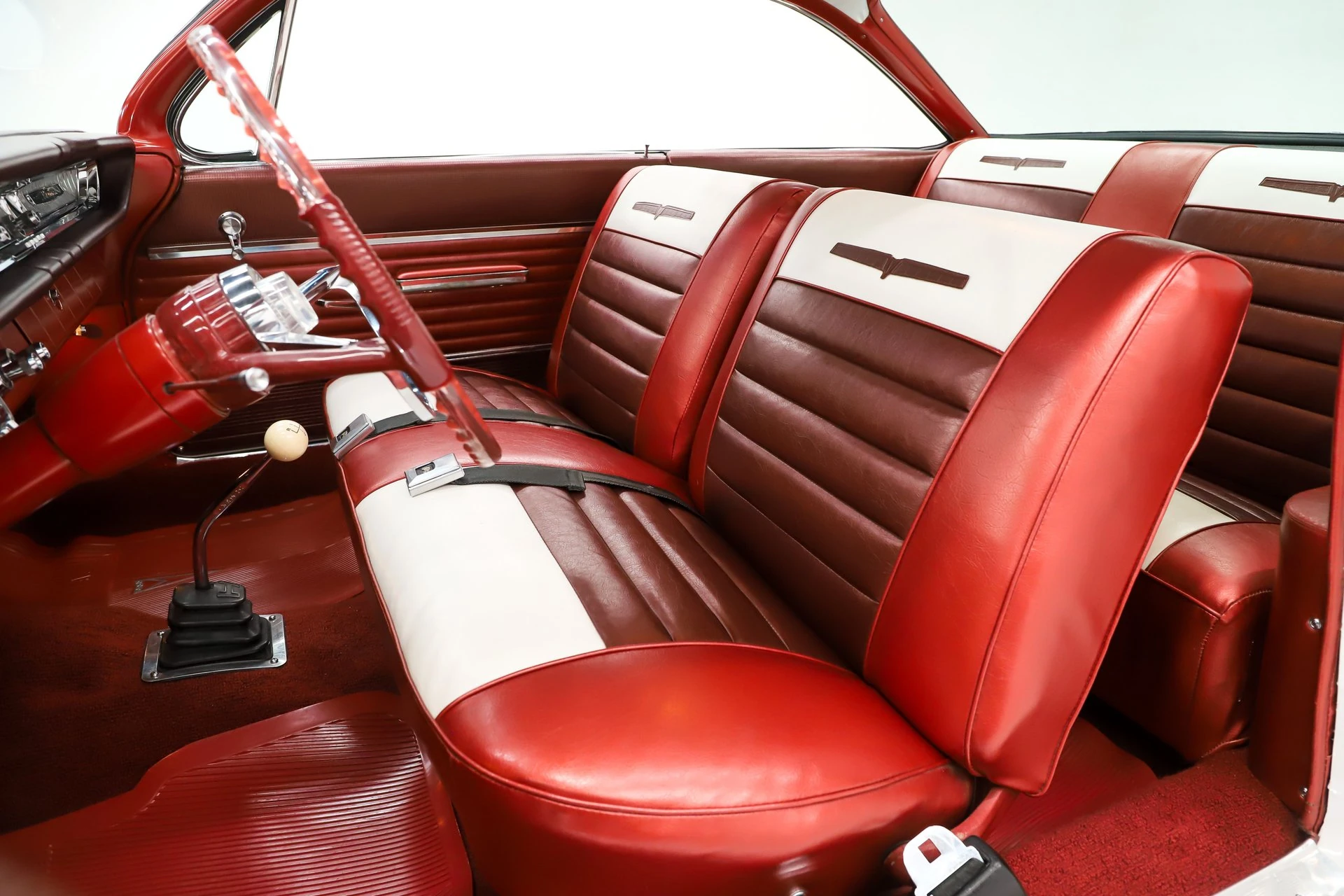
From a modern perspective, it can sometimes be hard to understand why buyers of the 1960s would pay extra for all-vinyl upholstery. In later years, vinyl has tended to be associated with cheapness (on cars of the ’80s and ’90s, you generally paid extra for cloth upholstery to get away from the standard vinyl), but the snazzy tri-tone color schemes, pleated seat inserts, and semi-metallic “Jeweltone” sheen of early ’60s Pontiac Morrokide upholstery does put it in better perspective. The Ventura was available in five color combinations in 1961; the others were gold, green, blue, and gunmetal & silver. All had a lot of showroom appeal.
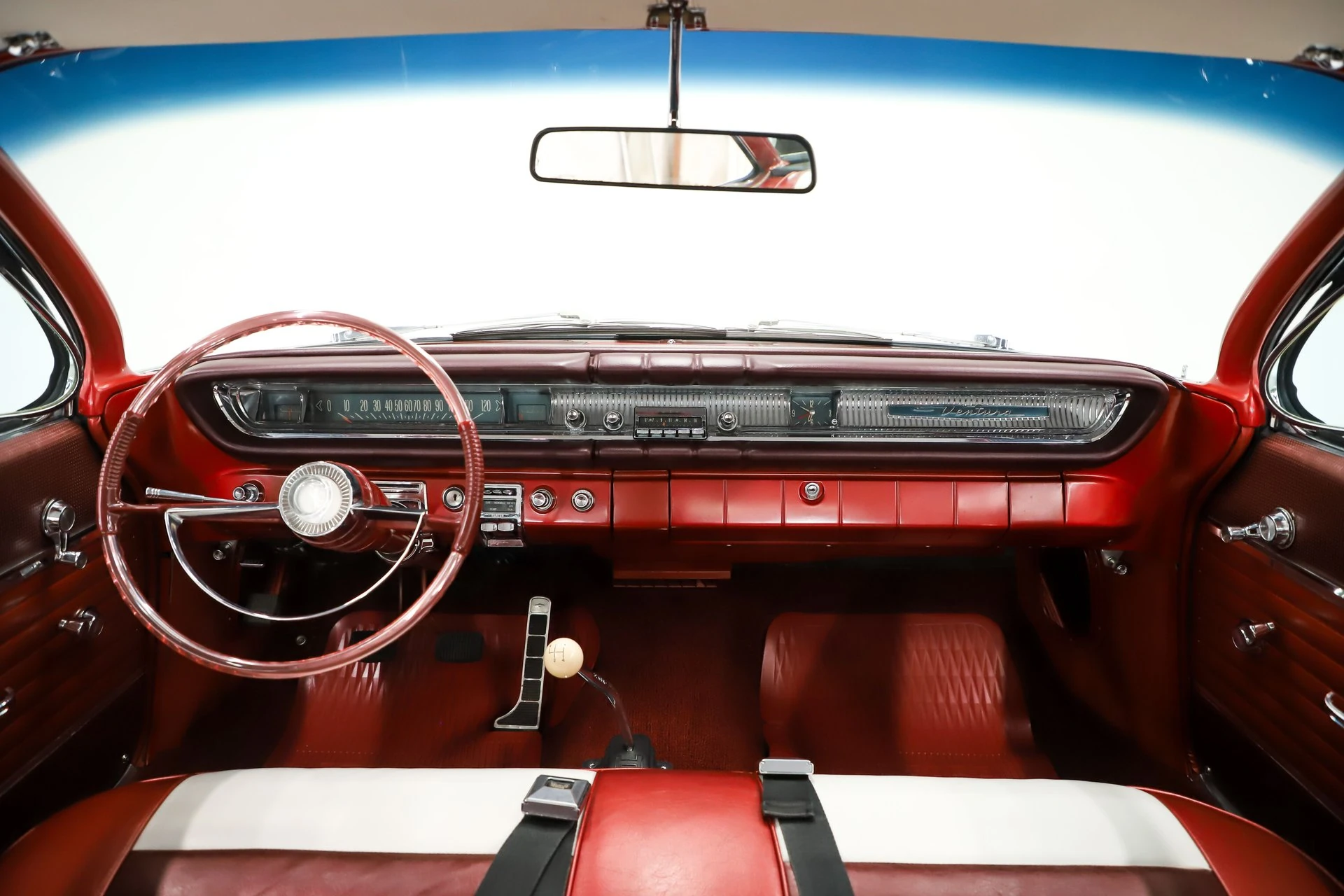
Pontiac also put a lot of pizzazz into the dashboard design. It doesn’t do anything remarkable, but gives the feeling of riding inside a piece of Googie architecture, one of those vintage diners with a stylized rocketship on the roof. (The pad on top of the dashboard was a $19.15 option, but was included as part of the basic groups.)
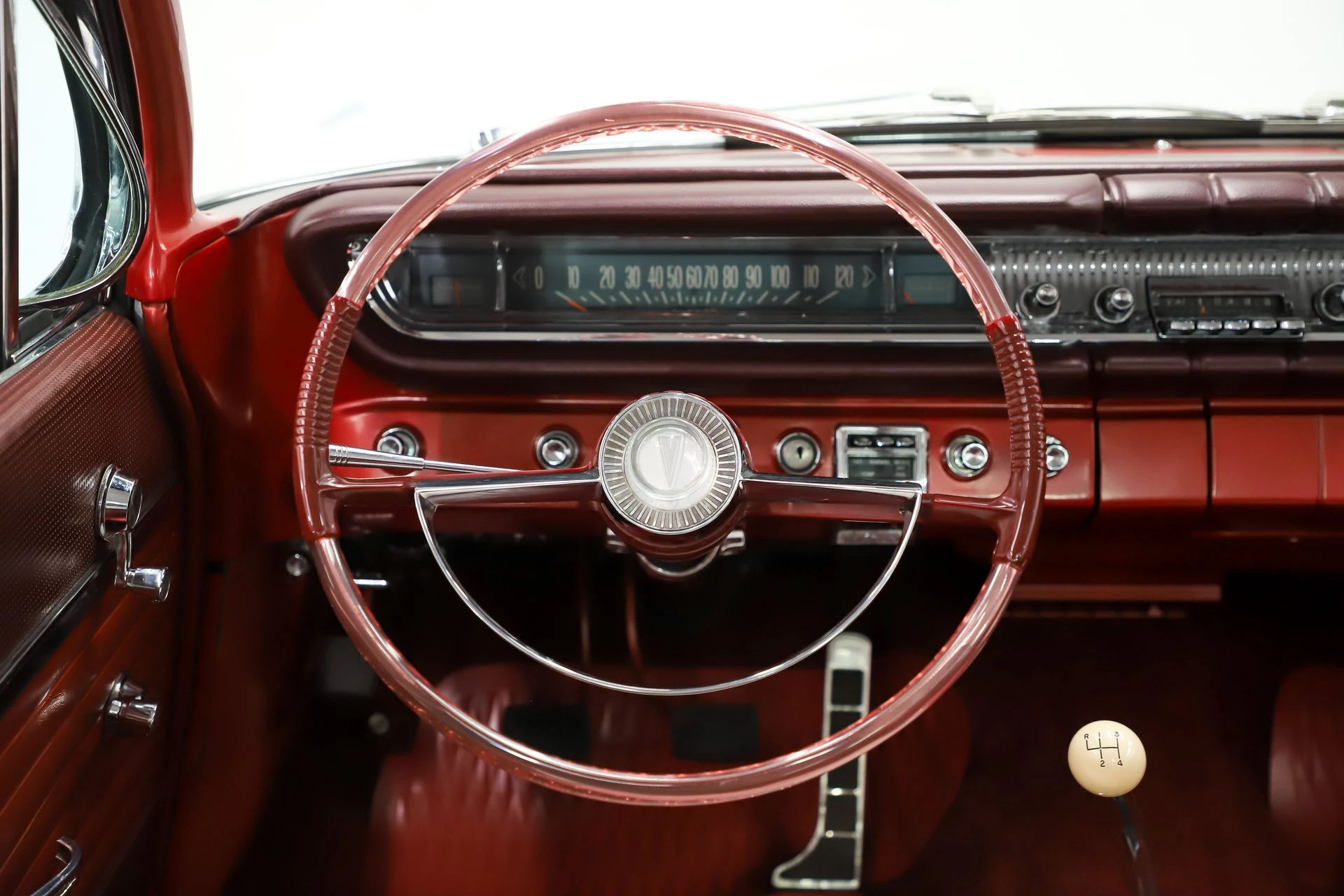
The Ventura also came with the translucent Custom steering wheel, which was optional on the Catalina.
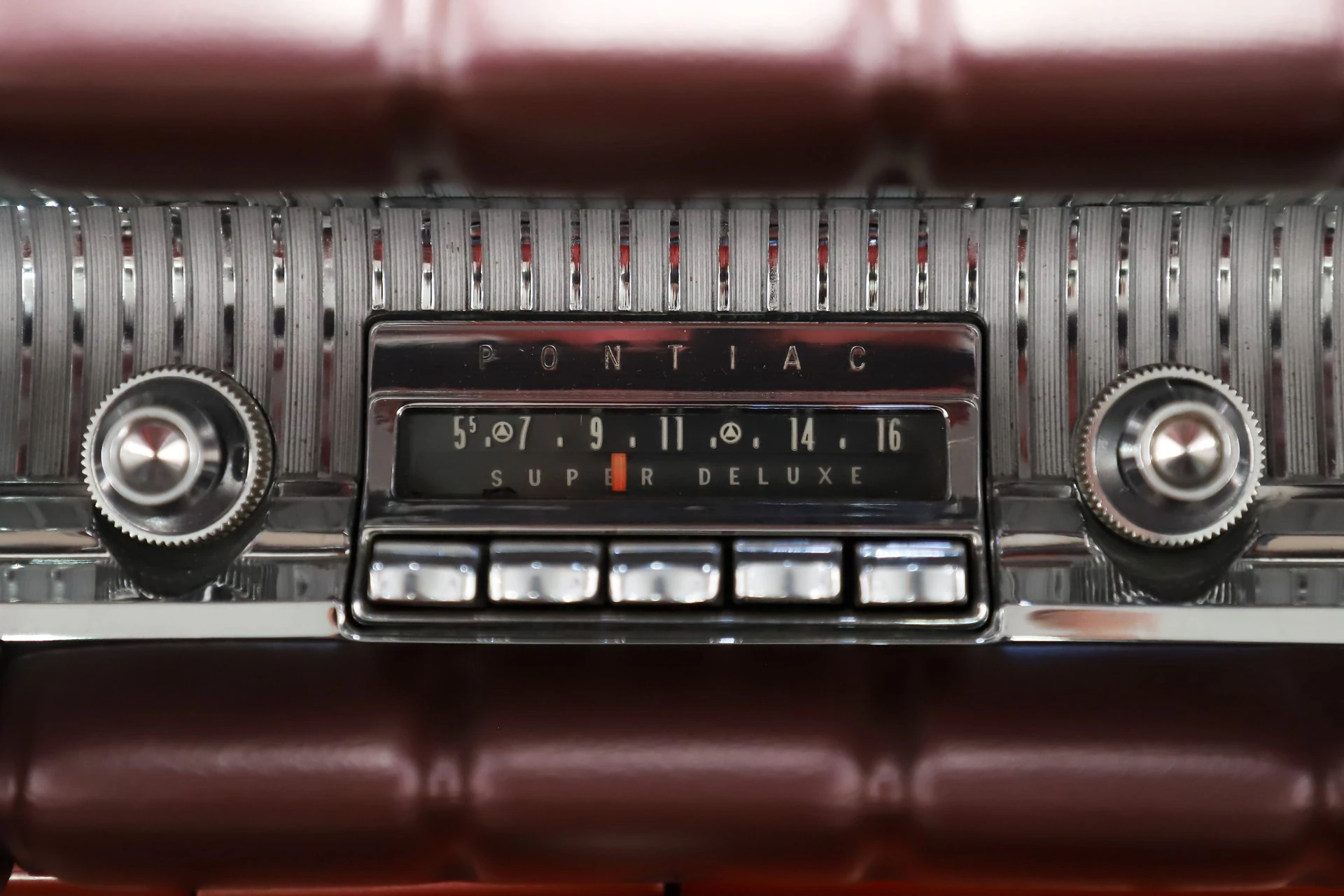
Other items included with the $212.72 basic group this car probably has included backup lights, dual-speed electric wipers, and the Super DeLuxe radio (although this car’s rear speaker was an extra $14.15).
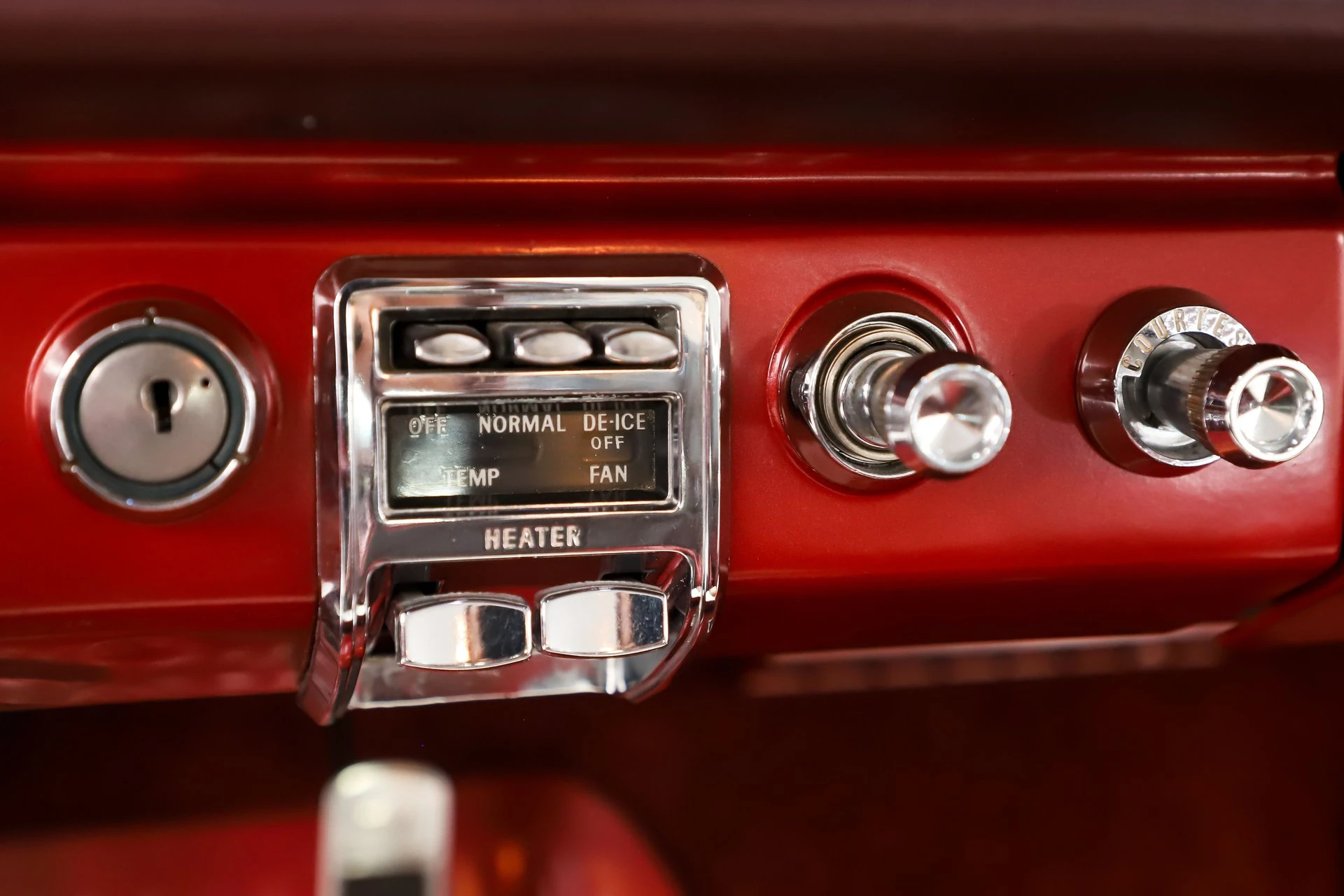
The basic group also included the “Circ-L-Aire” fresh air heater/defroster, which cost $94.15 by itself. 1961 was the last year that a heater cost extra on U.S. Pontiacs; Circ-L-Aire became standard line-wide for 1962.
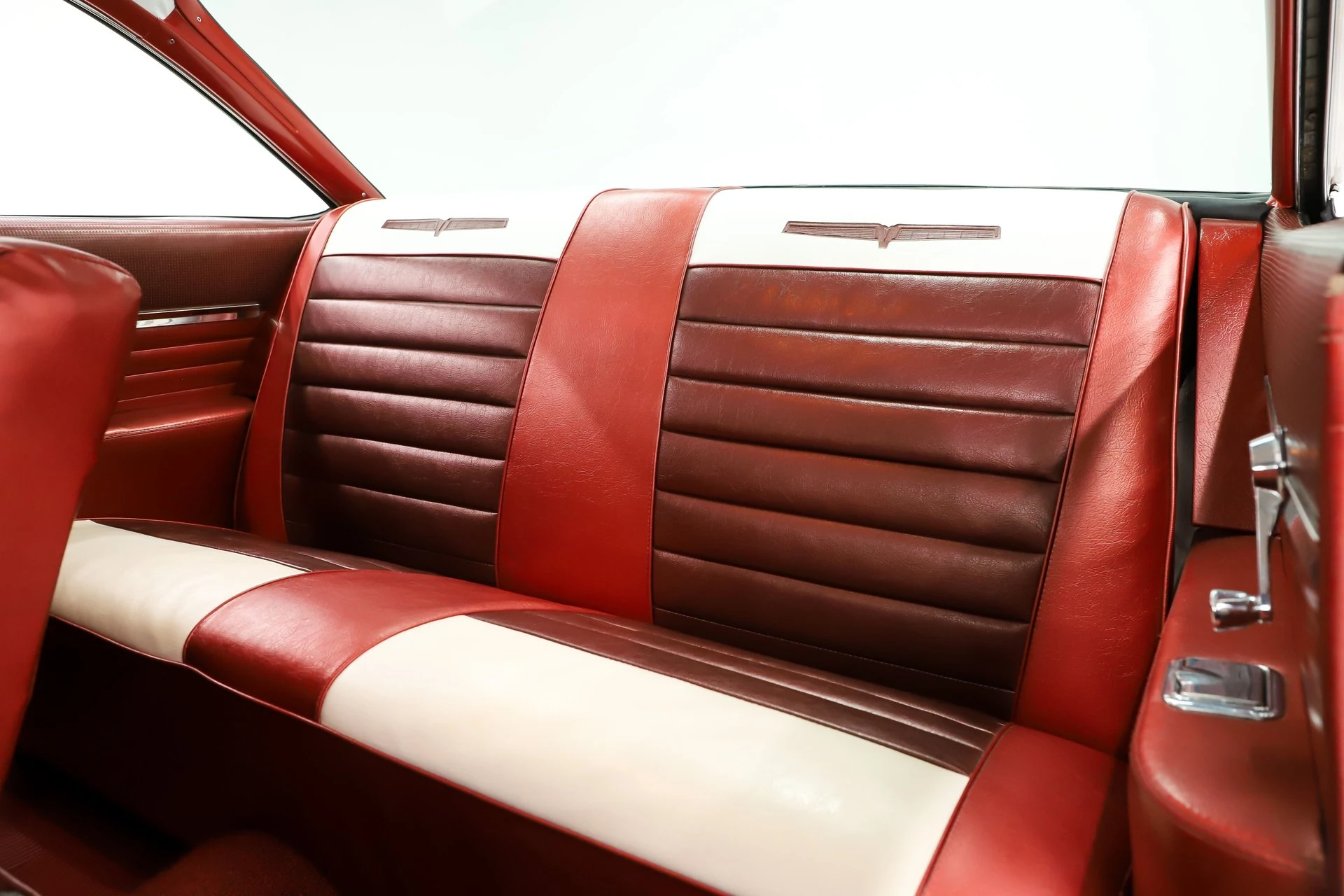
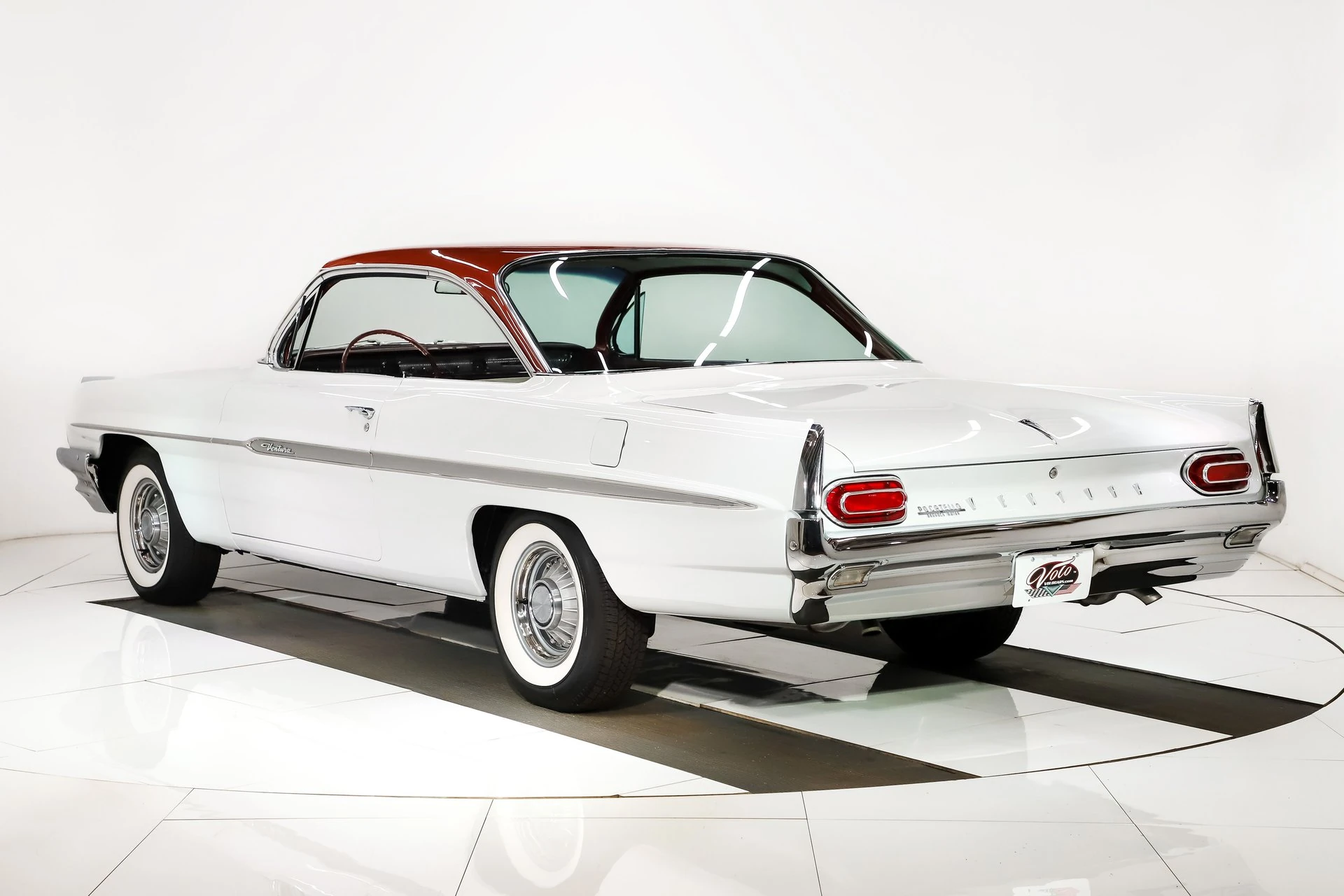
For a car this size, cabin space was underwhelming, especially headroom — blame the swoopy bubbletop hardtop roof.
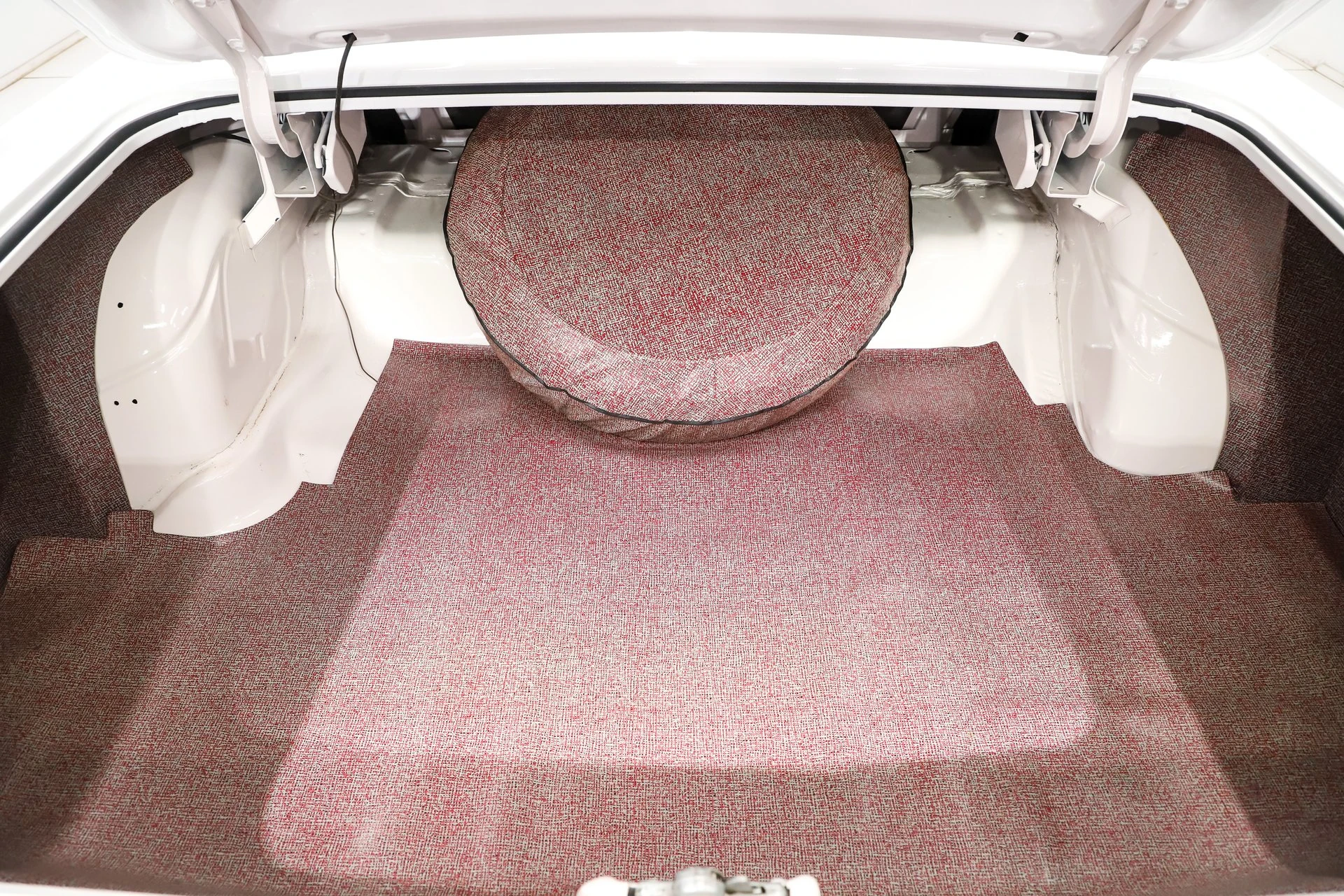
However, the Ventura and Catalina had a massive trunk. Its usable luggage capacity was rated at 16.4 cu. ft., but its actual volume was a massive 33.2 cu. ft., and that was WITH the spare tire in place!
The full-size Ventura only survived as a separate model for two years, 1960 and 1961. It sold reasonably well in 1960, 56,277 cars in all, but sales dropped by more than half in the recessionary 1961 model year, to 27,209. Sales were split almost evenly between two- and four-door models.
While the Ventura model didn’t return for 1962, Pontiac didn’t exactly drop it. Instead, they offered the fancy Morrokide interior as a Ventura Custom Trim option for Catalina hardtops. By eliminating previous Ventura standard features like the clock and wheel covers from the package, Pontiac cut the price from $205 to $118.36. Dealers loved it, and it sold well enough to continue through 1970. For 1971, Pontiac tried reinventing the original Ventura concept with the Catalina Brougham, but it didn’t sell any better than the old Ventura had and was again dropped after only two years.
The Ventura name was applied to enough products over the years that fans recognize it as a Pontiac nameplate, but don’t necessarily associate it with any particular model. If anything, “Pontiac Ventura” probably calls to mind the ugly Nova derivative of the ’70s. Personally, I’d much rather have this one.
Related Reading
How The 1959 Pontiac’s Split Grille Defined The Brand For The Next 50 Years (by me)
Curbside Classic: 1960 Pontiac Ventura – Have The Wheels Come Off The American Dream? (by Paul N)
Curbside Classic: 1961 Pontiac Bonneville – Fifth Place Today, But Look Out Tomorrow! (by Dave Skinner)
Vintage Ad: 1961 Pontiac Catalina by F&K – “Wisest Wide-Track Yet!” Wisest? (by Paul N)
1962 Pontiac Three-Way Comparison: How Did The Star Chief Compare To Catalina And Bonneville? (by me)
Curbside Classic: 1971 Pontiac Ventura II Sprint- GM’s Deadly Sin #3 – Badge Engineering Begins In Earnest (by Paul N)







And of course full size 1961 Pontiac instrument panels (dashes), were a direct copy of the 1961-64 Chevrolet / Pontiac Export RHD instrument panel. A fact few appreciate or even know.
You have it reversed. The 1961 US domestic market (LHD) Pontiac instrument panel was the original design.
General Motors flipped and adapted this specific dashboard design to use across all 1961–1964 Right-Hand Drive (RHD) Chevrolet and Pontiac export models
It is true that vinyl interiors were an upgrade in that era. I think it is mostly because cloth interiors had not been all that durable. Many people had seat covers installed over their factory cloth interiors, either after they started showing wear or to preserve them. This was also during peak baby boom, so lots of families with kids got lots of dirt and spills in their cars, and vinyl interiors would wipe right off instead of becoming stain factories like we have become used to seeing in minivans without leather in today’s world. When I was a kid, the only cars I ever saw with cloth seats belonged to elderly people.
Thanks for sharing this great car with us today!
Wow, there is not a part of that car pictured that isn’t so clean that one could eat off of it…although attempting to do so would surely result in necessitating a full detailing or restoration. Truly impressive.
I’ve never seen one of these in-person. A very very sharp car. I particularly love the two-tone paint. The red roof is just perfect on this. Thanks for sharing!
A lot of the tri-power setups became leaky and in the late 60’s one of these burned to the ground in my hometown.
A tip of the cap to Peter Wilding here with a great recent Mobius kit.
Looking at this beauty had me forgetting all about the `61 348 tri-power Impalas. The restoration on this is impeccable; can’t fault anything on it. For a moment there I felt like I stepped back in time and was looking at this on a showroom floor! If I wasn’t the age I am (66) and a ‘pauper’ I would want this in my garage any day!
This was pretty much my favorite car in the fall of 1960 just as we arrived in the US. Lean, taut, handsome and of course fast. And those 8-lug wheels were the icing on the cake.
I wasn’t the only one; these have been among the most desirable cars from the golden era since new. I shudder to think what this example is worth.