
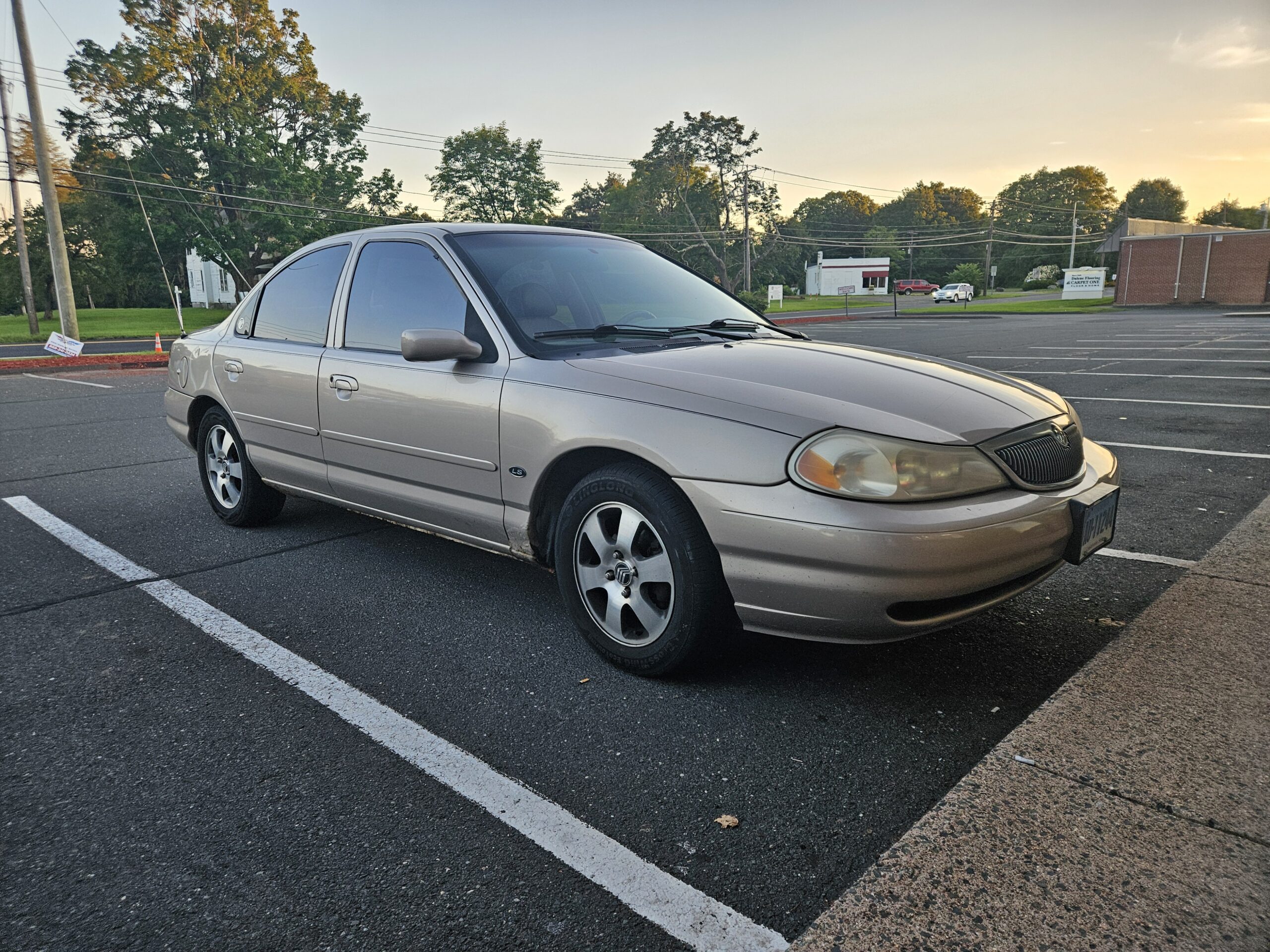
The Ford Contour and Mercury Mystique are well known in this community as Ford Motor Company’s $6 billion replacements for the ancient and unloved bargain-basement Ford Tempo and Mercury Topaz. Despite their impressive driving dynamics, it has been said that the blobish styling, cramped interior, questionable quality, high price, and nebulous placement in their respective lineups doomed them from the start. However, over 1.3 million were sold in their six-year run. So why did it take me literally months to find one in the wild once I set my mind to it?
The challenge stemmed from my Curbside Classic on the 1998 Dodge Stratus. In one of the comments, dman wrote:
I don’t see too many of these or their Cloud stablemates on the road anymore. But I see far fewer (as in almost zero) Contours or Mystiques.

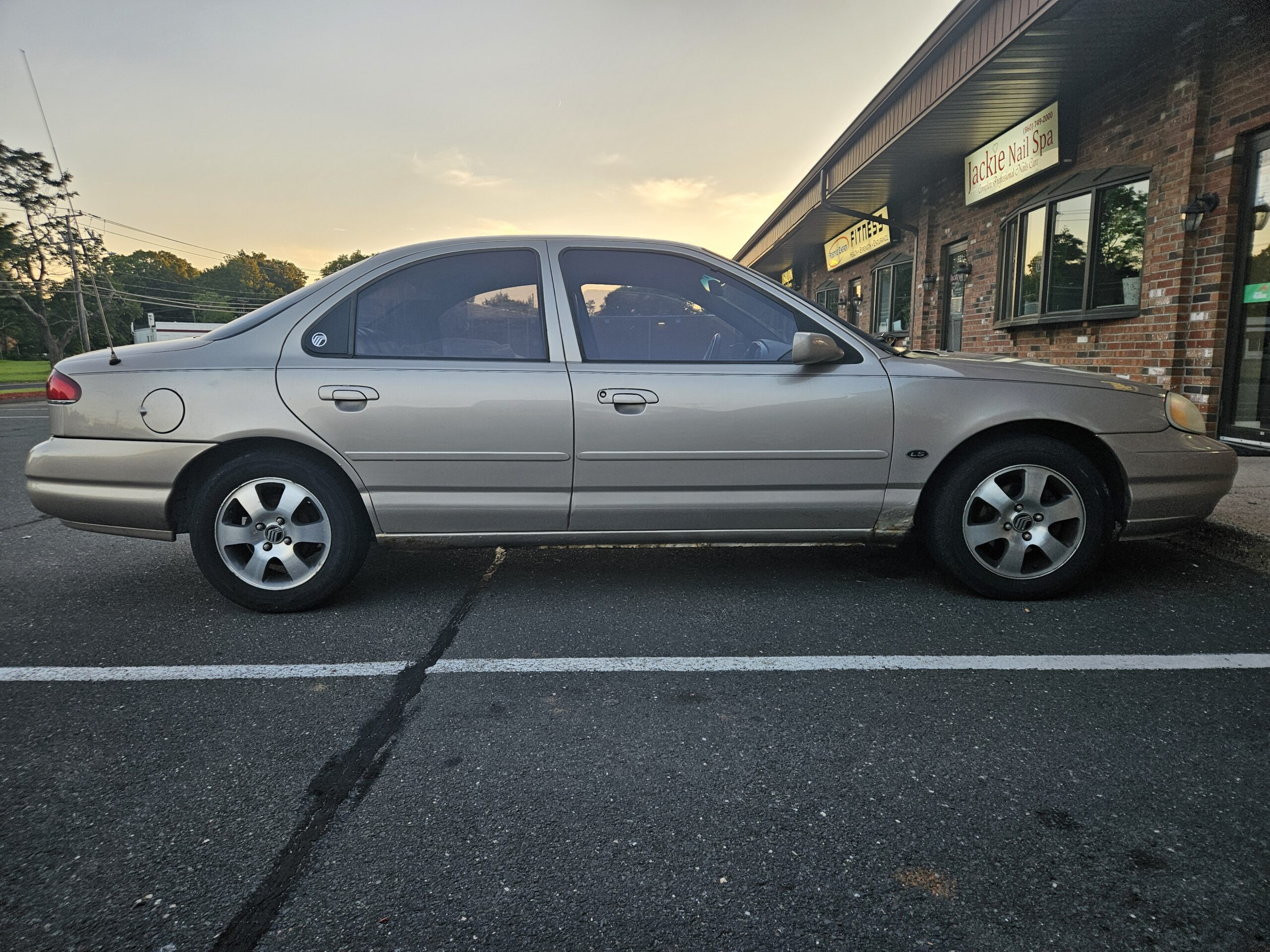
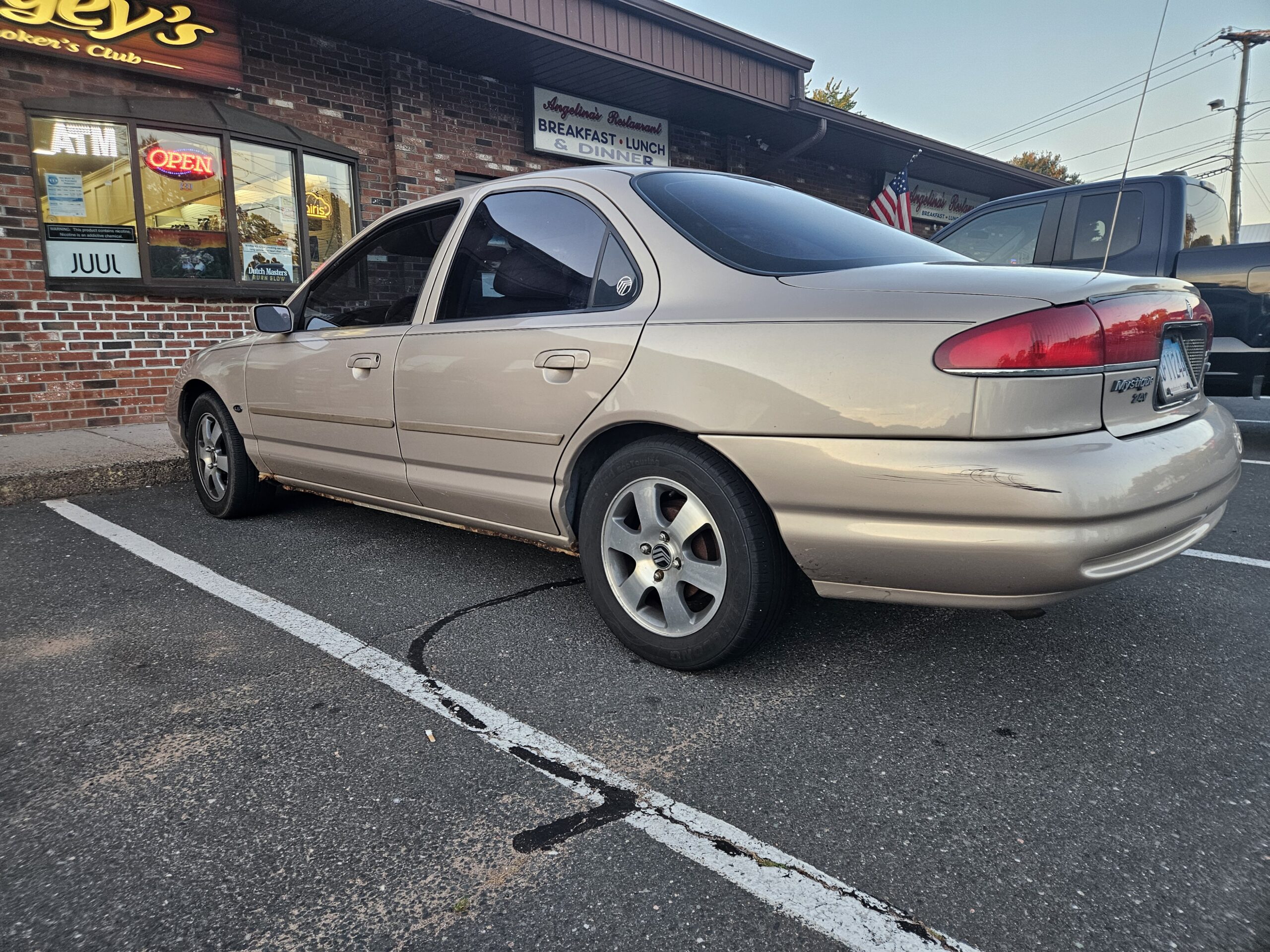
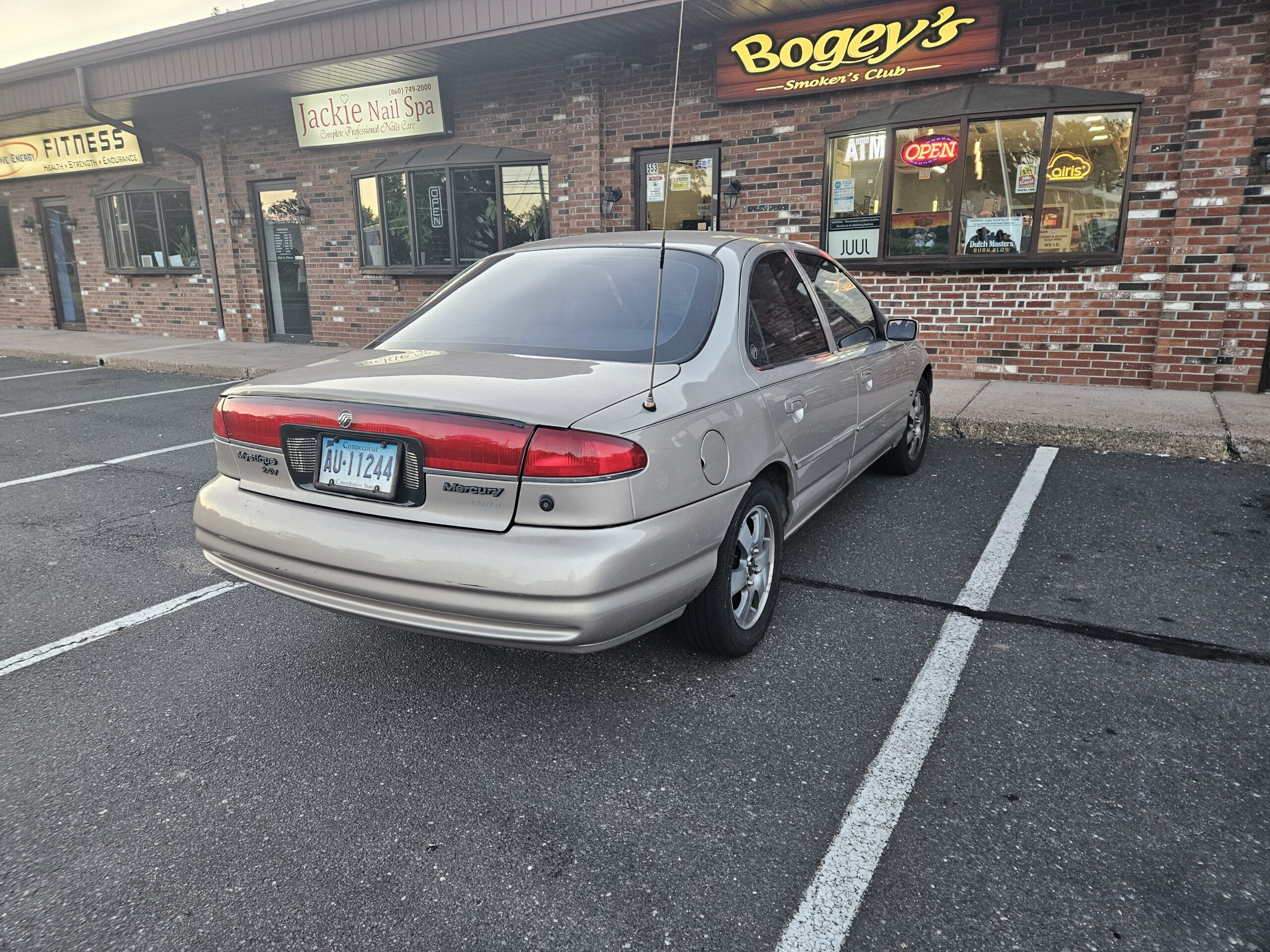
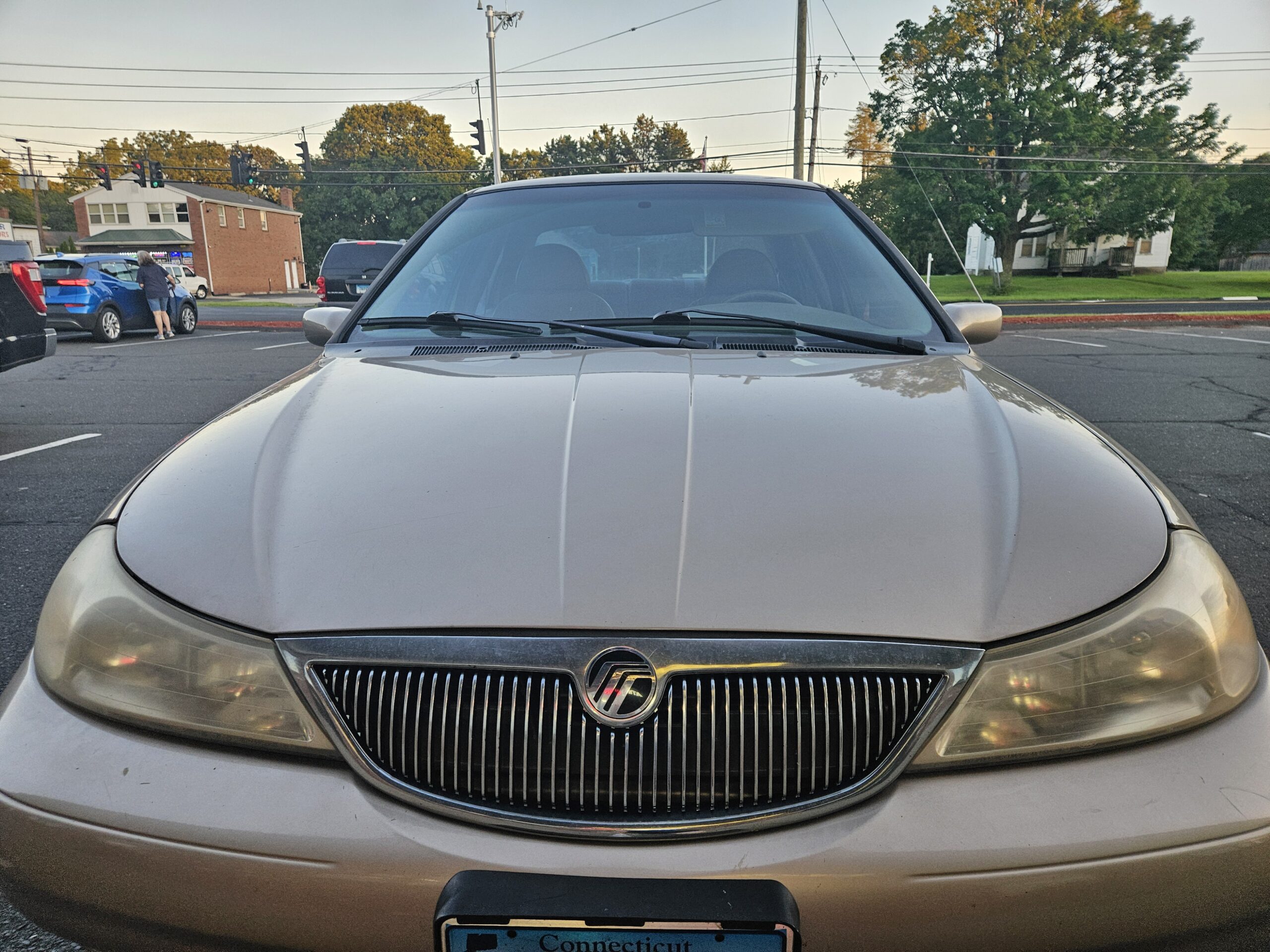
From that point on, I was determined to find a true Curbside Classic Contour (Detour) or Mystique (Mistake). I could easily have found one on Craigslist or Facebook Marketplace, but that almost felt like cheating. I was starting to think that dman was right until I found this little number parked next to the restaurant we went to after the 4H Fair, where my daughter won first place in the camelid category showing Olaf, her alpaca.
I’m not going in depth on the development or history of the cars since Perry Shoar did an excellent job of that back in 2014, with a follow-up by Brendan Saur in 2018. In short, it was a noble effort likely held back by one or more of the reasons stated above and ultimately cancelled – with no replacement – in its sixth model year when Ford determined that they didn’t need a car between the new Focus and the Taurus. Besides, there was more leg room in back seat of the Focus sedan.
However, as an avid follower of the auto industry, I was as excited as others of my ilk that the dreaded Tempo/Topaz were being replaced by vehicles primarily designed and engineered in Europe. Gone were the anachronistic OHV engines* – one of which traced its roots back to the 1960 Ford Falcon – and in were modern multivalve DOHC engines. And, lo and behold, the larger engine was available with a stick, unlike the Cirrus/Stratus. Also gone was the mediocre stretched-1981-Escort platform that even the Escort abandoned several years prior.
(* While displacing the same 2.3 liters as the Lima OHC engine in the Mustang, the engine in the Tempo was effectively the 200-cubic-inch version of the 144-cubic-inch OHV inline six from the 1960 Ford Falcon minus two cylinders. Ford didn’t think they had enough Limas to meet Tempo demand. )
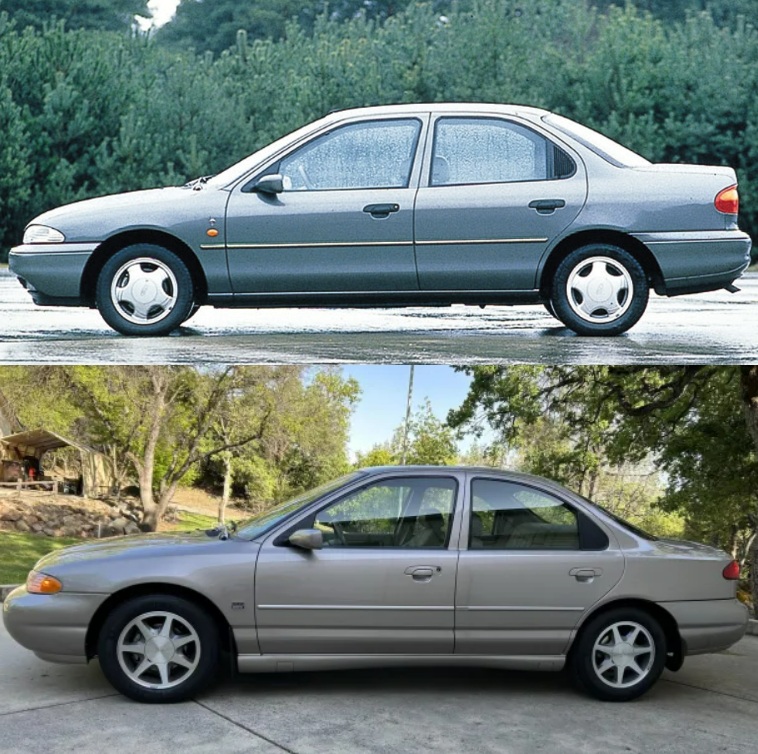
Furthermore, unlike in 1984 when Europe got the striking Sierra and we settled for the tepid Tempo (though we did briefly get a taste of this forbidden fruit for a few years in Merkur XR4Ti guise), our Contour, in my opinion, was slightly better looking than its Mondeo cousin. The tapered trunk, more prominent bumpers, and ovoid grille gave the car more character than Mondeo. However, Europe did get a sleek hatchback that I vividly recall seeing near Dearborn when I was in Michigan for the 1997 North American International Auto Show.
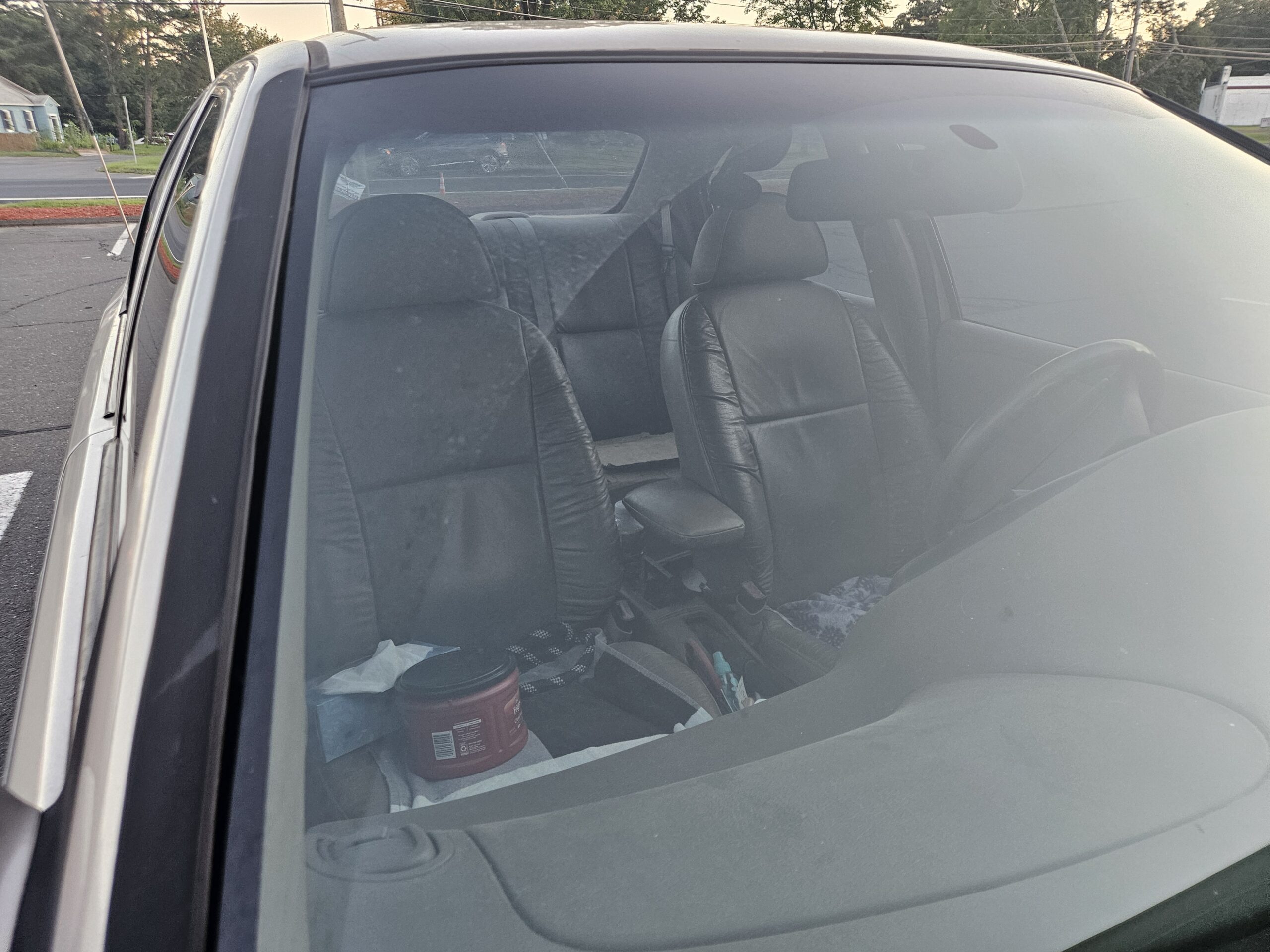
My one and only experience with the Contour was a rental first-year model when my fiance (now wife) and I drove from Washington, D.C. to the Shenandoah mountains to go horseback riding. While not in the most exciting configuration – 2.0L Zetec four/automatic– I do remember it driving and riding much better than many of the cars I’d rented at that time. I was most impressed with the European style interior, with rubber accordions at the base of the signal & wiper stalks and a genuine tilt steering column with airbag (In the Tempo, the tilt wheel was unavailable when equipped with the optional airbag).
Of course, I didn’t have to live with the thing. Years later, a coworker told me horror stories about his 1995 V-6 Contour. There were a long list of things that went wrong, with the climax being the engine overheating on the way to the airport. This was likely due to the cheap plastic water pump impeller Ford put in these cars, which tended to crack or spin loose on the metal drive shaft. He didn’t want to miss his flight, so he kept going and ultimately warped the cylinder heads.
After the engine was replaced, which I believe was an out-of-pocket expense, the transmission started slipping. While this may have been related to the above incident, these transmissions had many design flaws that led to early failures. He was probably experiencing a worn-out pump bushing or a solenoid pack failure. Or both. He prayed to any god that would listen on his way to the Toyota dealer (go figure) and, luck be a lady, the car behaved during the trade-in inspection. I haven’t talked to him in a long time but would be surprised if he ever bought another Ford.
Much has been made about the Contour’s tight rear seat, which did have less head- and legroom than the Tempo, but it did have a bigger rear seat than the nearly-dimensionally-identical Chevy Corsica. I would make that “It also had a bigger rear seat than the Infiniti G20. (Ford of Europe had benchmarked the Nissan Primera, the car on which the G20 was based.)” Also, keep in mind that Toyota significantly reduced the rear leg room in the current generation Corolla compared to the previous generation with no impact on sales.
Much has also been made of the Contour’s significantly higher price relative to the Tempo (everything that follows applies to the Topaz/Mystique as well). The 4-door 1994 Tempo started at $10,735 ($24,265 in 2026), while a similarly equipped 1995 Contour started at $13,310 ($29,256). That is a significant jump, but the 1994 Escort sedan was only $185 less than the Tempo, resulting in plenty of wiggle room between the $10,850 1995 Escort LX sedan and the $17,585 ($38,652) Taurus. Therefore, if Ford was intent on having a model between the Escort and Taurus – and a lot of people question that decision – the pricing of the Contour actually makes a lot of sense.
There are still many stories about potential Tempo buyers experiencing sticker shock and walking away, but I don’t think Ford really wanted those buyers. Back in the early nineties, there was a stark contrast between what foreign – especially European – automakers were selling and what Detroit was selling. Besides the Tempo, J-car and K-car derivatives with aging powertrains were the order of the day, appealing mainly to fleet buyers who prioritized low price over anything else. I believe who Ford was really going after with this clean-sheet, European tuned, modern powertrain approach was the more sophisticated buyer who would have purchased an Audi A4, BMW 3-Series or Mercedes C-Class sedan if their income allowed. Keep in mind that the back seats of those cars were not a great place to spend time, either, but people still bought them in droves.
In period reviews, much praise was heaped on the Contour and Mystique. From Car & Driver, “From the moment you grasp the thick steering wheel, the Contour exudes expensive-car vibes” and “steering and handling should be a benchmark for all makers of front-drive cars.” MotorWeek’s John Davis was impressed by the smoothness of the powertrains and the excellent road grip and feel (and, for the record, he called rear legroom “typical” for this size sedan).
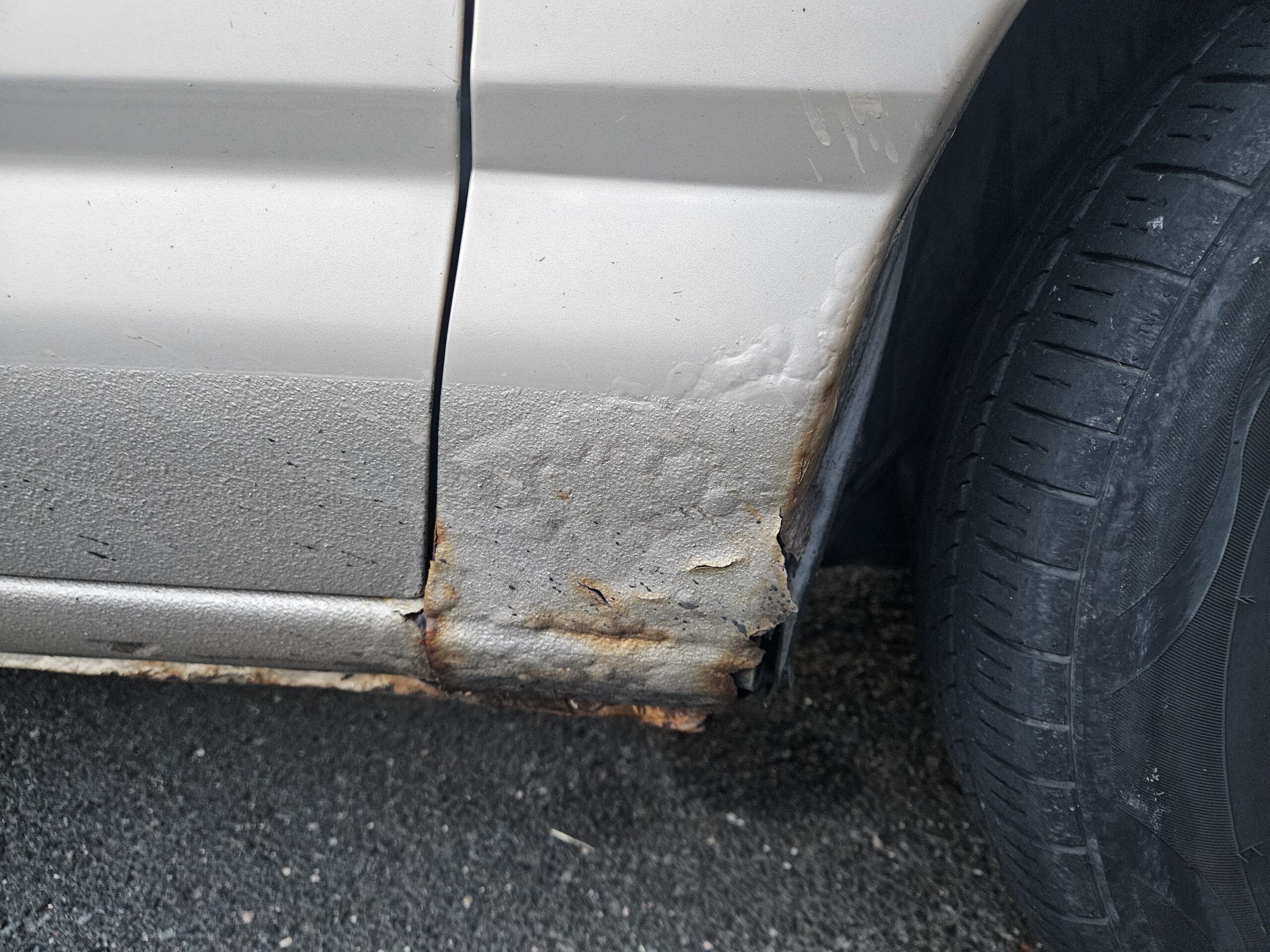
I believe that had the twins also offered Audi/BMW/Mercedes levels of quality, things would have turned out very differently. While they were not recalled as many times as the Focus and Escape, early cars often suffered engine-bay wiring harness disintegration, water pump failure, transmission slippage, and interior plastic warping. Worse, tight packaging of the engine and transmission components resulted in high labor bills when items like the water pump and its cheap plastic impeller inevitably needed to be replaced after a short life.
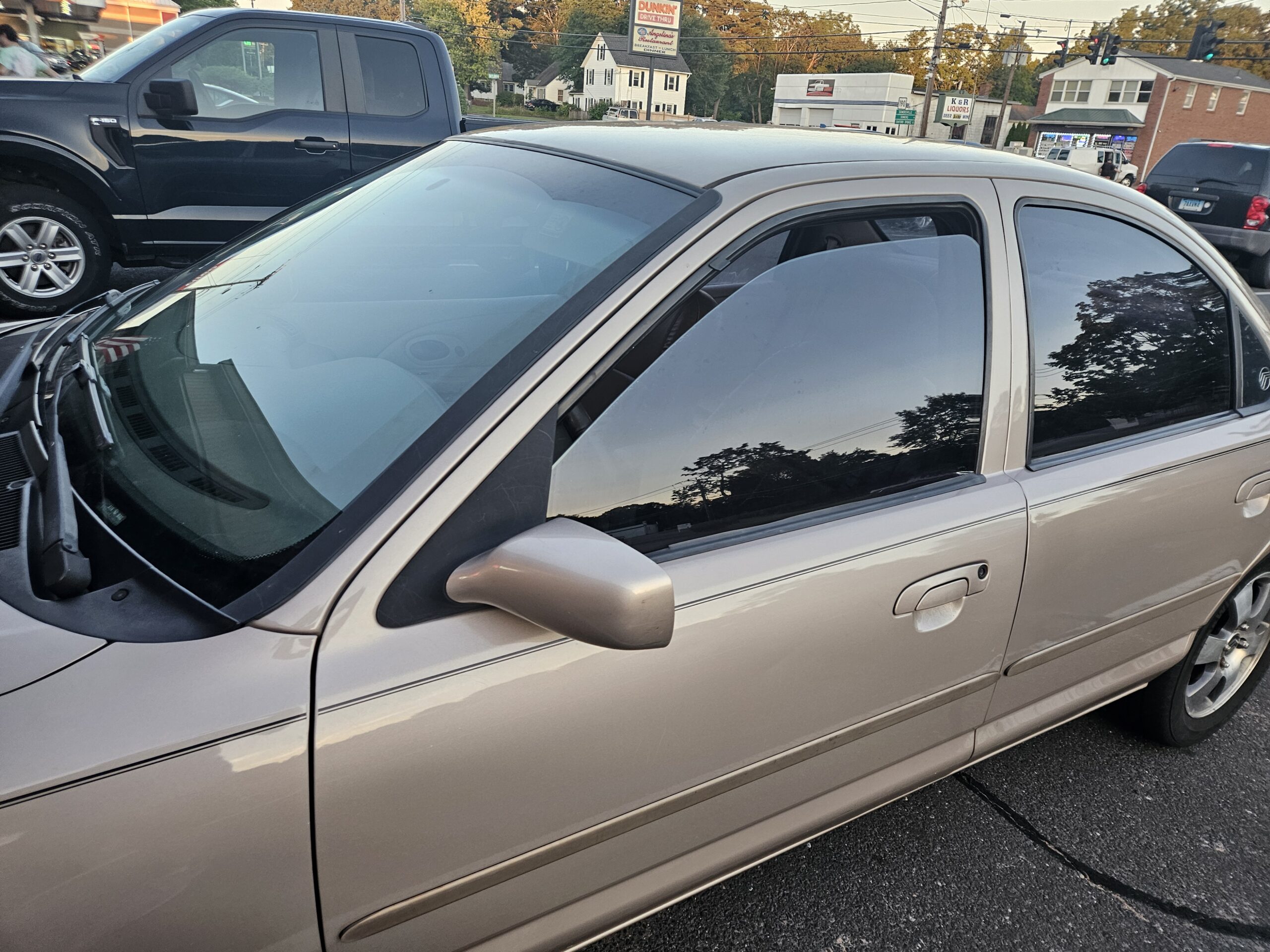
These issues severely impacted the cars’ reputation and subsequent resale values. Having failed in its initial mission, Ford embarked on a serious cost cutting and de-contenting crusade for the 1998 model year, when this Mystique came out. Gone were the Mystique’s previously unique front sheet metal and dashboard, and Ford deleted many of the accoutrements that had given the early Contour and Mystique their special feel. In a C&D comparison of 1998 sedans, the Contour came in dead last. This, of course, did nothing to stop the sales slide as Ford now had a cheaper-feeling but still pricey car with a tight back seat with a bad reputation that was still expensive to fix.
That, of course, is likely why there are so few in the wild these days. Expensive/time consuming to fix, limited parts availability, and no dedicated community trying to keep them alive is a recipe for extinction. Furthermore, while they were somewhat groundbreaking in their day, the trend toward a European “feel” for cars sold in the United States continued on, making the Contour and Mystique not quite as special now as they were then. The 1998 Volkswagen Passat, roughly the same size and aimed at the same crowd, was wildly successful by comparison even though it was priced above the Taurus.
Ford’s next attempt at a world sedan in this class, the 2013 Fusion, was far more successful. Unfortunately, its life was nearly as short, but for far different reasons.
Related Reading
Curbside Classic: 1996 Mercury Mystique – No Good Deed Goes Unpunished
Curbside Classic: 1998 Mercury Mystique LS – Case of Mystique-en Identity
CC Outtake: 1999 Ford SVT Contour























Late 90s Mondeos drive well and handle ok hardly class leading but very competent cars at too fast for the conditions,
Working as a lot jockey at Towson Ford in 2002 we had a Mystique in the used car lot. It was the same color as this car with a blue leather interior, V6, and to my immense surprise a 5 speed stick!! I did enjoy driving that car and there was ample opportunity given that it didn’t sell the entire summer I worked there. I remember thinking that it would be a neat car to own but I was far more drawn to the clapped out SVT Contour in the trade in lot. A couple of years later I drove a Rent A Wreck Contour with the Zetec automatic and it didn’t hold a candle to my previous experience with the Mystique.
I will report that I saw a silver SVT Contour on the road earlier this week!
I bought a Ford Contour new in 1999. It wasn’t my original intent, but Ford was heavily discounting them and was able to one new and loaded for under $14k. It was a sport package Including the V6.
The car handled and rode fantastic. The back seat was a complete joke, but I didn’t need it. But literally worse than like a Ford Mustang back seat.
In hindsight, I should have bought something different. It had issues, all covered under warranty. Was my last Ford for several decades. The resale was abysmal, I had to almost give it away when I sold it. Not surprised they disappeared for that reason alone.
I saw a nice looking used one in the mid 90s and don’t remember being aware of Car and Driver’s praises for it. A closer look told me I would not be happy inside. After driving an Accord for six years it seemed claustrophobic even though I’m not large at 5’6″ and 150#. I ended up with a Merkur Scorpio. I’m not surprised that Contour was not a big seller. I drove a rental diesel C-max with manual 5 speed in Italy and was completely delighted with it. If I had known the platform was related to the Focus, I might have given the Contour another chance. In 2008 I did buy a Mazda 5, another Focus relative, and I kept that one for 9 years.
The 2000 Focus platform was known internally as the C170, whereas the Mondeo/Contour/Mystique platform was the CDW27. They may have some similarities but are different platforms. While initially more troublesome than the Contour/Mystique, the Focus’ combination of relatively low price and roomy interior in addition to the European-tuned ride and handling saved it from being an afterthought like the Contour once the initial bugs were worked out.
On another note, I’d love to see a Cars of a Lifetime on your Scorpio!
Great find! The last Mystique I saw was about 5 years ago, after my parents moved into a senior living facility. There was a Mystique identical to this one in the resident parking lot – it remained there for a while, but then disappeared. I have occasionally seen a green Contour SVT around here, but I’ve never been quick enough with my camera to photograph it.
I owned a 1998 SVT – I know the SVT is sort of a different creature, but that was an outstanding car. I wish I could re-create a brand-new example of that car! Reliability-wise it was pretty decent too. Things started to break en masse at about 120,000 mi., and by then we had kids and were looking for another car anyway, so I got rid of it in favor of a minivan.
Regarding the rear seat, I had read about the small rear accommodations, but when I bought that car, I didn’t think it was that bad. No one complained about being back there (of course, most adults at that time were veterans of early-80s econoboxes, so by those standards, the Contour was cavernous). But then I had kids… and had to deal with those wretched rear-facing infant seats. Those things didn’t fit at all, and driving with one in the Contour was miserable.
(I should add that Ford increased rear seat room in these cars during the ’98 model year… if I recall, this was done largely by scooping out the rear of the front seats, which created a bit more legroom for rear passengers.)
Oh, and congratulations on Olaf winning first prize! And this isn’t related to cars at all, but I find it interesting that there’s still a Hartford County Fair, since Connecticut effectively eliminated references to county governments a few years ago. In the back of my mind, I’ve sometimes wondered how many references to counties continue to exist in CT – I guess county fairs are one of them.
Thanks Eric! It’s primarily because there’s technically no such thing as “Hartford County”. Decades ago, Connecticut abolished counties and replaced them with what they call “Planning Regions” overseen by a “Council of Governments”. We are in the Capitol Planning Region. However, since the 4H fair is not part of any government, they decided to stick with the old “Hartford County” name because it just makes more sense.
Saw a burgundy, “Contour” over “Palisades, DC”, neighborhood fairly recent. I’d say about a month, back. Didn’t get a long look.
I remember a number of years ago when Craigslist in my area featured gobs of nice older Buick Centuries for around $3500. At that time comparable Contours and Mystiques could be had all day long for $2k and less. It was pretty clear that they were the cheapest things for their age and size. I felt sorry for those who needed a cheap car and got hooked on one of these. I cannot remember the last time I saw one of these, even for sale online.
The decontenting hit every Ford line in the 1996-98 time frame. What had been appealing cars became grim after the penny squeezing refreshes.
I rented a Contour around 1995 and even in four cylinder rental spec it felt as good to drive as my 84 Jetta, which may be faint praise since VW was into a third generation and starting a fourth. Since we didn’t have passengers the rear door opening was not a problem.
The Fusion borrowed in the opposite direction since it was restyled Mazda6
As a clarification, the 2006 Fusion was built on the same platform as the 2003 Mazda6 and even used Mazda’s 2.3-liter, four-cylinder engine. The 2013 Fusion, like the Contour & Mystique, was developed alongside the Mondeo as Ford had dispensed with its investment in Mazda during the Great Recession.
Of note the Mystique face was much better than the Contour for both the 1995+ and restyled 1998s.
Anyone remember the flimsy unfolding cartridge pop up cupholders in the 95s? I rented a Contour and managed to break it within 10 minutes. I was worried I was going to get dinged for it but I managed to shove all the components back into the narrow slot in front of the shifter where it jammed shut and wouldn’t deploy again. Good odds for me I figured.
Later I learned they all broke within weeks of delivery. I really liked the interior otherwise, it was well thought out and had quality materials. Much better than in GM sedans.
i’m 6’1″ and noticed not even a 10 year old would’ve had enough legroom behind where my seat was set.
Later Contiques had cupholders in the console. They didn’t break, but they also didn’t hold cups. When I bought my Contour in 2000, it was two years old, and the only blemish were dark stains running down the console carpet next to each cupholder. It soon became obvious why those stains were there. ANY drink vessel (cup, can, thermos, etc.) would topple over during a turn. Utterly useless things.
I picked up a ’95 with a V6 and automatic in 2003 with 92k miles and a solid service history.
I knew the automatic sapped performance but it got down the road ok. Handled and rode great with a definite German feel, much better than the Taurus I got as a loaner while having the wiring harness recall done. I rarely carried anyone in the back seat so it didn’t matter quite so much but the car served its purpose very well. The V6/auto combo only gave 19 mpg, which was a huge disappointment given the mediocre performance.
I acquired it when my 1988 MR2 got a little too rusty to be roadworthy, and was soon hankering for another sports car, which turned out to be a 1990 Miata. So I kept both on the road, but I found myself driving the Miata more as it got 26 mpg. The MR2 got 28 but it preferred premium.
Then the problems began to surface. The tranny stopped shifting automatically but I could shift it manually, so I did for a little while. Since a rebuild would have cost more than I paid for the car, i had a junk tranny put in. The idiots who did the work screwed the car up by not remounting the subframe properly and I sent it back to them.
That was eventually worked out but then I drove over a metal step that fell off the side tank of a truck on the Brooklyn-Queens Expressway, cracking the oil pan. That retired the car temporarily until my nephew got his license and needed wheels. It never drove right after I got it going again, and my nephew bought a Honda Accord first chance he got. He still drives it after 10-plus years.
Like I said, loved the handling, but would have been a way better experience with a manual tranny instead of that awful CD4E automatic.
I test drove a new 5-speed Contour while car shopping with a friend in 1995. It did not ride or handle anything like my BMW or his Acura. It was very soft on initial turn in and rolled like one might expect of an old-school Detroit rental car. The Chrysler cloud cars had far better ride, handling and seating, but the Ford’s engines were far superior in NVH. Also, the Ford 2 liter was far better at moving the Contour than the Neon 2 liter was at motivating the Plymouth Breeze. I rented a 4-cylinder Mystique in January of 2001 that still holds the title for the smoothest Detroit 4 engine I’ve ever experienced. The rest of the car wasn’t really that much of an improvement over the teetering Tempo.
In the first few years that the Contour came out Ford was discounting the Taurus big time to keep it the #1 sales leader.
So a buyer could get a loaded, larger V6 Taurus for less than a base 4cyl Contour. Plus the salespeople and dealers earned more commission on the Taurus.
So the Contour was doomed by Ford, even before other factors are considered such as that it was styled, sized and powered similar to the much less expensive Chevy Cavalier, and its predecessor, the Tempo, was a 75% fleet vehicle, so there was no customer base to call to trade in.
I had a ’96 up until a couple yrs ago when the tranny rusted out, literally the cast iron pump developed a hole but for a car with no back seat the whole front buckets not only sat high but would tilt back making it one of the most comfortable cars for someone 6’4″….
I’ve probably mentioned this before here, but I rented a Mondeo in Scotland in August of 1995 (I recall specifically as on that trip I called back home and a friend informed me that Jerry Garcia had just died…which kind of bummed me out for the rest of the trip). It was a fabulous car with a 5 speed that I drove all over the Highlands and the outer islands on the wrong side of the road.
This made me quite interested in the North American counterparts. But in that regard, I only knew one person who had one, and the Contour seemed to sink without notice here. Oh well.