
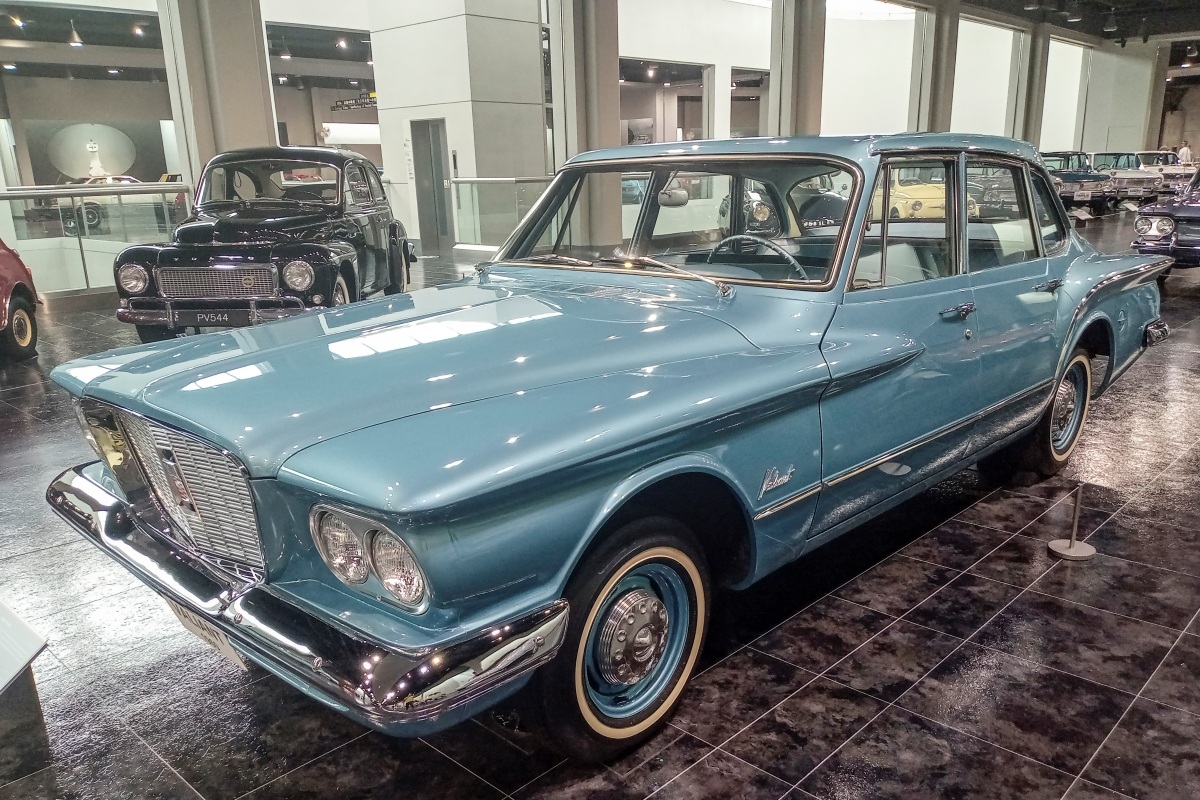
Car design is a matter of taste, of course. Your list of beautiful cars may not overlap with anybody else’s, which is fine. Has anyone ever included the Renault 6, the Datsun B210, the Morris Ital or the first-generation Valiant in their top ten? Statistically, that must have happened. Realistically, it won’t have happened too often.
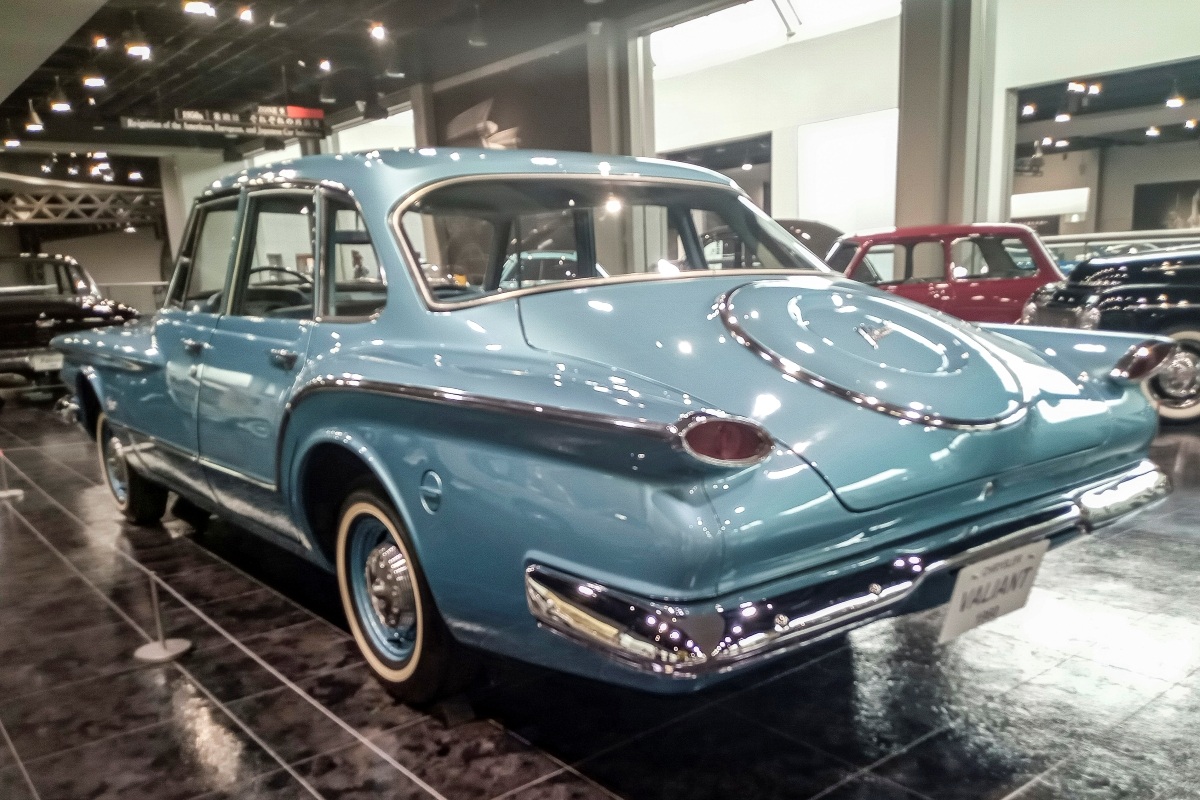
As one of the Big Three’s brand-new compacts for 1960, the Valiant was a rare occasion for a clean-sheet design to emerge from Detroit in the final throes of the tailfin era. Chevrolet, Ford and Studebaker wisely opted to tone down their styling excesses; the latter two’s designs were far from glorious, but at least they erred on the side of boring. Chrysler went for the path less taken, also known as the Virgil Ex(ner)pressway. More of a cul-de-sac, really.
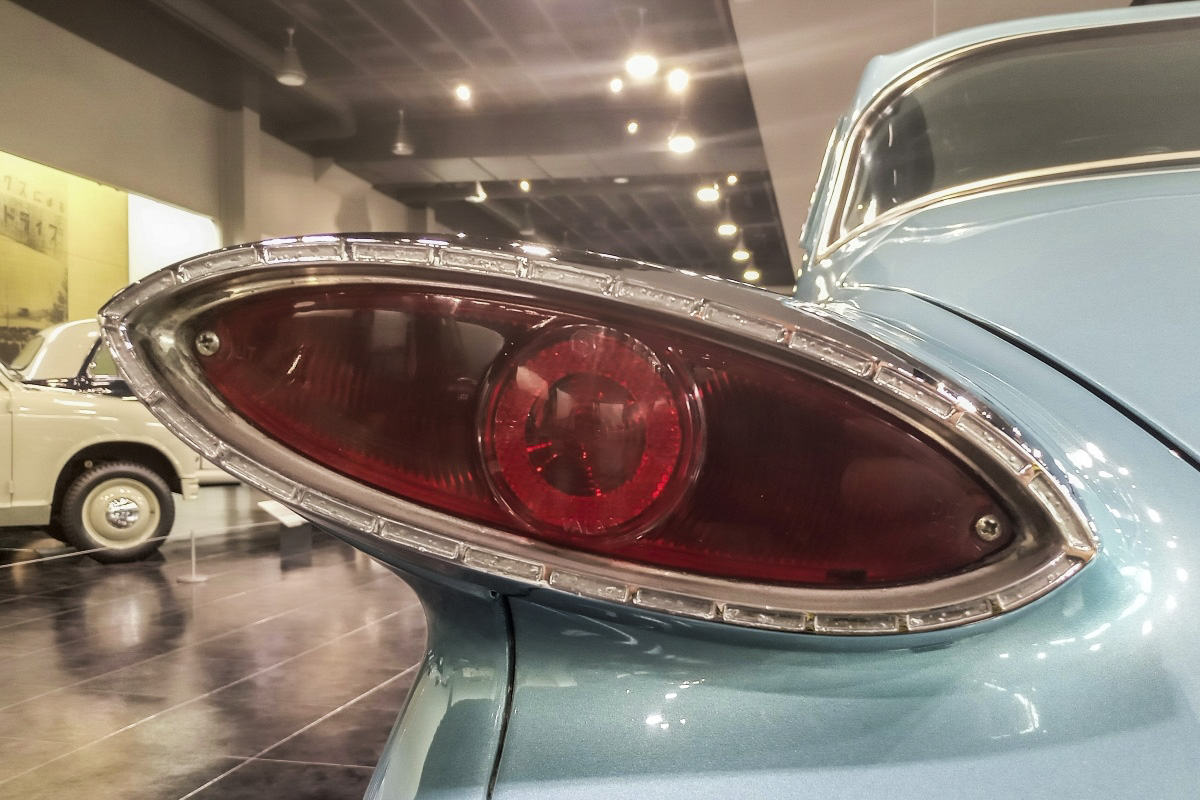
All car designers evolve with the times and nobody is perfect. Giovanni Michelotti authored some of the prettiest cars ever made in the ‘40s and ‘50s, but he was also behind the Leyland P76. Virgil Exner’s work through those same decades, for Studebaker and then and as chief stylist and V.P. of Design at Chrysler, was outstanding. And then it suddenly took a hard left into some sort of nightmarish uncanny valley.
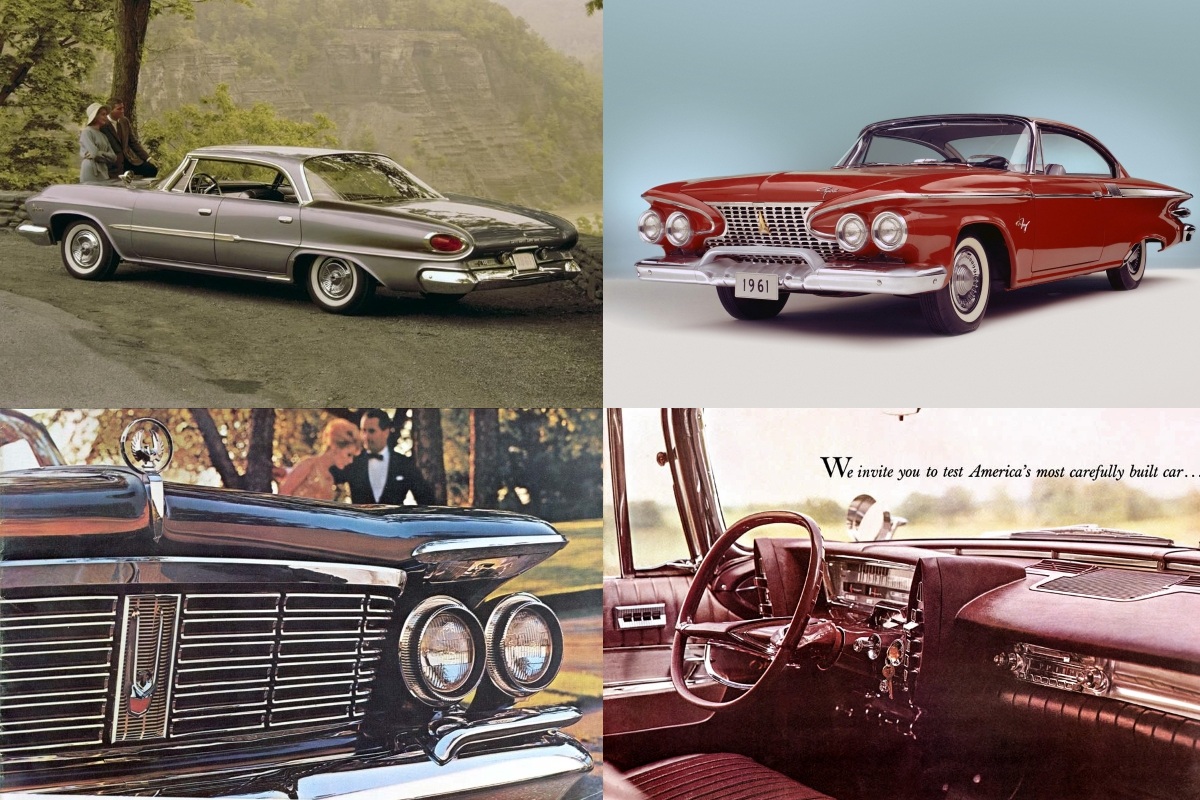
This may have something to do with Exner’s physical health. He suffered a major cardiac episode in 1956, as he was working on the designs for 1959-60. The ‘59s were basically warmed-over ‘58s, but the 1960 models, including the Valiant, would be mostly new unibodies and invariably weird. And they kept getting stranger as time went on. Tailfins were out everywhere, except at Mopar where they grew higher in some models, horizontally in others and, improbably, in reverse on the 1961 Dodges. The ’61 “Angry Alien” Plymouths, the ’62 “Plucked Chickens” and gimmicky things like the Imperials’ stand-up headlights or squared steering wheels made Chrysler products of the time a bit of an acquired taste.
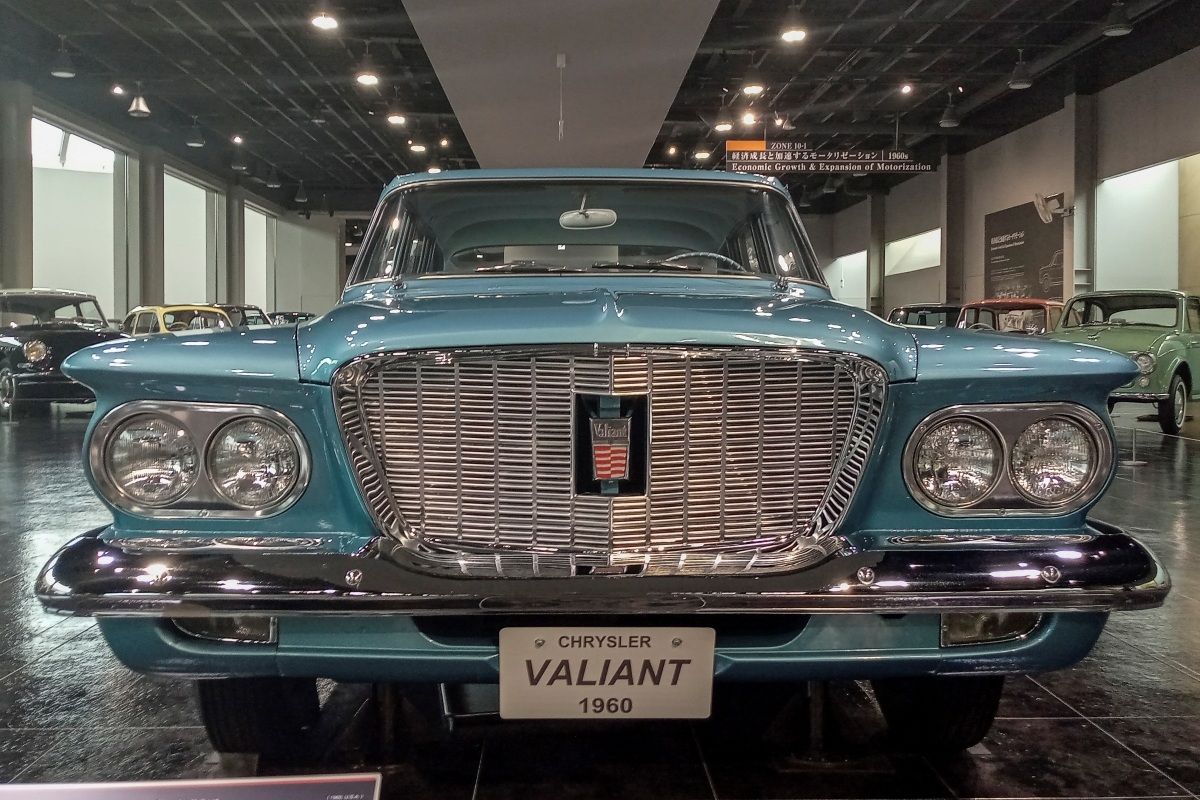
While not exactly alien, the Valiant was in itself a very strange and quite potent cocktail of Virgil Exner’s more questionable styling idées fixes, with a few strokes of brilliance thrown in. The gaping trapezoidal grille was also found on the 1961-62 Chryslers. The protruding flat front fenders also found their way into many other Exner cars, like the ’63 Chryslers, the ’62 Plymouths and the ’61-63 Imperials.
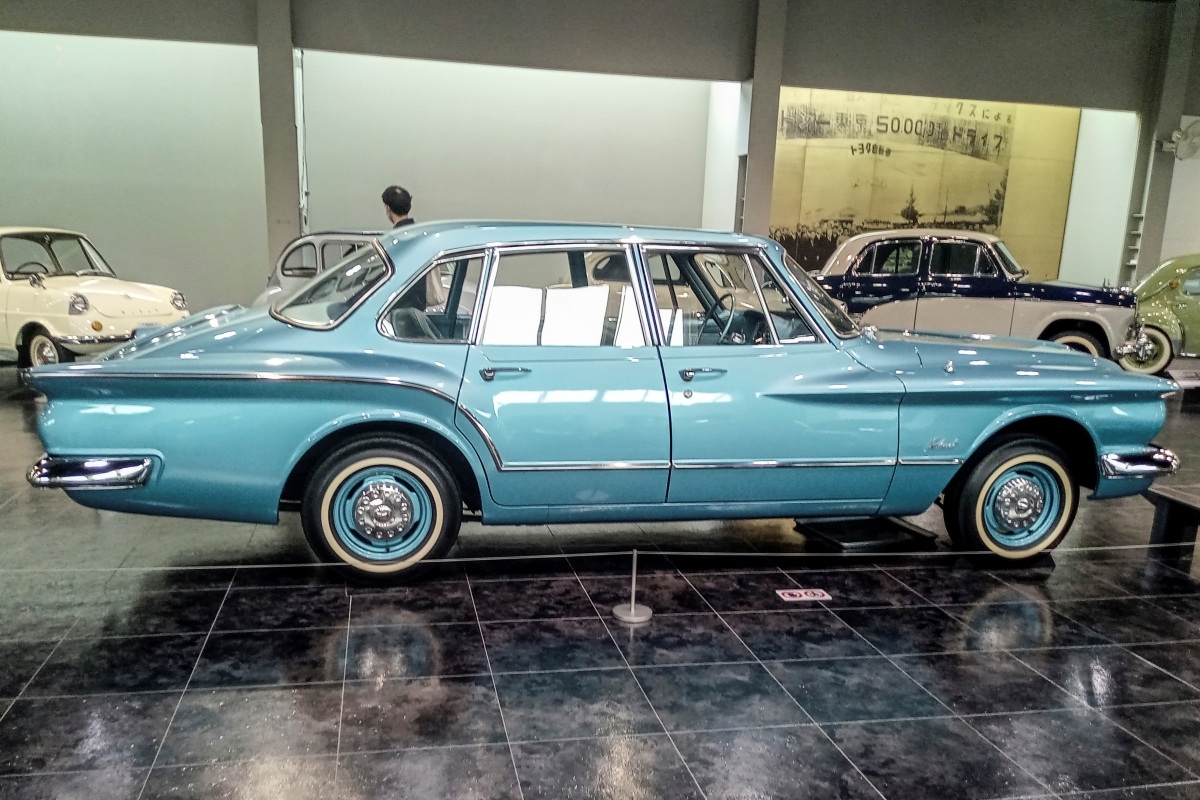
The deep beltline dip was a Valiant exclusive, but the shape of the character line that led the eye from the rear wheel to the taillight was also used in ’62 Dodges. The compact’s interesting six-light greenhouse and semi-fastback rear end, on the other hand, were sneak-previewed in 1958 on the Imperial d’Elegance show car.
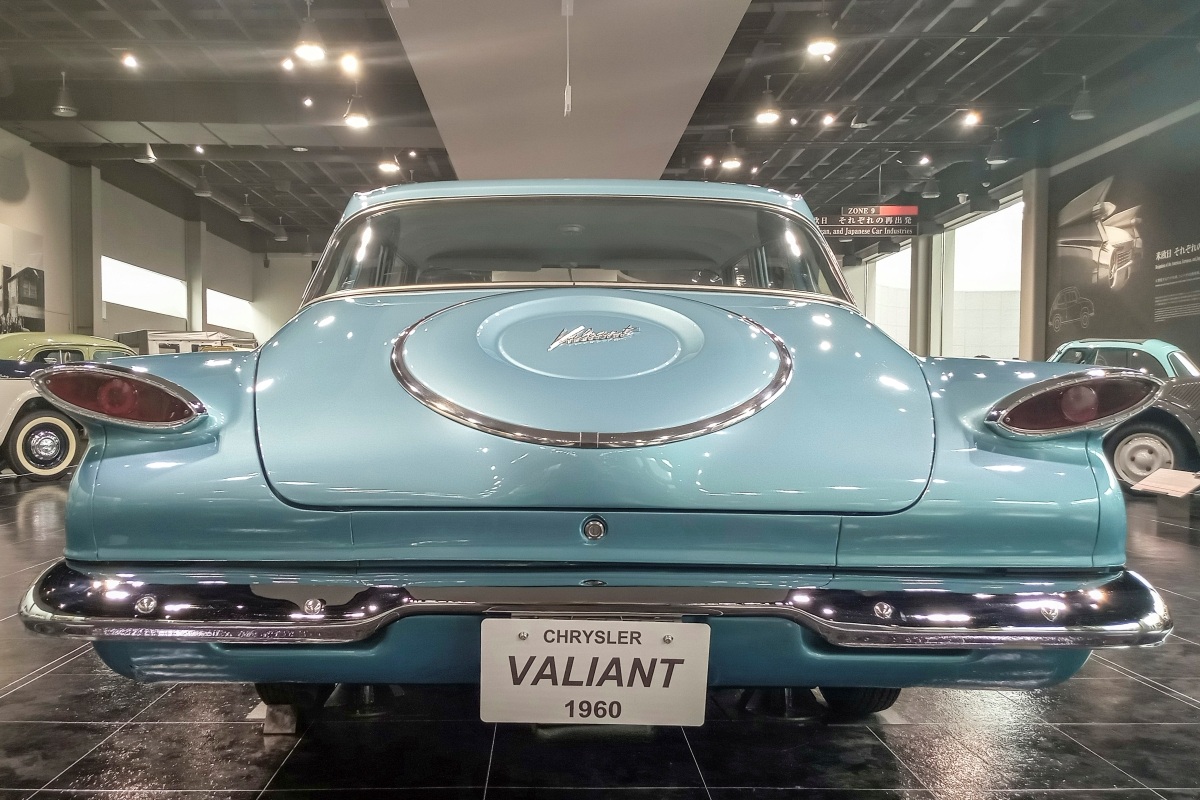
The infamous “toilet seat” faux spare wheel cover on the trunklid, featured in many Exner designs from the late ‘50s onward, found itself in the Valiant as well. Talk about bog standard!
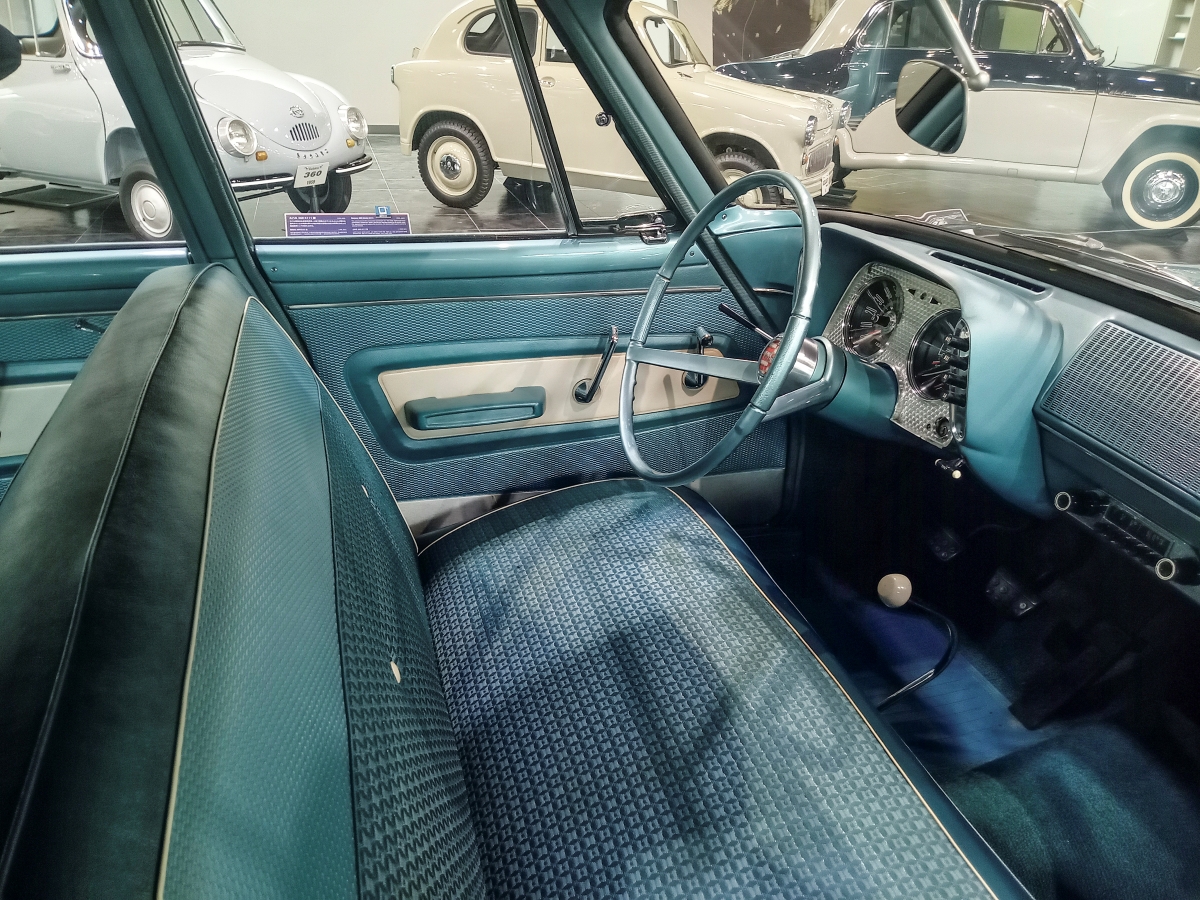
Interior design was as novel as the rest, with a large instrument binnacle sat on a recessed dash, somewhat reminiscent of Tuckers, bathtub Nashes or contemporary Panhards. Not revolutionary, but markedly different from the norm. This model has the floor-mounted 3-speed, which would have seemed a bit odd in the height of the column shifter era.
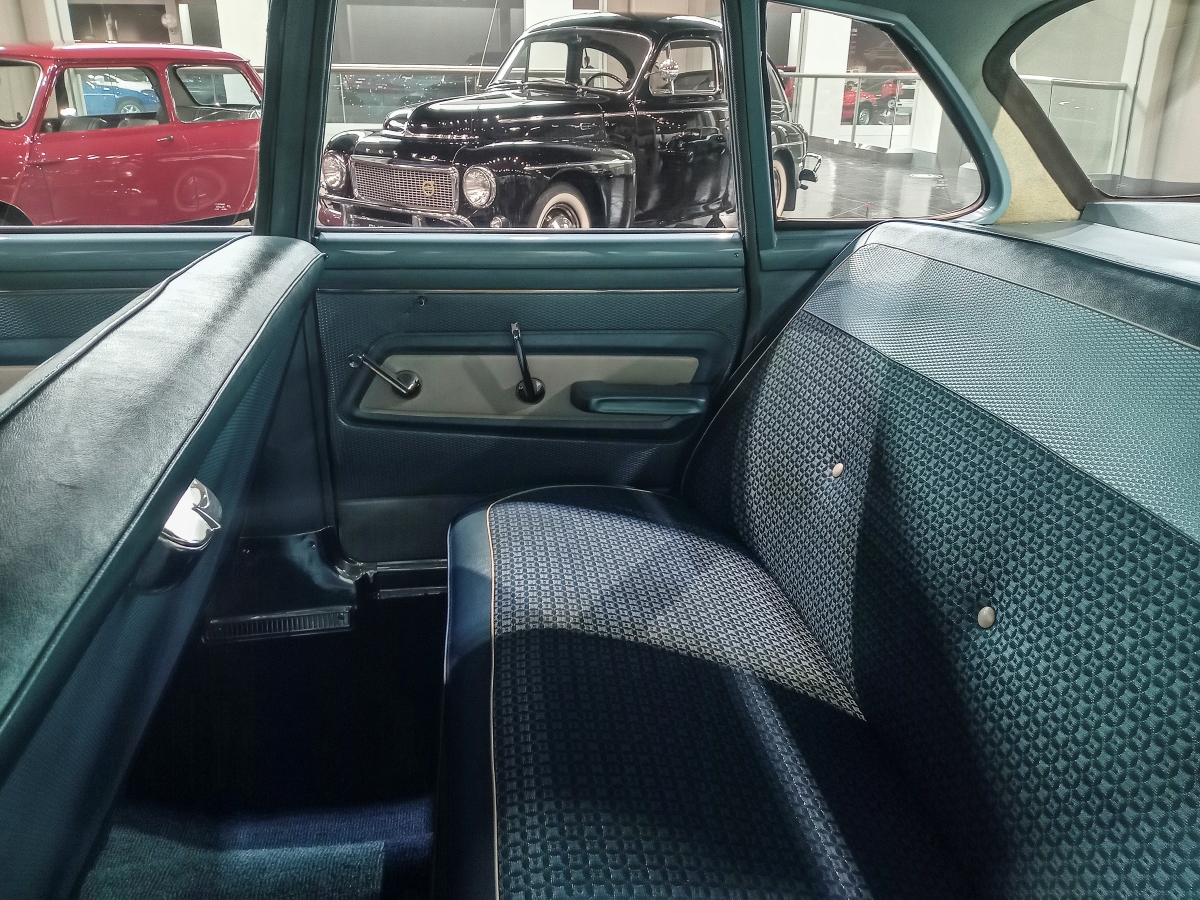
Compact by name, but not really by nature, the Valiant wasn’t too stingy with rear passenger space. Interestingly, this was despite its shorter wheelbase: Flacons rode on 109.5’’ Larks on 108.5’’, Corvairs on 108’’ and the Valiant made do with 106.5 inches (2705mm). It made up for it by being 2-3 inches longer than its three direct competitors. It was also a tad heavier than the Falcon and Corvair.
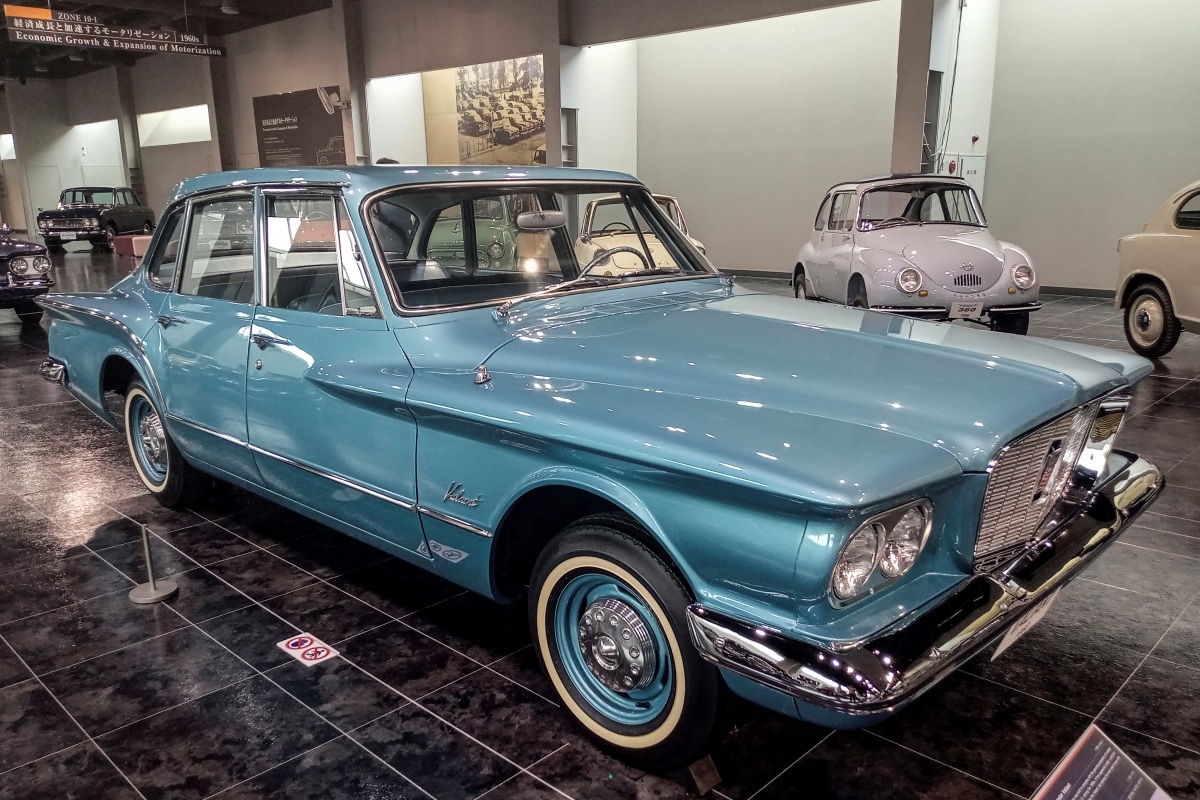
I caught this Valiant at the Toyota Museum in Nagoya, but I don’t know if it landed here when new or later. Some must have been imported here, as American cars were still pretty widely exported in 1960 and something a little smaller would have suited local roads better than, say, a Chevy Bel-Air. The new US compacts were also cheaper than full-sizers, both at home and in export markets, making them direct competitors with mid-level European executive cars in many markets, including in Europe itself.
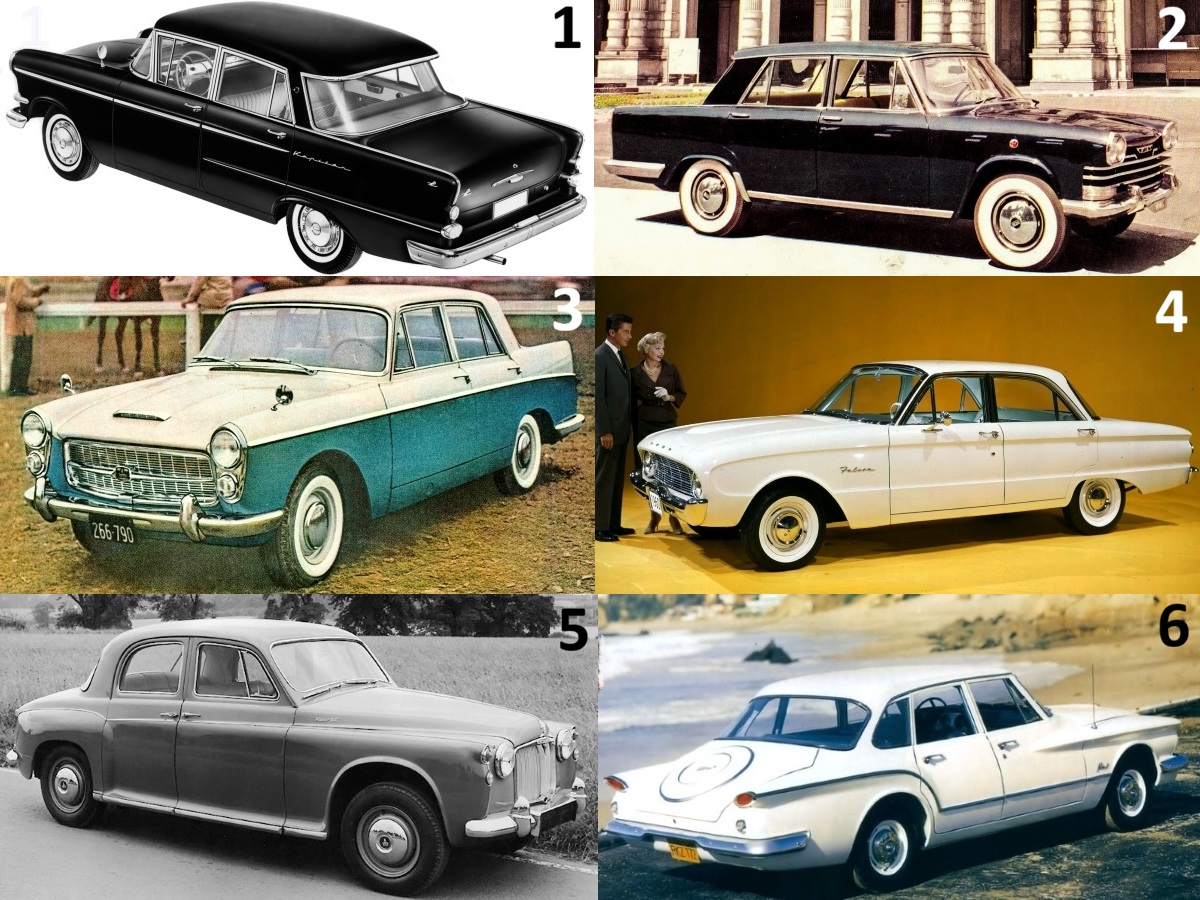
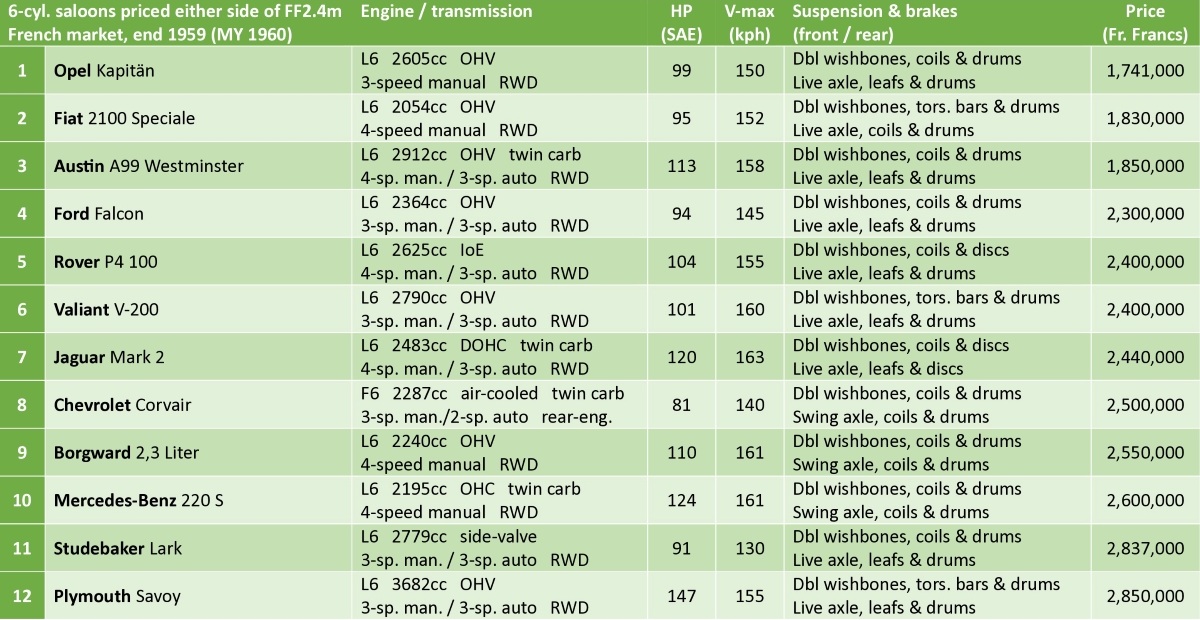
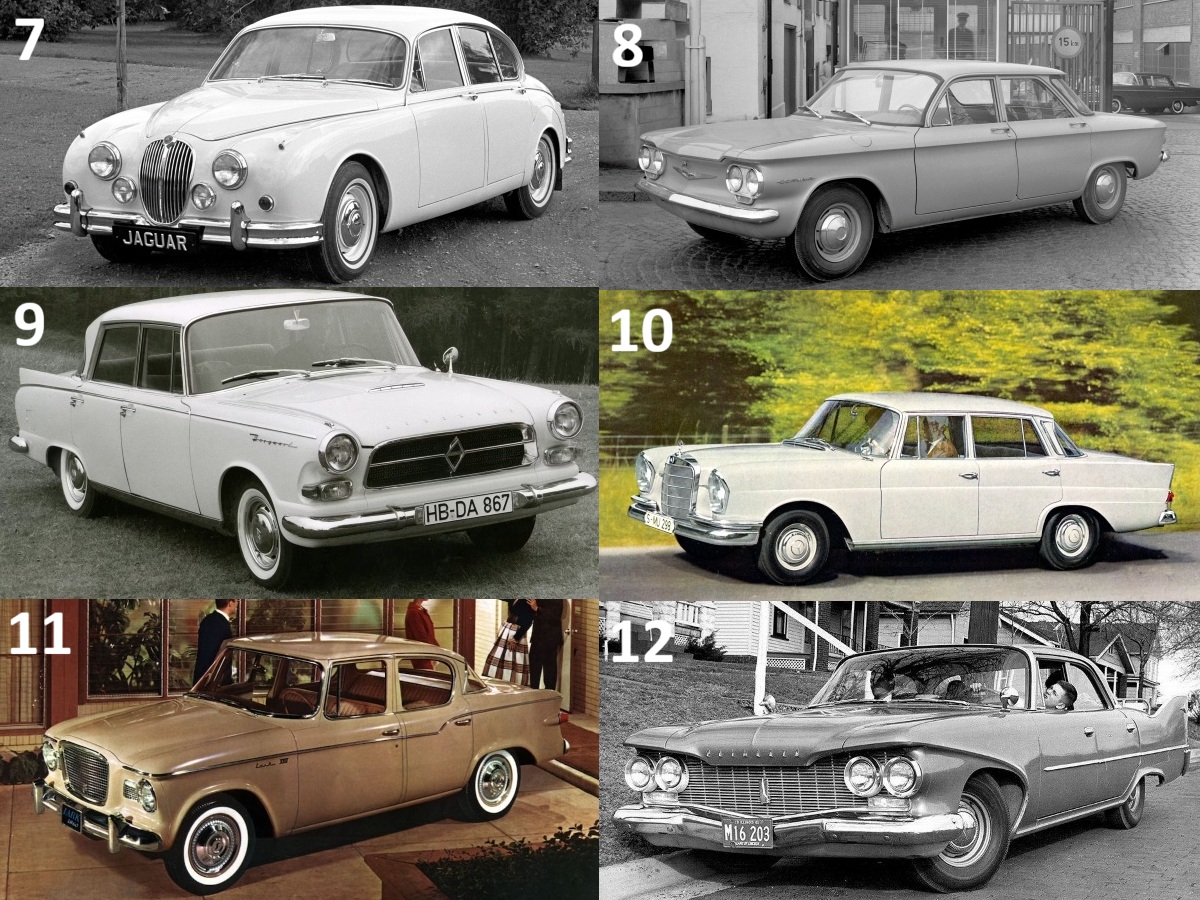
Here is what the lay of the land looked like in France, for instance. It was a somewhat peculiar market, in that the domestic makes didn’t really have a true competitor in this segment. Well, they did have the 2-litre Citroën DS, the Renault Frégate and the Ford V8-powered Simca Vedette, but those cost half as much as anything in this table. From a technical standpoint, the Valiant was bang up to date for its time, with the patented Chrysler torsion bar suspension and the brand-new slant-6 even giving it a bit of an edge. As an aside, full-size Plymouths were quite a bit cheaper than Fords or Chevrolets in several European markets, for some reason – not that this translated to all that many sales.
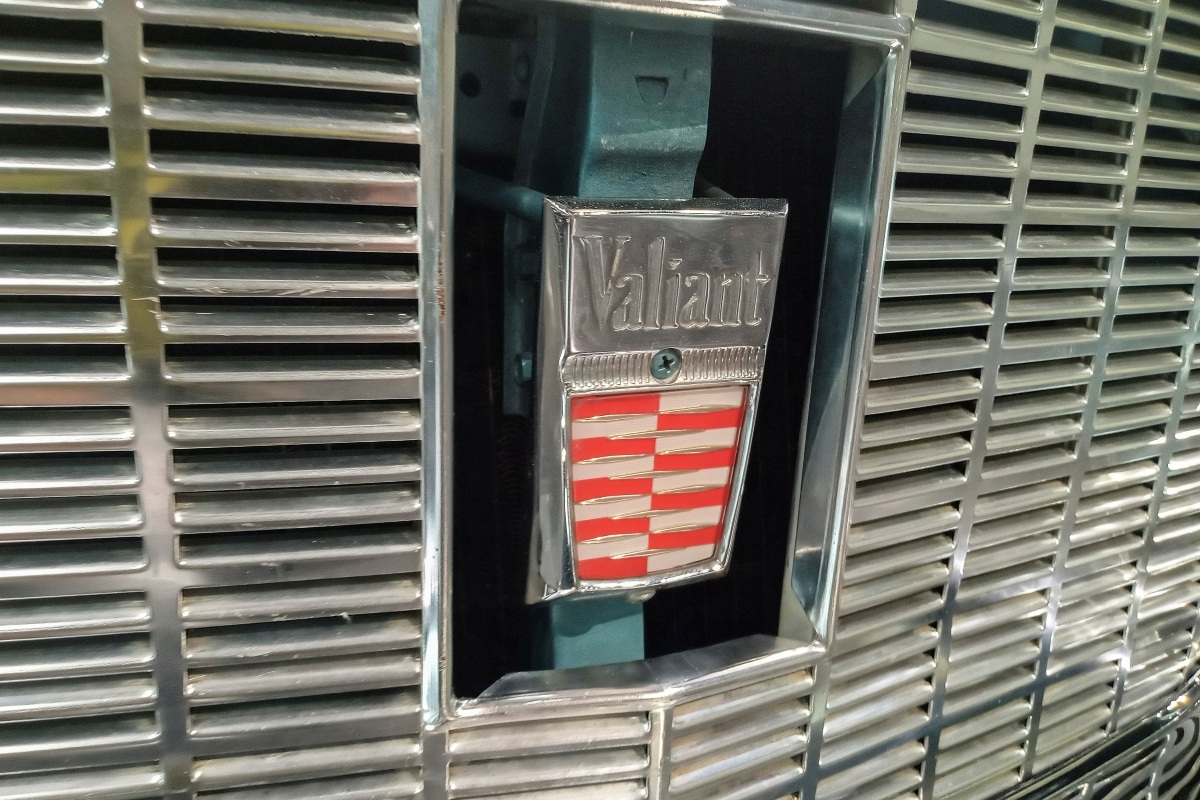
Another curious decision on Chrysler’s part was the Valiant being marketed as its own marque for 1960, but sold only at Chrysler-Plymouth and DeSoto-Plymouth dealers.
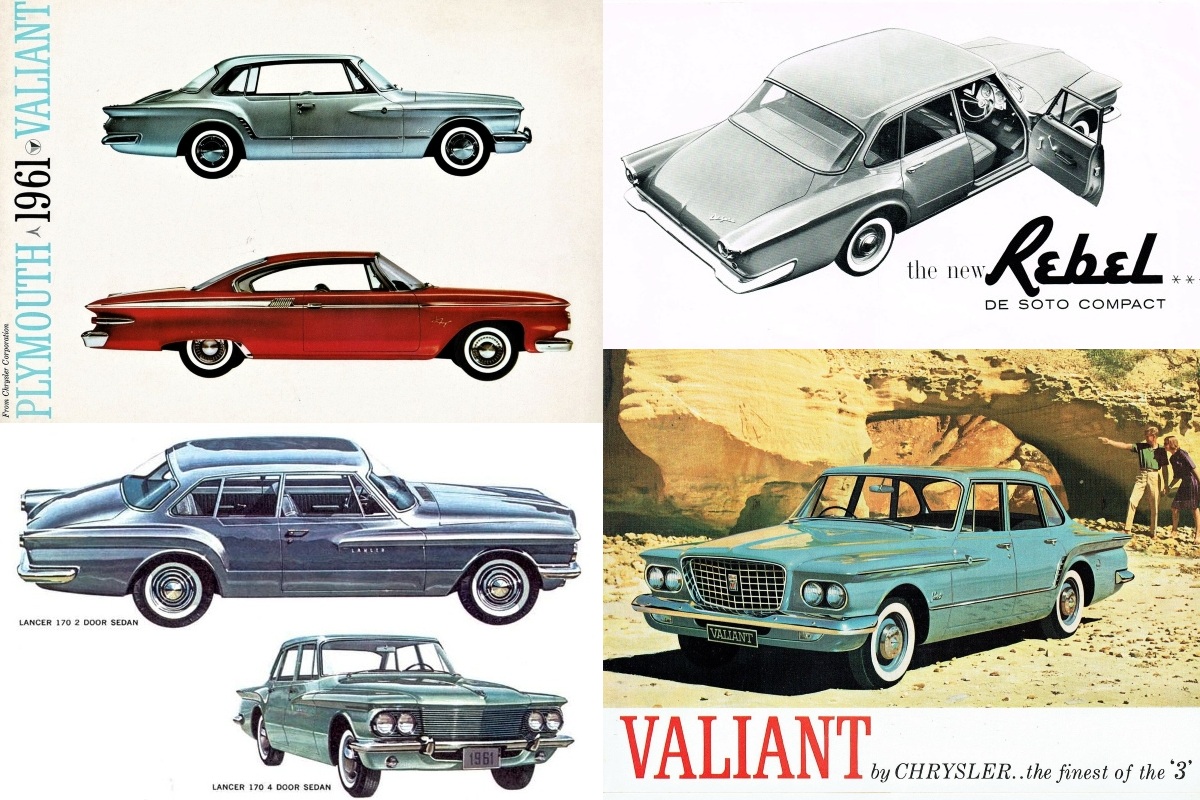
Prudently, the Valiant was given to Plymouth from MY 1961 to boost the division’s sagging sales data, though the Valiant kept a semi-independent identity in the near term. Dodge got the Lancer as their me-too version, with a few ornamental changes. Things could be different overseas: Valiants were marketed as Chryslers in several countries; the Lancer was even sold as a DeSoto in South Africa for a couple of years. In fact, aside from Imperial, the Valiant was thus adopted by every Mopar brand under the sun.
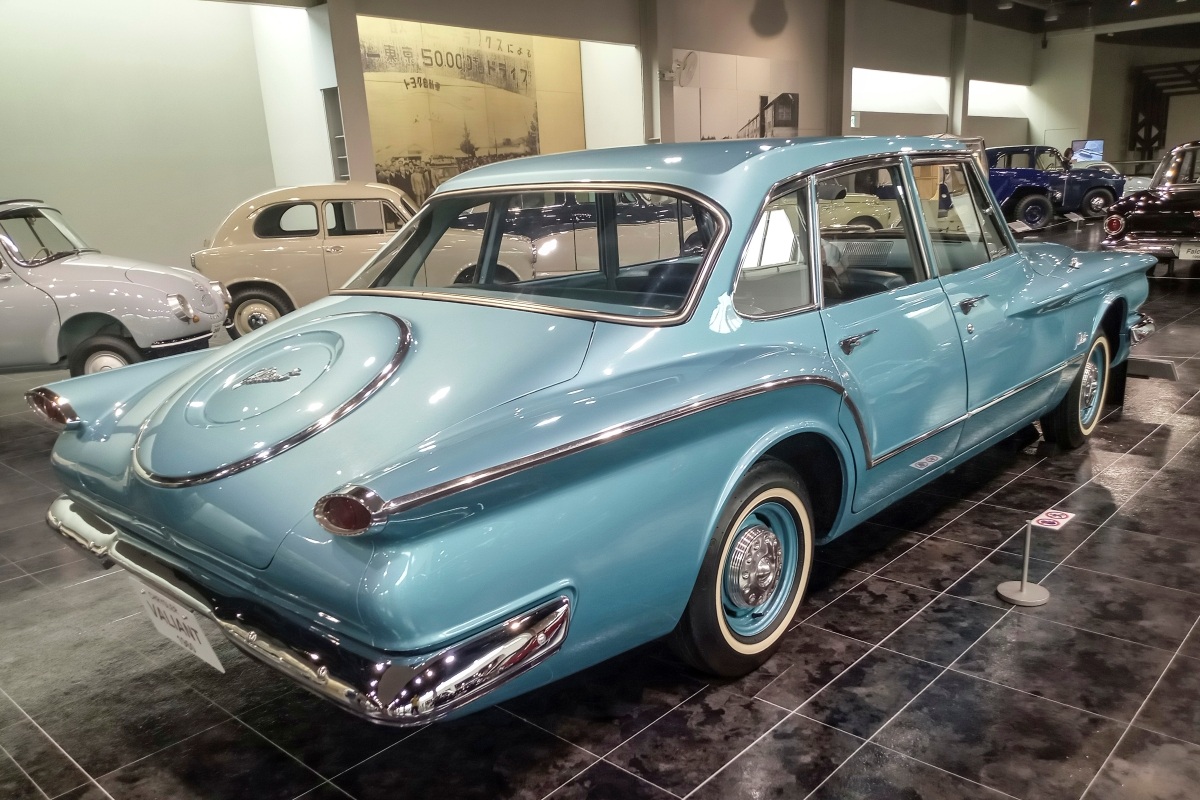
That was my two yens on Chrysler’s first “compact” – a very bizarre-looking machine for sure, but far from the worst design the convalescent Virgil Exner committed at the time. This car was displayed right next to a Falcon and a Corvair, so it was even more obviously a deep-sea creature out of water in that context. I’d pick the Chevy myself, but the Valiant might be my second choice, if only to enjoy its airy greenhouse, outstanding engine and innovative trunk-mounted commode. Where’s the flush, by the way?
Related posts:
1960 Valiant – The Automotive Frog Prince, by PN
Car Show Classic: 1960 Valiant V-200 – No, It’s Not a Plymouth, Not Yet, by Tom Klockau
1960 Valiant – Better Than the Competition Except In Build Quality and Styling Coherence, by PN
Curbside Classic: 1960 -1962 Plymouth Valiant – No One’s Kid Brother, by Laurence Jones
Vintage R&T Review: 1960 Valiant — A Technical Analysis Of Chrysler’s New Compact, by Aaron Severson























That is really one awful looking thing.
I love it. George Jetson would have driven one.
Sure it was an acquired taste that many buyers found too radical for a simple economy car, but it perfectly captured the Googie-infused optimism of 1960 American design. While automotive historians usually classify Virgil Exner’s work as “Forward Look” or “Space Age” design, it shares almost all its DNA with the mid-century Googie architectural movement. Googie styling was defined by futuristic optimism, bold asymmetry, sweeping lines, and a obsession with the Atomic Age. The Valiant captured that exact aesthetic.
The Valiant was so superior to the Falcon, which was a dull sad dour unfortunate-looking thing. The Vaiant had the legendary Slant six, Torsion-Aire ride, and the 3 sp Torqueflite making the Falcon so inferior w/ it’s 140 cu in 6, 2 sp Ford-O-Matic and coil leaf springs suspension. The Valiant was a race car in comparison.
It took the US almost a decade to realize how much better the Chrysler compacts were – altho syling had become conventional by then. The best looking new compact of 1960, the Corvair, with it’s even more beautiful 2nd gen restyle, got the worse deal of the 3. It always irks me that the Falcon was the breakaway early success of the trio, but also the worst of them in almost all ways.
In defense of the Falcon, it was actually a 144 – but that’s nothing against the Valiant. Still Ford was far short of the mark.
Here in Australia we didn’t get the Valiant until 1962, (so it lobbed at the same time as the ’62 Dodge, not two years earlier), and it came only with the 225 – incomparably better than anything Ford offered. This gave the local Valiant a reputation for performance and style, which later models seemed to water down as the competition caught up.
the Falcon was so reviled in Australia it earned the name “FoulCan”. it literally fell apart on Aussie roads and it took Ford years to catch up with the Valiant.
My sister drove her ’62 Signet 200 everywhere, even on the old Santiam wagon road and an unimproved single lane forest road to Ollalie Lake in the Oregon Cascade mountains. My 13 y.o. mind must have accepted the syling as normal for the times. Riding with her, the 225 c.i. six with torque flight seemed punchy, even at highway speeds. She seemed to enjoy putting her foot in it. I got to use the car for commuting to school one week while my Corvair was in the shop and I was impressed by the Valiant’s willing nature. I think I would enjoy having one today.
To modern, and perhaps non-North American (or Australian) eyes these look bizarre, but they were so common on the roads in my part of the world that as a kid I just took them for granted. I mean, the details are different, but a ‘59 Chevy is pretty weird too.
I would agree that the 59 Chevy is definitely “out there” compared to what people were seeing back then, but it still “flowed” (hate that expression), it just looked outrageous, but stylish still.
The 60 Val? LOL. It is Hideous from every angle. IMO. If you look at little sections, some look ‘neato’, but definitely doesn’t “flow’.
It seems like different pieces & different sizes mashed together, like some whacky ‘Barris’ Mobile, but not in an artsy way.
All this BEFORE mentioning the “toilet Seat”..
YMMV.
(I’d still drive one today, But I’m like that).
One thing that I’ve always found odd about these early Valiants is the exposed phillips head screw on the emblem in the middle of the grille. It really looks cheap! And since this particular screw is at angle, I have to resist the urge to stick a screwdriver into my screen to straighten it to a proper Up Down Right Left orientation.
If you don’t already know, that emblem was the hood latch release lever. I don’t recall if it incorporated the safety catch as well, it may have. Since the emblem was mounted to a moving lever it was likely difficult to keep square.
I can definitely see the inspiration for the rear end of the Stutz.
It’s like a Picasso, ignore it if you can either way. They were everywhere when I was a kid, we had a healthy Chrysler-Plymouth dealer in town.
It looks like a potato with wings. Then put a life buoy on the back as though it’s amphibious. It’s hideous. Such a great car under all that ugly. If I was a Chrysler engineer on that project, I’d had been absolutely in tears over how Exner ruined it. I know he created the 1963-1966 generation too, which was terrific, so WHY didn’t anyone at Chrysler stop him from doing the first design like that?
Honestly, how could Chrysler have let him touch any vehicle after 1959? The guy was obviously designing only for himself, not for buyers.
And how much did all of those excess styling gimmicks add to the cost?
Exner was an complex man in my opinion. His work has a definite progression. The 1956 designs were fresh and free from clutter. The 1957 models were a home run but as time went on, his designs became increasing strange.
The Valiant was a prime example of it. The car is all weird angles with tons of stuff slathered on, like the toilet seat fake spare cover. There must have been quite a bit of backlash as the Valiant was restyled in 1963, with much cleaner styling.
The Datsun 210 was not a bad-looking car. The B210, now that was a bit more questionable. And most would say the F10 was the worst design by far from Datsun in that era.
That’s what I meant, the B210. Fixed it — thanks for catching that.
Liked the lil, “F10’s”.
Terrific article! Finally some detailed photos plus commentary on a styling I can’t really wrap my head around. Still need to see in the metal, but this can take a while over here.
Also kind of intrigued with all the respect it gets and definitely wouldn’t dismiss it on looks alone.
Re: bog standard – it’s Ideal Standard where I come from
It just dawned on me what those taillights resemble: “Catseye” women’s sunglasses🕶 popular at the time.
Agree with “davis” post above: Chrysler had the best compacts technically. But I cannot acquire a taste for this model year, though the instrument binnacle looks fairly rational.
Ultra-fashionable taillights!
Toilet lid aside, most Americans might see it as European influenced, not the classic ’30s Ex like to evoke. In general his were sophisticated if eccentric designs perhaps too ahead of it’s time for the US, as were his imo terrific ’62 downsized full-size S Series cars.
I remember seeing one of these as a kid in person in the early to mid-70s. I thought it was so weird. (Still do.) In person, the creases and folds looked even more discordant than they do in photographs. That said, no-one can credibly claim the car is forgettable. Like a Yoko Ono song, it may make you grimace, but it also gives you plenty to talk about.
Floor shift is the obvious choice here. Most other makes had manual or automatic shifter on the column in those days, so lots of interchangeable/common parts, regardless of transmission. Chrysler had pushbutton automatic, so to engineer a column shifter just for the manual transmission would have been costly for the lower take rate.
And yet the wagon version looks great. I can never reconcile that!
A good part of the market at the end of the ’50’s was open for something much more sensible than the gas guzzling excesses coming out of Detroit. Just give me something simple that I can understand and rely upon the public said. Not something foreign with its engine in the rear, and not something so strange looking that it denies definition.
It’s clear to me why Ford knocked the ball out of the park with the very conventional Falcon.
Eye catching but wow, FUGLY .
I’d really like to drive one especially with the floor shift .
-Nate
I was just reading your Datsun 120 Why article T87, and there are some interesting parallels between it and the Valiant. Both unashamedly did their own thing, flying in the face of the competition, styling convention and good taste. Both feature bizarre design elements that bear no relation to what’s going on around them. It’s almost like Nissan’s 1970s commitment to weird styling was inspired by Exner’s work.
But another parallel is that both are memorable today – I guess even bad design is still design, standing apart from the masses. Given the choice between Falcon, Corvair or Valiant, my sense of humour would take the Valiant, but my sense of practicality would take the Falcon.
Side story: my grandparents bought a ’59 Plymouth Belvedere new when my Mother was aged 9. When the (Chrysler) Valiant was launched in New Zealand in 1962, Mum’s diary records the family heading to the local Chrysler dealer to try it out as a possible replacement for the Belvedere. Her diary notes that she hoped they wouldn’t buy it as it was odd looking and tiny inside versus the Belvedere. I guess my grandfather felt the same, as they kept the Belvedere and bought a Renault R8 to accompany it!
That slope around the windshield and side windows is extreme, and really attractive. I get the feeling that the designers struggled to fill in the space to the corners so that the car looked to be normal in width. There had to be a way to do it without the giant protruding lines front and back, but they didn’t do it. Keeping in the Exner family, they solved a problem like this better on the Karmann Ghia…
I can’t even begin to imagine the average Japanese person’s reaction on encountering one of these in 1960! It’s obviously a car – yet there is so much non-functional stuff added. Any way you look at it – front, rear, profile, inside – it seems different if only for the sake of being different. Determinedly different.
That said, I love it. Always have. It is just so different, vaguely reminiscent of some of the Ghia/Chrysler show cars. In that context it seems futuristic. In 2026 it speaks of a road not taken, a future not realized.
However, I could do without the toilet seat; I suppose I should be glad Chrysler engineers didn’t make it functional.
The bulletproof slant-six engine with its gained reputation for its reliability made the styling of it take a back seat to many buyers, which was why it was successful despite its awkward appearance.
My parents had a 1960 white Valiant. I’m not a fan of the Chrysler styling of the era. It was a decent commuter car though for my dad, while my mom drove the 1962 Chrysler Newport. As noted in a previous post, it was probably impractical to have a column manual shift due to the pushbutton automatic. Although very rare, even the Chrysler Newport of the era had a floor manual shift.
The Valiant wasn’t pretty, but it was unique with a superior chassis and drive train without resorting to unconventional tech like the Corvair.
I can only imagine production headaches resulting from the deep sculpted lines–and this after the tri-fives difficulties.
I prefer the basic shape of the Ghia Valiant, but the high mounted taillights, although a safety feature, looked odd as did the headlights which seemed to influence the ’62 Dodge.
I always liked the looks of the Corvair, but I probably would’ve opted for the Valiant. It’s the better car.
I never would’ve considered the Falcon.
The Exner design that should have been produced was the ’62 DeSoto prototype.
https://macsmotorcitygarage.com/the-never-was-1962-desoto/