
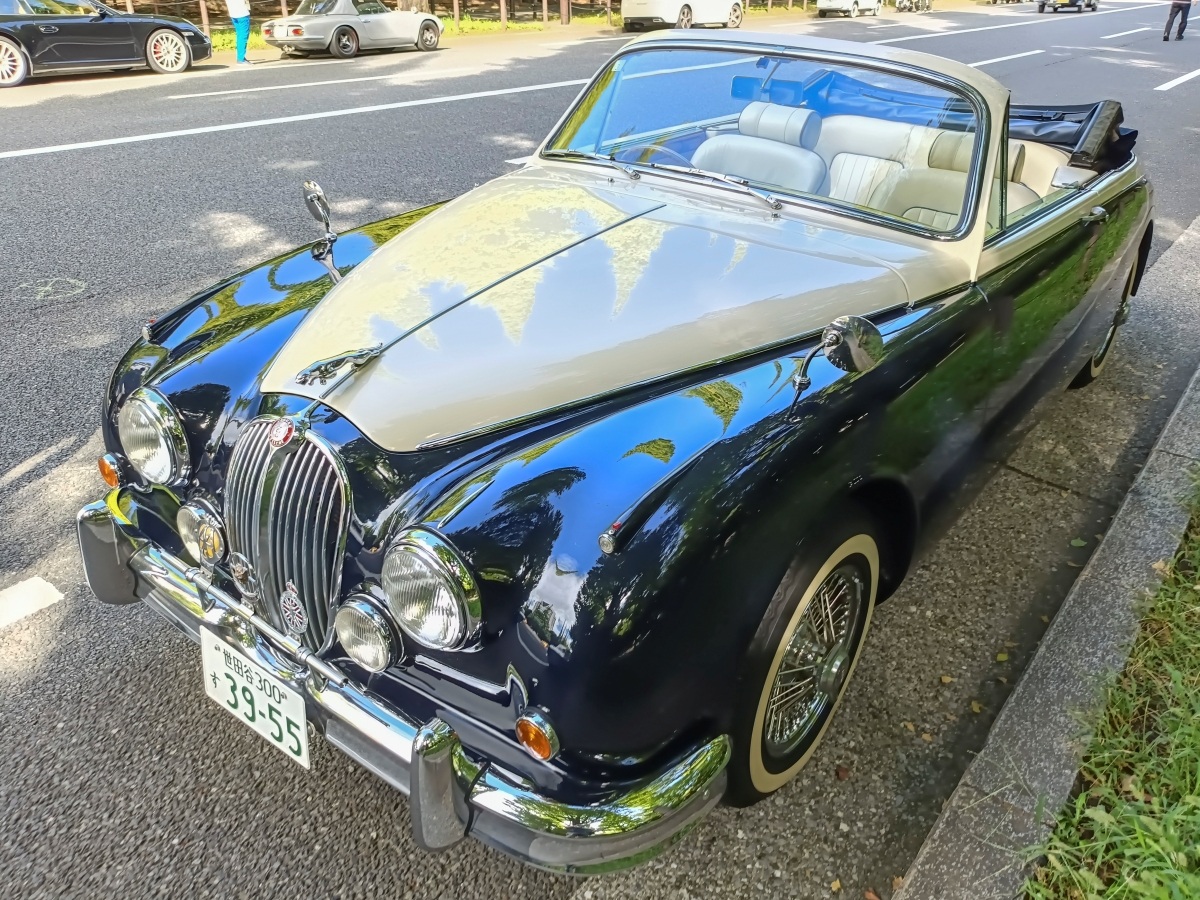
Even long after Jaguar ceased production of the Mark 2, quite a lot of people would look at them as pretty damn good. Vicarage, on the other hand, went: “We can rebuild them… we have the technology. We can make it better than it was – better, stronger, faster…” OK, but when did they add “We can also take the top off” to the opening credits?
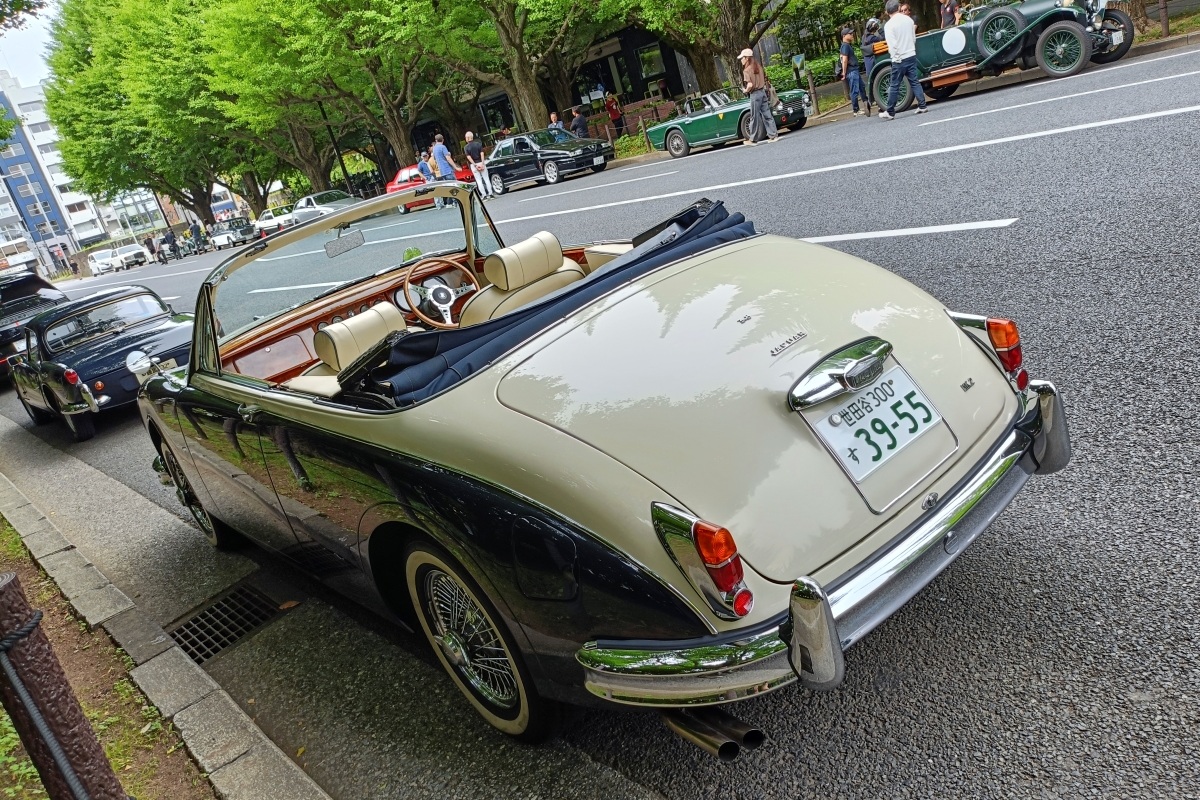
What is Vicarage? They’re something of an institution in their own right, in the little world of classic Jags. It’s not often that an outfit that does restorations and modifications (but not “restomods” as such, there’s the nub) becomes internationally renowned, but they certainly fall into this elite category.
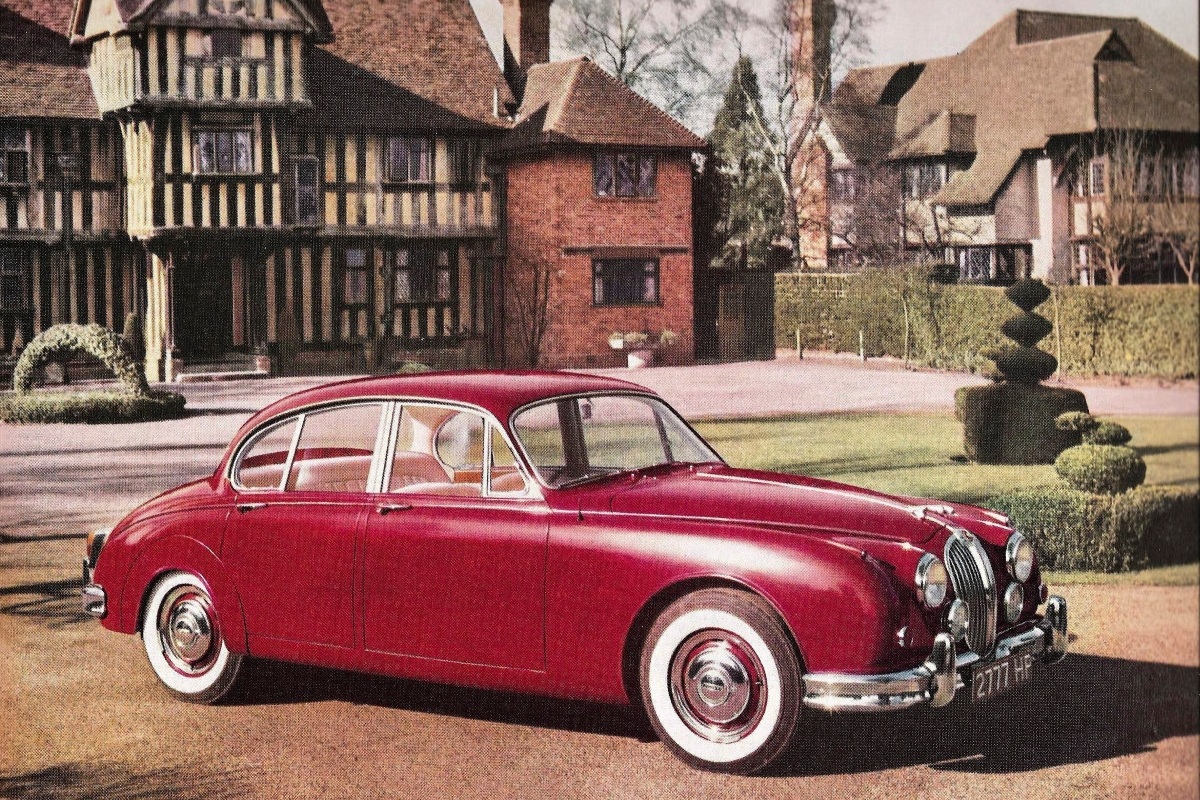
I’m sure we’re all familiar with the Jaguar Mark 2. These were made from 1959 to 1969 as the British marque’s entry-level four-door saloon, keeping the previous generation’s live axle suspension and brilliant 2.4, 3.4 or 3.8 litre XK straight-6 engine, but with a refreshed unit body. A Daimler version with a 2.5 litre V8 was also produced from 1963 onwards.
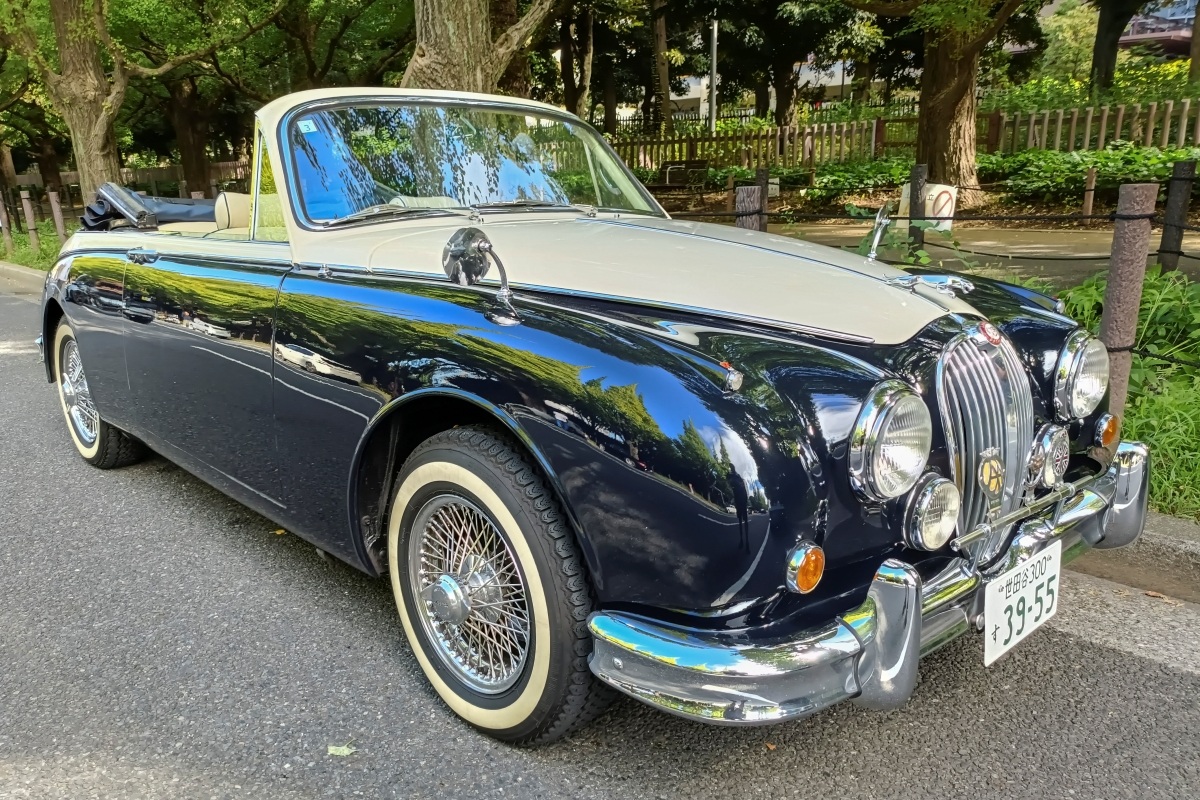
By the mid-‘80s, the Jaguars of the ‘60s had lost none of their cool, but many did need a little TLC. Vicarage’s take on this was to offer state-of-the-art restoration services, but also an extensive menu of upgrades that could be fitted to the cars so that they could be easier to drive, more comfortable or perform better.
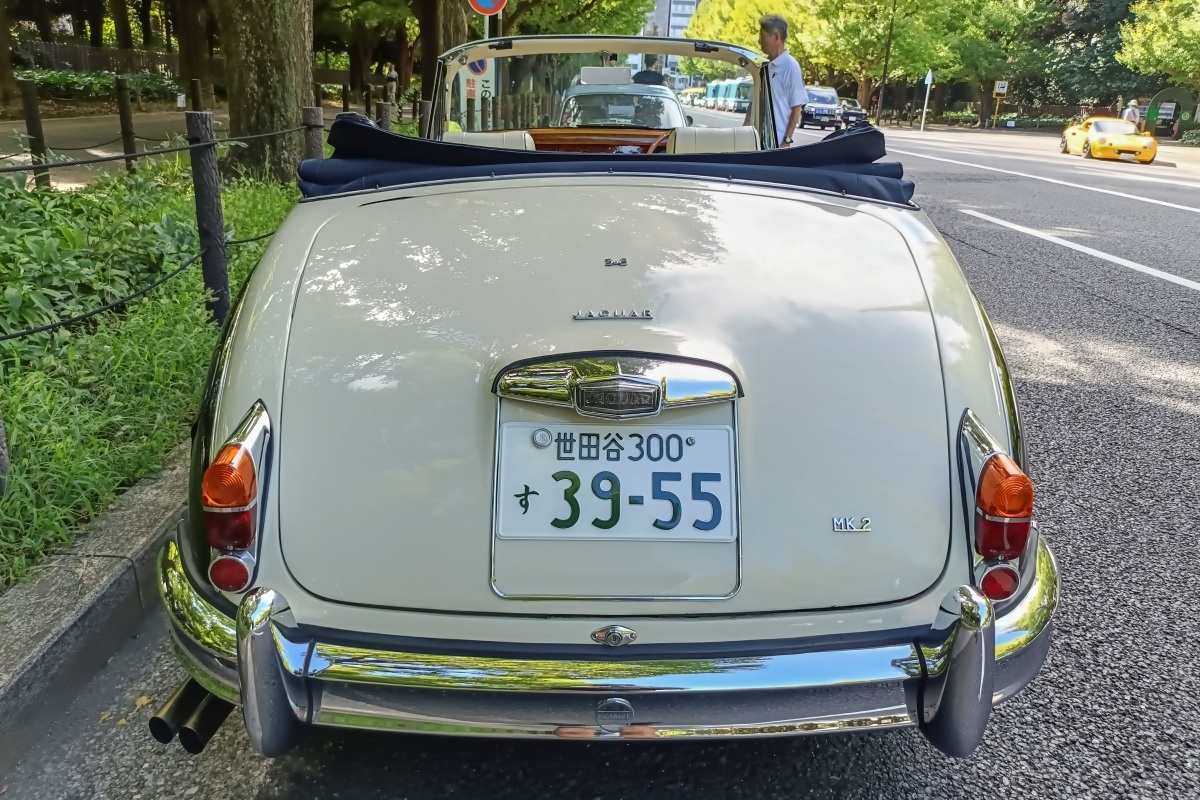
Upgrades could include power seats with custom upholstery, improved disc brakes, coilover IRS (for the Mark 2), more modern transmission options (5-speed manual, 4-speed auto – usually ZF), fuel injection or Weber carbs, engine upgrades (e.g. swapping in a 4.2 litre XK), A/C, satnav, seat belts with pretensioners, headrests, rack-and-pinion power steering, power windows and so on.
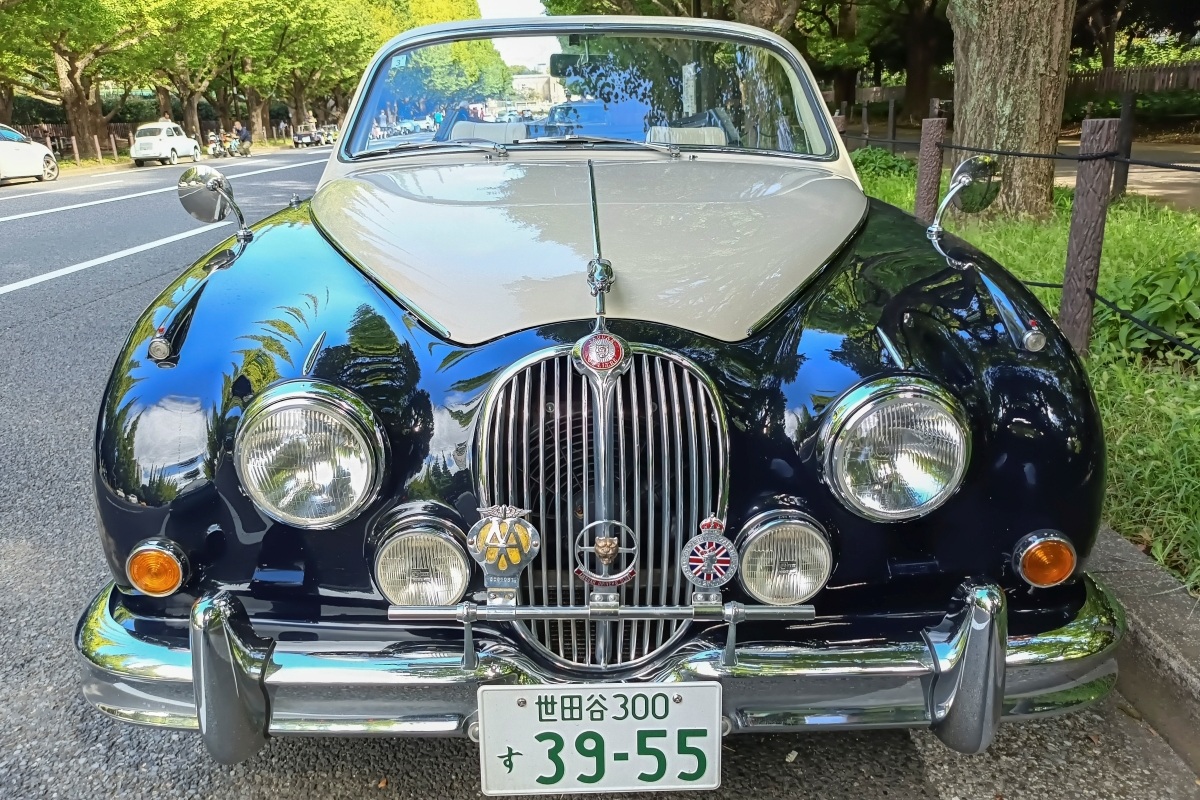
Most cars that got the Vicarage treatment were Mark 2 saloons and E-Types, though other Jags from the period were also worked on. But the only one that got the two-door drop-top treatment, which is quite an operation, was the Mark 2.
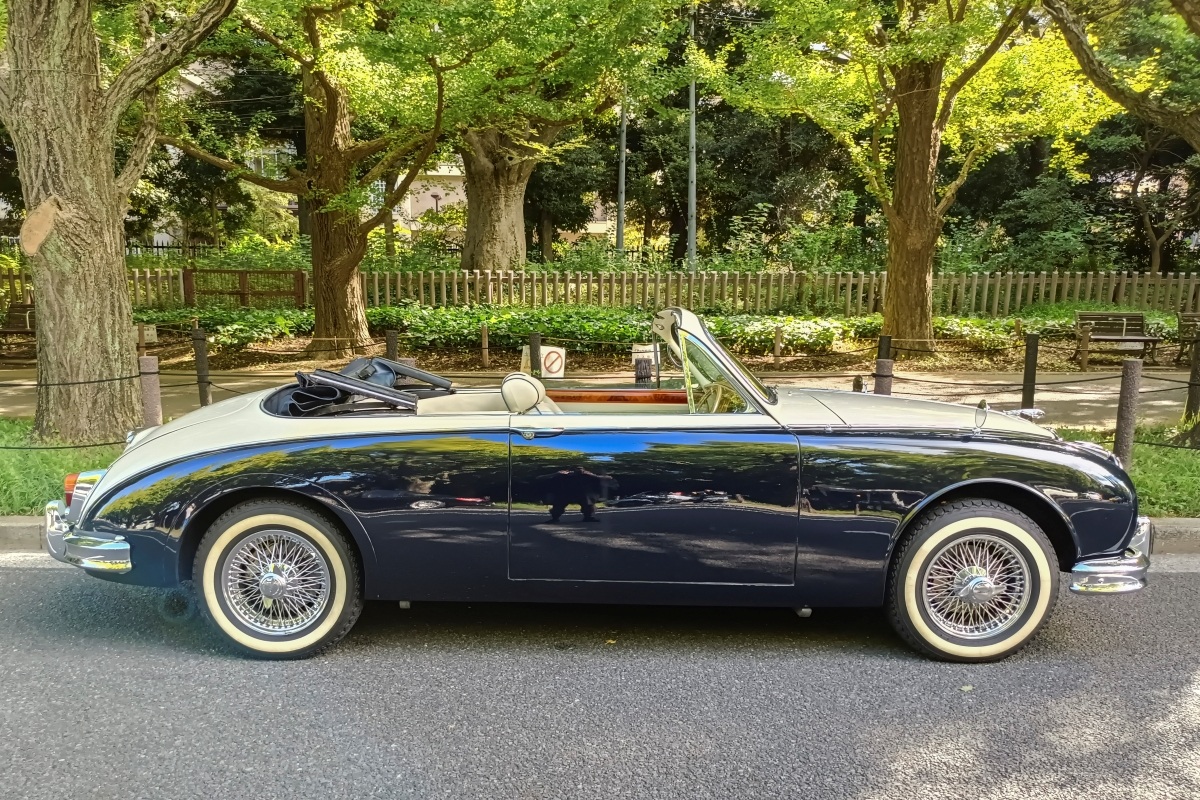
And those were few and far between. Some sources claim only 16 cars have been transformed this way to date – including one Daimler. This involved a lot of additional bracing to stiffen the platform, as well as some impressive coachbuilding aft of the B-pillar.
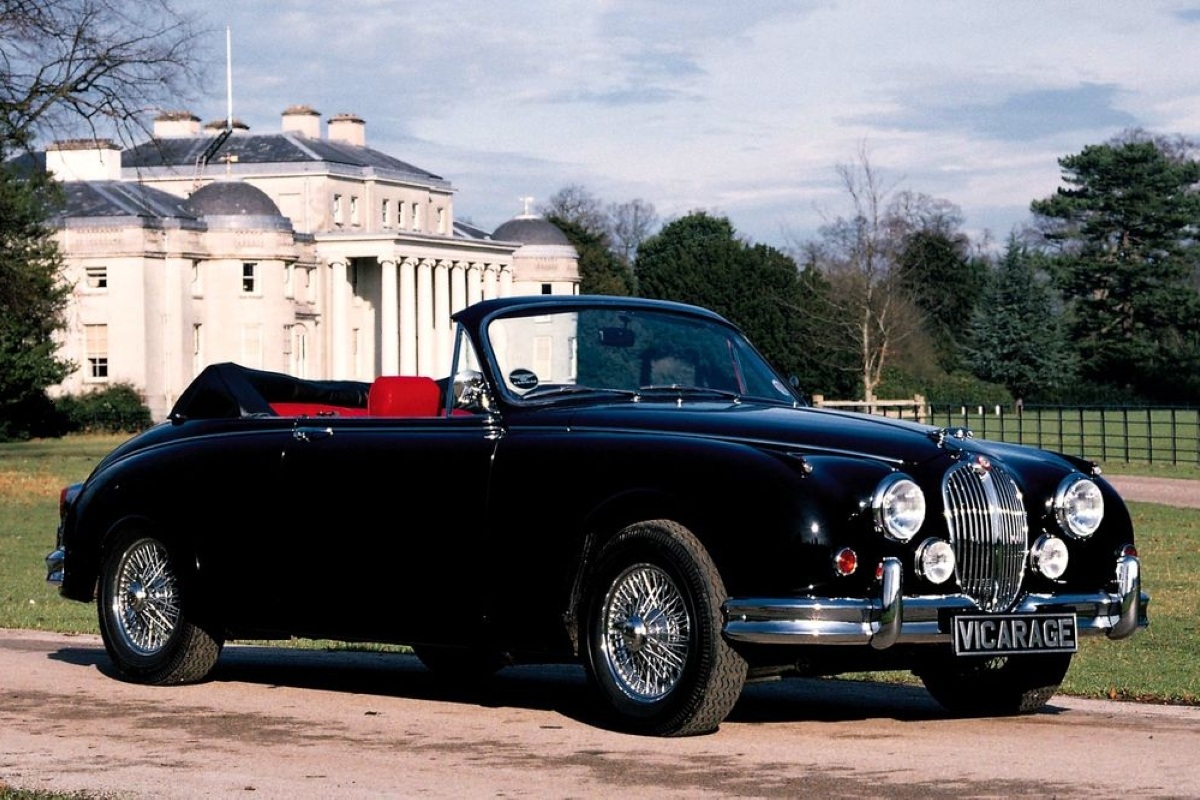
As far as I can tell (information on these is a tad imprecise), the first batch of ten cars was made circa 1989-90 and a few additional ones were added to the number since. The cost must be astronomical, so demand is necessarily limited. In any case, Vicarage claim to only be able to handle 25 cars per year. This is allegedly to ensure that quality remains beyond reproach, but it also guarantees that prices stay stratospheric.
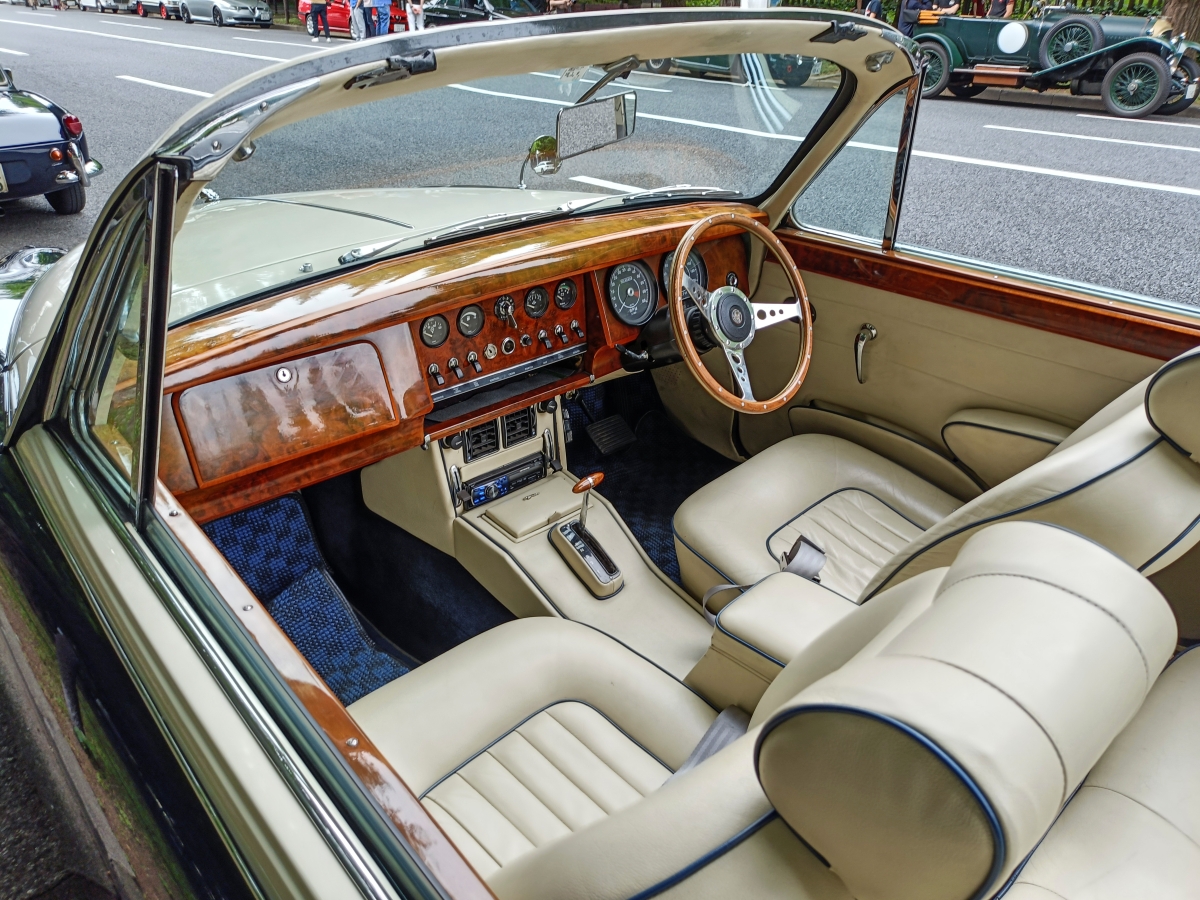
I have no idea how many updates and discreet modifications were added to this 1963 Mark 2, bodywork aside. Obviously, the seats, seat belts, HVAC, sound system, power windows and automatic transmission were all changed on this car. Vicarage’s calling card is how well said mods are integrated into the original design, of course.
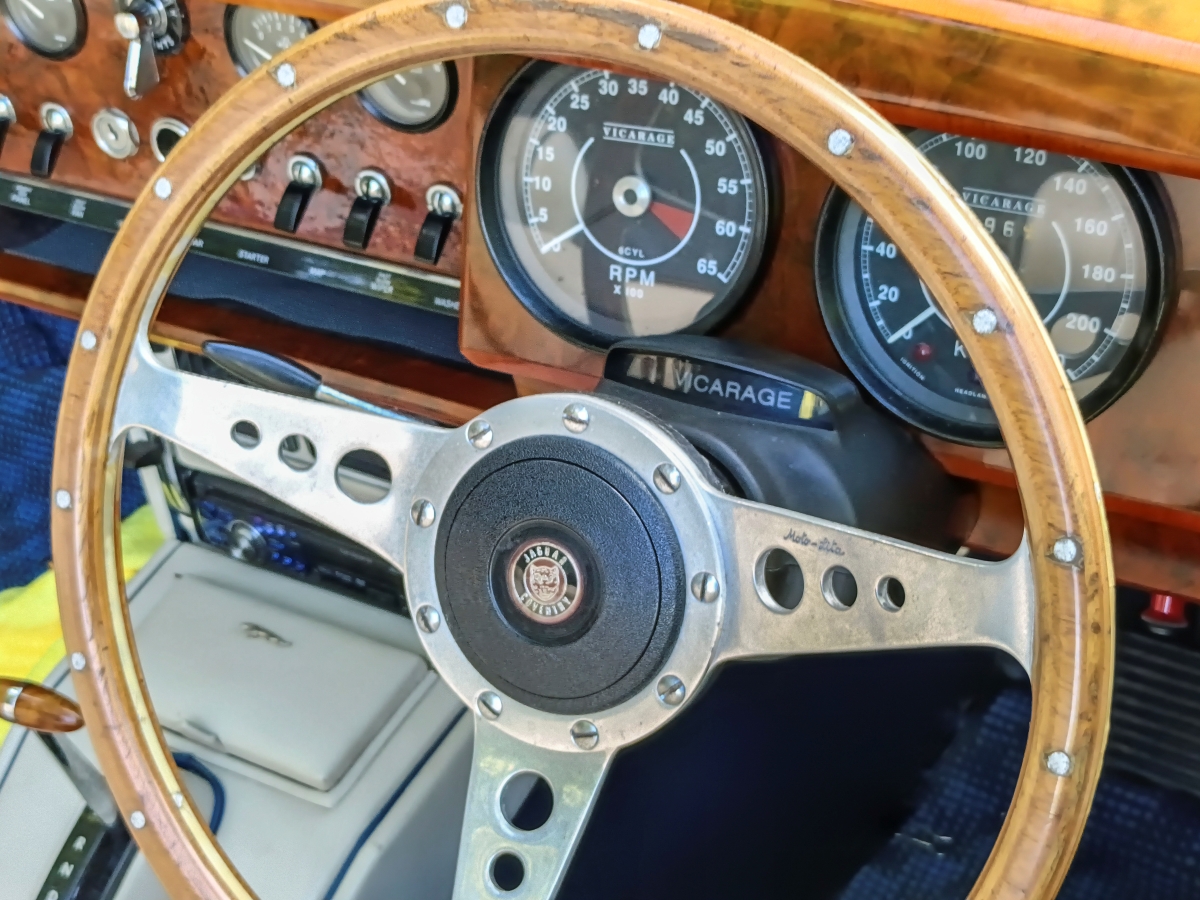
Personally, I’d give a minus point on this one for the steering wheel. It just doesn’t belong in a Mark 2, even if it is a convertible. And it’s too small, possibly hinting that the steering box was changed too. The “Vicarage” script in the now-useless column shifter indicator is a nice touch, though adding said script to the gauges is a bit much. We read you the first time, Vicarage.
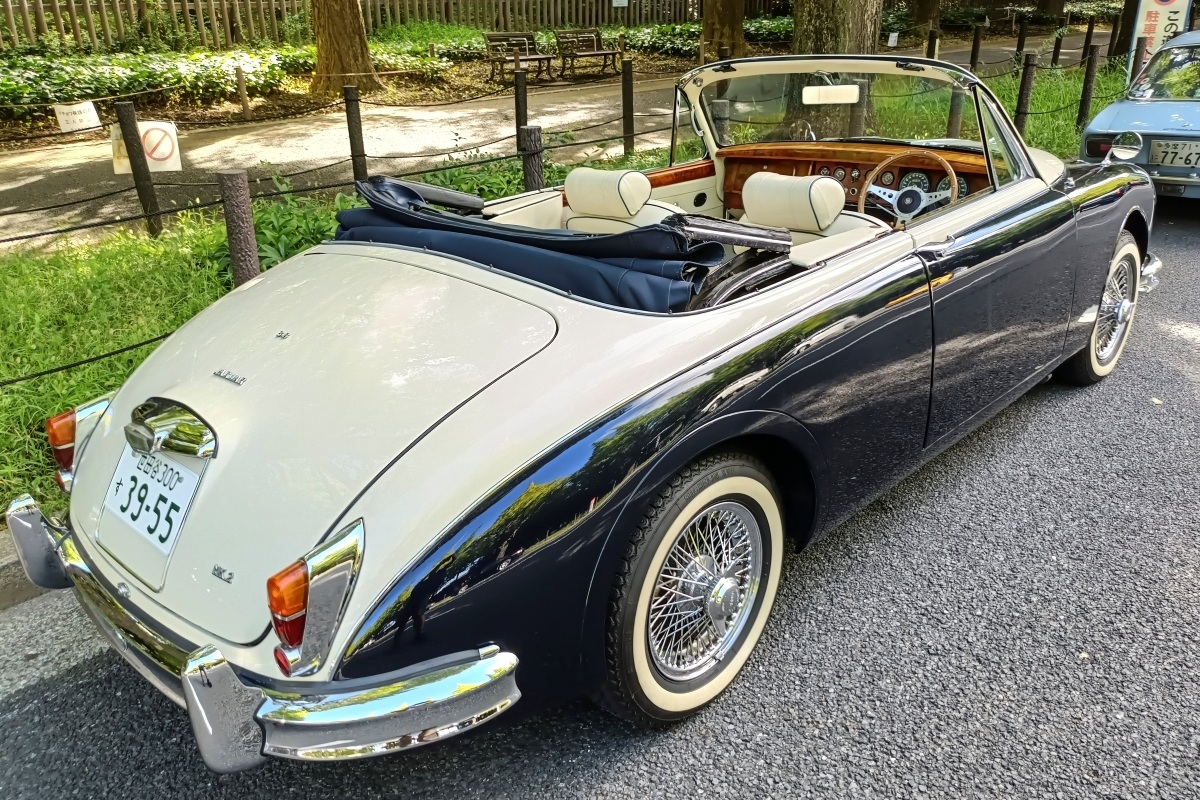
Part of the package is a fully automated hood, of course. And that hood was made with the utmost care, in that when it’s up, its shape is in harmony with the Mark 2’s rounded design.
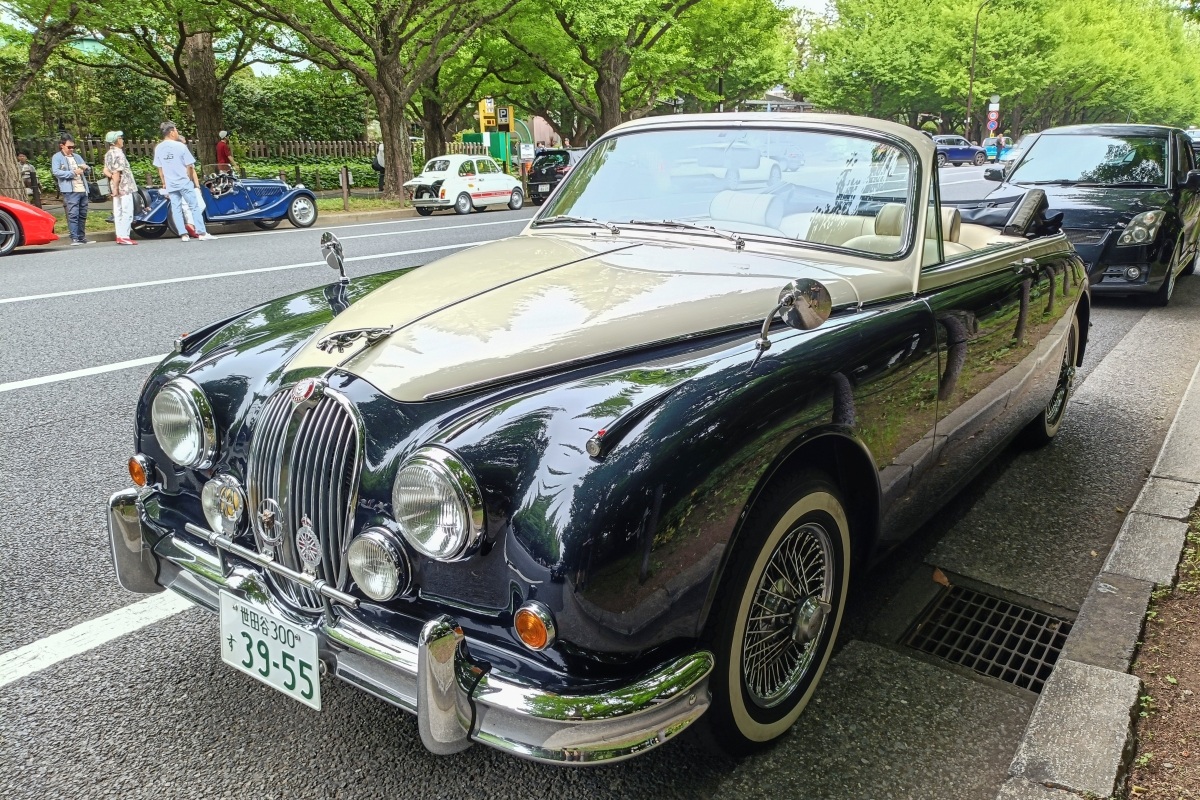
The six million dollar (or is that pounds?) question remains: was this worth the expense? Jaguar never contemplated a convertible Mark 2 in the ‘60s – should they have? I’m not really sold on this. The end result is not bad because it was very well made, but it’s not as if the world needed a Mark 2 two-door cabriolet, really. Jaguar didn’t think so, and they were probably right.
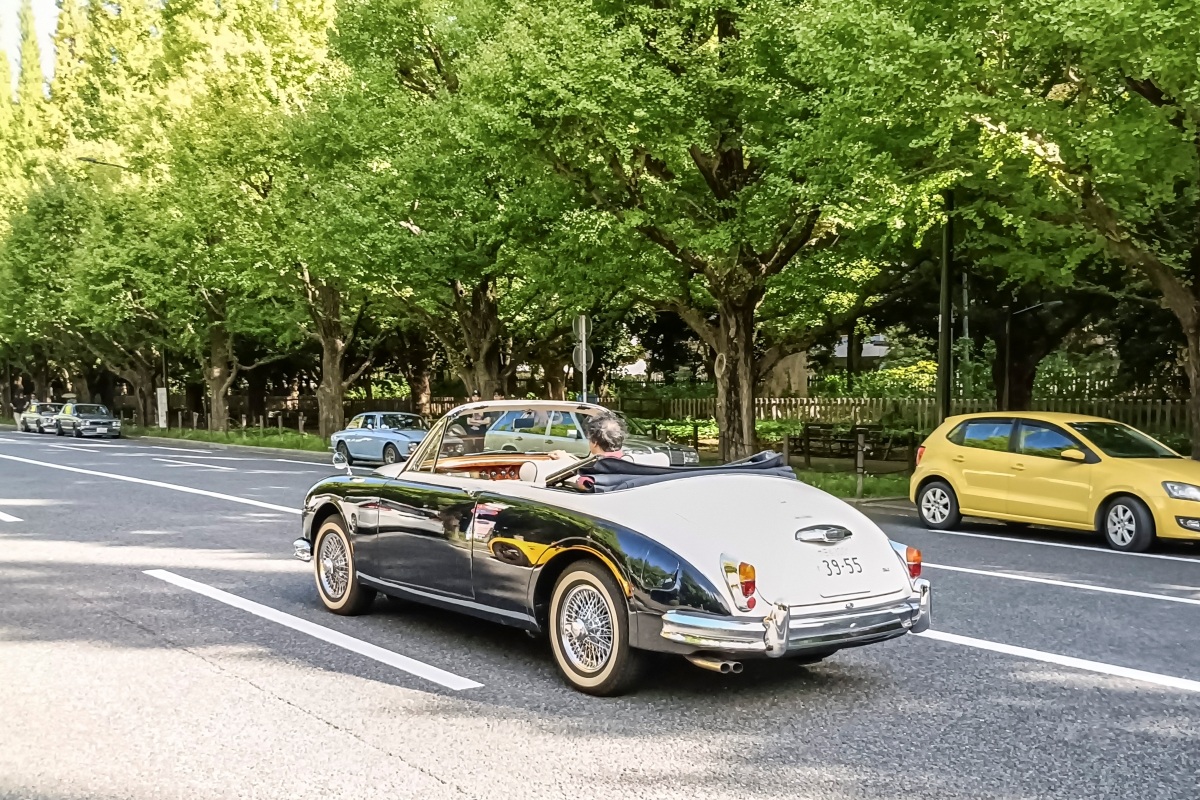
And this specific one’s two-tone paintwork and whitewall tyres just make this an exercise in poor taste, in my opinion. Very much 1989, not really 1963. Still, it’s better than a Mitsuoka Viewt I guess. The Vicarage philosophy of doing full-fledged restorations and ameliorating Jags while keeping them looking pretty much stock is one I can get behind. With this one, they went over the top and just took it right off.
Related posts:
Curbside Classic: 1968 Daimler V8-250 – Best Of Both Kinds
CC Outtake: 1963 Jaguar Mark 2 3.8 Litre – Finally, A Non-Mitsuoka!























Yeah….. NAR.
The Mk II is a beautiful car and I love convertibles so I want to like this a lot. It is better looking than many cars but it isn’t as good looking as I hoped it would be. I concept seems so good that I expect more than I would from just any car. The pictured black one (with striking red upholstery) looks better but there aren’t enough photos of that to pass judgement on. The folded top sticks up a bit and disturbs the elegant sweep of the body but I think the real problem is the two-tone paint. It breaks up a clean design and might be fine on a saloon but not on this convertible. The seats look overly padded and the console with storage bin is more intrusive than the original. Everything has been done well but this touches on the uncanny zone for me.
Overdone in the details. The Vicarage badges on the instruments are simply in bad taste. But I can see the appeal in principle.
I was trying to like it, but ultimately, it just doesn’t quite work. It feels chopped off.
The most telling thing to do is to scroll back up to the photo of the red Jag. There’s a confidence and rightness in the design that has been lost – it has ended up looking somehow dumpier and less elegant. As you say, Jaguar probably made the right call when they chose not make one of these
Didn’t know the Viewt was made as a convertible…
The Mk 2 just doesn’t work as a convertible, as the roof is so key to it’s design.
And adding the two tone and whitewalls? Tacky!
I am a big Jaguar fan. Almost everything they do is very different from most. I’ll leave it at that. Remember what Enso
Ferrari said. The XKE is by far the best designed car he had ever seen.
The XKE from the 60’s.