
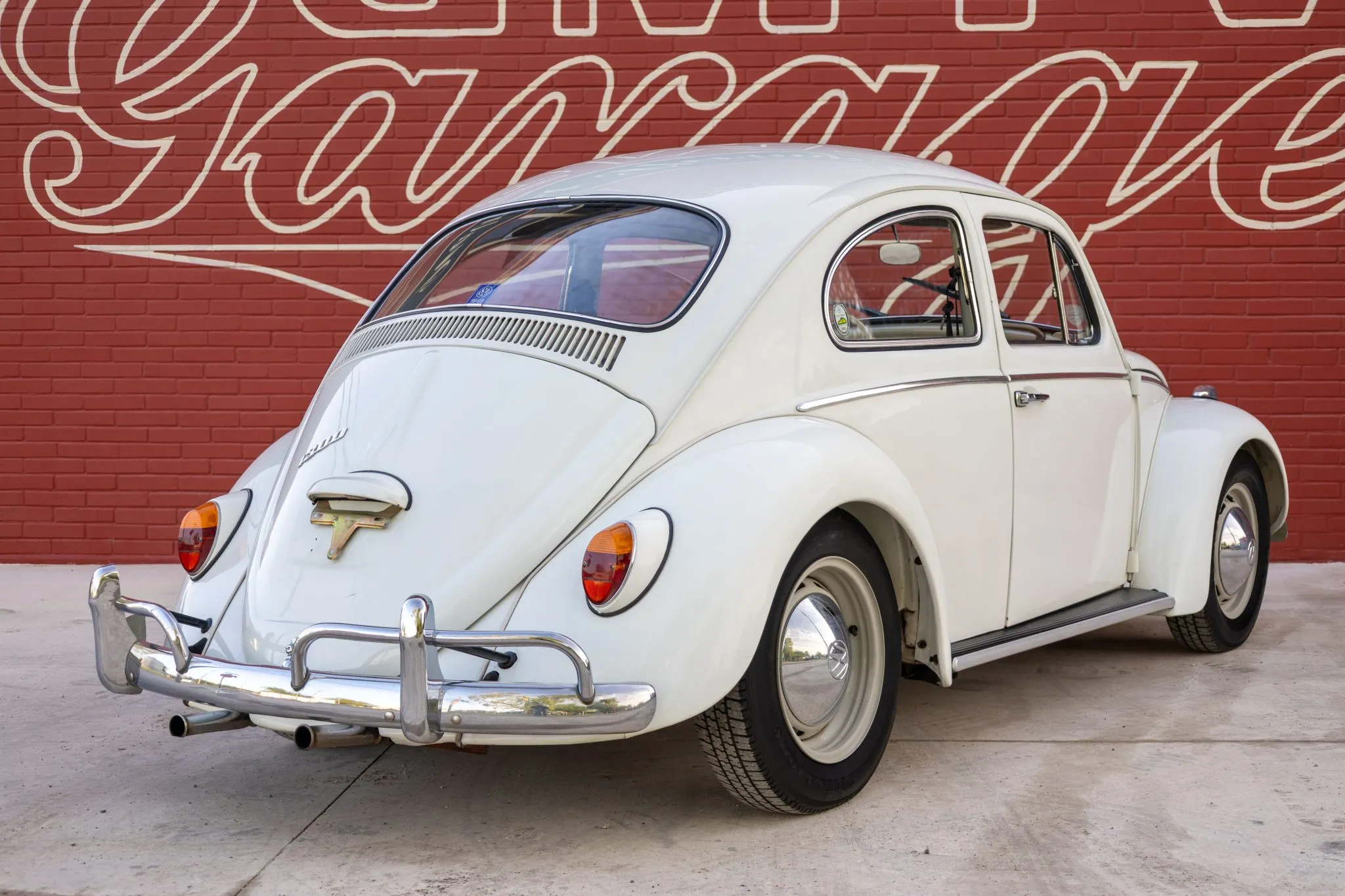
My first VW, a white ’64 1200, had served me superbly, and I sold it for what I had paid for it ($400). When I found myself back in Baltimore in late 1974, having quit the experimental theater company, I needed some wheels, and quick, so when I found an ad for a white’63 for only $200, I bit. White had quickly become my good-luck color for cars; it still is. It ran very poorly, so, I offered them $150, and they accepted. Driving it back to Towson on the Beltway was a nail-biter, but something told me it was going to be ok (it just needed some new points).
But before long I talked myself into rebuilding the engine (a steady job will do that), and adding big bore cylinders as part of the equation. I loved the way my brother’s ’66 1300 had run, so I figured a 1385cc would do about as well. It did, thanks to that and some decambering of the rear wheels. It was closest I’d ever get to my dream car, an old Porsche 356.
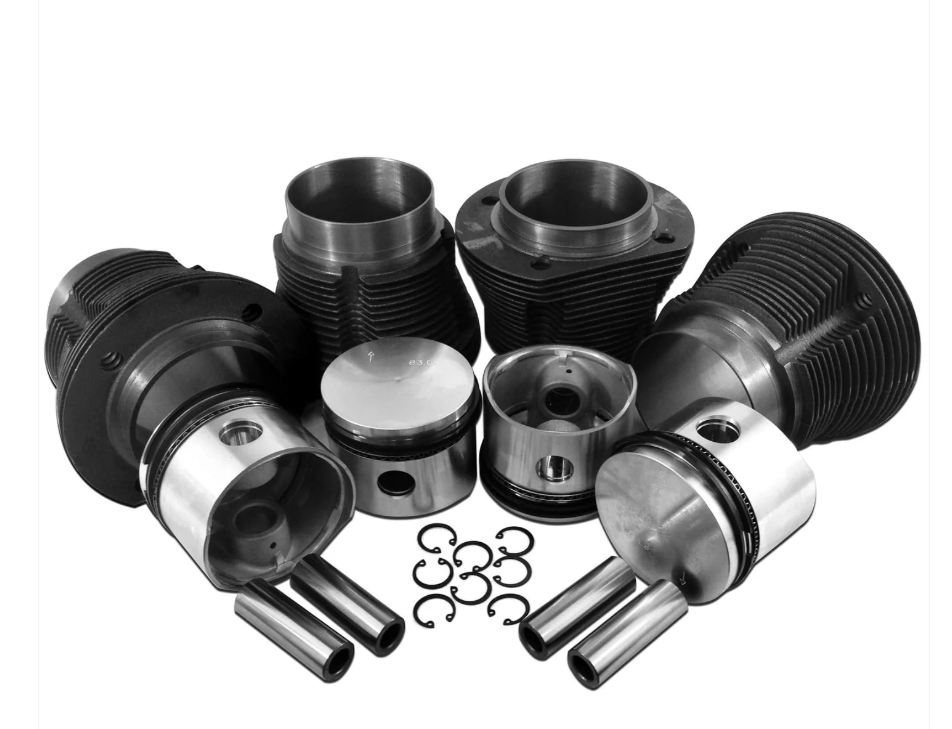
Big bore kits have been around for VW since almost forever. Thanks to the individual air cooled cylinders, it’s quite easy and cheap to swap out the originals for ones with a bigger bore, although going to really big ones will require some machining of the case and heads. But the very popular 83 mm bore kit for the 1200 was a straight swap, and resulted in 1385cc. They’re still readily available, and cheap, as this set is $310. You can’t get more bang for the buck than this.
I pulled the engine and was going to rebuild it myself , but then chickened out and took the stripped engine to a shop. And then reinstalled it, and scrounged up a slightly bigger carb from a 1300. Did it make the 50 hp that the 1300 did? Who knows; maybe not as the 1200 cylinder heads had smaller intake valves (31.3mm) compared to the 1300 (33mm). So I made up the difference by recklessly advancing the ignition timing. That would bite me in the butt later, but for now, it ran really well.
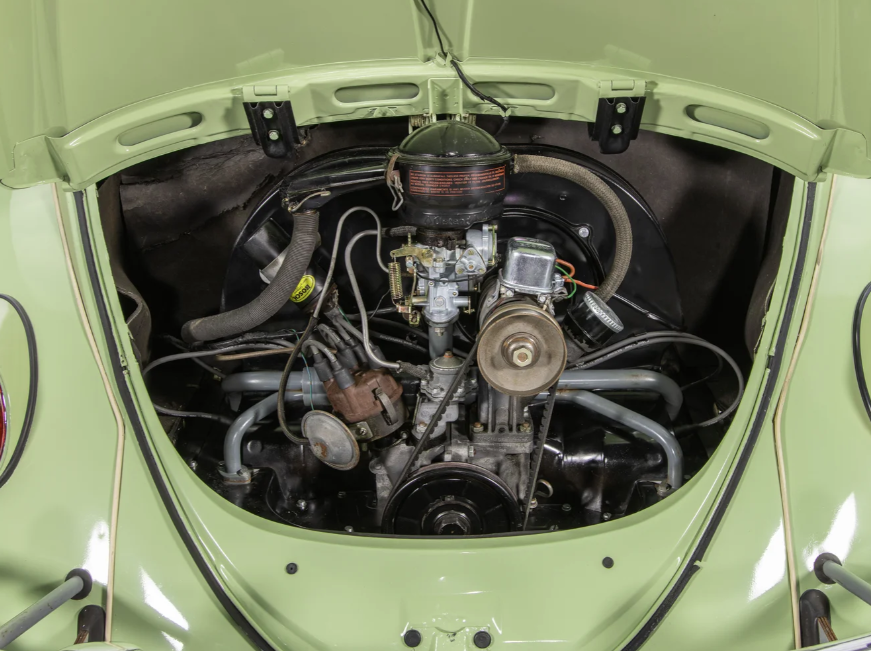
It must have been an early ’63, as the change to “fresh air” heating happened in December of 1962. And it took some doing to find an image of a truly original engine on the web, as they almost all…aren’t.
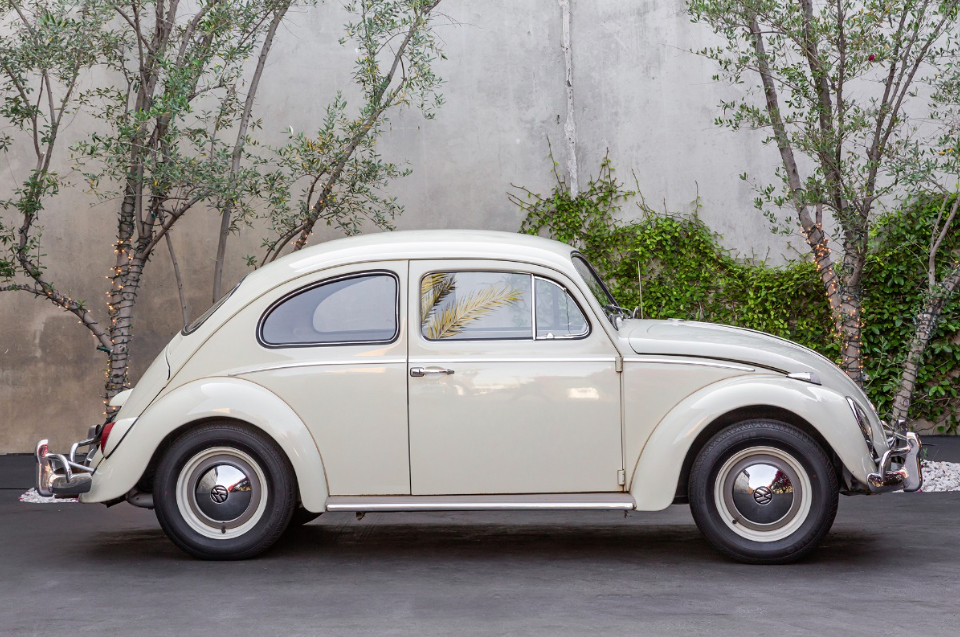
But then that goes for all sorts of elements of Beetles nowadays, as folks “restore” them with all sorts of non-original details, like the paint on the wheels of the most-original looking white ’63 I could find (above). No, the inner part of the wheels were all painted black, and the outer (rim) white. Seems like most folks just paint the whole wheel white nowadays; can’t be bothered with the two-toning, which was so distinctive.
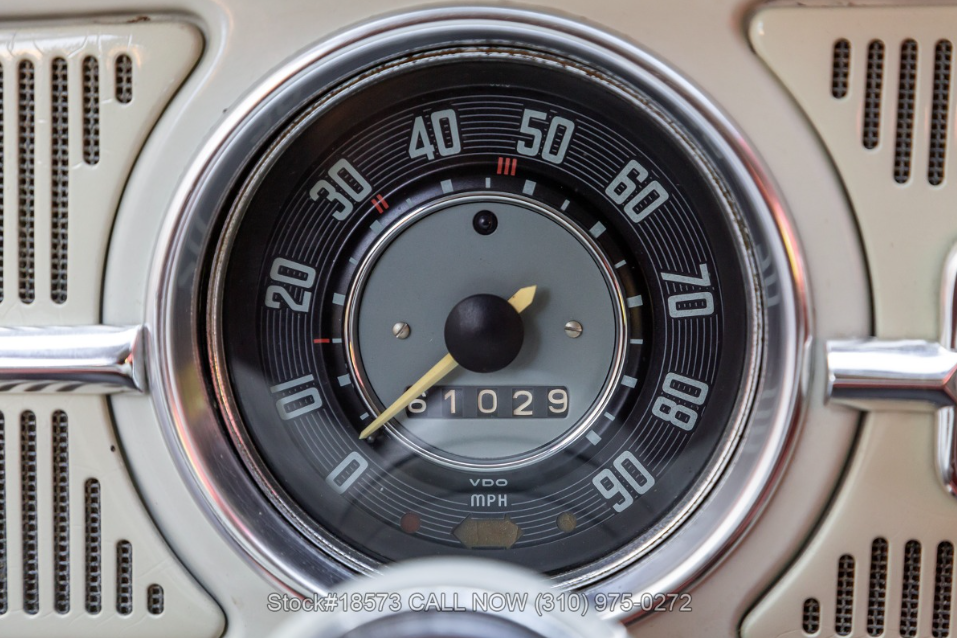
Back to…speed. The 1385 felt very eager compared to the stock 1200. Everything is relative, and I’ve always loved extracting the most out of an underpowered car; I still do, which explains my 75 hp F-head four Jeep. Acceleration was decidedly brisker and now it would hit 80 wide open, instead of the 72 maximum for a stock 1200. Don’t laugh; by utilizing every one of those 50 or so ponies, I surprised a few drivers; not at stop light drags but on twisty, hilly roads where momentum and pushing harder into the curves to maintain every bit of speed possible, including passing others on the downhill sections.
By the way, VW never bothered to update the red recommended shift markings on their later speedometers, even though the 1300 revved higher and the 1500 and 1600 versions had higher gearing and could hit 60 in third gear. But yes, for a stock 1200, this was the equivalent of a pretty functional tachometer.
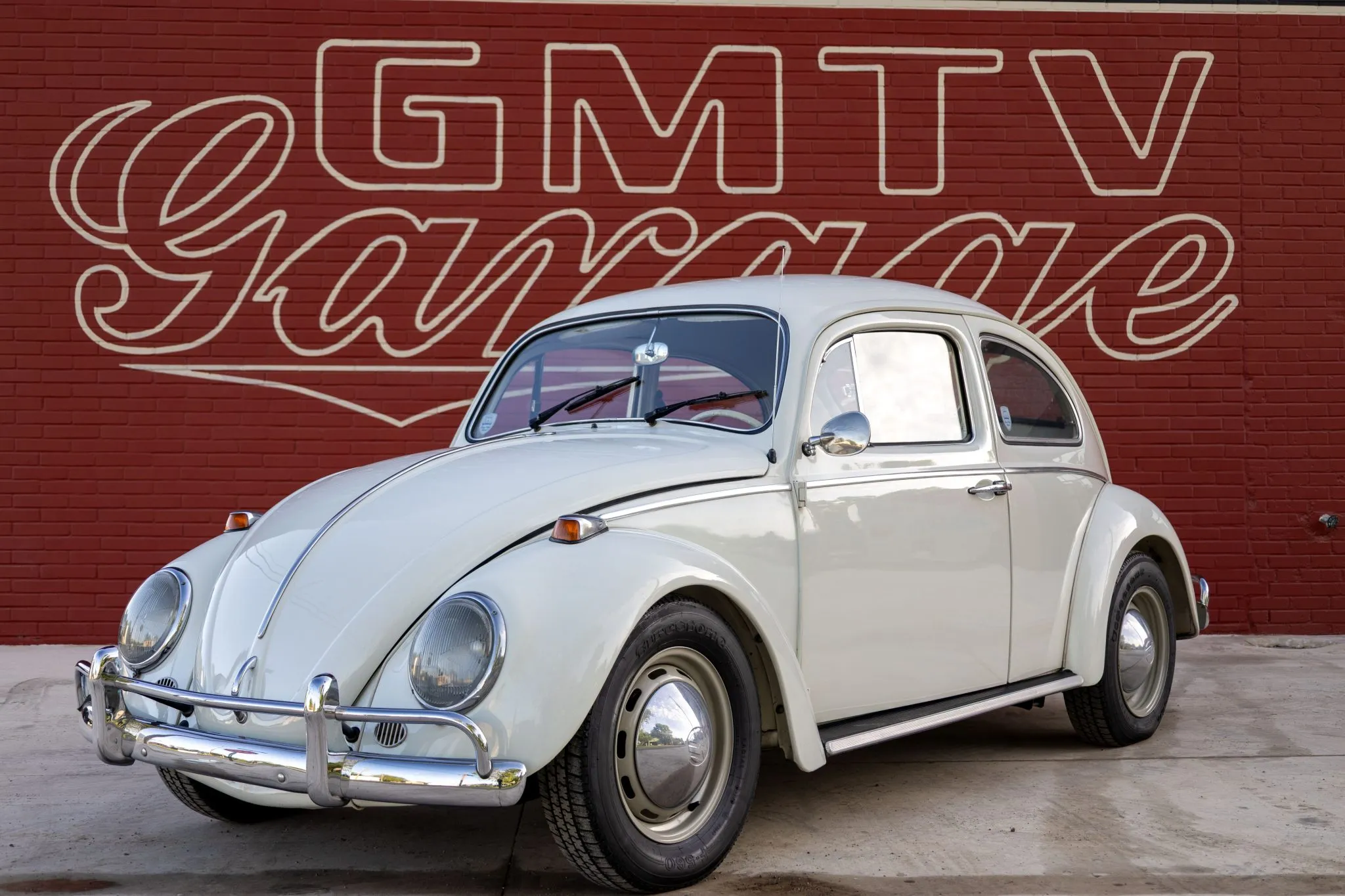
I wasn’t yet done with improving its handling and looks. I decambered the rear wheels some, by adjusting the torsion bars. And I found a wrecked ’66 in a junk yard and took the slotted wheels off it, painted them silver to make them look like Porsche 356 wheels. I picked up some used Pirelli radials for a song. I could have kept going, but my inherent cheapness and constantly quitting jobs to travel the country in my Beetle provided an effective check on that. But I was pretty happy with the way it now ran and looked, given that I had maybe no more than $400-500 or so in it.
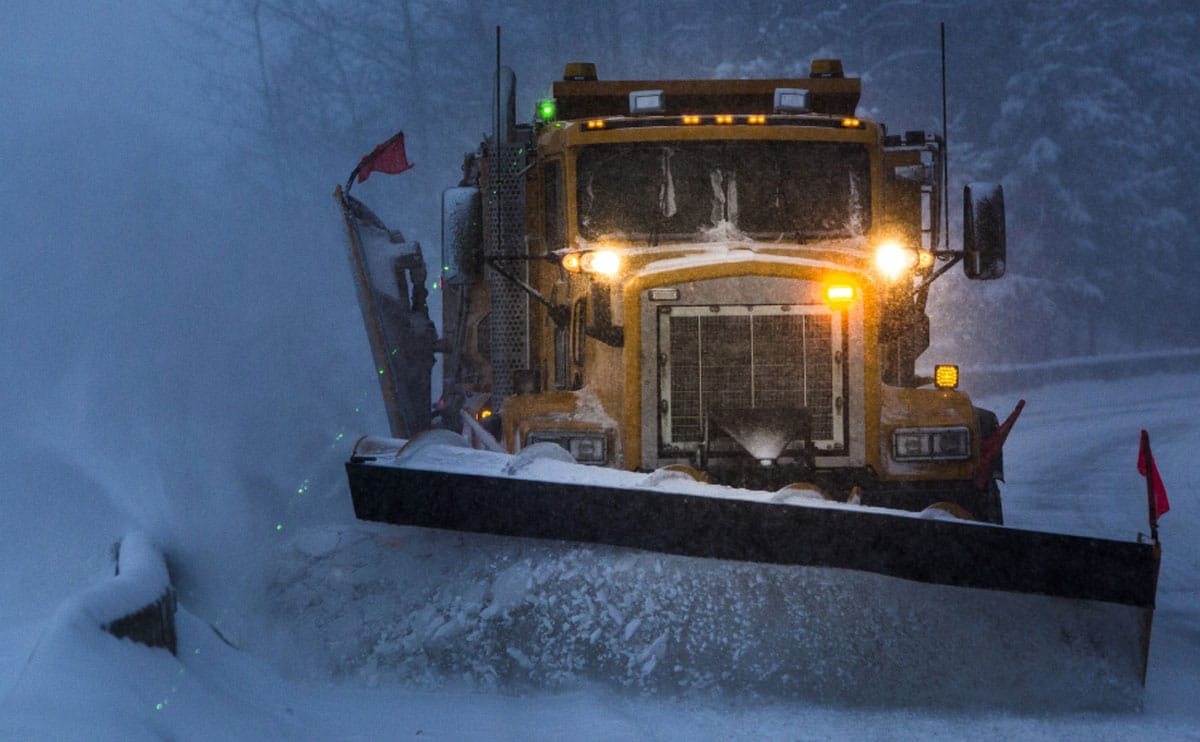
One night, I was driving my ’63 Beetle on the Indiana Turnpike in a snowstorm. I found myself in a line of cars behind a snowplow in the right lane. We were doing maybe forty, give or take. I was pretty confident in my snow driving abilities, and the VW was as good as it got for that. I kept looking at the deserted left lane, which had several inches of fresh snow on it already. I finally lost my patience, felt a youthful surge of adrenaline (or did we do these things in order to make the adrenaline come on?) and made my move, into the left lane. Not a good idea.
It was dark, and the thick falling snow reflected in my feeble six-volt headlights, so I couldn’t see very far at all. I passed the line of cars, and when I got right up next to the plow, I was very surprised to find that its blade was angled left, shooting a stream of snow into the center median. And of course, me. I hadn’t counted on that! (a youthful tendency).
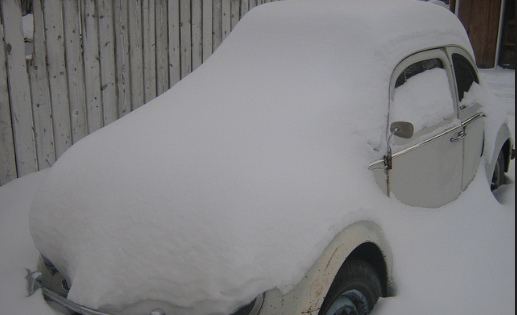
I was now doing about ten mph more than the plow. I momentarily considered backing off, but I was too committed having got this far, and plunged ahead. The curtain of snow buried my bug. The wipers stalled. I suddenly found myself in a windowless (and eerily quiet) igloo in the left lane of a snowy freeway doing 50 or 60 mph, and only feet away from a snow plow.
Yikes! I had to fight the instinct to back off, because that would put me right back in the snowplow’s discharge. So I just kept all the inputs the same, and keeping a cool head (literally), I tore open my side window and stuck my head out into the icy gale to navigate. Reaching out and around with my instantly-frozen left hand, I started clearing snow from the windshield until the little 6 volt wipers slowly came back to life. The advantage of the VW’s windshield being so close to one’s nose was finally appreciated. Try that in a modern car! On second thought, don’t try that in any car.

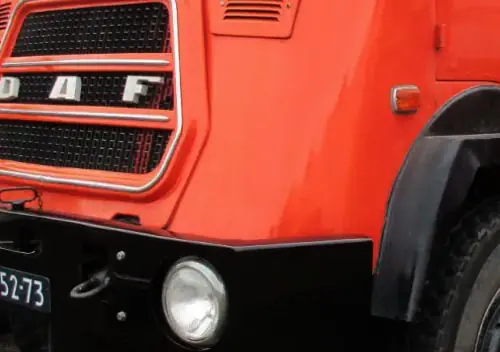
Despite its excellent fuel economy, on my cross-country rambles in my VW Bug I sometimes found myself a bit tight on gas money. So I would draft trucks, as in really close up: ten or fifteen feet off their back bumper. I could just feel myself getting sucked into their vacuum shadow, and my throttle position eased up dramatically. According to Mythbusters, ten feet is the optimum drafting distance, resulting in a 40% to 50% improvement in fuel economy. Which explains how I eked out a 55 mpg average out of one tankful. But the view sure sucked. So I found myself thinking of ways to take drafting to the next level, where I could just turn the engine off altogether.
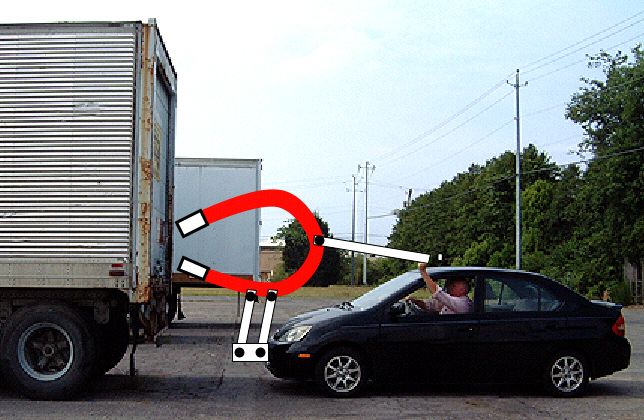
As in a hitch, that I could extend to hook my Beetle to the truck’s “Mansfield bar”. I fleshed out all kinds of permutations, although a giant magnet was not one of them. Wouldn’t it be wonderful, to hitch a ride, put it in neutral, and just take a nap? I guess my years of hitchhiking was making itself felt. As well as youthful daftness. Needless to say, like so many mental exercises, it didn’t ever get off the virtual drafting table. Good thing.
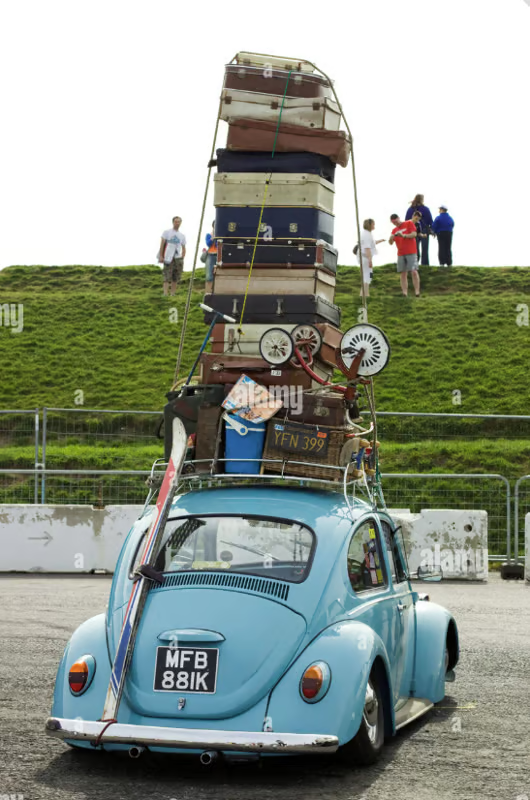
Folks tend to gripe about the lack of a proper trunk in the Beetle, but with creative packing, surprising things were possible. My dear friends in Iowa I have often written about, Elinor (my “second” mom) and her three daughters, played a role in the two younger ones needed to get to the University of Indiana one late summer. Just a few days before, Elinor had lent her car to a friend…and it got totaled in a crash (amazing how often that happens when you lend something out). One of the daughters was a cello major and had a cat. How to make this possible? I offered to take the two girls and Elinor would take the cello on a Greyhound bus and ride back with me.
I told them to bring all their stuff out to by the VW so I could pack it. The solution was to take all the soft stuff (clothing and bedding) and stuff it under the seats and in the rear floor and everywhere else. I jammed that Beetle absolutely full to the ceiling, leaving just one-third of the rear seat for one of them (and her cat). Some hard suitcases or boxes went up on top, and then I strapped their two bikes on top of that. I only wish I had a photo of that. It was a bit slower ride than usual, but we made it.
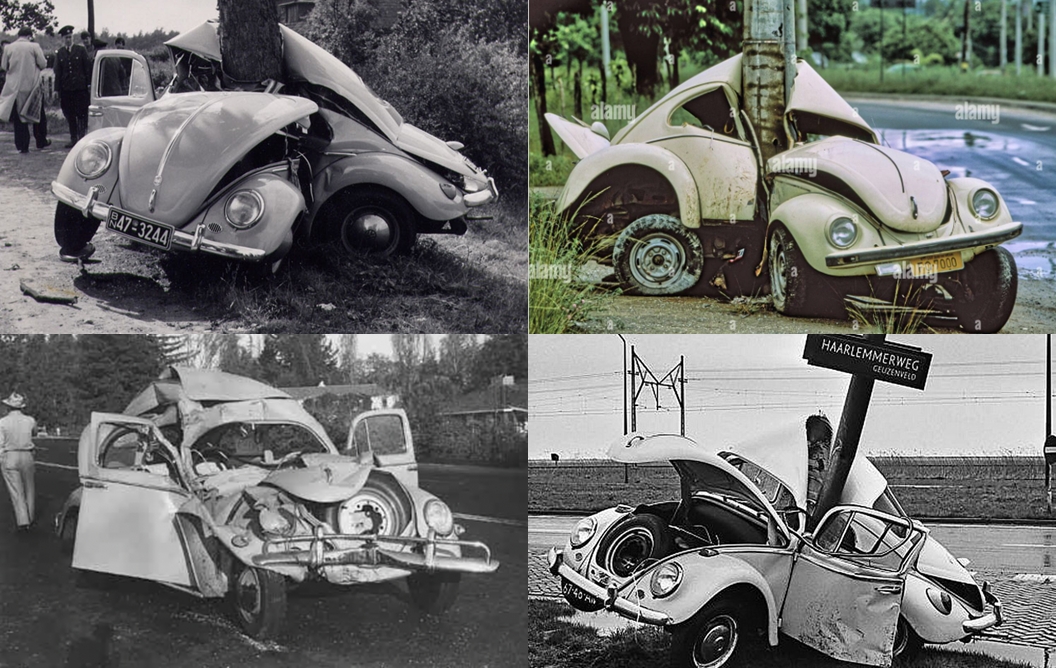
In the summer of 1975 I had a pretty nasty crash in the Beetle (full write up scheduled for next Saturday). No, it wasn’t as bad as these, although I was lucky to not have been hurt more. Yes, there’s a bit of a recurring them in three of these vintage crash photos: undoubtedly they wrapped around those poles due to unexpected extreme oversteer. That was of course an inherent risk in these ones with swing axle rear suspension, due to certain parameters being exceeded, as in braking hard in a curve or making a sudden transition without anticipating what the rear end is going to want to do.
I’ve said this here a hundred times, but I never once had a truly scary moment with any of my swing axle cars (gen1 Corvair and two Beetles) despite driving the snot out of them. A driver who understands the dynamics of them will know how to respond, but clearly that was not the case with too many owners of cars like this, especially Americans who were used to understeer.
Not only did I survive, but so did my Beetle, despite totaling a ’69 Ford Country Squire. I tore off the left front fender and hood, pulled out the underlying structure a bit with a come along, found a rusty old black Beetle abandoned on a friend’s farm and bolted its fender and hood on, although the hood would not latch (used a strap to secure it).
It still ran great, but the thrill was gone, as it looked pretty pathetic. In the summer of 1975, my GF and I took a trip out East, including a second drive through Skyline Drive and the Blue Ridge Parkway. It was during a heat wave, and my GF used fourth gear on a lot of grades where I would have shifted down into third. I didn’t want to say anything, but I was a bit worried about the engine getting hot. Air cooled engines don’t overheat in the obvious way water-cooled ones do, but I remember opening the engine lid once and maybe it was the smell of hot oil or whatever, but I sensed it was too hot.
There’s no way to know, but on the drive back home to Iowa, somewhere on the interstate in Indiana (in cool weather now) the engine started clattering horribly. It still sort of ran, but I knew something was seriously wrong. I nursed it to a gas station at the next exit, and I pulled on the engine pulley and it…moved, back and forth. A broken crankshaft, I assumed.
I asked if I could leave it for a couple of days, and then we hitchhiked the rest of the way. Elinor, in her usual generous way, bought a bumper hitch for her Corolla and lent it to me. I rented a tow hitch for a VW (they were a common item back then), and drove back to bring the VW home. The Corolla 1600 had no problem towing the VW on the mostly flat interstate.
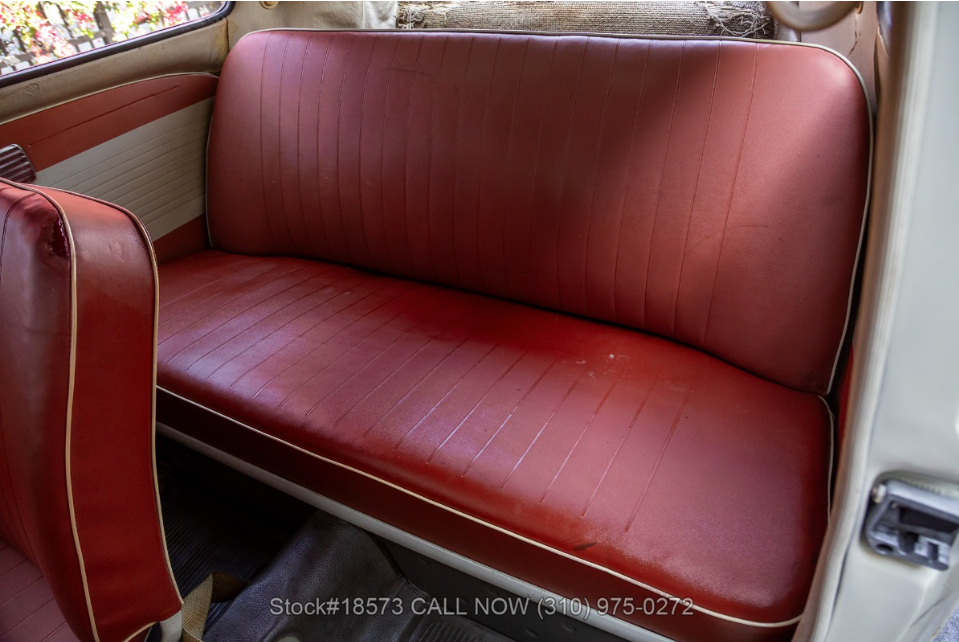
I just couldn’t muster any enthusiasm to fix the VW, given its bashed-p front end, so I sold it for parts and got something very different, the first of several of its kind. Let’s just say I was tired of curling up into the fetal position to sleep in the back seat of my VW.
Related VW reading by me:
My 1964 VW 1200 – Why The Beetle Was The Greatest Car Ever And My Automotive Soulmate
Curbside Classic Driving Review: 1969 VW Beetle – Still A Viable Daily Driver?
Curbside Classic: 1946 Volkswagen 1100 (Type 11): The Beetle Crawls Out Of The Rubble









Stock standard 1200 VW engine bays are a rarity my VW nutter friend told me 1200 engine parts are being reproduced now his 63 is factory stock looks new actually and a far cry from the scruffy beetle he used on school pickup runs years ago though its the same car
It is amazing how some of us avoided farm purchases (or buying the farm, as the old pilots used to say) in some of the situations our young brains got us into. As a mature adult who drives a truck now, the “drafters” drive me nuts. I cannot see them in my mirrors, and all it takes is one sudden situation that causes me to get on the brakes hard and the drafter’s car (and hopefully not the drafter) will be strained through my Mansfield bar. Following distance for a driver is like altitude for a pilot – it is difficult to have too much of. Which, of course, you and most of us here know now.
You certainly got your money’s worth out of this one, not to mention a lifetime of experiences.