
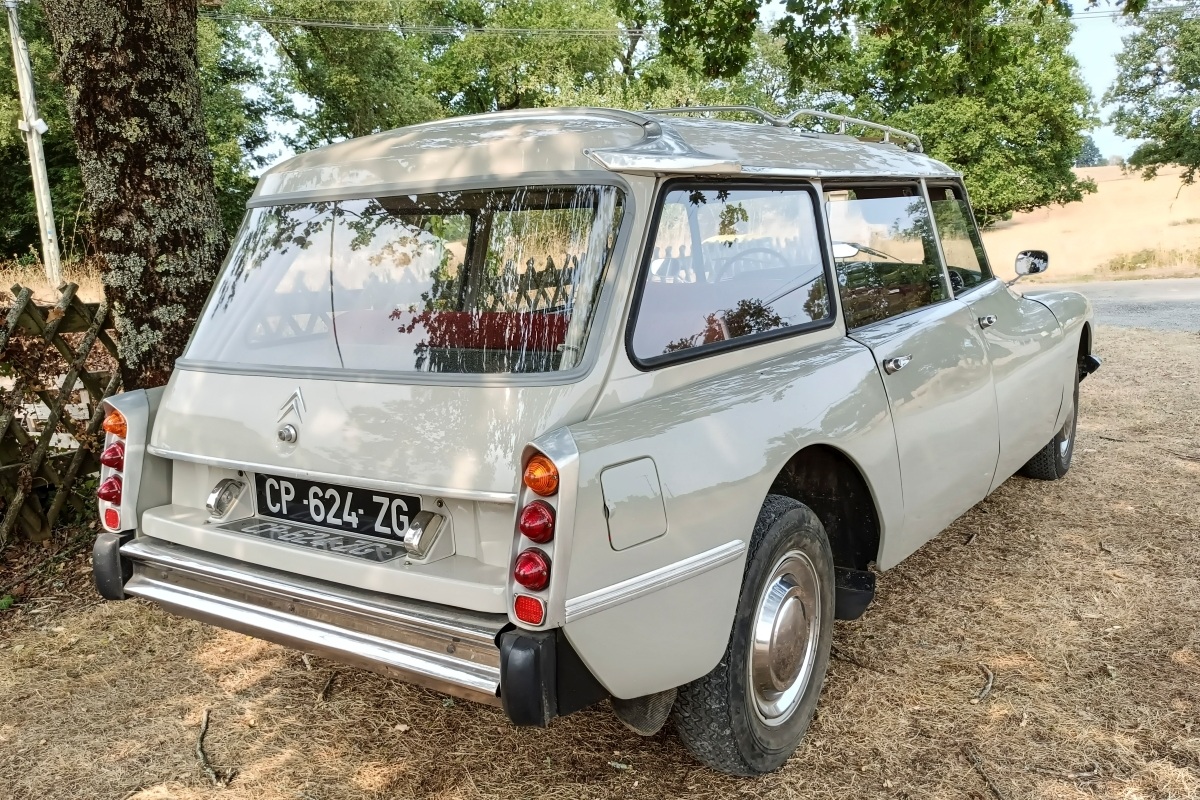
Last year, back in the old country, I was fortunate enough to get acquainted with a hard-core Citroën collector and see some of his prized possessions. I’m still unsure how to package the whole experience into a coherent text, but there were a few cars that will warrant their own stand-out post. This outstanding long-roofed ID 20 is a case in point.
Back when I was a car-crazy teen in ‘90s France, the DS / ID was barely coming out of banger-dom. There were plenty of well-worn saloons still on the road; the wagon version, on the other hand, was already getting rare. Those cars typically had a hard life. But that all depended on the kind of wagon we’re talking about, for the DS / ID came in several configurations.
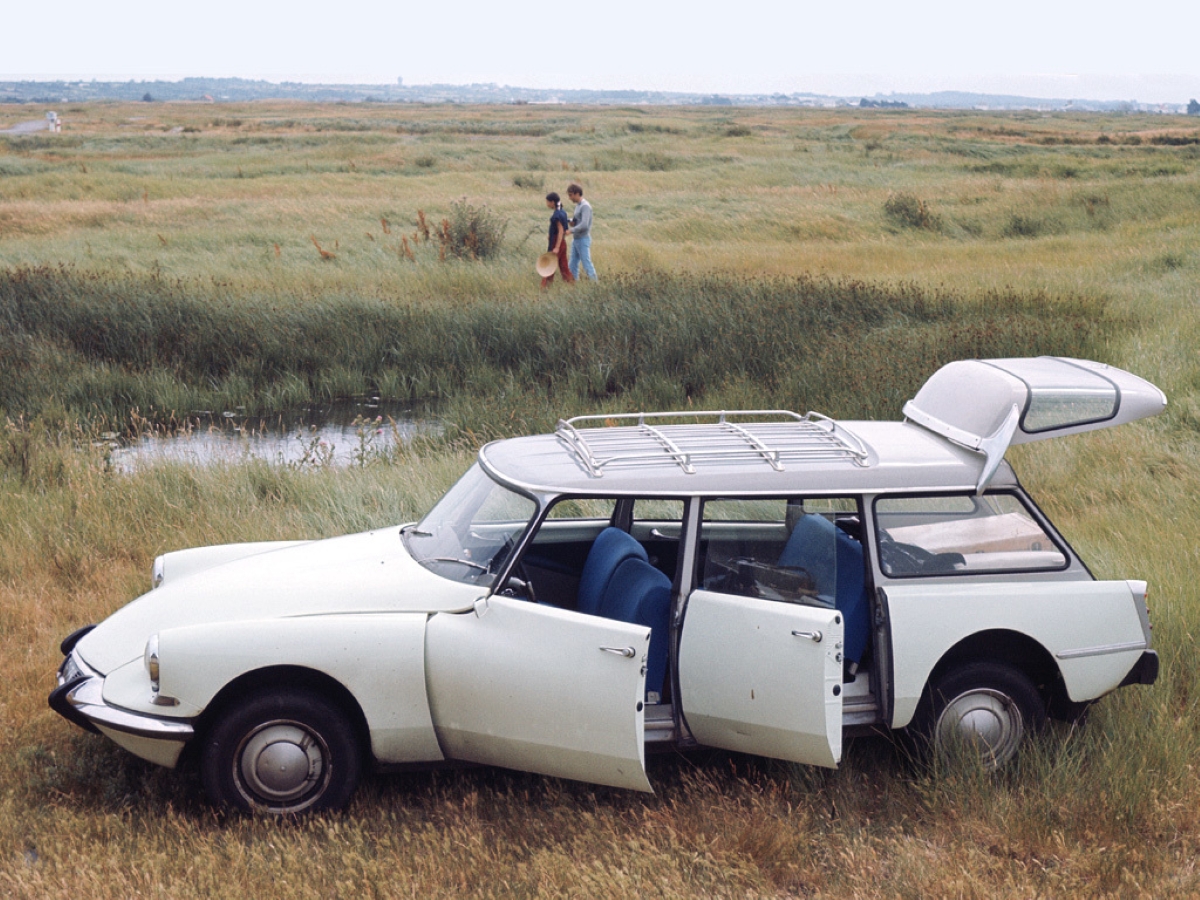
The DS was launched in late 1955 as a four-door saloon; this was followed by the ID a year later – a de-contented DS with far more basic trim, a less powerful engine and fewer hydro-powered features (e.g. regular brakes and gearbox). But the old Traction Avant, which the DS / ID replaced, also had a LWB variant that was a steady seller. It took a bit of time, but Citroën eventually created a successor in the shape of the ID 19 Break, which was unveiled at the 1958 Paris Motor Show but only actually entered the range a year later.
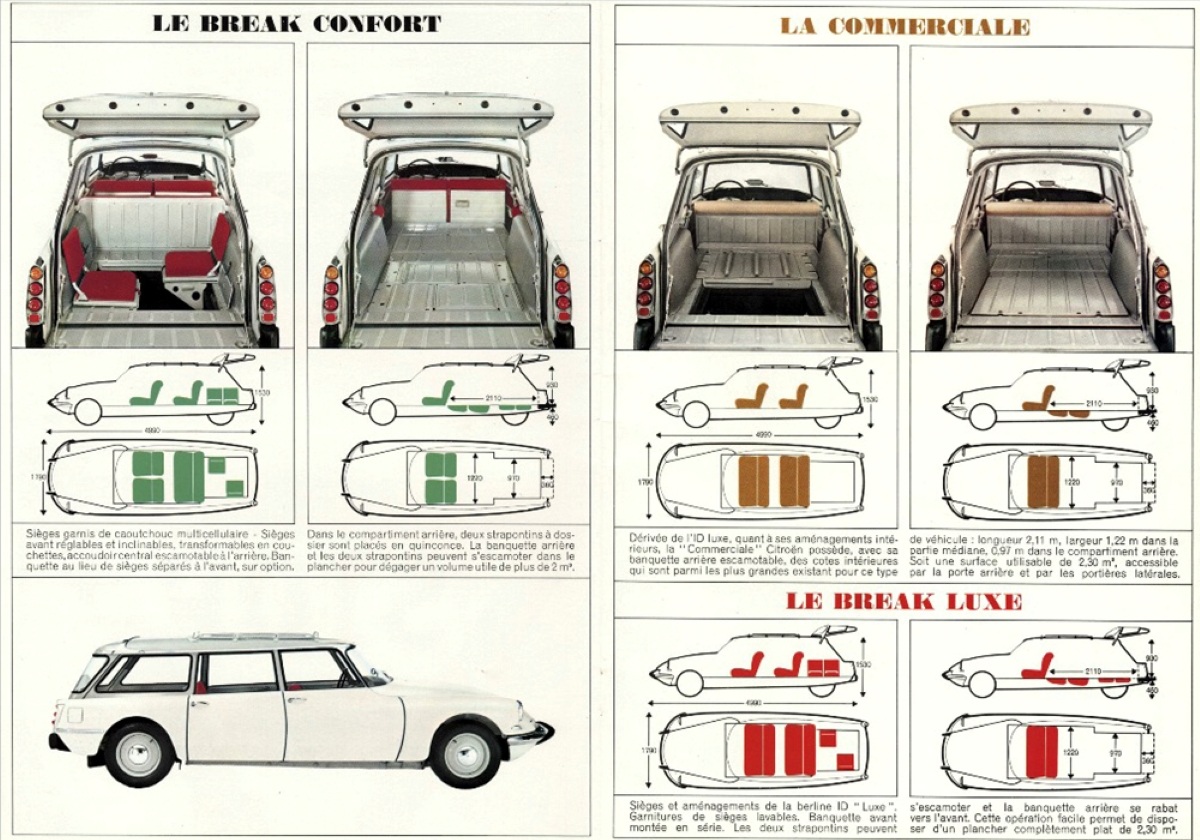
There were four production versions of the ID wagon. The Commerciale was the work horse of the bunch. It had two bench seats and a large cargo area in the back. Next came the Break (French for “wagon”), available in two trim levels and featuring a pair of sideways-facing jump seats in the rear. Our CC is the Familiale (not pictured above), which had three rows of seats.
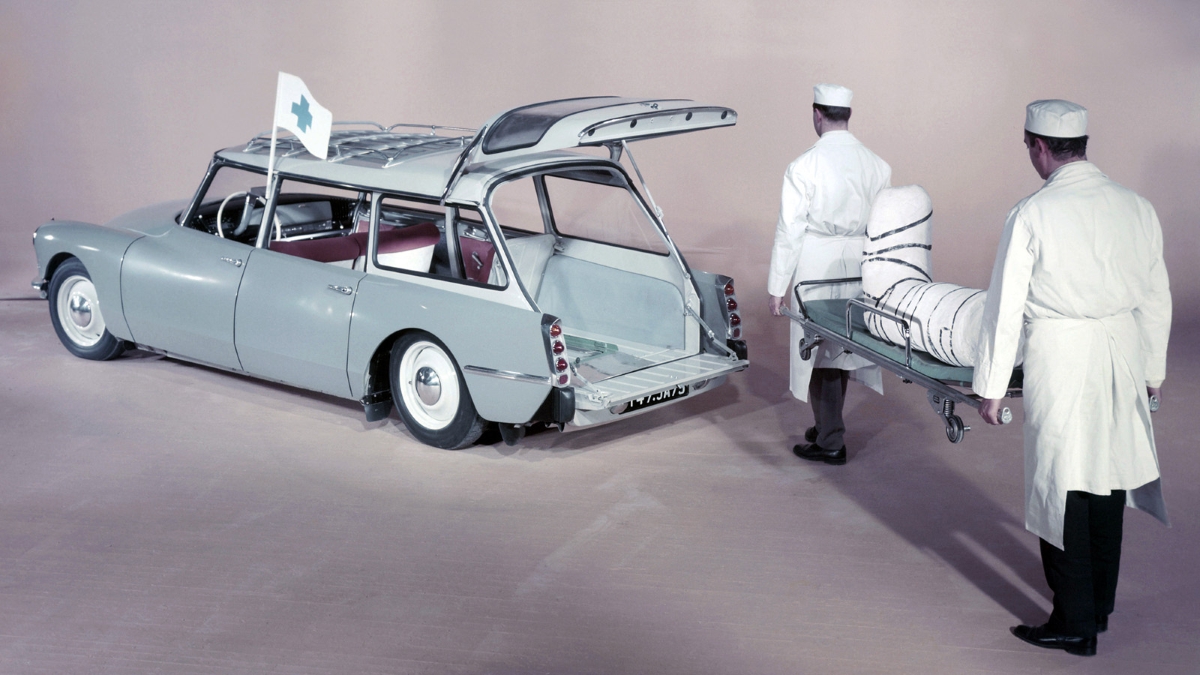
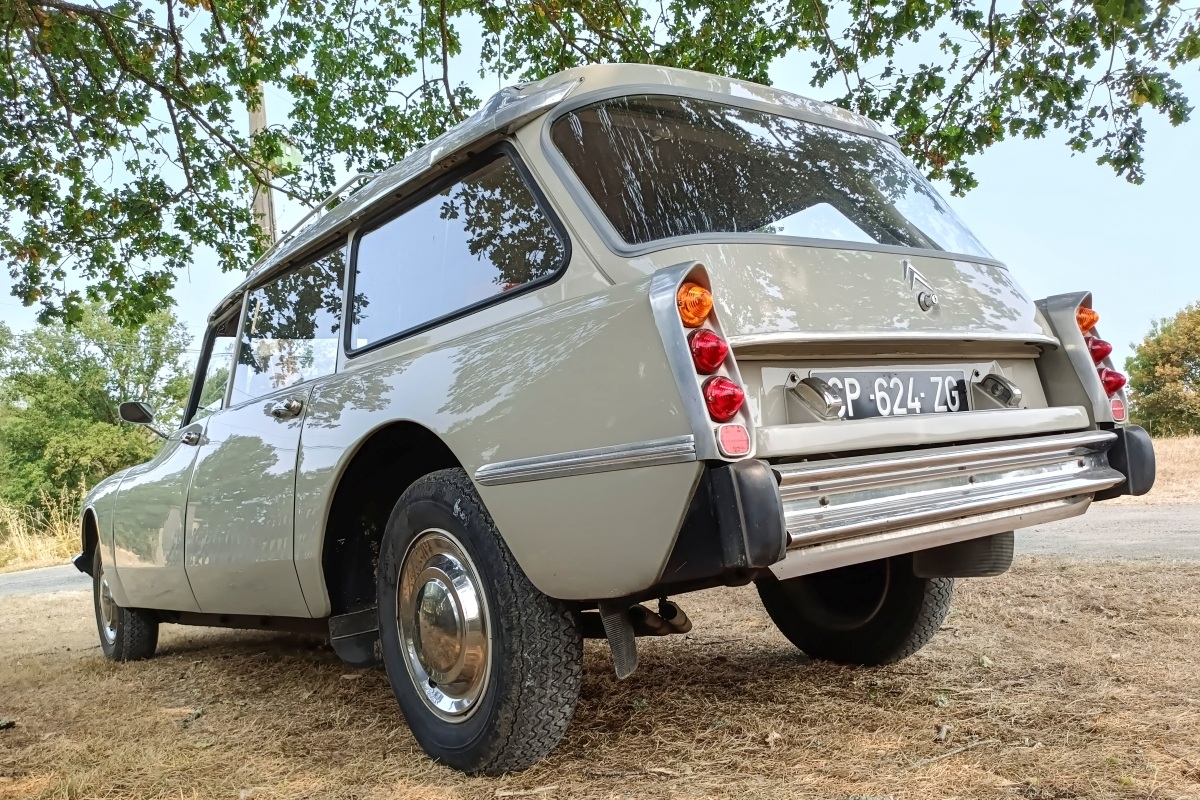
Version number four was the ambulance, which only came with front seats. Many of those were modified by various coachbuilders for extra capacity, especially high roofs. But the low-roof version was available from Citroën themselves. Incidentally, this picture shows the ID wagons’ tailgate arrangement: a small bottom gate was always there to facilitate loading and/or enable long items to stick out of the back.
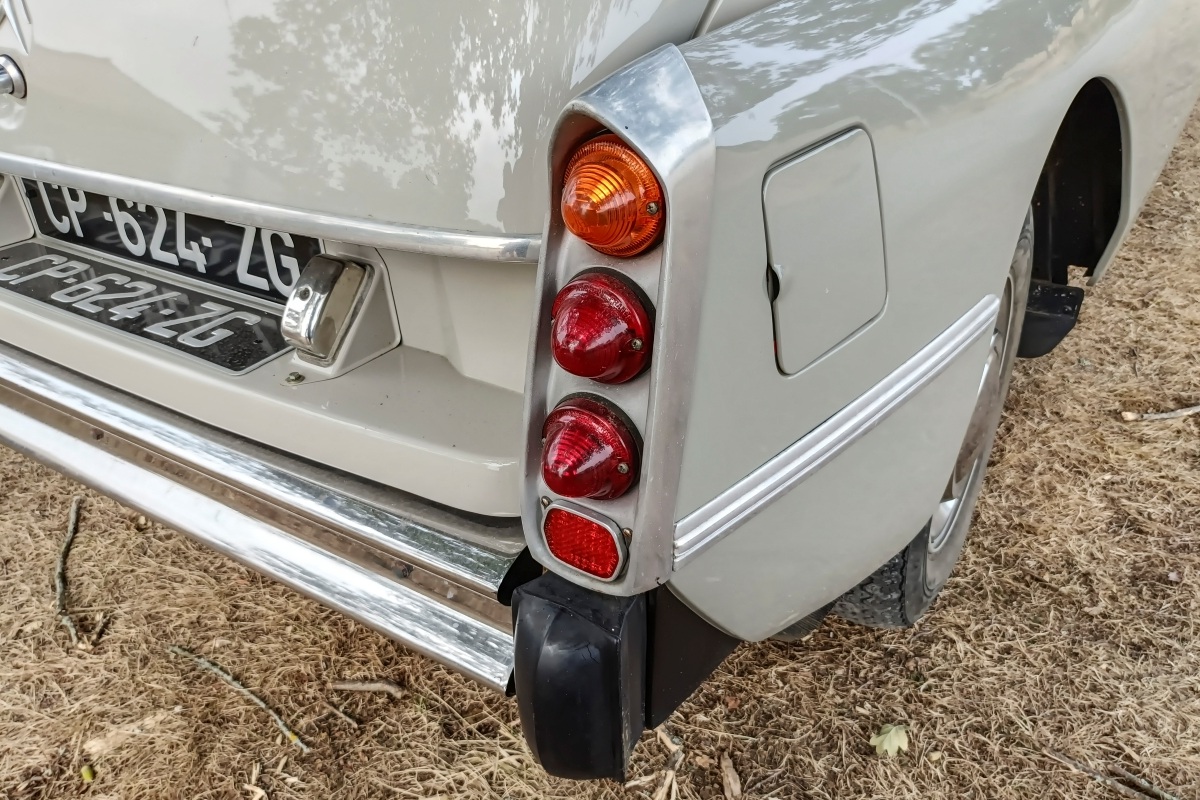
That’s why the rear had two license plates – one for when the back was closed, and one to remain road-legal when driving with an open tailgate. The rear lights, which look like they came off a DeSoto, were about as late-‘50s as they could be. Easily the most dated bit of the car, especially since they remained identical throughout the production run.
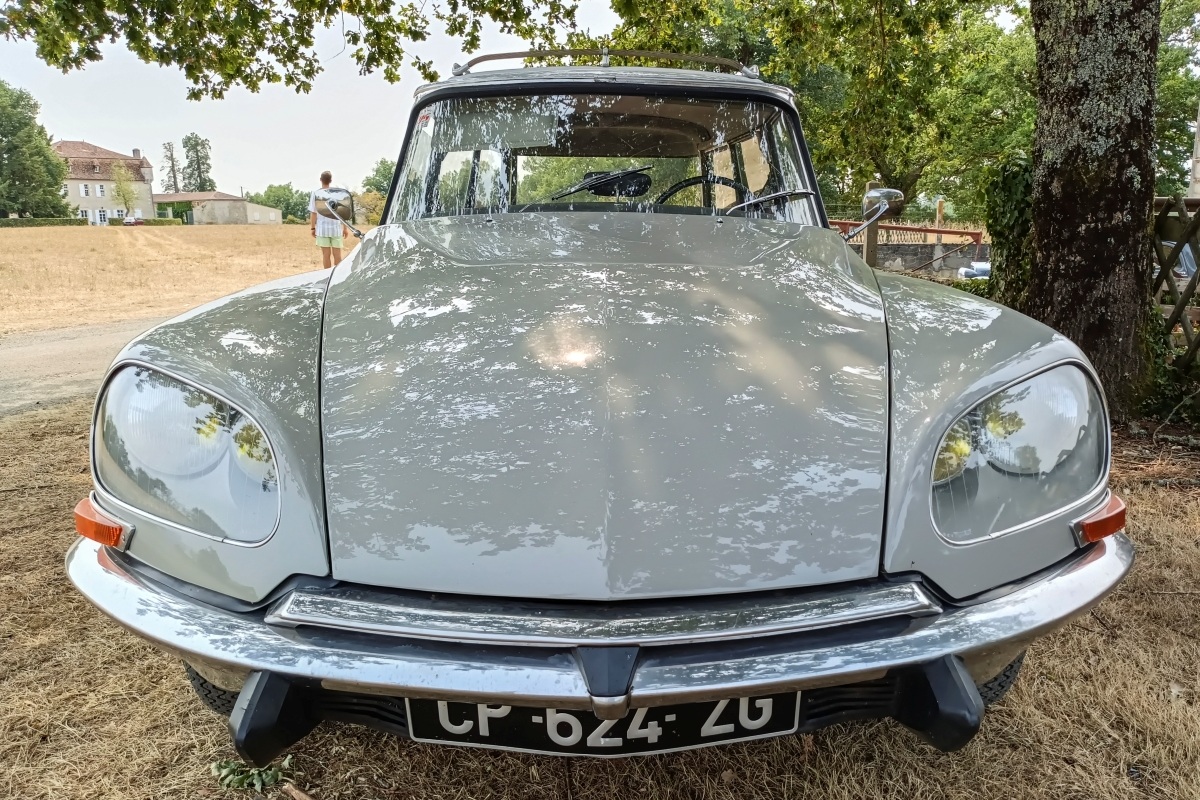
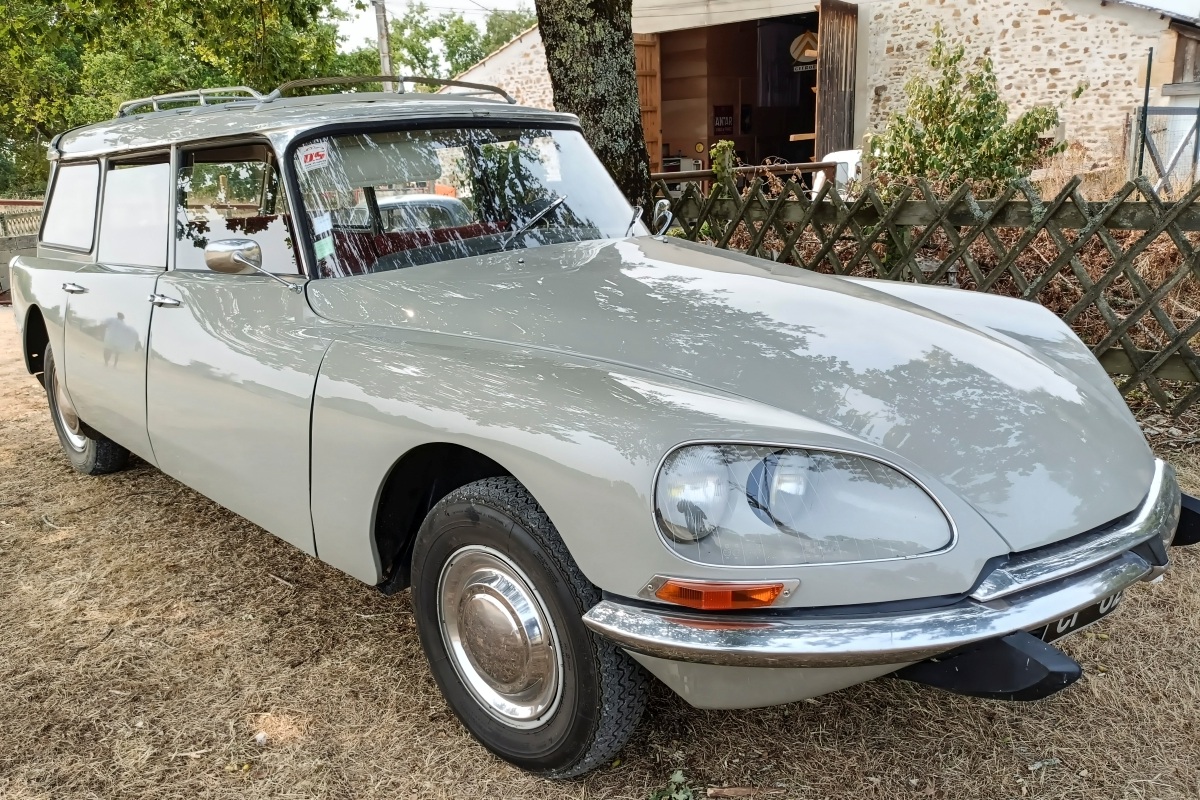
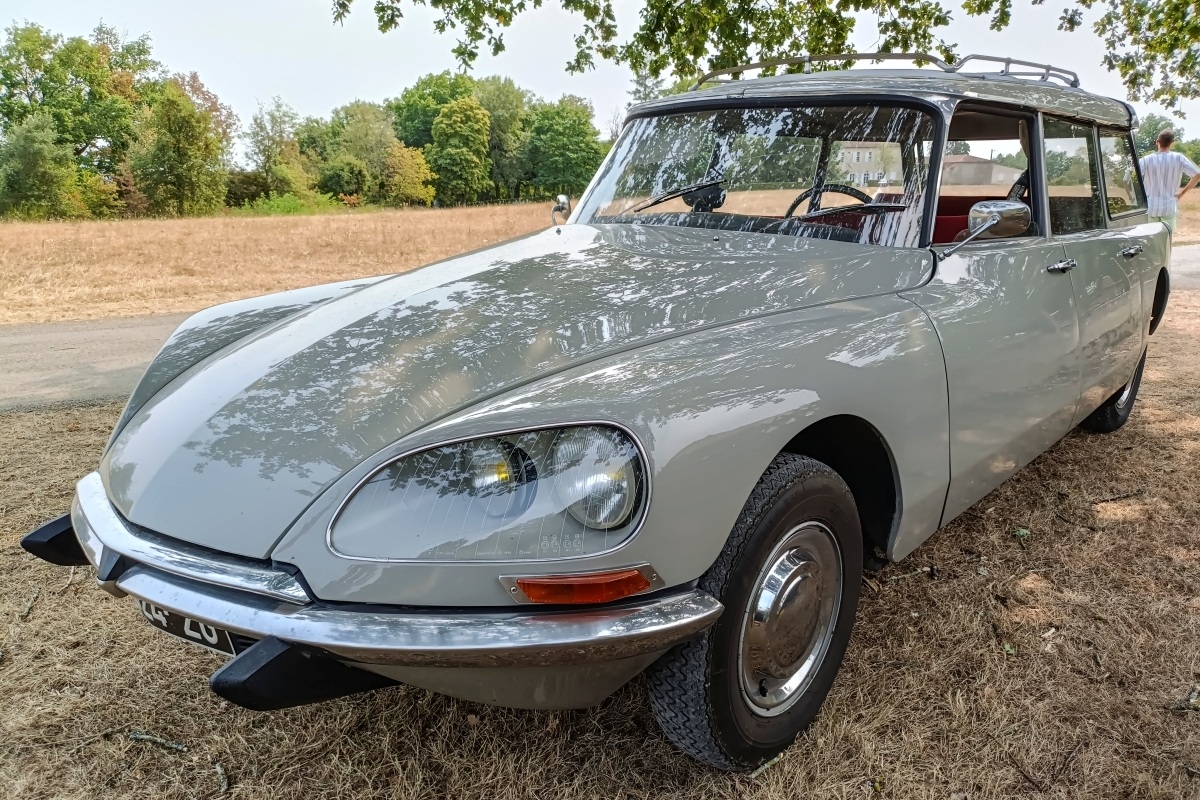
The same cannot of course be said about the front end. This being a ’69 model, it has the dramatic quad headlights that were grafted on the whole DS / ID range the previous model year. Probably one of the more effective facelifts in automotive history.
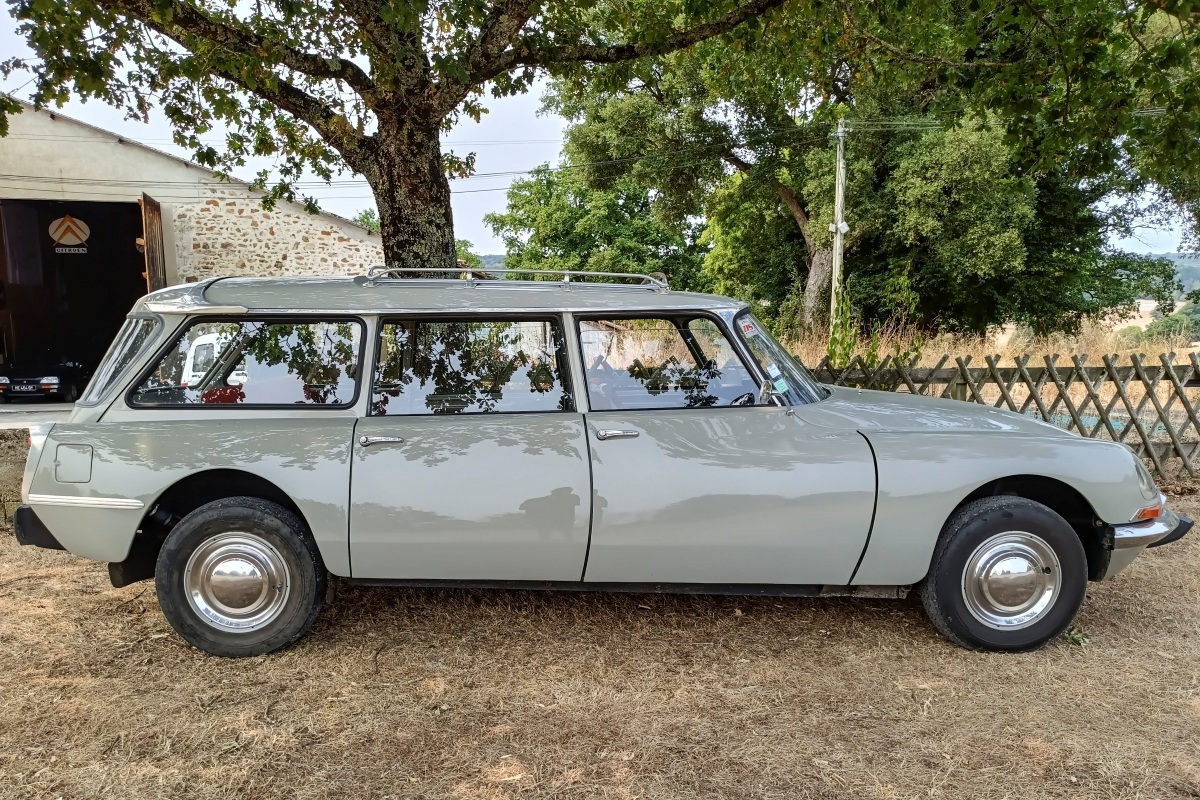
The Traction Avant and the CX both had wagon versions too (as did the XM, come to that), but they were LWB designs. For the DS / ID, Citroën figured that the saloon’s generous 312.5cm (123-inch) wheelbase would suffice, and it clearly did. The DS / ID wagons were longer than the saloons by 15cm due to their having a bit of rear overhang. These came with a roof rack fitted from the factory. The roofline, peculiar rear hatch design and open rear wheel cutout transform the whole character of the car, compared to the sleek saloon.
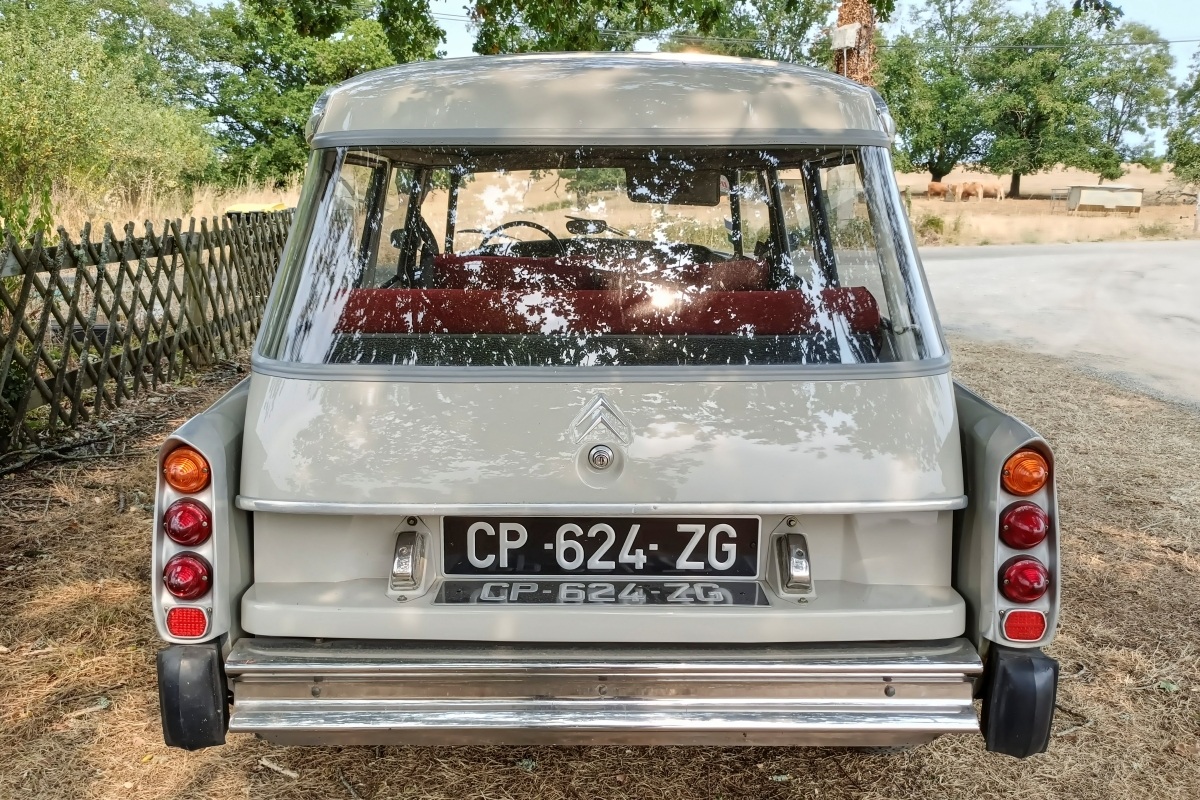
Citroën took some time to work out the practicalities of this DS variant, hence why it took a while for it to enter the range, but the end result was apparently worth the wait. Esthetics aside, the DS / ID was an ideal base for a wagon, with that hydropneumatic suspension. Having ridden in this very car on French country roads (both paved and unpaved), I can testify that those magic green spheres turn the worst dirt track into a still lake. This car just floats over the earth.
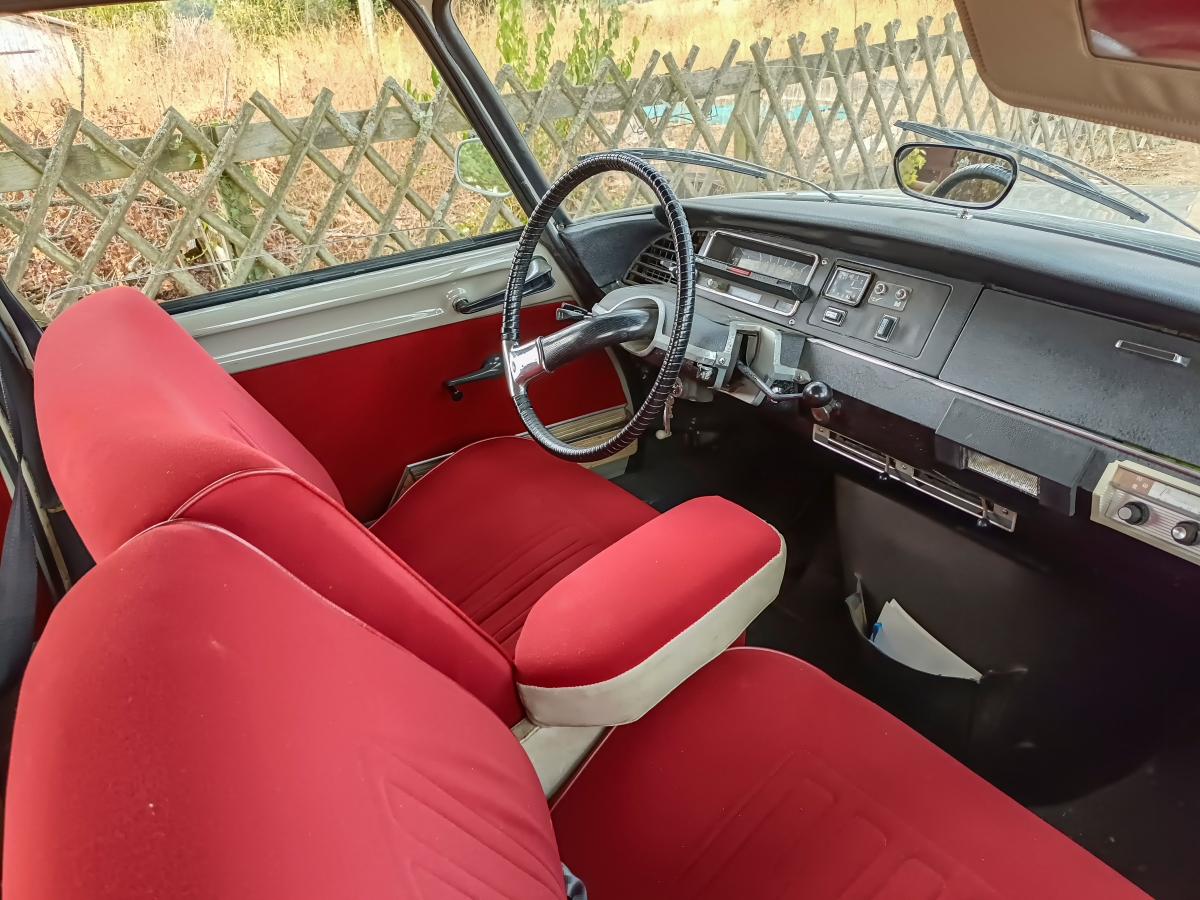
The only real problem Citroën had with these was cost. They were marketed as IDs, meaning cheapo-version, but they were effectively a mish-mash of ID and DS from the get-go. Because they were longer and heavier than the saloons, Citroën would usually fit the more powerful DS engine in them. For identical reasons, the DS’s hydro-powered brakes were also needed, which drove up the costs. Power steering, also using hydropneumatics, became standard from 1963 onward on the higher-end Breaks and Familiales. All these were DS features.
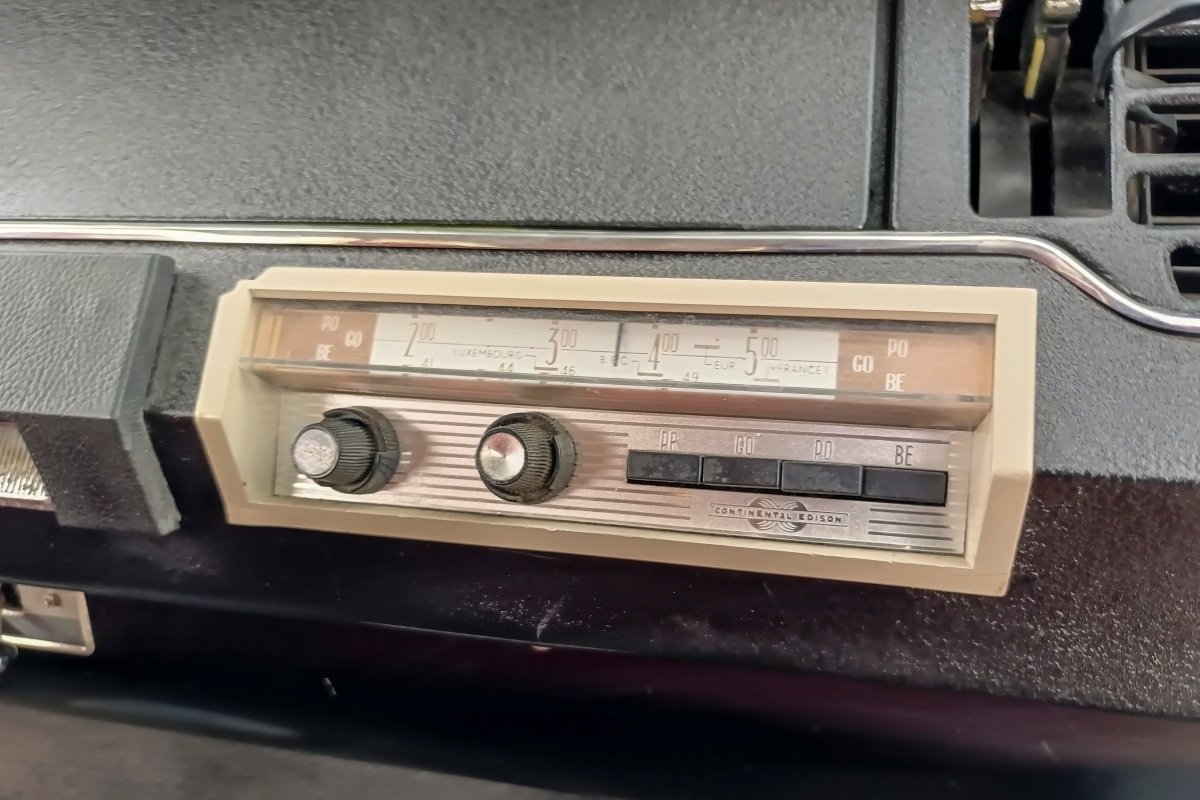
In addition, most wagons (this one included) were fitted with a manual gearbox, but the hydro-assisted clutch-less 4-speed was optional after 1967. Options-wise, our feature car has a magnificent and original Continental Edison radio set. A great addition to this Familiale, to help lull the youngsters in the back to sleep.
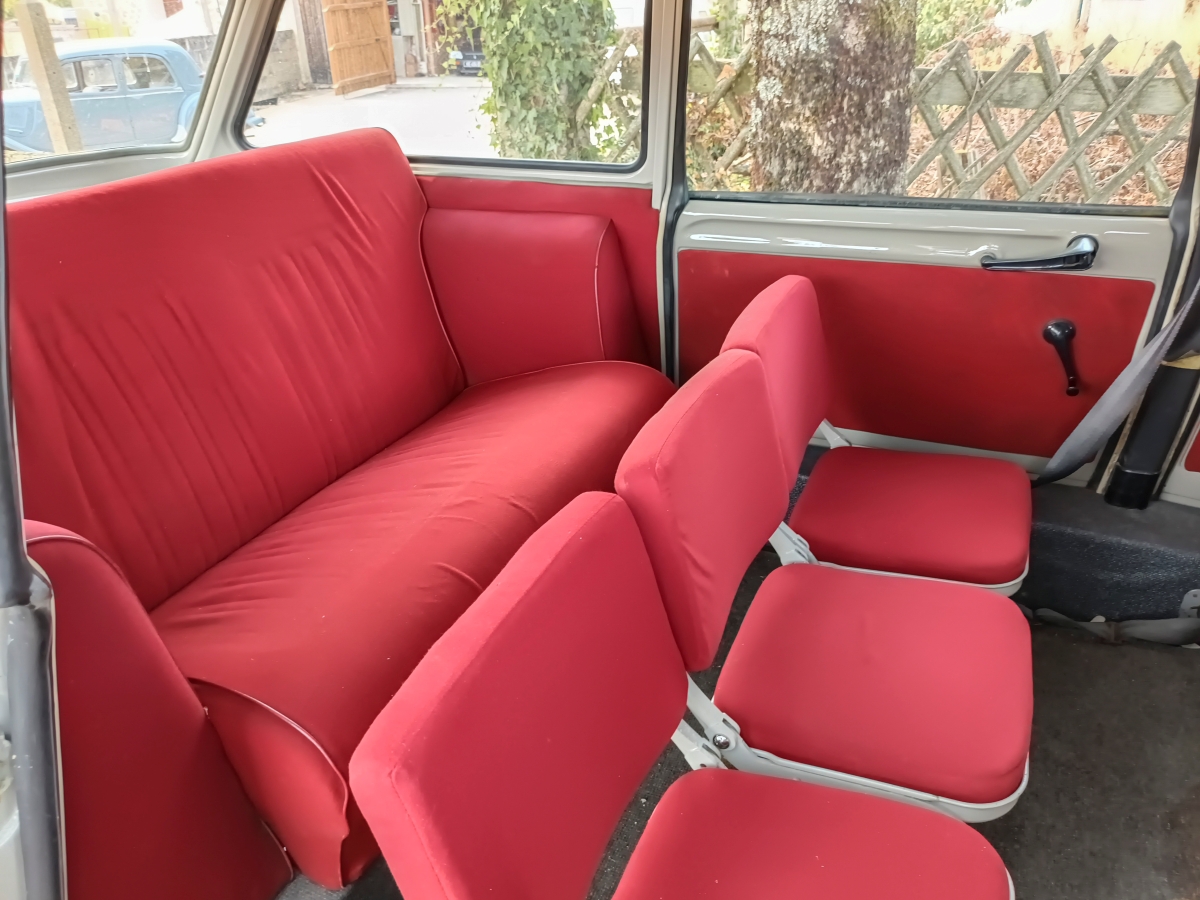
The seats, dash and trim were all very ID – i.e. cheap and cheerful, in a colourful ‘60s way. The car is titled as an eight-passenger model, but a ninth one could conceivably be squeezed in the back bench, if they are thin enough. The front seat can hold three abreast when the central armrest is removed.
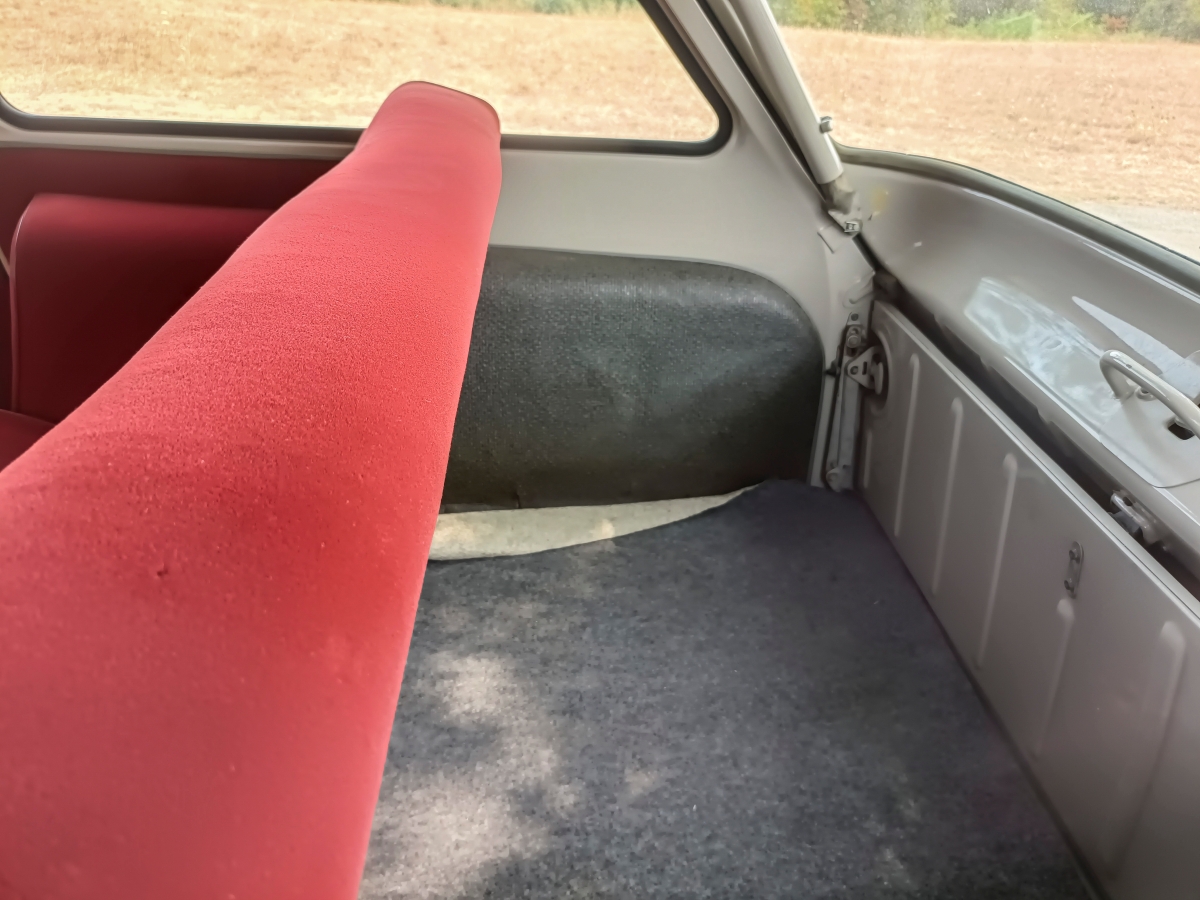
Or they could just sit sideways in the tail – not ideal (not very safety-conscious) for anyone, but there is a surprising amount of room left in this car, even past the three rows of actual seating. This led the British magazine The Autocar to write that the ID Safari, which is how these were marketed in the UK, had a “combined luggage and passenger space that is virtually unrivalled outside the realm of small coaches.” Speaking of rivals in England…
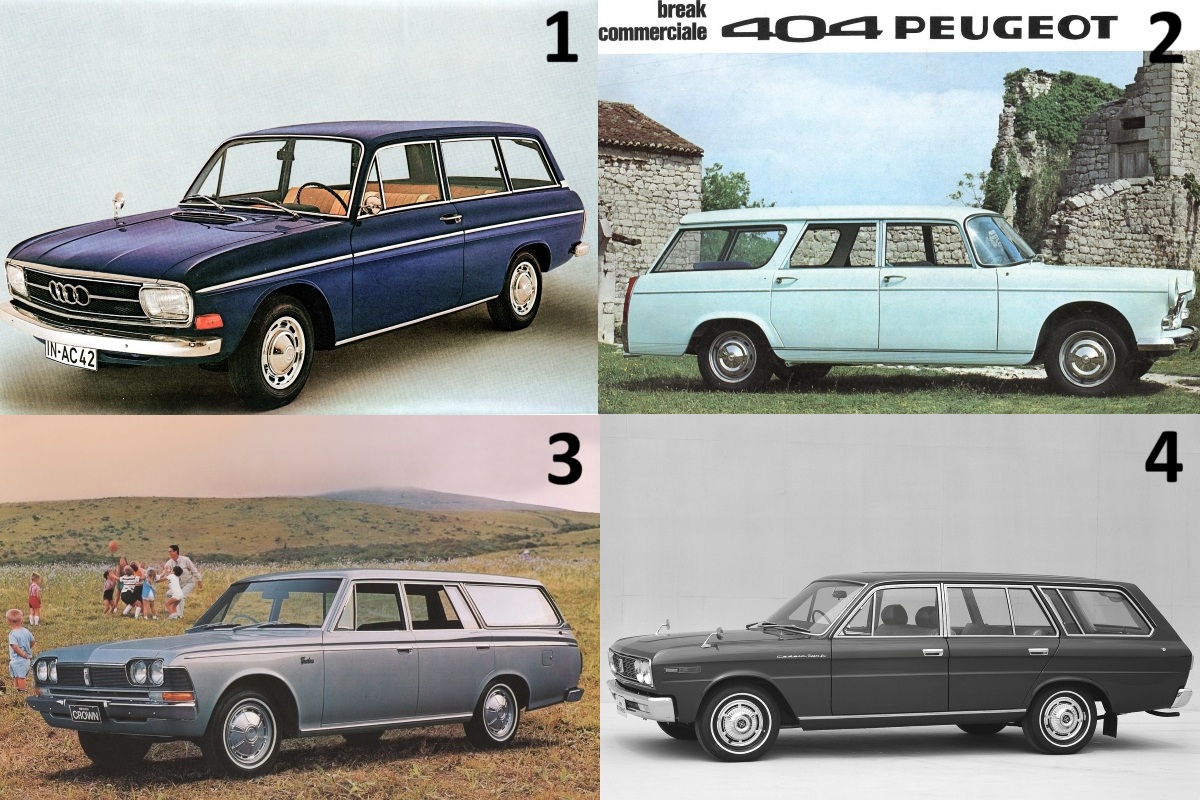
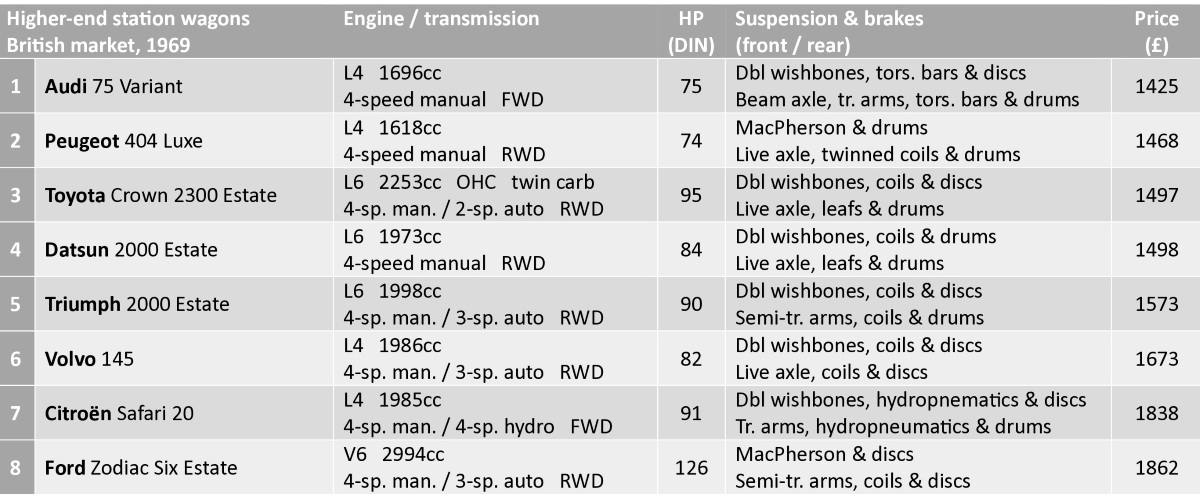
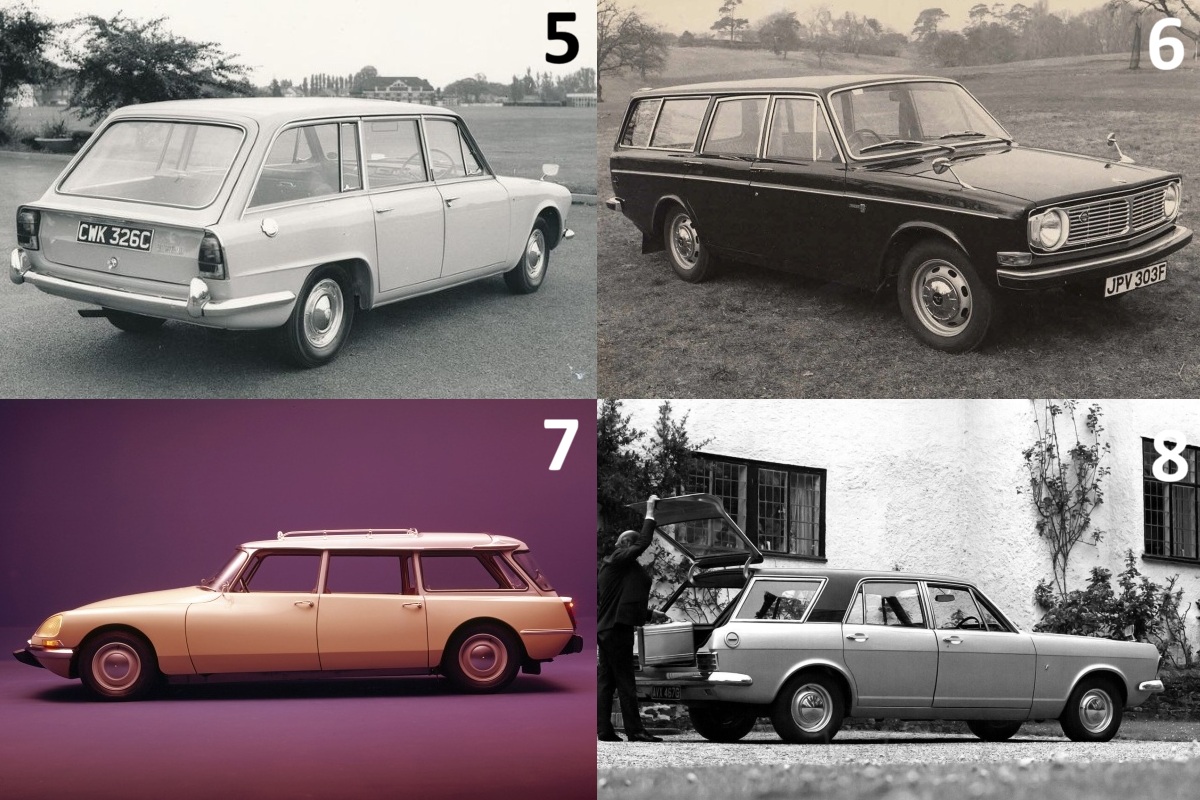
Deluxe wagons were just starting to become a thing in the late ‘60s. In its home market, the ID was already on the expensive side, but in non-EEC countries like Britain, the Citroën was near extortionate. And yet, thanks to its intrinsic qualities, a limited but steady number of Her Majesty’s subjects opted for the Safari rather than the Triumph or the (many) Fords that could rival the big Citroën on paper and in terms of luxury, but not in terms of practicality. For a little extra money, the DS 21’s 2.2 litre 106hp engine was available on the wagons, but performance was never the point of these cars. From 1972 on, the largest DS engine (2347cc, 115hp) took over as the most powerful engine option, but the 2-litre used in this 1969 car remained the default until the wagon’s end.
The last DS / ID wagons were built in 1975, with sales (especially ambulances) lasting well into MY 1976. This was done on purpose: Citroën needed enough stock to last until the CX wagon took over. A fifteen-year career is nothing to sniff at. Interestingly, the many francophone sources that discuss the DS online all disagree about production numbers. Apparently, Citroën never really shared a detailed breakdown of the DS / ID by model, year and body variant, so there are many numbers put forward. They all hover between 90-100k units between 1960 and 1975, compared to over 1.3 million saloons.
In a country that still had a fair few traditional catholic families, limited birth control and criminalized abortion (a law that was coincidentally changed in 1975), cars like the ID Familiale were certainly in demand. Hauling six or seven kids in one go is hard enough, but Citroën made it look unconventionally easy. And the hydro suspension turned it into a positively heavenly experience. Go forth and multiply, I say. But not usually in those words.
Related posts:
Curbside Classics: Citroën DS’s and ID Breaks – Four Goddesses Descend On Eugene, by PN
CC Driving Review – 1970 Citroen ID19 Familiale – Yes, You Can Meet Your Heroes., by Roger Carr




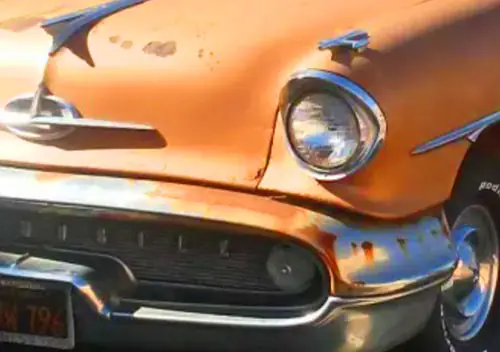
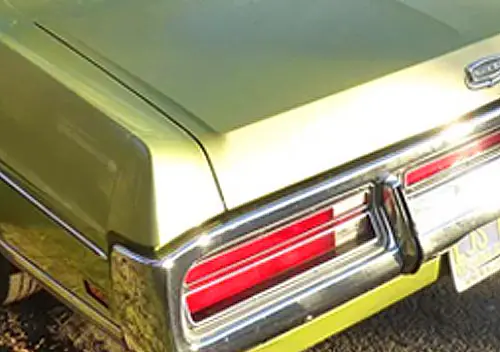




For a decade-odd, buyers in the UK could also choose the Australian-built Falcon and Valiant wagons. Although with engines as large as 360 cubic inch V8s, the Australian Valiants might seem a curious choice for the UK market (certainly after the 1973 oil shock), the demise of the big Humbers left a gap in the range (Chrysler having taken control of Rootes Group) and in the era the Australian cars had the advantage of benefiting from the Commonwealth Preference Scheme, a low tariff regime that was the last relic of the chimera of imperial free trade. Sales were never more than a trickle but the Chryslers & Fords were close to unique in the tiny market segment and the programmes appears for a while to have remained profitable, even after the tariff advantage was lost in 1973 when the UK joined the EEC (European Economic Community (1957), the Zollverein that would evolve into the EU (European Union (1993)). Although in Australia and South Africa the Valiant station wagons had (like the Citroëns) been called “Safaris” (after 1973 they would in the home market become “station wagons”), in the UK they were marketed as “Estates”, reflecting the local practice.
In 1966, UK prices for colonial Valiants ranged between Stg£1795-Stg£2545 and when Motor Magazine in 1966 tested a six-cylinder estate, it was noted the tag of Stg£1945 was about the same of that for a Jaguar 420, the two otherwise having little in common except fuel consumption. Although promotion was only ever half-hearted, the Australian Chryslers could be ordered until 1976 and they filled a niche (those towing horse floats etc). The early Valiants could be ordered with a 2-barrel 225 or the 273/318 V8 (depending on year) while after 1970, the unique 245 & 265 (an Antipodean re-purposing of an aborted US truck engine) sixes were offered, most of the V8s being 2-barrel 318s, a few 2-barrel 360s also imported. Ford Australia too flirted with the UK market, arriving also in the mid 1960s but found little more success in convincing the British their six and eight cylinder Falcons, Fairmonts, Fairlanes & LTDs made sense on UK roads, the last sold in 1984 after several years of dismal sales.
Conceptually there’s much similarity between the taillight treatment on the late 1950s DeSotos wagons and Citroën’s Breaks but the US designers paid much more attention to visual effect; the Europeans using the same “triple stack” idea (the ID & DS, Daimler Majestic Major, Standard Vanguard Phase II etc) were pure functionalists. DeSoto’s designers called their creation the “signal tower” but it’s said at other divisions it was known as the “Christmas tree”. The 1959 Cadillac is of course famous but DeSoto’s classic taillights surely were the best use of the tailfin era.
I’ve seen period ads for Australian Ford Fairmonts via personal import. I do wonder what the take rate was. Here in the US we had the monster station wagon until the early 80s with a V8 and separate chassis for hauling.
The pic with the Ambulance version…are they really ambulance personnel or just disposing a corpse?
And – multiplying in a Break should have been far easier than in a, say, Simca 1000 (presumed the kids were not present). Two birds with one stone.
I wondered that too after seeing the ambulance photo. At first i thought it was a wrapped-up corpse with rigor mortis, but then I thought it looked like a foot of a giant statue or something. Really odd – an empty stretcher would have been preferable!
Is it known if the estate versions (*Breaks*) for the British market were manufactured at the local assembly plant in Slough (at least until its closure, of course)?
The UK assembly of the ID/DS finished in 1966 but did include approx 300 Safaris and Tourmasters, the UK name for the Familiale.
https://www.citroenet.org.uk/foreign/slough/slough-index.html
The rear-seat configuration of this ”Break deLuxe” car is akin to that of a limousine, provided the three jump seats are removed. Great for letting the tall Général de Gaulle stretch his legs. But he already had his DS limousines—and there’s a story about how they saved his life during an assassination attempt.Despite several flat tires, the Général’s Citroën DS remains controllable and manages to escape, thanks to its hydraulic suspension. De Gaulle and his wife emerge unharmed.
That happened in 1962; the car was a regular DS saloon, which still exists, bullet holes and all.
The stretched wheelbase Chapron special pictured above was delivered in 1969 and de Gaulle only used it once before his resignation in April of that year. It was used by his successor, Georges Pompidou.
Several chapters could be written just about French presidential limousines.Indeed, the DS in question wasn’t even a limousine
These were the ultimate vehicle for a tiny strata of a certain kind of elite Americans in the ’60s and ’70s: as in the kind of people who were building geodesic domes or Earthships near Taos, NM, or owned a very progressive bookshop in SF, or were a university professor in Berkeley, or…well, you get the picture. In other words, the kind of person who was a very progressive thinker and considered the Citroen wagon the ultimate expression of that, more so than the sedan because it was more versatile and also rarer. It was literally the very coolest car to have in that slice of very cool and hip people.
One could still see these moldering away in the places where they had once served their owners, who were not going to let them go, ever, until they had to. There was one sitting on the street in Portland that comes to mind; I think we posted here once.
As to that comparison in the UK, as much as I appreciate these, I’d take the Peugeot 404 wagon over them all by a country mile. It was the only one of the bunch that had a longer wheelbase as well as a superb ride and was inherently simpler and thus significantly more robust than the Citroen. And it came in a three row Familiale that had just about as much room in the back behind the third seat as the Citroen. And it was drastically cheaper.
https://www.curbsideclassic.com/automotive-histories/the-worlds-greatest-wagons-peugeot-203-403-404-504-505-an-illustrated-history/
Funny you should mention progressive bookshops in SF, a friend who graduated from Berkeley High School in 69 or 70 had an ID19 Break for a while in the early 70s. FWIW he went to law school and now drives a Tesla. Also the only DS/ID wagon I’ve seen in the wild was on Sauvie Island around 2009-10
for other fans of Citroens- & these wagons in particular, there is a charming movie that stars both Rupert Grint & Julie Walters (AKA Ron & mum Molly Weasley from the Harry Potter films).
2006’s Driving Lessons. a Citroen wagon, in nearly this color is a significant character in the work. gone from Nflx now, but can rent from Amz prime perhaps also on other platforms .
What on earth happened to the accident victim being loaded into the ID ambulance! Safe bet he won’t be listening to any Continental Edison radio…
The wagons are Citroen ID’s, only more so. I would personally prefer a ’59 Chevy Nomad if I were looking for a flamboyant station wagon, but only because I can repair the Chevy myself.