
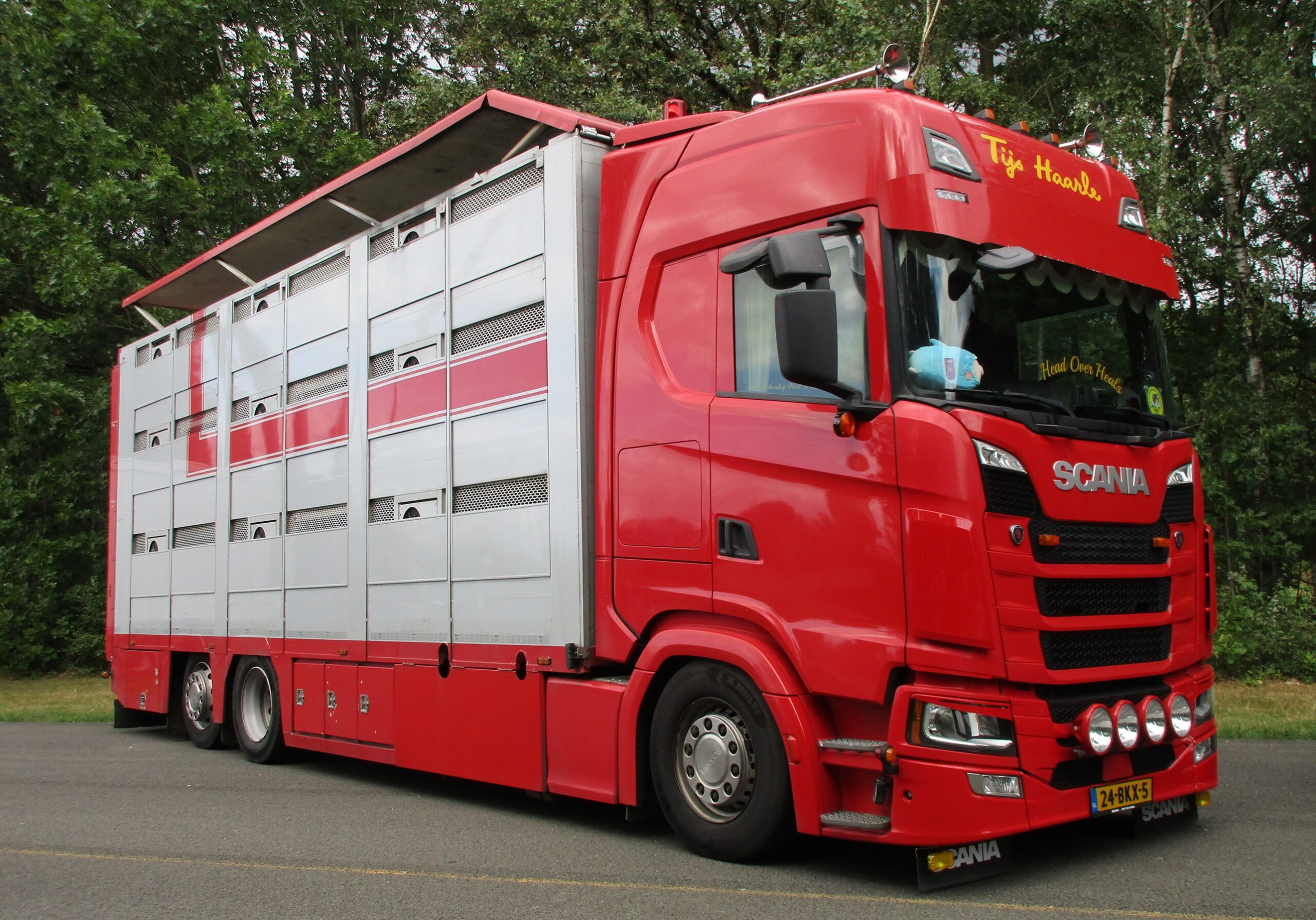
Varkenshandel Tijs Haarle B.V. from the east of the Netherlands specializes in pig trading, the company name says it all. One of their vehicles was present at a September 2026 truck show, a 2018 Scania S500 6×2*4 chassis-cab (so having a counter-steering and liftable tag axle) with a triple-deck livestock body. The body’s roof was slightly raised and the fans of its ventilation system were only partially visible.
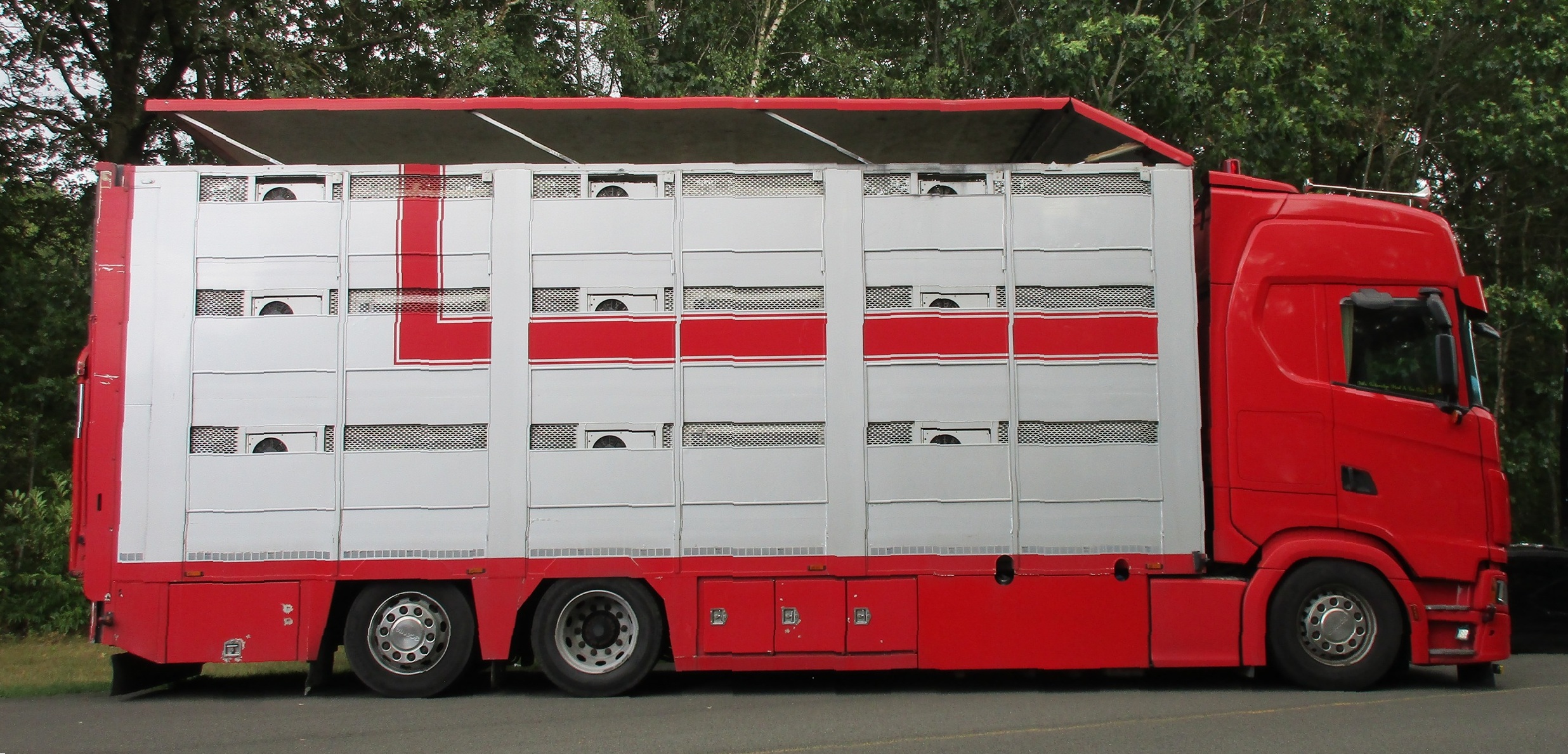
The curb weight of this whole setup is almost 15 tonnes (33,000 lbs), a lightweight it certainly ain’t. Given the truck’s GVWR of 28 tonnes (61,700 lbs), its legal maximum payload capacity is 13 tonnes (28,700 lbs). Now what does this all mean? Well, that this Scania can safely transport around 100 market-ready pigs (the pigs’ final stage before they miraculously turn into pork).
For the record, you can’t simply load pigs, or any other type of livestock, into a truck until you reach the vehicle’s maximum payload capacity. Animal welfare regulations have to be taken into consideration too, like the floor space per farm animal, which is a key factor in this context.
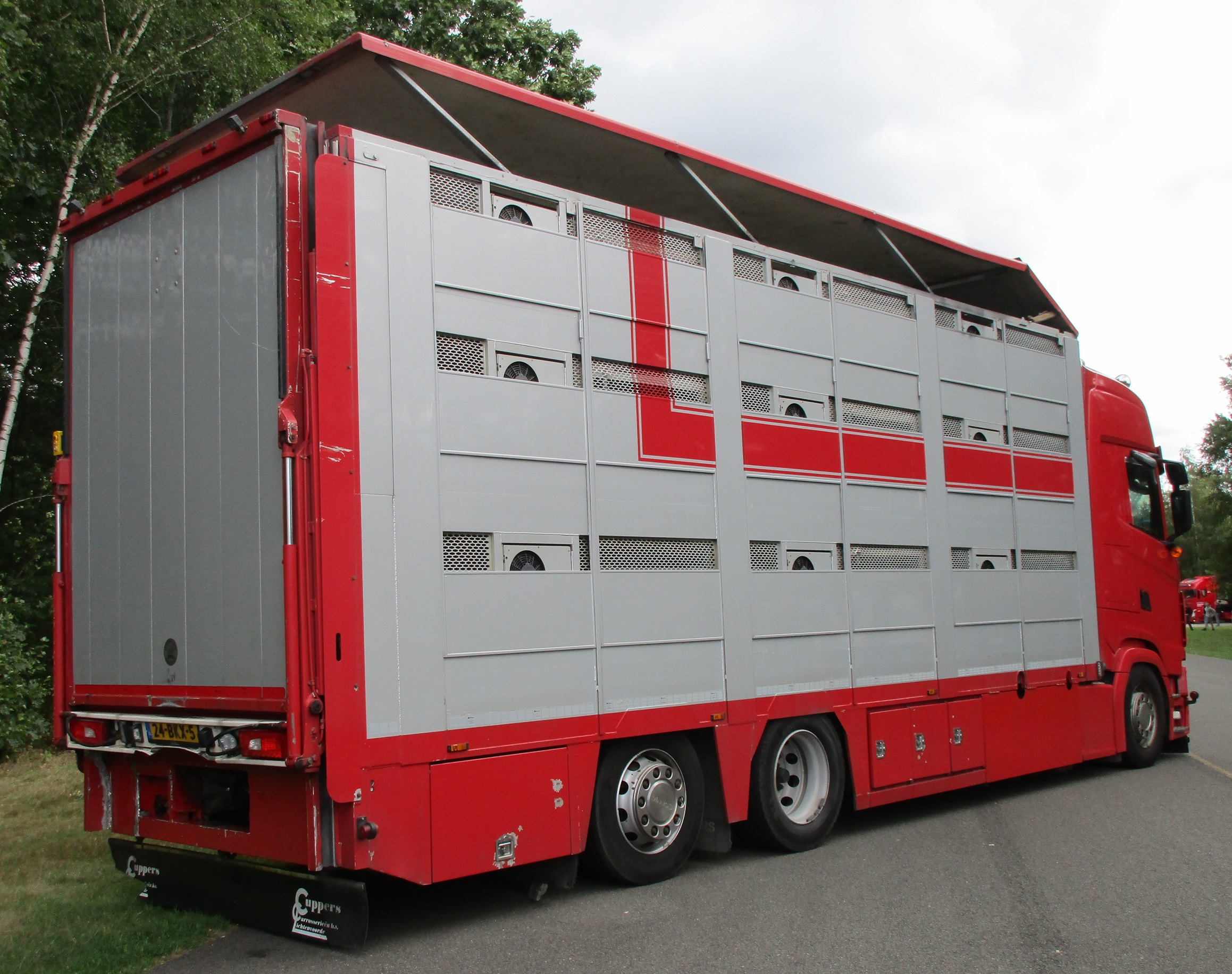
The complete body was manufactured by Cuppers Carrosserieën, also from the east of the Netherlands. Naturally, such a livestock truck has a liftgate -often fitted with a weighing system- rather than a simple loading ramp.
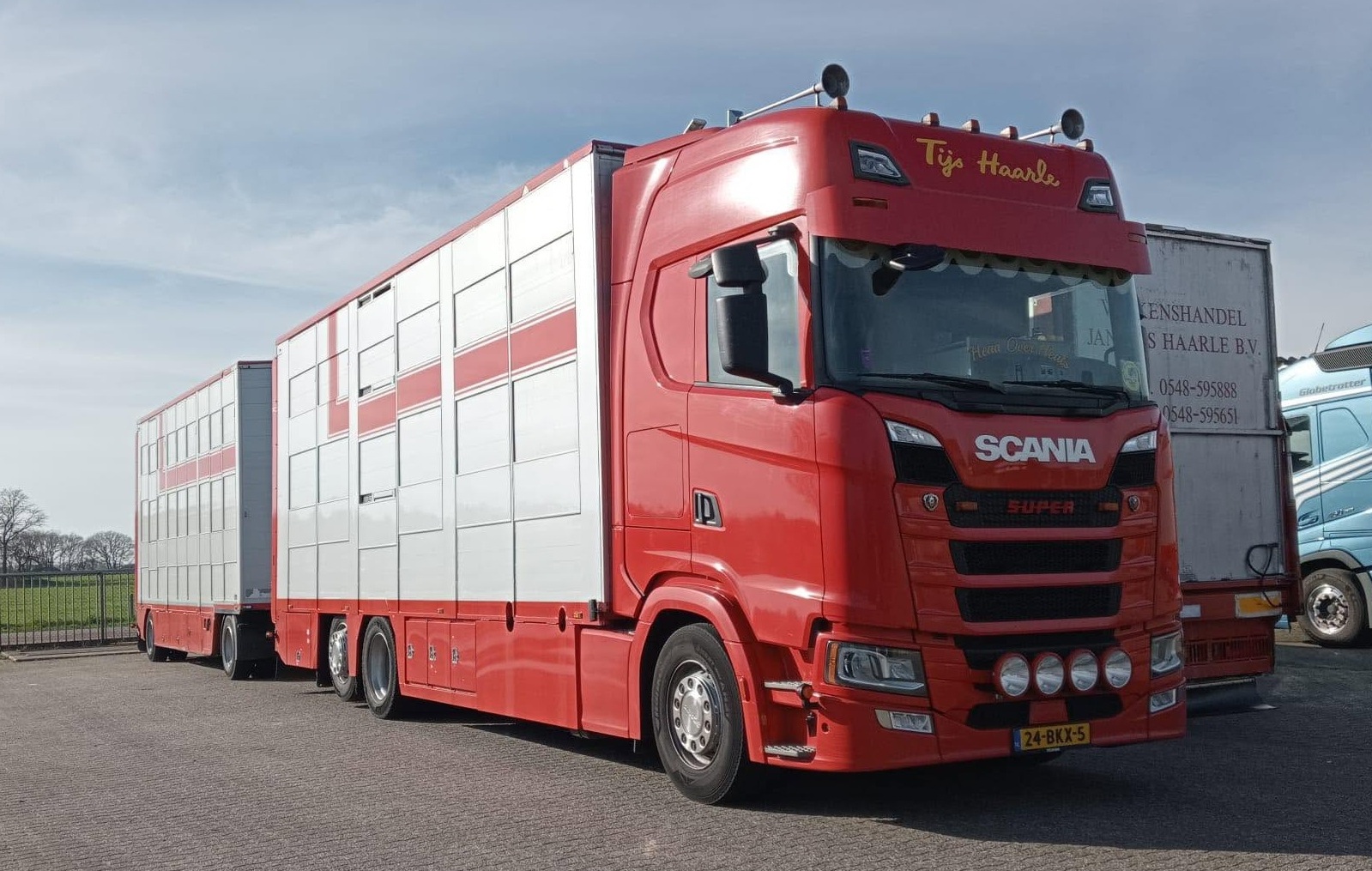
Here’s the same Scania with a 20 tonnes (44,000 lbs) full trailer, most likely built by Cuppers too. In this line of business, truck and trailer combinations are very common. Livestock trailers and semi-trailers are also offered with independent wheel suspension.
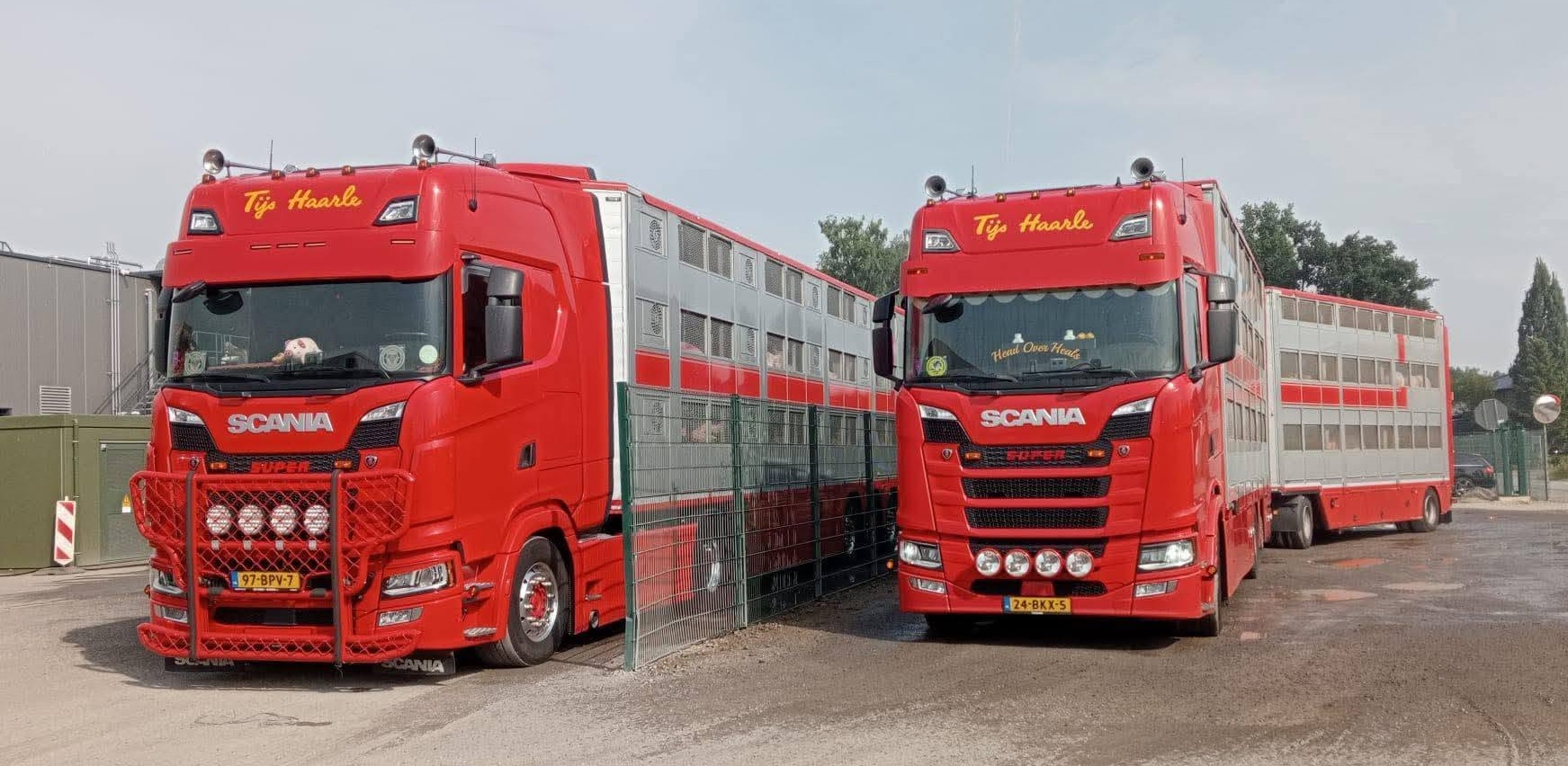
Another picture of the S500, its team member on the left is a 2020 Scania S450 4×2 tractor with a tri-axle semi-trailer. I’m sure these combinations are driven by serious, dedicated professionals and not by road hogs.
(images of the combination vehicles courtesy of Varkenshandel Tijs Haarle B.V.)
Related articles:
Scania Quartet – Three Livestock Haulers And One Reefer
2020 Volvo FH 6×2 – Comfort Class Transport
Carrozzeria Pezzaioli-Bodied MAN – Livestock Gran Turismo























Interesting! Ventilation fans and a weighing system are not commonly used here to my knowledge, but livestock trucks carrying hogs are typically 3 level.
These days, livestock bodies come with (quote from the Volvo FH link at the bottom):
A fully automatic ventilation system with optional (G3) filtration mats. Automatic temperature control, constantly monitored. A drinking water system. Overpressure in the perfectly illuminated interior. Insulated roof and sides.
Scanias have built in scales for weighing the load but not usually individual critters, very popular trucks here, on a roadie to collect a 308 yesterday there were queues of Scanias coming the other way yet 3 years ago you had a 18 month wait for one,those 4 wheel type trailers are a menace in reverse they can go really wrong really quick, pigs and sheep will run 3 decks cattle not so much
Five decks, that’s the max. Not for transporting market-ready pigs, obviously.
I remember learning as a kid that originally, these trailers were made from a straw-derived material, but they employed a huge, barrel-chested driver nick-named “Wolfie” – they really should’ve picked up on that clue – and it didn’t end well. The prototype replacements in wood also proved too weak in big winds, and the ones in brick, though secure, were just too heavy, so now they use the steel trailers pictured, and they check over the drivers more thoroughly than the truck itself. (For example, anyone with prior convictions for enormous blow jobs is out).
I may be digressing.
How do the unfortunate passengers get up that ramp to the top level?
What Bryce says below, the tailgate of the livestock body is a platform that goes up and down. And your personal historical overview sounds plausible, it really does.
Justy for such luxurious critter transport you cant have them walking up a ramp, thats for peasants the rear platform/tailgate lifts them. or theres an internal elevator.